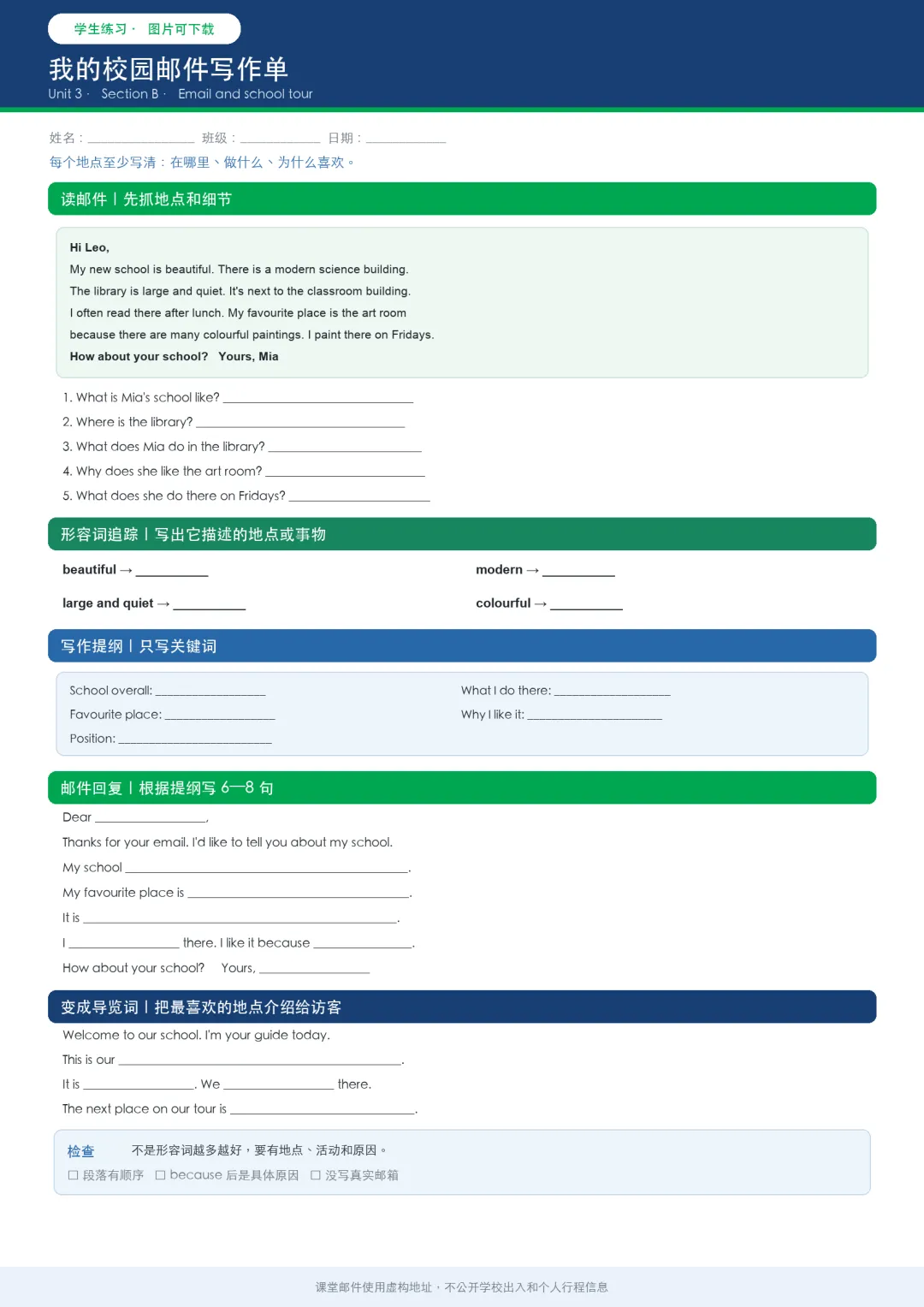
写学校介绍时,孩子很容易把会的形容词排成一列:My school is beautiful. It is big. It is nice.三句话没有语法错误,但读者仍然不知道学校里有什么,也不知道孩子为什么喜欢它。一篇清楚的校园介绍,至少要让读者找到一个地方、看到一种活动,并明白一个喜欢它的理由。
略读邮件,先找对方问了什么
课本中 Peter 的邮件依次写了学校整体、运动场、教学楼和食堂。这样的内容是在回答:What's your new school like?它不是在回答学校地址,也不只是在比较新旧学校。略读时不用逐词翻译。先看每段反复出现的地点名词和评价词,就能判断文章主题。
形容词要能找到它描述的对象
邮件中的形容词并不是随便放进去的:beautiful→ the schoolmodern→ the buildingslarge→ the sports fieldbig and clean→ the classroomdelicious→ jiaozi / fooddelicious 描述食物,不能直接说 The dining hall is delicious.。可以说:The food in the dining hall is delicious.孩子写完形容词后,可以反问自己:到底是什么 beautiful?什么 large?如果找不到明确对象,这个词很可能只是空泛评价。
每个地点写四件事就够了
介绍一个校园地点,可以按这个顺序:
地点是什么
它在哪里
人们在那里做什么
为什么喜欢它
例如:My favourite place is the library. It's next to the classroom building. I often read with my friends there. I like it because it is quiet and bright.四句话形成了一幅完整的小画面,不需要再堆五六个形容词。
there 可以避免重复地点
前一句已经说出 library,后一句可以用 there:I read books there after lunch.这里的 there 表示“在那里”,指代前面提到的地点。不要和 there is / there are 中用于引出事物的 there 混为一谈:I play basketballthere.(在那里)There isa basketball court.(有一个篮球场)
because 后面要给出真正的原因
I like the dining hall because the food is delicious.这是具体原因。I like it because it is good. 虽然正确,却几乎没有信息。可以从环境、活动、人际关系或个人感受中选择:because it is quietbecause I can play with my friendsbecause there are many interesting booksbecause the teachers there are kind
邮件和校园导览的说法不完全一样
邮件常用:Dear Flora,Thanks for your email. I'd like to tell you about my school.How about your school?Yours, Peter现场导览则需要带听众往前走:Hello and welcome to our school. I'm your guide today.Let's begin the tour.The next place on our tour is the library.同一份校园信息可以重复使用,但开头、过渡和结尾要根据交流场景改变。
 夜雨聆风
夜雨聆风