ARTICLE · 998839
高中作文批改|这样修改成优秀范文模板,背诵记忆,高分!
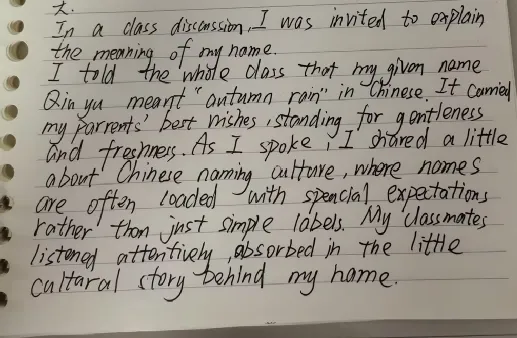
In a class discussion, I was invited to explain the meaning of my name.
I told the whole class that my given name Qinyu meant "autumn rain" in Chinese. It carried my parents' best wishes, standing for gentleness and freshness. As I spoke, I shared a little about Chinese naming culture, where names are often loaded with special expectations rather than just simple labels. My classmates listened attentively, absorbed in the little cultural story behind my name.
Many of my classmates got interested and came up to me after class. They tried to pronounce Qinyu patiently and asked more questions about Chinese traditions. Some even shared the stories behind their own names in return. Suddenly, my name was no longer a hard‑to‑pronounce word. It became a bridge connecting different cultures. I realized that instead of avoiding embarrassment, proudly introducing my culture helped me gain true respect from my classmates.
第一步:点评
优点:叙事完整,主题鲜明,语言功底优秀,几乎没有语法、拼写错误。细节描写生动。结尾感悟贴合主题,立意深刻。
缺点:个别地方小逻辑细节可以打磨:`meant`时态使用可以斟酌;部分句子可以微调句式,让行文节奏更流畅;全文没有硬性语法错误,大多属于优化提升点,不属于严重错误。需要注意文章书写工整。
第二步:修改详细批改解释
1. my given name Qinyu meant "autumn rain" in Chinese。meant是mean过去式。名字的含义是客观长久不变的事实,描述客观含义应当用一般现在时 means;主句是宾语从句过去式told,但从句描述客观真理/客观含义,时态不受主句过去时态限制。
2. where names are often loaded with special expectations rather than just simple labels。where引导的定语从句,先行词是Chinese naming culture。where多用于地点、抽象地点;culture不是抽象地点概念,此处用in which更严谨。
3. They tried to pronounce Qinyu patiently。副词patiently位置。原句语法没问题,但英文习惯把副词放在宾语后,从语感优化,可调整为They tried patiently to pronounce Qin‑yu读起来更自然。
4. 重复表达优化asked more questions about Chinese traditions,前文刚出现Chinese naming culture,连续多次出现Chinese,可适度替换,避免词语重复堆砌。
第三步:优化后的英语作文
In a class discussion, I was invited to explain the meaning of my name.
I told the whole class that my given name Qin‑yu means "autumn rain" in Chinese. It carried my parents' best wishes, standing for gentleness and freshness. As I spoke, I shared a little about Chinese naming culture, in which names are often loaded with special expectations rather than just simple labels. My classmates listened attentively, absorbed in the little cultural story behind my name.
Many of my classmates got interested and came up to me after class. They tried patiently to pronounce Qin‑yu and asked more questions about related traditions. Some even shared the stories behind their own names in return. Suddenly, my name was no longer a hard‑to‑pronounce word. It became a bridge connecting different cultures. I realized that instead of avoiding embarrassment, proudly introducing my culture helped me gain true respect from my classmates

来都来了,点个在看再走吧~~~
