文档文本内容
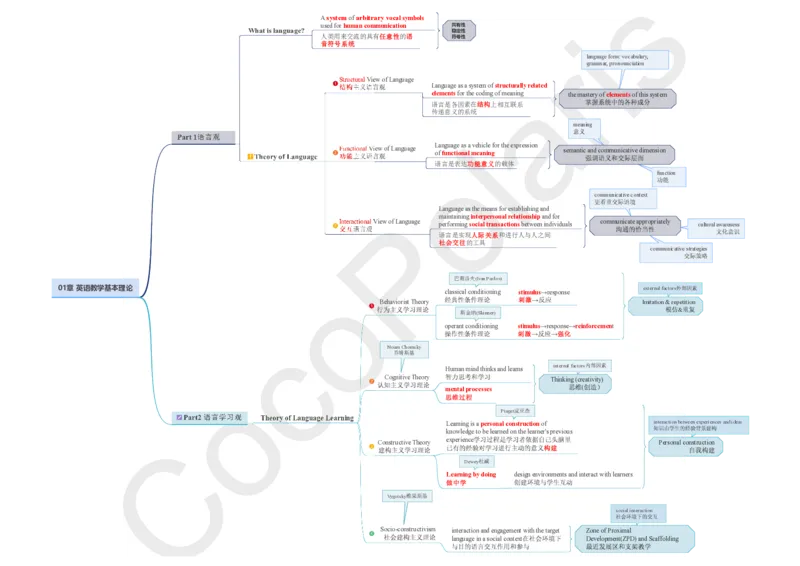
A system of arbitrary vocal symbols
used for human communication 共有性
What is language? 稳定性
人类用来交流的具有任意性的语 符号性
音符号系统
language form: vocabulary,
grammar, pronounciation
Structural View of Language
Language as a system of structurally related
elements for the coding of meaning the mastery of elements of this system
语言是各因素在结构上相互联系
传递意义的系统
meaning
Language as a vehicle for the expression
View of Language of functional meaning semantic and communicative dimension
语言是表达功能意义的载体
function
communicative context
Language as the means for establishing and
maintaining interpersonal relationship and for
View of Language performing social transactions between individuals communicate appropriately cultural awareness
语言是实现人际关系和进行人与人之间
社会交往的工具
communicative strategies
巴甫洛夫(Ivan Pavlov)
01章 英语教学基本理论 external factors
classical conditioning stimulus→response
Behaviorist Theory → Imitation & repetition
&
斯金纳(Skinner)
operant conditioning stimulus→response→reinforcement
→ →
Noam Chomsky
乔姆斯基
internal factors
Human mind thinks and learns
Cognitive Theory Thinking (creativity)
mental processes (
Piaget
Learning is a personal construction of interaction between experiences and ideas
knowledge to be learned on the learner's previous
Constructive Theory experience Personal construction
Dewey
Learning by doing design environments and interact with learners
Vygotsky
social interaction
Socio-constructivism interaction and engagement with the target Zone of Proximal
language in a social context Development(ZPD) and Scaffolding01章 英语教学基本理论Summary 总结
结构主义语言观 功能主义语言观 交互语言观
宏观 语言观
语言的结构性 语言的功能性 语言的交互性
行为主义学习观 认知主义学习观 建构主义学习观
语言学习观
中观 模仿&重复 思维(创造) 自我建构
代表人物 巴甫洛夫、斯金纳 乔姆斯基 皮亚杰、杜威、维果斯基
代表流派:
代表流派: 代表流派:
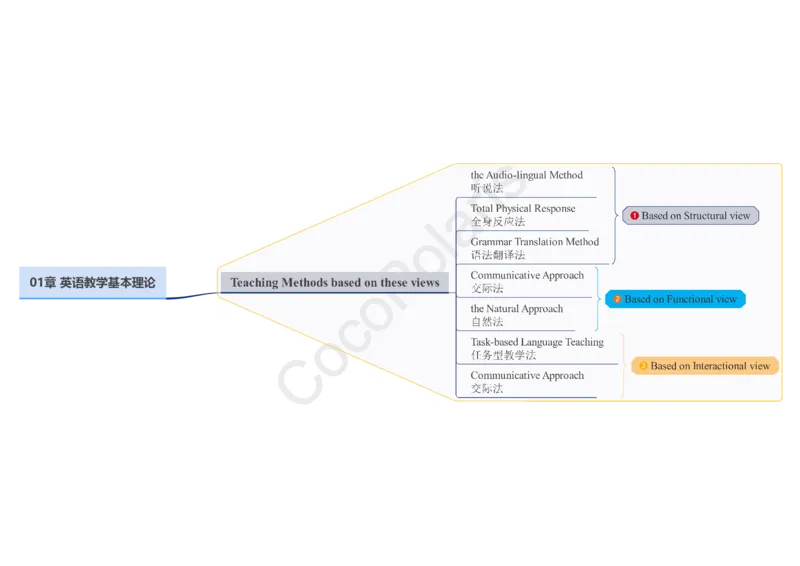
听说法
微观 教学方法 交际法 交际法
语法翻译法
自然法 任务型教学法
全身反应法(TPR)