【上好课】2025年高考一轮复习知识清单(讲案)
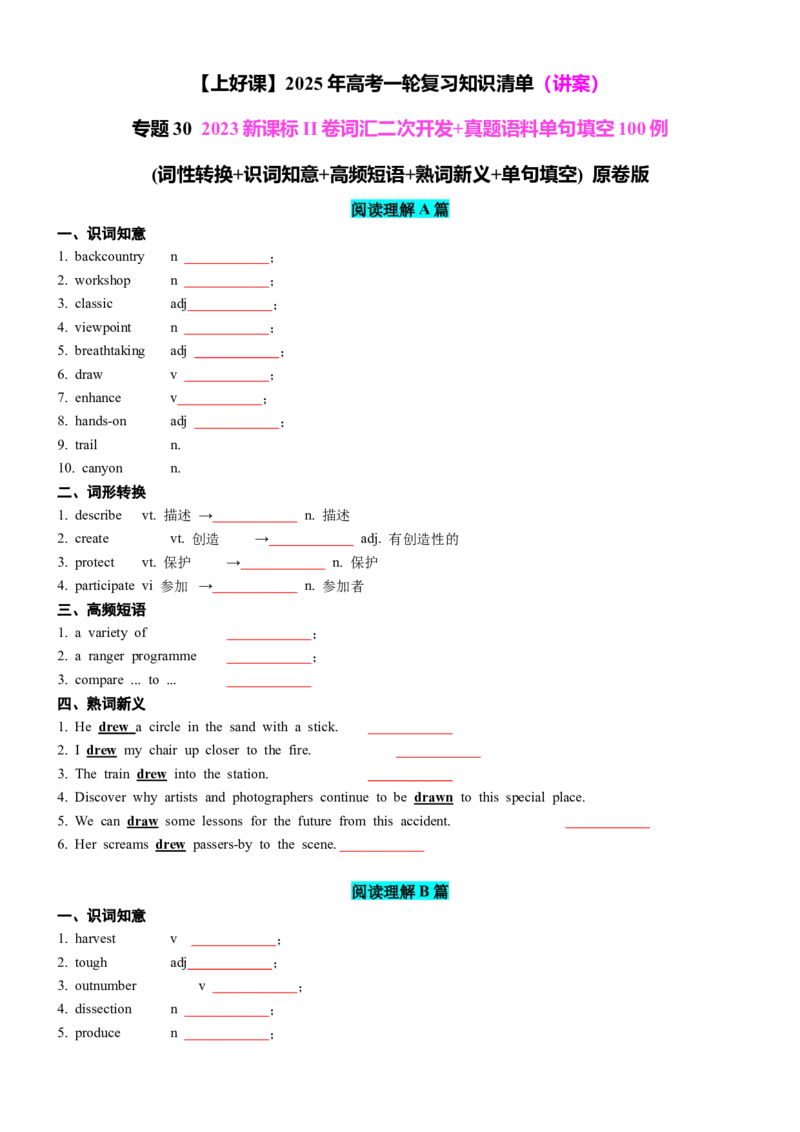
专题30 2023新课标II卷词汇二次开发+真题语料单句填空100例
(词性转换+识词知意+高频短语+熟词新义+单句填空) 原卷版
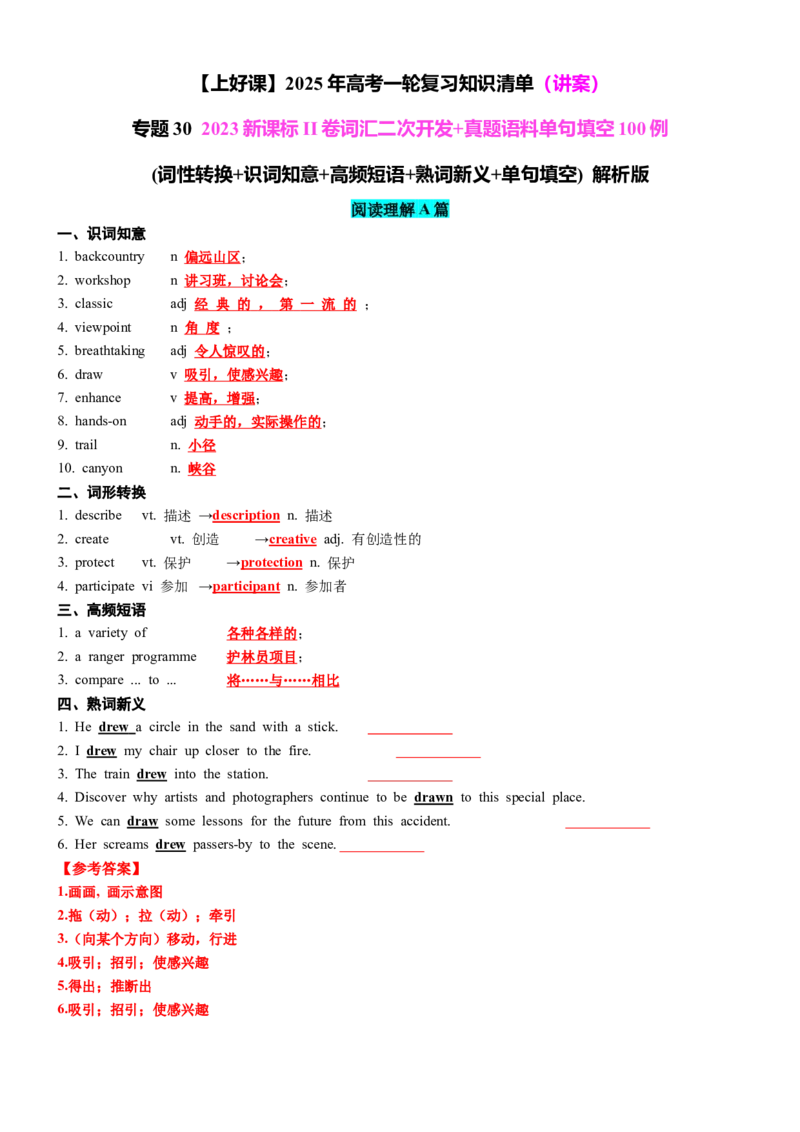
阅读理解A篇
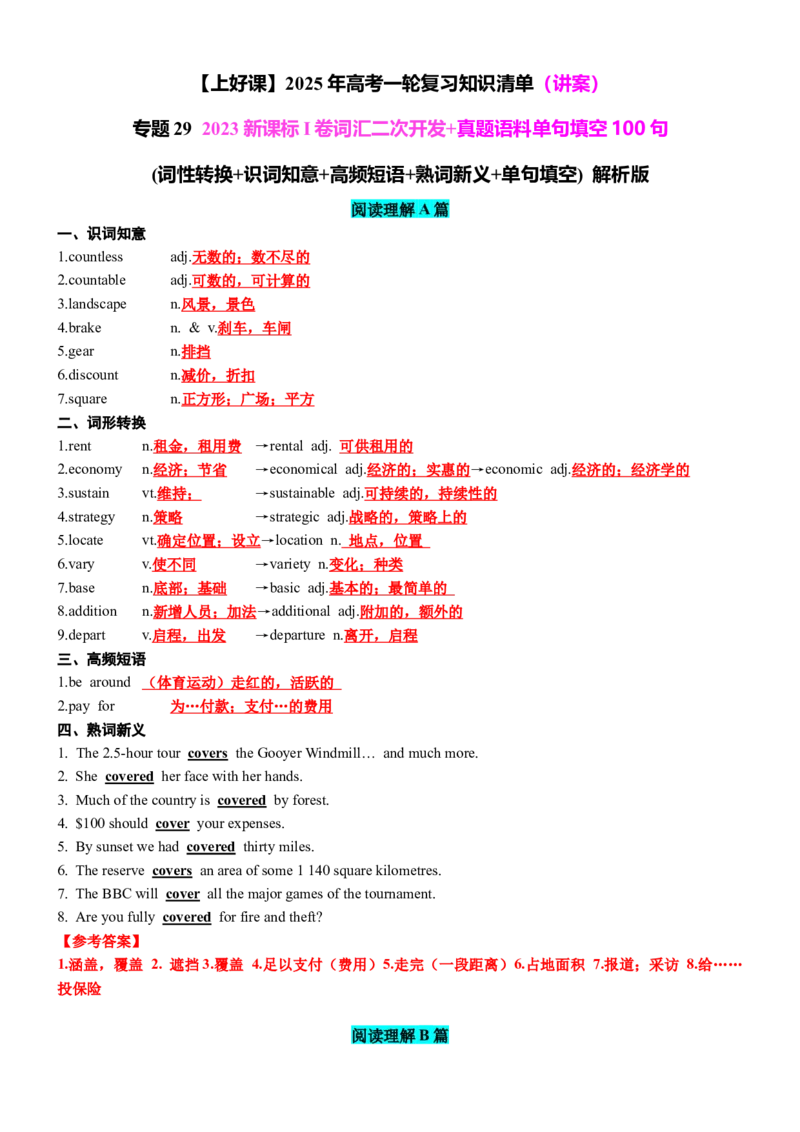
一、识词知意
1. backcountry n ;
2. workshop n ;
3. classic adj ;
4. viewpoint n ;
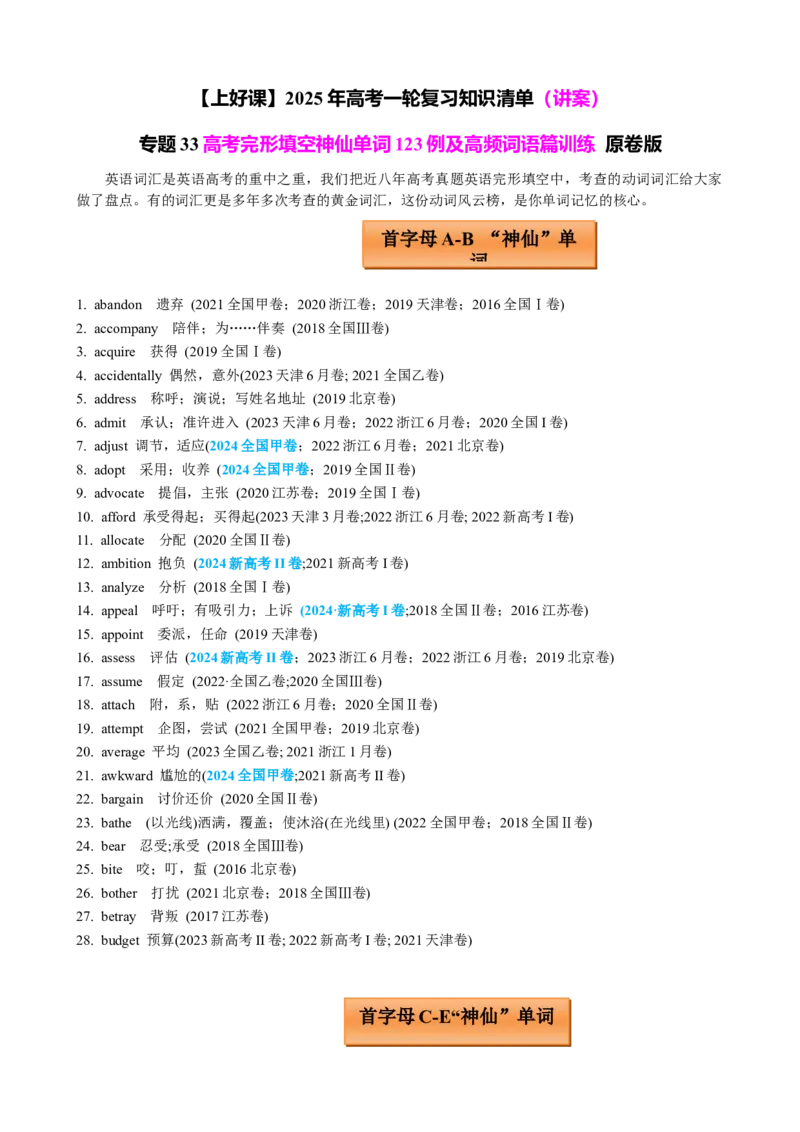
5. breathtaking adj ;
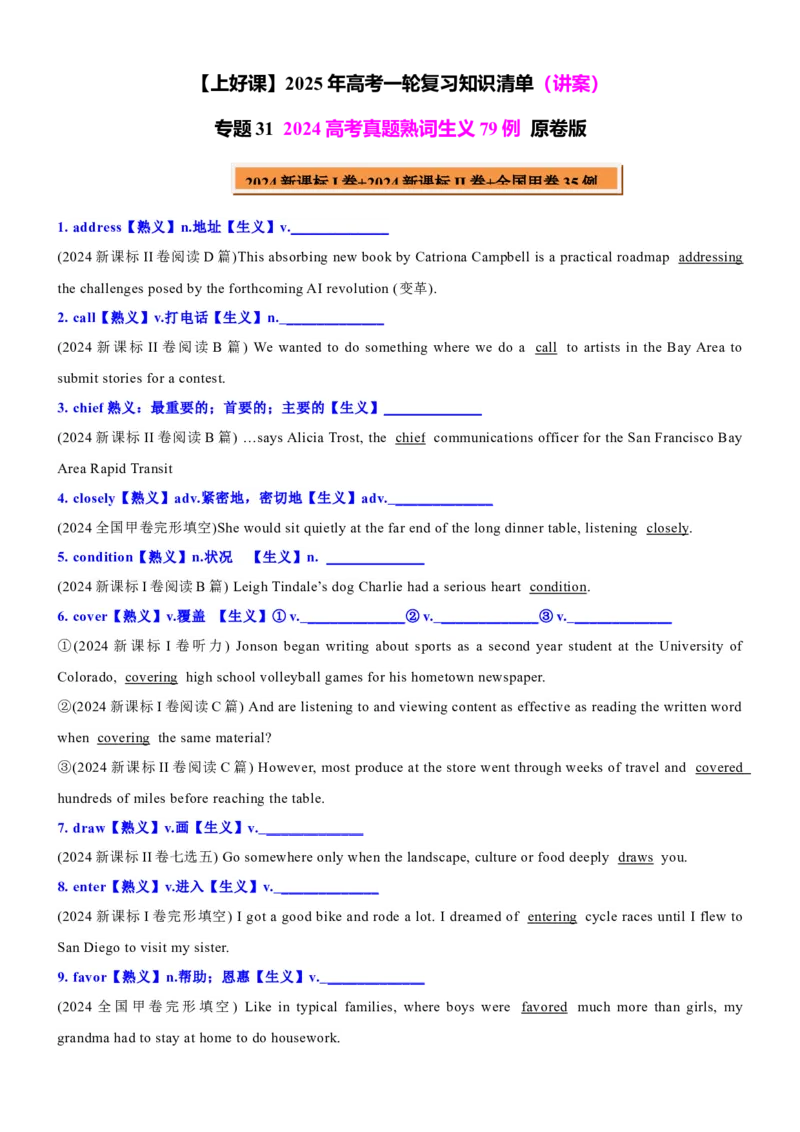
6. draw v ;
7. enhance v ;
8. hands-on adj ;
9. trail n.
10. canyon n.
二、词形转换
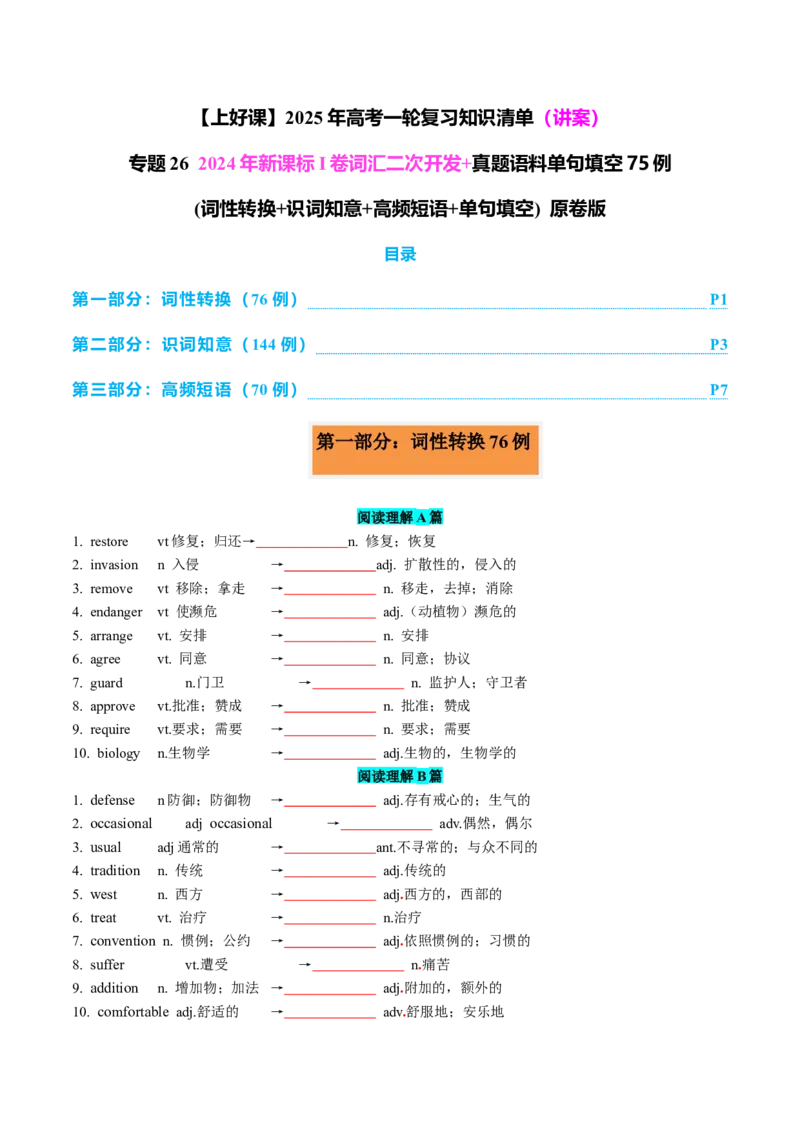
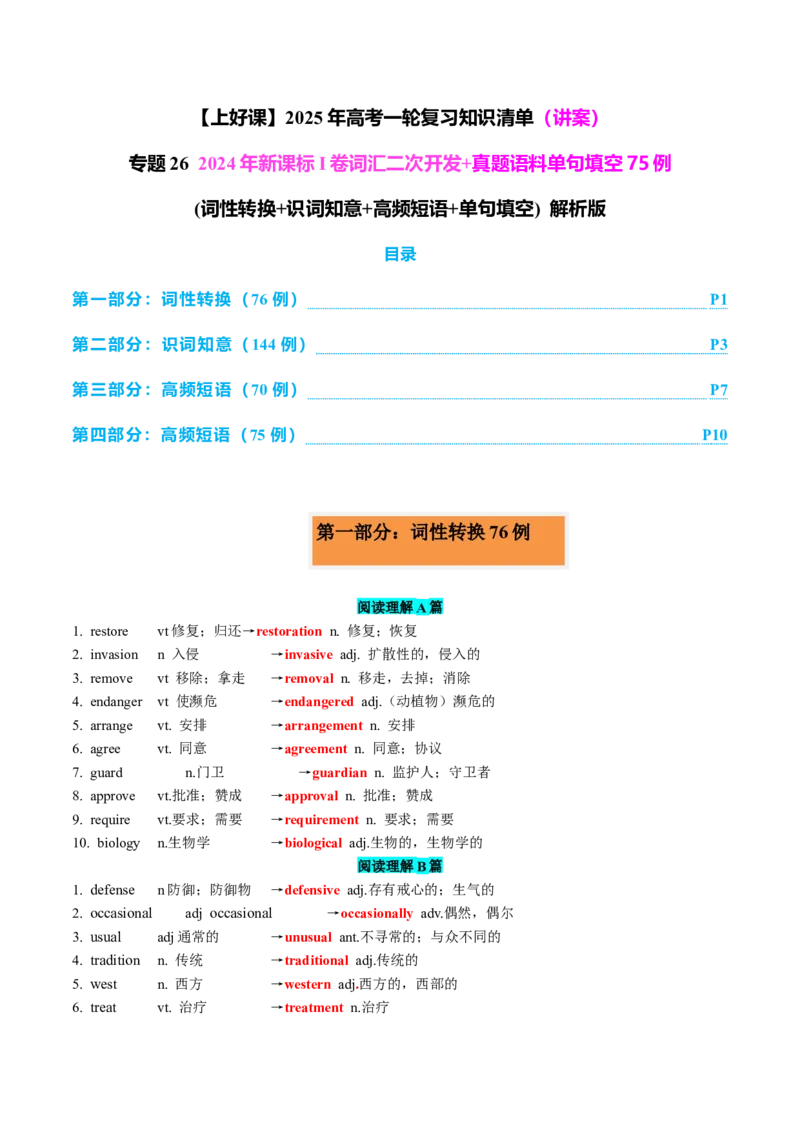
1. describe vt. 描述 → n. 描述
2. create vt. 创造 → adj. 有创造性的
3. protect vt. 保护 → n. 保护
4. participate vi 参加 → n. 参加者
三、高频短语
1. a variety of ;
2. a ranger programme ;
3. compare ... to ...
四、熟词新义
1. He drew a circle in the sand with a stick.
2. I drew my chair up closer to the fire.
3. The train drew into the station.
4. Discover why artists and photographers continue to be drawn to this special place.
5. We can draw some lessons for the future from this accident.
6. Her screams drew passers-by to the scene.
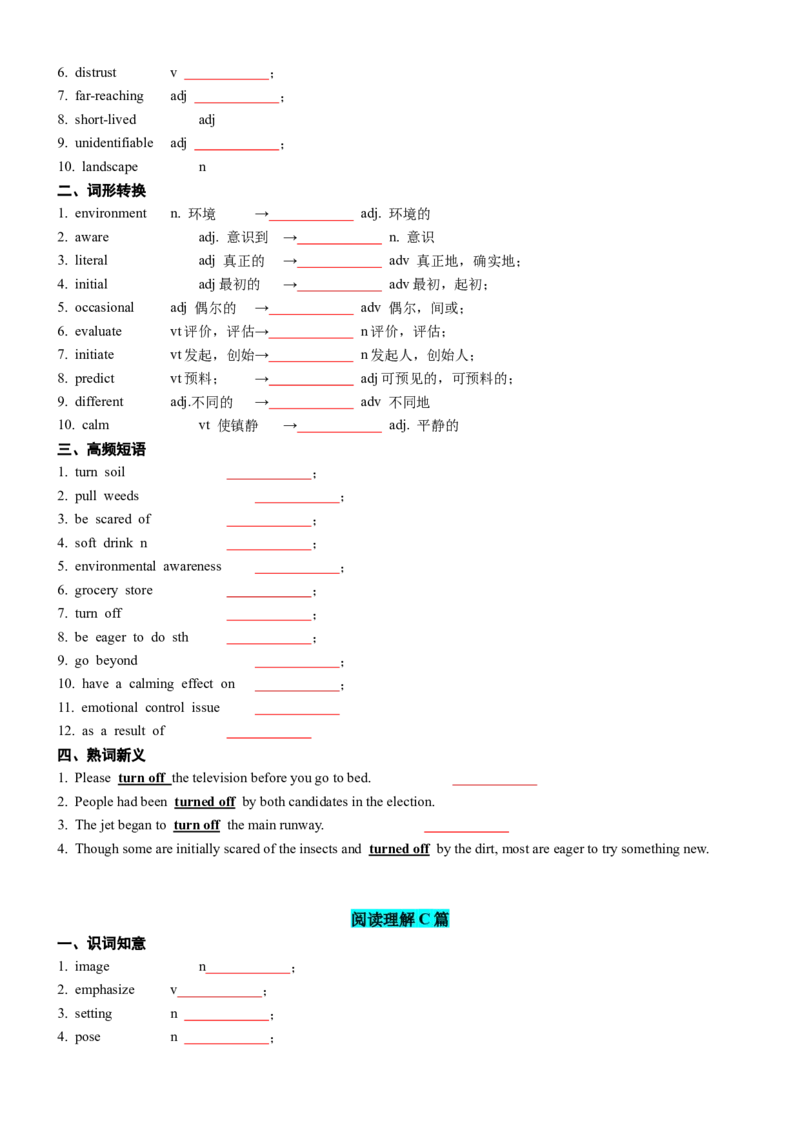
阅读理解B篇
一、识词知意
1. harvest v ;
2. tough adj ;
3. outnumber v ;
4. dissection n ;
5. produce n ;6. distrust v ;
7. far-reaching adj ;
8. short-lived adj
9. unidentifiable adj ;
10. landscape n
二、词形转换
1. environment n. 环境 → adj. 环境的
2. aware adj. 意识到 → n. 意识
3. literal adj 真正的 → adv 真正地,确实地;
4. initial adj最初的 → adv最初,起初;
5. occasional adj 偶尔的 → adv 偶尔,间或;
6. evaluate vt评价,评估→ n评价,评估;
7. initiate vt发起,创始→ n发起人,创始人;
8. predict vt预料; → adj可预见的,可预料的;
9. different adj.不同的 → adv 不同地
10. calm vt 使镇静 → adj. 平静的
三、高频短语
1. turn soil ;
2. pull weeds ;
3. be scared of ;
4. soft drink n ;
5. environmental awareness ;
6. grocery store ;
7. turn off ;
8. be eager to do sth ;
9. go beyond ;
10. have a calming effect on ;
11. emotional control issue
12. as a result of
四、熟词新义
1. Please turn off the television before you go to bed.
2. People had been turned off by both candidates in the election.
3. The jet began to turn off the main runway.
4. Though some are initially scared of the insects and turned off by the dirt, most are eager to try something new.
阅读理解C篇
一、识词知意
1. image n ;
2. emphasize v ;
3. setting n ;
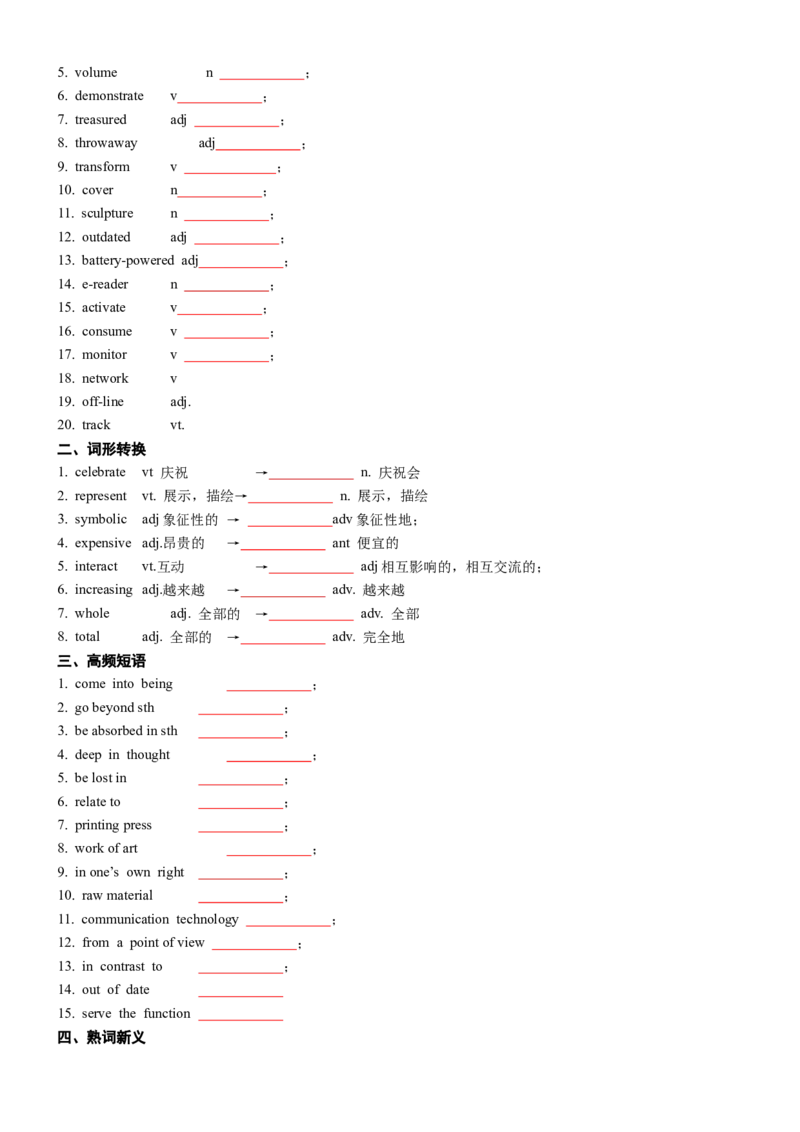
4. pose n ;5. volume n ;
6. demonstrate v ;
7. treasured adj ;
8. throwaway adj ;
9. transform v ;
10. cover n ;
11. sculpture n ;
12. outdated adj ;
13. battery-powered adj ;
14. e-reader n ;
15. activate v ;
16. consume v ;
17. monitor v ;
18. network v
19. off-line adj.
20. track vt.
二、词形转换
1. celebrate vt 庆祝 → n. 庆祝会
2. represent vt. 展示,描绘→ n. 展示,描绘
3. symbolic adj象征性的 → adv象征性地;
4. expensive adj.昂贵的 → ant 便宜的
5. interact vt.互动 → adj相互影响的,相互交流的;
6. increasing adj.越来越 → adv. 越来越
7. whole adj. 全部的 → adv. 全部
8. total adj. 全部的 → adv. 完全地
三、高频短语
1. come into being ;
2. go beyond sth ;
3. be absorbed in sth ;
4. deep in thought ;
5. be lost in ;
6. relate to ;
7. printing press ;
8. work of art ;
9. in one’s own right ;
10. raw material ;
11. communication technology ;
12. from a point of view ;
13. in contrast to ;
14. out of date
15. serve the function
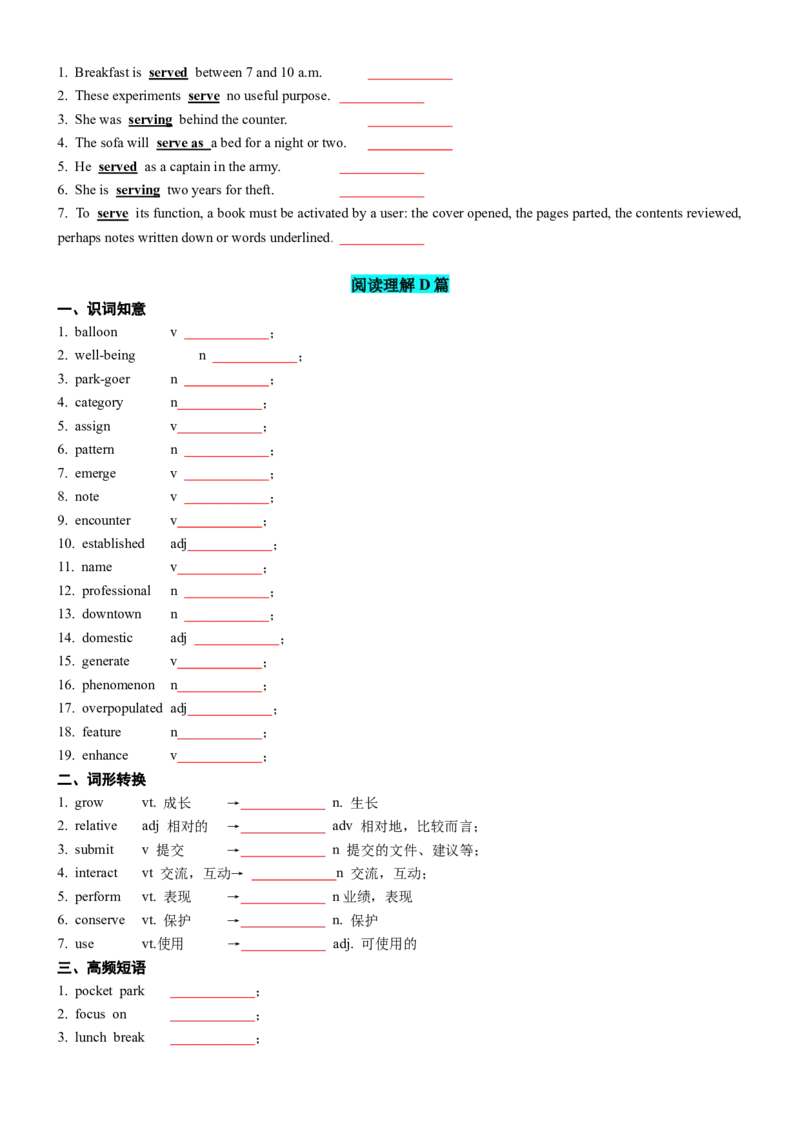
四、熟词新义1. Breakfast is served between 7 and 10 a.m.
2. These experiments serve no useful purpose.
3. She was serving behind the counter.
4. The sofa will serve as a bed for a night or two.
5. He served as a captain in the army.
6. She is serving two years for theft.
7. To serve its function, a book must be activated by a user: the cover opened, the pages parted, the contents reviewed,
perhaps notes written down or words underlined.
阅读理解D篇
一、识词知意
1. balloon v ;
2. well-being n ;
3. park-goer n ;
4. category n ;
5. assign v ;
6. pattern n ;
7. emerge v ;
8. note v ;
9. encounter v ;
10. established adj ;
11. name v ;
12. professional n ;
13. downtown n ;
14. domestic adj ;
15. generate v ;
16. phenomenon n ;
17. overpopulated adj ;
18. feature n ;
19. enhance v ;
二、词形转换
1. grow vt. 成长 → n. 生长
2. relative adj 相对的 → adv 相对地,比较而言;
3. submit v 提交 → n 提交的文件、建议等;
4. interact vt 交流,互动→ n 交流,互动;
5. perform vt. 表现 → n业绩,表现
6. conserve vt. 保护 → n. 保护
7. use vt.使用 → adj. 可使用的
三、高频短语
1. pocket park ;
2. focus on ;
3. lunch break ;4. interact with ;
5. gain access to sth ;
6. environmental conservation
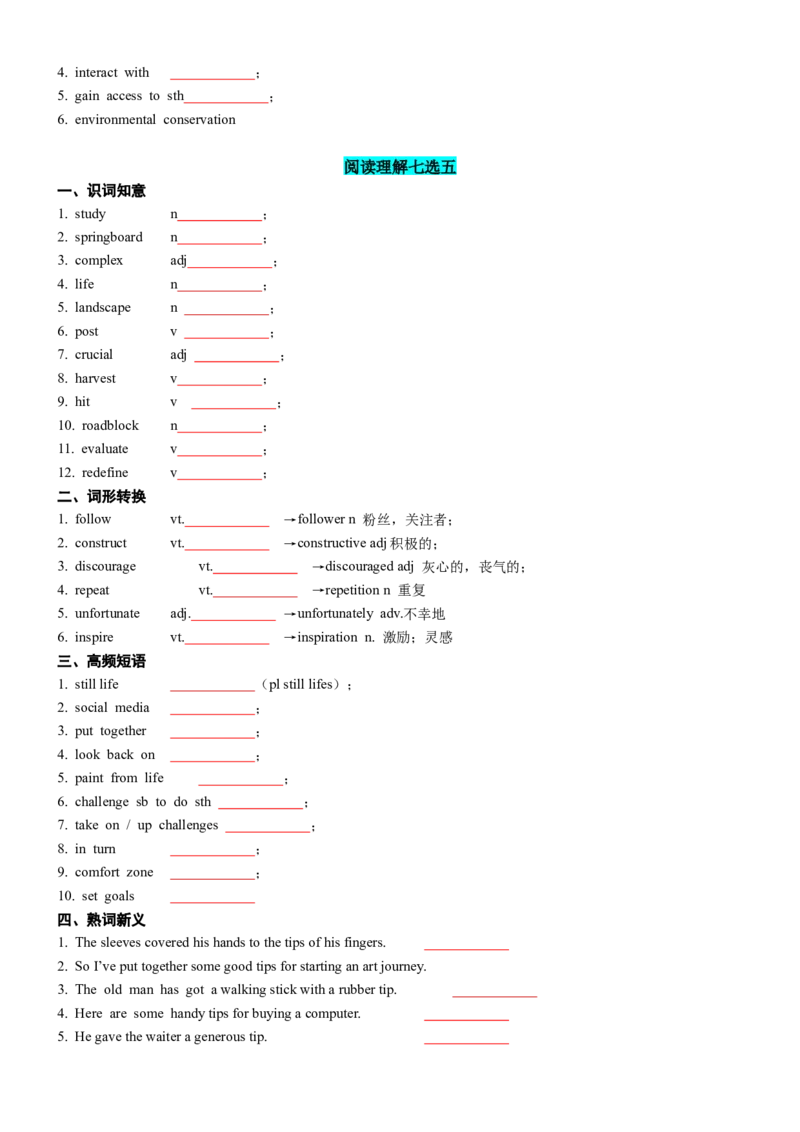
阅读理解七选五
一、识词知意
1. study n ;
2. springboard n ;
3. complex adj ;
4. life n ;
5. landscape n ;
6. post v ;
7. crucial adj ;
8. harvest v ;
9. hit v ;
10. roadblock n ;
11. evaluate v ;
12. redefine v ;
二、词形转换
1. follow vt. →follower n 粉丝,关注者;
2. construct vt. →constructive adj积极的;
3. discourage vt. →discouraged adj 灰心的,丧气的;
4. repeat vt. →repetition n 重复
5. unfortunate adj. →unfortunately adv.不幸地
6. inspire vt. →inspiration n. 激励;灵感
三、高频短语
1. still life (pl still lifes);
2. social media ;
3. put together ;
4. look back on ;
5. paint from life ;
6. challenge sb to do sth ;
7. take on / up challenges ;
8. in turn ;
9. comfort zone ;
10. set goals
四、熟词新义
1. The sleeves covered his hands to the tips of his fingers.
2. So I’ve put together some good tips for starting an art journey.
3. The old man has got a walking stick with a rubber tip.
4. Here are some handy tips for buying a computer.
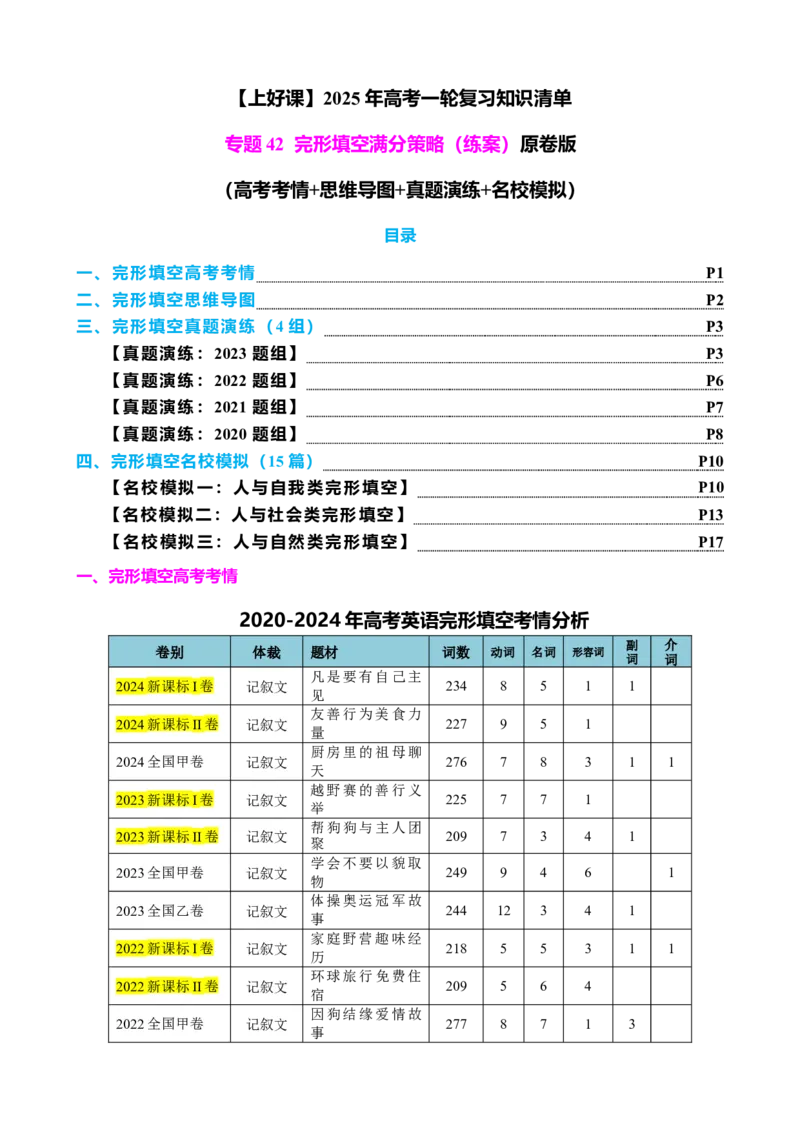
5. He gave the waiter a generous tip.完形填空
一、识词知意
1. post n ;
2. tell v ;
3. schedule n ;
4. coworker n ;
5. trust v ;
二、词形转换
1. transport vt. 运输 → n运输;
2. desperate adj. 迫切的 → adv 非常;
3. temporary adj. 暂时的 → adv. 暂时;
4. original adj. 起初的 → adv 起初,原来;
4. avoid adj. 可避免的 → adj 无法避免的;
5. eventful adj. 事情多发的→ adj平淡的,平静的;
6. sympathy n. 同情 → adj 同情的
三、高频短语
1. make it ;
2. on a tight budget ;
3. can’t afford to do sth ;
4. see off ;
5. hand over ;
6. pick up ;
7. work out ;
8. take off ;
9. load … into …
10. speed up
11. It happened that…
四、熟词新义
1. I work out regularly to keep fit.
2. Things have worked out quite well for us.
3. Can you work out what these squiggles mean?
4. I've worked out a new way of doing it.
5. I could tell this was hard for him, having to leave his dog to a stranger and trust that everything would work out.
语法填空
一、识词知意
1. questioning adj.
2. zookeeper n.
二、词形转换
1. comfort n. 舒服 → adj.舒服的2. confidence n. 信心 → adj. 有信心的
3. instruct vt.指导 → n. 指导;说明
4. tour vt. 旅游 → n. 游客
5. journalism n. 记者行业 → n.记者
6. basic adj. 基础的 → adv. 基础地
7. indirect adj. 间接的 → adv. 间接地
三、高频短语
1. figure out
2. check on
3. settle into
2023年新高考II卷语料单句语法填空100例
阅读理解A篇
1. Yellowstone National Park offers a ___________(vary) of ranger programs throughout the park, and throughout the
year.
2. The following are ___________(describe) of the ranger programs this summer.
3. ___________ you’re hiking a backcountry trail (小径), or just enjoying the park’s ___________(amaze) wildlife
from the road, this quick workshop is for you and your family.
4. Learn where to look for animals and how to ___________(safe) enjoy your wildlife watching experience.
5. Kids can test their skills ___________ compare their abilities to the animals of Yellowstone.
6. From a classic viewpoint, enjoy Lower Falls, and the breathtaking colors of the canyon while ___________(learn)
about the area’s natural and human history.
7. Discover why artists and photographers continue ___________(draw) to this special place.
8. Meet on ___________ lower platform at Artist Point on the South Rim Drive for this short talk.
9. Join Yellowstone’s park photographer for a hands-on program to inspire new and ___________(create) ways of
enjoying the ___________(beautiful) and wonder of Yellowstone.
10. Which of the four programs begins the ___________(early)?
阅读理解B篇
11. Turning soil, pulling weeds, and harvesting cabbage sound___________ tough work for middle and high school
kids.
12. And ___________ is Abby Jaramillo who with another teacher started Urban Sprouts, ___________ school garden
program at four low-income schools.
13. The program aims ___________(help) students develop science skills, environmental ___________(aware), and
healthy lifestyles.
14. Jaramillo’s students live in neighborhoods ___________ fresh food and green space are not easy
___________(find) and fast food restaurants outnumber grocery stores.15. “The kids ___________(literal) come to school with bags of snacks and large bottles of soft drinks,” she says.
16. Though some are ___________(initial) scared of the insects and turned off by the dirt, most are eager
___________(try) something new.
17. Urban Sprouts’ classes include hands-on ___________(experiment) such as soil testing, flower-and-seed
dissection, tastings of fresh or dried produce, and work in the garden.
18. Several times a year, students cook the vegetables ___________they grow, and they ___________(occasion) make
salads for their entire schools.
19. Program evaluations show that kids eat more vegetables as a ___________(consequent) of the classes.
20. “ We have students who say they went home and talked to their parents and now they’re eating
___________(different),” Jaramillo says.
21. Some students get ___________ interested in gardening that they bring home seeds___________(start) their own
vegetable gardens.
22. Besides, working in the garden ___________(seem) to have a ___________(calm) effect on Jaramillo’s special
education students, many of ___________ have emotional control issues.
23. What do we know about Abby Jaramillo? She is ___________ initiator of Urban Sprouts.
24. What was a problem ___________(face) Jaramillo at the start of the program?
阅读理解C篇
25. Reading Art: Art for Book Lovers is a ____________(celebrate) of an everyday object — the book,
____________(represent) here in almost three hundred artworks from museums around the world.
26. The image of the reader appears throughout history, in art made long before books as we now know them came
____________being.
27. In artists’ representations of books and reading, we see moments of ____________(share) humanity that go beyond
culture and time.
28. In this “book of books,” artworks are selected and arranged in a way ____________ emphasizes these connections
between different eras ____________ cultures.
29. We see scenes of children learning to read at home or at school, with the book as a focus for
____________(relation) between the generations.
30. Adults are portrayed (描绘) alone in many settings and poses —___________(absorb) in a volume, deep in thought
or _________(lose) in a moment of leisure.
31. These scenes may ____________(paint) hundreds of years ago, but they record moments we can all relate
____________.
32. Books themselves may be used ____________(symbolic) in paintings to demonstrate the intellect (才智), wealth or
faith of the subject.
33. As books have become inexpensive or even throwaway, artists have used them ____________ the raw material for
artworks —____________(transform) covers, pages or even complete volumes into paintings and sculptures.
34. Continued developments in communication technologies were once believed to make the printed page
____________(outdate).
35. From a 21st-century point of view, the printed book is certainly ancient, ____________ it remains as interactive
____________ any battery-powered e-reader.
36. To serve its function, a book must ____________(activate) by a user: the cover opened, the pages parted, the
contents reviewed, perhaps notes written down or words ____________(underline).37. In contrast to our ____________(increasing) networked lives, a printed book still offers the chance of a
____________(whole) private, “off-line” activity.
阅读理解D篇
38. As cities balloon with ____________(grow), access to nature for people ____________(live) in urban areas is
becoming harder to find.
39. If you’re lucky, ____________ might be a pocket park near where you live, but it’s unusual to find places in a city
____________ are relatively wild.
40. Past research has found health and wellness benefits of nature for __________ (human), but a new study shows
that wildness in urban areas is ____________ (extreme) important for human well-being.
41. They surveyed several hundred park-goers, ____________(ask) them to submit a __________(write) summary
online of a meaningful interaction they had ___________ nature in the park.
42. The researchers then examined these submissions, coding ( 编 码 ) experiences into different
____________(category).
43. For example, one ____________(participant) experience of “We sat and listened to the waves at the beach for a
while” was assigned the categories “sitting at beach” and “listening to waves.”
44. Across the 320 ____________(submission), a pattern of categories the researchers call a “nature language” began to
emerge.
45. After the coding of all submissions, half a dozen categories were noted most often as important to
____________(visitor).
46. These include ____________(encounter) wildlife, walking along the edge of water, and following an established
trail.
47. Naming each nature experience creates a usable language, ____________ helps people recognize and take part in
the activities ____________ are most satisfying and meaningful to them.
48. For example, the experience of ____________(walk) along the edge of water might be satisfying for a young
professional on a weekend hike in the park.
49. Back downtown during a workday, they can enjoy a more domestic form of this ____________(interact) by
walking along a fountain on their lunch break.
50. “We’re trying ____________(generate) a language that helps bring the human-nature interactions back into our
daily lives.” said Peter Kahn, a senior author of the study.
51. “And for that to happen, we also need ____________(protect) nature so that we can interact with it,” said Peter
Kahn, a senior author of the study.
52. What phenomenon does the author describe at the ____________ (begin) of the text?
阅读理解七选五
53. As an artist who ___________(share) her journey on social media, I’m often asked by curious followers
___________ to begin an art journey.
54. ___________(fortunate), there is no magic list I can offer. I do remember, though, ___________ it was like to be a
complete beginner.
55. So I’ve put together some good ___________(tip) for starting an art journey.
56. ▪Start small. I suggest ___________(use) a sketchbook (素描本) for small studies.
57. These small studies provide ___________(inspire) and may be a springboard for more complex works in the future.
58. Don’t throw away your beginner art. You’ll want to look back on your journey ___________(see) how far you’vecome.
59. ▪Paint often and paint from life. There’s no better way to improve___________ to put in those brush miles.
60. Whether you paint still lifes, portraits, ___________ landscapes, paint from life as much as possible.
61. You’ll develop that painting muscle memory that only comes with ___________(repeat).
62. ▪Continually challenge ___________(you) to try something new.
63. Get out of your comfort zone. ___________(artist) growth can be a bit painful.
64. Welcome ___________ the club; we’ve all been there. I love taking on challenges.
65. I once took up a challenge ___________(create)to create a painting every day for a month and post the works
online.
66. Seeking and accepting___________(construct)constructive feedback (反馈) is crucial to growth.
67. I post my work on social media and, ___________in turn, have met some of the kindest people.
68. They make me feel ___________(value) valued and respected, no matter my level of artistic ability.
69. The journey ___________you’re on won’t follow a straight path.
70. You’ll hit roadblocks, and you’ll feel ___________(discourage) at times.
71. Push through, give it time and put in the effort and you ___________ (harvest) the rewards of an artistic life.
72. Evaluate your __________(perform) and, if needed, redefine your role.
完形填空
73. In April last year, I___________(see) a post on the PNP (Pilots N Paws) website from a family in Topeka.
74. They had to move to Virginia but they were ___________ a very tight budget.
75. They could not afford ___________(pay) for transportation for their dog, Tiffy, and ___________(desperate)
wanted to take her with them.
76. ___________ just happened that I was planning another PNP flight with another pilot, Karen, ___________ offered
to take Tiffy from Kansas City to Virginia.
77. What I was to do was fly to Topeka to pick _________ Tiffy.
78. George, the husband, was trying to be calm, ___________ I could tell this was hard for him, ___________(have)
to leave his dog to a stranger and trust that everything would work out.
79. I promised ___________(take) care of Tiffy and call them as soon as we got to Kansas City.
80. The flight was uneventful, ___________ Tiffy was a great passenger.
81. The next day, she ___________(fly) with Karen and made it back to George in Virginia within a few days.
82. He was so ___________(thank) and sent me a nice e-mail with pictures.
83. It felt great to know that I ___________(help) bring this family together again.
语法填空
84. Whenever I tell people that I teach English at the Berlin Zoo, I almost always get a ____________(question) look.
85. Behind it, the person is trying to figure out who ____________(exact) I teach…the animals?
86. Since June 2017, right before the ____________(arrive) of the two new pandas, Meng Meng and Jiao Qing, I have
been helping the panda keepers at the zoo to feel more comfortable and ____________(confidence) speaking English.
87. And who do they speak English ____________? Not the pandas, even though the language ___________(use)
used for the medical training instructions is actually English.
88. They talk to the flood of international tourists and to ____________(visit) Chinese zookeepers who often come to
check on the pandas, which are on loan from China.
89. They also need to be ready to give ____________(interview) in English with international journalists.90. This is ____________ they need an English trainer. So, what are they learning?
91. ____________(basic), how to describe a panda’s life. It’s been an honor to watch the panda programme develop
____________ to see the pandas settle into their new home.
92. As a little girl, I ____________(wish) to be a zookeeper when I grew up.
93. Now, I’m living out that dream indirectly by helping the panda ____________(keep) do their job in English.
读后续写阅读材料
94. Writing was ____________ difficult and painful for me that my teacher had allowed me ____________(present)
my paper on the sinking of the Titanic by acting out a play, ____________ I played all the parts.
95. So, why did he suddenly force me ____________(do) something at which I was sure to fail?
96. His reply: “Because I love your stories. If you’re willing ____________(apply) yourself, I think you have a good
shot at this.”
97. ____________(encourage) by his words, I agreed to give it ____________ try.
98. Paul Revere was a silversmith (银匠) in Boston who ____________(ride) a horse at night on April 18, 1775 to
Lexington ____________(warn) people that British soldiers were coming.
99. When I handed in the essay to my teacher, he read it, ____________(laugh) out loud, and said, “Great. Now, write it
again.”
100. When I finally finished it, the ____________(think) of winning had given way ____________ the enjoyment of
writing.