2022 年 12 月大学英语四级考试真题(二)
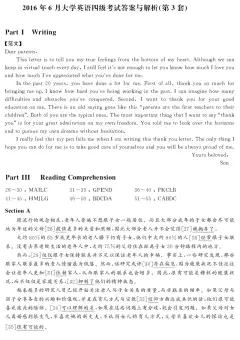
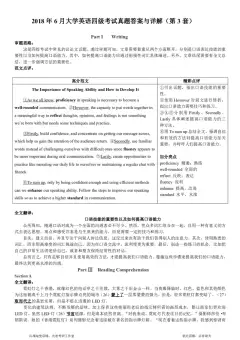
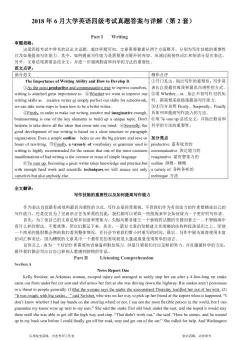
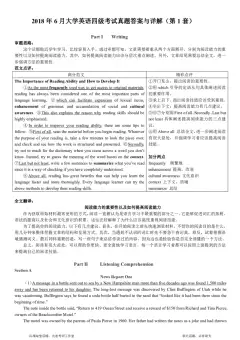
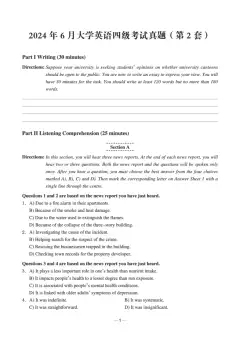
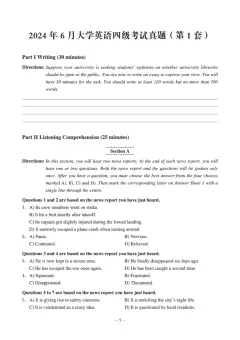
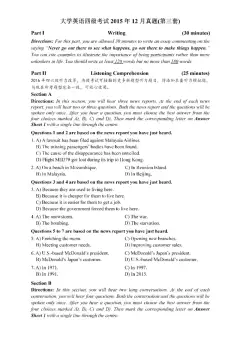
PartΙWriting(30minutes)
Directions: In this task, you are to write an essay on the importance of developing a healthy
lifestyleamongcollegestudents.Youwill have30minutesforthetask.Youshouldwriteatleast
120wordsbutnomorethan180words.
Part Ⅱ ListeningComprehension(25minutes)
SectionA
Directions: In this section you will hear here news reports. Atthe end of each news report, you
will hear two or three questions. Both the news report and the questions will be spoken only
once.Afteryouhearaquestion,youmustchoosethebestanswerfromthefourchoicesmarked
A) ,B) ,C) and D). Then mark the corresponding letter on Answer Sheet 1 with a single line
throughthecentre.
Questions1and2arebasedonthenewsreportyouhavejustheard.
1.A)Afreecarshow C)Asportscompetition.
B)Ayearlyconcert. D)Apipebandcontest.
2.A)ImprovetheimageofGlasgowcity C)Contributealottothelocaleconomy
B)EnrichthelocalcultureofGlasgow D)Entertainpeopleinlocalcommunities
Questions3and4arebasedonthenewsreportyouhavejustheard.
3.A)Surprisingriseinglobalsealevels. C)Changingweatherpatternsinsummer
B)DangerousicemeltsinGreenland D)RecordgrowthofGreenland'sicesheets
4.A)ItbeganinlateMay C)Itstartedamonthearlierthanusual
B)Itlastedthreemonths. D)Itendedamonthearlierthanbefore
Questions5to7arebasedonthenewsreportyouhavejustheard.
5.A)Bundlesof£20noteskeptturningup.
B)Avillagerwassearchingforhislostcash
C)Localpolicemencameacrossbundlesof£20notes
D)Abundlecontainingthousandsofpoundsgotstolen
6.A)Theygiveittocharity. C)Theyhanditovertothelocalgovernment.
B)Theyreturnittothefinder. D)TheyplaceanoticeinTheNorthernEcho
7.A)Theycooperatedwellwiththepolice. C)Theywerepuzzledbythemystery.
B)Theyenjoyedafairlyaffluentlife. D)Theyhadastrongcommunityspirit.
SectionB
Directions:Inthissection,youwillheartwolongconversations.Attheendofeachconversation,
you will hear four questions. Both the conversation and the questionswill bespoken only once.
After you hear a question you must choose the best answer from the four choices marked
A).B),C)andD).ThenmarkthecorrespondingletteronAnswerSheet1withasinglelinethrough
thecentre.
Questions8to11arebasedontheconversationyouhavejustheard.
8.A)Excited. C)Indifferent.
B)Delighted. D)Strange9.A)Searchforthemeaningoftheirlife. C)Callontheirrelativesandfriends.
B)Lookbackontheiryearsatschool D)Talkaboutfutureplanswithfriends.
10.A)Hepreferstohavethemshownonsocialmedia.
B)Helovesthembutdoesnotwanttomakeafuss
C)Heenjoyscelebratingothers’birthdaysratherthanhisown.
D)Helooksforwardtoreceivingpresentsfromhisclosefriends.
11.A)Holditonamodestscaletoremovebirthdayanxieties.
B)Viewitasachanceforpeopletosocializeandhavefun
C)Extendinvitationtothosehetrustsmost
D)Makeitanoccasiontocollectdonations.
Questions12to15arebasedontheconversationyouhavejustheard.
12.A)Itwasabsolutelyexhausting C)Therewastoolongadelay.
B)Therewasaterriblesmell. D)Shegotoffatthewrongstation
13.A)Shehasn'tsavedenoughmoney C)Shehasn'tpassedthedrivingtestyet.
B)Sheisworriedabouttrafficjams D)Sheisusedtotakingpublictransport
14.A)Theyarepopular. C)Theyareabitexpensiveforher
B)Theyaredangerous. D)Theyareenvironmentallyfriendly.
15.A)Bybus. C)Byrentingabike.
B)Byjogging D)Bysharingaride.
SectionC
Directions:Inthissection,youwillhearthreepassages.Attheendofeachpassage,youwillhear
threeonfourquestions.Boththepassageandthequestionswill bespokenonlyonce.Afteryou
hearaquestion,youmustchoosethebestanswerfromthefourchoicesmarkedA),B),C)andD).
ThenmarkthecorrespondingletteronAnswerSheet1withasinglelinethroughthecentre.
Questions16to18arebasedonthepassageyouhavejustheard
16.A)Heisasignlanguageinterpreter. C)Hedoesn'tlikespeakingatmeetings.
B)HeisadeafpersonworkinginIT. D)Hedoesn'tuseemailortextmessages.
17.A)Improvedcommunicationskills. C)Bigadvancesinsignlanguage.
B)Speechrecognitiontechnology. D)TransformationintheITindustry.
18.A)Hecanavoidbeingmistaken. C)Hecanunderstandwithease.
B)Hecantakenotesonthespot. D)Hecanseethespeakers'images.
Questions19to21arebasedonthepassageyouhavejustheard.
19.A)Tofindpurewhitewallsshining. C)Togetahugfromfamilymembers.
B)Toenterahousewelllookedafter. D)Toseecheerfulcoloursallaround.
20.A)Choosingacolourbecauseitisfashionable.
B)Paintingtheinterioroftheircupboards.
C)Doingthepaintingjoballbythemselves.
D)Designingallwindowframesthesameway
21.A)Fitmostofthecupboardsintowalls.
B)Hanglandscapepaintingsallaround.
C)Matchtheroom'sceilingwithallthefurnitureincolour.
D)Paintthewoodenframeworksandwallsthesamecolour.
Questions22to25arebasedonthepassageyouhavejustheard.
22.A)Childrenmustreadatleast3timesaweek.B)Readingisahabiteverychildcandevelop.
C)Readingtotheirchildrenisimportant.
D)Childrenshouldstartreadingatage3.
23.A)Thenumberofbookstheyhavereadbyagefour.
B)Thespeedoftheirbraindevelopmentininfancy.
C)Thenumberandqualityofbooksparentsreadtothemininfancy.
D)Thequalityandquantityoftimeparentsspendplayingwiththem
24.A)Bookswithspecificallylabeledimages. C)Booksdescribingthelivesofanimals.
B)Bookswithpicturesofdollsandtoys. D)Bookstellingveryinterestingstories.
25.A)Readasmanybooksaspossibletotheirchildren.
B)Choosecarefullywhattoreadtotheirchildren.
C)Shareexperiencewithotherparents.
D)Createpicturebooksfortheirchildren
Part Ⅲ ReadingComprehension(40minutes)
SectionA
Directions:Inthissection,thereisapassagewithtenblanks.Youarerequiredtoselectoneword
foreachblankfromalistofchoicesgiveninawordbankfollowingthepassage.Readthepassage
through carefully before making your choices. Each choice in the bank is identified by a letter.
PleasemarkthecorrespondingletterforeachitemonAnswerSheet2withasinglelinethrough
thecentre.Youmaynotuseanyofthewordsinthebankmorethanonce.
Parentingbringsfathersmorejoythanitdoesmothers,accordingtoanewstudy.Theresearch
examined three studies 26 more than 18,000 participants. Across all three, parenthood was 27
withmorepositivewellbeingoutcomesfordadsthanformums.
So why are fathers happier than mothers? “Fathers mayfarebetter than mothers in part due
to how they spend time with their children, "said lead author Katherine Nelson-Coffey. In one
study. the authors 28 that dads were more likely to take “playing" as an 29 activity both when
caring for their kids and spending time with their kids. “Playing with their children likely offers
parentsopportunities to experience positive feelings and 30 closenesswith their children," they
say.
Fathers also did better than men without kids, reporting greater happiness, life satisfaction,
and fewer 31 symptoms. They also reported greater connectedness and autonomy (自主). For
mums, 32 ,compared to women without children, the results weren't quite as positive. Mums
reportedgreaterautonomy,butalso“greatertrouble"andfewerpositive33.
Mums reported happier moods while interacting with their kids, compared to other
experiences, butnot while engaging 34 in childcare. "This difference suggeststhathowmothers
and fathers spend time with their children might have important 35 for their wellbeing. "the
authorswrite.Theysuspectthatmumsmaybelesshappythandadsbecausethey'remorelikely
to have higher expectations about parenthood. As such, they're more likely to be "let down" by
theexperience.
A)additional
B)associated
C)composing
D)cultivate
E)depressiveF)directly
G)emotions
H)however
I)implications
J)interfered
K)involving
L)note
M)precisely
N)superficial
O)therefore
SectionB
Directions: In this section, you are going to read a passage with ten statements attached to it.
Eachstatementcontainsinformationgiveninoneoftheparagraphs.Identifytheparagraphfrom
whichtheinformationisderived.Youmaychooseaparagraphmorethanonce.Eachparagraphis
markedwithaletter.AnswerthequestionsbymarkingthecorrespondingletteronAnswerSheet
2.
Learningtosayno
A)Notdoingsomethingwillalwaysbefasterthandoingit.Thisphilosophyappliesinmanyareas
oflife.Forexample,thereisnomeetingthatgoesfasterthannothavingameeting atall.This
isnottosayyoushouldneverattendanothermeeting,butthetruthisthatwesay“yes”totoo
manythingswedon'tactuallywanttodo.
B) How often do people ask you to do something and you just reply, “Sure." Three days later,
you're overwhelmed by how much is on your to-do list. We become frustrated by our
obligations even though we were the ones who said “yes” to them in the first place. Even
worse, people will occasionally fight to do things that waste time. You don't have to do
something just because it exists. It's worth asking if things are necessary. Many of them are
not,andasimple“no”willbemoreproductivethanwhateverworkthemostefficientperson
cancopewith.Butifthebenefitsofsaying“no”aresoobvious,thenwhydowesay“yes"so
often?
C)Wesay“yes”tomanyrequestsnotbecausewewanttodo them, butbecausewedon'twant
to be seen as rude or unhelpful. Often, we have to consider saying “no” to someone we will
interactwithagaininthefuture--ourco-worker,ourspouse,ourfamilyandfriends.Saying“no”
to our superiors at work can be particularly difficult. In these situations, I like the approach
recommended in Essentialism by reg McKeown. He writes, “Remind your superiors what you
wouldbeneglectingifyousaid‘yes’andforcethemtodealwith thetrade-off.Forexample,if
your manager comes to you and asks you to do X, you can respond with “Yes, I'm happy to
make this the priority. Which of these other projects should I deprioritize to pay attention to
thisnewproject?”
D) Collaborating with others is an important element of life. The thought of straining the
relationship outweighs the commitment of our time and energy. For this reason, it can be
helpfultobegraciousinyourresponse.Dowhateverfavorsyoucan,andbewarm-heartedand
direct when you have to say no. But even after we have accounted for these social
considerations, manyof usstill seem to do apoor jobof managing the trade-off between yes
and no. We find ourselves over-committed to things that don’t meaningfully improve orsupportthosearoundus,andcertainlydon'timproveourownlives.
E)Perhapsoneissueishowwethinkaboutthemeaningofyesandno.Thewords“yes”and“no”
get so often used in comparison with each other that it feels like they carry equal weight in
conversation. In reality, they're not just opposite in meaning, but of entirely different
magnitudes incommitmentWhen you say“no”,you'reonlysaying “no”tooneoption. When
yousay“yes”,you'resaying“no”toeveryotheroption.IlikehoweconomistTimHarfordputit,
“Every time we say ‘yes’ to a request, we’re also saying ‘no’ to anything else we might
accomplishwiththetime." Onceyou'recommittedtosomething,you'vealreadydecidedhow
thatfutureblockoftimewillbespent.Inotherwords,saying“no”savesyoutimeinthefuture.
Saying“yes”costsyoutimeinthefuture.“No”isaformoftimecredit.Youretaintheabilityto
spend yourfuturetimehoweveryouwant.“Yes”isaformoftimedebt. Youhavetopayback
yourcommitmentatsomepoint.
F)“No”isadecision.“Yes”isaresponsibility.Saying“no”issometimesseenasaluxurythatonly
thoseinpowercanafford.Andit'strue:turningdownopportunitiesiseasierwhenyoucanfall
back on the safetynet provided bypower,money,and authority.But it's also true thatsaying
“no”isnotmerelyaprivilegereservedforthesuccessful.It'salsoastrategythatcanhelpyou
become successful. Saying “no” is an important skill to develop at any stage of your career
becauseitretainsthemostimportantassetinlife:yourtime.AsinvestorPedroSorrentinoput
it, “If you don't guard your time, people will steal it from you.” You need to say “no” to
whateverisn'tleadingyoutowardyourgoals.
G) Nobody embodied this idea better than Steve Jobs. who said, “People think focus means
saying ‘yes’ to the thing you've got to focus on. But that's not what it means at all. It means
saying ‘no’ to the hundred other good ideas that there are. You have to pick carefully." Jobs
had another great quote about saying “no”: “I'm actually as proud of the things we haven't
doneasthethingsIhavedone.Innovationissaying‘no’to1,000things.”
D) Overtime, as you continue to improve and succeed, your strategy needs to change. The
opportunity cost of your time increases as you become more successful. At first, you just
eliminatetheobviousdistractionsandexploretherest.Asyourskillsimproveandyoulearnto
separate what works from what doesn't, you have to continually increase your threshold for
saying“yes".Youstillneedtosay“no”todistractions,butyoualsoneedtolearntosay“no”to
opportunitiesthatweregoodusesoftime,soyoucanmakespaceforbetterusesoftime.It'sa
goodproblemtohave,butitcanbeatoughskilltomaster.
I) What is true about health is also true about productivity: an ounce of prevention is worth a
pound of cure. More effort is wasted doing things that don't matter than is wasted doing
things inefficiently.And ifthatisthe case, elimination isamoreusefulskill than optimization.
I'm reminded of the famous Peter Drucker quote, “There is nothing so useless as doing
efficientlythatwhichshouldnotbedoneatall.”
36.Peopleoftengrantarequestjustbecausetheywanttoappearpoliteandhelpful.
37. It's no easy job learning to say "no" to opportunities that were once considered worth
grasping.
38.Whenyoudeclinearequest,youaresavingyourfuturetime.
39.Peoplesometimesstruggletodothingsthataresimplyawasteoftime.
40.Doingefficientlywhatisnotworthdoingisthemostuselesseffort.
41.Itisespeciallydifficultforpeopletodeclinetodowhattheirsuperiorsaskthemtodo.42.Peopleagreetodotoomanythingstheyareinfactunwillingtodo
43.Accordingtoonefamousentrepreneur,innovationmeansrefusaltodoanenormousnumber
ofthings.
44.Itisanessentialaspectoflifetocooperatewithotherpeople.
45.Refusingarequestissometimesseenasaprivilegenotenjoyedbyordinarypeople.
SectionC
Directions: There are 2 passages in this section. Each passage is followed by some questions or
unfinished statements. For each of them there are four choices marked A), B),C) and D). You
should decide on t best choice and mark the corresponding letter on Answer Sheet 2 with a
singlelinethroughthecentre.
PassageOne
Questions46to50arebasedonthefollowingpassage.
We're eating more fish than ever these days. At around 20 kilograms per person global fish
consumptionisnowmorethantwicewhatitwasinthe1960s.What'sreallyremarkable,though,
iswherethatfishcomesfrom.
For the first time in human history, most of our aquatic(水产的) food now comes from
farmingratherthanfishing.
Peopleatearound73milliontonnesoffarmedfish--justmorethanhalfofthevolumeoffish
that humans consumed--in2014.That's out of a total fish supply of 167 million tonnes; the
remaining20millionorsotonnesgointothingslikeanimalfeedandmedicalproducts.
Tokeepeatingfishatthecurrentrate,we'redefinitelygoingtoneedtokeepaquaculture(水
产养殖)developing.That'sbecausethevolumeoffishcaughtinthewildhasleveledoffsincethe
1990s.
Back in 1974,only 10% of marine fish stocks had been overfished. Now, more than
three-tenthsare.Onlyatenthofouroceans'fishstockscouldsustainheavierfishingthancurrent
levels.
Butwhilecatchingsatseahavesufferedfish-farminghasbeengrowingatafastrate.Alotof
that is coming from China which produces 60% of the world's farmed fish. In fact, some 35
countries,includingChina,nowproducemorefarmedthanwild-caughtfish.
This shift toward aquaculture isn't just good for ensuring salmon(三文鱼)on your plate; it's
also crucial to ensuring food security and sustainability. By2050, the world will need to feed an
estimated9.7billionpeople.They'llhavetogettheirproteinsomewhere.However,raisingcattle,
pigs,andotherlandbasedanimalsrequiresvastsumsofgrainandwater.Forexample,poundfor
pound,beefrequires15timesmorefeedtoraisethancarp,afreshwaterfishfarmedalloverAsia.
Thatgrain--andthewaterneededtogrowit--couldbeconsumedbypeopleinstead.
However, aquaculture is no silver bullet. In some southeast Asian countries. shrimp farming
does disastrous damage to marine ecosystems. Despite these problems, however, shrimp
continuestobeamongthemostpopularseafoodsworldwide.
46.Whatdoestheauthorsayisremarkableaboutthefishweeat?
A)Theyreproducequickly.
B)Theyaremostlyfarmed.
C)Theyhavebecomeasimportantasgrain.
D)Theyhavealongerhistorythanhumans.47.Whatdoweneedtodoifwekeepconsumingfishatthecurrentrate?
A)Increasethefishingvolumeconsiderably.
B)Developmoreadvancedfishingtechnology
C)Enlargethemarinefishstockseffectively.
D)Expandthescaleoffish-farmingcontinuously.
48.WhatdoestheauthorsayaboutChinaintermsofaquaticfood?
A)Itplacesincreasingemphasisonfishingnow.
B)Itboastsoftheworld'slargestfishingstocks.
C)Itraisesmorefishthancaughtfromthewild.
D)Itsupplies60%oftheworld'sfishproducts.
49.Whydoestheauthorsayaquacultureissoimportantthesedays?
A)Itisamustforfeedingtheworld'sfast-growingpopulation.
B)Itprovesareliablesourceofproteinforhumansandanimals.
C)Itisessentialtomaintainingbothmentalandphysicalhealth.
D)Itensuresabalancedhealthydietforpeopletheworldover.
50.Whatdoestheauthorimplybysayingaquacultureisnosilverbullet?
A)Shrimp-farmingisariskybusiness.
B)Fish-farmingwillnotbesustainable.
C)Fish-farmingmaycauseseriousproblemstoo.
D)Shrimp-farmingcanbecomequiteexpensive.
PassageTwo
Questions51to55arebasedonthefollowingpassage.
In2020,theNobelPeacePrizewasawardedtotheWorldFoodProgramme(WFP).
Why a Nobel Prize for the WFP, and why now? In2019, the WFP assisted nearly 100 million
people in 88 countries. It is the safety net for those who fall off the edge of existence. It is a
response to solving the problem of food instability. Its Nobel Prize reminds us all of the moral
hazardinimaginingthatthepoorandvulnerablearesomebodyelse'sproblem.
TheWFPhasbeenaroundsince1961andhasbeentheglobalcoordinatorofnationallybased
efforts toavoid disasterswith food aid. Despite decades of effort toeliminatehunger,the latest
estimateisthatabout11%ofpeopleontheplanet(about820millionpeople)aresufferingdaily
undernourishment. Progress at reducing undernourishment has stopped despite gains through
the1990sand2000s.
Developed countries sometimes offer food and aid to developing ones, but at a price. One
Americanphilosopherstatedthataddressingtheneedsofthepoorandvulnerableisaboutmore
than money--it is mostly about creating conditions under which prosperity and opportunity can
thrive. When aid is offered with heavy conditions attached, like loan repayment or food for
resources,itoftenwidensthegapbetweenrichandpoorandsustainstheoldworldorder.Thisis
whytheworkoftheWFPissovital.
The scientific community, however, can provide a helping hand to the WFP. By sharing
knowledge or agriculture and climate with peers in countries most vulnerable to poverty and
hunger,scientistscanhelpreducetheseproblems.Bymakingitsvoiceheard,sciencecanleadby
example. The ability to overcome food shortages that must be built into some of the poorest
countries will not come from loans from wealth countries, which may have food problems of
their own, or world economic institutions. This ability will be built upon self-confident peopleusingopenandsharedscientificknowledgetopullthemselvesoutoftheirmisery.
51.WhatdoestheWFP'swinningoftheNobelPeacePrizemakeusrealize?
A)Moreandmorepeopleintheworldaresufferingfromstarvation.
B)Allofuscanbeaffectedbyfoodinstabilityonewayoranother.
C)Itishazardoustoleavemillionsofpeoplepoorandvulnerable.
D)Itismorallywrongtothinkhelpingthepoorisnotourbusiness.
52.WhatdowelearnabouttheWFP'sefforttoeliminatehunger?
A)Ithasensuredasufficientfoodsupplytomillions.
B)Itisstillfarfromitsgoaldespitetheprogressmade.
C)Ithasdoneagoodjobincombatingnaturaldisasters.
D)Itispreventingstarvationoccurringonaglobalscale.
53.Whatwillhappenwhenfoodaidisofferedataprice?
A)Therichwillbecomericherandthepoorpoorer.
B)Morepeoplewillbewillingtojoinintheeffort.
C)Morefoodwillbemadeavailabletotheneedy.
D)Thereliefeffortwillberenderedlesssustainable.
54.Howcanscientistshelpcopewithpovertyandhunger?
A)Bycollaboratingcloselywithworldeconomicinstitutions.
B)Bysharingexpertisewithpeersinpoverty-strickennations.
C)Bysettingupmorefoodresearchprogramsindevelopingcountries.
D)Bybuildingself-respectinpeoplesufferingfromundernutrition
55.Whatmessagedoestheauthortrytoconveyattheendofthepassage?
A)Wealthynationsshouldsolvetheirownfoodproblemsfirst.
B)Richcountriesshouldbemoregenerousinprovidingfoodaid.
C)Poornationsshouldenhancetheirownabilitytosolvetheirfoodshortages.
D)Worldeconomicinstitutionsshouldplayabiggerroleinfightinghunger.
Part Ⅳ Translation(30minutes)
Directions: For this part, you are allowed 30 minutes to translate a passage from Chinese into
English.YoushouldwriteyouransweronAnswerSheet2.
立春(StartofSpring)在中国农历中表示春天的开始。立春之后,白天变得更长,天气也
愈发温暖,万物开始复苏,大地充满生机。人们常说“一年之计在于春”,农民在这个时节开
始播种,为全年的丰收打下基础。中国人早在三千年前就已开始在立春这一天举行庆祝活动。
数百年来,迎春一直是民间的重要习俗。在春暖花开的日子里,人们常常外出游玩,欣赏春天
的美景。