柴荣老师考研英语全年班每日打卡Day 48
阅读精读
2009 Text 1
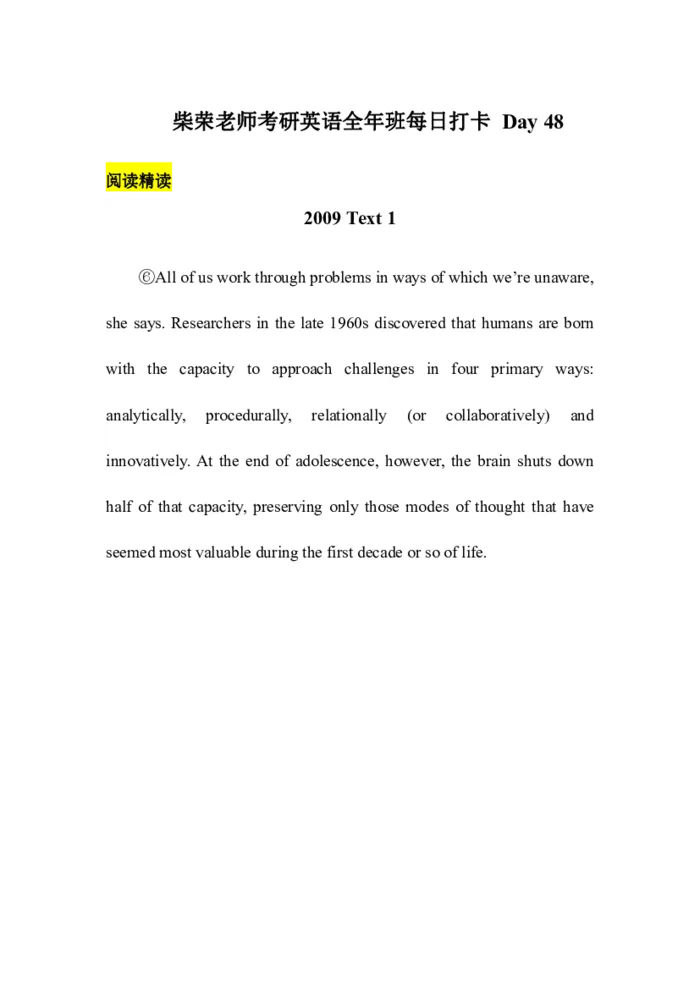
⑥All of us work through problems in ways of which we’re unaware,
she says. Researchers in the late 1960s discovered that humans are born
with the capacity to approach challenges in four primary ways:
analytically,
procedurally,
relationally
(or
collaboratively)
and
innovatively. At the end of adolescence, however, the brain shuts down
half of that capacity, preserving only those modes of thought that have
seemed most valuable during the first decade or so of life.
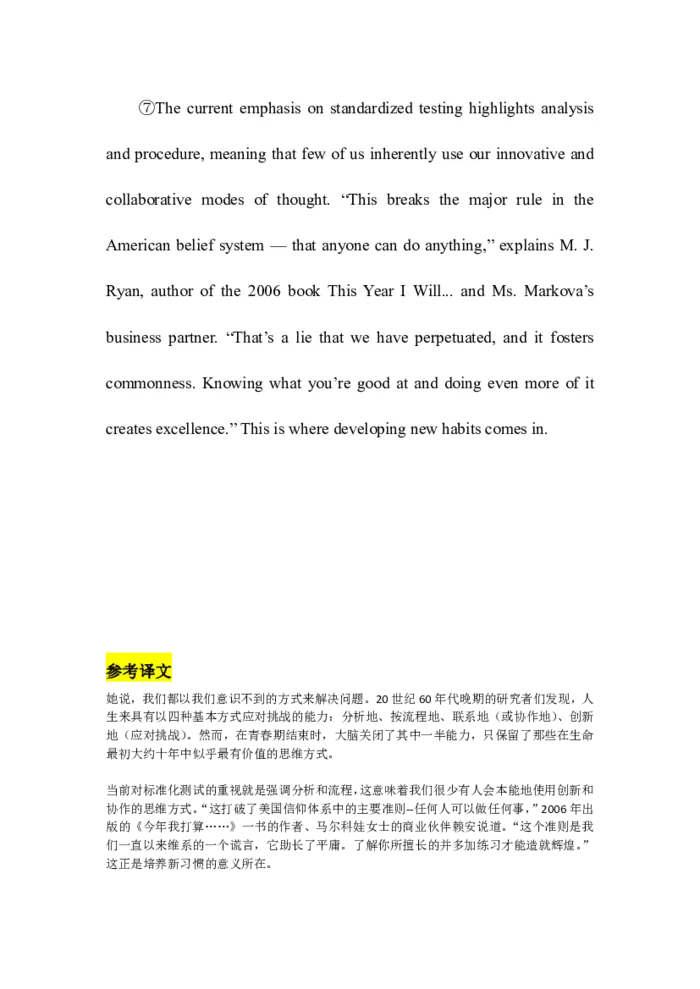
⑦The current emphasis on standardized testing highlights analysis
and procedure, meaning that few of us inherently use our innovative and
collaborative modes of thought. “This breaks the major rule in the
American belief system — that anyone can do anything,” explains M. J.
Ryan, author of the 2006 book This Year I Will... and Ms. Markova’s
business partner. “That’s a lie that we have perpetuated, and it fosters
commonness. Knowing what you’re good at and doing even more of it
creates excellence.” This is where developing new habits comes in.
参考译文
她说,我们都以我们意识不到的方式来解决问题。20 世纪60 年代晚期的研究者们发现,人
生来具有以四种基本方式应对挑战的能力:分析地、按流程地、联系地(或协作地)、创新
地(应对挑战)。然而,在青春期结束时,大脑关闭了其中一半能力,只保留了那些在生命
最初大约十年中似乎最有价值的思维方式。
当前对标准化测试的重视就是强调分析和流程,这意味着我们很少有人会本能地使用创新和
协作的思维方式。“这打破了美国信仰体系中的主要准则--任何人可以做任何事,”2006 年出
版的《今年我打算……》一书的作者、马尔科娃女士的商业伙伴赖安说道。“这个准则是我
们一直以来维系的一个谎言,它助长了平庸。了解你所擅长的并多加练习才能造就辉煌。”
这正是培养新习惯的意义所在。
reluctant
/ri'lʌktənt/
a.不愿的,勉强的
policy
/'pɔlisi/
n.政策,方针
funny
/'fʌni/
a.滑稽的,可笑的
confidence
/'kɔnfidəns/
n.(in)信任;信心,自信;秘密,机密
February
/'februəri/
n.二月
property
/'prɔpəti/
n.财产,资产,地产,房地产,所有物;性质,特性
second
/'sekənd/
a.第二;次等的,二等的 n.秒 v.赞成,附和
glad
/glæd/
a.高兴的,快活的;乐意的,情愿的
frustrate
/frʌs'treit/
vt.挫败,阻挠,使灰心
trivial
/'triviəl/
a.琐碎的;无足轻重的
contrary
/'kɔntrəri/
a.(to)相反的,矛盾的 n.反对,矛盾;相反
bell
/bel/
n.钟,铃
brick
/brik/
n.砖块,砖;v.用砖围砌,用砖填补
serious
/'siəriəs/
a.严肃的;主要的;严重的,危急的;认真的
alien
/'eiljən/
n.外侨,外国人;外星人 a.外国的;相异的
classmate
/'klɑ:smeit/
(名)同班同学
simple
/'simpl/
a.简单的;单纯的,直率的;迟钝的,头脑简单的
enhance
/in'hɑ:ns/
v.提高,增强
geography
/dʒi'ɔgrəfi/
n.地理(学)
civilization
/ˌsivilai'zeiʃən/
n.(=civilisation)文明,文化
destroy
/di'strɔi/
v.破坏,摧毁,消灭
backward
/'bækwəd/
a.向后的,倒行的;迟钝的 ad.向后,朝反方向
cash
/kæʃ/
n.现金,现款 v.兑现,付(或收)现款
span
/spæn/
n.跨度,跨距
optional
/'ɒpʃənl/
a.可以任选的,随意的,非强制的
toilet
/'tɔilit/
n.厕所,盥洗室
surrender
/sə'rendə/
vi.投降,屈服 vt.放弃,交出 n.投降,认输
element
/'elimənt/
n.元素;要素;成分;元件;自然环境
salvation
/sæl'veiʃən/
n.拯救,救助;救济(者,品),救助工具;救世主
heart
/hɑ:t/
n.心(脏);内心,感情;热忱;中心,要点
oar
/ɔ:ˌ əu/
n.桨,橹 v.划,划动,划行
critical
/'kritikəl/
a.批评的,评论的;危急,紧要的;临界的
statue
/'stætju:/
n.塑像,雕像
concern
/kən'sɜ:n/
v.涉及,关系到 v./n.关心 n.(利害)关系
badly
/'bædli/
ad.非常,严重地;坏地,差地,拙劣地
brand
/brænd/
n.商标,标记,牌子 v.使铭记;打火印,打烙印
forecast
/'fɔ:kɑ:st/
v./n.预测,预报
tube
/tju:b/
n.管,软管;电子管,显像管;地铁
retire
/ri'taiə/
v.退休,引退;退却,撤退;就寝
project
/prə'dʒekt/
n.方案,工程,项目v.投射,放映;设计,规划
either
/'aiðə/
ad.也(不) pron.两者之一 a.(两者中)任一的
mute
/mju:t/
a.哑的,缄默的n.哑巴;弱音器v.减弱…的声音
race
/reɪs/
n.赛跑;人种,种族;属,种 v.赛跑
consume
/kən'sju:m/
vt.消耗;吃完,喝光;(with)使着迷;烧毁
join
/dʒɔin/
v.参加,加入;联合,连接;和…在一起
valve
/vælv/
n.阀;(英)电子管,真空管;(心脏的)瓣膜
streamline
/'stri:mlaɪn/
a.流线型的 vt.使成流线型;使合理化
第48页,共117页