 夜雨聆风
夜雨聆风


AI重塑技术内容生产:从“写文档”到“构建智能内容生态系统”
随着大语言模型和生成式 AI 的迅速发展,技术内容生产正经历一次深刻的范式转变。过去,技术传播工作的核心任务是撰写和维护文档——用户手册、产品指南、知识库文章等,这些内容主要以 PDF 或网页的形式交付给用户,依赖人类主动查阅与阅读。然而,在 AI 逐渐成为信息获取入口的今天,内容的形态与价值正在被重新定义。
越来越多的企业开始意识到:技术文档不再只是“可阅读的内容”,而需要成为可被机器理解、调用和组合的结构化知识资产。从内容生产到知识管理,再到智能化交付,AI 正在推动技术内容体系向更加自动化、结构化和智能化的方向演进。通过大语言模型、知识图谱、内容结构化以及多智能体协作等技术,企业能够让知识在系统之间高效流动,并在不同场景中被动态调用,从而显著提升内容生产效率与用户获取信息的体验。
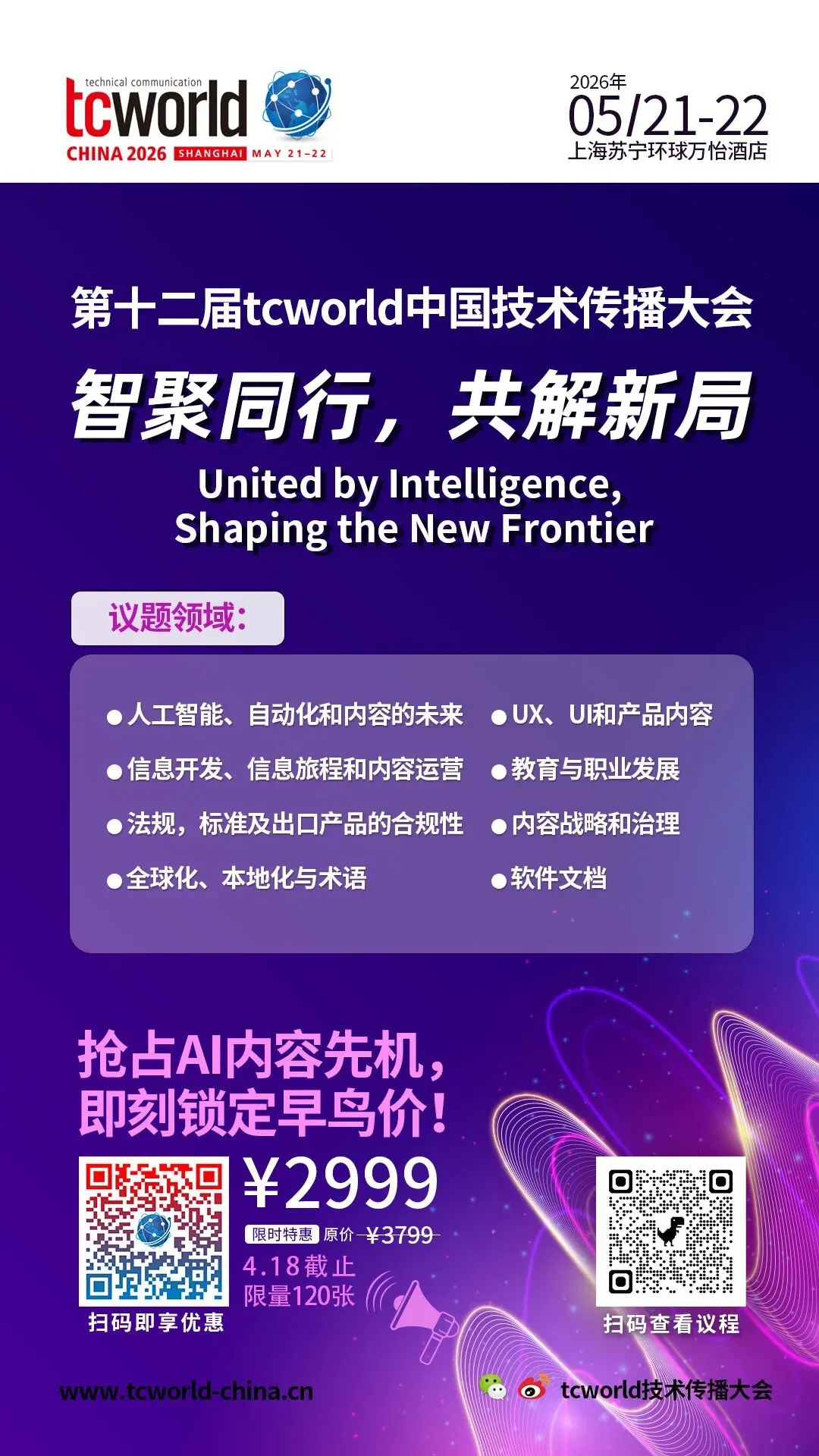
在 tcworld China 2026 的议程中,多位来自行业一线的实践者将分享他们在这一转型中的探索。例如,阿里云将探讨“模型上下文工程”这一新兴角色,思考如何通过构建可信知识上下文来降低大模型幻觉;中兴通讯将展示 AI 如何贯穿技术文档的全链路生产与交付;平安科技将分享多智能体在技术文档管理与维护中的应用实践,描绘未来文档系统自动化协作的蓝图;inDrive则聚焦如何将智能体深度嵌入工程开发流程,实现工程与文档工作的智能协同。
这些实践共同指向一个重要趋势:技术传播的目标正在从“写好文档”,升级为“构建一个能够持续演进的智能内容生态系统”。在这样的体系中,人类与 AI 协同工作,内容不仅能够被高效生产与管理,更能够在不同业务场景中被智能调用与服务用户。
接下来,我们将介绍几场具有代表性的实践案例,看看行业领先企业如何利用 AI 重塑技术内容生产模式,并探索技术传播未来的发展方向。

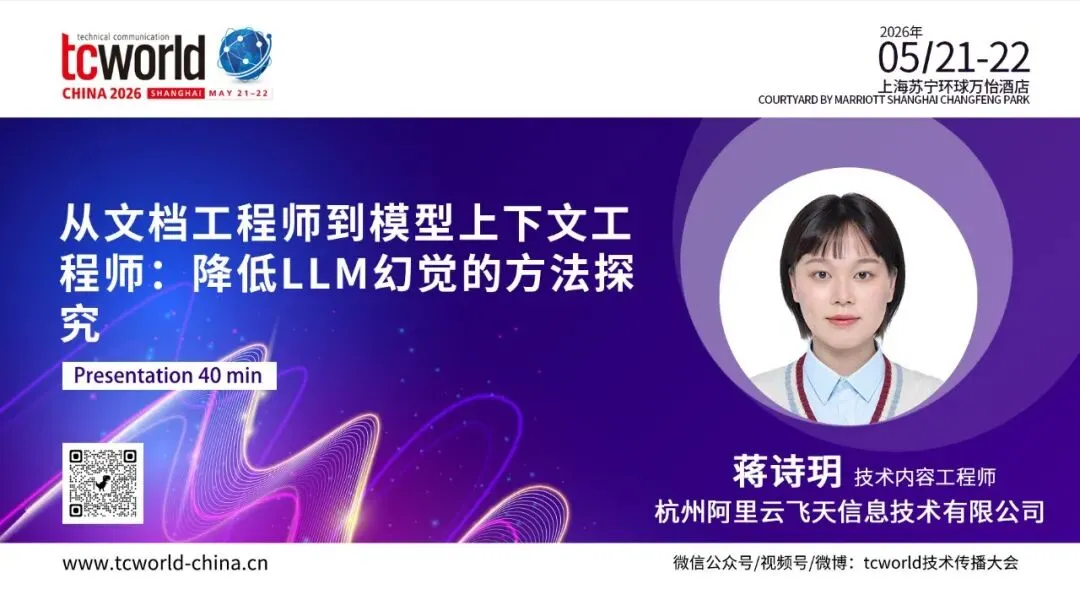
从文档工程师到模型上下文工程师:降低LLM幻觉的方法探究
议题介绍:
在AI重塑技术写作方式的今天,大语言模型(LLM)的“事实性幻觉”问题——如内容虚构、张冠李戴、过度润色——已成为阻碍其在高准确性场景下规模化应用的核心瓶颈。
本议题提出技术文档工程师正向“模型上下文工程师”演进的新角色范式:不再仅撰写文本,而是系统性地构建、优化和管理模型生成所依赖的可信上下文。
本议题不仅系统剖析技术文档生成中幻觉的深层成因,更聚焦于这一新角色的能力模型与方法论。提出“知识-生成-验证”三层抗幻觉架构,阐述系统性地构建、优化和管理模型的输入上下文,辅以验证反馈机制,实现抗幻觉闭环的方法论。
亮点:
1、重新定义角色:从文档工程师到模型上下文工程师。深入分析为何传统的技术文档工程师技能在AI时代需要升级,引入“模型上下文工程师”的核心能力模型。
2、面向技术文档的幻觉成因进行深度剖析与分类。
-
提出适用于技术写作场景的幻觉分类体系,并结合具体案例从技术上剖析幻觉成因。
-
揭示LLM在技术文档生成中的特殊风险点,为针对性抑制技术文档场景下的幻觉问题提供理论依据。
3、可复用的上下文工程框架:“文档类型驱动”的抗幻觉生成范式。
-
构建闭环式幻觉验证与反馈体系,设计“知识层-生成层-验证层”三层协作机制,涵盖涵盖轻量级验证到知识图谱构建的多种方法探究。
-
针对不同类型技术文档的语义特征与风险模式,设计差异化约束机制。

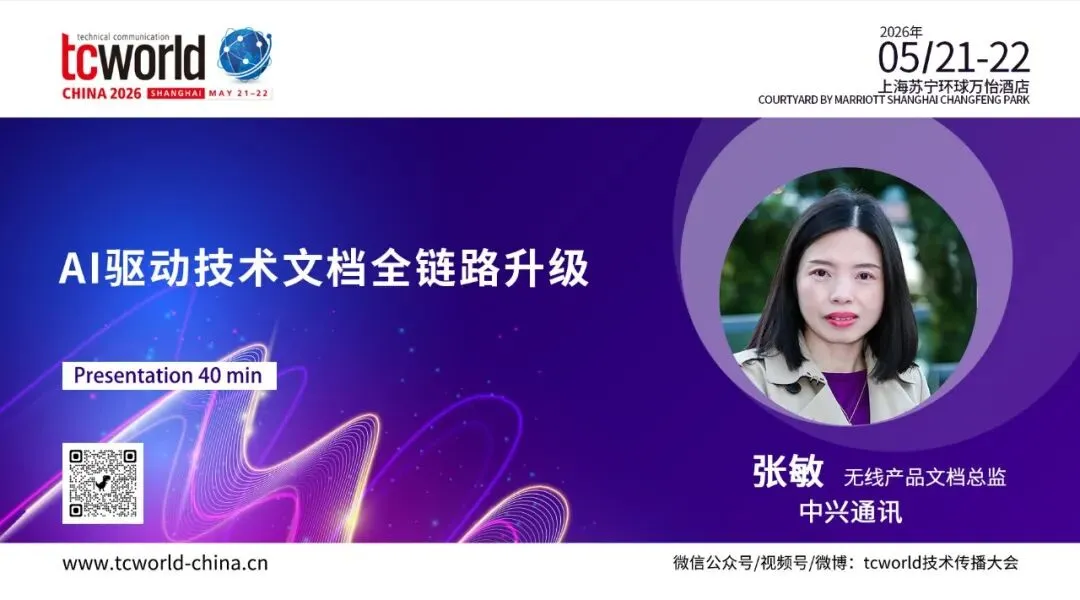
AI驱动技术文档全链路升级
议题介绍:
本次分享聚焦技术文档的全生命周期管理,覆盖概念分析、内容规划、编写开发、多轮评审、测试验证到正式发布的完整流程。结合内容域建设的实际场景,系统介绍AI在各环节的应用探索与落地思考,同时明确人机协作的分层模式:AI承担重复性、规则性强的任务,释放人力专注于价值判断、技术准确性把关和用户体验提升。通过实践案例,展现如何借助AI提升文档生产效率与质量,推动技术传播向智能化、标准化、高效化演进。
亮点:
-
全流程管理确保内容低时延,文档与产品的生命周期完全同步
-
人机协作的过程探索,如何定位AI的作用,如何让人机高效高质的产生内容。

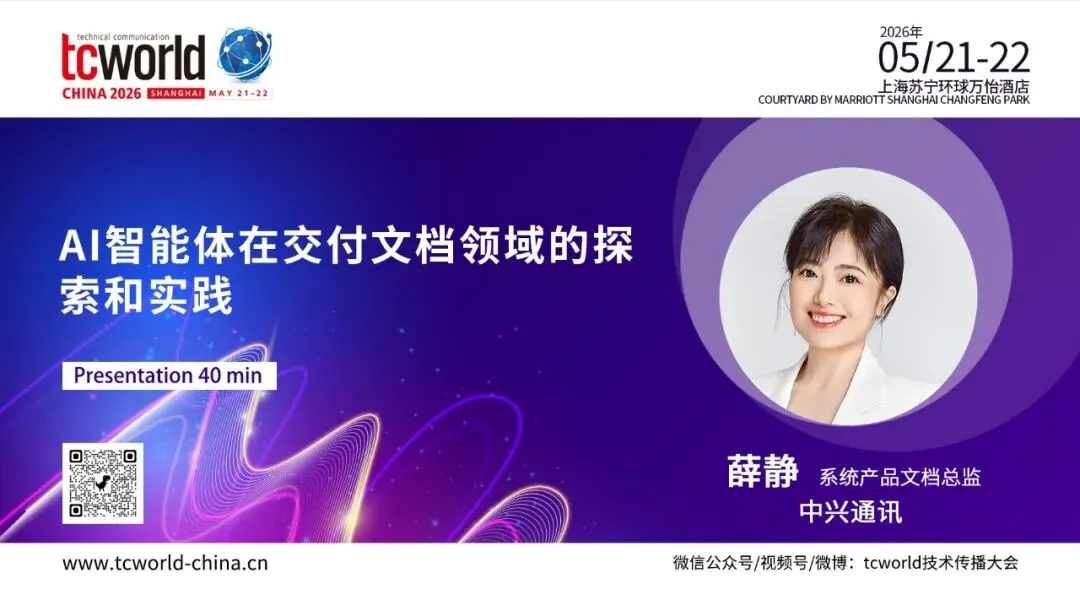
AI智能体在交付文档领域的探索和实践
议题介绍:
本次分享将介绍中兴通讯在交付文档领域引入AI智能体的探索与实践。将阐述如何基于大语言模型构建智能体系统,实现技术文档从静态知识向动态服务的转变。重点分享智能问答、场景化内容推送及自动化知识维护等应用场景,展现“知识即服务”理念如何显著提升文档获取效率与运维支持体验,为行业智能化交付提供实践参考。
亮点:
-
本实践是基于现场真实痛点出发的分析和改进;
-
对于文档智能体在文档生产过程和文档消费及运维支持有实践产出;
-
本实践的底层思考对于文档领域构建数据-信息-知识有普遍适用意义。

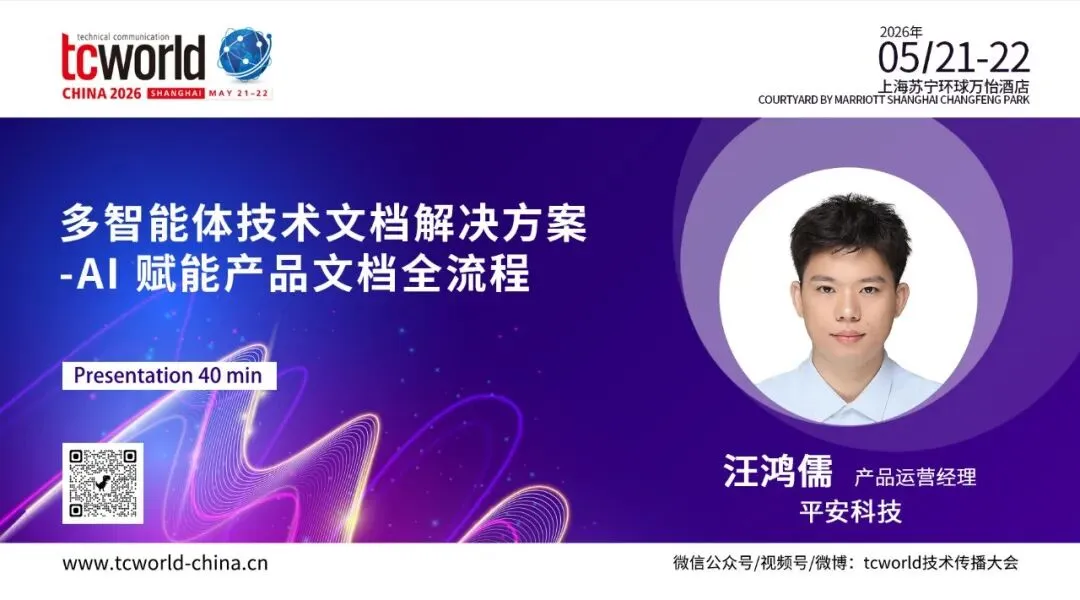
多智能体技术文档解决方案-AI 赋能产品文档全流程
议题介绍:
在LLM等AI技术飞速发展的当下,技术产品迭代迅速,然而配套产品文档的编写、维护与使用模式却进展相对缓慢。传统方法虽能有限提升效率,但在面对复杂产品时,文档从业者仍需深入理解产品技术细节与庞大的文档架构,才能准确查找和修改内容,导致文档维护效率面临显著瓶颈。
为解决这一问题,我们借助LLM强大的文本生成能力、嵌入模型的语义检索技术,以及具备主动思考与执行能力的智能体(Agent),研发了一套面向技术文档的AI多智能体解决方案。该方案针对文档同步、审核校对、运营维护等环节中的痛点,推动其向自动化与智能化转型,从而使文档从被动固化的资产,转变为能够自动审校、持续演进的“主动”资源。
亮点:
-
Agent与工作流:如何重塑文档工作的生产力
-
突破文档维护瓶颈:从人工查找到智能定位
-
技术文档工程师的新身份:走向“AI 知识工程师”?
-
文档的转向:从面向用户(People-Oriented)到面向大模型(LLM-Oriented)?

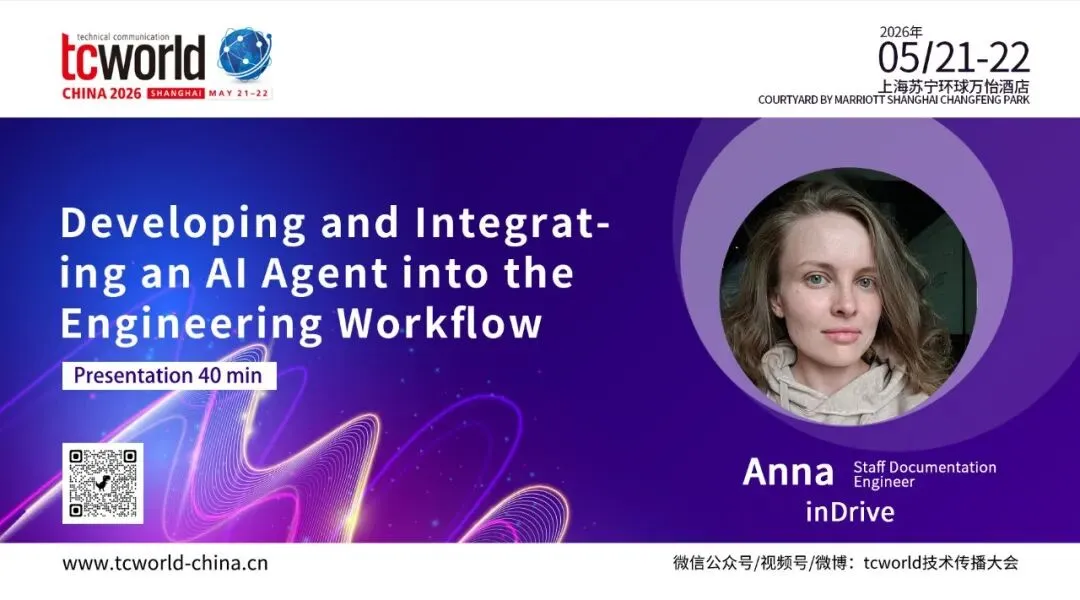
Developing and Integrating an AI Agent into the Engineering Workflow
议题介绍:
Engineering teams struggle to balance documentation quality with development velocity. Manual documentation processes create bottlenecks, while outdated content leads to knowledge gaps and increased support burden. This presentation explores a practical approach: developing an AI agent that integrates directly into existing engineering workflows.
The speaker shares firsthand experience building and deploying an AI agent that operates within the software development lifecycle. The presentation covers the complete development journey from concept to production-ready system, demonstrating how an AI agent connects with version control, responds to code changes, and produces consistent output without disrupting established team processes.
Attendees learn the technical foundations of agent development including API integration with large language models, event-driven architecture design, and CI/CD pipeline automation using GitHub Actions. The talk addresses critical implementation challenges such as authentication handling, error recovery, output quality control, and managing edge cases.
The presentation emphasizes practical integration patterns that allow a documentation AI agent to complement rather than complicate engineering workflows. The speaker discusses how to identify appropriate automation opportunities, set realistic expectations, and measure agent effectiveness.
Participants gain actionable knowledge for evaluating, building, and deploying AI agents within their own engineering organizations.
亮点:
This presentation addresses a widespread pain point: the friction between maintaining quality technical processes and keeping pace with rapid development cycles. Engineering teams often sacrifice documentation and routine tasks under delivery pressure, creating technical debt that compounds over time.
The topic offers genuine practical value. Rather than discussing AI possibilities in abstract terms, the speaker presents a working agent currently deployed in production. The talk shares specific architectural decisions, integration patterns, and lessons learned through iterative development and real-world failures.
The presentation conveys innovative approaches to AI adoption in engineering contexts. The agent-based model represents a shift from passive AI tools that require human initiation toward autonomous systems that respond to workflow events independently.
Audience members can expect concrete takeaways: criteria for identifying tasks suitable for agent automation, technical requirements for building reliable integrations, strategies for handling authentication and security concerns, and methods for validating agent output quality.
This topic stands apart from typical AI presentations by grounding discussion in implementation reality. The speaker addresses what succeeds, what fails, and which approaches prove more effective under production conditions.
Engineering leaders and technical communicators gain perspective on positioning themselves as architects of AI-enhanced workflows. The presentation provides a roadmap for moving from experimentation to reliable production systems.

点击阅读原文,了解tcworld China 2026大会的更多议程详情!
tcworld China 2026大会早鸟已开启,抢占AI内容先机,即刻锁定早鸟价!