 夜雨聆风
夜雨聆风


One PDF to Master HSK 1–6 Grammar: 559 Grammar Points from Zero to Hero
Are you looking for one complete grammar guide to help you review and master HSK 1–6 Chinese grammar?
Now you do not need to buy or organize separate files level by level anymore. We have combined all HSK 1–6 grammar points into one PDF, making your grammar study much easier, clearer, and more systematic.
This full grammar PDF is especially helpful for learners who want to build a strong foundation, review grammar step by step, and prepare for long-term HSK study with one complete resource.
What’s included in this PDF?
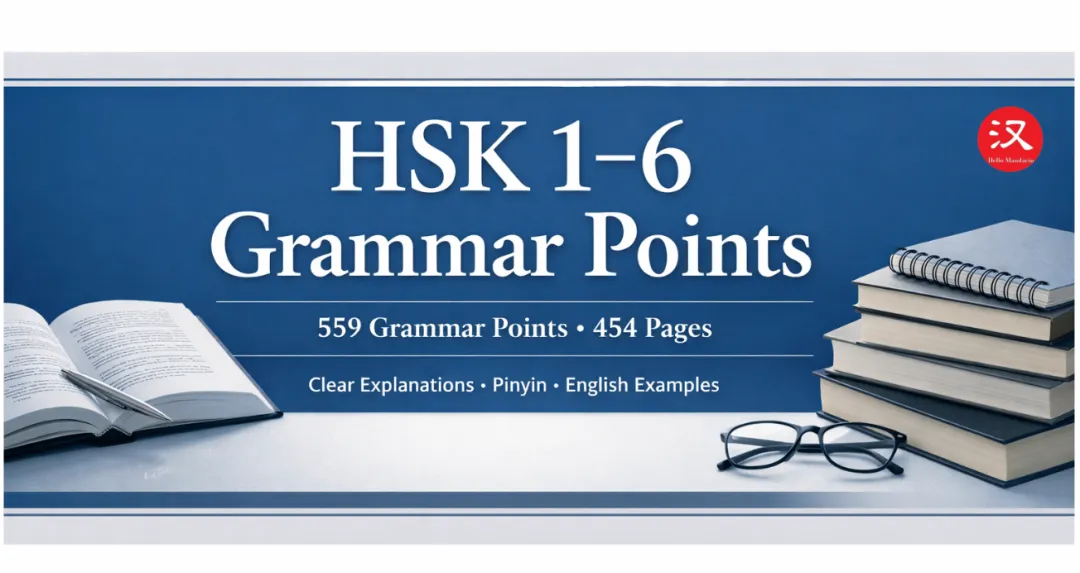
HSK 1: 53 grammar pointsHSK 2: 74 grammar pointsHSK 3: 86 grammar pointsHSK 4: 103 grammar pointsHSK 5: 138 grammar pointsHSK 6: 105 grammar points
Total: 559 grammar pointsTotal length: 454 pages
This is a practical all-in-one grammar PDF for learners from beginner to advanced HSK levels.
Why learners like this PDF 📘
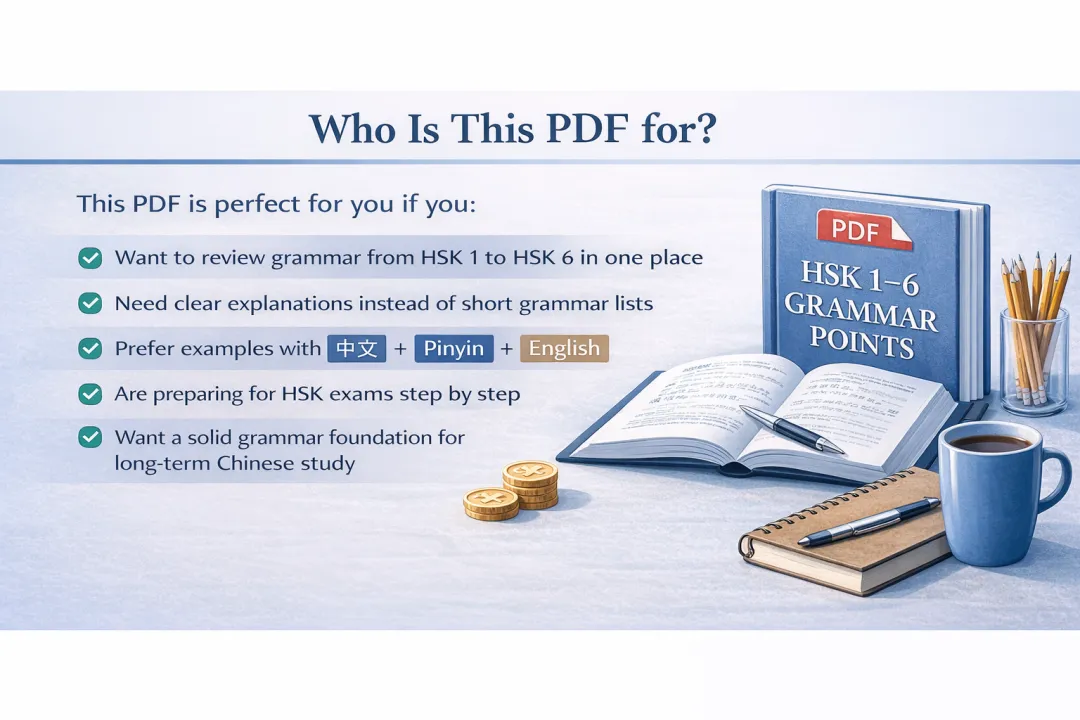
✔ Clear explanations✔ Simple examples with Pinyin and English✔ Step-by-step grammar notes✔ Perfect for HSK 1–6 learners✔ A complete grammar review in one PDF
Whether you are just starting Chinese or already preparing for higher HSK levels, this PDF can help you review grammar more efficiently and build a stronger understanding of sentence patterns and usage.
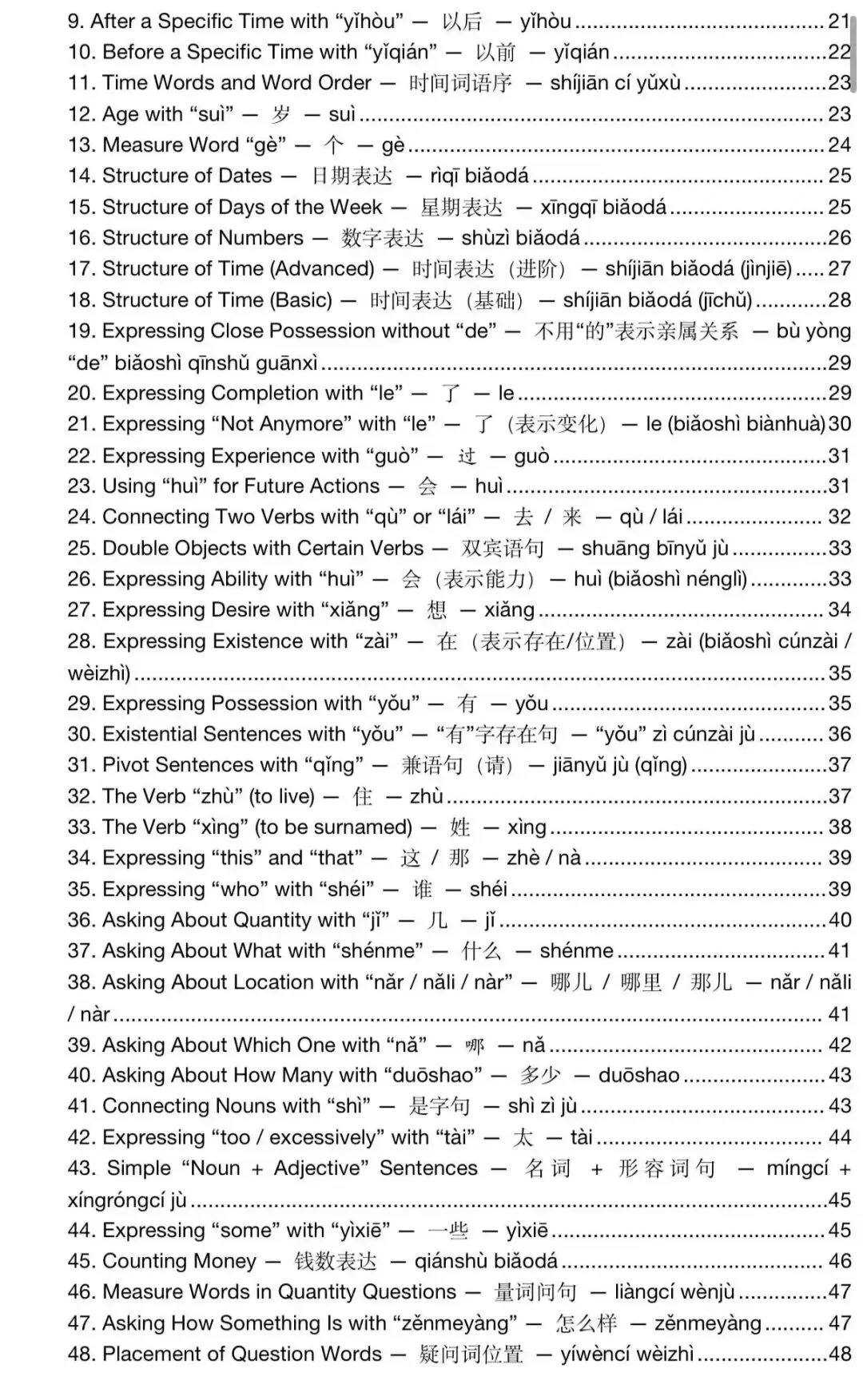
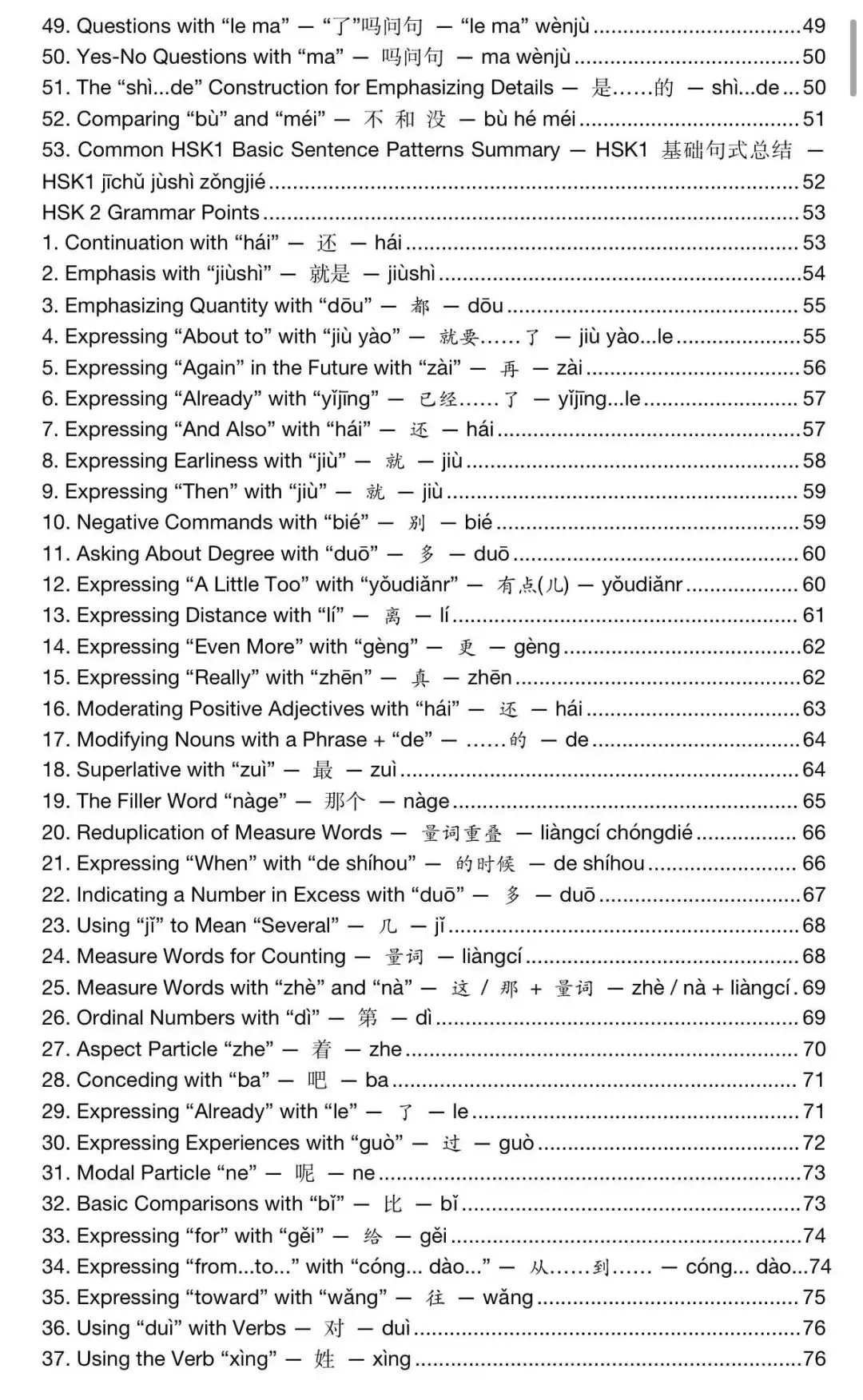
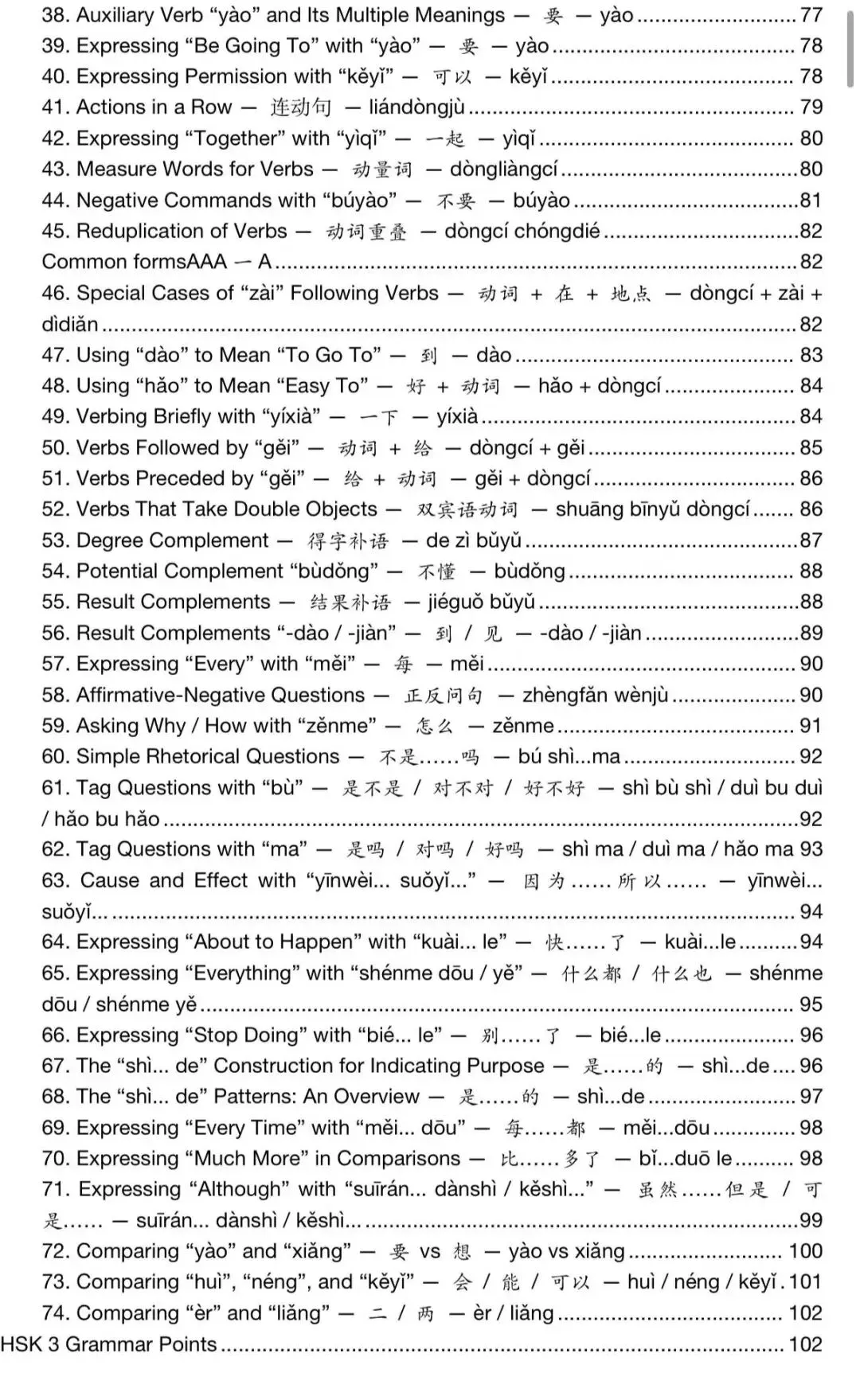
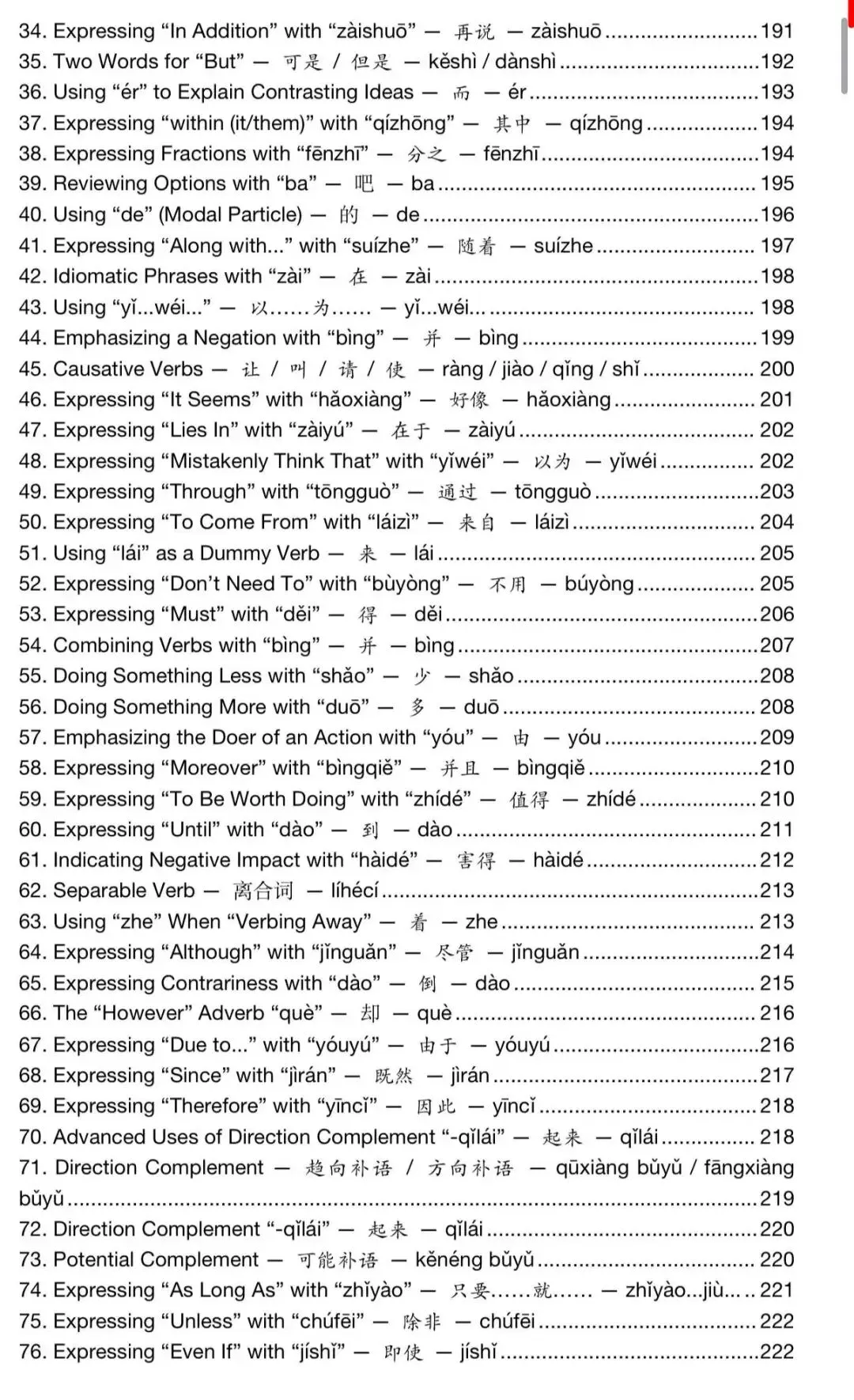
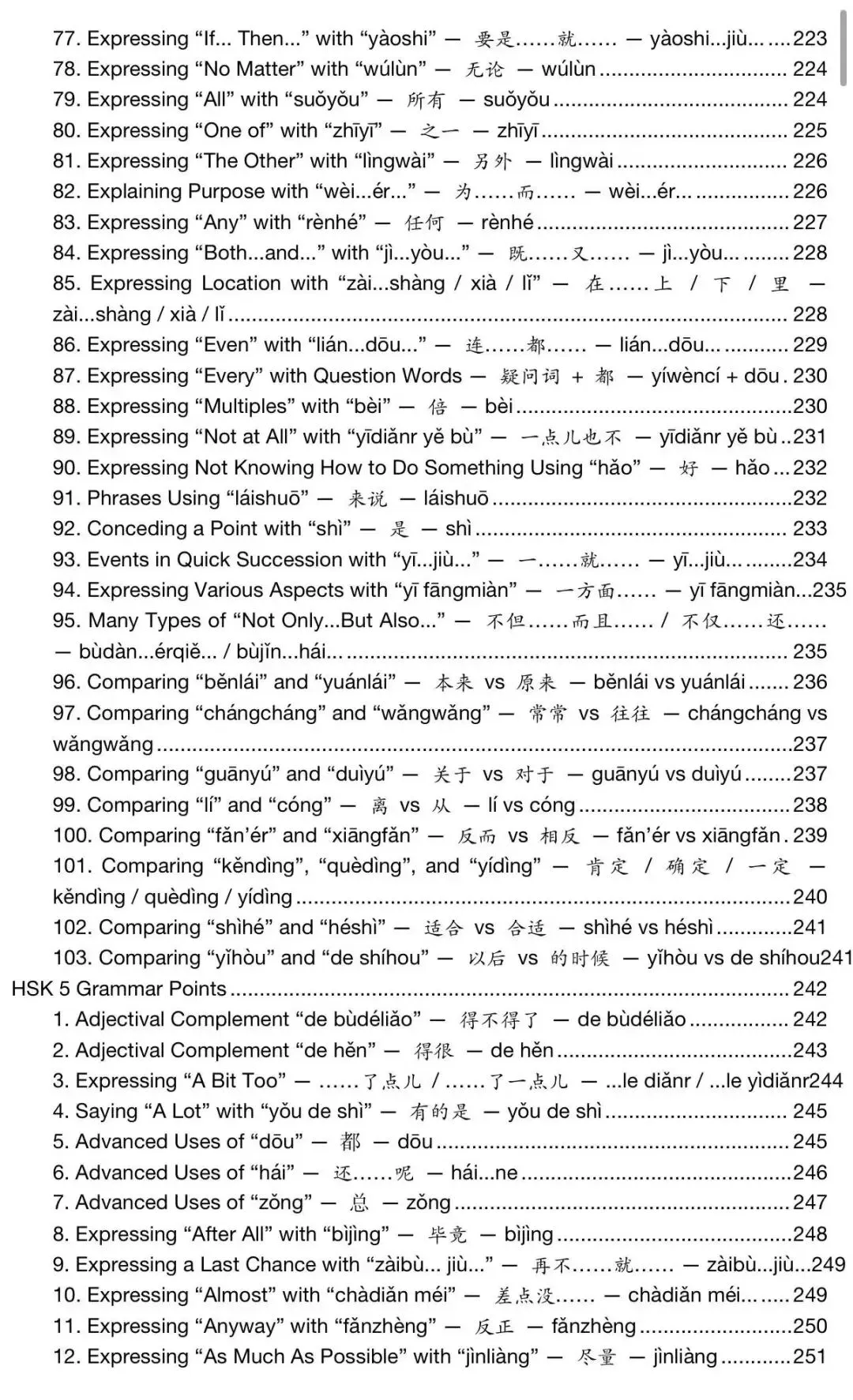
6 Sample Grammar Points from HSK 1 to HSK 6
As learners move from HSK 1 to HSK 6, Chinese grammar becomes gradually richer, more flexible, and more precise. At the beginner level, students mainly learn how to describe daily actions and simple facts. At higher levels, they begin to express comparison, development, value judgment, suggestion, and even cautious analysis. Here are six sample grammar points from different levels of the PDF, with one example from each stage.
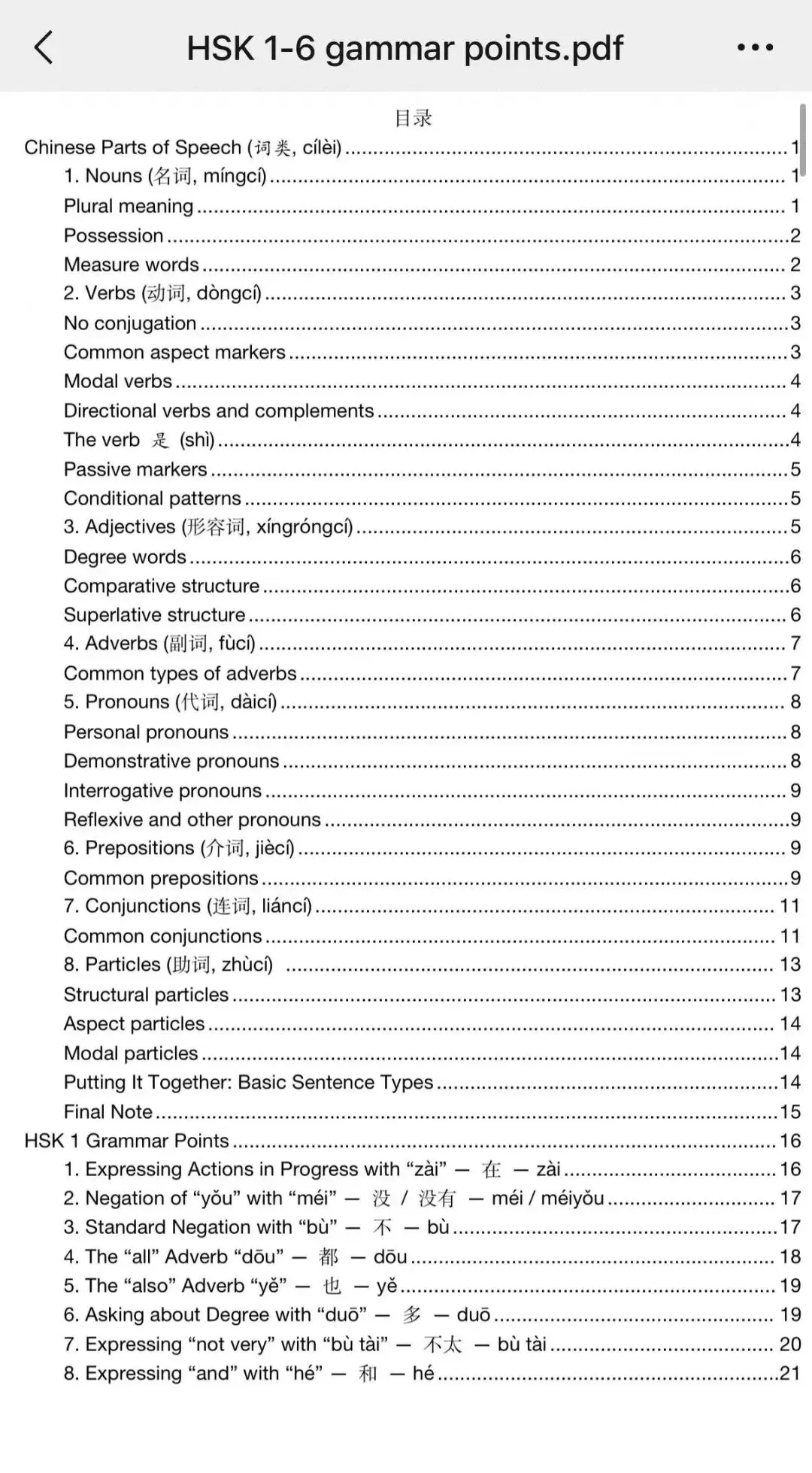
HSK 1 — 在 (zài): expressing actions in progress
At HSK 1, one of the most practical grammar points is 在 (zài). It is used before a verb to show that an action is happening right now, much like “be doing” in English. The basic pattern is Subject + 在 + Verb + Object. This structure is extremely common in everyday Chinese because it helps learners talk about what they or other people are doing at the moment. The PDF also clearly notes that 在 should not be used simply for habits or repeated actions; it is mainly for actions in progress.
Example: 我在看书。Wǒ zài kàn shū.“I am reading a book.”
This sentence is simple, but it teaches an essential idea in Chinese grammar: Chinese often does not change the verb form itself. Instead, meaning is shown through grammar markers like 在. That is why this pattern is such an important first step for beginners.
HSK 2 — 比 (bǐ): making basic comparisons
At HSK 2, learners begin to compare people, objects, and situations. The grammar point 比 (bǐ) is used for basic comparisons, and the standard pattern is A + 比 + B + Adjective. It is one of the most useful ways to express differences in Chinese. With this structure, students can talk about height, weather, difficulty, speed, price, and many other everyday topics. The PDF also reminds learners that in simple 比 sentences, they normally should not put 很 before the adjective.
Example: 我比你高。Wǒ bǐ nǐ gāo.“I am taller than you.”
This grammar point is important because it helps learners move beyond isolated descriptions. Instead of only saying “I am tall,” students can now say “I am taller than you,” which makes their Chinese more natural, specific, and communicative.
HSK 3 — 越来越……了 (yuèláiyuè…le): showing gradual change
At HSK 3, students start describing changes more naturally, and 越来越……了 is one of the most common patterns for this purpose. It means “more and more…” or “becoming increasingly…”. The basic pattern in the PDF is Subject + 越来越 + Adjective / Verb + 了. This structure is especially useful when talking about improvement, development, habits, feelings, or changing situations.
Example: 他的汉语越来越好了。Tā de Hànyǔ yuèláiyuè hǎo le.“His Chinese is getting better and better.”
What makes this pattern important is that it allows learners to describe a process, not just a fixed state. It is very common in real life, for example when talking about language progress, weather, cities, technology, or relationships. It is also one of the clearest examples of how HSK 3 grammar begins to connect language with change over time.
HSK 4 — 值得 (zhídé): expressing that something is worth doing
At HSK 4, learners begin to express more mature opinions and evaluations. The grammar point 值得 (zhídé) means “to be worth doing.” It is used when something has enough value, importance, or meaning for someone to spend time, energy, or attention on it. According to the PDF, the usual structure is 值得 + Verb, and after 值得, Chinese normally uses a verb phrase rather than a noun by itself.
Example: 这本书很值得看。Zhè běn shū hěn zhídé kàn.“This book is worth reading.”
This pattern is especially useful for giving recommendations and expressing thoughtful judgment. Learners can use it to talk about books, cities, ideas, movies, questions, or life experiences. Compared with earlier HSK levels, 值得 adds a more reflective tone and helps students sound more advanced and expressive.
HSK 5 — 不如 (bùrú): comparison and suggestion
At HSK 5, grammar becomes more flexible and nuanced. The PDF explains that 不如 (bùrú) has two common uses. First, it can compare two things and show that one is not as good as the other. Second, it can be used to make a suggestion, with a meaning close to “it would be better to…” or “might as well…”. The patterns given are A + 不如 + B or 不如 + Verb Phrase.
Example: 与其一直等别人决定,不如自己先把计划做好。Yǔqí yìzhí děng biérén juédìng, bùrú zìjǐ xiān bǎ jìhuà zuò hǎo.“Rather than always waiting for others to decide, it would be better to first make the plan yourself.”
This is a very useful advanced pattern because it does more than compare. It also introduces advice, reasoning, and judgment. In other words, 不如 often helps the speaker guide the listener toward a better option. That is why it appears so often in natural discussion, writing, and argumentation.
HSK 6 — 似乎 (sìhū): careful and formal judgment
At HSK 6, learners encounter more formal and analytical Chinese. The grammar point 似乎 (sìhū) means “it seems,” “as if,” or “apparently.” The PDF explains that it is used to express uncertainty, impression, or tentative judgment. It also notes that compared with 好像 (hǎoxiàng), 似乎 is usually more formal, more written, and less colloquial. It is especially common in analysis, description, and cautious reasoning.
Example: 他虽然什么也没说,但态度似乎已经说明了一切。Tā suīrán shénme yě méi shuō, dàn tàidu sìhū yǐjīng shuōmíng le yíqiè.“Although he said nothing, his attitude seemed to have explained everything.”
This grammar point shows a clear shift from everyday survival Chinese to advanced interpretive Chinese. At this level, learners are not only describing actions or giving opinions, but also making subtle judgments based on observation. That is one reason why 似乎 feels more sophisticated and is often seen in written Chinese.
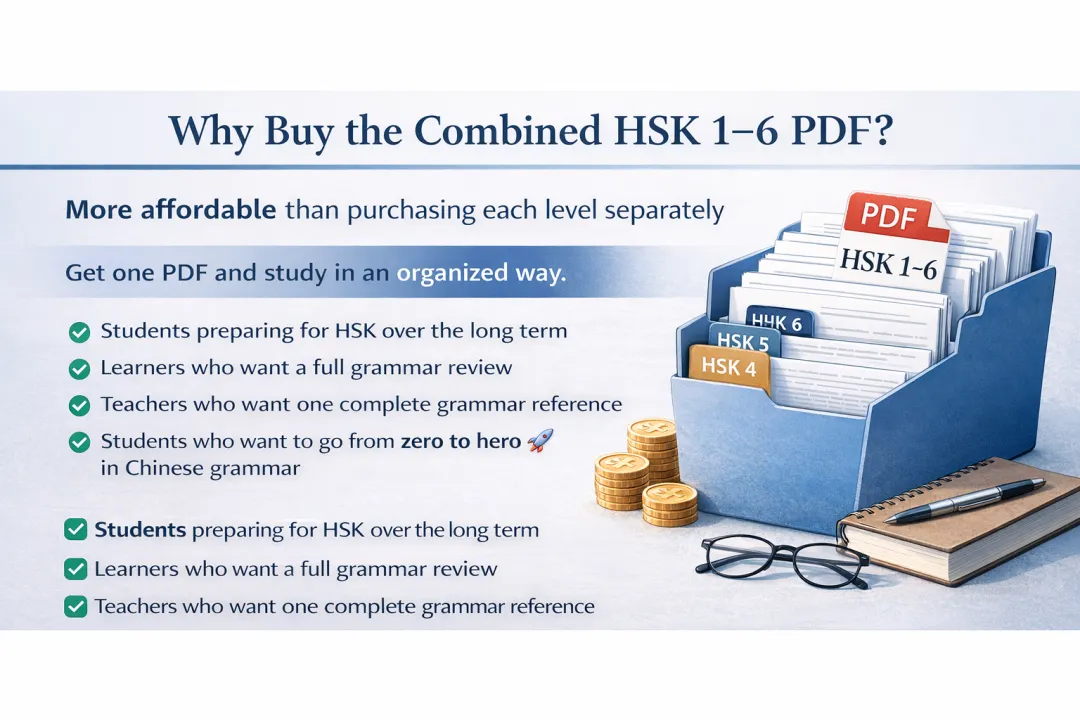
Why buy the combined HSK 1–6 PDF?
Buying the complete version is now more affordable than purchasing each level separately.
Instead of managing many different files, you can get one PDF and study everything in a more organized way. It is a great choice for:
Students preparing for HSK over the long termLearners who want a full grammar reviewTeachers who want one complete grammar referenceStudents who want to go from zero to hero in Chinese grammar 🚀
Limited-time price 🔥
The original price is 129 yuan.Now the full HSK 1–6 Grammar Points PDF is available for only 99 yuan.
This is a limited-time offer and will end on April 15.After that, the price will return to 129 yuan.
Need a Printed Copy?
We also provide a printed version of this PDF for learners who prefer studying on paper.Price: 145 yuanShipping fee includedBlack-and-white edition
It is convenient for review, highlighting, and long-term study.Please contact us if you would like to order a copy.
We have adjusted the pricing to make this complete grammar resource more accessible for students who want to prepare seriously, review efficiently, and strengthen their grammar foundation from HSK 1 to HSK 6.

How to get it
If you would like to get this PDF, please contact us on WeChat:
WeChat: JasonMandarin
If you are interested, feel free to message us anytime. ✨

New HSK 3.0 Textbooks (Levels 1–3) Are Now Available!