ARTICLE · 1246116
人教版八年级初中英语第一单元知识点总结
初中英语教研· 同步讲义
Unit 1 Happy Holiday
知识点总结
学生版· 含重点单词讲解
人教版(新目标·2024)· 八年级上册
单元范围:Unit 1(全单元)| 主题:欢乐假期
| 适用:新授配套 / 单元复习 / 假期作业
初中英语教研员· 英教通
目录
目 录
一、单元总览
二、单元话题与功能意念
三、核心词汇速记
四、重点单词讲解(学生版·13 个核心词)
五、语法聚焦:一般过去时与复合不定代词
六、重点句型与交际对话
七、语音小课堂
八、话题写作指导(假期记叙文)
九、易错点预警与中考衔接
十、学生自测清单
十一、版权声明
人教版(新目标·2024)八年级上册 Unit 1 Happy Holiday 知识点总结(学生版)
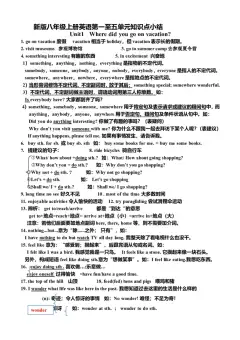
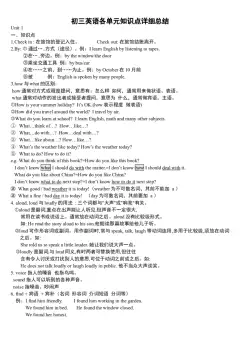
本单元是八年级上册的开篇单元,以"欢乐假期"为题,围绕大问题 What makes a great holiday? 展开,引导学生运用一般过去时和复合不定代词回顾、描述并反思自己的假期生活。本讲义为学生版:语言更亲切,并在词汇速记之外增设重点单词讲解板块,每个核心词配例句、考点提示与记忆妙招,方便自主复习。
一、单元总览
维度 | 要点 |
单元名称 | Unit 1 Happy Holiday(欢乐假期) |
单元大问题 | What makes a great holiday?(什么造就了一个美好的假期?) |
Section A 主线 | How do people spend their holidays?(人们如何度过假期?)——听说为主,交流分享假期经历 |
Section B 主线 | What can we learn from holiday experiences?(我们能从假期经历中学到什么?)——阅读假期日记与故事,感知假期中的新收获 |
语法聚焦 | ①一般过去时;②复合不定代词(形容词后置) |
核心词汇量 | 黑体核心词约30 个 + 重点短语约 30 条 |
话题写作 | 假期经历类记叙文(日记/ 邮件 / 发言稿) |
项目活动 | 小组讨论并评选"最有意义的假期活动" |
二、单元话题与功能意念
本单元话题围绕"假期经历"展开,既谈去哪儿、做什么,也谈感受与收获。以下五个维度帮你建立单元学习的整体图景。
1.主题范畴:属于"人与自我"主题范畴中"丰富、充实、积极向上的生活",同时涉及"人与社会"范畴中的"跨文化沟通与交流";内容融入黄山、丽江、杭州等我国自然文化遗产,开阔视野、增强文化自信。
2.询问与分享:Where did you go? What did you do? How was it?——三问打开假期话题。
3.描述维度:从地点、活动、景点、同伴、时长、感受等角度把假期讲具体。
4.感受与评价:fantastic, unforgettable, exciting, tiring but worthwhile。
5.评述意义:People spend their holidays in different ways.(人们以不同的方式度过假期。)
三、核心词汇速记
词汇按话题语篇与常见考法分级整理:★★★ 黑体核心词(四会)、★★ 认读词汇(二会)、★ 拓展词汇(认读即可)。短语按"出行—活动—感受"逻辑归类。使用前请对照教材黑体词表校准。 |
(一)黑体核心词(★★★)
词汇 | 词性 | 释义 |
holiday | n. | 假期;假日 |
experience | n./v. | 经历;经验 |
travel | v./n. | 旅行;旅游 |
visit | v. | 参观;拜访 |
explore | v. | 探索;勘查 |
discover | v. | 发现 |
relax | v. | 放松;休息 |
ancient | adj. | 古代的;古老的 |
local | adj. | 当地的;本地的 |
fantastic | adj. | 极好的;美妙的 |
excellent | adj. | 优秀的;极好的 |
wonderful | adj. | 精彩的;美妙的 |
unforgettable | adj. | 难忘的 |
exciting | adj. | 令人兴奋的;使人激动的 |
delicious | adj. | 美味的;可口的 |
scenery | n. | 风景;景色(不可数) |
palace | n. | 宫殿 |
tower | n. | 塔;塔楼 |
breath | n. | 呼吸;气息 |
diary | n. | 日记;日记簿 |
gift | n. | 礼物;天赋 |
journey | n. | 旅程(常指较长行程) |
destination | n. | 目的地 |
souvenir | n. | 纪念品 |
schedule | n. | 日程安排;时间表 |
anyone | pron. | 任何人 |
anywhere | adv. | 任何地方 |
something | pron. | 某物;某事 |
anything | pron. | 任何事物 |
nothing | pron. | 没有什么;没有东西 |
everything | pron. | 一切;每件事 |
(二)认读词汇(★★)
词汇 | 词性 | 释义 |
enjoyable | adj. | 愉快的;有趣的 |
boring | adj. | 令人厌烦的;无聊的 |
tiring | adj. | 累人的;使人疲劳的 |
meaningful | adj. | 有意义的 |
relaxed | adj. | 放松的;舒畅的 |
themselves | pron. | 他们自己 |
myself | pron. | 我自己 |
countryside | n. | 乡下;农村 |
noise | n. | 响声;噪音 |
budget | n. | 预算 |
deer | n. | 鹿(单复数同形) |
strawberry | n. | 草莓 |
silk | n. | 丝绸 |
painting | n. | 画;油画 |
worthwhile | adj. | 值得做的 |
stunning | adj. | 令人惊叹的;极美的 |
proud | adj. | 自豪的;骄傲的 |
friendly | adj. | 友好的 |
(三)拓展词汇(★)
词汇 | 词性 | 释义 |
tent | n. | 帐篷 |
campfire | n. | 营火;篝火 |
flashlight | n. | 手电筒 |
airport | n. | 机场 |
flight | n. | 航班;飞行 |
steamed chicken soup | 短语 | 汽锅鸡(云南名菜,文化词条) |
(四)重点短语与固定搭配
短语 | 释义 |
go on vacation | 去度假 |
go sightseeing | 去观光 |
visit ancient buildings | 参观古建筑 |
take photos | 拍照 |
keep a diary | 记日记 |
have a fantastic time | 玩得开心 |
try local dishes | 品尝当地美食 |
feel like | 想要;感觉像 |
be ready to do sth. | 准备好做某事;愿意做某事 |
decide to do sth. | 决定做某事 |
get together | 聚会;相聚 |
turn around | 转身;翻转 |
look for | 寻找 |
learn from travel experiences | 从旅行经历中学习 |
go to a summer camp | 参加夏令营 |
as a gift | 作为礼物 |
rain heavily | 下大雨 |
arrive at/in... | 到达…… |
in different ways | 以不同的方式 |
take a train to... | 乘火车去…… |
on the last day | 在最后一天 |
feel excited to do sth. | 做某事感到兴奋 |
take sb.'s breath away | 令人惊叹;让人叹为观止 |
nothing but | 只有;仅仅 |
because of | 因为(后接名词、代词或动名词) |
rest your mind and body | 放松身心 |
go back to your regular life | 回归日常生活 |
see beautiful sights | 欣赏美丽的风景 |
make a noise | 发出响声 |
go over budget | 超出预算 |
in the sun | 在阳光下 |
in the countryside | 在乡下 |
take out | 拿出;取出 |
feel sick | 感到恶心;不舒服 |
四、重点单词讲解(学生版·13 个核心词)
以下13 个词是本单元的"硬骨头":多为中考高频词、一词多性词或易混词。每个词按教材例句→ 考点提示 → 记忆妙招三步突破,建议边读边在草稿本上默写一遍。
1. experience /ɪkˈspɪəriəns/ n. 经历;经验 v. 经历
教材例句:My best holiday experience was two years ago.(我最美好的假期经历是在两年前。)
考点提示:一词两性要注意:作"经历"讲可数(an unforgettable experience);作"经验"讲不可数(rich experience)。动词用法:experience difficulties 经历困难。
记忆妙招:ex-(出)+ peri(尝试,同 risk"冒险")→ 亲自尝试过 → 经验、经历。
2. travel /ˈtrævl/ v. 旅行;行进
教材例句:We travelled to Yunnan last summer and saw beautiful scenery.(去年夏天我们去了云南旅行,看到了美丽的风景。)
考点提示:travel 的过去式 travelled 要双写l(重读闭音节);"旅行者"是 traveler。travel 泛指旅行,journey 指长途旅程,trip 指短途往返,三者中考常混考。
记忆妙招:trav-(奔波)+ -el → 一路奔波的出行 → 旅行。
3. explore /ɪkˈsplɔː(r)/ v. 探索;勘查
教材例句:We explored the ancient town and found a hidden garden.(我们探索了那座古镇,发现了一座隐蔽的花园。)
考点提示:名词explorer(探险家)、exploration(探索活动)由它派生;写作中 explore 比 visit 更有"深度游"的意味。
记忆妙招:ex-(向外)+ plore(呼喊,同 implore"恳求")→ 喊着"出去看看" → 探索。
4. discover /dɪˈskʌvə(r)/ v. 发现
教材例句:On the last day, I discovered a small bookstore near the hotel.(最后一天,我在宾馆附近发现了一家小书店。)
考点提示:discover 指"发现已存在但没人知道的事物";invent 指"发明不存在的新事物"。这组辨析是中考高频考点。
记忆妙招:dis-(揭开)+ cover(盖子)→ 把盖子揭开 → 发现。
5. scenery /ˈsiːnəri/ n. 风景;景色(不可数)
教材例句:The scenery of Guilin is famous for its karst mountains and clear rivers.(桂林的风景以喀斯特地貌和清澈的河流闻名。)
考点提示:不可数名词,没有复数,也不能说a scenery;"一处风景"要说 a piece of scenery。view 指从某处看到的景色,sight 指名胜风景,三者分工不同。
记忆妙招:scene(场景)+ -ry → 一场场如画的景 → 风景(总称,故不可数)。
6. unforgettable /ˌʌnfəˈɡetəbl/ adj. 难忘的
教材例句:The trip to Beijing was unforgettable — I still think about it now.(北京之行令人难忘——我现在还会想起它。)
考点提示:构词拆解un- + forget + -able;-able 后缀表"能够……的",同根词:forgettable(易忘的)、unforgettable(难忘的)。写作高频好评词。
记忆妙招:un(不)+ forget(忘记)+ able(能够)→ 不能够忘记的 → 难忘的。
7. delicious /dɪˈlɪʃəs/ adj. 美味的;可口的
教材例句:Everything tasted really good — the local food was delicious!(所有东西尝起来都很好——当地食物很美味!)
考点提示:taste / smell 在此类句中是系动词,后面接形容词:tastes delicious,不能说 tastes deliciously。同根词 delight(n./v. 高兴;使高兴)。
记忆妙招:de-(强调)+ lic(引诱,同 lure"诱惑")+ -ious → 诱人的 → 美味的。
8. diary /ˈdaɪəri/ n. 日记;日记簿
教材例句:I kept a diary during the trip and wrote down what I saw every day.(旅行期间我记日记,每天写下所见所闻。)
考点提示:复数变y 为 i 加 -es:diaries;固定搭配 keep a diary(记日记)、keep diaries(记日记,复数)。"日记条目"可说 a diary entry。
记忆妙招:di-(日,同 daily"每日的")+ -ary(表物)→ 按天记录的本子 → 日记。
9. gift /ɡɪft/ n. 礼物;天赋
教材例句:I bought some silk scarves as gifts for my friends.(我买了一些丝巾作为礼物送给朋友。)
考点提示:gift 与 present 都表"礼物":gift 较正式,还可指"天赋"(have a gift for music 有音乐天赋);present 更口语化。写作中 as a gift 是高频短语。
记忆妙招:give(给)的名词"孪生兄弟" → 送出去的东西 → 礼物。
10. destination /ˌdestɪˈneɪʃn/ n. 目的地
教材例句:Sanya is a popular holiday destination in winter.(三亚是冬天热门度假目的地。)
考点提示:常见搭配arrive at/in one's destination(到达目的地)、final destination(最终目的地);动词是 head for / reach。听力题常以 destination 设问。
记忆妙招:de-(向下)+ stin(站,同 stand)+ -ation → 最终"站"下来的地方 → 目的地。
11. schedule /ˈʃedjuːl/ n. 日程安排;时间表
教材例句:Our trip schedule was full, but we still had a lot of fun.(我们的旅行日程排得很满,但仍然玩得很开心。)
考点提示:高频搭配on schedule(按计划进行)、ahead of schedule(提前)、behind schedule(延误);动词形式表示"把……安排在……"(schedule a meeting)。
记忆妙招:古代时刻表写在纸莎草叶片(sched-)上 → 一点点排出来的 → 日程表。
12. breath /breθ/ n. 呼吸;气息
教材例句:The view from the top of the mountain took my breath away.(从山顶看到的景色令人叹为观止。)
考点提示:名词breath 与动词 breathe 只差一个 e,发音不同(/breθ/ 与 /briːð/);搭配 take a deep breath(深呼吸)、take one's breath away(令人惊叹)、out of breath(上气不接下气)。
记忆妙招:breath 无 e"屏住的那一口气",breathe 有 e"呼出来的气"——名词收住,动词送出。
13. 复合不定代词 anyone / anything / everyone / nothing
教材例句:Did you meet anyone interesting at the summer camp?(你在夏令营遇到什么有趣的人了吗?)
考点提示:any-(任一,多用于疑问、否定句)、every-(每个,谓语动词用单数)、no-(没有,本身表否定);形容词或 else 修饰时必须后置:anything special, nothing wrong。anyone 在肯定句中表"随便哪一个"。
记忆妙招:any- / every- / no- + -one / -body / -thing / -where,像"积木"一样拼:前半定范围,后半定对象。
五、语法聚焦:一般过去时与复合不定代词
本单元语法聚焦两个核心项目:一般过去时与复合不定代词。二者共同服务于"回顾假期、分享经历"的话题表达,是单元命题与中考衔接的重心。
(一)一般过去时(Simple Past Tense)
一般过去时是八年级语法核心,也是中考必考项目。本单元从其用法标志、动词变形与句式结构三方面突破。
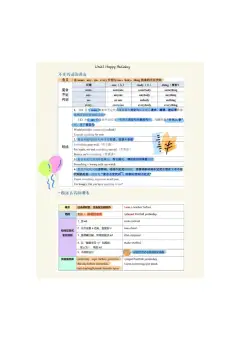
1. 用法与标志词
表示过去某个时间发生的动作或存在的状态。本单元用于回顾假期经历,描述已经发生的事情。
常用时间状语:yesterday, last night / week / month / summer, ... ago, just now, in 2025, when I was seven 等。
2. 动词过去式变化规则
规则 | 变法 | 例词 |
一般情况 | 直接加-ed | work → worked, visit → visited, play → played |
以不发音的e 结尾 | 加-d | live → lived, arrive → arrived, hope → hoped |
辅音字母+ y 结尾 | 变y 为 i 再加 -ed | study → studied, carry → carried |
重读闭音节结尾 | 双写尾字母再加-ed | stop → stopped, plan → planned, travel → travelled |
单元高频不规则动词:go → went, come → came, see → saw, take → took, buy → bought, eat → ate, feel → felt, have → had, do → did, is/am → was, are → were, get → got, sit → sat, run → ran, swim → swam, make → made, tell → told, write → wrote, ride → rode, stay → stayed。
3. 句式结构
句式 | 结构 | 例句 |
肯定句 | 主语+ 动词过去式 + 其他 | I visited the Great Wall last year. |
否定句 | 主语+ didn't + 动词原形 | She didn't go to the park yesterday. |
一般疑问句 | Did + 主语 + 动词原形 + 其他? | —Did you have fun during the holiday? —Yes, I did. / No, I didn't. |
特殊疑问句 | 疑问词+ did + 主语 + 动词原形 + 其他? | Where did you go on vacation? |
(二)复合不定代词与形容词后置
先识记常见复合不定代词,再重点掌握"形容词后置"这一中考高频考点。
1. 常见复合不定代词
指代 | 肯定/ 通用 | 否定/ 疑问 | 其他 |
指人 | someone(某人) | anyone(任何人,常用于疑问、否定句) | everyone(每个人) |
指物 | something(某物) | anything(任何事物,常用于疑问、否定句) | nothing(没有什么);everything(一切) |
2. 用法要点
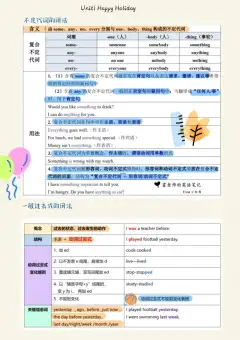
1.something 多用于肯定句;anything 多用于否定句、疑问句和条件句;nothing 本身表否定。
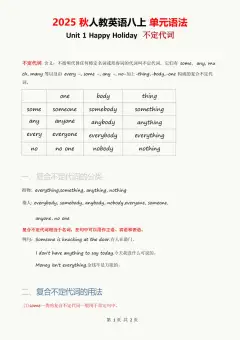
2.形容词或else 修饰复合不定代词时必须后置:something special, anything interesting, nothing wrong。
3.anyone 在肯定句中表示"随便哪一个人"(强调无限制选择):You can sit anywhere you like.
4.everyone / everything 作主语时,谓语动词用单数:Everyone likes the idea.
六、重点句型与交际对话
以下目标句型覆盖询问、描述与感受表达,是单元听说读写活动的语言支架,建议整体背诵、仿写运用。
(一)目标句型
1.—Where did you go on vacation? —I went to Beijing with my family.(你去哪里度假了?——我和家人去了北京。)
2.—Did you go anywhere interesting? —Yes, I went to Huangshan.(你去了什么有趣的地方吗?——是的,我去了黄山。)
3.—Did you do anything special? —Yes, I went to a summer camp.(你做了什么特别的事吗?——是的,我参加了夏令营。)
4.—How was your vacation? —It was fantastic!(你假期怎么样?——棒极了!)
5.Everything tasted really good!(所有东西尝起来都很好!)
6.We were so happy that we didn't notice the time.(我们太开心了,以至于没有留意时间。)
7.I turned around and was surprised to see a deer.(我转过身,惊讶地看到了一只鹿。)
8.People spend their holidays in different ways.(人们以不同的方式度过假期。)
9.I can learn about the history of a country or a city.(我能了解一个国家或一座城市的历史。)
10.My best holiday experience was two years ago.(我最美好的假期经历是在两年前。)
11.It was tiring but worthwhile.(很累,但很值得。)
12.I felt excited because everything was so new.(我感到很兴奋,因为一切都是新鲜的。)
(二)交际对话示例
交际对话示例· Holiday Talk(分享假期) |
A:Hi, Yaming! How was your summer holiday? B:It was great! I went to Huangshan with my parents. A:Did you do anything special there? B:Yes. We climbed the mountain and took lots of photos. The scenery took my breath away. A:Lucky you! I just stayed at home, reading and playing games. B:That sounds relaxing, too. People spend their holidays in different ways. A:You're right. Maybe we can travel together next holiday. |
七、语音小课堂
本单元语音聚焦四组元音的对比,以及英语句子的节奏与语调。读假期叙事时,注意重音落在"发生了什么事"上。
(一)元音对比
音标 | 例词(教材) | 发音要领 |
/iː/ | she, see, beach, meet, tree | 长音,嘴角向两侧拉开,声音拖足时长;常见拼写e / ee / ea |
/ɪ/ | trip, swim, city, sit, miss | 短音,唇形自然放松,短促有力,勿与/iː/ 混淆 |
/e/ | fresh, forget, bread, ready | 嘴张约一指,舌尖抵下齿,音比/æ/ 轻 |
/æ/ | camp, relax, bad, map | 嘴张约两指,舌尖抵下齿,发音饱满 |
(二)句子节奏与语调
1.重读实词:名词、动词、形容词、副词读得重而慢;虚词(did, on, and, the)读得轻而快。
2.意群停顿:在虚词后或意群结束处划开,如Where did you go / on holiday?
3.语调:陈述句与特殊疑问句(Where/What/How 开头)用降调;一般疑问句(Did you...?)用升调。
八、话题写作指导(假期记叙文)
写作指导按"文体判断—结构搭建—词块句式—范文示范"四步推进,直指单元话题写作,可直接用于写作课板书或学案。
(一)文体判断
本单元常考三类写作文体:假期日记(记录假期生活)、邮件/ 书信(向笔友分享假期故事)、记叙文(描述一次难忘的假期)。三种文体均以一般过去时叙事;日记可用第一人称随感,邮件须含称呼与结尾礼辞。
(二)三段式结构
段落 | 任务 | 写法提示 |
开头 | 点明假期的时间、地点、同伴和总体感受 | Last summer, I went to Lijiang with my family. We had a fantastic time. |
中间 | 按时间顺序描述2~3 件具体活动,加入细节(天气、心情、所见所闻) | On the first day, we visited the ancient town and took many photos. We also tried the local steamed chicken soup. |
结尾 | 总结收获或表达对假期的怀念 | This holiday taught me to appreciate the beauty of nature and different cultures. I hope to visit again someday. |
(三)高分词块与句式
地点词汇:mountain, beach, ancient town, museum, the West Lake, palace
活动词汇:hike, take photos, try local food, meet new people, keep a diary, go sightseeing
感受词汇:fantastic, unforgettable, meaningful, relaxed, breathtaking, tiring but worthwhile
高分句式:
1.I went to... with...(我和……去了……)
2.The most amazing part was...(最令人惊叹的部分是……)
3.I felt... because...(我感到……因为……)
4.We were so happy that we didn't notice the time.(我们如此开心以至于没留意时间。)
5.It was tiring but worthwhile.(很累,但很值得。)
6.I hope to visit again someday.(希望有一天再去。)
(四)范文
My Unforgettable Summer Holiday(范文) |
Last summer, I went to Lijiang with my family. The ancient town was full of beautiful buildings and clear rivers. We stayed in a small hotel near the river, and every morning we walked along the stone streets. One day, we hiked to Yulong Mountain. The snow on the mountain was so white and the view from the top was amazing — it felt like a painting! We also tried the local steamed chicken soup, which was delicious. The best part was spending time with my family and making new friends in the town. This holiday taught me to appreciate the beauty of nature and different cultures. I can't wait to go back! |
九、易错点预警与中考衔接
以下汇总本单元高频易错点,并标注其与中考考点的衔接。复习时先自查左栏"错误示例",能否说出错在哪里。
(一)易错点清单
易错点 | 错误示例 | 正确表达 | 解析 |
过去式拼写(辅音+y) | studyed | studied | 辅音字母+ y 结尾,变 y 为 i 再加 -ed |
过去式拼写(重读闭音节) | planed | planned | 辅元辅结构且重读,双写尾字母再加-ed |
didn't 后动词形式 | She didn't went there. | She didn't go there. | 助动词did 已表过去,后接动词原形 |
Did 开头动词形式 | Did you went anywhere? | Did you go anywhere? | 一般疑问句中Did 后接动词原形 |
复合不定代词的定语后置 | interesting anything | anything interesting | 形容词修饰复合不定代词须后置 |
somewhere / anywhere 混用 | Did you go somewhere interesting? | Did you go anywhere interesting? | 疑问句、否定句中用anything / anywhere |
arrive 的介词搭配 | arrive to Beijing | arrive in Beijing / arrive at the station | 大地点用in,小地点用 at |
because 与 because of | because of he was ill | because he was ill / because of his illness | because 后接从句,because of 后接名词(短语) |
so...that 与 such...that | so beautiful scenery that... | such beautiful scenery that... / so beautiful that... | so 后接形容词/副词,such 后接名词(短语) |
系动词后形容词 | I felt happily. | I felt happy. | feel / taste 等系动词后接形容词作表语 |
scenery 不可数误加复数 | beautiful sceneries | beautiful scenery / a piece of scenery | scenery 为不可数名词,无复数形式 |
breath / breathe 混用 | Take a deeply breathe. | Take a deep breath. | breath 是名词,breathe 是动词 |
(二)中考考点链接
1.一般过去时:中考英语必考语法项目,单选、词汇运用、完成句子与书面表达中均为高频考点;规则动词过去式的四种变化是词汇运用题常客。
2.复合不定代词+ 形容词后置:中考单选经典设题点,如something important, anything interesting。
3.so...that 句型:常见于句型转换与写作提分句式,注意与such...that 的辨析。
4.because / because of 辨析:中考单选高频考点,牢记"of 后接词、because 后接句"。
5.discover / invent 辨析:中考词汇题常考,"发现已存在"与"发明新事物"要分清。
6.话题写作:假期/ 旅游类记叙文是中考书面表达高频话题,建议以本单元三段式结构为模板,积累"地点—活动—感受"词块。
十、学生自测清单
合上讲义,逐条自测。全部打勾,说明这个单元可以"毕业"了。
1.能讲清一般过去时的四种过去式变法,并各举两个例词(含travel → travelled 这类双写)。
2.能连贯讲述自己的一次假期,时间、地点、活动、感受四要素齐全,至少用5 个过去式动词。
3.能就Did you do anything special? 类问题作出肯定 / 否定回答,并注意形容词后置。
4.能写出含"地点—活动—感受"词块的三段式假期短文(至少 60 词),结尾有收获或愿望句。
5.能辨析arrive in / at、because / because of、so...that / such...that、discover / invent 四组易混点。
6.能按/iː/ /ɪ/ /e/ /æ/ 分组读单词,朗读句子时做到重读实词、意群停顿、一般疑问句升调。
7.能讲清楚13 个重点单词中任意 8 个的考点提示与记忆妙招。
十一、版权声明
本资料由"初中英语教研员"依据人教版(2024)八年级上册 Unit 1 内容整理生成,仅供教师备课与学生学习使用,不得商用。语篇示例为教学原创或改编,词汇分级请以教材黑体词表为准。
人教版(新目标·2024)八年级上册 Unit 1 Happy Holiday 知识点总结(学生版)