ARTICLE · 1257084
高考英语 D 篇精读|微笑真的能改变心情吗(金科大联考·2025届高三1月质量检测 D 篇
哈喽~ 宝子们!今日份高考英语精读来啦🥰 专门挑选了Z20名校联盟2025届高三第二次联考 D 篇 ,原版考场真题原文,中英逐段对照,生词短语都整理好了,附带高考级例句,边读边记轻松提分。
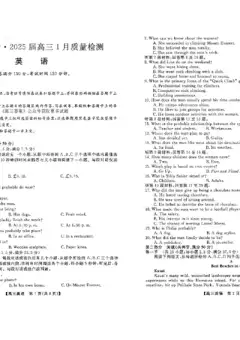
The debate on whether smiling or frowning influences emotions has lasted for decades. Recently, researchers used electrical muscle stimulation to force participants' mouths into smiles or frowns, seeking a definitive answer. They found that the physical act of these expressions directly impacts emotions, making people feel more positive or negative.微笑还是皱眉会左右情绪?这场争论已经持续了几十年。最近,研究人员用电刺激肌肉的方法,强迫参与者做出微笑或皱眉的表情,试图得到一个确凿的答案。他们发现,做这些表情的身体动作会直接影响情绪,让人感到更积极或更消极。
Sebastian Korb, a psychology lecturer at the University of Essex, notes that the idea that the body shapes emotions is old but not universally accepted. This concept has roots in the 19th century, with Charles Darwin and William James suggesting that physiological changes affect emotions. In the 20th century, researchers focused on facial expressions, leading to the "facial feedback hypothesis" in the 1970s. However, this hypothesis has received mixed support.埃塞克斯大学心理学讲师 Sebastian Korb 指出,"身体塑造情绪"这个观点由来已久,但并未被普遍接受。这一概念源于19世纪,查尔斯·达尔文和威廉·詹姆斯提出生理的变化会影响情绪。到20世纪,研究人员聚焦面部表情,在1970年代提出了"面部反馈假说"。然而这一假说获得的支持褒贬不一。
A 1988 German study, known as the pen task, found that participants who held a pen between their teeth (facilitating a smile) found cartoons funnier than those who held it between their lips (forming a kiss-like expression). This supported the facial feedback hypothesis.1988年德国一项被称为"笔任务"的研究发现,用牙齿咬住笔(促成微笑表情)的参与者,比用嘴唇夹住笔(形成类似亲吻表情)的人觉得卡通片更有趣。这一结果支持了面部反馈假说。
In the new study, Korb and his team used electrical stimulation to target specific facial muscles. They placed electrodes on 58 participants and gradually increased the current until it caused a smile or frown. Participants were exposed to various conditions, including looking at a blank screen, a happy image, and a depressing image while smiling or frowning. They also underwent experiments with weaker stimulations that didn't produce visible facial movements.在新研究中,Korb 和团队用电刺激靶向特定面部肌肉。他们在58名参与者身上贴上电极,逐渐加大电流,直到引起微笑或皱眉。参与者在各种条件下接受测试,包括对着空白屏幕、看一张开心的图片、看一张令人沮丧的图片,同时做出微笑或皱眉。他们还做了电流更弱、不会产生可见面部动作的实验。
The researchers found connections between participants' facial features and their feelings when stimulated strongly. The strongest connection was when smiles were paired with positive images. Even without accompanying imagery, participants felt happier when stimulated to smile and sadder when forced to frown, although the effect was not massive. Korb emphasized that they only activated certain muscles for a short duration.研究人员发现,在强刺激下,参与者的面部特征与他们的感受之间存在关联。最强的关联出现在微笑配合正面图片时。即使没有配合图像,被刺激做出微笑的参与者也会感到更快乐,被迫皱眉时则更难过,尽管效果并不强烈。Korb 强调,他们只在短时间内激活了某些肌肉。
Heather Lench, a professor of psychological and brain sciences at Texas A&M University, who was not involved in the research, says the new study was done well and "opens up a new way to make facial expressions".未参与本研究的德州农工大学心理与脑科学教授 Heather Lench 说,这项新研究做得很好,"为操控面部表情开辟了一条新途径"。
生词 & 短语
frown /fraʊn/ v. 皱眉高考例句:He frowned at the telephone bill.文中语境:smiling or frowning influences emotions
definitive /dɪˈfɪnətɪv/ adj. 确凿的,最终的高考例句:No one has yet found a definitive answer.文中语境:seeking a definitive answer
physiological /ˌfɪziəˈlɒdʒɪkl/ adj. 生理的高考例句:The doctors studied the physiological effects of sleep loss.文中语境:physiological changes affect emotions
hypothesis /haɪˈpɒθəsɪs/ n. 假说,假设高考例句:Experiments can prove or disprove a hypothesis.文中语境:the facial feedback hypothesis
facilitate /fəˈsɪlɪteɪt/ v. 促进,使便利高考例句:The new railway will facilitate trade between the two cities.文中语境:facilitating a smile
electrode /ɪˈlektroʊd/ n. 电极高考例句:The scientist attached electrodes to the patient's chest.文中语境:They placed electrodes on 58 participants
depressing /dɪˈpresɪŋ/ adj. 令人沮丧的高考例句:The news was very depressing.文中语境:a depressing image
duration /djuˈreɪʃn/ n. 持续时间高考例句:The duration of the exam is two hours.文中语境:for a short duration
原文重读
The debate on whether smiling or frowning influences emotions has lasted for decades. Recently, researchers used electrical muscle stimulation to force participants' mouths into smiles or frowns, seeking a definitive answer. They found that the physical act of these expressions directly impacts emotions, making people feel more positive or negative.
Sebastian Korb, a psychology lecturer at the University of Essex, notes that the idea that the body shapes emotions is old but not universally accepted. This concept has roots in the 19th century, with Charles Darwin and William James suggesting that physiological changes affect emotions. In the 20th century, researchers focused on facial expressions, leading to the "facial feedback hypothesis" in the 1970s. However, this hypothesis has received mixed support.
A 1988 German study, known as the pen task, found that participants who held a pen between their teeth (facilitating a smile) found cartoons funnier than those who held it between their lips (forming a kiss-like expression). This supported the facial feedback hypothesis.
In the new study, Korb and his team used electrical stimulation to target specific facial muscles. They placed electrodes on 58 participants and gradually increased the current until it caused a smile or frown. Participants were exposed to various conditions, including looking at a blank screen, a happy image, and a depressing image while smiling or frowning. They also underwent experiments with weaker stimulations that didn't produce visible facial movements.
The researchers found connections between participants' facial features and their feelings when stimulated strongly. The strongest connection was when smiles were paired with positive images. Even without accompanying imagery, participants felt happier when stimulated to smile and sadder when forced to frown, although the effect was not massive. Korb emphasized that they only activated certain muscles for a short duration.
Heather Lench, a professor of psychological and brain sciences at Texas A&M University, who was not involved in the research, says the new study was done well and "opens up a new way to make facial expressions".
━━━━━━━━━━━━━━━━━━━━━━━━━━━━━━━━
本篇精读结束,日积月累坚持打卡,英语阅读和词汇能力稳步提升,我们下期再见~ 今天的文章就学到这里,坚持精读,阅读稳步提分!