 夜雨聆风
夜雨聆风Why your AI assistant is suddenly selling to you
Sponsored chats are changing the way digital advertising works
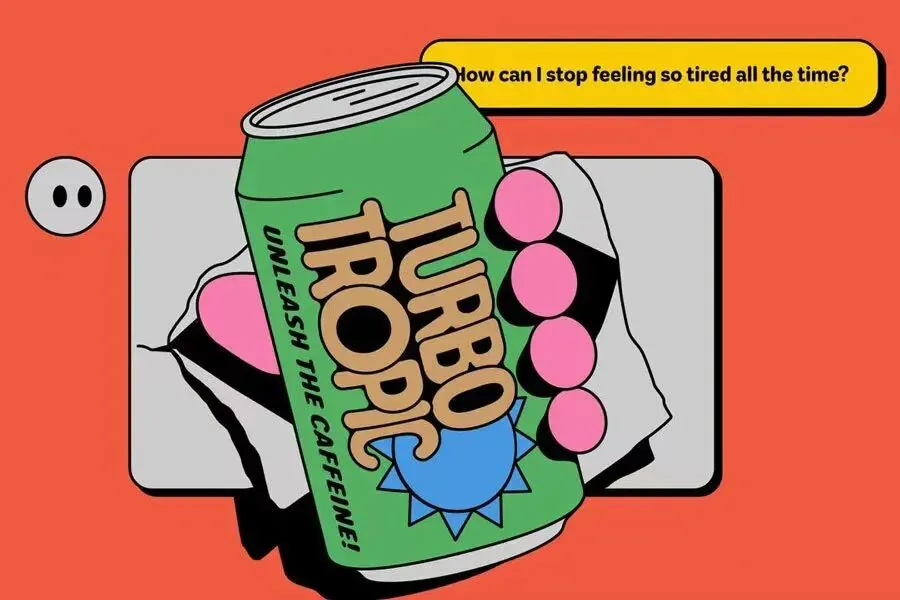
Chatbots are employed every day as teachers, counsellors, coders and escorts. Now they are taking on another role: salesmen. Advertisements are popping up ever more frequently in users’ conversations with large language models, punctuating chats with promotions. Consumers’ search queries, editing sessions and even intimate moments are increasingly at risk of interruption by sponsored messages.
As chatbots become adbots, the future of two industries is at stake. For the artificial-intelligence business, ads represent a way to monetise a wildly expensive invention that most people currently use free of charge. For the ad industry, adbots are a possible answer to the existential question of how advertising will work if users move away from conventional search engines. Although it is early days, the outlines of a new kind of marketing are emerging.
Most of the AI giants are piling in. In February OpenAI said it would begin testing ads in ChatGPT, the most widely used chatbot. Google has been trialling them in its search engine’s “AI Mode” since last year, and Microsoft has woven them into its Copilot. Amazon’s shopping assistant, Rufus, allows brands to sponsor its replies. Meta’s chatbot does not yet show ads, but since December it has been passing on insights from chats to its sister companies, Facebook and Instagram, to help them serve better-targeted plugs.
For OpenAI, which reportedly expects to burn $25bn of cash this year and twice as much in 2027, the need for another revenue stream is acute. Although it sells subscriptions, most of ChatGPT’s more than 900m weekly users are on its free tier. Ads represent a way to monetise them. What is more, they may allow the company to make its best—most expensive—models available to users who do not pay, thus deepening their engagement, argues Benedict Evans, a tech analyst. Even Google, which has no immediate cashflow worries, has reason to bring ads to AI chats if these interactions are to replace search for some users. Already Google is set to lose its crown as the biggest seller of digital ads: this year Meta will overtake it with ad revenue of $243bn, forecasts eMarketer, a research firm.
So far the experiments are modest. ChatGPT is showing ads in only about 1% of conversations, and Google in an even smaller share of AI Mode queries, estimates Similarweb, a data provider. But they are due to ramp up. OpenAI has reportedly told investors that it expects ChatGPT to generate $2.5bn in ad revenue this year and $11bn in 2027, with a goal of hitting $100bn by 2030. That would make it one of the world’s largest sellers of ads.
The early evidence suggests that OpenAI and Google have different approaches to how a chatbot should sell. According to Similarweb, 98.5% of the ads in Google’s AI Mode appear in response to the user’s first query, rather like a conventional search engine. ChatGPT, by contrast, bides its time. Less than half its ads come in the chatbot’s first response, and nearly a third come after the tenth turn in the conversation—like a shop assistant waiting for the customer’s intent to become clear before they make their pitch. “This is not search. This is a new category of advertising,” argues Harel Amir of Similarweb.
So far the results are mixed. ChatGPT’s targeting sometimes seems sophisticated: for instance, advertising job-interview coaching to a user drafting a professional email. Other times it is comically literal. One user asking about cryptographic “private keys” was served an ad for metal safety-boxes from Bed Bath & Beyond. OpenAI’s fledgling ad service so far offers advertisers little in the way of performance data or the ability to target specific demographic groups, says Caelean Barnes of Gauge, which helps brands track how chatbots talk about them.
OpenAI and Google also seem to be going after different kinds of advertisers. Google’s Direct Offers allow companies to promote a discount code for a product the user is researching in AI Mode. OpenAI, meanwhile, is focused on brand-building ads designed to burnish a company’s image rather than trigger a click. So far 81% of its ads fall into that category, by Similarweb’s analysis. It may reckon that users deep in a coding or editing session are unlikely to break off to pursue an offer.
The good news for chatbot-makers is that users do not seem to be repelled by ads. Some competitors have steered clear of sponsored replies, fearing these will hurt trust: in February Perplexity stopped showing ads and Anthropic skewered its ad-toting rivals with a series of skits showing therapists and professors suddenly launching into sales pitches. Yet Similarweb finds that 72% of ads shown on ChatGPT are not on the final turn of the conversation—in other words, users keep chatting. Conversations incorporating ads last an average of about 20 turns, the same as those without.
For advertisers, AI ads present two challenges. The first is measurement. If users keep chatting rather than clicking through, “post-view attribution”—the murky science of determining whether a user eventually buys the product elsewhere—will become the main way to assess a campaign’s effectiveness. The second challenge is brand safety. Mark Zuckerberg has painted a picture of a future where advertisers simply tell Meta their objective and let the AI handle the rest. But letting a chatbot write its own creative copy is a gamble. Personalised ads are proven to be more effective than generic ones. Companies may nevertheless be wary of a silicon salesman who could hallucinate a deal too good to be true.
为何你的AI助手突然开始推销了?
“赞助式对话”正在改变数字广告的运作方式
聊天机器人每天都在扮演着教师、咨询师、程序员乃至陪伴者的角色。现在,它们又承担起另一角色:推销员。在用户与大语言模型的对话中,广告弹出得愈发频繁,促销推广不断穿插其中。用户的搜索查询、会话编辑,甚至私密时刻的对话,都越来越容易受到这些推广信息的干扰。
随着聊天机器人变身为广告机器人,两大行业的未来都将面临考验。于人工智能行业而言,广告是这项研发成本极高、但目前大众可免费使用的技术实现变现的一个途径。于广告行业而言,如果用户逐渐弃用传统搜索引擎,广告机器人或许能为“广告该如何运作”这一关乎行业存亡的问题提供答案。尽管尚处于起步阶段,但一种新型营销模式的轮廓已初见端倪。
大多数人工智能巨头正纷纷涌入这一赛道。今年2月,OpenAI 宣布将在旗下最热门的聊天机器人 ChatGPT 中启动广告测试。谷歌自去年起便已在其搜索引擎的“AI 模式”中试投广告,微软则将广告植入到 Copilot。亚马逊的购物助手 Rufus 允许品牌方赞助其回复内容。Meta 的聊天机器人暂未展示广告,但自去年12月起,该公司已开始将从聊天数据中获取的洞察结果同步给姊妹公司 Facebook 和 Instagram,助力其推送更精准的定向广告。
据报道,OpenAI 预计今年将烧掉250亿美元现金,到2027年这一数字还将翻倍,因此迫切需要开辟新的收入来源。尽管该公司推出付费订阅服务,但 ChatGPT 每周超9亿的用户中,绝大多数使用的都是免费版本。而广告正是让这些用户变现的一个途径。科技分析师本尼迪克特・埃文斯表示,此外,广告还能让公司将最优质、成本最高的模型向非付费用户开放,从而提升用户的粘性。即使是目前暂无现金流压力的谷歌,也有理由在人工智能对话中引入广告,毕竟人机交互可能会取代部分用户的搜索行为。研究机构 eMarketer 预测:今年,谷歌将失去全球最大数字广告销售商的桂冠,而 Meta 将以2430亿美元广告收入超越谷歌。
目前,这些尝试的规模还比较有限。据数据提供商 Similarweb 估算,ChatGPT 仅在约1%的对话中展示了广告,而谷歌“AI 模式”的广告展示占比则更低。但广告投放规模预计将逐步扩大。据报道,OpenAI 向投资者透露,今年 ChatGPT 的广告收入预计将达到25亿美元,2027年将增至110亿美元,并计划在2030年达到1000亿美元的目标。届时,ChatGPT 将跻身全球最大广告销售商之列。
早期迹象表明,OpenAI 与谷歌在聊天机器人如何推销方面采取了截然不同的策略。根据 Similarweb 的数据显示,谷歌“AI 模式”中98.5%的广告均出现在用户首次询问的回复中,这与传统搜索引擎的运作模式如出一辙。相比之下,ChatGPT 则更善于等待时机。其只有不到一半的广告出现在聊天机器人的首次回复之中,还有近三分之一的广告则是在对话进行到第十轮交互之后才出现——这就如同店员等待顾客逐渐明确意向后再进行推销。Similarweb 的哈雷尔・阿米尔指出:“这不是搜索,这是一种全新的广告品类。”
目前的广告效果参差不齐。ChatGPT 的广告定位有时十分精准:例如,向撰写职场邮件的用户推送求职面试辅导的广告。但有时又因生硬直白而显得滑稽可笑。一位用户在询问加密技术的“私钥”时,竟被推送了 Bed Bath & Beyond 售卖金属保险箱的广告。Gauge(一家帮助品牌方追踪聊天机器人言论的公司)的卡利恩・巴恩斯称,OpenAI 这项尚处于起步阶段的广告服务,目前在向广告投放商提供效果数据、以及针对特定人群进行精准投放的能力方面还很有限。
OpenAI 和谷歌似乎在争取不同类型的广告主。谷歌的“直接优惠”功能,允许企业在用户使用“AI 模式”调研产品时,向其推送折扣码。而 OpenAI 则专注于品牌塑造类广告,旨在提升企业形象,而非促成点击。Similarweb 的分析显示,目前其81%的广告都属于这一类别。OpenAI 可能认为,沉浸在编程或编辑工作中的用户,不太可能中断操作去查看优惠信息。
对聊天机器人开发商而言,好消息是用户似乎并不反感广告。部分竞争对手因担心这会损害用户信任,刻意避开了赞助式回复:今年2月,Perplexity 开始停止展示广告;Anthropic 则发布了一系列讽刺短片,抨击那些投放广告的竞争对手,短片中的治疗师和教授会突然开始推销产品。但 Similarweb 发现,ChatGPT 上72%的广告并非出现在对话的最后一轮——换言之,用户并未因广告而停止聊天。包含广告的对话平均约持续20轮,与无广告对话持平。
对广告投放商而言,人工智能广告面临两大挑战。首先是效果衡量。如果用户只是持续聊天而不是点击跳转,那么,“浏览后归因”——一种判断用户最终是否在其他平台购买产品的模糊方法——将成为评估广告效果的主要方式。其次是品牌安全。马克・扎克伯格曾描绘过这样一幅未来图景:广告主只需向 Meta 告知营销目标,其余工作皆交由人工智能完成。但让聊天机器人自主撰写创意文案实属一场豪赌。事实证明,个性化广告效果要优于普通广告。但企业仍会对“硅基推销员”心存戒备,因为它可能会凭空编造出一笔好得令人难以置信的虚假交易。