 夜雨聆风
夜雨聆风
▶ 引言
在生物医药领域,多肽药物的骨架设计长期高度依赖天然产物及其类似物,这种“向自然索取模板”的传统模式,严重束缚了药物设计的自由度与创新空间。三优生物依托AI-STAL 2.0平台中的智能超万亿环状多肽库平台,彻底打破了这一瓶颈。该平台不仅攻克了分子生成的源头难题,也突破了高效筛选的技术壁垒,实现了多肽药物骨架从0到1的全新创制,使研发不再受限于天然骨架的稀缺,真正开启了多肽药物研发的新纪元。
通过将AI-STAL 2.0 平台与三优智能创新药加速器(SAI-DA)深度整合,研发效率被推向极致:仅需14天,即可完成从分子筛选到候选多肽确认的跨越式突破。这一创新模式,不仅为全球合作伙伴提供了自然界中不存在、成药潜力更优的全新序列,更以极速的交付能力,重新定义多肽药物研发的未来。
一、文库背景
根据弗若斯特沙利文等机构的数据,全球多肽药物市场近年来持续增长。2020年,全球市场规模达到628亿美元,预计到2026年将增至1049亿美元。长期来看,到2030年,这一市场规模有望进一步扩大至2108亿至2338亿美元。
上述数据表明,多肽药物市场蕴含着巨大的增长潜力。与此同时,中国多肽药物市场也呈现逐年上升的趋势,且增速显著高于全球平均水平。多肽类药物之所以备受关注,主要得益于其显著优势:特异性高、免疫原性较低、毒副作用小,尤其适用于胞内靶点,为多种疾病的治疗提供了新的可能性。
然而,多肽药物研发面临的核心挑战之一,在于如何构建高通量、多样化的多肽文库。对大多数药物研发公司而言,这一过程门槛高、投入大、周期长。为攻克这一瓶颈,三优生物凭借前瞻性布局与持续的研发投入,于2022年成功构建并验证了千亿环状多肽库;在此基础上,2023年进一步完成了万亿环状多肽库的构建与验证。到2026年,该万亿环状多肽库实现再度升级,依托海量分子库与SAI-DA的深度融合,仅需14天即可完成从分子筛选到候选多肽产生的跨越式突破。这一里程碑式的进展,标志着三优生物在多肽药物发现领域迈入全新阶段,为全球医药研发提供了高效、前沿的环状多肽分子系统解决方案。
二、文库特性
三优生物的万亿环状多肽库设计融合了自然规律、人工智能(AI)和前沿生物技术。通过收集并深入分析海量天然多肽序列,提取氨基酸分布规律,并在此基础上借助AI算法进行理性设计与优化,极大地拓展了多肽分子的多样性和成药性潜力。如Fig 1.和Fig 2.所示,三优生物NL17和NB17多肽的氨基酸分布频率符合自然规律,序列多样性高。
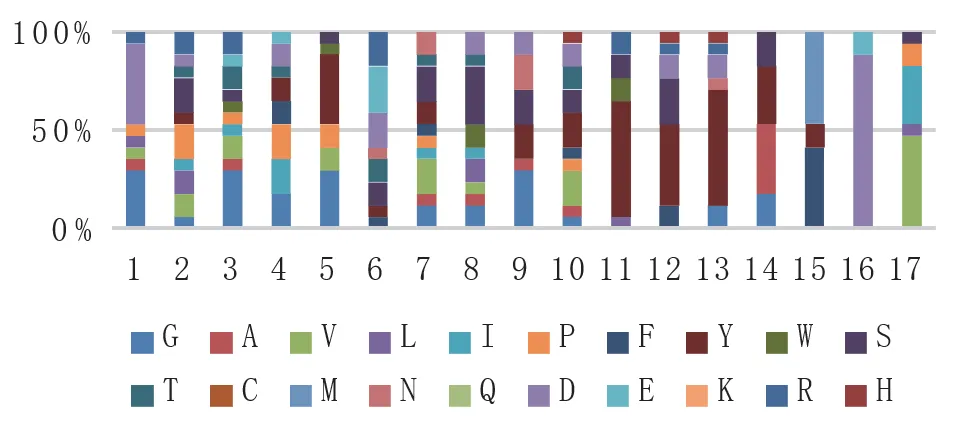
▲ Fig 1. NL17 AA Frequency
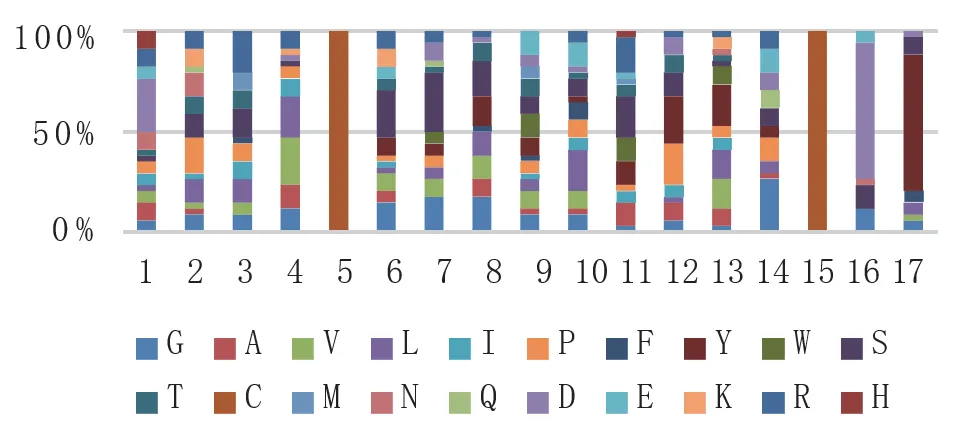
▲ Fig 2. NB17 AA Frequency
三优生物凭借自主知识产权的表达载体,有效解决了多肽分子的高效表达难题,显著提升了多肽在宿主系统中的可溶性表达量和展示效率,极大简化了多肽药物研发的复杂流程,加速了高品质先导分子的筛选进程。
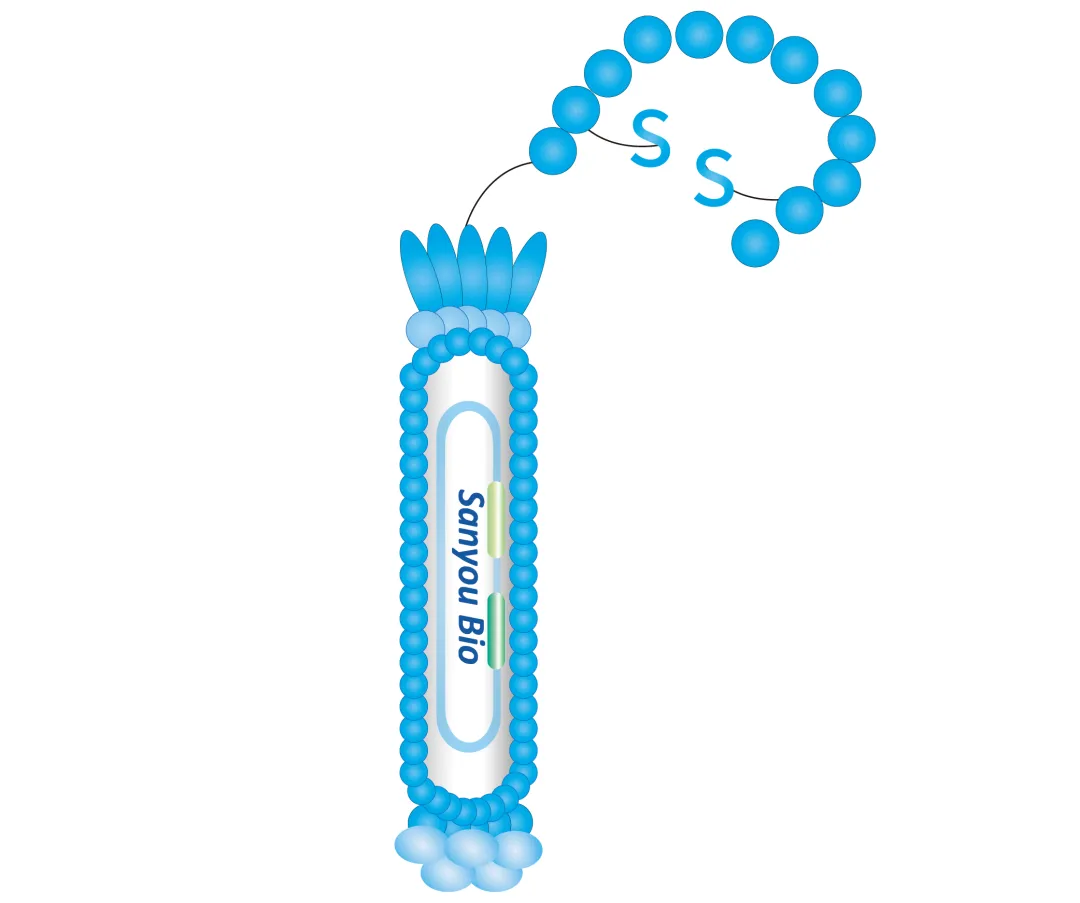
▲ Fig 3. Schematic diagram of peptide phage display
噬菌体展示技术是三优生物高效筛选万亿环状多肽库的关键。通过对上千个克隆进行严格检测,结果Fig 4.所示,证实其噬菌体展示效率高达98%。高展示效率不仅能够减少文库中无效分子的占比、提高文库品质,同时也表明所设计多肽可高效表达,成药性良好。
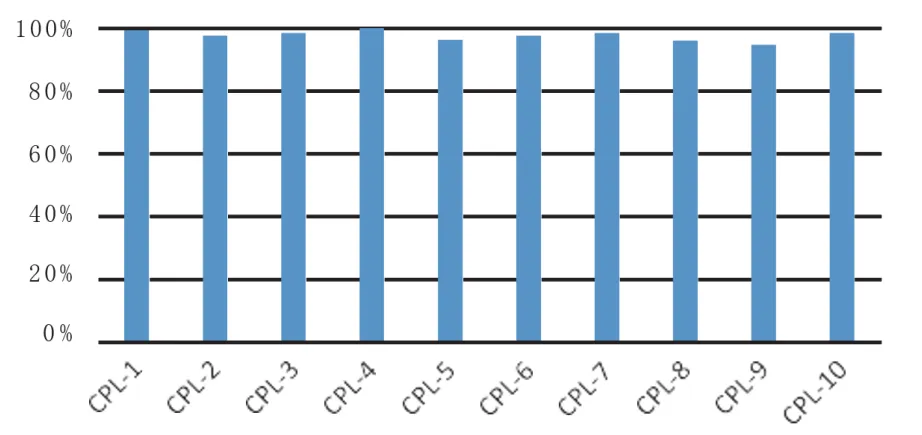
▲ Fig 4. Peptide library display efficiency
三优生物万亿环状多肽库采用关键的二硫键成环策略。相较于线性多肽,二硫键形成的环状结构能显著限制构象自由度,大幅提升多肽的结构刚性和稳定性,从而增强其对蛋白酶降解的抵抗力,延长体内半衰期并提高生物利用度。
与其他化学成环方式(如酰胺键、醚键等)相比,二硫键成环不仅因其在天然蛋白质中的广泛存在而具有优异的生物兼容性,更能精确锁定多肽的活性构象,赋予其更高的靶点亲和力与选择性,为药物发现提供更具潜力的分子骨架。筛选多肽进行半胱氨酸突变,结果如Fig 5.所示:突变前多肽成环,具有结合活性;突变后环肽线性化,失去结合活性。
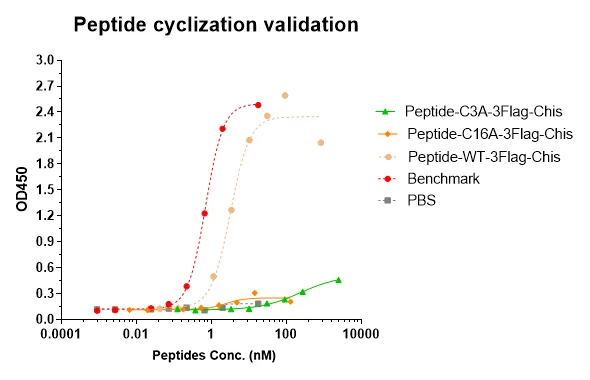
▲ Fig 5. Peptide cyclization validation
SAI-DA通过四个智能化工作站(Station 1至Station 4)的串联运作,仅需14天即可获得特异性好、亲和力高、序列明确并经真核表达验证的多肽。针对不同抗原,可制定Fc/His标签交叉、固液相交替、细胞蛋白交叉竞争及阻断筛选等多种筛选策略,采用固相或液相高通量方式快速获得先导分子。将先导分子进行穿梭构建后,通过CHO/293真核表达系统进行表达,并开展生化理化分析及细胞水平的功能验证,从而获得真实有效的成药性数据。
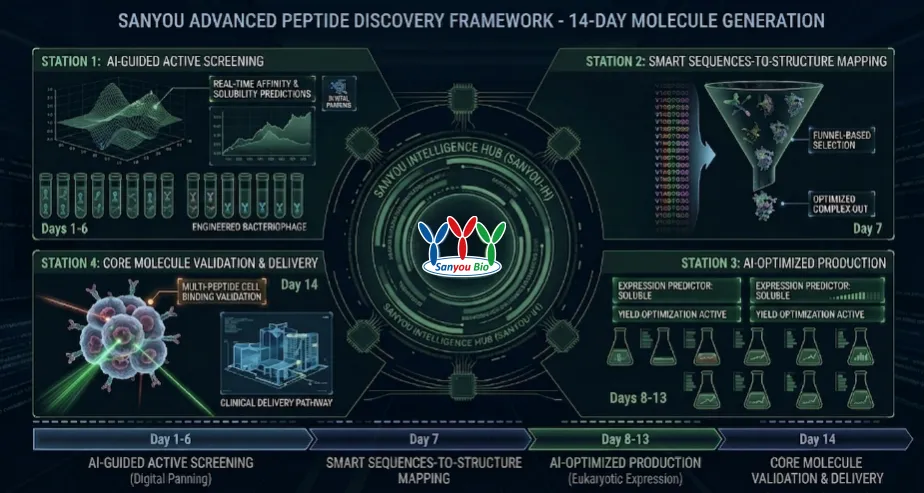
▲ Fig 6. Flowchart of SAI-DA
三、代表案例
目的:在万亿环状多肽库中筛选能够结合Target A抗原蛋白的多肽分子。
方法:将万亿环状多肽库筛选获得的多肽分子进行亲和力成熟后,采用Target A抗原蛋白进行ELISA亲和活性分析。
结果:如Fig 7. 所示,从万亿环状多肽库中筛选到的多肽分子能够特异性结合Target A抗原蛋白。经过亲和力成熟后,获得了与母本分子相比亲和力显著提升的分子。
结论:通过万亿环状多肽库成功筛选出能够特异性识别Target A抗原蛋白、且亲和力明显提升的候选多肽分子。
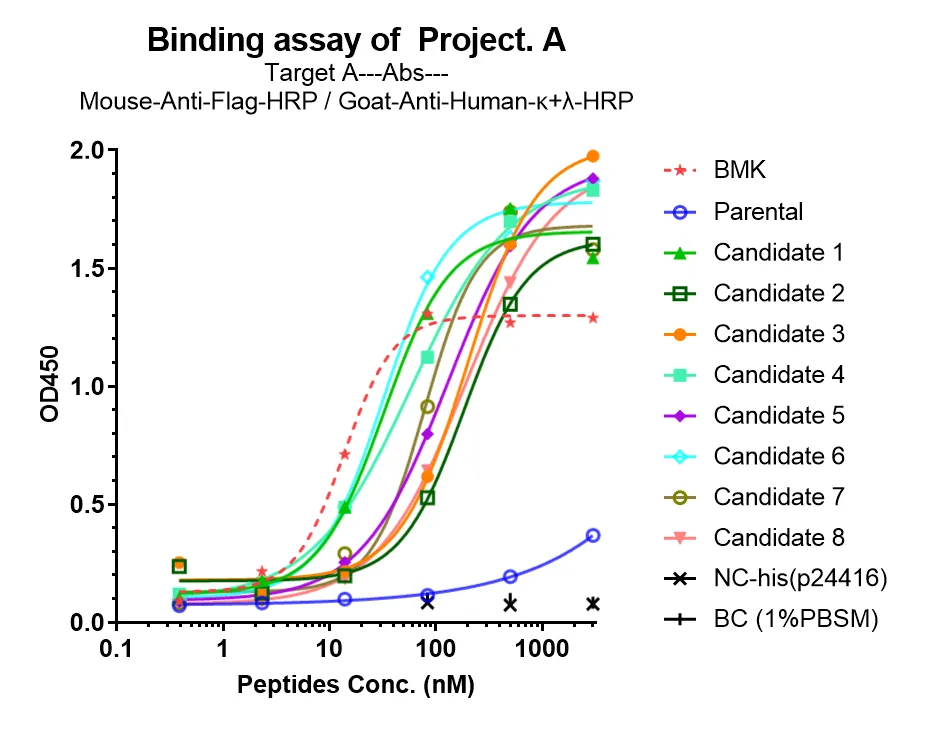
▲ Fig 7. Binding affinity determination by ELISA
四、总结展望
当前,全球多肽药物市场正经历爆发式增长。仅2023年,司美格鲁肽的全球销售额便接近200亿美元,充分彰显了该领域巨大的增长空间与未被满足的临床需求。多肽库的建立是多肽药物研发的核心,亦是公认的技术制高点。三优生物凭借在创新生物药领域多年的深厚积累,并依托成功搭建的AI-STAL 2.0 超万亿抗体库平台的经验,已系统攻克多肽库构建的各项技术瓶颈,成功完成万亿环状多肽库的构建与验证。到2026年,该万亿环状多肽库实现进一步升级,依托海量分子库与尖端AI算法的深度融合,仅需14天即可完成从分子筛选到候选多肽产生的跨越式突破。
展望未来,三优生物将持续深耕AI与生物技术的交叉领域,充分发挥平台优势,致力于攻克多肽药物研发中的关键难点,包括引入非天然氨基酸以提升多肽的口服生物利用度、开发高效穿膜多肽以靶向胞内靶点等。同时,随着SAI-DA的持续演进,公司计划于2026年实现研发流程的全面自动化闭环,并力争完成AI工具向“Agent(智能体)”研发模式的整合,将技术优势转化为推动行业变革的生产力。
通过这些创新举措,三优生物将显著降低多肽药物的开发难度,极大加速创新药物的研发进程,以前瞻性的技术布局和极致的研发效率赋能全球新药研发。在AI的强力加持下,助力更多创新药物加速走向临床,为全球患者带来更高效、更安全的治疗选择。
AI-STAL 2.0 | Total Intelligent Peptide Molecule Generation System Solution
▶ Introduction
In the field of biomedicine, the backbone design of peptide drugs has long relied heavily on natural products and their analogs. This traditional paradigm of "borrowing templates from nature" has severely constrained the freedom and innovation space in drug design. Leveraging the Super Trillion Cyclic Peptide Library within its AI-STAL 2.0 system, Sanyou Bio has achieved a breakthrough that completely overcomes this bottleneck. The AI-STAL 2.0 system not only addresses the root challenge of molecular generation but also breaks through the technical barrier of high-throughput screening, enabling de novo design of peptide drug scaffolds from scratch. This liberates drug discovery from the constraint of scarce natural scaffolds, truly ushering in a new era of peptide drug development.
By deeply integrating the AI-STAL 2.0 system with the Sanyou Intelligent Drug Accelerator (SAI-DA), R&D efficiency is maximized, which is achieved by a breakthrough from molecular screening to candidate peptide confirmation is achieved in just 14 days. This innovative model not only delivers novel sequences absent in nature with superior druggability to global partners but also redefines the future of peptide drug R&D through ultra-fast delivery capabilities.
I. Library Background
Based on data from Frost & Sullivan and other institutions, the global peptide drug market has displayed continuous growth in recent years.In 2020, the global market size reached $62.8 billion and is projected to grow to $104.9 billion by 2026. In the long term, by 2030, the market is expected to further expand to $210.8–233.8 billion.
The above data indicate that the peptide drug market holds significant growth potential. Meanwhile, the peptide drug market in China has trended upwards yearly, whose growth rate is significantly higher than the global average. Peptide-based drugs have garnered significant attention primarily due to their notable advantages including high specificity, low immunogenicity, and minimal toxic side effects. They are particularly suitable for intracellular targets, offering new therapeutic possibilities for various diseases.
However, one of the main challenges in the development of peptide drug lies in the construction of high-throughput, diversified peptide libraries. For most pharmaceutical R&D companies, this process entails high barriers, substantial investment, and lengthy timelines. To address this bottleneck, Sanyou Bio leveraged its forward-looking strategy and sustained R&D investment to successfully construct and validate the Hundred-Billion Cyclic Peptide Library in 2022. Based on the achievement, the company further completed the construction and validation of the Super Trillion Cyclic Peptide Library in 2023.By 2026, the Super Trillion Cyclic Peptide Library will be further upgraded. Leveraging the deep integration of the massive molecular library with SAI-DA, the breakthrough from molecular screening to candidate peptide generation can be achieved in just 14 days. This milestone marks a new era for Sanyou Bio in peptide drug discovery, providing efficient and cutting-edge systemic solutions for cyclic peptide molecules to advance global pharmaceutical R&D.
II. Library Features
The Super Trillion Cyclic Peptide Library design by Sanyou Bio integrates natural principles, artificial intelligence (AI), and cutting-edge biotechnology, which could extract amino acid distribution patterns by collecting and deeply analyzing vast natural peptide sequences. Based on the library, AI algorithms can be utilized in the rational design and optimization, which significantly expanded the diversity and druggability potential of peptide molecules. As shown in Fig 1. and Fig 2., the amino acid distribution frequencies of Sanyou Bio’s NL17 and NB17 peptides conform to natural laws, with high sequence diversity.
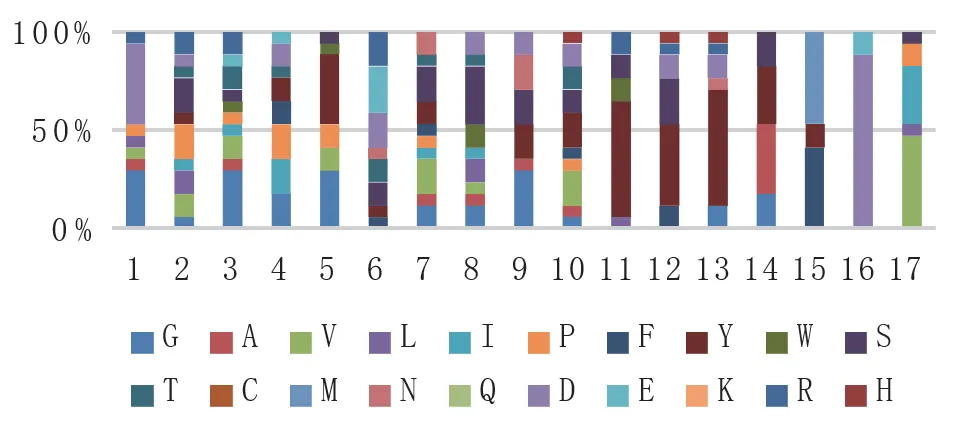
▲ Fig 1. NL17 AA Frequency
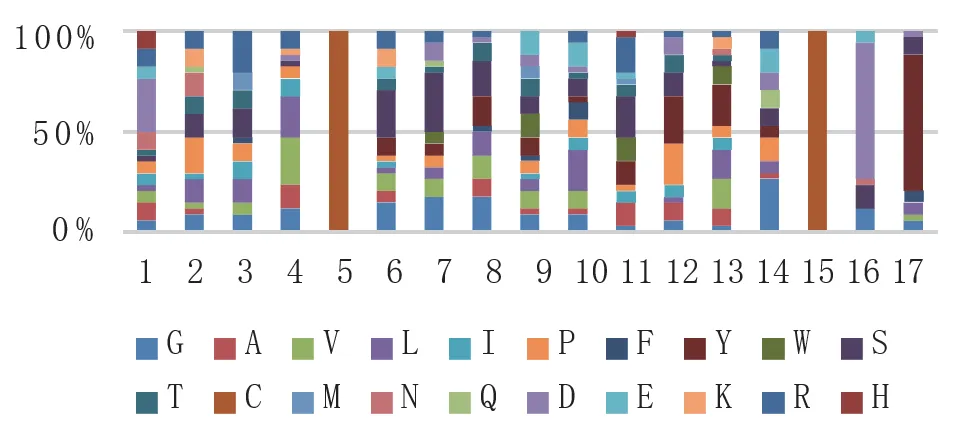
▲ Fig 2. NB17 AA Frequency
Based on our proprietary expression vectors, Sanyou Bio has effectively addressed the challenge of efficient peptide expression, significantly enhanced the soluble expression level and display efficiency of peptides in host systems, greatly simplified the complex workflows of peptide drug discovery, and accelerated the screening process of high-quality lead molecules.
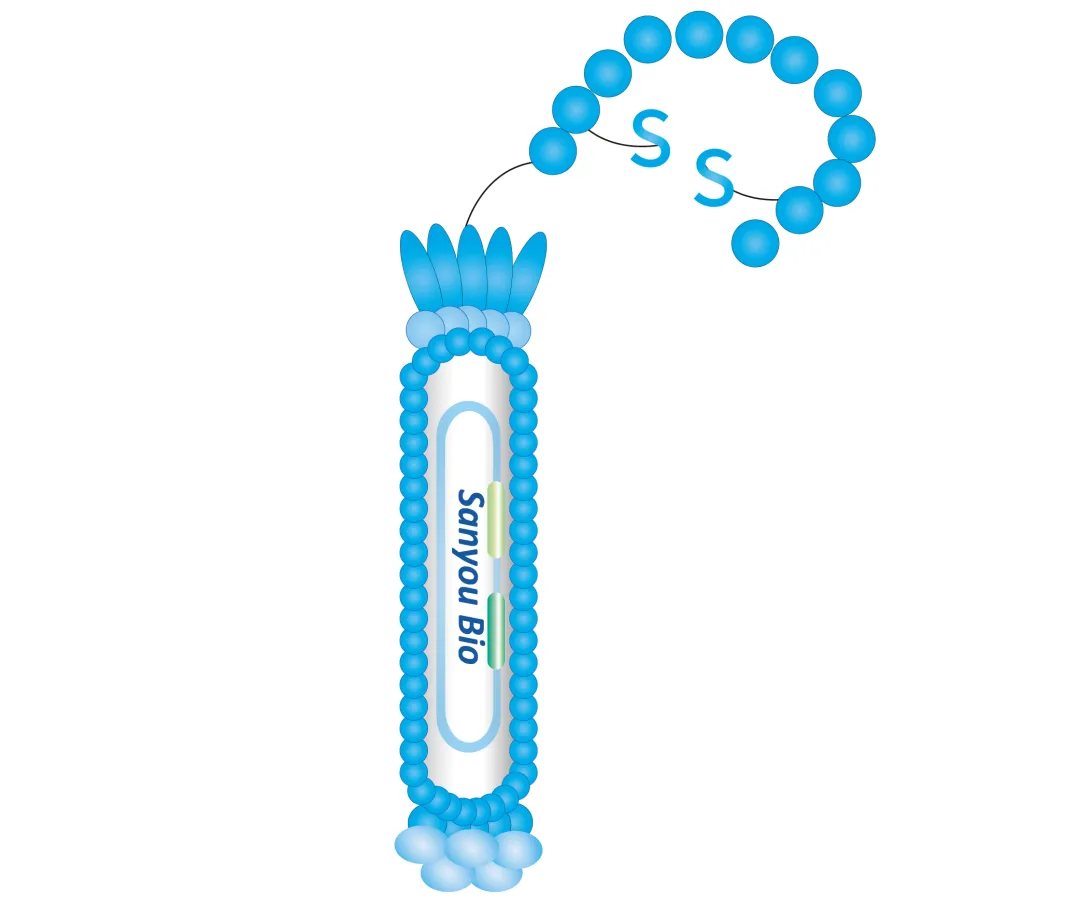
▲ Fig 3. Schematic diagram of peptide phage display
Phage display technology is the key of Sanyou Bio’s high-efficiency screening of the Super Trillion Cyclic Peptide Library. The rigorous testing of over a thousand peptide library clones shown in Fig 4. confirmed a phage display efficiency of up to 98%. High display efficiency not only reduces the proportion of ineffective molecules in the library and improves library quality, but also indicates that the designed peptides can be efficiently expressed with favorable druggability.
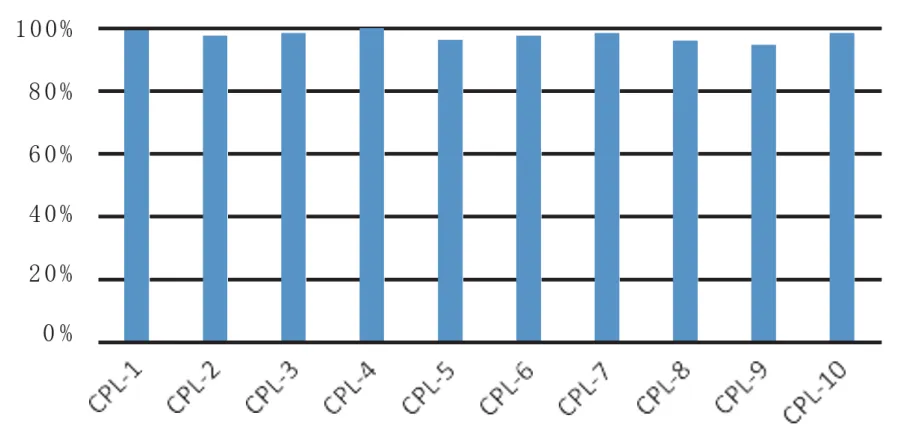
▲ Fig 4. Peptide library display efficiency
The Super Trillion Cyclic Peptide Library of Sanyou Bio employs a key disulfide bond-based cyclization strategy. Compared with linear peptides, the cyclic structure formed by disulfide bonds significantly restricts conformational flexibility and enhances peptide structural rigidity and stability, which improves resistance to proteolytic degradation, extends in vivo half-life, and increases bioavailability.
Compared to other chemical cyclization methods (e.g., amide or ether bonds), disulfide bridge cyclization not only offers excellent biocompatibility due to its widespread presence in natural proteins, but also precisely locks the bioactive conformation of peptides, enhancing target affinity and selectivity, thereby providing a more promising molecular scaffold for drug discovery. Screening of peptides for cysteine mutation, with results shown in Fig 5. the pre-mutation peptide forms a ring and exhibits binding activity; after mutation, the cyclic peptide becomes linearized and loses binding activity.
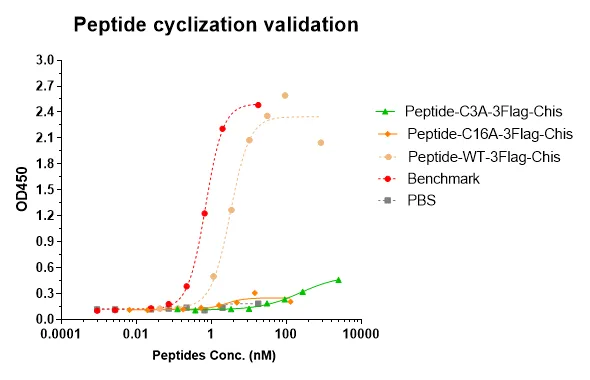
▲ Fig 5. Peptide cyclization validation
SAI-DA utilizes four integrated intelligent workstations (Station 1 to Station 4) in series to obtain peptides with high specificity, strong affinity, defined sequences, and validated eukaryotic expression within just 14 days. For different antigens, various screening strategies can be designed, including Fc/His tag cross-screening, solid-liquid phase alternation, cell-protein cross-competition, and blocking screening. High-throughput solid-phase or liquid-phase methods can be employed to rapidly obtain lead molecules. After shuttle construction of the lead molecule, it is expressed using the CHO/293 eukaryotic expression system, followed by biochemical and biophysical characterization as well as cell-based functional validation to obtain reliable druggability data.
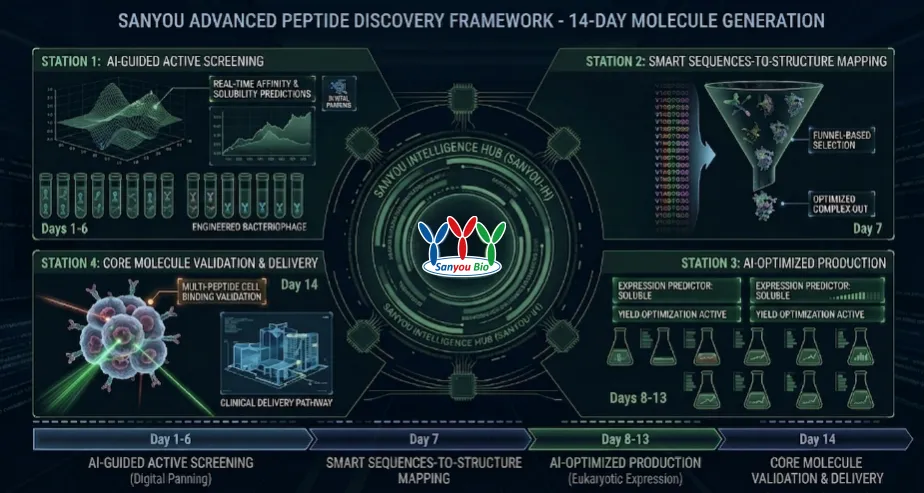
▲ Fig 6. Flowchart of SAI-DA
III. Representative case
Objective: To screen peptide molecules capable of binding to Target A antigen protein from the Super Trillion Cyclic Peptide Library.
Methods: Following affinity maturation of peptide molecules screened from the Super Trillion Cyclic Peptide Library, ELISA was performed using Target A antigen protein to analyze their binding affinity.
Results: As shown in Fig 7., the peptide molecule screened from the Super Trillion Cyclic Peptide Library specifically binds to the Target A antigen protein. After affinity maturation, molecules with significantly improved affinity compared to the parental molecule were obtained.
Conclusion: From the Super Trillion Cyclic Peptide Library, candidate peptide molecules with specific recognition of Target A antigen protein and significantly improved affinity were successfully screened.
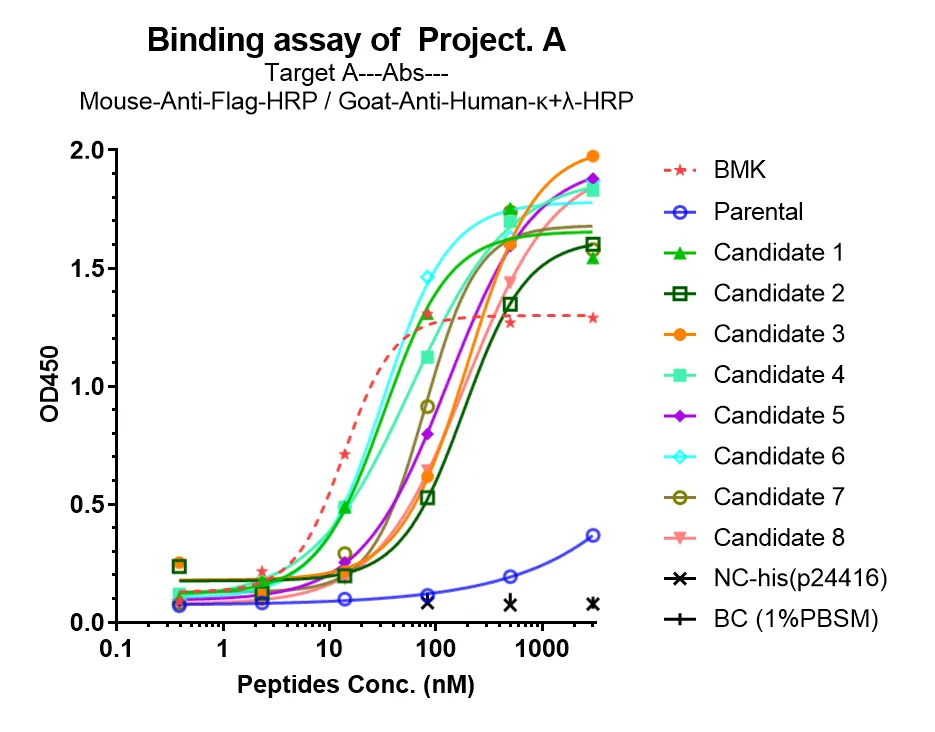
▲ Fig 7. Binding affinity determination by ELISA
IV. Summary and Outlook
The global peptide drug market is currently experiencing explosive growth. In 2023 alone, global sales of semaglutide approached $20 billion, underscoring the substantial growth potential and unmet clinical needs in this field. Establishment of peptide libraries is central to peptide drug discovery and recognized as a key technological frontier. Leveraging years of deep expertise in innovative biopharmaceuticals and the successful development of the STAL trillion-scale antibody library platform, Sanyou Bio has systematically overcome key technical challenges in peptide library construction, and successfully established and validated the Super Trillion Cyclic Peptide Library.By 2026, the Super Trillion Cyclic Peptide Library will be further upgraded. Leveraging the deep integration of a massive molecular repository and cutting-edge AI algorithms, the breakthrough from molecular screening to candidate peptide generation can be achieved in just 14 days.
Looking ahead, Sanyou Bio will continue to deepen its efforts in the intersection of AI and biotechnology, fully leverage its platform advantages, and focus on overcoming key challenges in peptide drug development, including the introduction of non-natural amino acids to improve oral bioavailability of peptides and the development of efficient cell-penetrating peptides to target intracellular targets. Meanwhile, with the continued advancement of SAI-DA, the company plans to achieve a fully automated closed-loop R&D process by 2026 and aims to integrate AI tools into an “Agent”-based R&D paradigm, transforming technological advantages into productive forces that drive industry transformation.
Through these innovative initiatives, Sanyou Bio will significantly reduce the difficulty of peptide drug development, greatly accelerate the R&D process of innovative drugs, and empower global drug discovery with forward-looking technological deployment and unparalleled R&D efficiency. Powered by AI, more innovative drugs are accelerated toward clinical use, bringing safer and more effective treatment options to patients worldwide.
推荐阅读
关于三优生物

三优生物是一家以“让天下没有难做的创新药”为使命,致力于透彻解决创新药源头创新问题的生物医药高科技企业。
公司以智能超万亿分子库(AI-STAL)为核心驱动,以智能新药加速器(SAI-DA)为依托,致力于一站式透彻解决创新药各类分子产生和新药研发问题。
公司致力于打造全球顶尖的原创新药创新工场,协同各方共同加速全球创新药的研发进程。
公司总部位于中国上海,在亚洲、北美洲、欧洲等多地建立了业务中心,形成了全球化的业务网络,现有投产及布局的研发及GMP场地20000多平方米。
公司已与全球2000多家药企、生技公司等建立了良好的合作关系,已赋能1200多个新药研发项目;已完成50多个合作研发项目,其中10多个协同研发项目已推至IND及临床研发阶段。
公司已申请170多项发明专利,其中30多项发明专利已获得授权,并获得了国家级高新技术企业、上海市专精特新、ISO9001、ISO27001等10余项资质及体系认证。

推荐阅读
关于三优生物
三优生物是一家以“让天下没有难做的创新药”为使命,致力于透彻解决创新药源头创新问题的生物医药高科技企业。
公司以智能超万亿分子库(AI-STAL)为核心驱动,以智能新药加速器(SAI-DA)为依托,致力于一站式透彻解决创新药各类分子产生和新药研发问题。
公司致力于打造全球顶尖的原创新药创新工场,协同各方共同加速全球创新药的研发进程。
公司总部位于中国上海,在亚洲、北美洲、欧洲等多地建立了业务中心,形成了全球化的业务网络,现有投产及布局的研发及GMP场地20000多平方米。
公司已与全球2000多家药企、生技公司等建立了良好的合作关系,已赋能1200多个新药研发项目;已完成50多个合作研发项目,其中10多个协同研发项目已推至IND及临床研发阶段。
公司已申请170多项发明专利,其中30多项发明专利已获得授权,并获得了国家级高新技术企业、上海市专精特新、ISO9001、ISO27001等10余项资质及体系认证。