 夜雨聆风
夜雨聆风
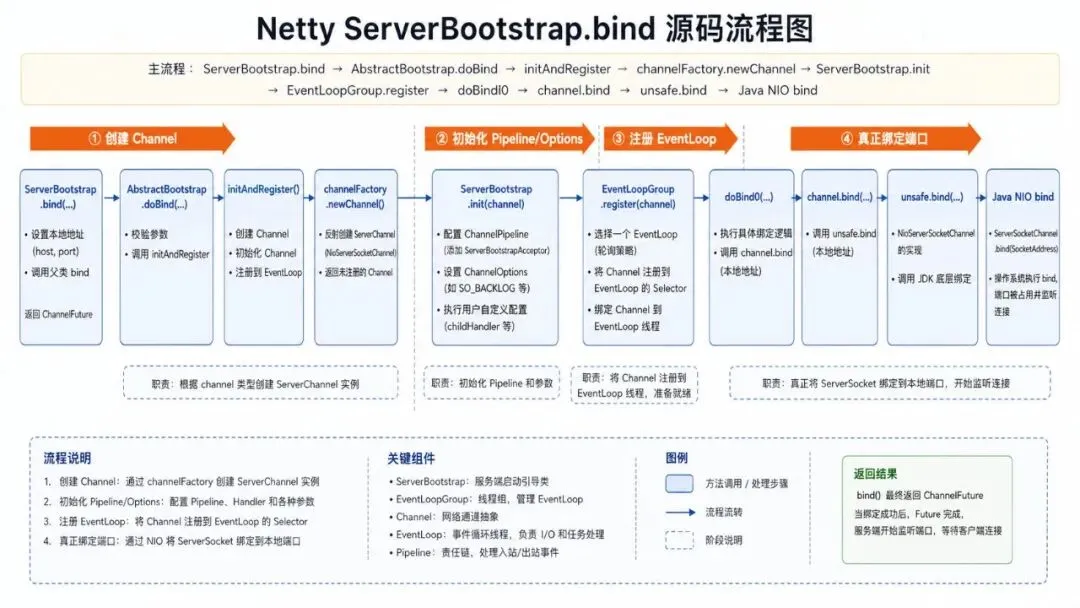
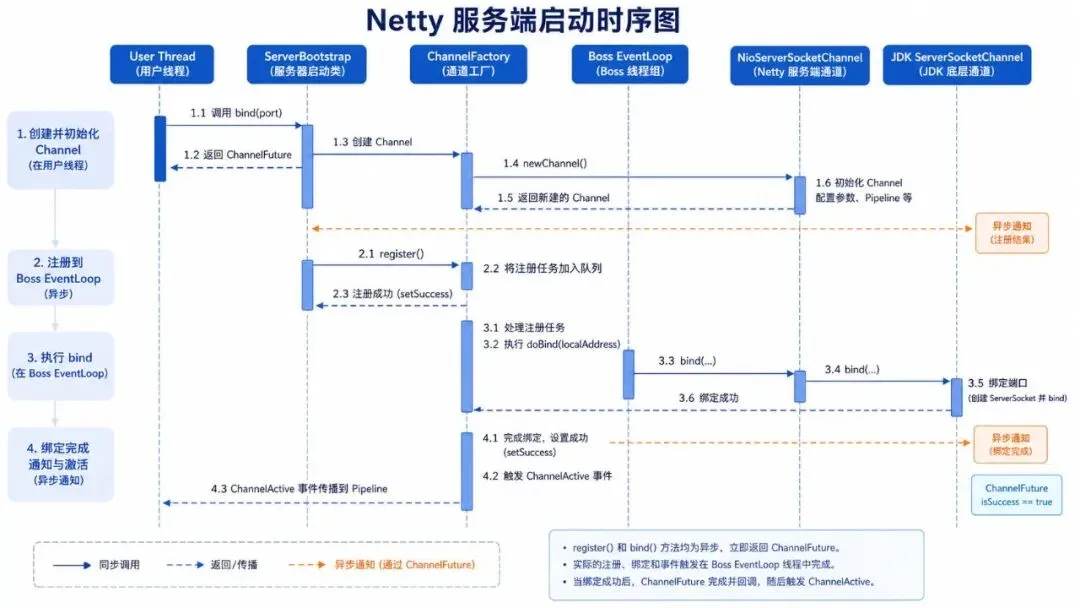
ServerBootstrap.bind()不是一次简单的端口绑定,而是一条“创建 Channel → 初始化组件 → 注册 EventLoop → 异步执行 bind”的装配链。注册必须先于绑定,是因为 Netty 要先为 Channel 确立唯一的线程归属,之后所有生命周期事件才能在正确的 EventLoop 中有序发生。
Netty 服务端启动代码通常只有十几行。真正让服务开始监听端口的,也只是:
ChannelFuture future = bootstrap.bind(8080).sync();但这行代码背后至少解决了六个问题:使用哪个 Channel 实现、怎样创建底层 JDK ServerSocketChannel、父 Pipeline 如何初始化、监听 Channel 归属哪个 EventLoop、端口绑定在哪个线程执行、绑定成功如何通知调用者。
如果不理解这些步骤,就很容易把启动阶段的几个概念混为一谈。例如有人认为 channel(NioServerSocketChannel.class) 已经创建了 Channel;有人认为 register() 就是注册端口;也有人认为 bind() 在主线程同步完成。实际上:
• channel(...)只配置 Channel 工厂。• initAndRegister()才真正创建并初始化 Channel。• register()是把 Channel 注册到 EventLoop 和 Selector。• bind()是把底层 ServerSocket 绑定到本地地址。• 返回的 ChannelFuture表达异步完成结果。
本文沿 AbstractBootstrap.doBind() 这一条主链展开。
源码基线:
• Netty netty-4.1.135.Final• Commit: f05f765d81460799c53123a207f665bf3b465171• 重点文件: transport/src/main/java/io/netty/bootstrap/AbstractBootstrap.java• 重点类: AbstractBootstrap、ServerBootstrap、AbstractChannel.AbstractUnsafe• 官方源码:https://github.com/netty/netty/tree/netty-4.1.135.Final
1. 启动参数先被保存,bind 时才集中生效
一个典型服务端配置如下:
ServerBootstrap b = new ServerBootstrap();b.group(bossGroup, workerGroup) .channel(NioServerSocketChannel.class) .option(ChannelOption.SO_BACKLOG, 1024) .childOption(ChannelOption.TCP_NODELAY, true) .handler(new LoggingHandler(LogLevel.INFO)) .childHandler(new ChannelInitializer<SocketChannel>() { @Override protected void initChannel(SocketChannel ch) { ch.pipeline().addLast(new FrameDecoder()); ch.pipeline().addLast(new BusinessHandler()); } });这些链式调用大多没有立即操作 Socket。它们把配置保存进 Bootstrap:
• group保存 parentGroup 和 childGroup。• channel包装出ReflectiveChannelFactory。• option保存父 Channel 参数。• childOption保存子 Channel 参数。• handler保存父 Channel Handler。• childHandler保存未来每个连接的初始化器。
延迟应用配置有两个好处。第一,Bootstrap 可以在真正启动前做完整校验,例如是否设置 EventLoopGroup、ChannelFactory 和 childHandler。第二,Bootstrap 可以被 clone(),用相同模板创建多个监听 Channel,而不需要重新编写配置。
不过这也意味着 Bootstrap 是有状态的启动模板,不宜在多个线程中边修改边绑定。生产代码通常应该先完成配置,再执行一次或少量几次 bind。
2. doBind() 先调用 initAndRegister()
AbstractBootstrap.bind(SocketAddress) 完成地址校验后进入 doBind()。核心代码可简化为:
private ChannelFuture doBind(final SocketAddress localAddress) { final ChannelFuture regFuture = initAndRegister(); final Channel channel = regFuture.channel(); if (regFuture.cause() != null) { return regFuture; } if (regFuture.isDone()) { ChannelPromise promise = channel.newPromise(); doBind0(regFuture, channel, localAddress, promise); return promise; } final PendingRegistrationPromise promise = new PendingRegistrationPromise(channel); regFuture.addListener(future -> { if (future.cause() != null) { promise.setFailure(future.cause()); } else { promise.registered(); doBind0(regFuture, channel, localAddress, promise); } }); return promise;}源码位置:
• 文件: transport/src/main/java/io/netty/bootstrap/AbstractBootstrap.java• 方法: doBind(SocketAddress)• 链接:https://github.com/netty/netty/blob/netty-4.1.135.Final/transport/src/main/java/io/netty/bootstrap/AbstractBootstrap.java
这段代码最重要的不是 Promise 细节,而是顺序:先初始化和注册,再绑定。
为什么不能先把 ServerSocket 绑定端口,再注册到 EventLoop?因为 Channel 的后续生命周期事件,例如 channelRegistered、channelActive、异常通知和关闭,都应该在其所属 EventLoop 中执行。如果先绑定,Channel 可能已经变成 Active,却还没有线程归属和 Pipeline 执行环境,事件顺序会变得难以保证。
所以 Netty 把“注册成功”作为 bind 的前置条件。注册一旦完成,Channel 知道自己的 EventLoop,之后的 bind 会被安全地投递到这个 EventLoop。
3. ChannelFactory 才在此刻创建 NioServerSocketChannel
initAndRegister() 的第一步是:
Channel channel = null;try { channel = channelFactory.newChannel(); init(channel);} catch (Throwable t) { if (channel != null) { channel.unsafe().closeForcibly(); return new DefaultChannelPromise(channel, GlobalEventExecutor.INSTANCE) .setFailure(t); } return new DefaultChannelPromise(new FailedChannel(), GlobalEventExecutor.INSTANCE) .setFailure(t);}ChannelFuture regFuture = config().group().register(channel);channel(NioServerSocketChannel.class) 配置的工厂通常通过反射调用无参构造器。创建 NioServerSocketChannel 时,它还会创建底层 JDK ServerSocketChannel,设置为非阻塞,并构造 ChannelConfig、Unsafe 和 Pipeline 等基础对象。
这一步要区分“Netty Channel”与“JDK Channel”:
NioServerSocketChannel | |
java.nio.channels.ServerSocketChannel |
Netty 没有替代操作系统和 JDK NIO,而是在其上建立了稳定的事件模型。NioServerSocketChannel 把 JDK Channel 包装进统一的 Netty Channel 抽象,使 Pipeline、Future、Allocator 和跨平台 Transport 可以复用。
构造阶段还会指定关注的 SelectionKey 操作。Server Channel 关注 OP_ACCEPT;普通 Socket Channel 关注 OP_READ。这种差异不是 Bootstrap 决定的临时参数,而是各类 Channel 的传输职责决定的。
4. ServerBootstrap.init() 初始化的是父 Channel
Channel 创建后,init(channel) 动态分派到 ServerBootstrap.init(Channel)。这一阶段主要处理父 Channel:
1. 应用 option()配置。2. 应用父 Channel Attribute。 3. 获取父 Channel Pipeline。 4. 加入用户配置的 handler()。5. 加入一个延迟安装 ServerBootstrapAcceptor的初始化 Handler。
简化后的关键逻辑是:
ChannelPipeline p = channel.pipeline();final EventLoopGroup currentChildGroup = childGroup;final ChannelHandler currentChildHandler = childHandler;p.addLast(new ChannelInitializer<Channel>() { @Override public void initChannel(final Channel ch) { final ChannelPipeline pipeline = ch.pipeline(); ChannelHandler handler = config.handler(); if (handler != null) { pipeline.addLast(handler); } ch.eventLoop().execute(() -> pipeline.addLast(new ServerBootstrapAcceptor( ch, currentChildGroup, currentChildHandler, currentChildOptions, currentChildAttrs, extensions, connectionMetadata))); }});源码位置:
• 文件: transport/src/main/java/io/netty/bootstrap/ServerBootstrap.java• 方法: init(Channel)• 链接:https://github.com/netty/netty/blob/netty-4.1.135.Final/transport/src/main/java/io/netty/bootstrap/ServerBootstrap.java
ServerBootstrapAcceptor 是连接接入主链的关键 Handler。Boss EventLoop 从 ServerSocket 接收新连接后,会把新建的子 Channel 作为入站消息沿父 Pipeline 传播;Acceptor 收到它,再应用 childHandler、childOption 和 childAttr,并注册到 Worker Group。
这解释了 handler() 与 childHandler() 的本质区别:
• handler()属于监听 Channel,通常处理日志、异常或连接接入层事件。• childHandler()属于每条已接入的 SocketChannel,处理真正的协议和业务数据。
如果误把业务 Decoder 放进 handler(),它不会处理客户端请求,因为父 Channel 不承载每条连接的数据流。
5. 注册过程为 Channel 选择唯一 EventLoop
config().group().register(channel) 会由 EventLoopGroup 选择一个 EventLoop,再调用该 EventLoop 的 register()。对于 NioEventLoopGroup,选择策略通常是轮询或经过优化的幂次选择。
注册最终进入 AbstractChannel.AbstractUnsafe.register():
public final void register(EventLoop eventLoop, final ChannelPromise promise) { if (isRegistered()) { promise.setFailure(new IllegalStateException("registered already")); return; } if (!isCompatible(eventLoop)) { promise.setFailure(new IllegalStateException("incompatible event loop type")); return; } AbstractChannel.this.eventLoop = eventLoop; if (eventLoop.inEventLoop()) { register0(promise); } else { eventLoop.execute(() -> register0(promise)); }}这段源码证明了三个关键事实。
第一,一条 Channel 只能注册一次,不能随意在多个 EventLoop 之间迁移。第二,Channel 类型必须与 EventLoop 兼容,例如 NIO Channel 应注册到 NIO EventLoop。第三,如果当前线程不是目标 EventLoop,真正的 register0() 会被封装成任务投递过去。
register0() 会调用传输实现的 doRegister()。对 NIO Channel 而言,核心动作是把 JDK Channel 注册到 EventLoop 持有的 Selector:
selectionKey = javaChannel().register(eventLoop().unwrappedSelector(), 0, this);注意初始 interestOps 是 0,不是马上关注 OP_ACCEPT。注册解决的是 Channel 与 Selector 的关联,真正读取兴趣事件会在 Channel Active 和 read 逻辑中逐步设置。附件 this 使 SelectionKey 就绪后能反查到对应的 Netty Channel。
6. 注册成功会触发 Pipeline 生命周期事件
注册不仅是底层 Selector 操作,还会触发 Pipeline 事件。register0() 大致完成:
• 执行 doRegister()。• 标记 registered = true。• 调用 pipeline.invokeHandlerAddedIfNeeded()。• Promise 成功。 • 触发 pipeline.fireChannelRegistered()。• 若 Channel 已 Active,则触发 fireChannelActive()或安排首次读取。
这就是为什么 Handler 的 handlerAdded()、channelRegistered()、channelActive() 存在明确时序。它们不是任意回调:
handlerAdded -> channelRegistered -> channelActive -> channelRead ... -> channelInactive -> channelUnregistered -> handlerRemoved在服务端启动场景中,注册时通常还没有绑定端口,因此 Channel 尚未 Active。等后面的 bind 成功,状态从未激活变为激活,才触发 channelActive。
如果业务在 handlerAdded() 中假定连接已经可用,可能拿不到有效地址或错误发起写操作。需要使用哪一个生命周期回调,取决于逻辑依赖的是“Handler 已进入 Pipeline”“Channel 已注册线程”还是“连接已经激活”。
7. doBind0() 确保 bind 在 EventLoop 中执行
注册 Future 完成后,doBind0() 不直接调用底层 bind,而是:
private static void doBind0( final ChannelFuture regFuture, final Channel channel, final SocketAddress localAddress, final ChannelPromise promise) { channel.eventLoop().execute(() -> { if (regFuture.isSuccess()) { channel.bind(localAddress, promise).addListener(ChannelFutureListener.CLOSE_ON_FAILURE); } else { promise.setFailure(regFuture.cause()); } });}为什么已经知道注册成功,还要再次 eventLoop().execute()?因为调用 bind() 的线程通常是用户启动线程,而 Netty 希望 Channel 生命周期操作统一在 EventLoop 中串行执行。这样 bind、active 事件、后续 accept 之间不会因为多线程竞争而打乱顺序。
channel.bind() 会进入 Pipeline 的出站路径。默认从 TailContext 开始向 HeadContext 传播,最终由 HeadContext 调用 unsafe.bind()。这意味着 bind 和 write 一样,都是 Channel 的出站操作,也可以被 ChannelOutboundHandler 拦截。
在 AbstractUnsafe.bind() 中,Netty记录 bind 前后的 Active 状态:
boolean wasActive = isActive();try { doBind(localAddress);} catch (Throwable t) { safeSetFailure(promise, t); closeIfClosed(); return;}if (!wasActive && isActive()) { invokeLater(() -> pipeline.fireChannelActive());}safeSetSuccess(promise);真正的平台调用落在 NioServerSocketChannel.doBind(),最终调用 JDK ServerSocketChannel.bind(localAddress, backlog)。到这里,端口才真正处于监听状态。
8. ChannelFuture 为什么必须贯穿启动链
启动过程跨越用户线程与 Boss EventLoop,注册和绑定都可能异步完成,因此无法用普通返回值表达结果。ChannelFuture 让调用者既可以同步等待,也可以注册监听:
ChannelFuture bindFuture = bootstrap.bind(8080);bindFuture.addListener(f -> { if (f.isSuccess()) { log.info("server started: {}", f.channel().localAddress()); } else { log.error("bind failed", f.cause()); }});示例里的 .sync() 只是启动线程选择阻塞等待,并没有把 Netty 底层变成同步模型:
ChannelFuture bindFuture = bootstrap.bind(8080).sync();bindFuture.channel().closeFuture().sync();第一处 sync 等待端口绑定成功;第二处 sync 等待服务端 Channel 被关闭。真正的 I/O 仍然由 EventLoop 异步处理。
需要避免在 EventLoop 中调用可能等待同一 EventLoop 的 sync()。Netty 的 Promise 实现会尽力检测死锁,但架构上更正确的方式是使用 Listener 串联异步步骤。
9. 启动失败应该按阶段定位
bind() 失败不能一概归因为“端口占用”。按调用链至少可以分成四类:
init() | ||
BindException |
如果 Future 的 cause 是 RejectedExecutionException,问题往往不是端口,而是 EventLoopGroup 已经 shutdown,注册或 bind 任务无法提交。如果是 ChannelPipelineException,需要检查 Handler 是否可共享、初始化期间是否抛异常。如果是 Native Transport 初始化失败,则应确认分类器、操作系统和架构是否匹配。
还有一个容易忽略的问题:用户只调用 bind() 却不检查 Future。启动线程继续打印“启动成功”,实际端口并未监听。生产启动逻辑必须以 Future 成功为准,再对外报告 Ready。
10. 从 bind 主链反推配置规则
理解源码后,许多配置规则不需要死记。
为什么 option() 和 childOption() 分开?因为前者在 ServerBootstrap.init() 中应用到父 Channel,后者由 ServerBootstrapAcceptor 在每次 Accept 后应用到子 Channel。
为什么 childHandler() 必填?因为监听 Channel 只负责产生新连接,真正的业务 Pipeline 要在每条子 Channel 创建后初始化。
为什么通常创建两个 EventLoopGroup?因为父 Channel 的 Accept 与子 Channel 的读写职责不同。小型服务可以复用同一个 Group,但职责仍然存在,性能隔离也会减弱。
为什么 bind Future 成功后才能接流量?因为成功意味着 Channel 已创建、初始化、注册并完成底层地址绑定,Pipeline 生命周期也进入 Active 阶段。
为什么优雅停机要关闭 EventLoopGroup,而不仅是关闭 ServerChannel?因为 ServerChannel 只停止接收新连接,已注册的子 Channel、任务队列、定时任务和 EventLoop 线程仍可能存活。
11. 总结:注册先于绑定,是启动链的设计支点
ServerBootstrap.bind() 看似是入口,真正的设计支点却是 initAndRegister()。Netty 先创建 Channel 和 Pipeline,再为 Channel 确定 EventLoop,最后把 bind 投递到该 EventLoop。这个顺序建立了后续所有事件的线程边界。
可以把整个过程记成四句话:
1. ChannelFactory 创建运行时 Channel。 2. ServerBootstrap 把配置和 Acceptor 装进父 Pipeline。 3. EventLoopGroup 选择 EventLoop,并把 JDK Channel 注册到 Selector。 4. EventLoop 执行真正 bind,状态转为 Active,Future 完成。
下一篇将继续沿这条链向前:客户端完成 TCP 握手后,Boss EventLoop 如何把 OP_ACCEPT 转换成一个 NioSocketChannel,ServerBootstrapAcceptor 又如何把它交给 Worker EventLoop。那一步才是“监听服务端”变成“管理大量连接”的关键。
参考资料
1. AbstractBootstrap.java:https://github.com/netty/netty/blob/netty-4.1.135.Final/transport/src/main/java/io/netty/bootstrap/AbstractBootstrap.java2. ServerBootstrap.java:https://github.com/netty/netty/blob/netty-4.1.135.Final/transport/src/main/java/io/netty/bootstrap/ServerBootstrap.java3. AbstractChannel.java:https://github.com/netty/netty/blob/netty-4.1.135.Final/transport/src/main/java/io/netty/channel/AbstractChannel.java4. NioServerSocketChannel.java:https://github.com/netty/netty/blob/netty-4.1.135.Final/transport/src/main/java/io/netty/channel/socket/nio/NioServerSocketChannel.java5. Netty 4.1 用户指南:https://netty.io/wiki/user-guide-for-4.x.html