文档文本内容
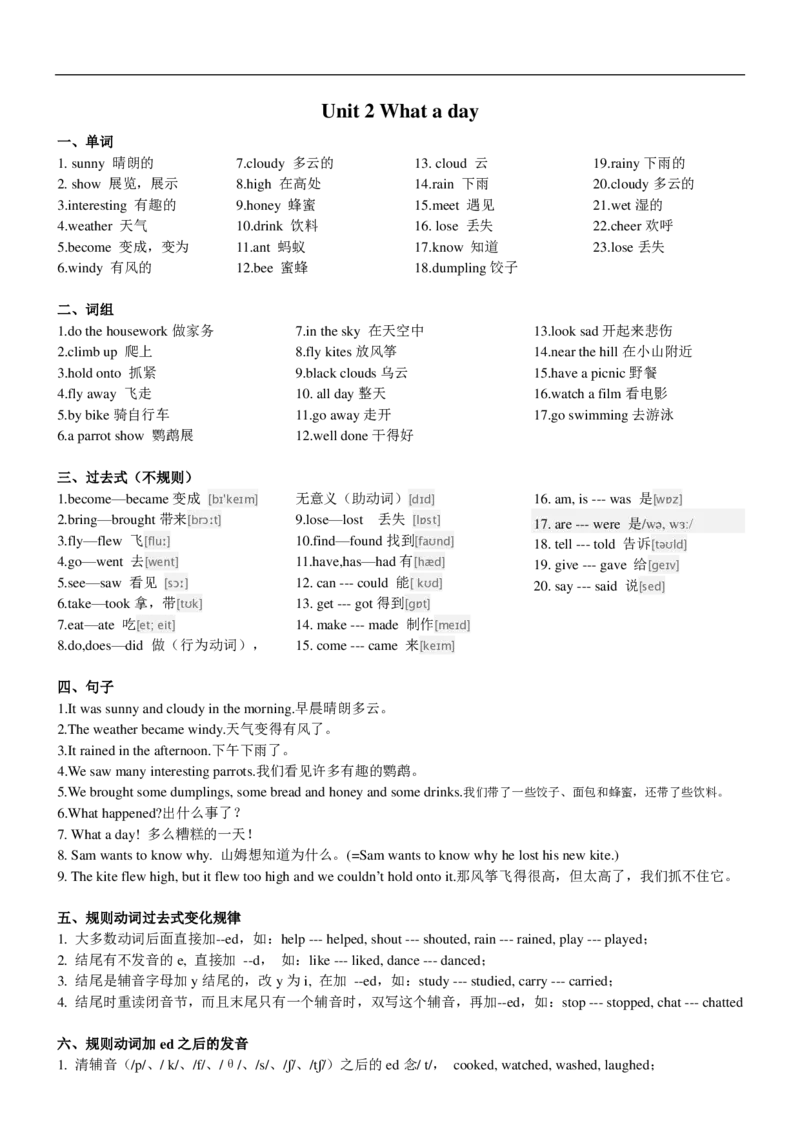
Unit 2 What a day
一、单词
1. sunny 晴朗的 7.cloudy 多云的 13. cloud 云 19.rainy下雨的
2. show 展览,展示 8.high 在高处 14.rain 下雨 20.cloudy多云的
3.interesting 有趣的 9.honey 蜂蜜 15.meet 遇见 21.wet湿的
4.weather 天气 10.drink 饮料 16. lose 丢失 22.cheer欢呼
5.become 变成,变为 11.ant 蚂蚁 17.know 知道 23.lose丢失
6.windy 有风的 12.bee 蜜蜂 18.dumpling饺子
二、词组
1.do the housework做家务 7.in the sky 在天空中 13.look sad开起来悲伤
2.climb up 爬上 8.fly kites放风筝 14.near the hill在小山附近
3.hold onto 抓紧 9 .black clouds乌云 15.have a picnic野餐
4.fly away 飞走 10. all day整天 16.watch a film看电影
5.by bike骑自行车 11.go away走开 17.go swimming去游泳
6.a parrot show 鹦鹉展 12.well done干得好
三、过去式(不规则)
1.become—became变成 [bɪ'keɪm] 无 意 义(助动词)[dɪd] 16. am, is --- was 是[wɒz]
2.bring—brought带来[brɔːt] 9.lose—lost 丢失 [lɒst] 17. are --- were 是/wə, wɜː/
3.fly—flew 飞[fluː] 10.find—found找到[faʊnd] 18. tell --- told 告诉[təʊld]
4.go—went 去[went] 11.have,has—had有[hæd] 19. give --- gave 给[ɡeɪv]
5.see—saw 看见 [sɔː] 12. can --- could 能[ kʊd] 20. say --- said 说[sed]
6.take—took拿,带[tʊk] 13. get --- got得到[ɡɒt]
7.eat—ate 吃[et; eit] 14. make --- made 制作[meɪd]
8.do,does—did 做(行为动词), 15. come --- came 来[keɪm]
四、句子
1.It was sunny and cloudy in the morning.早晨晴朗多云。
2.The weather became windy.天气变得有风了。
3.It rained in the afternoon.下午下雨了。
4.We saw many interesting parrots.我们看见许多有趣的鹦鹉。
5.We brought some dumplings, some bread and honey and some drinks.我们带了一些饺子、面包和蜂蜜,还带了些饮料。
6.What happened?出什么事了?
7. What a day! 多么糟糕的一天!
8. Sam wants to know why. 山姆想知道为什么。(=Sam wants to know why he lost his new kite.)
9. The kite flew high, but it flew too high and we couldn’t hold onto it.那风筝飞得很高,但太高了,我们抓不住它。
五、规则动词过去式变化规律
1. 大多数动词后面直接加--ed,如:help --- helped, shout --- shouted, rain --- rained, play --- played;
2. 结尾有不发音的e, 直接加 --d, 如:like --- liked, dance --- danced;
3. 结尾是辅音字母加y结尾的,改y为i, 在加 --ed,如:study --- studied, carry --- carried;
4. 结尾时重读闭音节,而且末尾只有一个辅音时,双写这个辅音,再加--ed,如:stop --- stopped, chat --- chatted
六、规则动词加ed之后的发音
1. 清辅音(/p/、/ k/、/f/、/θ/、/s/、/ʃ/、/tʃ/)之后的ed念/ t/, cooked, watched, washed, laughed;2. 元音以及浊辅音(/b/、/g/、/v/、/ð/、/z/、/dʒ/、/m/、/n/、/ŋ/、/ ǀ/)之后的ed念/d/,showed, lived, played;
3. 在/ t/、/d/之后的ed念/ɪd/,visited, needed.
七、语法知识点
1、(1)could引导的一般过去时的否定句,在could之后加not:could not=couldn’t
Six years ago, I could write.(否定句) Six years ago, I couldn’t write.
(2)could引导的一般过去时的一般问句,将could调至句首:
Mike could read and draw.(一般问句) Could Mike read or draw?
(3)could引导的特殊问句:特殊疑问句+could引导的一般问句:
They could ride a bike. (对画线部分提问)
Could they ride a bike (用do what替换) ? What could they do ?