页 1
新人教版六年级英语上册(语境下)背单词
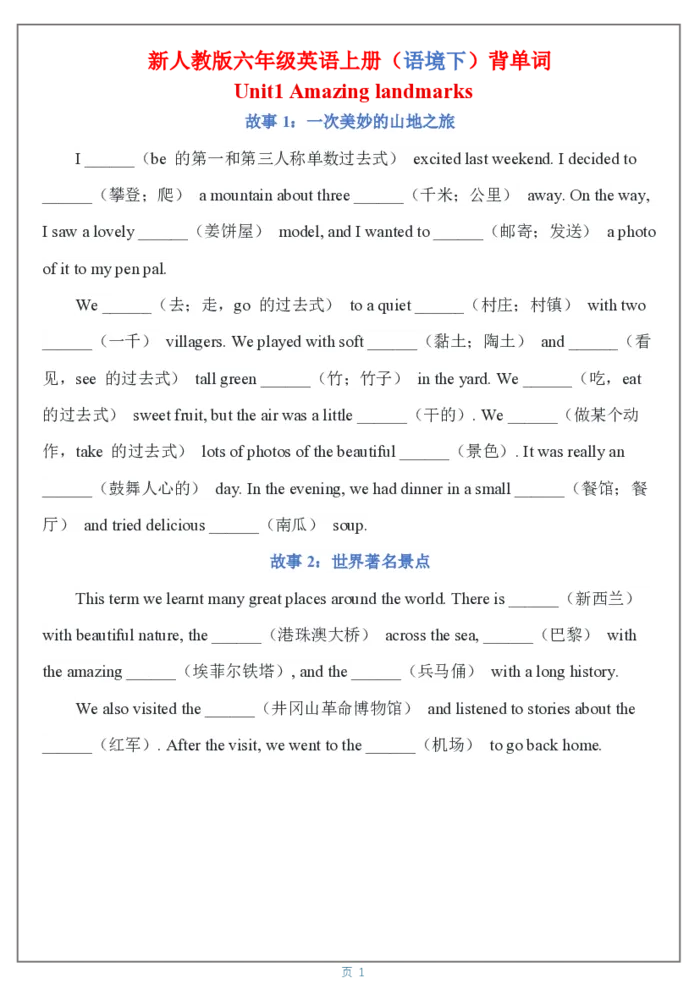
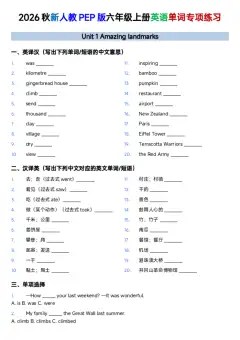
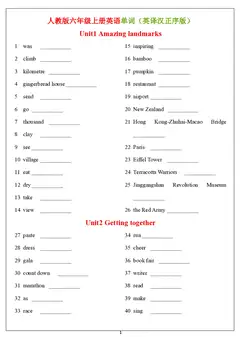
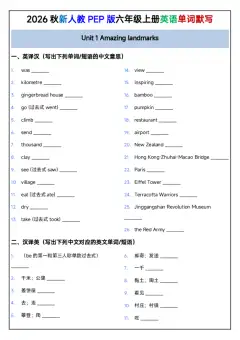
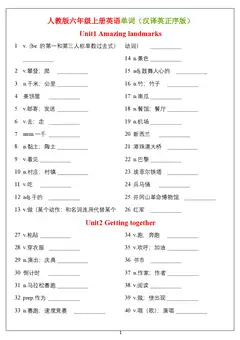
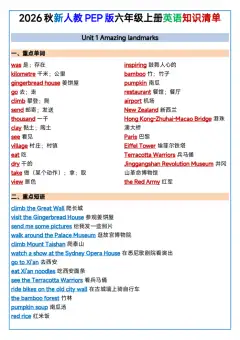
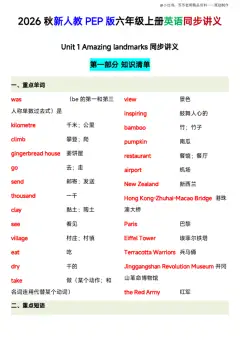
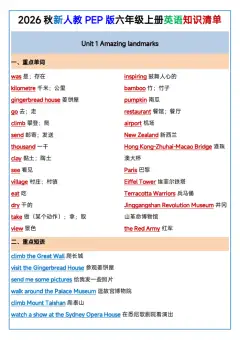
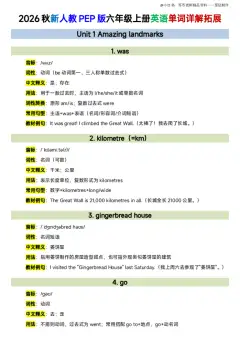
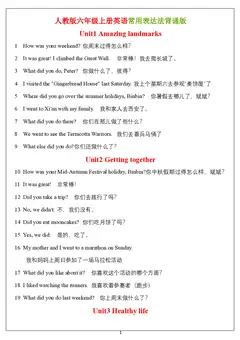
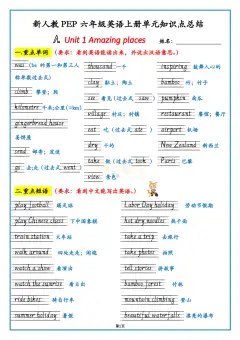
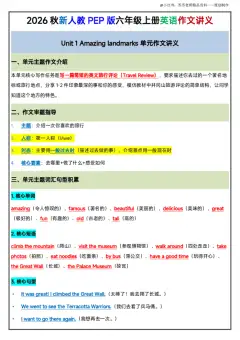
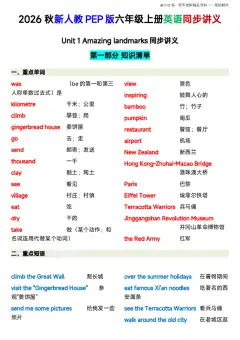
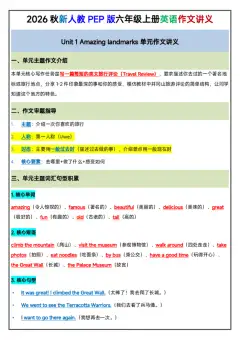
 Unit1 Amazing landmarks
故事1:一次美妙的山地之旅
I ______(be 的第一和第三人称单数过去式) excited last weekend. I decided to
______(攀登;爬) a mountain about three ______(千米;公里) away. On the way,
I saw a lovely ______(姜饼屋) model, and I wanted to ______(邮寄;发送) a photo
of it to my pen pal.
We ______(去;走,go 的过去式) to a quiet ______(村庄;村镇) with two
______(一千) villagers. We played with soft ______(黏土;陶土) and ______(看
见,see 的过去式) tall green ______(竹;竹子) in the yard. We ______(吃,eat
的过去式) sweet fruit, but the air was a little ______(干的). We ______(做某个动
作,take 的过去式) lots of photos of the beautiful ______(景色). It was really an
______(鼓舞人心的) day. In the evening, we had dinner in a small ______(餐馆;餐
厅) and tried delicious ______(南瓜) soup.
故事2:世界著名景点
This term we learnt many great places around the world. There is ______(新西兰)
with beautiful nature, the ______(港珠澳大桥) across the sea, ______(巴黎) with
the amazing ______(埃菲尔铁塔), and the ______(兵马俑) with a long history.
We also visited the ______(井冈山革命博物馆) and listened to stories about the
______(红军). After the visit, we went to the ______(机场) to go back home.


 页 2
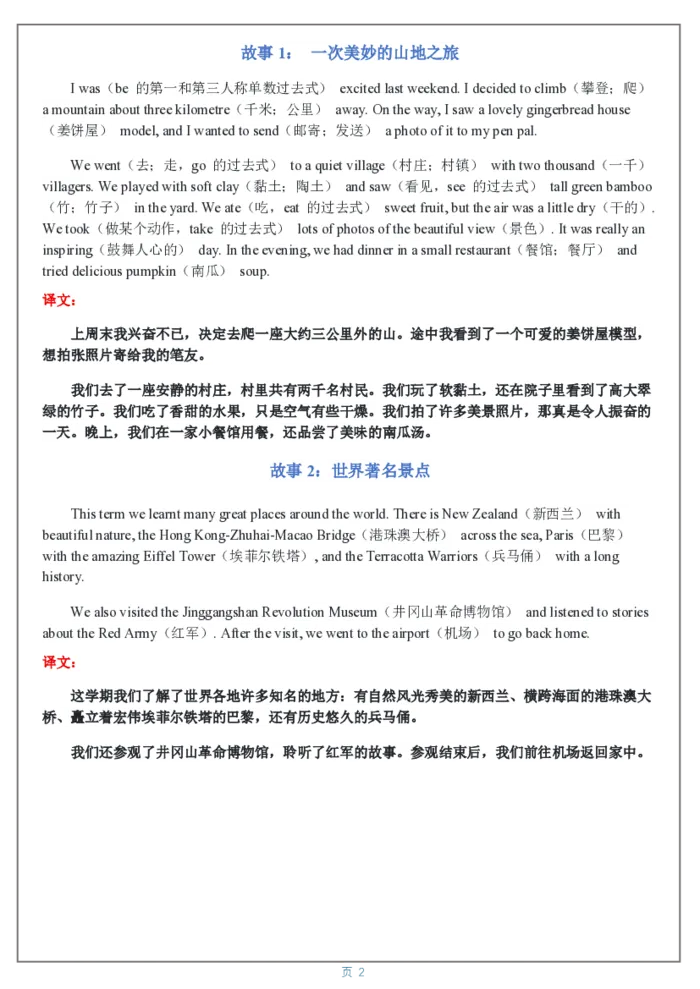
故事1: 一次美妙的山地之旅
I was(be 的第一和第三人称单数过去式) excited last weekend. I decided to climb(攀登;爬)
a mountain about three kilometre(千米;公里) away. On the way, I saw a lovely gingerbread house
(姜饼屋) model, and I wanted to send(邮寄;发送) a photo of it to my pen pal.
We went(去;走,go 的过去式) to a quiet village(村庄;村镇) with two thousand(一千)
villagers. We played with soft clay(黏土;陶土) and saw(看见,see 的过去式) tall green bamboo
(竹;竹子) in the yard. We ate(吃,eat 的过去式) sweet fruit, but the air was a little dry(干的).
We took(做某个动作,take 的过去式) lots of photos of the beautiful view(景色). It was really an
inspiring(鼓舞人心的) day. In the evening, we had dinner in a small restaurant(餐馆;餐厅) and
tried delicious pumpkin(南瓜) soup.
译文:
上周末我兴奋不已,决定去爬一座大约三公里外的山。途中我看到了一个可爱的姜饼屋模型,
想拍张照片寄给我的笔友。
我们去了一座安静的村庄,村里共有两千名村民。我们玩了软黏土,还在院子里看到了高大翠
绿的竹子。我们吃了香甜的水果,只是空气有些干燥。我们拍了许多美景照片,那真是令人振奋的
一天。晚上,我们在一家小餐馆用餐,还品尝了美味的南瓜汤。
故事2:世界著名景点
This term we learnt many great places around the world. There is New Zealand(新西兰) with
beautiful nature, the Hong Kong-Zhuhai-Macao Bridge(港珠澳大桥) across the sea, Paris(巴黎)
with the amazing Eiffel Tower(埃菲尔铁塔), and the Terracotta Warriors(兵马俑) with a long
history.
We also visited the Jinggangshan Revolution Museum(井冈山革命博物馆) and listened to stories
about the Red Army(红军). After the visit, we went to the airport(机场) to go back home.
译文:
这学期我们了解了世界各地许多知名的地方:有自然风光秀美的新西兰、横跨海面的港珠澳大
桥、矗立着宏伟埃菲尔铁塔的巴黎,还有历史悠久的兵马俑。
我们还参观了井冈山革命博物馆,聆听了红军的故事。参观结束后,我们前往机场返回家中。


 页 3
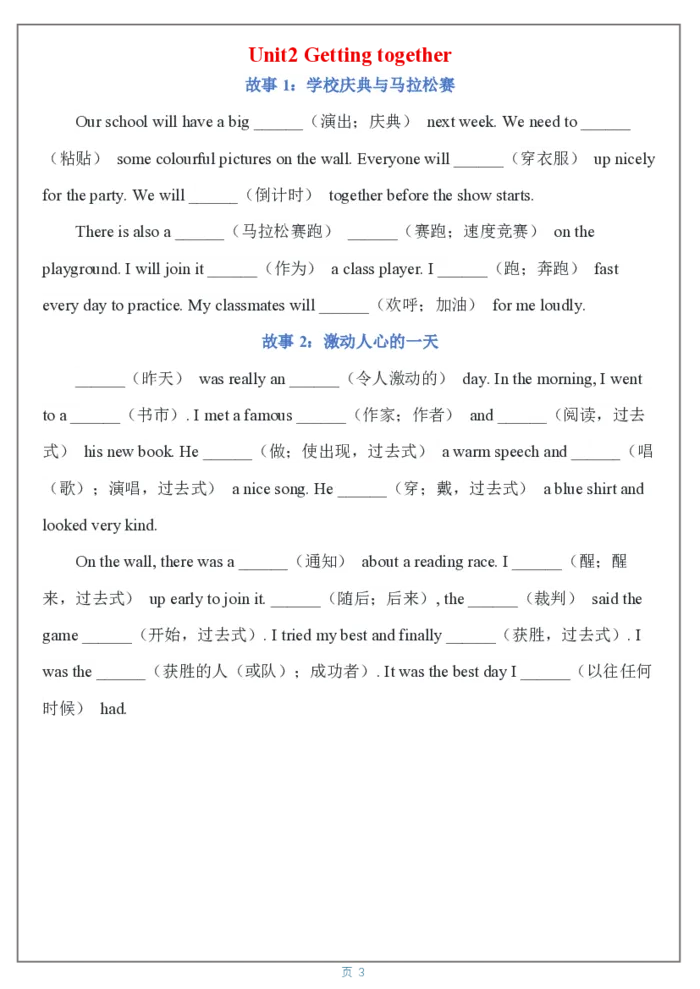
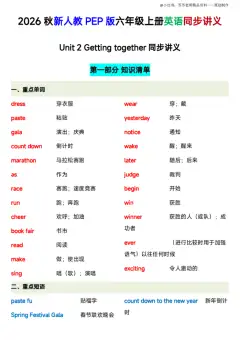
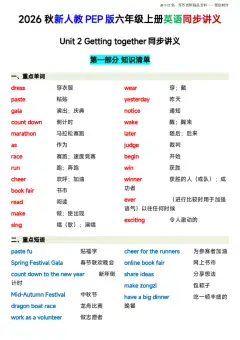
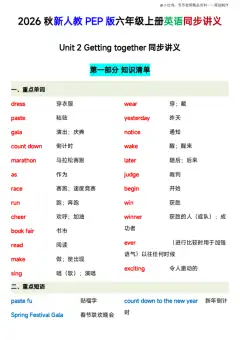
Unit2 Getting together
故事1:学校庆典与马拉松赛
Our school will have a big ______(演出;庆典) next week. We need to ______
(粘贴) some colourful pictures on the wall. Everyone will ______(穿衣服) up nicely
for the party. We will ______(倒计时) together before the show starts.
There is also a ______(马拉松赛跑) ______(赛跑;速度竞赛) on the
playground. I will join it ______(作为) a class player. I ______(跑;奔跑) fast
every day to practice. My classmates will ______(欢呼;加油) for me loudly.
故事2:激动人心的一天
______(昨天) was really an ______(令人激动的) day. In the morning, I went
to a ______(书市). I met a famous ______(作家;作者) and ______(阅读,过去
式) his new book. He ______(做;使出现,过去式) a warm speech and ______(唱
(歌);演唱,过去式) a nice song. He ______(穿;戴,过去式) a blue shirt and
looked very kind.
On the wall, there was a ______(通知) about a reading race. I ______(醒;醒
来,过去式) up early to join it. ______(随后;后来), the ______(裁判) said the
game ______(开始,过去式). I tried my best and finally ______(获胜,过去式). I
was the ______(获胜的人(或队);成功者). It was the best day I ______(以往任何
时候) had.


 页 4
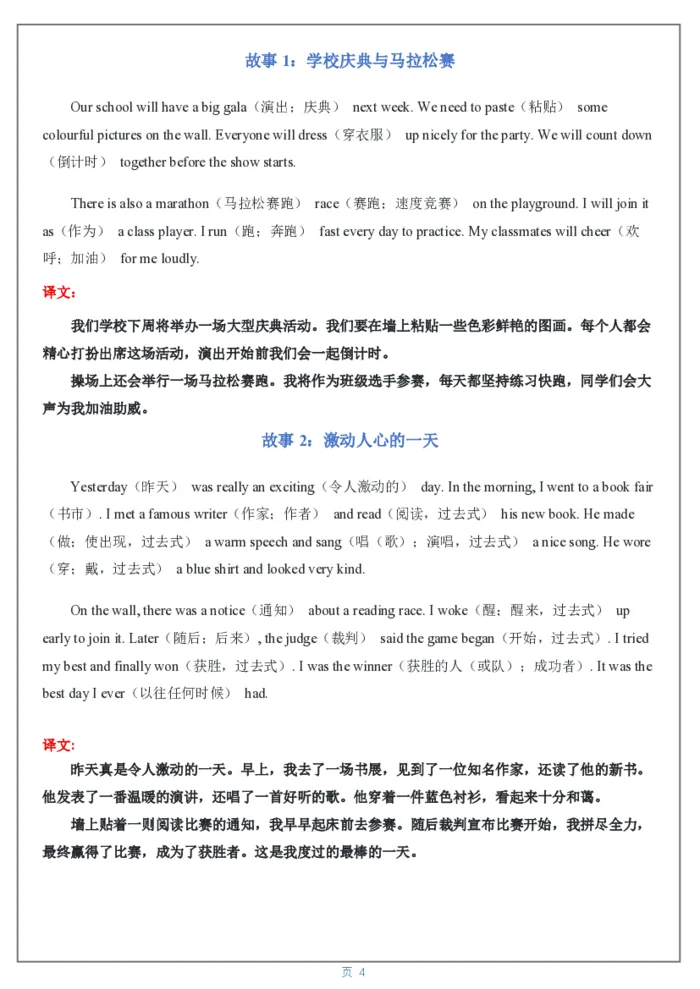
故事1:学校庆典与马拉松赛
Our school will have a big gala(演出;庆典) next week. We need to paste(粘贴) some
colourful pictures on the wall. Everyone will dress(穿衣服) up nicely for the party. We will count down
(倒计时) together before the show starts.
There is also a marathon(马拉松赛跑) race(赛跑;速度竞赛) on the playground. I will join it
as(作为) a class player. I run(跑;奔跑) fast every day to practice. My classmates will cheer(欢
呼;加油) for me loudly.
译文:
我们学校下周将举办一场大型庆典活动。我们要在墙上粘贴一些色彩鲜艳的图画。每个人都会
精心打扮出席这场活动,演出开始前我们会一起倒计时。
操场上还会举行一场马拉松赛跑。我将作为班级选手参赛,每天都坚持练习快跑,同学们会大
声为我加油助威。
故事2:激动人心的一天
Yesterday(昨天) was really an exciting(令人激动的) day. In the morning, I went to a book fair
(书市). I met a famous writer(作家;作者) and read(阅读,过去式) his new book. He made
(做;使出现,过去式) a warm speech and sang(唱(歌);演唱,过去式) a nice song. He wore
(穿;戴,过去式) a blue shirt and looked very kind.
On the wall, there was a notice(通知) about a reading race. I woke(醒;醒来,过去式) up
early to join it. Later(随后;后来), the judge(裁判) said the game began(开始,过去式). I tried
my best and finally won(获胜,过去式). I was the winner(获胜的人(或队);成功者). It was the
best day I ever(以往任何时候) had.

译文:
昨天真是令人激动的一天。早上,我去了一场书展,见到了一位知名作家,还读了他的新书。
他发表了一番温暖的演讲,还唱了一首好听的歌。他穿着一件蓝色衬衫,看起来十分和蔼。
墙上贴着一则阅读比赛的通知,我早早起床前去参赛。随后裁判宣布比赛开始,我拼尽全力,
最终赢得了比赛,成为了获胜者。这是我度过的最棒的一天。


 页 5
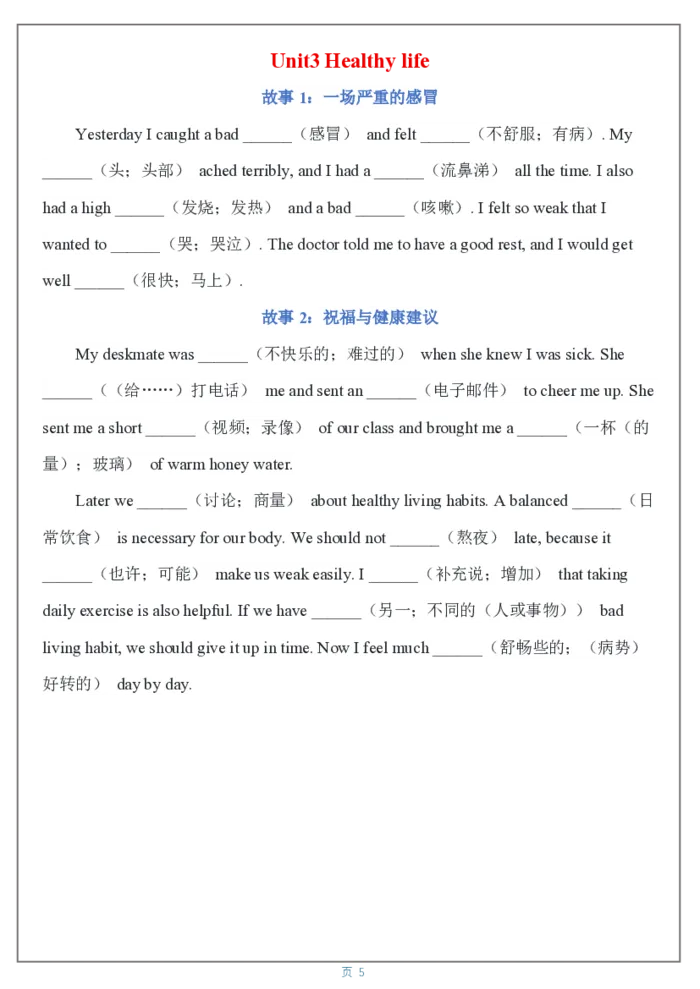
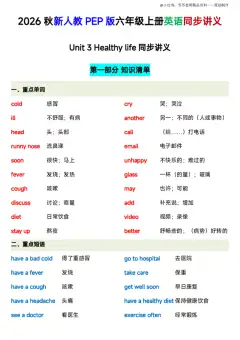
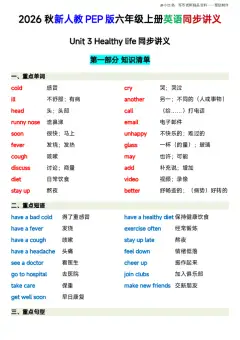
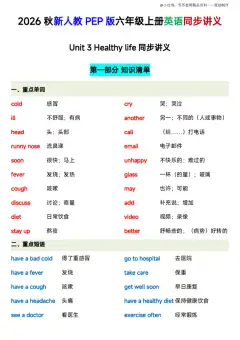
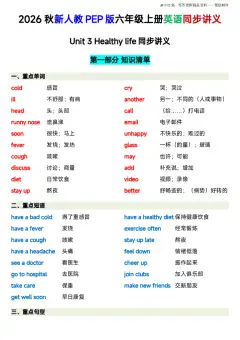
Unit3 Healthy life
故事1:一场严重的感冒
Yesterday I caught a bad ______(感冒) and felt ______(不舒服;有病). My
______(头;头部) ached terribly, and I had a ______(流鼻涕) all the time. I also
had a high ______(发烧;发热) and a bad ______(咳嗽). I felt so weak that I
wanted to ______(哭;哭泣). The doctor told me to have a good rest, and I would get
well ______(很快;马上).
故事2:祝福与健康建议
My deskmate was ______(不快乐的;难过的) when she knew I was sick. She
______((给……)打电话) me and sent an ______(电子邮件) to cheer me up. She
sent me a short ______(视频;录像) of our class and brought me a ______(一杯(的
量);玻璃) of warm honey water.
Later we ______(讨论;商量) about healthy living habits. A balanced ______(日
常饮食) is necessary for our body. We should not ______(熬夜) late, because it
______(也许;可能) make us weak easily. I ______(补充说;增加) that taking
daily exercise is also helpful. If we have ______(另一;不同的(人或事物)) bad
living habit, we should give it up in time. Now I feel much ______(舒畅些的;(病势)
好转的) day by day.


 页 6
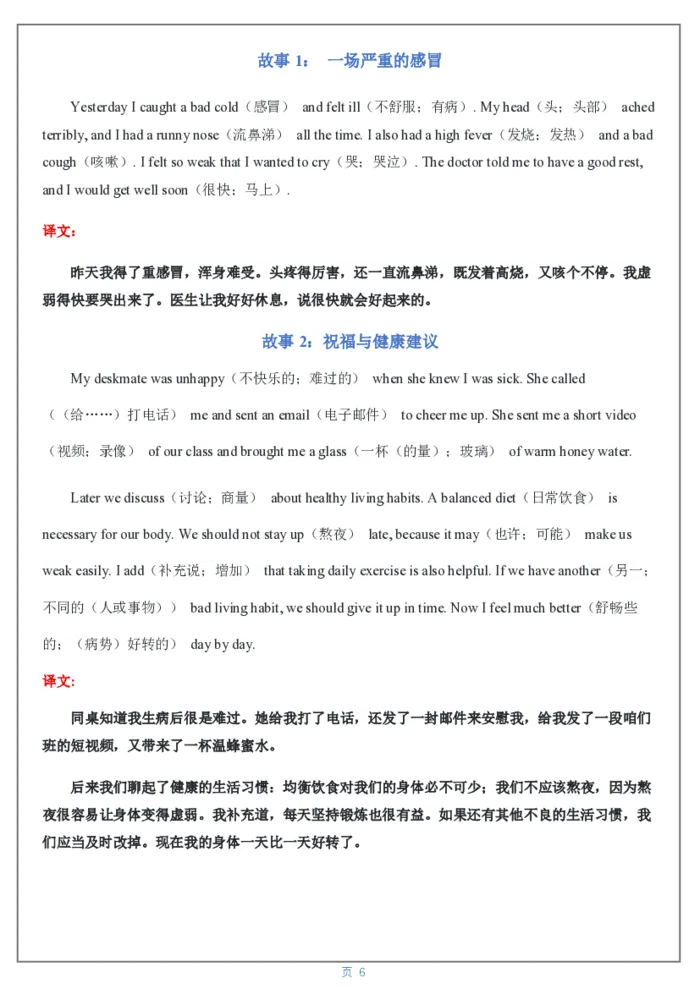
故事1: 一场严重的感冒
Yesterday I caught a bad cold(感冒) and felt ill(不舒服;有病). My head(头;头部) ached
terribly, and I had a runny nose(流鼻涕) all the time. I also had a high fever(发烧;发热) and a bad
cough(咳嗽). I felt so weak that I wanted to cry(哭;哭泣). The doctor told me to have a good rest,
and I would get well soon(很快;马上).
译文:
昨天我得了重感冒,浑身难受。头疼得厉害,还一直流鼻涕,既发着高烧,又咳个不停。我虚
弱得快要哭出来了。医生让我好好休息,说很快就会好起来的。
故事2:祝福与健康建议
My deskmate was unhappy(不快乐的;难过的) when she knew I was sick. She called
((给……)打电话) me and sent an email(电子邮件) to cheer me up. She sent me a short video
(视频;录像) of our class and brought me a glass(一杯(的量);玻璃) of warm honey water.
Later we discuss(讨论;商量) about healthy living habits. A balanced diet(日常饮食) is
necessary for our body. We should not stay up(熬夜) late, because it may(也许;可能) make us
weak easily. I add(补充说;增加) that taking daily exercise is also helpful. If we have another(另一;
不同的(人或事物)) bad living habit, we should give it up in time. Now I feel much better(舒畅些
的;(病势)好转的) day by day.
译文:
同桌知道我生病后很是难过。她给我打了电话,还发了一封邮件来安慰我,给我发了一段咱们
班的短视频,又带来了一杯温蜂蜜水。
后来我们聊起了健康的生活习惯:均衡饮食对我们的身体必不可少;我们不应该熬夜,因为熬
夜很容易让身体变得虚弱。我补充道,每天坚持锻炼也很有益。如果还有其他不良的生活习惯,我
们应当及时改掉。现在我的身体一天比一天好转了。


 页 7
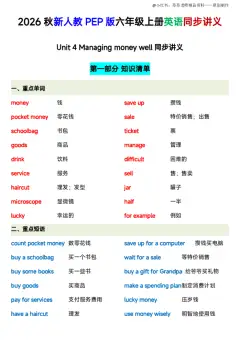
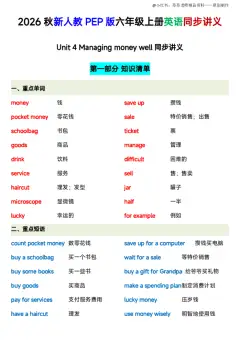
Unit4 Managing money well
故事1:我的零花钱计划
My parents give me a little ______(零花钱) every week, and I always keep the
______(钱) safely in my ______(书包). I know money is hard to earn, so I never
spend it randomly. There is a small shop near my school, and it sells all kinds of ______(商
品), like sweet ______(饮料), cool stationery and cartoon stickers. The shop keeper is
very kind and provides warm ______(服务) to every student.
Last month, I wanted to get a new ______(理发;发型) and buy a ______(显微
镜) for my science class. I heard the shop near the park would have a big ______(特价销
售;出售) this weekend, and many things would be at very good prices. I felt so ______
(幸运的) because I could ______(攒钱) much money for the things I need. I also
wanted to buy a ______(票) for the science show, so I made a careful plan for my pocket
money. I gave up buying my favorite fruit juice every day, and finally I got all the things I
wanted. I felt so proud of myself.
故事2:一家特别慈善商店
Our school has a small charity shop, and students can ______(管理) it in turns. It is
not ______(困难的) to run the shop if we work carefully. We ______(出售;售卖)
many second-hand things there, ______(例如), story books, pretty paper ______(罐
子) and hand-made cards.
All the goods are very cheap, and most of them cost only ______(一半) of their
original price. The money we get will be used to help students in need. At first, some of us
were worried that we could not sell things well, but with the teacher’s help, we did a great
job. We also learnt that it is not easy to make money, and we should value every coin we
have.

 页 8
故事1: 我的零花钱计划
My parents give me a little pocket money(零花钱) every week, and I always keep the money
(钱) safely in my schoolbag(书包). I know money is hard to earn, so I never spend it randomly.
There is a small shop near my school, and it sells all kinds of goods(商品), like sweet drinks(饮料),
cool stationery and cartoon stickers. The shop keeper is very kind and provides warm service(服务) to
every student.
Last month, I wanted to get a new haircut(理发;发型) and buy a microscope(显微镜) for my
science class. I heard the shop near the park would have a big sale(特价销售;出售) this weekend, and
many things would be at very good prices. I felt so lucky(幸运的) because I could save up(攒钱)
much money for the things I need. I also wanted to buy a ticket(票) for the science show, so I made a
careful plan for my pocket money. I gave up buying my favorite fruit juice every day, and finally I got all
the things I wanted. I felt so proud of myself.
译文:
我父母每周会给我一点零花钱,我总把钱妥善收在书包里。我知道挣钱不容易,所以从不乱
花。学校附近有一家小店,售卖各类商品,比如甜饮料、别致的文具和卡通贴纸。店主十分和善,
对每一位学生都服务周到。
上个月,我想剪个新发型,还想为科学课添置一台显微镜。我听说公园旁的商店这周末会举办
大促销,很多商品价格都十分实惠。我觉得很幸运,这样就能攒下不少钱来买需要的东西。我还想
买一张科学展的门票,于是为自己的零花钱做了详细的规划。我不再每天买最爱的果汁,最终如愿
买到了所有想要的东西,心里特别为自己骄傲。
故事2: 一家特别慈善商店
Our school has a small charity shop, and students can manage(管理) it in turns. It is not difficult
(困难的) to run the shop if we work carefully. We sell(出售;售卖) many second-hand things there,
for example(例如), story books, pretty paper jars(罐子) and hand-made cards.
All the goods are very cheap, and most of them cost only half(一半) of their original price. The
money we get will be used to help students in need. At first, some of us were worried that we could not sell
things well, but with the teacher’s help, we did a great job. We also learnt that it is not easy to make
money, and we should value every coin we have.
译文:
我们学校有一家小型慈善商店,学生们可以轮流参与管理。只要我们用心打理,经营这家店并
不难。店里售卖很多二手物品,比如故事书、精致的纸罐和手工贺卡。
所有商品都很便宜,大多只需原价的一半。售卖所得的善款会全部用于帮助有需要的学生。一
开始,有些同学担心东西卖不好,但在老师的帮助下,我们完成得十分出色。我们也从中体会到挣
钱不易,应当珍惜手里的每一分钱。


 页 9
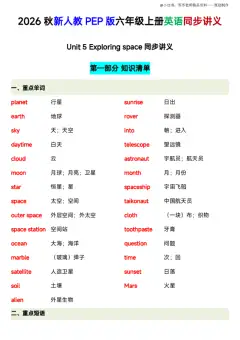
Unit5 Exploring space
故事1:美丽的地球与太空
The ______(地球) is a beautiful ______(行星) in ______(太空;空间). In
the ______(白天), the ______(天;天空) has soft ______(云). The wide ______
(大海;海洋) and rich ______(土壤) feed all lives. We can enjoy warm ______
(日出) and colourful ______(日落) every day. Kids like to play with a glass ______
((玻璃)弹子) and wonder what is in ______(外层空间;外太空).
At night, the bright ______(月球;月亮;卫星) and ______(恒星;星) shine
high. A man-made ______(人造卫星) and the ______(空间站) fly above us. We can
use a ______(望远镜) to watch them. Every ______(月;月份), we learn new space
facts. Many kids want to be an ______(宇航员;航天员) and fly ______(朝;进入)
space by ______(宇宙飞船).
故事2: 探索火星
______(火星) is a famous red planet. People have many ______(问题) about it:
Is there an ______(外星生物) there? What is its soil like?
We sent a ______(探测器) to Mars for research. This is not the first ______(次;
回) we have explored it. Our Chinese ______(中国航天员) also make great progress.
They take daily things like a piece of ______((一块)布;织物) and ______(牙膏)
to the space station. We will find more space secrets in the future.


 页 10
故事1:美丽的地球与太空
The earth(地球) is a beautiful planet(行星) in space(太空;空间). In the daytime(白天),
the sky(天;天空) has soft cloud(云). The wide ocean(大海;海洋) and rich soil(土壤) feed
all lives. We can enjoy warm sunrise(日出) and colourful sunset(日落) every day. Kids like to play
with a glass marble((玻璃)弹子) and wonder what is in outer space(外层空间;外太空).
At night, the bright moon(月球;月亮;卫星) and star(恒星;星) shine high. A man-made
satellite(人造卫星) and the space station(空间站) fly above us. We can use a telescope(望远镜)
to watch them. Every month(月;月份), we learn new space facts. Many kids want to be an astronaut
(宇航员;航天员) and fly into(朝;进入) space by spaceship(宇宙飞船).
译文:
地球是太空中一颗美丽的行星。白天,天空飘着轻柔的云朵,辽阔的海洋与肥沃的土壤滋养着
世间万物。我们每天都能欣赏到温暖的日出与绚烂的日落。孩子们喜欢玩玻璃弹珠,还总好奇外太
空里藏着什么。
到了夜晚,皎洁的月亮与点点繁星在高空闪耀。人造卫星和空间站在我们上方飞行,我们可以
用望远镜观测它们。每个月我们都会学到新的太空知识。许多孩子都梦想成为宇航员,乘坐宇宙飞
船飞向太空。
故事2:探索火星
Mars(火星) is a famous red planet. People have many question(问题) about it: Is there an alien
(外星生物) there? What is its soil like?
We sent a rover(探测器) to Mars for research. This is not the first time(次;回) we have
explored it. Our Chinese taikonaut(中国航天员) also make great progress. They take daily things like a
piece of cloth((一块)布;织物) and toothpaste(牙膏) to the space station. We will find more
space secrets in the future.
译文:
火星是一颗著名的红色行星。人们对它有许多疑问:那里有外星生物吗?它的土壤是什么样
的?
我们向火星发射了一台探测器开展研究,这已经不是我们首次探索火星了。中国航天员也取得
了巨大进展,他们会把一块布料、牙膏这类日常用品带上空间站。未来我们将会发现更多太空的奥
秘。


 页 11
Unit6 Energy nature and us
故事1:我们生活中的能量
______(电) is a kind of ______(能;能量), and it is an important ______(能
源) ______(来源) in our daily life. ______(太阳的) energy is another green
______(类型;种类) of clean energy. It can ______(照亮) our rooms, ______(加
热) water and ______(使变凉,冷却) the air. It also helps ______(使运行) all
kinds of machines.
Natural ______(资源) will ______(用完) one day if we waste too much. There
are ______(不多) big energy sources around us, so we must ______(改变) our living
habits. Small and ______(迅速的) actions make a big ______(差别;不同之处). For
example, take a short ______(淋浴) and ______(拔掉…… 的电源插头) the
machines when you don’t use them.
故事2:绿色生活小贴士
To ______(减少) waste in daily life, we can do many easy things. We can turn off
the ______(空调机) when we go out, and we needn’t ______(驾驶;开车) to places
that are not far. We can ______(再次使用;重复使用) many things in our ______(自
己的) life.
At the ______(集市;市场), we can bring our own bag instead of using new plastic
bags and ______(瓶子) packages. The ______(最高的) rule is to keep things ______
(有用的;有益的) as long as possible. Don’t throw things away just because one
______(一面;一边) looks ______(脏的). Small green habits will make our world
much better.


 页 12
故事1:我们生活中的能量
Electricity(电) is a kind of power(能;能量), and it is an important energy(能源) source
(来源) in our daily life. Solar(太阳的) energy is another green type(类型;种类) of clean
energy. It can light(照亮) our rooms, heat(加热) water and cool(使变凉,冷却) the air. It also
helps run(使运行) all kinds of machines.
Natural resource(资源) will run out(用完) one day if we waste too much. There are few(不
多) big energy sources around us, so we must change(改变) our living habits. Small and quick(迅速
的) actions make a big difference(差别;不同之处). For example, take a short shower(淋浴) and
unplug(拔掉…… 的电源插头) the machines when you don’t use them.
译文:
电是一种能量,也是我们日常生活中重要的能源。太阳能是另一种绿色清洁能源,它可以为房
间照明、加热水、给空气降温,还能驱动各类机器运转。
如果我们过度浪费,自然资源总有一天会枯竭。我们身边的大型能源十分有限,因此必须改变
生活习惯。微小及时的行动就能带来显著改变,比如缩短淋浴时长,不用电器时拔掉电源插头。
故事2:绿色生活小贴士
To reduce(减少) waste in daily life, we can do many easy things. We can turn off the air
conditioner(空调机) when we go out, and we needn’t drive(驾驶;开车) to places that are not far.
We can reuse(再次使用;重复使用) many things in our own(自己的) life.
At the market(集市;市场), we can bring our own bag instead of using new plastic bags and bottle
(瓶子) packages. The top(最高的) rule is to keep things useful(有用的;有益的) as long as
possible. Don’t throw things away just because one side(一面;一边) looks dirty(脏的). Small
green habits will make our world much better.
译文:
要减少日常生活中的浪费,我们可以做很多简单易行的事。出门时可以关掉空调,路程不远的
地方也不必开车前往。生活中很多物品都可以重复利用。
去市场时,我们可以自带购物袋,不用新的塑料袋和瓶装包装。最核心的原则是让物品尽可能
长时间发挥用处,不要只因一面看起来脏了就把东西扔掉。小小的环保习惯,会让我们的世界变得
更加美好。