ARTICLE · 1069656
小学英语时态用法1000句,进初中前先弄懂这一块.英语再也不怕了,妈妈!

中小学电子版课本可下载
(温馨提示:点击下方蓝色字体进入获取界面)
孩子到了五六年级,英语里最容易卡住的地方,往往不是单词不会,而是一个句子到底该用什么时态。明明每个单词都认识,动词一换形式就容易写错。尤其到了初中,时态会越来越多,如果小学阶段没理顺,后面学起来确实容易乱。所以这次把常见用法整理成句子,直接放进具体语境里练,比死背规则更容易记。
【文末PDF】
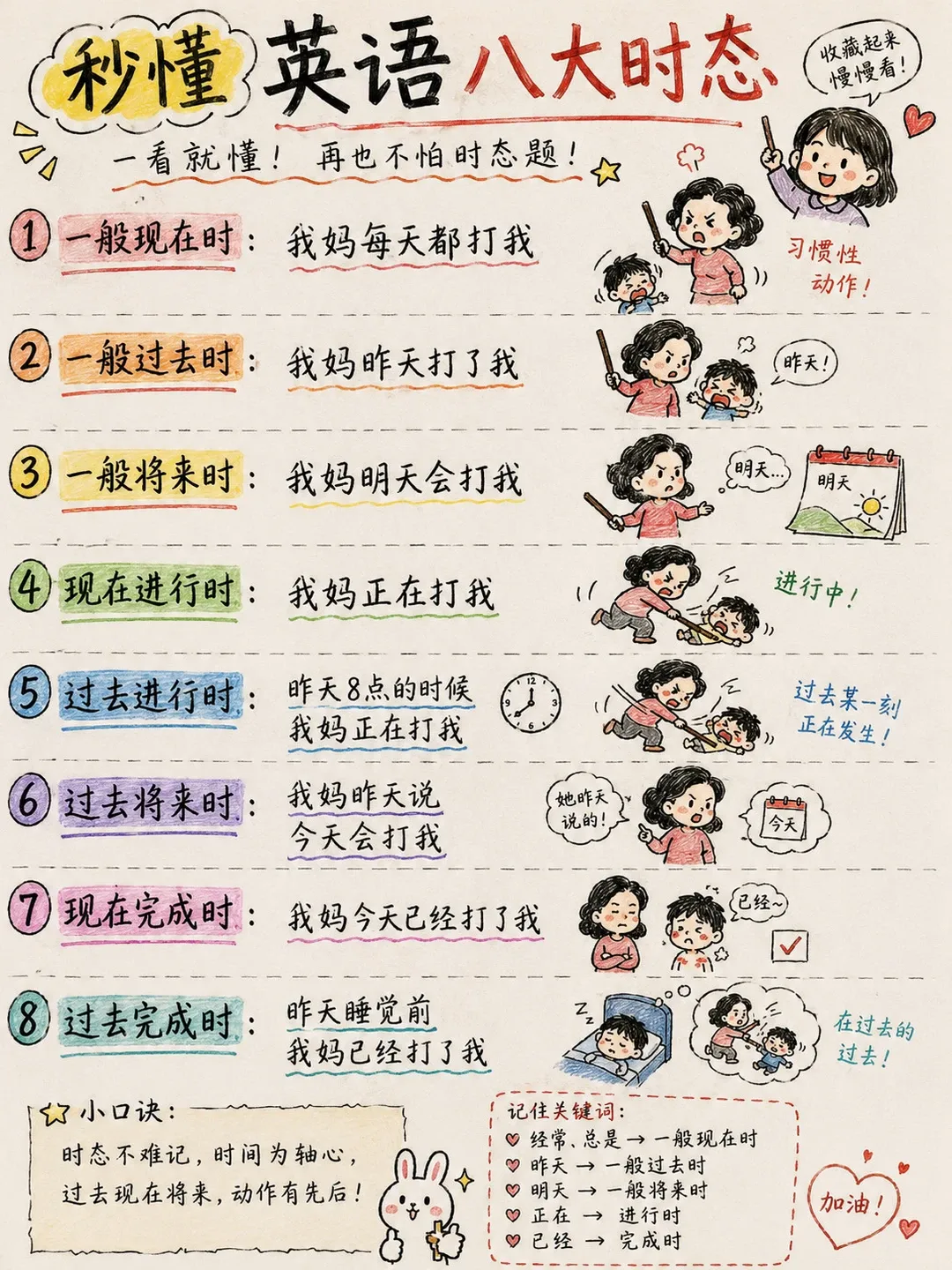
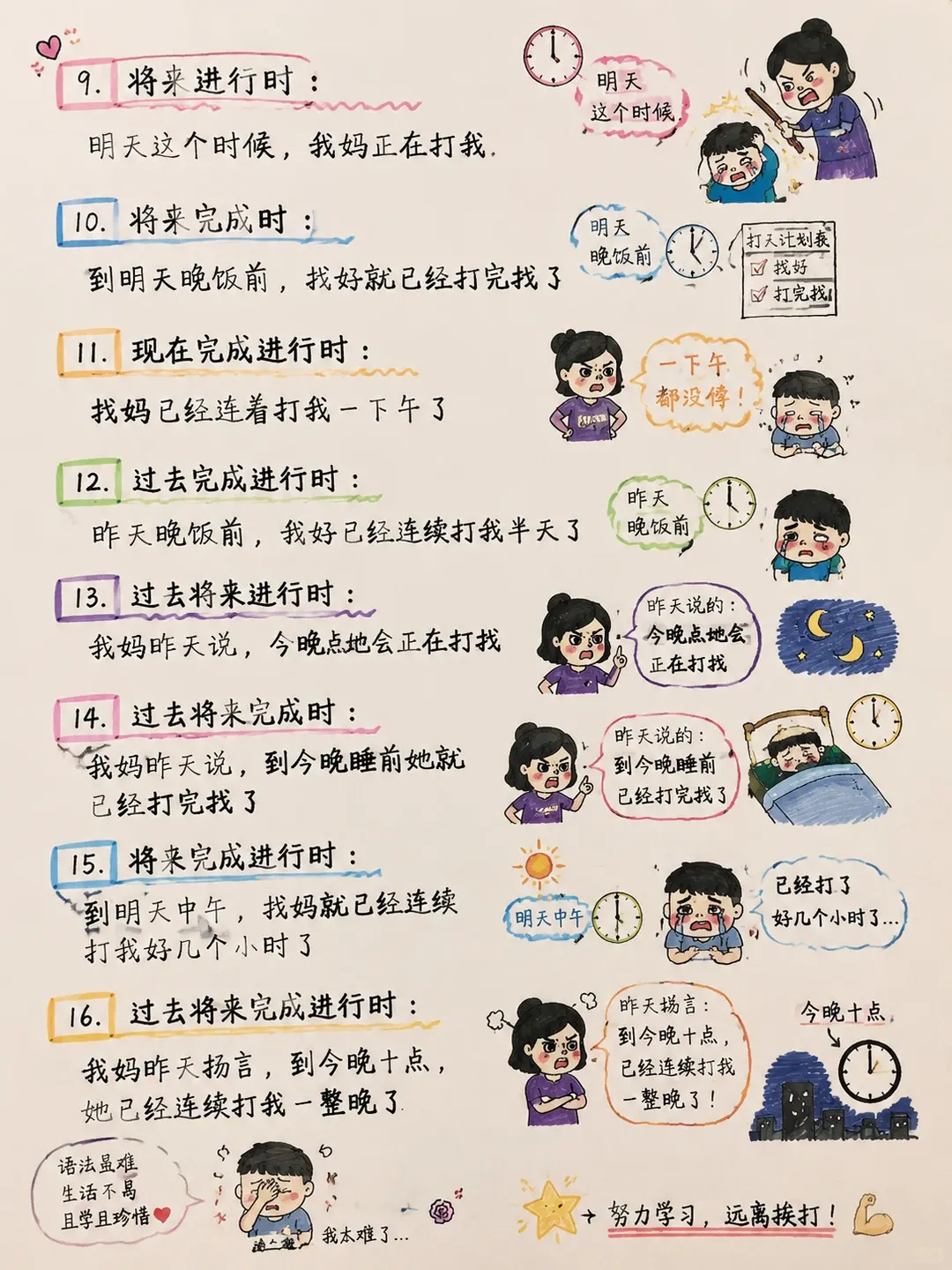


一、一般现在时:习惯与事实
我通常七点起床。
I usually get up at seven.我每天早上都会喝一杯牛奶。
I have a glass of milk every morning.妹妹喜欢在睡前听故事。
My sister likes listening to stories before bed.我们周末经常去公园骑自行车。
We often ride bikes in the park on weekends.他放学后通常先做作业。
He usually does his homework after school.我妈妈每天晚上检查我的书包。
My mom checks my schoolbag every evening.爸爸有时候星期六带我们去游泳。
Dad sometimes takes us swimming on Saturdays.我不喜欢太甜的饮料。
I don't like drinks that are too sweet.她每天花一点时间练习钢琴。
She spends some time practicing the piano every day.我们学校八点开始上课。
Our school starts classes at eight.我的朋友住在学校附近。
My friend lives near the school.这只猫晚上总是睡在沙发上。
The cat always sleeps on the sofa at night.我哥哥很喜欢踢足球。
My brother really likes playing soccer.我通常坐公交车去上学。
I usually take the bus to school.她周一到周五都很早起床。
She gets up early from Monday to Friday.我们午饭后有二十分钟的休息时间。
We have a twenty-minute break after lunch.他每周给奶奶打一次电话。
He calls Grandma once a week.我不经常看电视,因为我有很多作业。
I don't watch TV very often because I have a lot of homework.你通常几点睡觉?
What time do you usually go to bed?你姐姐喜欢什么运动?
What sport does your sister like?她每天走路去学校吗?
Does she walk to school every day?你们午饭在学校吃吗?
Do you have lunch at school?我爸爸周末很少工作。
My dad rarely works on weekends.我们有时候一起做晚饭。
We sometimes make dinner together.这个公交车站离我家不远。
This bus stop isn't far from my home.水在零摄氏度时结冰。
Water freezes at zero degrees Celsius.鸟会用翅膀飞翔。
Birds use their wings to fly.太阳从东方升起。
The sun rises in the east.冬天这里经常下雪。
It often snows here in winter.我的学校每年举办一次运动会。
My school holds a sports day every year.这家商店九点开门。
This store opens at nine.这条路通向火车站。
This road leads to the train station.大象通常吃植物。
Elephants usually eat plants.我们的英语老师会说三种语言。
Our English teacher speaks three languages.这本书有很多有趣的故事。
This book has many interesting stories.我的铅笔盒里有两支蓝色铅笔。
There are two blue pencils in my pencil case.她的哥哥比她高一点。
Her brother is a little taller than her.我们班有二十六名学生。
There are twenty-six students in our class.我的家乡夏天很热。
My hometown is very hot in summer.这条河流经我们的城市。
This river runs through our city.我每天都记得带水杯。
I remember to bring my water bottle every day.他总是把自己的东西收拾好。
He always puts his things away.我姐姐不喜欢早起。
My sister doesn't like getting up early.我们放学后通常一起聊天。
We usually chat together after school.这辆自行车属于我的哥哥。
This bike belongs to my brother.你每天需要多少时间完成作业?
How much time do you need to finish your homework every day?你的老师通常怎么教这个单词?
How does your teacher usually teach this word?我们班的同学都知道这个规则。
Everyone in our class knows this rule.如果天气很好,我们通常在操场上吃午饭。
If the weather is nice, we usually have lunch on the playground.我睡觉前总会把闹钟调好。
I always set my alarm before I go to bed.


二、一般过去时:过去发生的事
我昨天忘了带雨伞。
I forgot to bring my umbrella yesterday.我们上周参观了一个科学博物馆。
We visited a science museum last week.她昨天晚上给我讲了一个有趣的故事。
She told me an interesting story last night.我去年第一次学会了骑自行车。
I learned to ride a bike for the first time last year.他早上把早餐吃完了。
He finished his breakfast in the morning.我们周六在操场上踢了两个小时的足球。
We played soccer on the playground for two hours on Saturday.妈妈昨天买了一本新的英语书。
Mom bought a new English book yesterday.我放学后在图书馆找到了这本书。
I found this book in the library after school.她上个月去了上海。
She went to Shanghai last month.我昨天晚上没有看电视。
I didn't watch TV last night.他没有听见老师的问题。
He didn't hear the teacher's question.我们昨天没有赶上公交车。
We didn't catch the bus yesterday.妹妹昨天不想出去玩。
My sister didn't want to go out yesterday.我没有把钥匙放在桌子上。
I didn't put the key on the table.你昨天为什么这么晚回家?
Why did you come home so late yesterday?你什么时候开始学英语的?
When did you start learning English?谁打开了窗户?
Who opened the window?你们上周末去了哪里?
Where did you go last weekend?他什么时候发现自己的书不见了?
When did he notice that his book was missing?你昨天有没有完成作业?
Did you finish your homework yesterday?我小时候住在一个小村庄里。
I lived in a small village when I was young.她小时候很喜欢画画。
She loved drawing when she was little.我以前每天都和爷爷下棋。
I played chess with my grandpa every day when I was younger.我们小时候经常在河边玩。
We often played by the river when we were children.他以前害怕一个人睡觉。
He was afraid to sleep alone when he was younger.去年冬天,我们第一次看到了雪。
We saw snow for the first time last winter.昨天的比赛非常精彩。
Yesterday's game was exciting.昨晚外面特别安静。
It was very quiet outside last night.那家餐厅以前在学校附近。
That restaurant was near the school before.我小时候的房间很小。
My room was very small when I was young.她打开书包,发现里面没有铅笔。
She opened her schoolbag and found no pencil inside.我回到家以后发现妈妈不在。
I came home and found that Mom wasn't there.他看见老师后马上跑了过去。
He ran over as soon as he saw the teacher.我们到了电影院,但是电影已经开始了。
We arrived at the cinema, but the movie had already started.她摔倒了,但是很快站了起来。
She fell down but got up quickly.我在房间里找了半天,终于找到了我的手表。
I looked around my room for a long time and finally found my watch.弟弟打碎了杯子,然后主动告诉了妈妈。
My brother broke the cup and then told Mom about it.我昨天在书店遇到了我的英语老师。
I met my English teacher at the bookstore yesterday.我们回家的路上买了一些面包。
We bought some bread on our way home.她昨天下午给朋友写了一张卡片。
She wrote a card to her friend yesterday afternoon.比赛结束后,我们一起拍了一张照片。
We took a picture together after the game.我第一次吃那道菜时觉得味道很奇怪。
I thought the dish tasted strange when I tried it for the first time.昨天的天气比今天冷。
The weather was colder yesterday than today.他考试前有点紧张,但最后表现得很好。
He was a little nervous before the test, but he did well in the end.我们昨天讨论了周末的计划。
We talked about our weekend plans yesterday.她借了我的彩笔,用完后还给了我。
She borrowed my colored pens and gave them back after using them.我本来想早点睡,但是一本书吸引了我。
I wanted to go to bed early, but a book caught my attention.他们去年搬到了一个更大的房子。
They moved to a bigger house last year.我第一次见到他时,他正在学校门口等朋友。
When I first met him, he was waiting for a friend at the school gate.那天我们玩得很开心,直到天开始下雨。
We had a great time that day until it started to rain.


三、一般将来时:计划与打算
我明天要早点起床。
I will get up early tomorrow.我们周末要去动物园。
We are going to the zoo this weekend.她下个月要参加一个英语比赛。
She will take part in an English competition next month.我放学后要先完成作业。
I am going to finish my homework first after school.爸爸今晚会做披萨。
Dad will make pizza tonight.我们暑假准备去海边。
We are going to the beach during the summer vacation.他明年要上六年级。
He will be in Grade Six next year.妈妈周五要去接我。
Mom is going to pick me up on Friday.我以后想成为一名科学家。
I want to be a scientist in the future.明天可能会下雨。
It may rain tomorrow.我相信你会通过考试。
I believe you will pass the test.别担心,我会帮助你的。
Don't worry. I will help you.我一会儿给你打电话。
I will call you later.我们今晚不打算出去吃饭。
We aren't going to eat out tonight.她明天不会来学校。
She won't come to school tomorrow.你周末准备做什么?
What are you going to do this weekend?你什么时候开始学游泳?
When are you going to start learning to swim?他们明年会搬到新家吗?
Will they move to a new home next year?你长大后想做什么?
What do you want to do when you grow up?你打算什么时候完成这幅画?
When are you going to finish this picture?我们下午要一起练习英语。
We are going to practice English together this afternoon.我的朋友下周要来看我。
My friend will visit me next week.她准备给妈妈做一张生日卡片。
She is going to make a birthday card for Mom.我们明天要早点出发。
We will leave early tomorrow.哥哥打算在假期读三本书。
My brother is going to read three books during the holiday.老师下节课会检查我们的作业。
The teacher will check our homework next class.我晚上准备整理自己的房间。
I am going to clean my room tonight.他们周日下午要打篮球。
They are going to play basketball on Sunday afternoon.我相信天气很快会变好。
I believe the weather will get better soon.这棵小树以后会长得很高。
This little tree will grow very tall.我们过几天就能看到结果了。
We will see the result in a few days.她打算每天练习十分钟口语。
She is going to practice speaking for ten minutes every day.我以后会自己整理书包。
I will pack my schoolbag by myself in the future.他们准备给教室换一些新桌子。
They are going to get some new desks for the classroom.我们明年春天可能会去旅行。
We may travel next spring.他长大以后会开车吗?
Will he drive a car when he grows up?我今晚要早点睡,因为明天有考试。
I am going to bed early tonight because I have a test tomorrow.下周我们会学习一个新单元。
We will learn a new unit next week.她准备把这个秘密告诉最好的朋友。
She is going to tell her best friend the secret.我们不会忘记你的生日。
We won't forget your birthday.如果你需要我,我会在这里。
If you need me, I will be here.我们吃完晚饭后要去散步。
We are going to take a walk after dinner.这周末我要和朋友一起看电影。
I will watch a movie with my friends this weekend.他打算每天早上跑步。
He is going to run every morning.我想明年把英语说得更好。
I want to speak English better next year.你毕业以后会想念你的同学。
You will miss your classmates after you graduate.我们先完成这个任务,然后再玩。
We will finish this task first and then play.她明天准备带一本新书到学校。
She is going to bring a new book to school tomorrow.我觉得这次比赛会很有趣。
I think this competition will be fun.等我长大以后,我想去很多国家旅行。
When I grow up, I want to travel to many countries.


四、现在进行时:正在发生的事
我正在写英语作业。
I am doing my English homework.妈妈正在厨房里做晚饭。
Mom is cooking dinner in the kitchen.弟弟正在客厅里搭积木。
My brother is building with blocks in the living room.看!那只鸟正在飞。
Look! That bird is flying.他们正在操场上跑步。
They are running on the playground.老师正在黑板上写一个新单词。
The teacher is writing a new word on the board.我正在找我的眼镜。
I am looking for my glasses.爸爸正在给自行车修轮胎。
Dad is fixing the bike tire.她正在和朋友打电话。
She is talking to her friend on the phone.我们正在等公交车。
We are waiting for the bus.小狗正在门口睡觉。
The puppy is sleeping by the door.你正在看什么?
What are you watching?你在听我说话吗?
Are you listening to me?他们正在讨论什么?
What are they talking about?为什么你一直笑?
Why are you laughing?你现在在做作业吗?
Are you doing your homework now?我现在没有玩游戏。
I am not playing a game now.她没有看电视,她正在读书。
She isn't watching TV. She is reading.我们没有吵架,我们正在讨论一个问题。
We aren't arguing. We are discussing a problem.他现在不在睡觉,他正在洗澡。
He isn't sleeping now. He is taking a shower.外面正在下大雨。
It is raining heavily outside.天空中有几朵云正在移动。
Some clouds are moving across the sky.我的朋友正在门外等我。
My friend is waiting for me outside the door.孩子们正在为比赛做准备。
The children are getting ready for the competition.我姐姐正在房间里练习唱歌。
My sister is practicing singing in her room.我们正在为生日聚会布置房间。
We are decorating the room for the birthday party.他正在把书放回书架。
He is putting the books back on the shelf.妹妹正在给她的玩偶穿衣服。
My sister is dressing her doll.我正在学习怎么做这个实验。
I am learning how to do this experiment.老师正在给我们解释这个问题。
The teacher is explaining this question to us.我们正在寻找一个安静的地方。
We are looking for a quiet place.她正在画一幅她家的画。
She is drawing a picture of her house.他们正在为明天的表演练习。
They are practicing for tomorrow's show.我正在和哥哥分享我的零食。
I am sharing my snacks with my brother.爸爸正在阳台上给花浇水。
Dad is watering the flowers on the balcony.妈妈正在给奶奶发消息。
Mom is sending a message to Grandma.我们正在讨论今天下午去哪里。
We are talking about where to go this afternoon.那个男孩正在门口找他的鞋。
The boy is looking for his shoes at the door.我的同学正在帮老师搬书。
My classmate is helping the teacher carry some books.孩子们正在教室里安静地阅读。
The children are reading quietly in the classroom.现在太阳正在慢慢落下。
The sun is slowly going down now.我正在尝试记住这些新单词。
I am trying to remember these new words.她正在给她的新朋友介绍自己。
She is introducing herself to her new friend.我们正在等老师回来。
We are waiting for the teacher to come back.你为什么正在翻我的书包?
Why are you looking through my schoolbag?他正在把自己的房间收拾干净。
He is cleaning up his room.我正在学着自己解决这个问题。
I am learning to solve this problem by myself.他们正在商量周末的活动。
They are discussing their weekend activities.看,那几个孩子正在追一只蝴蝶。
Look, those children are chasing a butterfly.我们现在正在慢慢变得更有耐心。
We are slowly becoming more patient.


五、过去进行时:当时正在做什么
昨晚八点我正在看书。
I was reading a book at eight last night.妈妈回家时,我正在写作业。
I was doing my homework when Mom came home.昨天下午他们正在操场上踢足球。
They were playing soccer on the playground yesterday afternoon.老师进教室时,我们正在聊天。
We were talking when the teacher came into the classroom.下雨的时候,我正在公交车上。
I was on the bus when it started to rain.昨天晚上十点,爸爸还在工作。
Dad was still working at ten last night.她打电话给我时,我正在洗澡。
I was taking a shower when she called me.我到家时,弟弟正在睡觉。
My brother was sleeping when I got home.他们吃晚饭的时候,电视正在播放新闻。
The TV was showing the news while they were having dinner.昨天下午三点,我们正在上英语课。
We were having an English class at three yesterday afternoon.我看见他的时候,他正在过马路。
He was crossing the street when I saw him.当妈妈做饭时,我正在摆桌子。
I was setting the table while Mom was cooking.昨晚我没有玩游戏,我正在准备考试。
I wasn't playing games last night. I was studying for a test.你给我打电话时,我正在睡觉吗?
Was I sleeping when you called me?昨天下午你在做什么?
What were you doing yesterday afternoon?他们那时候为什么一直笑?
Why were they laughing at that time?你到学校的时候,老师正在讲课吗?
Was the teacher teaching when you got to school?她正在画画时,谁敲了门?
Who knocked on the door while she was drawing?我们正在公园里散步,突然听到一声巨响。
We were walking in the park when we suddenly heard a loud noise.他正在骑自行车,突然下起了雨。
He was riding his bike when it suddenly started to rain.我正在收拾房间,朋友突然来了。
I was cleaning my room when my friend suddenly came over.姐姐正在弹钢琴,弟弟却一直唱歌。
My sister was playing the piano while my brother was singing.我们正在等车,爸爸给我发了一条消息。
We were waiting for the bus when Dad sent me a message.她正在书店里看书时,看到了自己的老师。
She was reading in the bookstore when she saw her teacher.我洗完手的时候,妈妈正在准备晚饭。
Mom was preparing dinner when I finished washing my hands.昨晚九点,妹妹正在给朋友写信。
My sister was writing a letter to her friend at nine last night.那时候我们正在讨论周末的计划。
We were talking about our weekend plans at that time.我进房间时,哥哥正在整理书桌。
My brother was cleaning his desk when I entered the room.她发现钱包不见时,正在商场购物。
She was shopping at the mall when she noticed her wallet was missing.我们正在吃午饭,老师打来了电话。
We were having lunch when the teacher called.昨天早上七点,爸爸正在开车上班。
Dad was driving to work at seven yesterday morning.我回头的时候,那个男孩正在跑开。
The boy was running away when I turned around.孩子们正在草地上玩,突然看见了一只小兔子。
The children were playing on the grass when they suddenly saw a little rabbit.我们正在拍照的时候,太阳出来了。
The sun came out while we were taking pictures.她正在找鞋的时候,发现床底下有一只猫。
She was looking for her shoes when she found a cat under the bed.我正在听音乐,所以没有听见你的声音。
I was listening to music, so I didn't hear you.他当时正在努力解决这个问题。
He was trying hard to solve the problem at that time.我们经过操场时,很多孩子正在跑步。
Many children were running when we passed the playground.昨天下午雨下得很大,大家都在教室里等着。
It was raining heavily yesterday afternoon, and everyone was waiting in the classroom.妈妈回来时,我和妹妹正在搭一个城堡。
My sister and I were building a castle when Mom came back.我打开窗户时,鸟儿正在树上唱歌。
The birds were singing in the tree when I opened the window.他正在洗碗时,杯子掉到了地上。
He was washing the dishes when a cup fell on the floor.我们正在讨论这件事,老师突然走了进来。
We were talking about it when the teacher suddenly came in.昨晚我睡觉的时候,外面一直在下雨。
It was raining outside while I was sleeping last night.她正在准备生日礼物,朋友突然给她打了电话。
She was preparing a birthday gift when her friend called her.你来的时候,我们正在吃蛋糕。
We were eating cake when you arrived.我小时候,爷爷每天晚上都给我讲故事。
When I was young, Grandpa was telling me stories every night.当我看到他们时,他们正在操场上练习。
They were practicing on the playground when I saw them.我们正在回家的路上,发现路边有一只受伤的小鸟。
We were walking home when we found an injured bird by the road.我正在关灯,突然听见门外有声音。
I was turning off the light when I suddenly heard a sound outside the door.


六、现在完成时:已经做过了吗
我已经完成作业了。
I have finished my homework.她刚刚洗完手。
She has just washed her hands.我已经看过这部电影了。
I have already seen this movie.他还没有吃早餐。
He hasn't had breakfast yet.你已经找到你的书了吗?
Have you found your book yet?我从来没有骑过马。
I have never ridden a horse.她以前去过北京。
She has been to Beijing before.你曾经见过这么大的鲸鱼吗?
Have you ever seen such a big whale?我们已经学完这一课了。
We have already finished this lesson.弟弟刚刚把牛奶喝完了。
My brother has just finished his milk.妈妈还没有回来。
Mom hasn't come back yet.我已经把房间收拾好了。
I have cleaned my room.他已经读完那本书了吗?
Has he finished reading that book?我还没有决定周末去哪儿。
I haven't decided where to go this weekend.她已经学会游泳了。
She has learned to swim.我们从来没有在这里吃过饭。
We have never eaten here.你有没有试过这道菜?
Have you ever tried this dish?我已经给老师发消息了。
I have sent a message to the teacher.爸爸刚刚修好了我的自行车。
Dad has just fixed my bike.她已经把礼物放在桌子上了。
She has put the gift on the table.我还没有找到我的钥匙。
I haven't found my keys yet.你已经刷牙了吗?
Have you brushed your teeth yet?他已经离开学校了。
He has left school.我们已经等了半个小时。
We have waited for half an hour.她在这所学校学习三年了。
She has studied at this school for three years.我认识他很多年了。
I have known him for many years.他们住在这里已经五年了。
They have lived here for five years.我从星期一开始就一直很忙。
I have been busy since Monday.她从早上起就一直在找那本书。
She has been looking for the book since this morning.我们已经在这里等了很久。
We have waited here for a long time.你学英语多久了?
How long have you learned English?你来这里多久了?
How long have you been here?他已经当老师十年了。
He has been a teacher for ten years.我们从去年开始就是同学了。
We have been classmates since last year.她已经看过这本书两次了。
She has read this book twice.我今年已经参加过三次比赛了。
I have taken part in three competitions this year.这是我第一次坐飞机。
This is the first time I have taken a plane.这是她第二次来这里。
This is her second time here.我以前没有听过这个故事。
I have never heard this story before.你最近有没有见到汤姆?
Have you seen Tom recently?我已经把你的问题告诉妈妈了。
I have told Mom about your question.他刚刚给我发了一张照片。
He has just sent me a picture.我们还没有开始比赛。
We haven't started the game yet.老师已经解释过这个语法了。
The teacher has already explained this grammar.我的妹妹已经长高很多了。
My sister has grown a lot.外面的雨已经停了。
The rain has stopped outside.我们已经改变了周末的计划。
We have changed our weekend plans.你有没有忘记带作业?
Have you forgotten to bring your homework?我已经把所有的东西准备好了。
I have prepared everything.到目前为止,我已经学会了很多新单词。
So far, I have learned many new words.


七、一般现在时 vs 现在进行时:平时做还是正在做
我每天早上读英语。
I read English every morning.我现在正在读一本英语故事书。
I am reading an English storybook now.她通常坐公交车上学。
She usually takes the bus to school.今天她正在和爸爸一起走路上学。
Today she is walking to school with her dad.我哥哥每周打两次篮球。
My brother plays basketball twice a week.看!他正在和朋友打篮球。
Look! He is playing basketball with his friends.妈妈每天晚上做饭。
Mom cooks dinner every evening.妈妈现在正在厨房里做蛋糕。
Mom is making a cake in the kitchen now.我们周末经常去公园。
We often go to the park on weekends.今天我们正在家里看电影。
Today we are watching a movie at home.他通常穿校服去学校。
He usually wears his school uniform to school.今天他穿着一件蓝色外套。
He is wearing a blue jacket today.我姐姐喜欢画画。
My sister likes drawing.她现在正在画一幅风景画。
She is drawing a picture of a landscape now.我每天晚上帮妈妈洗碗。
I help Mom wash the dishes every evening.我今天正在帮爸爸整理车库。
I am helping Dad clean the garage today.弟弟通常下午睡觉。
My brother usually sleeps in the afternoon.他今天没有睡觉,正在玩积木。
He isn't sleeping today. He is playing with blocks.我们每周五上体育课。
We have PE class every Friday.我们现在正在操场上跑步。
We are running on the playground now.她每天练习钢琴。
She practices the piano every day.她现在正在练习一首新曲子。
She is practicing a new song now.我爸爸经常在早上喝咖啡。
My dad often drinks coffee in the morning.他现在正在喝茶。
He is drinking tea now.我通常晚上九点睡觉。
I usually go to bed at nine.今天我正在熬夜看一本有趣的书。
Today I am staying up late to read an interesting book.他们每年夏天去海边。
They go to the beach every summer.他们现在正在海边玩。
They are playing at the beach now.我的朋友通常骑自行车来学校。
My friend usually rides a bike to school.今天他正在坐地铁。
Today he is taking the subway.我们的老师总是说英语。
Our teacher always speaks English.老师现在正在给我们讲一个故事。
The teacher is telling us a story now.我不喜欢吃辣的食物。
I don't like spicy food.我现在正在尝试一种新的食物。
I am trying a new food now.她通常在房间里看书。
She usually reads in her room.她现在正在图书馆看书。
She is reading in the library now.我哥哥每天整理自己的书桌。
My brother cleans his desk every day.他现在正在整理自己的衣柜。
He is cleaning his closet now.我们平时午饭在学校吃。
We usually have lunch at school.今天我们正在家里吃午饭。
Today we are having lunch at home.小狗喜欢睡在沙发上。
The dog likes sleeping on the sofa.小狗现在正在门口等主人。
The dog is waiting for its owner at the door now.你平时怎么去学校?
How do you usually get to school?你现在为什么走这么快?
Why are you walking so fast now?你的妹妹平时喜欢做什么?
What does your sister usually like to do?她现在正在做什么?
What is she doing now?你每天都看电视吗?
Do you watch TV every day?你现在正在看电视吗?
Are you watching TV now?他平时不玩电脑游戏。
He doesn't usually play computer games.但是他今天正在和朋友玩一个新游戏。
But he is playing a new game with his friends today.


八、一般过去时 vs 现在完成时:过去做过还是已经做过
我昨天看了这部电影。
I watched this movie yesterday.我以前看过这部电影。
I have seen this movie before.她上周去了北京。
She went to Beijing last week.她去过北京两次。
She has been to Beijing twice.我昨天吃了这道菜。
I ate this dish yesterday.我以前吃过这道菜。
I have eaten this dish before.他去年开始学游泳。
He started learning to swim last year.他已经学会游泳了。
He has learned to swim.我昨天买了一本新书。
I bought a new book yesterday.我已经买好生日礼物了。
I have already bought a birthday gift.妈妈刚才给我打了电话。
Mom called me just now.妈妈已经给我打过电话了。
Mom has already called me.我上个月第一次去了上海。
I went to Shanghai for the first time last month.我以前去过上海。
I have been to Shanghai before.她昨天丢了钥匙。
She lost her keys yesterday.她还没有找到钥匙。
She hasn't found her keys yet.我昨天完成了作业。
I finished my homework yesterday.我已经完成作业了。
I have finished my homework.他三年前住在这里。
He lived here three years ago.他已经在这里住了三年。
He has lived here for three years.我小时候见过那位老师。
I saw that teacher when I was young.我已经见过那位老师了。
I have already met that teacher.我们去年第一次吃了寿司。
We ate sushi for the first time last year.我们以前吃过寿司。
We have eaten sushi before.她昨天没有做完这道题。
She didn't finish this question yesterday.她到现在还没有做完这道题。
She hasn't finished this question yet.我上周读完了那本书。
I finished reading that book last week.我已经读完那本书了。
I have finished reading that book.爸爸昨天修好了自行车。
Dad fixed the bike yesterday.爸爸已经把自行车修好了。
Dad has fixed the bike.你昨天见到汤姆了吗?
Did you see Tom yesterday?你见过汤姆吗?
Have you ever seen Tom?你什么时候买的这件衣服?
When did you buy this shirt?你买这件衣服了吗?
Have you bought this shirt?她什么时候开始学英语的?
When did she start learning English?她学英语多久了?
How long has she learned English?我们五年前搬到了这里。
We moved here five years ago.我们已经在这里住五年了。
We have lived here for five years.他昨天第一次骑自行车上学。
He rode his bike to school for the first time yesterday.他已经骑自行车上学很多次了。
He has ridden his bike to school many times.我昨晚忘了带书。
I forgot to bring my book last night.我已经把书忘在家里了。
I have left my book at home.她昨天写了一封信。
She wrote a letter yesterday.她已经给奶奶写过信了。
She has written a letter to Grandma.我们去年参加了一场比赛。
We took part in a competition last year.我们今年已经参加过两场比赛了。
We have taken part in two competitions this year.他刚才摔了一跤。
He fell down just now.他已经摔过一次了,所以现在走得很小心。
He has fallen once, so he is walking carefully now.我昨天第一次见到你的哥哥。
I met your brother for the first time yesterday.我已经见过你的哥哥很多次了。
I have seen your brother many times.


九、时间词搭配:when / while / before / after
我回家时,妈妈正在做饭。
When I came home, Mom was cooking.我正在写作业时,朋友给我打了电话。
While I was doing my homework, my friend called me.我们吃完晚饭后出去散步了。
After we had dinner, we went for a walk.我睡觉前刷了牙。
I brushed my teeth before I went to bed.老师进来时,我们正在聊天。
When the teacher came in, we were talking.我洗完手后吃了午饭。
I had lunch after I washed my hands.我出门前检查了书包。
I checked my schoolbag before I left home.当爸爸回来时,我正在看电视。
When Dad came back, I was watching TV.我们正在操场上玩时,突然下起了雨。
While we were playing on the playground, it suddenly started to rain.她到学校后发现自己忘了带水杯。
After she got to school, she found that she had forgotten her water bottle.我离开房间前关了灯。
I turned off the light before I left the room.当我打开门时,小狗跑了进来。
When I opened the door, the dog ran in.我们看完电影后回了家。
We went home after we watched the movie.妹妹洗澡时,我正在整理她的房间。
While my sister was taking a shower, I was cleaning her room.我到公交车站时,公交车刚好来了。
When I got to the bus stop, the bus arrived.吃早餐前,我先喝了一杯水。
I drank a glass of water before breakfast.我做完作业后才开始玩游戏。
I started playing games after I finished my homework.当她听到这个消息时,她非常惊讶。
When she heard the news, she was very surprised.我正在洗碗时,杯子掉到了地上。
While I was washing the dishes, a cup fell on the floor.我们到电影院后,电影已经开始了。
After we got to the cinema, the movie had already started.出门前别忘了带雨伞。
Don't forget to take an umbrella before you leave.当我第一次见到他时,他正在操场上跑步。
When I first met him, he was running on the playground.我们回家后,爸爸给我们做了晚饭。
After we got home, Dad made dinner for us.我读书的时候,妹妹正在旁边画画。
While I was reading, my sister was drawing beside me.我考试前认真复习了。
I studied carefully before the test.当妈妈叫我时,我没有听见。
I didn't hear Mom when she called me.我们吃完饭以后洗了碗。
We washed the dishes after we finished dinner.她正在等朋友时,看见了她的老师。
While she was waiting for her friend, she saw her teacher.我睡觉前把闹钟调好了。
I set my alarm before I went to bed.当雨停了以后,我们去了公园。
After the rain stopped, we went to the park.我正在过马路时,看见一辆自行车经过。
While I was crossing the street, I saw a bike go by.他回到座位后打开了书。
After he returned to his seat, he opened his book.我离开学校时,天已经黑了。
When I left school, it was already dark.做蛋糕之前,我们先洗了手。
We washed our hands before we made the cake.当爸爸开车时,我坐在后座。
While Dad was driving, I sat in the back seat.我找到钥匙后打开了门。
After I found my keys, I opened the door.她上床前整理好了书桌。
She cleaned her desk before she went to bed.当老师提问时,我正在想答案。
When the teacher asked the question, I was thinking about the answer.我们正在吃午饭时,爷爷来了。
While we were having lunch, Grandpa arrived.我写完这封信后把它放进了书包。
After I finished the letter, I put it in my schoolbag.出门之前,我发现外面正在下雨。
Before I went outside, I noticed that it was raining.当我打开冰箱时,发现里面没有牛奶了。
When I opened the fridge, I found that there was no milk left.我们看完这本书后讨论了故事。
After we finished the book, we talked about the story.她正在打扫房间时,弟弟进来了。
While she was cleaning the room, her brother came in.我洗完澡后换上了睡衣。
After I took a shower, I put on my pajamas.当比赛开始时,大家都安静了下来。
When the game started, everyone became quiet.我上学前总会检查一次书包。
I always check my schoolbag before I go to school.我们正在回家的路上时,突然遇到了老师。
While we were walking home, we suddenly met our teacher.他完成任务后去找朋友玩了。
After he finished the task, he went to play with his friends.当我进教室时,同学们正在准备考试。
When I entered the classroom, my classmates were getting ready for the test.


十、时态综合:同一件事换个时间
我每天七点吃早餐。
I have breakfast at seven every day.我昨天七点吃了早餐。
I had breakfast at seven yesterday.我现在正在吃早餐。
I am having breakfast now.我明天七点会吃早餐。
I will have breakfast at seven tomorrow.她每天骑自行车上学。
She rides her bike to school every day.她昨天骑自行车去了学校。
She rode her bike to school yesterday.她现在正在骑自行车。
She is riding her bike now.她明天准备骑自行车去学校。
She is going to ride her bike to school tomorrow.我通常在晚上读书。
I usually read at night.我昨晚读了一本故事书。
I read a storybook last night.我现在正在读一本新书。
I am reading a new book now.我周末会读完这本书。
I will finish this book this weekend.他每周踢一次足球。
He plays soccer once a week.他上周参加了一场足球比赛。
He played in a soccer game last week.他现在正在踢足球。
He is playing soccer now.他下周还会参加比赛。
He will play in another game next week.我每天练习英语。
I practice English every day.我昨天练习了一个小时。
I practiced for an hour yesterday.我现在正在练习发音。
I am practicing pronunciation now.我今晚还要练习英语。
I am going to practice English tonight.妈妈每天做晚饭。
Mom cooks dinner every day.妈妈昨天做了面条。
Mom made noodles yesterday.妈妈现在正在做晚饭。
Mom is cooking dinner now.妈妈今晚会做我们喜欢的菜。
Mom will make our favorite dish tonight.我通常在家做作业。
I usually do my homework at home.我昨天在图书馆做了作业。
I did my homework in the library yesterday.我现在正在完成最后一道题。
I am doing the last question now.我晚饭后会继续做作业。
I will continue my homework after dinner.我已经洗完澡了。
I have already taken a shower.我昨晚八点洗了澡。
I took a shower at eight last night.我现在正在洗澡。
I am taking a shower now.我明天早上还要洗澡。
I am going to take a shower tomorrow morning.我以前去过北京。
I have been to Beijing before.我去年去了北京。
I went to Beijing last year.我现在正在计划下一次旅行。
I am planning my next trip now.明年我会再去那里。
I will go there again next year.他已经完成作业了。
He has finished his homework.他昨晚完成了作业。
He finished his homework last night.他现在正在检查答案。
He is checking his answers now.他明天会交作业。
He will hand in his homework tomorrow.我们已经学过这个单词。
We have learned this word.我们上周学了这个单词。
We learned this word last week.我们现在正在学习新的单词。
We are learning new words now.下节课我们会学习更多单词。
We will learn more words next class.我小时候喜欢画画。
I liked drawing when I was young.我现在仍然喜欢画画。
I still like drawing now.我最近画了很多画。
I have drawn many pictures recently.我今天正在画一幅新的画。
I am drawing a new picture today.我下周准备把它送给朋友。
I am going to give it to my friend next week.我希望有一天能画得更好。
I hope I will draw better someday.
时态其实没那么可怕,真正让孩子头疼的是没有把“什么时候发生的事”和“动词怎么变化”对应起来。五六年级把这些常见情况多读、多说、多练几遍,到了初中再遇到类似句型,就不会每次都从头猜。家长陪练时也不用一次塞很多,每天挑十几句,读熟、理解,再自己换个场景说一遍,效果反而更稳。
后台发送【英语】获取PDF
- END -
任何学习上的问题和需求都可以
留言或私信学习乐园Ai哦
文章末尾的“👍🏻”和“♥”期待您的点亮~
每一次支持都将是我持续输出!
注:文章图片均来自网络,侵删
声明:本公众号尊重原创,素材来源网络,好的内容值得分享,如有侵权请联系删除。

▲扫码关注学习乐园Ai
在公众号消息框(后台)
回复:初中语文
