ARTICLE · 1235742
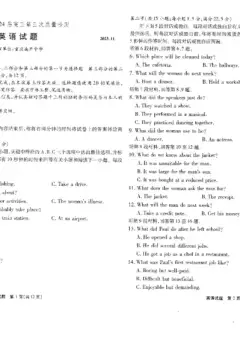
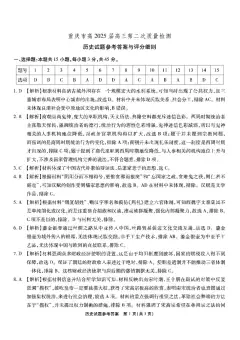
26年10月重庆南开中学高三质检二英语试题及完整答案解析纯净打印下载版

⬇️PDF可打印下载版放在评论区⬇️
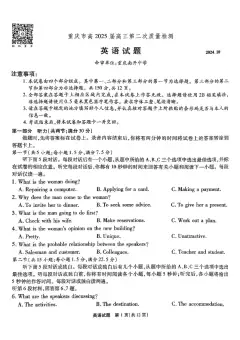
第一部分听力(共两节,满分30分)
做题时,先将答案标在试卷上。录音内容结束后,你将有两分钟的时间将试卷上的答案转涂到答题卡上。
第一节(共5小题:每小题1.5分,满分7.5分)
听下面5段对话。每段对话后有一个小题,从题中所给的A、B、C三个选项中选出最佳选项。听完每段对话后,你都有10秒钟的时间来回答有关小题和阅读下一小题。每段录音读两遍。
1. What are the speakers mainly talking about?
A. Tourist attractions.
B. Different technologies.
C. A travel app.
2. What is the woman's reaction to the photograph?
A. She loves its colors.
B. She is unsure of its meaning.
C. She wants to give it to her son as a gift.
3. What is the probable relationship between the speakers?
A. Mother and son.
B. Brother and sister.
C. Boss and employee.
4. Where does the conversation probably take place?
A. At home.
B. At a clinic.
C. At a sports club.
5. Which fact does the man present to the woman?
A. The ocean is as dangerous as space.
B. Space is harder to explore than the ocean.
C. The deep sea has fewer visitors than space.
第二节(共15小题:每小题1.5分,满分22.5分)
听下面5段对话或独白。每段对话或独白后有几个小题,从题中所给的A、B、C三个选项中选出最佳选项。听每段对话或独白前,你将有时间阅读各个小题,每小题5秒钟;听完后,各小题将给出5秒钟的作答时间。每段录音读两遍。
听第6段录音,回答第6、7题。
6. What is the woman saving money for?
A. A new car.
B. A new bed.
C. A vacation.
7. What does the man suggest the woman do?
A. Find another job.
B. Take a break from work.
C. Work extra hours to meet deadlines.
听第7段录音,回答第8至10题。
8. Why does the man find the system challenging?
A. He has trouble with its booking function.
B. He can't connect it with other software.
C. He can't access its patient records.
9. How will the woman probably help the man?
A. By finishing some of his work.
B. By organizing his personal files.
C. By teaching him how to use an AI tool.
10. Who are the speakers probably?
A. Nurses.
B. Patients.
C. AI experts.
听第8段录音,回答第11至13题。
11. Why do the speakers go to the forest?
A. To have a break.
B. To do a research.
C. To take care of trees.
12. What would the man like to do after he retires?
A. Build his own house.
B. Move to rural areas.
C. Visit natural reserves.
13. How much money does the man plan to save in a year?
A. $5000
B. $3600
C. $3000
听第9段录音,回答第14至17题。
14. How is the woman feeling about her work?
A. Excited.
B. Confident.
C. Stressful.
15. What is the most difficult for the woman?
A. Planning lessons.
B. Balancing work and life.
C. Holding students' attention.
16. What has the woman tried to do?
A. Hand out more homework.
B. Get some students to help.
C. Shorten lesson time.
17. What will the woman do tomorrow?
A. Learn from Mr. Smith.
B. Cover a class for the man.
C. Prepare an open class.
听第10段录音,回答第18至20题。
18. What is the speaker curious about?
A. Whether humans can live on another planet.
B. Whether there is life on other planets.
C. Whether Earth will be here to stay.
19. What can we learn about Comet A3?
A. The speaker was lucky to see it.
B. No one alive will ever see it again.
C. It passed by Earth 8000 years ago.
20. What will the speaker do in the future?
A. Visit another planet.
B. Design an advanced telescope.
C. Carry on with his research work.
第二部分阅读理解(共两节,满分50分)
第一节(共15小题:每小题2.5分,满分37.5分)
阅读下列短文,从每题所给的A、B、C和D四个选项中,选出最佳答案。
A
Belize is a beautiful Caribbean country featuring rich rainforests, ancient Maya culture and amazing sea views. It devotes great efforts to environmental protection, offering travelers wonderful eco-friendly accommodations. Here are four top sustainable resorts for visitors.
Blancaneaux Lodge
Owned by a famous film director, this luxury lodge lies in the forest mountains. It provides comfortable private cabins surrounded by waterfalls and green pools. The resort sticks to strict environmental rules. It uses no plastic and relies fully on hydropower. Local building materials and organic food are used, and it offers outdoor activities like horse riding and bird watching. It takes about 2.5 hours to reach it by car from Belize City.
Chaa Creek Lodge
As one of Belize's earliest eco-resorts, it covers a large rainforest area. It uses solar energy and collects rainwater for daily use. Part of its income goes to local environmental protection. Families can enjoy various wildlife experiences, horse riding and jungle walks. The nearby Maya ruins and caves also bring tourists unforgettable adventures. It is a 1.5-hour car ride from Belize City.
Hamanasi Adventure and Dive Resort
Located by the Caribbean Sea, it is a green-certified diving base. It provides professional diving courses of different levels. The clear local sea water and well-protected reefs attract diving lovers worldwide. Besides diving, visitors can try canoeing, bird watching and jungle hiking. It takes two hours to drive here from Belize City.
Naia Resort and Spa
Located on a quiet island, the resort provides modern beachfront cottages. It saves water, reduces waste and supports local farmers. Most of its surrounding areas remain as original forests. It is famous for its professional spa with nature-inspired treatments. Tourists can also cycle along the long beach or go snorkeling on nearby small islands.
21. What is special about Blancaneaux Lodge?
A. It is totally plastic-free.
B. It sits on a quiet island.
C. It offers diving courses.
D. It features Maya ruins.
22. Which resort suits wildlife-loving families best?
A. Blancaneaux Lodge.
B. Chaa Creek Lodge.
C. Hamanasi Resort.
D. Naia Resort and Spa.
23. What do the four resorts have in common?
A. They are family-run.
B. They focus on sustainability.
C. They lie deep in rainforests.
D. They offer free car service.
B
With hands stretched wide, Meng Baoyin backs the ewe (母羊) into a corner, seizes it by the horns and swings his leg over its back. A farmhand approaches with a newborn lamb and presses it against the sheep's underbelly. "He's weak," Meng says, "but he should survive."
Life, too, has found a way to survive in Inner Mongolia's Kubuqi Desert. Once, centuries of grazing (放牧) had stripped the land bare and trapped its people in poverty. "In the past, we used mud and straw bricks," Meng recalls. "Life was hard."
That is now changing. In 1988, the firm Elion partnered with local communities to fight desertification. Nearly three decades later, about one third of Kubuqi has been restored. Special plants now hold the shifting sands in place, cattle have returned, and new businesses have emerged. "We once needed a full day's camel ride just to buy matches," says Meng's son Kedalai, who now runs a restaurant.
The "Green Land Plan" took shape under challenging conditions. When Elion took over a struggling saltworks, salt had to travel 350 km to market, as no road cut through the sands. Transport was often disrupted by sandstorms. The firm built a road, but sand swallowed it. The desert had to be managed, but only if locals shared the profits.
Early attempts to plant trees had little success, as villagers had no interest in their survival. Later, Elion offered bonuses for trees that lasted, and survival rates increased significantly. They pioneered willow planting with high-pressure water jets, cutting time from ten minutes to ten seconds per seedling. Today, the sand is covered with trees.
Locals now grow licorice, a cash crop that needs little water. After four years, the soil regains enough integrity to host crops like grapes and potatoes. Meng's herd has grown from 200 sheep to 700, plus 80 cows, earning him $30,000 a year. "The desert is tough," he says, "but so are we."
24. Why does the author describe Meng's actions in Paragraph 1?
A. To highlight people's will to live.
B. To introduce the theme of survival.
C. To present the process of raising sheep.
D. To show Meng's skill in handling animals.
25. What can we learn about life in Kubuqi Desert from Paragraph 3?
A. New businesses have replaced grazing.
B. Matches were considered irreplaceable.
C. Living conditions have greatly improved.
D. Local restaurants once depended on camels.
26. What led Elion to start the "Green Land Plan"?
A. Difficulties in transporting salt.
B. Requests from local communities.
C. A government environmental policy.
D. Growing awareness of climate change.
27. What is Meng's attitude in the last paragraph?
A. Frustrated.
B. Discouraged.
C. Satisfied.
D. Determined.
C
At a drugstore in Boston, Dr. Elena Voss pauses before shelves stacked with fish oil bottles promising "sharp mind support." She sees the same promise repeated across a billion-dollar industry: one in five adults over 60 swallows these supplements daily, convinced that omega-3 fatty acids will protect their aging brains. Yet Voss, a neurologist who has studied them for two decades, rarely recommends them.
In theory, the logic is sound. These essential nutrients help form brain cell connections needed for cognition (认知), and people with higher levels in their blood tend to have better memory and a lower risk of dementia (痴呆). However, clinical studies tell a different story.
A two-year study of 365 older adults at risk for Alzheimer's—nearly half carrying the APOE4 gene, the strongest genetic risk factor for the disease—found that high doses of DHA, a key omega-3, did not improve memory or slow hippocampus (海马体) shrinkage, even though brain levels of the nutrient rose by 17%. "We all wish there was a silver bullet," said Hussein Yassine, lead investigator of the study. "While omega-3s are vital in forming brain cell connections needed for cognition, our results do not support fish oil supplements as a preventive measure against Alzheimer's."
Why the gap between promise and proof? Yassine suggests that the answer may lie in individual biology. Genetic differences can influence how effectively the brain uses omega-3s, meaning that simply increasing intake does not guarantee better outcomes. Other researchers point out that nutrients may work differently when consumed in whole diets rather than in isolation—the case with Mediterranean-style diets, where omega-3s naturally occur alongside other protective nutrients.
"Staying healthy throughout life remains the most powerful tool we have," Voss observes. "The brain is more likely to lose function if health issues elsewhere go unaddressed, just as car engines stop working when regular maintenance is skipped." For most people, a plate rich in fish, nuts, and greens may ultimately be wiser than any bottle on the shelf.
28. What is the conclusion of the study in Paragraph 3?
A. The APOE4 gene influences omega-3 absorption.
B. Higher DHA levels lead to better cognitive function.
C. Omega-3s promote communication between brain cells.
D. Omega-3 supplements show no clear cognitive benefits.
29. What does the underlined "the case" refer to in Paragraph 4?
A. Simply increasing the intake of omega-3.
B. Genetic differences affecting nutrient use.
C. Nutrients behaving differently in combination.
D. Nutrients being less effective when taken alone.
30. What message did Voss convey in the last paragraph?
A. Brain health should be given top priority.
B. Regular maintenance prevents brain failure.
C. Ignoring overall health may lead to brain decline.
D. Staying healthy is the key to fighting Alzheimer's.
31. What can be a suitable title for the text?
A. Promise VS. Proof: Why Nutrients Fail the Brain
B. Omega-3 Supplements: Science Behind the Craze
C. From Pills to Plates: How to Maintain Brain Health
D. Alzheimer's Prevention: In Search of a Silver Bullet
D
If evolution is about survival of the fittest, how did humans become moral creatures? Traditionally, two answers were offered: individuals help their kin, with whom they share genes; or they engage in reciprocity—"I scratch your back and you scratch mine." Yet neither fully explains what is arguably the core of human morality: the sense of obligation (义务) we feel toward one another.
Recently, a new approach has come to the fore. Its key insight is that in social groups where individuals depend on one another for survival, helping others is not merely beneficial but necessary. If I depend on you, it is in my interest to ensure your well-being; more generally, if we all depend on one another, then we must all take care of one another.
But how did such interdependence arise? The answer lies in the conditions that forced early humans into increasingly cooperative ways of life, especially in acquiring food. Faced with new ecological pressures, early humans began forming joint goals in hunting and gathering, making cooperation essential for survival. Under such conditions, individuals incapable of forming joint goals or communicating effectively with others and those who were socially uncooperative in their interactions with others were excluded and risked going without food. In this way, strong social selection favored those who were both competent and willing to cooperate.
This process reshaped how individuals related to one another. Cooperation was no longer simply advantageous; it carried expectations. Individuals became concerned not only with success but with how they were evaluated by their partners. Helping others, sharing fairly, and fulfilling one's role thus became matters not just of strategy but of obligation.
As human groups grew larger and more complex, these patterns of interaction were gradually formalized into cultural norms (规范), which defined not only the right and wrong way of doing things but also how to treat other people. Over time, the collective goals and shared understanding thus created an "objective" perspective—not "me" but "we"—and morality emerged as a system grounded in a collective sense of what is right and wrong.
32. What does the "new approach" in Paragraph 2 mainly argue?
A. Morality is shaped by family bonds.
B. Cooperation produces mutual benefits.
C. Helping each other is socially expected.
D. Survival rests on human interdependence.
33. What initially drove early humans to cooperate?
A. Resource pressures.
B. Genetic selection.
C. Social expectations.
D. Interaction patterns.
34. What was the effect of the cooperative process?
A. It encouraged individuals to pursue personal gain.
B. It turned strategic behavior into a moral obligation.
C. It forced individuals to depend on family members.
D. It spared group members social evaluation pressure.
35. What is the primary purpose of the text?
A. To compare different theories of morality.
B. To emphasize ecological pressures on survival.
C. To propose a new explanation for moral origins.
D. To describe how norms regulate human behavior.
第二节(共5小题;每小题2.5分,满分12.5分)
阅读下面短文,从短文后的选项中选出能填入空白处的最佳选项。选项中有两项为多余选项。
The Hidden History of Salt
Today a packet of salt is so cheap that it almost disappears from our attention. But salt has been more than just a seasoning. It was a central material for food preservation, government money, and even national security. 36
Evidence from southeastern Europe suggests that organized salt production existed more than seven thousand years ago. In other words, salt was not a luxury added to civilization later; it was one of the basic materials that helped civilization develop. 37 Ancient roads were often connected to the movement of salt. Rome's Via Salaria, the "salt road", ran for about 242 kilometers. A famous story even says that the English word "salary" comes from Roman soldiers being paid in salt, which shows how important salt was to the Roman economy.
In ancient China, salt was a powerful tool for national administration. Under Emperor Wu of the Western Han, salt, iron and other industries were brought under state control to finance wars against the Xiongnu and frontier expansion. 38 The demand of salt is universal, its production is easily controlled through limited sources, and taxes can be hidden within its price for gradual payment.
The late Tang period shows this especially clearly. After the An Lushan Rebellion, the state again relied on salt when other taxes failed. 39 It controlled production areas, licenses and prices, while merchants handled distribution. By 779, salt taxes supplied more than half of Tang government revenue.
Today, governments still regulate salt, but for different reasons. In the past, they intervened because salt was rare and valuable. 40 Excessive salt intake is now linked to many health problems. Salt has moved from a money-raising tool to a public-health concern, but it remains a key point where the government meets our daily lives.
A. Now salt is too available and too heavily consumed.
B. This importance also shaped transportation and trade.
C. In most places, salt could even be worth more than gold.
D. The history of salt shows how states entered the kitchen.
E. The government did not need to sell salt directly in every village.
F. Humans and animals both need this mineral to keep their bodies working.
G. Salt attracted the government due to its special "magic" for raising money.
第三部分语言知识运用(共两节,满分30分)
第一节(共15小题;每小题1分,满分15分)
阅读下面短文,从短文后各题所给的A、B、C、D四个选项中,选出可以填入空白处的最佳选项。
I consider myself quite a language expert. However, my "fluency" is actually 41 to whatever I have memorized from restaurant menus. When my wife's thirtieth birthday approached, I picked an Italian restaurant and decided to impress her by 42 in her native language. I saw it as a golden opportunity to 43 her Italian heritage. Despite her not being particularly 44 of the idea, I believe it would make the evening unforgettable.
To me, this wasn't just a dinner; it was a performance that required thorough 45. I noted down everything I planned to order on my computer and 46 the lines during my daily commute. I even spent extra time driving around the neighborhood to memorize them better. 47 of applause from the wait staff and perhaps a "bravo" from my wife drove me on.
When the evening finally arrived, I 48 entered the restaurant. I greeted the staff with a smile and ordered our courses without a single 49. I sat back, awaiting my wife's admiration. However, the atmosphere changed suddenly when the waiter presented a 50 dish—raw octopus (章鱼) served over ice cream.
The sight left me completely shocked, as I had no 51 of ordering such a combination. Meanwhile, my wife was laughing so hard that she was 52 up and down in her chair as the entire staff erupted in laughter. The truth surfaced: she had secretly altered my digital notes, turning my "perfect" plan into a(n) 53 scene.
54. Had I not put in those weeks of practice, this moment of pure, shared laughter would never have existed. My labor was not 55; it provided the foundation for a memory far more precious than a perfectly ordered meal.
41.
A. attached
B. limited
C. adapted
D. expanded
42.
A. ordering
B. joking
C. bargaining
D. translating
43.
A. abandon
B. reveal
C. honor
D. preserve
44.
A. aware
B. fond
C. proud
D. tired
45.
A. reservation
B. decoration
C. imagination
D. preparation
46.
A. repeated
B. drew
C. delivered
D. exchanged
47.
A. Memories
B. Warnings
C. Visions
D. Echoes
48.
A. confidently
B. cautiously
C. hurriedly
D. secretly
49.
A. question
B. excuse
C. regret
D. hesitation
50.
A. classic
B. curious
C. tasty
D. local
51.
A. experience
B. record
C. memory
D. evidence
52.
A. bouncing
B. looking
C. nodding
D. pacing
53.
A. charming
B. appealing
C. comical
D. educational
54.
A. disappeared
B. shifted
C. deepened
D. returned
55.
A. withdrawn
B. rewarded
C. ignored
D. wasted
第二节(共10小题;每小题1.5分,满分15分)
阅读下面短文,在空白处填入1个适当的单词或括号内单词的正确形式。
A pioneering cultural exchange event, "The Festival of Meeting of Gods," 56 (conclude) in September in Hong Kong. The event introduced seven theater 57 (production) by artists from Asia and Europe, representing a wide range of disciplines. To co-organizer Danny Yung, the artistry of traditional opera lies in 58 (breathe) life into the ancestral spirit. By tracing a character's evolution, ancient figures are not merely represented, but reborn on stage.
Yung recalled a collaboration with artist Ke Jun, who performed the experimental Kunqu Flee by Night. Ke portrayed Lin Chong, 59 classic character from the novel Water Margin. In the first half, Ke performed in traditional costume and makeup. As he changed into modern attire, a pre-recorded video was projected on stage, showing him 60 (systematic) removing his facial makeup. This "unmasking" moment pushed him 61 (face) his true identity and achieve a spiritual connection with the character's struggle for survival.
Co-organizer Liu Xiaoyi emphasizes that artists must recognize that art should extend 62 mere entertainment. He argues that looking beneath the surface 63 (transform) cultural exchanges from simple transactions (交易) into deep connections. Success in experimental theater is measured by the boldness of creative risks and the extent to 64 a performance can challenge the audience's preconceptions. In his view, artistic practice promotes the creative thinking 65 (necessity) to push the boundaries of scientific and technological advancement.
第四部分写作(共两节,满分40分)
第一节
注意:
(1)写作词数应为80左右。
(2)可适当增加细节,以使行文连贯。
Dear Mr. Smith,
I am Li Hua from Class 10.
Yours sincerely,
Li Hua
第二节(满分25分)
阅读下面材料,根据其内容和所给段落开头语续写两段,使之构成一篇完整的短文。
I couldn't help admiring those slim and confident girls on magazines and TV shows. Whenever I flipped through fashion pages, I would unconsciously hold my own waist with my palm and sigh. The more I compared, the more my own reflection in the window seemed clumsy beside theirs. Gradually, admiration turned into a quiet, persistent voice whispering that I was never enough. Many nights, I stood before the mirror, turning sideways, sucking in my stomach, imagining a different girl staring back.
To reshape myself, I cut my daily meals to barely half of what I used to eat, crossing out every snack I had once loved—the crispy chips, the creamy cakes, even the warm milk I used to enjoy before sleep. After school, I forced myself through half an hour of intense workout every single day, my only company the cold numbers on the scale.
On rainy evenings when my knees ached and my vision blurred, I still refused to stop, telling myself that pain was proof of progress. Yet the harder I pushed, the more distant the "perfect figure" seemed. Worst of all, I could no longer remember the last time I had laughed freely or eaten without guilt. My world had shrunk to a narrow loop of denial and discipline, and somewhere I had lost the girl who used to run just for the joy of feeling the wind.
One quiet afternoon, I sat by the classroom window. Soft sunlight spilled across my desk, and a gentle breeze carried the scent of freshly cut grass. I picked up a book left behind and leafed through it randomly. My eyes stopped at a paragraph that spoke directly to me. It said true health was never about fitting into a certain size, but about accepting our bodies and appreciating our own strength every day.
注意:
(1)续写词数应为150左右。
(2)请按如下格式在答题卡的相应位置作答。
Paragraph 1: Those words didn't shout, yet they silenced the constant voice in my head.
Paragraph 2: Weeks passing, the changes in my life went beyond what I had expected.
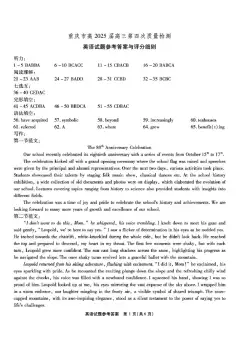
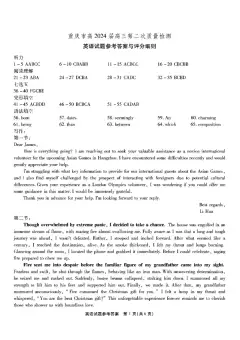
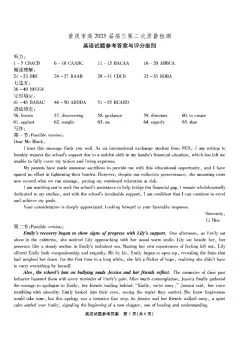
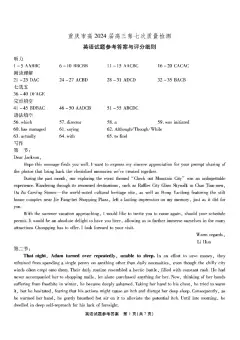
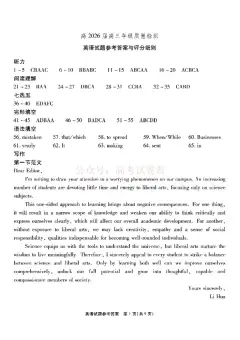
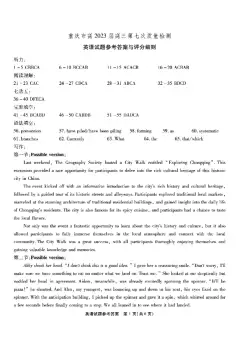
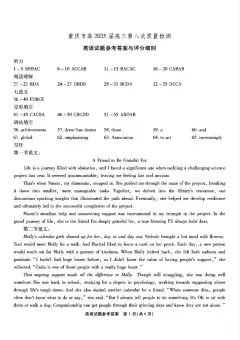
英语试题参考答案与评分细则
听力
1-5 CBAAC6-10 CBAAC11-15 ABBCC16-20 BABBC
阅读理解
21-23 ABB24-27 BCAD28-31 DCCB32-35 DABC
七选五
36-40 DBGEA
完形填空
41-45 BACBD46-50 ACADB51-55 CACBD
语法填空
56. concluded57. productions58. breathing59. a60. systematically
61. to face62. beyond63. transforms64. which65. necessary
写作
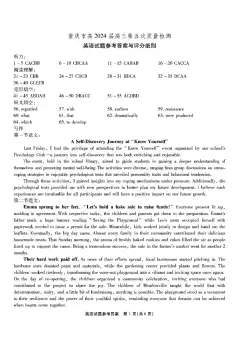
第一节范文:
Dear Mr. Smith,
I am Li Hua from Class 10. Learning that you are in charge of preparing the new English column for our school's 90th anniversary, I'm writing to offer a suggestion and apply to be a volunteer.
To make the column more attractive, we can collect stories from overseas alumni, sharing their precious memories of our school. It will help more readers know about our school's glorious history and spread our school spirit abroad.
I believe I am qualified for the volunteer work. Having a good command of English, I can sort out materials and polish English articles. Besides, I am good at communicating with others, so I am able to interview schoolmates and collect related stories.
I would appreciate it if you could take my application into consideration.
Yours,
Li Hua
第二节范文:
Those words didn't shout, yet they silenced the constant voice in my head. They reminded me that true health lay in accepting my body instead of chasing a perfect figure. For a long moment, I just sat there, staring at the page, feeling the noise inside slowly fading away. I realized how tired I was—tired of counting every bite, tired of pushing my body past its limits, tired of never feeling good enough. Placing my hand over my heart, I felt it beating—steady, strong, alive. That heartbeat had never asked me to be thinner or prettier. It had just kept going, day after day, carrying me through all my hardest moments. I closed my eyes and whispered to myself, "Maybe I don't need to change at all."
Weeks passing, the changes in my life went beyond what I had expected. I didn't suddenly love my reflection, but I stopped avoiding it. I started running again—not to burn calories, but to feel the rhythm of my own stride. I shared lunches with friends, laughing between bites, no longer calculating the "cost" of every mouthful. My clothes fit the same, yet I wore them with a different posture—shoulders back, chin up, not to appear thinner, but to feel taller. The girl I had tried to erase was never gone; she had just been waiting for permission to return. And slowly, gently, she began to reclaim her place in the mirror—not as a perfect image, but as a real, breathing, beautifully imperfect human being.
听力原文
Text 1
M: Have you tried the new virtual travel experience app?
W: No, but I've heard you can visit different places without leaving home.
M: Exactly! I toured the Great Wall of China. It felt so real! (1)
Text 2
W: Have you seen this photograph? The colors are mixed up. My son gave it to me.
M: It's a popular modern style.
W: But it's strange. It doesn't seem to focus on any subject. (2)
Text 3
M: I can't find the cat in the yard.
W: Let's put up posters right away. Your sister will get so worried.
M: Yeah. She always takes care of it while I do my homework. (3)
Text 4
W: First it was your hand, and now this! What happened?
M: I was just doing warm-ups and hit the corner of the dining table.
W: Get some ice and put it on your knee right away. (4)
Text 5
M: More people have been to space than to the bottom of the ocean.
W: Why? Isn't space harder to explore?
M: The ocean is deep with intense pressure in some areas, so exploring it is much tougher. (5)
Text 6
W: I'm so tired from working extra hours, but the thought of the coming holiday makes it worthwhile. (6)
M: Yeah, you've been spending long hours at the office these days. I saw you driving home late in your old car!
W: Yes. I'm trying to save up as much money as I can. I'll be relaxing on the beach in Majorca and resting in a king-size bed at the hotel. (6)
M: Still, you've been working too hard. Maybe take some time off in the next few days? (7)
W: I can't. I need to finish everything first.
Text 7
M: I thought using AI for managing patient records would simplify everything, but it's more difficult than I expected. (8)
W: When I started using AI at my clinic, I had even more to manage before things settled down.
M: The AI system has helped organize patient records, but I still need to learn how to use its booking function. (8) Patients sometimes get double-booked or wait too long.
W: You still need some time to figure out the system.
M: Exactly! I haven't even looked at its appointment reminders!
W: Don't stress. After operation hours, I'll show you the AI tool I use for tracking the flow of patients. (9)
M: That would be amazing.
Text 8
W: I read that spending time in nature can reduce stress, and you seemed like you needed it. (11)
M: Thanks. I'm glad you brought me to this peaceful place. (11)
W: Scientists measured how people reacted to being in a forest like this. They called it "forest bathing (森林浴)". It helps improve focus and mood. Still, I could never move out of the city. I love how exciting life is there.
M: I could easily move to the countryside. It's my dream when I retire. (12) I want to buy a house with a mountain view.
W: I'll come visit you.
M: Sure. I've started saving for my future home. If I save $300 every month, in five years I'll have enough for a down payment. (13)
W: Cool.
Text 9
W: Mr. Taylor, do you have a moment to talk about my teaching?
M: Of course! How are you finding everything so far? (14)
W: Not too bad. But with managing the classroom, planning lessons, and trying to keep the students on track, there's almost too much to manage. (14)
M: That's understandable. The first few months can feel a lot. What's been the biggest challenge? (15)
W: I didn't expect it would be so hard to keep the students focused, especially when teaching something important. (14) (15)
M: Try giving positions of responsibility to the students. (16)
W: I've tried that, (16) but sometimes it feels like nothing works. I come to class well-prepared, but they start chatting easily.
M: That happens. You'll find your own working style.
W: Honestly, it just feels like I do more homework than the children...
M: True, but you'll get there. How about I arrange for you to sit in on Mr. Smith's class tomorrow? He'll show you how to maintain classroom discipline. (17)
W: Alright, thank you! (17)
Text 10
Good evening, everyone. Every time I look up at the stars, I wonder about all the worlds beyond our own. (18) Imagine, there are billions of stars, each with the possibility of having planets like Earth. They make you think—could there be life out there watching the sky just like we do? Are we really the only ones? (18) The more we look, the more we realize how tiny we are. Recently, I was really eager to see Comet (彗星) A3. It only passes by Earth once about every 80,000 years or so. (19) Its bright tail would stretch across the sky on a clear night. But the night I was ready to view it with my telescope, the weather wasn't good. It was very disappointing, but that's part of being a scientist—you never know what surprises the universe will bring you. The sky is filled with endless wonders, and I'll continue my study of it. (20) I hope you can look up and feel amazed, just like I do every night.
答案详解
A篇
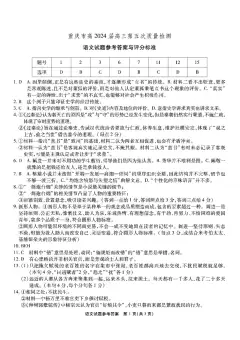
21. A细节理解题。原文提到“The resort sticks to strict environmental rules. It uses no plastic and relies fully on hydropower”可知它不使用任何塑料产品,完全依靠水力发电。故选A。
22. B细节理解题。原文提到“Families can enjoy various wildlife experiences, horse riding and jungle walks.”可知家庭可以享受各种野生动物体验、骑马和丛林漫步。其他度假村虽也有户外活动,但未明确强调“家庭”和“野生动物体验”相结合。故选B。
23. B推理判断题。本文开头提到“Belize devotes great efforts to environmental protection, offering travelers wonderful eco-friendly accommodations.”随后每个度假村都提到环保措施。Blancaneaux: 不用塑料、全水力发电、使用本地材料;Chaa Creek: 太阳能、雨水收集、收入用于环保;Hamanasi: 绿色认证潜水基地;Naia: 节水、减少浪费、支持当地农民。可见四个度假村的共同点是“注重可持续性/环保”。故选B。
B篇
24. B推理判断题。第一段描写Meng Baoyin救助羔羊的具体场景,第二段首句“Life, too, has found a way to survive”中“too”表明首段与全文主题构成“具体→抽象”的映射关系,旨在呈现沙漠中生命求生的一个场景。A项“will to live”过度强调主观意志;C项以偏概全;D项“show Meng's skill”偏离主题。故选B。
25. C推理判断题。Kedalai的话采用今昔对比,“过去花一整天骑骆驼去买火柴”与“现在经营餐馆”形成鲜明对照,旨在说明生活条件已大幅改善。A项为信息错误整合,新的商业出现,但并没有取代放牧;B项过度推断;D项为信息嫁接,原文说的是个人生活(买火柴需要骑骆驼),选项把它偷换成了商业行为(餐馆运营业)。故选C。
26. A细节理解题。第四段指出,Elion接管亏损的盐场后,因沙漠阻隔导致运输中断、道路被吞,由此意识到“the desert had to be managed”,即其治沙项目源于现实中的运输困难。B项“当地社区请求”、C项“政府政策”、D项“气候意识”文中均未提及。故选A。
27. D推理判断题。末段Meng Baoyin说“The desert is tough, but so are we”,“but”的转折与“so are we”的倒装强调,凸显其面对严酷环境时的坚韧。A项“沮丧”、B项“气馁”与原文情感相反;C项“满意”虽与收入增加有关,但末句重心在“坚韧”而非“满足”。故选D。
C篇
28. D细节理解题。第三段研究表明,高剂量DHA并未改善记忆或减缓海马体萎缩;“do not support fish oil supplements as a preventive measure against Alzheimer's”,即补充剂未显示明确认知益处。A项偷换概念(APOE4是风险因素而非吸收因素);B项与研究发现相反;C项是第二段理论前提,非研究结论。故选D。
29. C指代推断题。第四段破折号前指出“nutrients may work differently when consumed in whole diets rather than in isolation”,“the case”指代的是“营养物质在组合摄入时表现不同”这一现象,后文中地中海饮食即为例证。A项是前文提到的错误做法;B项属于第四段内容;D项是反向推导,非直接指代。故选C。
30. C推理判断题。末段Voss指出“The brain is more likely to lose function if health issues elsewhere go unaddressed”,即忽视整体健康将使大脑功能受损,强调全身健康对大脑的重要性。A项“大脑健康优先”文中未提及;B项是类比的字面误读;D项“对抗阿尔茨海默”范围过窄。故选C。
31. B主旨大意题。文章首段呈现鱼油行业热潮(billion-dollar industry),后文以临床证据揭示科学真相,“Science Behind the Craze”精准统摄“热潮背后的科学审视”这一核心。A项过于负面且以偏概全;C项仅对应末段;D项范围过窄。故选B。
D篇
32. D主旨大意题。第二段指出新方法的核心洞察:在相互依存的群体中,帮助他人“not merely beneficial but necessary”,即生存依赖于人类相互依存。A、B项是第一段传统理论;C项“socially expected”对应第四段,属时序错位。故选D。
33. A细节理解题。第三段首句“But how did such interdependence arise?”点明该段追溯根源,“Faced with new ecological pressures... making cooperation essential”表明早期人类因生态/资源压力被迫合作。B项“基因选择”是第一段内容;C项“社会期望”、D项“互动模式”均为后文结果,非最初驱动力。故选A。
34. B推理判断题。第四段指出合作“carried expectations”,“became matters not just of strategy but of obligation”,即合作从策略性行为转变为道德义务。A项与原文“not only with success”矛盾;C项“family members”是第一段亲缘理论,属跨段信息嫁接;D项“spared... pressure”与原文“concerned with how they were evaluated”逻辑相反。故选B。
35. C主旨大意题。全文采用“先破后立”结构,否定亲缘选择与互惠理论后,提出相互依存催生道德义务,旨在为道德起源提供新解释。A项“比较理论”是手段而非目的;B项“生态压力”是第三段局部信息;D项“规范调节行为”是第五段末段信息。故选C。
七选五
36. D前文指出盐不仅是调味品,还与食物保存、政府财政和国家安全密切相关。D项概括盐的历史与国家治理之间的关系,既承接前文对盐重要性的介绍,又自然引出后文盐与交通、贸易及政府管理的历史,衔接紧密。故选D。
37. B前文说明盐是推动文明发展的基础材料,后文紧接着介绍古代道路与盐的运输密切相关(罗马的Via Salaria为例),以及对经济贸易的影响(salary为例)。B项中的“This importance”承接盐的重要性,“transportation and trade”又与后文相呼应,过渡自然。故选B。
38. G前文提到汉武帝时期国家控制盐、铁等行业以筹集战争经费,后文进一步列举盐适合增加财政收入的三个原因。G项概括指出盐因其特殊的“筹钱功能”而受到政府重视,能够总领后面的具体解释,形成“总述原因→具体说明”的逻辑。故选G。
39. E前文指出安史之乱后国家重新依赖盐税,后文进一步说明政府控制生产地区、许可证和价格,而由商人负责分销。E项与后文“merchants handled distribution”形成对应,说明政府监管与商人分销的分工,衔接自然。故选E。
40. A前文对比过去与现在政府管理盐的不同原因:过去因为盐稀缺且有价值,后文则指出过量摄入盐与许多健康问题有关。A项正好解释现代政府监管盐的原因,并与后文“Excessive salt intake”形成语义呼应,完成由经济价值到公共健康的转折。故选A。
完形填空
41. B此空表示作者所谓的流利仅仅局限于从菜单上背下来的内容,“be limited to”意为“局限于”,符合语境,故选B。
42. A作者选择意大利餐厅,是为了通过“用妻子的母语点餐”给她留下深刻印象。结合后文“everything I planned to order”可知,此处应为ordering,故选A。
43. C作者认为用意大利语点餐是向妻子的意大利文化背景表达敬意的机会。“honor one's heritage”表示“尊重/致敬某人的文化传统”,符合语境,故选C。
44. B结合上下文,此空表示“不太喜欢这个主意”。“be fond of”是固定搭配,意为“喜欢”,故选B。
45. D作者把这次晚餐当作一场需要充分准备的“表演”,后文列举了记下点餐内容、反复练习、通勤时背诵等准备过程,故选D。
46. A作者将点餐内容写在电脑上,并在每天通勤时反复练习这些台词。“repeat the lines”表示“反复练习/重复这些话”,与后文“memorize them better”呼应,故选A。
47. C作者想象自己得到服务员的掌声和妻子的“bravo”,这些都是对未来成功场景的憧憬。“visions of”表示“对……的想象/憧憬”,选C;“echoes”指已有掌声的回响,与语境中的未来期待不符。故选C。
48. A经过充分准备后,作者对自己的表现很有信心。后文“greeted the staff with a smile”和“without a single hesitation”进一步体现他的自信。故选A。
49. D “without hesitation”是固定搭配,意为“毫不犹豫地”,承接上文。故选D。
50. B后文明确描述这道菜是“raw octopus served over ice cream”,这种组合十分奇怪。“curious”在此表示“奇怪的、不同寻常的”,而非“好奇的”,故选B。
51. C作者看到这道奇怪的菜后非常震惊,因为他根本不记得自己点过这样的组合。“have no memory of doing sth”表示“不记得做过某事”,与后文妻子偷偷修改电子笔记的真相相呼应,故选C。
52. A “bounce up and down”表示“上下弹跳”,这里指妻子笑得非常厉害,以至于在椅子上上下晃动。故选A。
53. C妻子偷偷修改了作者的电子笔记,使原本“完美”的点餐计划变成了一个好笑的场面。“comical”意为“滑稽的、可笑的”,与后文妻子和整个餐厅的人大笑相呼应,故选C。
54. B作者一开始觉得自尊心受到伤害,但看到妻子的快乐后,他的看法发生了变化。“shift one's perspective”表示“改变看法/视角”,与“Initially...Yet...”所体现的态度转折完全吻合,故选B。
55. D结尾是全文的情感升华:虽然计划没有按预期进行,但之前的练习创造了珍贵的共同回忆。因此作者认为自己的努力并没有白费。“be wasted”表示“被浪费、白费”,故选D。
语法填空
56. concluded考察时态,句子需要谓语动词,主语“A pioneering cultural exchange event”与“conclude”构成主动关系;时间状语“in September”表明动作发生在过去,因此用一般过去时“concluded”。
57. productions考察名词单复数,“seven”后接可数名词复数,且这里的production表示“戏剧作品”,因此填“productions”。
58. breathing “lie in doing sth”是固定结构,意为“在于做某事”。因此“lies in life into...”中填动名词breathing,构成“breathe life into sth”,意为“赋予……生命”。
59. a “character”是单数可数名词,此处表示“一个经典人物”,且classic以辅音音素开头,因此填不定冠词“a”。
60. systematically此处修饰动词“removing”,需要使用副词。“systematic”的副词形式为“systematically”,表示“有条理地、系统地”。
61. to face “push sb to do sth”是固定结构,意为“促使某人做某事”。因此“pushed him his true identity”填“to face”。
62. beyond “extend beyond sth”表示“超越……”。此处强调艺术的意义不能局限于单纯的娱乐,因此填“beyond”。
63. transforms “looking beneath the surface”是动名词短语作主语,谓语动词用第三人称单数。根据“transform A from B into C”这一结构,填“transforms”。
64. which “the extent to which...”中to which是“介词+关系代词”结构,先行词是extent。关系词填“which”。
65. necessary此处修饰名词短语“the creative thinking”,需要形容词。“the creative thinking necessary to...”意为“推动……所必需的创造性思维”,因此填“necessary”。