ARTICLE · 1333963
人教版八年级英语上册期中试题
第一部分阅读(共40分)
第一节阅读理解(共15小题,每题2分,共30分)
A
“Why does bamboo grow so fast?” my grandfather asked me one summer afternoon. I was on vacation at my grandparents’ home in the countryside, far from the noise of the city. I had no idea. “Because it never stops reaching for the sky,” he said. “It doesn’t wait for the perfect weather. It just grows.”
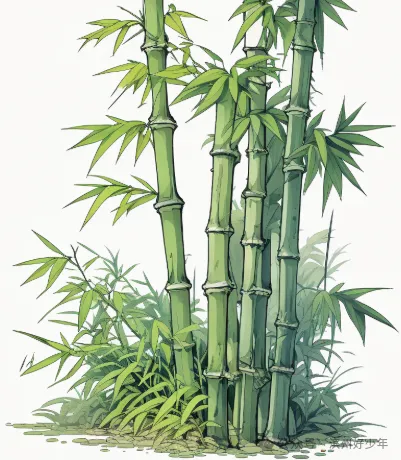
That summer, I learned something else about bamboo. My grandfather showed me how bamboo bends in strong wind but does not break. “Storms come,” he said. “But bamboo knows how to survive. It bends, then stands up again.”
When I returned to school, I noticed a classmate, Lin, sitting alone at lunch. Most students thought she was strange because she rarely spoke. But I remembered the bamboo. I sat down beside her. Slowly, she began to talk. She told me she had just moved from a small town and felt lost here. We became friends.
Now I understand what my grandfather meant. Bamboo doesn’t grow fast to be the tallest. It grows fast because it refuses to give up. And like bamboo, some people just need someone to stand beside them until they find the strength to stand tall again.
1. What did the grandfather compare bamboo to in the second paragraph?
A. A person who never gives up.
B. A tree that grows in perfect weather.
C. A plant that is easily broken by storms.
2. Why did the writer sit beside Lin at lunch?
A. Because the teacher asked him to.
B. Because Lin reminded him of bamboo.
C. Because Lin was the tallest student in class.
3. What can we infer about Lin from the passage?
A. She did not want to make friends.
B. She felt lonely after moving to a new place.
C. She was not good at her schoolwork.
4. What is the best title for the passage?
A. How Bamboo Grows
B. The Bamboo Lesson
C. My Grandfather’s Farm
B
Many people believe that plants are silent. They think plants simply stand in one place and do nothing. But scientists have found that plants are far more active than we imagine.
Take the tomato plant as an example. When a caterpillar(毛毛虫) starts eating its leaves, the tomato plant does not just sit there. It releases chemicals into the air. These chemicals are a kind of “call for help.” Wasps(黄蜂) that eat caterpillars can sense these chemicals. They fly to the tomato plant and attack the caterpillars.
Even more surprising, plants can “talk” to each other through their roots. Some plants share water and nutrients(养分) with neighboring plants through underground networks. When a plant is attacked by insects, it can send warnings through these networks. Other plants then start to produce chemicals that make their leaves taste bad to insects.
However, this does not mean plants have feelings the way humans do. They do not think or worry. But they do respond to the world around them. They compete for sunlight, defend themselves against danger, and even cooperate with each other. The next time you walk past a garden, remember: there may be a lot more going on than you can see.
5. What does the tomato plant do when caterpillars attack it?
A. It closes its leaves quickly.
B. It releases chemicals to call for wasps.
C. It sends a warning to other tomato plants.
6. What does the underlined word “cooperate” in Paragraph 4 probably mean?
A. Work together.
B. Fight against each other.
C. Grow taller than others.
7. Which of the following is TRUE according to the passage?
A. Plants have feelings like humans.
B. Plants can communicate through their roots.
C. All plants produce the same chemicals.
8. What is the writer’s main purpose in writing this passage?
A. To advise people to grow more tomato plants.
B. To show that plants are more active than people think.
C. To explain why caterpillars are dangerous to gardens.
C
My name is Emma. My twin sister Ella and I look almost the same. People often confuse us. But we are very different in one important way: Ella is outgoing and loves being the center of attention. I am quiet and prefer to have a few close friends.
Last month, our class had a talent show. Ella wanted us to sing together. I said no. “I’m not like you,” I told her. “I can’t stand on a stage in front of everyone.” Ella looked disappointed. “But you have a beautiful voice,” she said. “Better than mine.”
I was surprised. I had always thought Ella was better at everything. She was louder, funnier, and more confident. It never occurred to me that she might admire something about me.
In the end, I agreed to sing, but only with Ella standing beside me. When we finished, the room was silent for a second. Then everyone clapped. After the show, a classmate said to me, “You know, you and Ella have the same face, but your voices are completely different. Hers is loud and bright. Yours is soft and warm. I liked yours better.”
That night, Ella said to me, “See? I told you.” And for the first time, I realized that being different doesn’t mean being less. It just means being yourself.
9. How did Emma feel when Ella said she had a better voice?
A. Angry.
B. Surprised.
C. Proud.
10. Why did Emma agree to sing in the talent show?
A. Because she wanted to become popular.
B. Because Ella encouraged her and stood by her.
C. Because her classmates asked her to sing alone.
11. What does the classmate’s comment help Emma understand?
A. That she should try to be more like Ella.
B. That her voice has its own value.
C. That singing is not her real talent.
12. What is the main message of the story?
A. Twins always share the same abilities.
B. Being different from others is a good thing.
C. Talent shows help students make friends.
D
Four students are discussing what makes a good home.
Ben: I think a good home is not about the size of the house. My family moved to a small apartment last year. We have less space now, but we are happier. We eat dinner together every night because there is no TV in the dining room. We talk more.
Lucy: For me, home means traditions. Every Spring Festival, my grandmother makes dumplings with us. Even if we are busy, we go back to her house. It is not the food that matters. It is the time we spend together.
David: I used to think a good home needed to be in a nice neighborhood. But then my dad lost his job, and we had to move to a different area. I was upset at first. But my new neighbors are friendlier than the old ones. Now I think people matter more than location.
Anna: My parents work in different cities. We only see each other on weekends. But we have a family group chat. We share photos and jokes every day. It is not perfect, but we stay connected. To me, home is where people remember you, even when you are not there.
13. What do Ben and David both suggest about a good home?
A. It should have a big dining room.
B. It is not decided by material conditions.
C. It must be in a friendly neighborhood.
14. What does Lucy value most about her family tradition?
A. The taste of the dumplings.
B. The time spent with family.
C. The Spring Festival holiday.
15. Which student’s idea about home is based on staying connected through technology?
A. Ben.
B. Lucy.
C. Anna.
第二节阅读还原(六选五,共5小题,每题2分,共10分)
How to Make Your Bedroom a Better Place to Be
Your bedroom is more than just a place to sleep. It is your personal space. A well-designed bedroom can help you relax, focus, and feel happier. Here are some ideas.
16. ______ A clean room feels calmer. Start by putting away clothes and clearing your desk. You don’t need to do everything at once. Even ten minutes of tidying can make a difference.
17. ______ If your room is dark during the day, open the curtains. Natural light lifts your mood. At night, use a soft lamp instead of a bright ceiling light. It helps your body prepare for sleep.
18. ______ You don’t need to buy new things. A plant, a photo, or a drawing you made yourself can make the space feel like yours. Personal touches turn a room into a home.
19. ______ Your bed is for sleeping, not for doing homework or watching videos. If you study on your bed, your brain starts to connect the bed with stress. Keep your desk for work and your bed for rest.
20. ______ Even a small change can make your room feel new. Move your chair to a different corner. Change the pictures on your wall. A fresh arrangement can give you fresh energy.
A. Keep your bed for sleep only.
B. Bring in some natural light.
C. Make your bed every morning.
D. Start by clearing the mess.
E. Try moving things around.
F. Add something that is truly yours.
第二部分语言运用(共20分)
第一节完形填空(共10小题,每题1分,共10分)
A Home for Grandpa
When Grandpa moved in with us, I was not happy. I had to give up my room and share with my brother. Grandpa was old and quiet. He didn’t talk much. He just sat in the garden for hours, looking at the plants.
Weeks passed. One afternoon, I noticed something strange. The roses in our garden, which had never grown well, were suddenly full of flowers. “Did you do something to them?” I asked Grandpa. He smiled for the first time. “I talk to them,” he said. “Plants can feel 21 , you know.”
I thought it was silly. But then I remembered what we learned in Unit 4: plants respond to the world around them. Maybe Grandpa wasn’t so strange after all.
One evening, I found Grandpa sitting alone in the dark living room. “Are you okay?” I asked. He looked at me and said, “I 22 this house. But it doesn’t feel like home yet.”
I didn’t know what to say. Then I had an idea. The next morning, I brought my favorite photo of Grandma and Grandpa from the living room and put it on his bedside table. When he saw it, his eyes lit up.
“Thank you,” he said. “Now it feels a little more like 23 .”
From that day on, I started to see Grandpa differently. He wasn’t just an old man who took my room. He was someone who needed to feel 24 . And I could help.
Now, every evening, Grandpa and I sit in the garden together. He tells me stories about his childhood. I tell him about school. The roses have never looked better. And I have learned something important: a home is not about 25 . It is about the people inside.
A. love B. fear C. pain
A. miss B. hate C. remember
A. school B. home C. work
A. welcome B. busy C. famous
A. time B. money C. space
第二节语法填空(共10小题,每题1分,共10分)
The Secret Life of the Redwood
When you walk through a redwood forest in California, the first thing you notice is the 26. ______ (high). Some redwood trees are over 100 metres tall. They are among 27. ______ (tall) living things on Earth.
But redwoods are not just tall. They are also 28. ______ (amaze) in other ways. Their bark(树皮) is very thick. This protects 29. ______ (they) from fire and insects. A redwood can live for more than 2,000 years.
Scientists have discovered something even 30. ______ (strange). Redwoods share food with each other. Their roots connect underground. 31. ______ (young) trees receive sugar from older trees through these connections. This is why redwood forests are so 32. ______ (health). The trees support one another.
______ (compare) with other trees, redwoods grow very quickly. But they do not grow alone. They grow in groups, 34. ______ (stand) close together. When a storm comes, they protect each other from the wind.
The next time you see a redwood, remember: it is not just one tree. It is part of a 35. ______ (connect) community.
第三部分写作(共30分)
第一节阅读表达(共5小题,每题2分,共10分)
阅读下面短文,根据要求完成各题。
The Girl Who Talked to Animals
Maya grew up on a farm. She could not remember a time when she did not love animals. But Maya was different from other children. While they played games, Maya sat quietly and watched the chickens, the goats, and the old horse.
Her parents worried about her. “She is too quiet,” her mother said. “She needs friends.” But Maya did not feel lonely. She felt that the animals understood her.
One winter, a terrible storm hit the farm. The wind blew down trees. The rain flooded the roads. In the middle of the night, Maya woke up. She heard something. It was a low sound, like crying. She followed the sound to the barn(谷仓). The roof had broken, and the animals were cold and frightened.
Maya did not run back to the house. Instead, she stayed in the barn. She talked to the animals in a soft voice. She covered the youngest goats with a blanket. She held the old horse’s head until the storm passed.
In the morning, her father found her asleep next to the animals. At first, he was angry. But then he saw that every animal was safe. Nothing was lost.
That day, Maya’s parents stopped worrying. They finally understood: Maya was not lonely. She had a gift. She could connect with animals in a way that most people could not.
36. What did Maya’s parents think was wrong with her?(回答不超过10词)
37. What happened to the barn during the storm?(回答不超过10词)
38. How did Maya help the animals during the storm?(回答不超过15词)
39. Why did Maya’s parents stop worrying about her?(回答不超过15词)
40. 请根据短文内容,补全下面句子(不超过15词):
Maya’s story shows that being different is not ______.
第二节书面表达(共20分)
41. 假设你是李华,你的英国笔友Alex计划明年暑假来中国旅行。他写信向你询问你的家乡是否值得一游。请你给他回信,内容包括:
(1)介绍你家乡的一个特色(可以是风景、美食、文化或人物);
(2)说明为什么这个特色让你觉得家乡“与众不同”;
(3)邀请他到你家乡做客。
注意:
(1)词数80—100;
(2)可适当增加细节,使行文连贯;
(3)开头和结尾已给出,不计入总词数。
Dear Alex,
I’m glad to hear that you’re coming to China next summer. ___________________________________
Yours,
Li Hua
参考答案与评分标准
阅读理解
A篇:1—4 B B B B
B篇:5—8 B A B B
C篇:9—12 B B B B
D篇:13—15 B B C
阅读还原:16—20 D B F A E
完形填空
21—25 A A B A C
语法填空
height(名词,作宾语)
the tallest(最高级,前有among)
amazing(-ing形容词修饰物)
them(宾格)
stranger(比较级,even修饰)
Younger(比较级作定语)
healthy(形容词作表语)
Compared(过去分词作状语)
standing(现在分词作伴随状语)
connected(过去分词作定语,修饰community)
阅读表达
She was too quiet.(或:She needed friends.)
Its roof broke. / The roof was broken.
She talked to them softly and covered the young goats.
Because they saw Maya’s special gift with animals.
being less / a bad thing(开放题,语义合理即可)