 夜雨聆风
夜雨聆风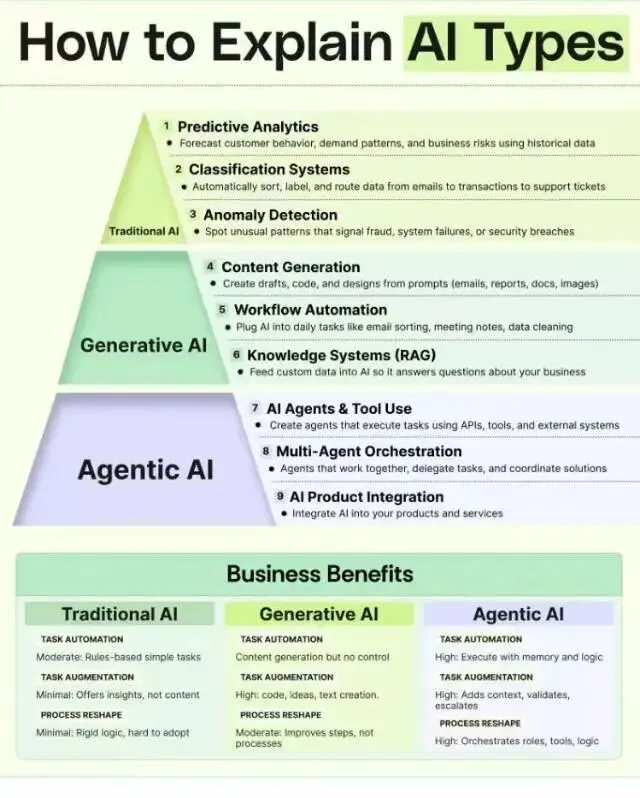
A lot of people use the terms: AI, GenAI, and Agentic AI interchangeably.
But they represent very different levels of capability.
This visual explains the progression really well.
1️⃣ 𝐓𝐫𝐚𝐝𝐢𝐭𝐢𝐨𝐧𝐚𝐥 𝐀𝐈
🔺 Focused on prediction and classification.
🔺 Think: fraud detection, recommendation systems, anomaly detection,
forecasting
🔺 These systems are great at analyzing patterns from historical data, but they usually operate within fixed rules and narrow workflows.
2️⃣ 𝐆𝐞𝐧𝐞𝐫𝐚𝐭𝐢𝐯𝐞 𝐀𝐈
🔺 This changed the interaction layer.
🔺 Now systems can: generate text, write code, create images, summarize documents, and answer questions using RAG pipelines
🔺 Instead of just predicting outcomes, GenAI creates content and augments human workflows.
3️⃣ 𝐀𝐠𝐞𝐧𝐭𝐢𝐜 𝐀𝐈
🔺 This is where systems move from:
🔺 generating → to acting
🔺 Agentic systems can: use tools/APIs, maintain memory, break down goals into tasks, coordinate across workflows, and interact with external systems
🔺 And increasingly: multiple agents collaborate.
What’s interesting is how the business impact evolves across these layers.
🔹 Traditional AI improves decisions.
🔹 Generative AI improves productivity.
🔹 Agentic AI starts reshaping processes themselves.
That’s a very important shift. Because once systems can reason, execute, validate, and iterate. The engineering challenges become much bigger than just model quality.
We’re moving from “using AI features” to “designing AI systems.”
#AI#technology