 夜雨聆风
夜雨聆风原标题:AI glasses are aiding cheating in exams. Test-obsessed Asia is ground zeroground zero 原指核武器爆炸时正下方的地表点,爆心投影点,即破坏最严重的核心区域。现在可指重大事件/危机的起源地,爆发中心,受影响最严重的地区
随着AI技术的发展,可穿戴作弊设备防不胜防,除了钻研反作弊手段,真正的问题在于如何调整教育体系和评估能力的方式,教育需要更专注培养学生的思维能力,将AI作为工具而非过度依赖,避免outsource thinking capability.
For as long as there have been tests in schools, students have found ways to cheat, whether it is peeking over a classmate’s shoulder or scribbling (v/n 潦草地写,涂鸦) notes on a palm or crib (n 作弊夹带) sheet.
只要学校还存在考试,学生们就总能找到作弊的方法,无论是偷瞄邻座的试卷,还是在手掌写笔记或夹带小抄。
But as technology evolves and pressure builds for a top grade, students are now turning to AI-powered smart glasses to get an upper hand. And in East Asia’s test-obsessed societies, where a single exam could impact the trajectory of a student’s future career and social status, educators are scrambling to get ahead of the problem.
但随着技术进步和争夺高分压力加剧,学生们现在正转向AI驱动的智能眼镜来获取优势。在东亚这个考试至上的社会,一场考试就可能影响学生未来职业轨迹和社会地位,教育工作者正拼命想提前解决问题的办法。
Twice last month, people in South Korea taking an exam to assess their English language skills - the results of which are often used to make hiring decisions - were caught using smart glasses.
上个月,韩国发生两起参加英语水平测试的考生被当场抓获使用智能眼镜的案例,该考试成绩常被用于招聘决策。
Cheating with smart glasses is not new. But as AI-enabled wearable devices become more commonplace, affordable and sophisticated, traditional aspects of education – from teaching to evaluation – are coming under immense pressure to evolve. More broadly, the technology also reignites debates over how to balance learning efficiency against the risk of cheating.
用智能眼镜作弊并非新鲜事。但随着AI可穿戴设备日益普及、价格亲民功能精密,传统的教育层面,从教学到评估方式,都面临巨大变革压力。更广泛地说,这项技术也重新点燃了关于如何平衡学习效率与作弊风险的争论。
Already, countries are stepping up inspections for test-takers.
各国已开始加强对考生的检查。
For China’s grueling (adj 让人精疲力竭的) annual college entrance exam earlier this month – which more than 10 million hopefuls take each year – authorities required screening of all glasses. In the United Kingdom, the head of England’s exam watchdog warned earlier this month that AI glasses and smart devices like earpieces could worsen cheating in exams.
本月初中国残酷的年度高考,每年有超过1000万考生参加,当局要求对所有眼镜进行筛查。在英国,英格兰考试监管机构负责人本月早些时候警告称,AI眼镜和智能耳机等设备可能加剧考试作弊的情况。
The two incidents in South Korea were the country’s first reported cases of cheating with AI glasses.
韩国的两起事件是该国首次报道的AI眼镜作弊案例。
In response, South Korea’s college entrance exam administrator told CNN it is in discussions with the Education Ministry and local education offices about measures to prevent cheating with AI glasses, which, along with all other electronic devices, are already banned from exam rooms.
作为回应,韩国大学入学考试管理机构告诉CNN,正与教育部及地方教育办公室讨论防止AI眼镜作弊的措施,尽管AI眼镜与其他所有电子设备一样,早已被禁止带入考场。
In Taiwan, the university where a prospective student was caught cheating is now reviewing rules and standard operating procedures for AI eyewears during examinations.
在台湾, 一个招生的学生被抓作弊,该大学现在开始审查考试期间AI眼镜的规则和标准操作流程。
But experts worry these individual cases point to a more widespread issue.
但专家担心,这些个案指向一个更普遍的问题。
“If we’re seeing a few cases being reported, we’re seeing a lot more cases not being reported,” said Thomas Corbin, lecturer at Deakin University in Australia, who has conducted research around the usage of AI-powered glasses and other smart devices in academic assessment.
"如果我们看到少数案例被报道,那意味着还有更多未被报道的案例,"澳大利亚迪肯大学讲师托马斯·科尔宾说,他曾研究AI眼镜及其他智能设备在学业评估中的使用情况。
With the rapid development of AI technology, however, smart glasses are becoming slimmer, less noticeable, while integrating AI models that can operate independently with connectivity, raising concerns not only about exam integrity, but also about broader privacy risks.
然而,随着AI技术快速发展,智能眼镜正变得更轻薄、更不起眼,同时集成了可独立运行、无需联网的AI模型,这不仅引发对考试诚信的担忧,也带来了更广泛的隐私风险。
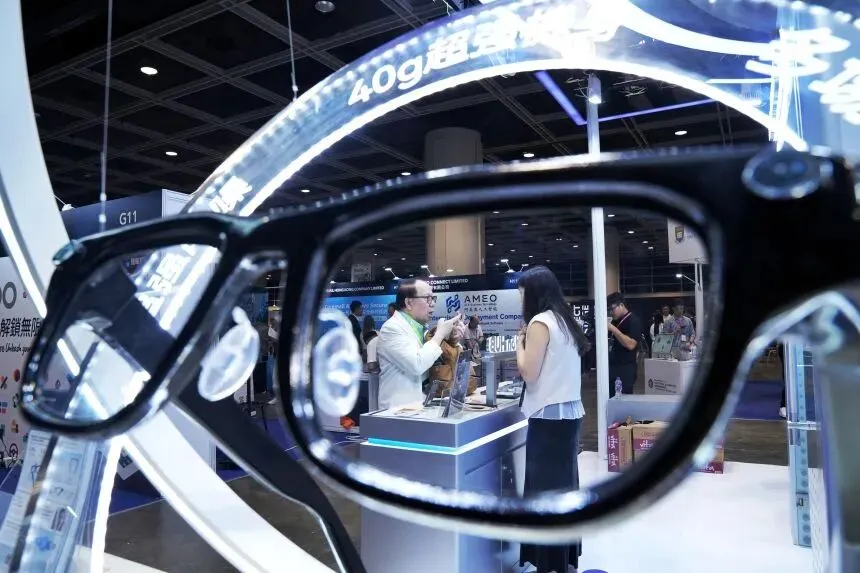
2026年6月4日中国香港“AI+power 2026”展会科大讯飞的AI眼镜
These wearable devices are rapidly moving away from novelty into the mainstream. US tech giant Meta launched its first AI-enabled glasses with Ray-Ban in late 2023, and has since released several new versions. Last year alone, more than seven million pairs were sold.
这些可穿戴设备正迅速从新奇玩意走向主流。美国科技巨头Meta于2023年底推出首款AI赋能的Ray-Ban眼镜,此后发布了多个新版本。仅去年一年,就售出超过700万副。
“Wearable AI is as much of a challenge to exams as ChatGPT was to essays in 2022 and I just don’t think there is any real way that we can reliably have exam practices moving forward,” Corbin said.
"可穿戴AI对考试的挑战,不亚于2022年ChatGPT对论文的冲击,而且我认为我们真的没有可靠的方式来维护未来考试正常进行了,"科尔宾说。
A ‘viable technology’ for cheating 一种可行的作弊技术
A year ago, Assistant Professor Meng Zili at the Hong Kong University of Science and Technology (HKUST) noticed a pair of stylish glasses worn by a student during an exam he was proctoring. As a researcher working on AI glasses, the frames caught his attention.
一年前,香港科技大学助理教授孟紫黎在监考时注意到一名学生戴着一副时尚眼镜。作为研究AI眼镜的学者,这副镜框引起了他的注意。
The glasses turned out to be ordinary. But the incident inspired him to test commercial AI glasses in an undergraduate level exam of an electrical engineering course.
结果证明那只是普通眼镜,但这一事件启发他测试商用AI眼镜在本科电气工程课程考试中的表现。
The result was striking, showing that AI glasses are a “viable technology” for handling exams, Meng said. By simply looking at the exam paper, the glasses could transmit questions to a connected AI large language models, which generated answers and displayed them on the lenses.
结果令人震惊,显示AI眼镜应对考试技术方面完全可行,孟说。只需看着试卷,眼镜就能将题目传输给连接的AI大语言模型,生成答案并显示在镜片上。
The score generated with the device placed it among the top five in a class of over 100 students, significantly exceeding the average score of 72.
使用该设备获得的分数在100多人的班级中跻身前五,远超72分的平均分。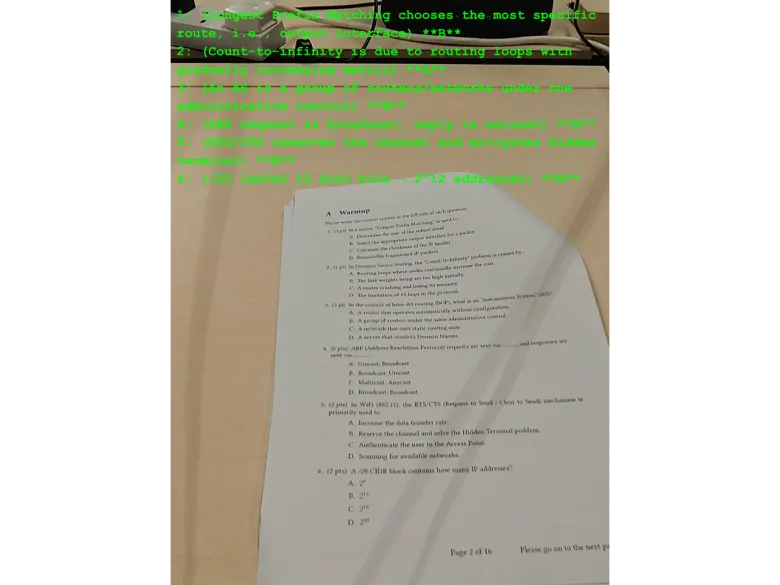
AI眼镜用于HAUST计算机通信网考试答题的屏幕截图
“After conducting the experiment, it really raises the question of how much knowledge students actually need to memorize for exams, versus whether we should allow them to use AI during assessment, given what AI is now capable of,” Meng said.
"做完实验后,这真的引发了一个问题:学生究竟需要为考试记忆多少知识,鉴于AI现在的能力,我们是否应该允许他们在评估中使用AI,"孟说。
“The real question is how quickly we can rethink and adapt our education system — how we change the way we teach, and how we evaluate students,” he said.
"真正的问题是我们怎么能迅速重新思考并调整我们的教育体系,怎样改变教学方式,以及怎样评估学生,"他说。
But despite being a major disruption to education, the power of AI should not be a reason to discourage its use, said Kong Siu Cheung, a professor and director of the AI and Digital Competence Education Center at the Education University of Hong Kong.
但香港教育大学人工智能与数字素养教育中心主任江绍祥教授表示,尽管AI是对教育的重大颠覆,其威力不应成为劝阻使用它的理由。
Instead, the educational systems should focus on developing students’ thinking capabilities and metacognition to prevent over-reliance on AI, he said.
相反,教育体系应专注于培养学生的思维能力和元认知,以防止过度依赖AI。
“We should use technology. We should use AI. We should not just say avoid it, stop using it… The bottom line is: don’t outsource your thinking capability,” he added.
"我们应该使用技术,我们应该使用AI,我们不应该说只能避开它、停止使用它,底线是:不要外包你的思维能力,"他补充道。