夜雨聆风
夜雨聆风01 文章选材
August 8TH- 14TH |Asia

【Para. 1】韩国半导体巨头工程师婚恋市场受追捧
【Para. 2】韩国在 AI 时代的机遇与风险
【Para. 3】政府用超额税收设立 “未来应对基金”
【Para. 4】韩国是 AI 淘金热的卖铲人,已盈利丰厚
【Para. 5】SK 海力士员工以罢工威胁,获得了丰厚奖金
【Para. 6】红利局限于芯片业内人,业外人士通过股市参与损失惨重
【Para. 7】仅三星和 SK 海力士缴纳的公司税,达成了韩国今年所有公司税预期
【Para. 8】政策制定者考虑直接给公民发钱分享红利
【Para. 9】一部分人主张进行更广泛的再分配
【Para. 10】另一些人反对称 “芯片业虽受益于 AI,但本身并非 AI”
03 原文音频

 807 words ★★★☆☆(难度评级)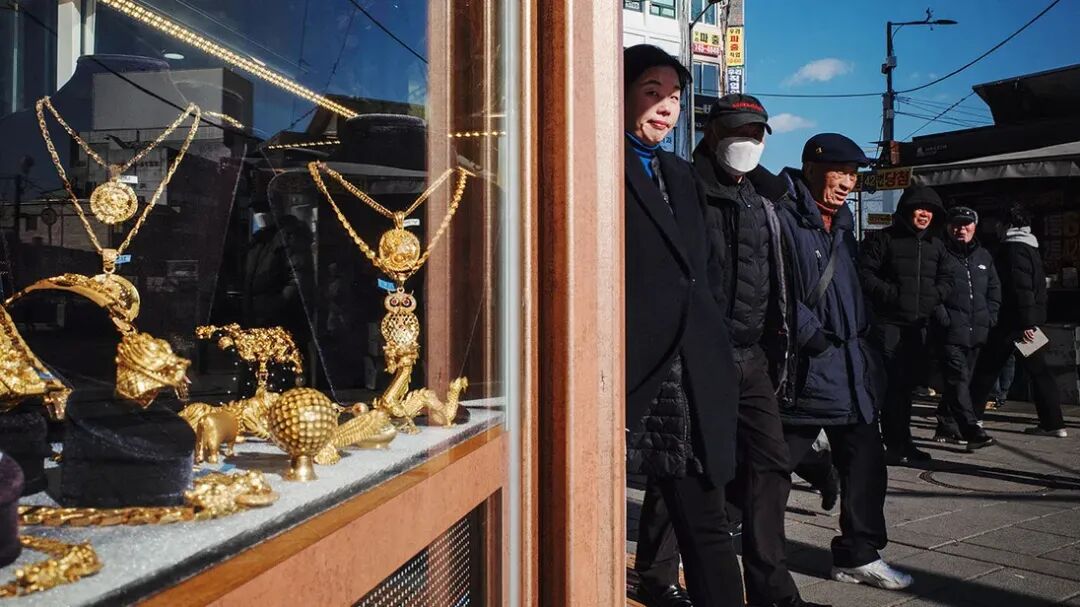
How AI-fuelled wealth is reshaping South Korea
【Para.1】An unkempt man walks into a pricey shop. The staff dismiss him—until he takes off his jacket and reveals a gilet emblazoned with “SK Hynix”, a semiconductor firm known for handing out massive bonuses. This imagined scene—a recent skit on a South Korean comedy show—lampoons real ones unfolding as AI driven wealth floods the country. Companies that help arrange marriages report a big jump in the desirability of engineers from SK Hynix and Samsung Electronics, another semiconductor maker. They are now nearly as sought after as doctors and lawyers.
【Para.2】An AI windfall is reshaping South Korean society. Speaking in Silicon Valley on July 25th, Lee Jae Myung, South Korea’s president, compared the AI era to the discovery of fire and called it “a truly new opportunity for Korea”. But the new era also brings risks: South Korea’s benchmark stock index, KOSPI, has doubled in value in the past year but dipped 22% in July. A series of wild swings have made it the most volatile stock market in the world.
【Para.3】Fierce debates rage in Seoul over how to ensure that new wealth is shared equitably and stewarded sustainably. “This raises a new policy challenge for us: how should we approach such extraordinary excess profits from a socioeconomic perspective and from the standpoint of national policy?” Mr Lee said during an interview with The Economist in June. The following month his government announced a “Future Response Fund” to invest newfound tax revenue for generations to come.
【Para.4】Wealth is flowing into South Korea because its firms provide infrastructure AI model makers need, such as high bandwidth memory chips. South Korean officials speak of producing “picks and shovels” for an AI gold rush. While the gold miners may or may not hit paydirt, the pickmakers (or, rather, the chipmakers) are already flush. On July 30th Samsung Electronics said operating profit in the second quarter was 89.5trn won ($63bn), up 1,800% from a year earlier. One day earlier SK Hynix said operating profit in the same quarter grew 557%, year on year.
【Para.5】Their workers want a bigger share. Last year SK Hynix agreed to set aside 10% of its operating profit for bonuses. Samsung’s powerful labour union threatened a strike in May, demanding a cut of soaring profits. A last ditch agreement staved off a factory shutdown; some bonuses will exceed $400,000. Such payouts are unheard of in a country where the average annual salary is less than $40,000. A new class of workers has been minted: neither white nor blue collar, but “silicon collar”.
【Para.6】Yet the spoils have largely been limited to chip industry insiders. The government recently raised its GDP growth forecast for 2026 from 2% to 3%, but that is largely thanks to booming exports. Except near chip factories, consumption has been sluggish. People outside the industry have looked to equities for a piece of the action. Retail investors poured 78trn won ($54bn) into South Korean stocks in May and June; many were burned when shares fell in July.
【Para.7】The broadest benefit will be fiscal, as corporate and income tax revenues flood government coffers. Corporate tax receipts from Samsung and SK Hynix alone could yield as much as the government expected to receive in total from corporate taxation this year. Overall tax revenue is projected to reach 500trn won next year, equal to 17% of GDP and a record high.
【Para.8】Policymakers are grappling with how to manage the windfall. Kim Yong beom, Mr Lee’s chief domestic policy adviser, sparked debates in May with a personal Facebook post musing about a possible “citizen dividend” funded through excess tax revenues. Speaking to The Economist, Mr Lee suggested that a basic income could be one of several useful policy options.
【Para.9】One faction is arguing for more sweeping redistribution. Chipmakers’ success was made possible by “long term public investment by the state and support from taxpayers and the public”, and should be returned in part to the public, says Oh Jun ho of the Basic Income Research Institute. Proposals include creating new top corporate tax brackets for higher earning companies, imposing windfall levies, or giving the public stakes in the firms.
【Para.10】Others see such calls as misguided. Chipmaking requires continuous investment: new levies could discourage it. The public’s claim to revenues generated by private sector electronics firms is not akin to its right to benefit from nationally owned oil and gas companies—even if some in South Korea like to compare them. It is true that AI labs have trained their models using data created by whole societies. But that is not the game South Korea’s chipmakers are in, says Rhee Chang yong, a former governor of the Bank of Korea: “They benefit from AI, but they are not AI.”
05 检验题
21. According to Paragraph 1, the comedy skit about an unkempt man in a pricey shop illustrates _____.
[A] the growing prestige of doctors and lawyers in South Korean society
[B] how AI-driven wealth has elevated the social status of semiconductor engineers
[C] the importance of dressing well when shopping in upscale stores
[D] the fierce rivalry between SK Hynix and Samsung Electronics employees
22. The phrase "picks and shovels" (Paragraph 4) is used by South Korean officials to describe their country's role in the AI industry as _____.
[A] a provider of essential infrastructure for the AI boom
[B] the primary developer of consumer-facing AI applications
[C] a minor supplier of raw materials for chip manufacturing
[D] the leading investor in AI startup companies worldwide
23. It can be inferred from Paragraph 6 that retail investors who poured money into Korean stocks in May and June _____.
[A] profited handsomely from the AI boom before selling in July
[B] were largely industry insiders with advance knowledge of market trends
[C] successfully diversified their portfolios across multiple sectors
[D] likely suffered significant losses when the market dipped 22% in July
24. Unlike Oh Jun-ho, who argues that chipmakers' profits should be partly returned to the public, Rhee Chang-yong believes that _____.
[A] the government should nationalise all semiconductor companies immediately
[B] higher corporate-tax brackets should be created specifically for the chip industry
[C] chipmakers benefit from AI but are not AI companies, and thus cannot be compared to state-owned resource firms
[D] South Korea's chipmakers should receive even more state subsidies to maintain their competitiveness
25. Which of the following would be the best title for the text?
[A] Why South Korea Must Nationalise Its Semiconductor Industry
[B] How AI-Driven Wealth Is Reshaping South Korean Society and Policy
[C] The Fall of KOSPI: Inside the World's Most Volatile Stock Market
[D] Marriage Market Trends Among South Korean Engineers
看更多单词注释,全文翻译,长难句解析,写作积累以及答疑服务;
扫码下方报名训练营获取👇👇👇