ARTICLE · 996201
高中英语写作进阶系列 | 05 作文不是句子的堆积:建立逻辑链
到了这里,学生已经能够:
提出观点,解释原因,增加具体内容,用例子支持观点。
但一个新的问题会出现:
这些句子放在一起,就一定是一篇好作文吗?
不一定。
因为写作并不是把几个正确的句子排成一行。
真正成熟的文章,还需要一种更重要的能力:Logical Relationships
建立逻辑关系
也就是说:
读者不仅要看懂每一句写了什么,还要知道为什么这一句会出现在上一句之后。
这就是高中写作开始从“句子能力”进入“篇章能力”的关键一步。
一、很多学生的问题不是“句子错”,而是“句子散”
来看一段很典型的学生作文:
Exercise is important for teenagers. It is good for our health. Many students are busy with their studies. Exercise can make us stronger. Students sometimes feel stressed. We should exercise every day.
每一句单独看,都没有明显问题。
但整段读下来,会有一种感觉:
散。
为什么?
因为这些句子只是围绕“运动”这个话题放在了一起,却没有形成清楚的关系。
如果把它们重新组织一下:
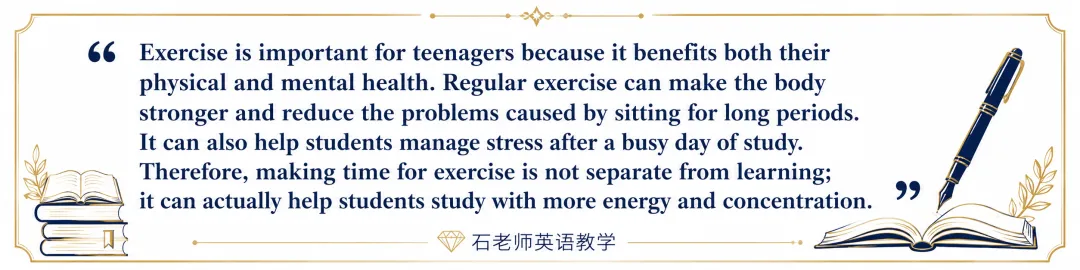
现在文章明显更顺了。
不是因为词汇突然变高级了。
而是因为句子之间出现了一条逻辑链:
观点→↓
原因1:身体健康→↓
原因2:缓解压力→↓
结果:更有精力学习
这就是文章的“骨架”。
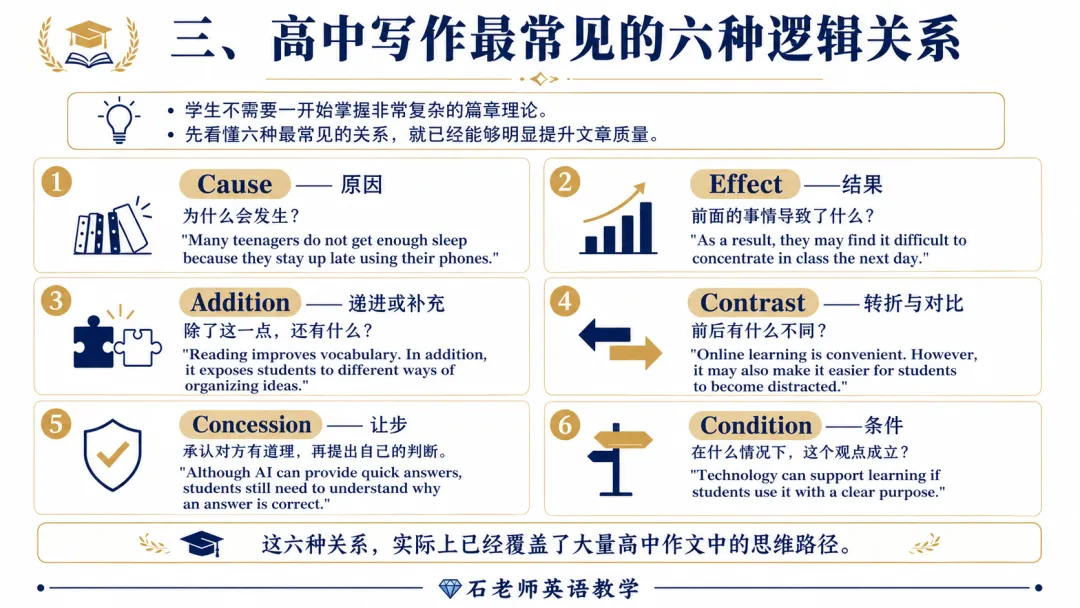
二、真正的逻辑,不等于多用连接词
一说到“逻辑”,学生最容易想到:
·First
·Second
·Besides
·Moreover
·However
·Therefore
·In addition
·Last but not least
于是作文变成:
First, reading is important.Second, reading is useful.Besides, reading can help us a lot.Moreover, we can learn many things from books.Therefore, we should read more.
看上去连接词很多。
但逻辑真的清楚了吗?
不一定。
因为连接词只是标记关系的语言工具。
真正的逻辑首先来自:
内容之间本身有没有关系。
如果两句话之间没有因果,
加上therefore也不会自动产生因果。
如果两个观点之间没有转折,
加一个however也不会让文章真正有层次。
所以,可以告诉学生:
先建立关系,再选择连接词。
而不是:
先背连接词,再想办法把它塞进作文。
四、可以先教学生读懂一个最基础的逻辑链
比如:
Students should develop the habit of reading every day.
不要急着写。
先问:
Why?
Because reading exposes them to new ideas.
What happens then?
They begin to see problems from different perspectives.
What may be the result?
They may become more thoughtful readers and writers.
于是形成:
Students should develop the habit of reading every day because reading exposes them to ideas and experiences beyond their own lives. As they encounter different perspectives, they gradually learn to look at the same issue in more than one way. This can help them become not only stronger readers but also more thoughtful writers.
这里其实是:
Cause → Process → Result
阅读→↓
接触不同观点→
看问题的角度发生变化→
阅读与写作能力提升
学生一旦看见这种“箭头关系”,文章就不再只是句子的堆积。
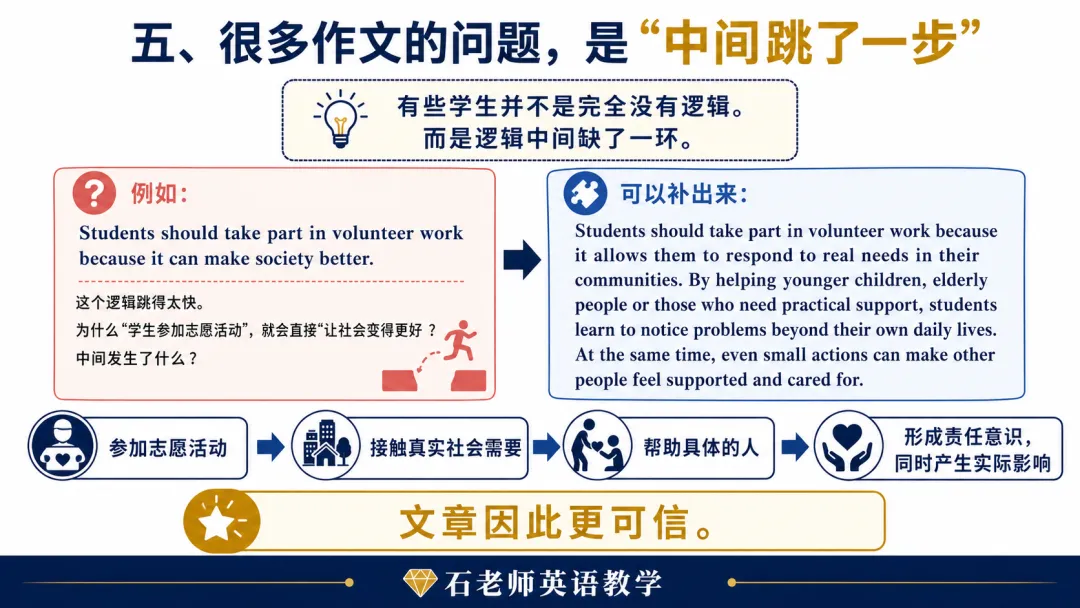
六、教师可以经常问一个问题:中间发生了什么?
比如:
Reading improves writing.
学生会写。
但继续问:
How?
中间发生了什么?
可以拆成:
阅读→
接触不同表达→
注意句子和段落怎样组织→
积累语言模式→
迁移到自己的写作
于是可以写:
Reading widely can improve writing because students are repeatedly exposed to different ways of expressing and organizing ideas. Over time, they begin to notice useful patterns in vocabulary, sentence structure and paragraph development. When these patterns are later transferred into their own writing, their expression becomes more flexible.
这就是逻辑链。
很多所谓的“作文不够深”,其实就是:
A和C都写了,但B没有写出来。
七、一个很实用的方法:给每句话贴“功能标签”
学生写完一段后,可以不要先改语法。
先给每句话标一个功能。
例如:
Failure can help us grow.Point
It shows us what we still need to improve.[Reason]
For example, after failing my first speech contest, I realized that I spoke too quickly and rarely looked at the audience.[Example]
I changed the way I practised and gradually became more confident.[Result]
The experience taught me that failure becomes valuable when it leads to reflection and change.[Meaning]
学生一看就会发现:
这不是五个句子。
而是:
Point → Reason → Example → Result → Meaning
这就是逻辑结构。
九、读后续写尤其需要“事件之间有因果”
读后续写最怕:
Then… Then… Then…
例如:
Then Tom ran outside. Then he saw a boy. Then he helped him. Then they became friends.
事情都发生了。
但为什么发生?
不知道。
更自然的写法应该是:
As Tom hurried toward the station, he noticed a boy struggling to lift a bicycle that had fallen beside the road. He hesitated for a second, knowing that he was already late. But when he saw the boy trying again with one injured hand, he turned back.
这里就有完整的逻辑:
赶时间→
看到男孩需要帮助→
产生犹豫→
发现男孩受伤→
决定返回
故事因此可信。
十、人物变化也需要逻辑链
读后续写里经常出现:
She suddenly became confident.
最需要追问的是:
Why suddenly?
一个合理的人物变化,往往需要:
事件→
心理反应→
新的认识→
新的行动
例如:
She heard her name called and felt her hands turn cold. Then she saw her teacher at the back of the hall, holding up the same handwritten speech card they had practised with for weeks. Suddenly, she remembered what the teacher had told her: “You do not have to sound perfect. Just make sure they hear what you want to say.” She took a slow breath and stepped forward.
这不是一句:
She became confident.
而是让读者看到了“变化是怎样发生的”。
十二、高考写作迁移:这项能力在哪里用?
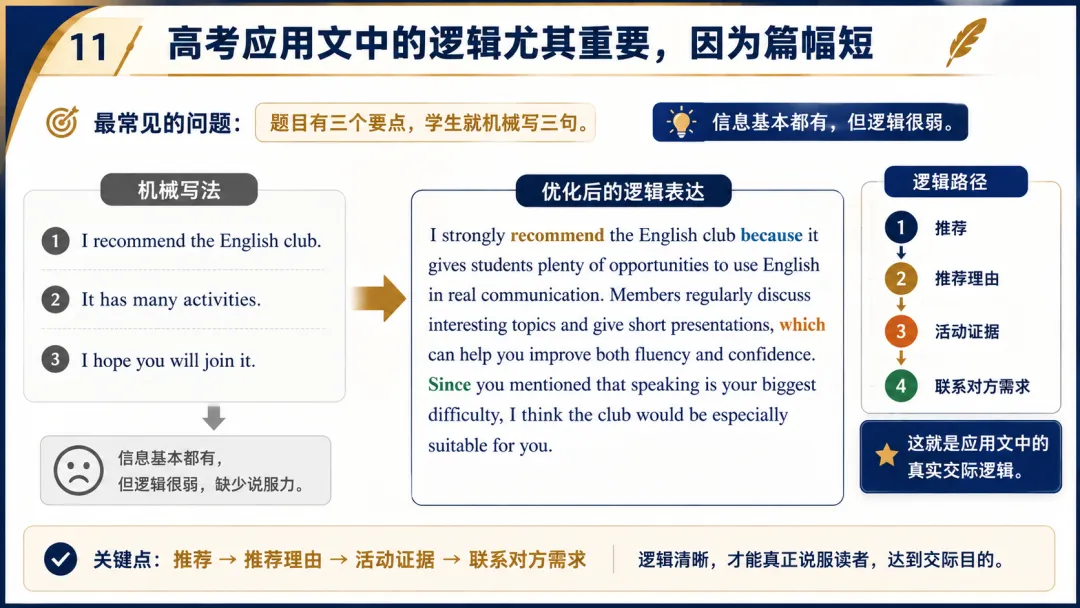
第5篇的LogicalRelationships,是应用文和读后续写共同需要的底层能力。
在高考应用文中
它帮助学生做到:
不是机械覆盖题目要点,而是把要点组织成真实、自然的交流。
例如:
推荐→ 理由→ 具体内容→ 为什么适合对方
或者:
问题→ 建议→ 理由→ 预期效果
一篇短短的应用文,只要逻辑清楚,就会明显更完整。
在读后续写中
它决定:
故事是否自然。
人物为什么行动?
事件为什么发生?
情绪为什么变化?
上一段怎样推动下一段?
结尾为什么能够从前面的情节自然生长出来?
读后续写真正考查的,从来不只是“会不会编故事”。
而是:
能不能让故事按照原文已经建立的逻辑继续发展。
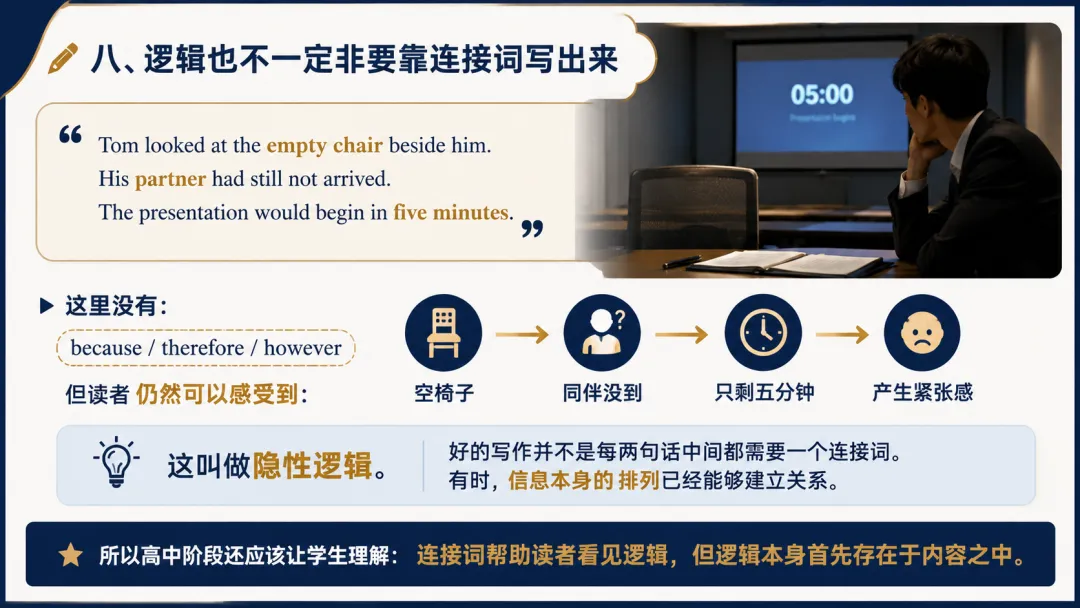
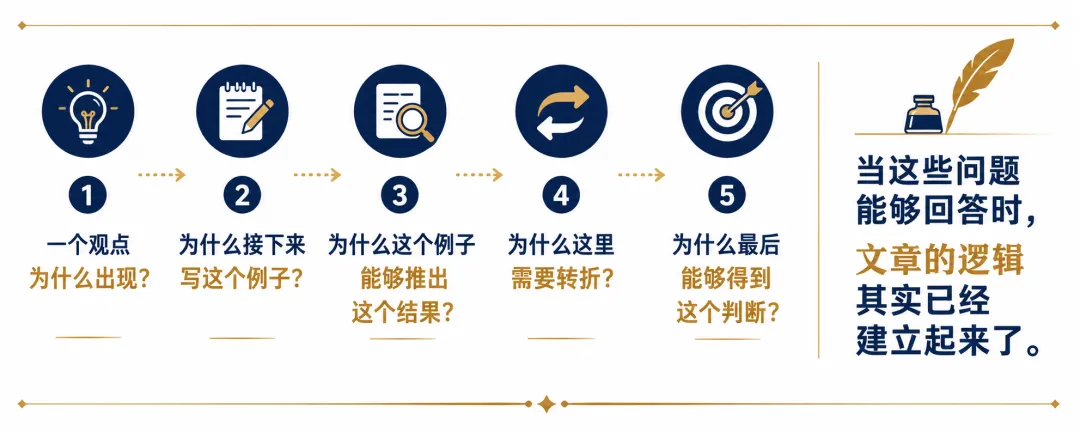
十三、作文真正的“连贯”,首先发生在思想里
我们经常要求学生:
Make your writing coherent.
写得连贯。
但真正的连贯,并不是多背几个:
however, therefore, moreover, besides…
真正的连贯是:
前一句为后一句创造条件,后一句回应前一句留下的问题。
所以,第5种核心写作能力:
Logical Relationships
可以浓缩成一句话:
作文不是把正确的句子放在一起,而是让每一句都和前后发生关系。
接下来,我们暂时不进入第6种能力。
因为前5篇训练完成以后,正好到了第一次高考真实任务迁移的时候。
下一篇|阶段实战①:高考应用文
怎样把“几个要点”真正写成一篇文章?
我们会把前面已经训练过的:
内容展开、解释、具体化、举例与论证、逻辑关系

全部放进高考应用文中。
看看同样是题目给出的几个信息点,
为什么有些学生只是把它们翻译成英语,
而有些学生却能够把它们组织成一篇:
内容完整、逻辑自然、真正有交际感的应用文。
这也将是“10篇能力训练 + 2篇高考实战”中的第一次实战迁移。