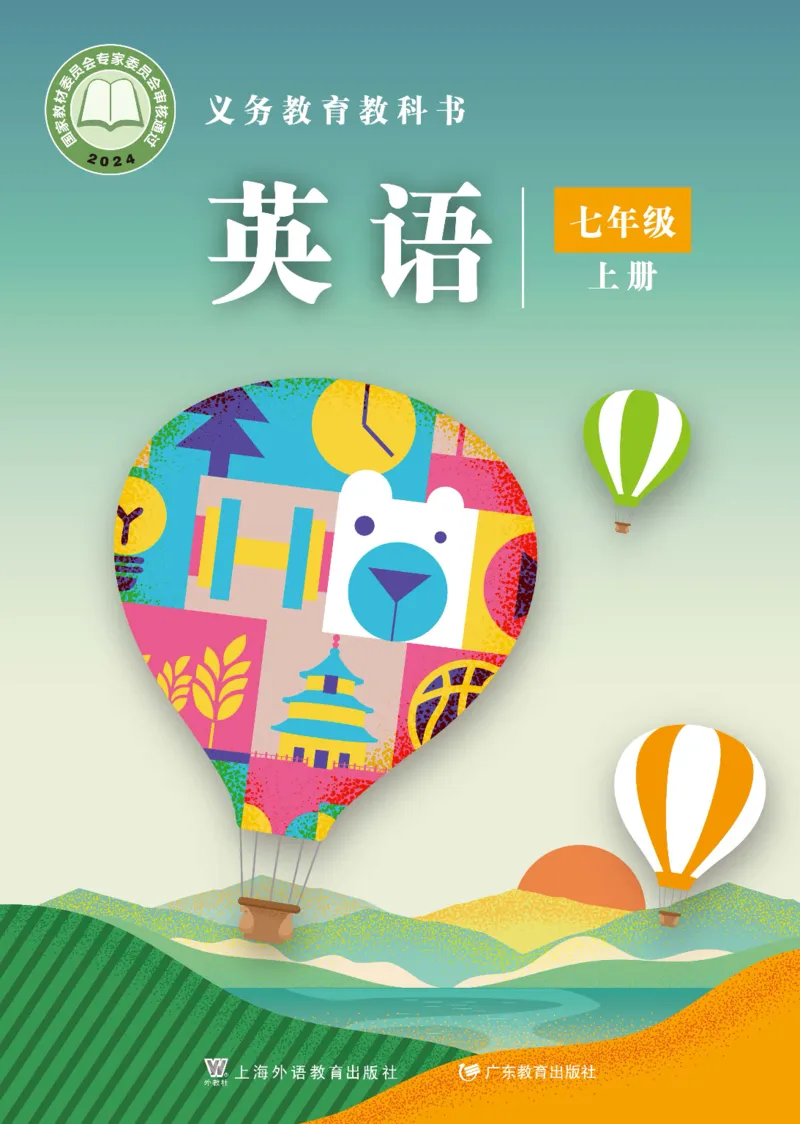
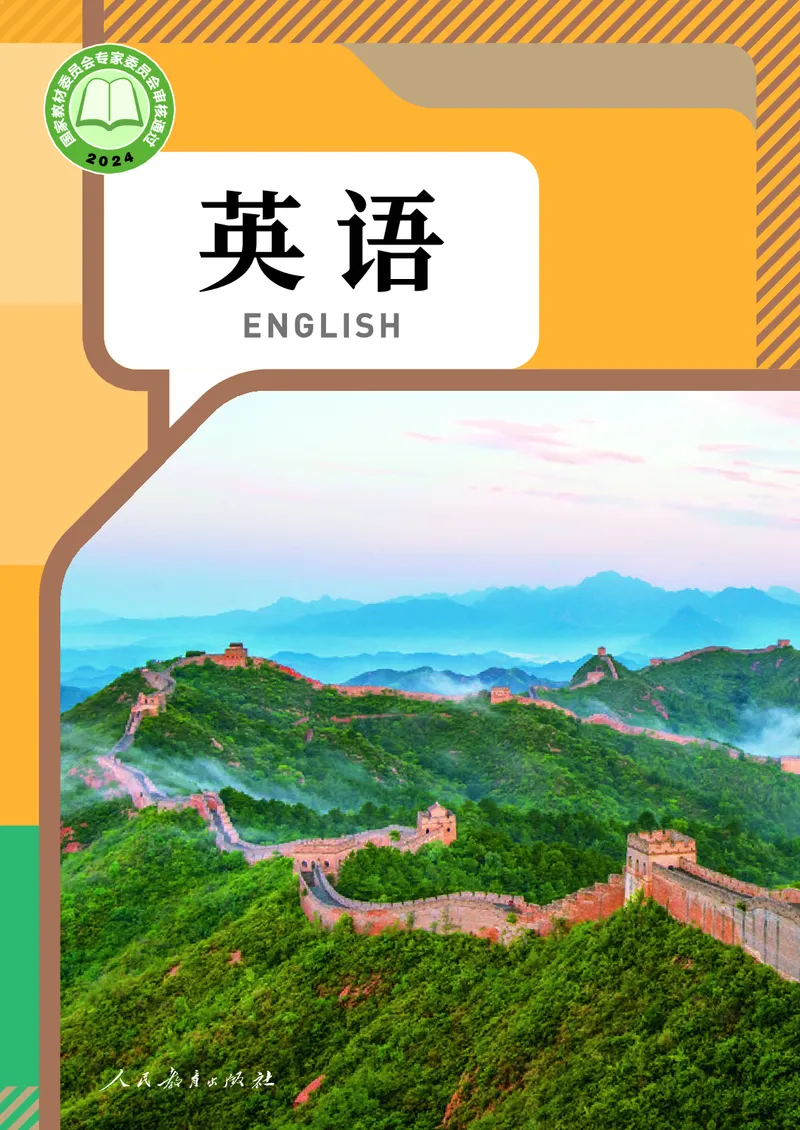
YINGYU 义务教育教科书
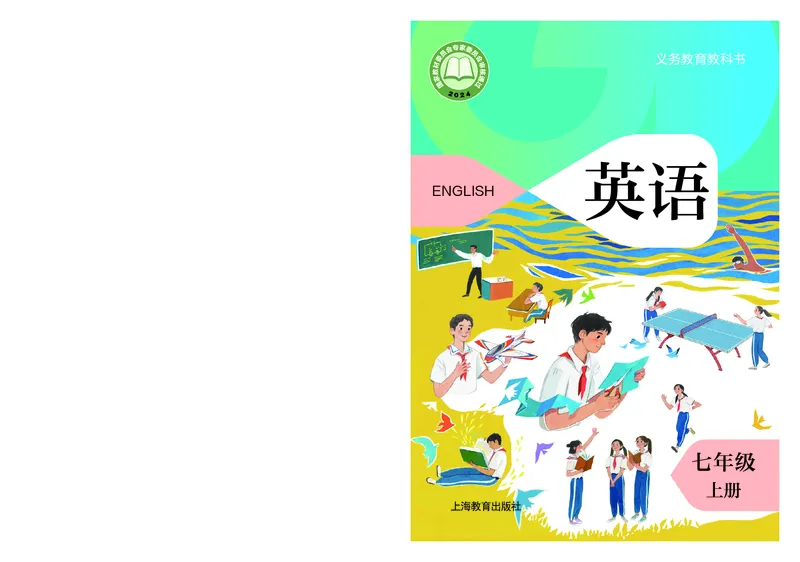
英语
英语
七年级 上册
七
年
级
七年级
上册
英
上
册
义
务
教
育
教
科
书
ENGLISH
语
定价:10.30元
英英语语 七七年年级级 上上册册 封封面面..iinndddd 11 22002244//77//2244 1133::4422::5522义务教育教科书
英英语语
七年级
上册
主编 舒白梅主 编:舒白梅
副 主 编:程 林
编写人员:(以姓氏笔画为序)
叶方兴 向宗平 李 睿 何 琳
陈皓曦 秦文娟 倪 宏
责任编辑:黄 艳 王婧文 吕 晔
特约审读:张迎庆
特约编辑:戴思泉 陈峤琦 朱 珏
美术编辑:朱博韡
封面设计:郑 艺 朱博韡
版式设计:严 冬
插图绘制:庞 坤
本册教材部分图片由图虫网图片库、IC photo图片库提供
义务教育教科书 英语 七年级 上册
出 版 上海教育出版社(上海市闵行区号景路 159 弄 C 座)
发 行 各地新华书店
印 刷 上海中华印刷有限公司
版 次 2024年7月第1版
印 次 2024年7月第1次印刷
开 本 787毫米×1092毫米 1/16
印 张 10.5
字 数 157千字
书 号 ISBN 978-7-5720-2733-8/G·2410
定 价 10.30元
辽宁省物价局价格审查批准文号:辽价发〔2018〕30号
版权所有·未经许可不得采用任何方式擅自复制或使用本产品任何部分·违者必究
如发现内容质量问题,请拨打 021-64319241;
如发现印、装问题,请拨打 021-64373213,我社负责调换。
声明 按照《中华人民共和国著作权法》第二十五条有关规定,我们已尽量寻找著作权人支付稿酬。著
作权人如有关于支付稿酬事宜可及时与出版社联系。致 同 学
亲爱的同学:
英语是当今世界广泛使用的语言,是各国之间交流的重要工具。学习英语能够让我们获
得跨文化交流能力,为自己成长为具有家国情怀、国际视野和跨文化沟通与交流能力的高素
质人才打下基础。
这套教材将陪伴大家度过初中阶段的英语学习。它是一套怎样的教材?
教材的每个单元都有一个主题,围绕主题呈现一个“关键问题”(Key question),以
激发同学们对主题的学习兴趣和初步认识。随着单元学习的推进,我们将基于这个关键问题,
一步步探究该单元的主题意义。在单元主题的统领下,单元内容分为四个以E开头的部分,
它们之间是循序渐进的关系。
第一个E是Experiencing and understanding language。这个部分将带领我们体验和
理解英语语言,其中的阅读和听力板块选用了题材广泛、体裁丰富的语篇。同学们能在学习
语言的同时体验生活,了解自我、自然和社会。
第二个E是Exploring and applying rules。语言意义的理解需要借助语言规则的学习。
同学们需要在不断习得和积累中归纳语言规则,并在语境中运用规则表达意义。
第三个E是Expressing and communicating ideas。语言是思维的载体和表达思想的
工具,这个部分说和写的活动为同学们提供了运用语言的机会。同学们可围绕单元主题,以
口头或书面形式表达观点,交流思想。
第四个E是Extending and developing competencies。这个部分提供了丰富的中外文
化和跨学科内容,通过听说读写看等活动,帮助同学们拓展和扩宽英语学习的边界和视野,
增加学习的深度和广度,进一步提升核心素养。
单元最后的项目(Project)是检测单元学习效果的综合实践活动。这些活动需要同学们
充分运用知识和智慧,开展合作学习,发挥想象力和创造力,以项目成果的形式呈现学习结果。
此外,教材中还有各种小栏目等着同学们去探索。同学们能在“初步思考”栏目(First
thoughts)中初步了解单元主题,在“阅读策略”栏目(Reading strategy)和“提示”栏
目(Tip)中学习阅读、视听等基本方法策略,在“词汇建构”栏目(Word building)中掌
握构词法和词汇的使用规律,在“归纳规则”栏目(Let’s sum up the rules!)中总结英语
语法规则,在“语法综合运用”栏目(Grammar in use)中灵活运用所学语法知识,在“迁
移创新”栏目(Your ideas)中充分交流自己的思想,在文化“注释”栏目(Notes)中了
解多元文化知识,在“自主探究”栏目(Exploring more)中开展自主探究学习,在“名言
警句”栏目(Wits corner)中感悟人生哲理……
希望这套教材为同学们提供珍贵的英语学习体验。通过学习这套教材,同学们能够探索
大千世界,品味不同文化的内涵,学有所思,学有所得,学有所成!Contents
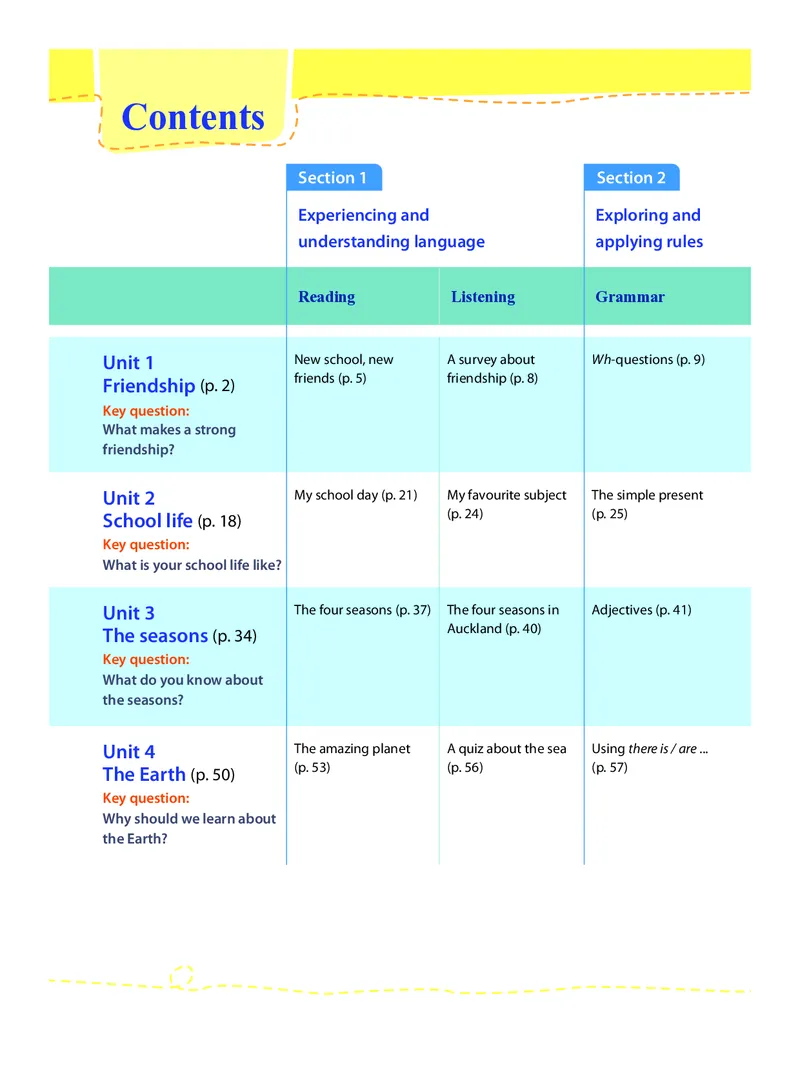
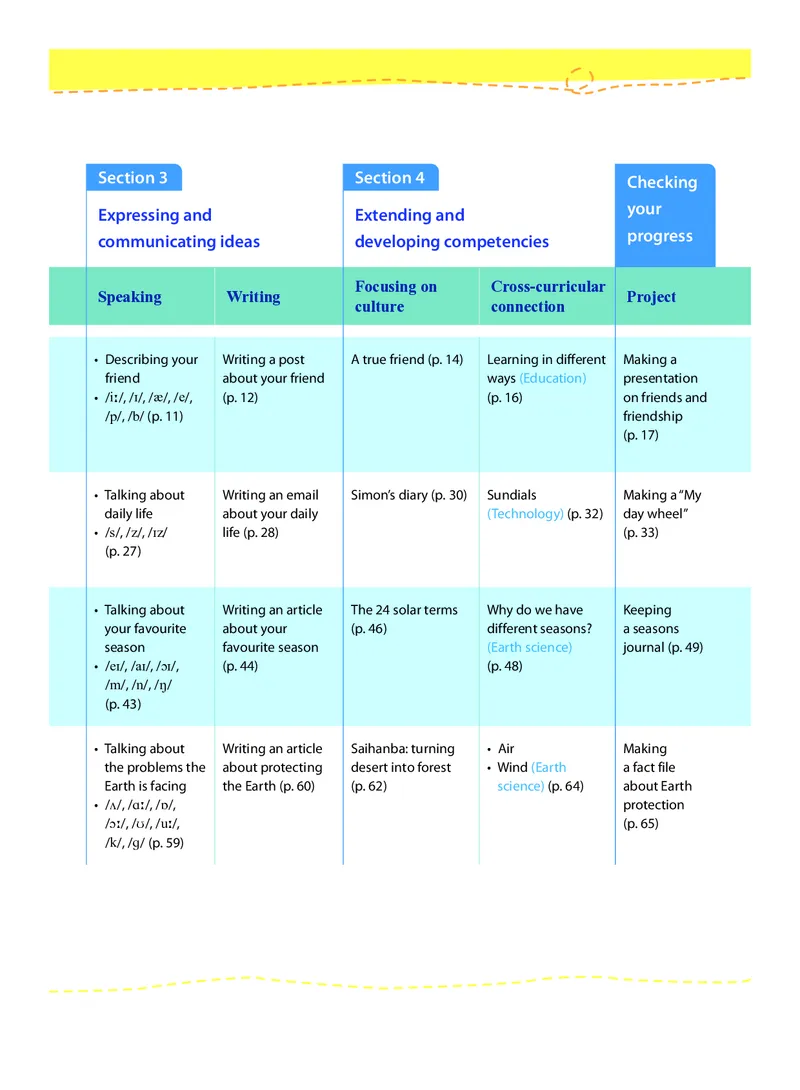
Section 1 Section 2 Section 3 Section 4
Checking
your
Experiencing and Exploring and Expressing and Extending and
progress
understanding language applying rules communicating ideas developing competencies
Focusing on Cross-curricular
Reading Listening Grammar Speaking Writing Project
culture connection
Unit 1 New school, new A survey about Wh-questions (p. 9) • Describing your Writing a post A true friend (p. 14) Learning in different Making a
friends (p. 5) friendship (p. 8) friend about your friend ways (Education) presentation
Friendship (p. 2)
• /i:/, /I/, /C/, /e/, (p. 12) (p. 16) on friends and
Key question:
/p/, /b/ (p. 11) friendship
What makes a strong
(p. 17)
friendship?
Unit 2 My school day (p. 21) My favourite subject The simple present • Talking about Writing an email Simon’s diary (p. 30) Sundials Making a “My
(p. 24) (p. 25) daily life about your daily (Technology) (p. 32) day wheel”
School life (p. 18)
• /s/, /z/, /Iz/ life (p. 28) (p. 33)
Key question:
(p. 27)
What is your school life like?
Unit 3 The four seasons (p. 37) The four seasons in Adjectives (p. 41) • Talking about Writing an article The 24 solar terms Why do we have Keeping
Auckland (p. 40) your favourite about your (p. 46) different seasons? a seasons
The seasons (p. 34)
season favourite season (Earth science) journal (p. 49)
Key question:
• /eI/, /aI/, /OI/, (p. 44) (p. 48)
What do you know about
/m/, /n/, /N/
the seasons?
(p. 43)
Unit 4 The amazing planet A quiz about the sea Using there is / are ... • Talking about Writing an article Saihanba: turning • Air Making
(p. 53) (p. 56) (p. 57) the problems the about protecting desert into forest • Wind (Earth a fact file
The Earth (p. 50)
Earth is facing the Earth (p. 60) (p. 62) science) (p. 64) about Earth
Key question:
• /V/, /A:/, /B/, protection
Why should we learn about
/O:/, /W/, /u:/, (p. 65)
the Earth? /k/, /G/ (p. 59)Contents
Section 1 Section 2 Section 3 Section 4
Checking
your
Experiencing and Exploring and Expressing and Extending and
progress
understanding language applying rules communicating ideas developing competencies
Focusing on Cross-curricular
Reading Listening Grammar Speaking Writing Project
culture connection
Unit 1 New school, new A survey about Wh-questions (p. 9) • Describing your Writing a post A true friend (p. 14) Learning in different Making a
friends (p. 5) friendship (p. 8) friend about your friend ways (Education) presentation
Friendship (p. 2)
• /i:/, /I/, /C/, /e/, (p. 12) (p. 16) on friends and
Key question:
/p/, /b/ (p. 11) friendship
What makes a strong
(p. 17)
friendship?
Unit 2 My school day (p. 21) My favourite subject The simple present • Talking about Writing an email Simon’s diary (p. 30) Sundials Making a “My
(p. 24) (p. 25) daily life about your daily (Technology) (p. 32) day wheel”
School life (p. 18)
• /s/, /z/, /Iz/ life (p. 28) (p. 33)
Key question:
(p. 27)
What is your school life like?
Unit 3 The four seasons (p. 37) The four seasons in Adjectives (p. 41) • Talking about Writing an article The 24 solar terms Why do we have Keeping
Auckland (p. 40) your favourite about your (p. 46) different seasons? a seasons
The seasons (p. 34)
season favourite season (Earth science) journal (p. 49)
Key question:
• /eI/, /aI/, /OI/, (p. 44) (p. 48)
What do you know about
/m/, /n/, /N/
the seasons?
(p. 43)
Unit 4 The amazing planet A quiz about the sea Using there is / are ... • Talking about Writing an article Saihanba: turning • Air Making
(p. 53) (p. 56) (p. 57) the problems the about protecting desert into forest • Wind (Earth a fact file
The Earth (p. 50)
Earth is facing the Earth (p. 60) (p. 62) science) (p. 64) about Earth
Key question:
• /V/, /A:/, /B/, protection
Why should we learn about
/O:/, /W/, /u:/, (p. 65)
the Earth? /k/, /G/ (p. 59)Contents
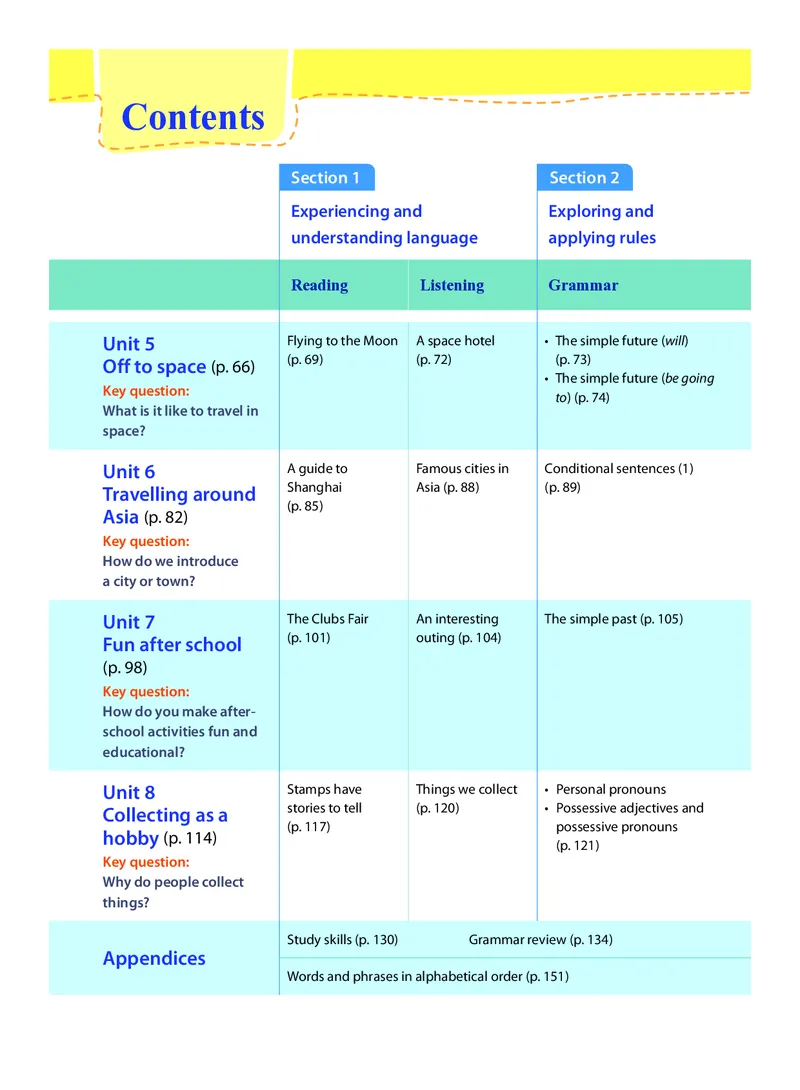
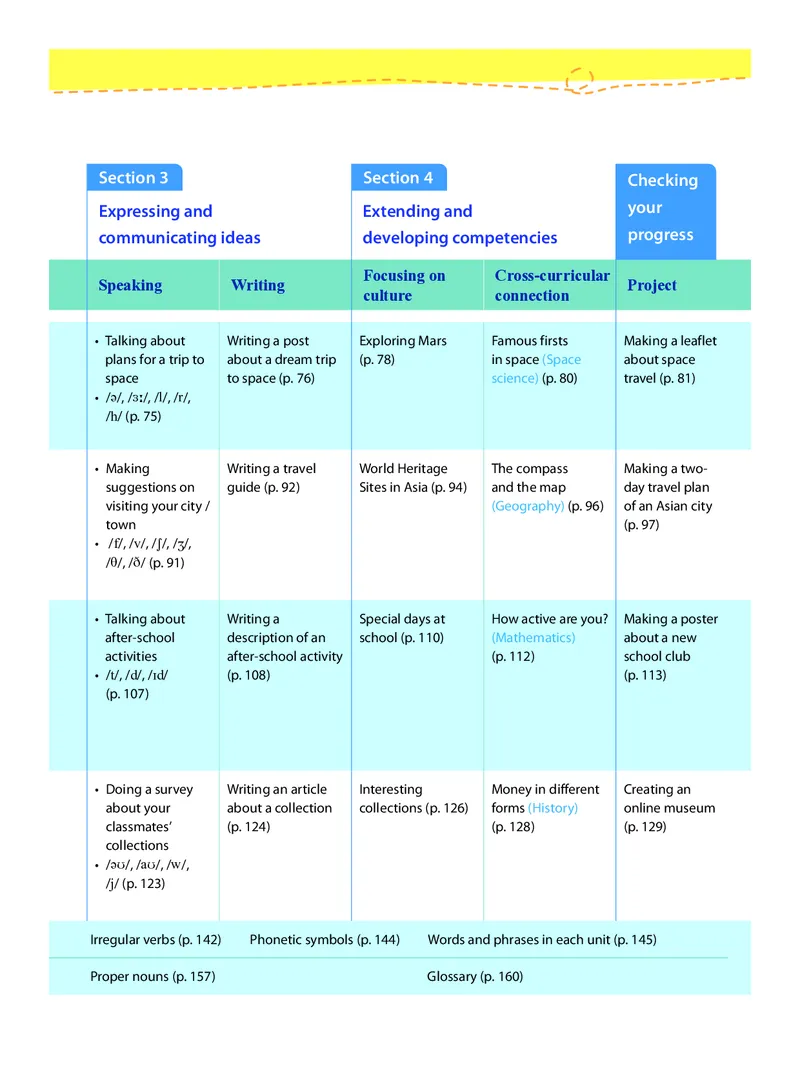
Section 1 Section 2 Section 3 Section 4 Checking
Experiencing and Exploring and Expressing and Extending and your
understanding language applying rules communicating ideas developing competencies progress
Focusing on Cross-curricular
Reading Listening Grammar Speaking Writing Project
culture connection
Unit 5 Flying to the Moon A space hotel • The simple future (will) • Talking about Writing a post Exploring Mars Famous firsts Making a leaflet
(p. 69) (p. 72) (p. 73) plans for a trip to about a dream trip (p. 78) in space (Space about space
Off to space (p. 66)
• The simple future (be going space to space (p. 76) science) (p. 80) travel (p. 81)
Key question:
to) (p. 74) • /R/, /F:/, /l/, /r/,
What is it like to travel in
/h/ (p. 75)
space?
Unit 6 A guide to Famous cities in Conditional sentences (1) • Making Writing a travel World Heritage The compass Making a two-
Shanghai Asia (p. 88) (p. 89) suggestions on guide (p. 92) Sites in Asia (p. 94) and the map day travel plan
Travelling around
(p. 85) visiting your city / (Geography) (p. 96) of an Asian city
Asia (p. 82)
town (p. 97)
Key question: • /f/, /v/, /S/, /Z/,
How do we introduce /P/, /Q/ (p. 91)
a city or town?
Unit 7 The Clubs Fair An interesting The simple past (p. 105) • Talking about Writing a Special days at How active are you? Making a poster
(p. 101) outing (p. 104) after-school description of an school (p. 110) (Mathematics) about a new
Fun after school
activities after-school activity (p. 112) school club
(p. 98)
• /t/, /d/, /Id/ (p. 108) (p. 113)
Key question: (p. 107)
How do you make after-
school activities fun and
educational?
Unit 8 Stamps have Things we collect • Personal pronouns • Doing a survey Writing an article Interesting Money in different Creating an
stories to tell (p. 120) • Possessive adjectives and about your about a collection collections (p. 126) forms (History) online museum
Collecting as a
(p. 117) possessive pronouns classmates’ (p. 124) (p. 128) (p. 129)
hobby (p. 114)
(p. 121) collections
Key question: • /RW/, /aW/, /w/,
Why do people collect /j/ (p. 123)
things?
Study skills (p. 130) Grammar review (p. 134) Irregular verbs (p. 142) Phonetic symbols (p. 144) Words and phrases in each unit (p. 145)
Appendices
Words and phrases in alphabetical order (p. 151) Proper nouns (p. 157) Glossary (p. 160)Contents
Section 1 Section 2 Section 3 Section 4 Checking
Experiencing and Exploring and Expressing and Extending and your
understanding language applying rules communicating ideas developing competencies progress
Focusing on Cross-curricular
Reading Listening Grammar Speaking Writing Project
culture connection
Unit 5 Flying to the Moon A space hotel • The simple future (will) • Talking about Writing a post Exploring Mars Famous firsts Making a leaflet
(p. 69) (p. 72) (p. 73) plans for a trip to about a dream trip (p. 78) in space (Space about space
Off to space (p. 66)
• The simple future (be going space to space (p. 76) science) (p. 80) travel (p. 81)
Key question:
to) (p. 74) • /R/, /F:/, /l/, /r/,
What is it like to travel in
/h/ (p. 75)
space?
Unit 6 A guide to Famous cities in Conditional sentences (1) • Making Writing a travel World Heritage The compass Making a two-
Shanghai Asia (p. 88) (p. 89) suggestions on guide (p. 92) Sites in Asia (p. 94) and the map day travel plan
Travelling around
(p. 85) visiting your city / (Geography) (p. 96) of an Asian city
Asia (p. 82)
town (p. 97)
Key question: • /f/, /v/, /S/, /Z/,
How do we introduce /P/, /Q/ (p. 91)
a city or town?
Unit 7 The Clubs Fair An interesting The simple past (p. 105) • Talking about Writing a Special days at How active are you? Making a poster
(p. 101) outing (p. 104) after-school description of an school (p. 110) (Mathematics) about a new
Fun after school
activities after-school activity (p. 112) school club
(p. 98)
• /t/, /d/, /Id/ (p. 108) (p. 113)
Key question: (p. 107)
How do you make after-
school activities fun and
educational?
Unit 8 Stamps have Things we collect • Personal pronouns • Doing a survey Writing an article Interesting Money in different Creating an
stories to tell (p. 120) • Possessive adjectives and about your about a collection collections (p. 126) forms (History) online museum
Collecting as a
(p. 117) possessive pronouns classmates’ (p. 124) (p. 128) (p. 129)
hobby (p. 114)
(p. 121) collections
Key question: • /RW/, /aW/, /w/,
Why do people collect /j/ (p. 123)
things?
Study skills (p. 130) Grammar review (p. 134) Irregular verbs (p. 142) Phonetic symbols (p. 144) Words and phrases in each unit (p. 145)
Appendices
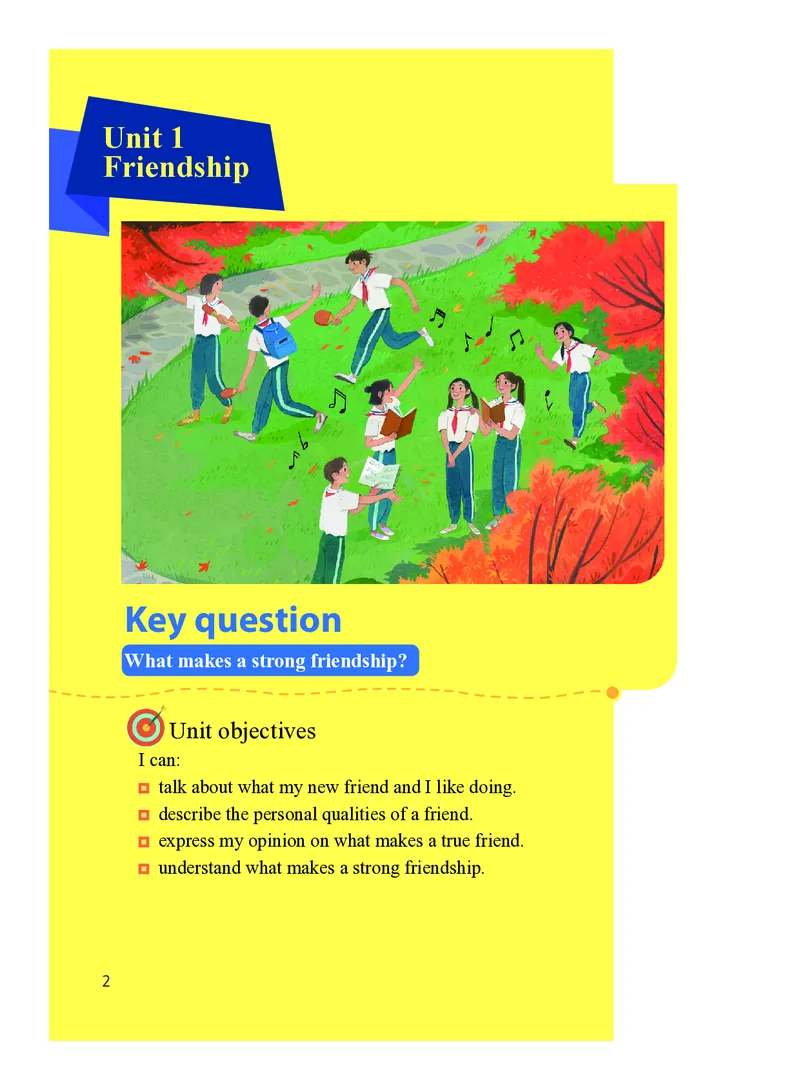
Words and phrases in alphabetical order (p. 151) Proper nouns (p. 157) Glossary (p. 160)Unit 1
Friendship
Key question
What makes a strong friendship?
UUnniitt oobbjjeeccttiivveess
I can:
talk about what my new friend and I like doing.
describe the personal qualities of a friend.
express my opinion on what makes a true friend.
understand what makes a strong friendship.
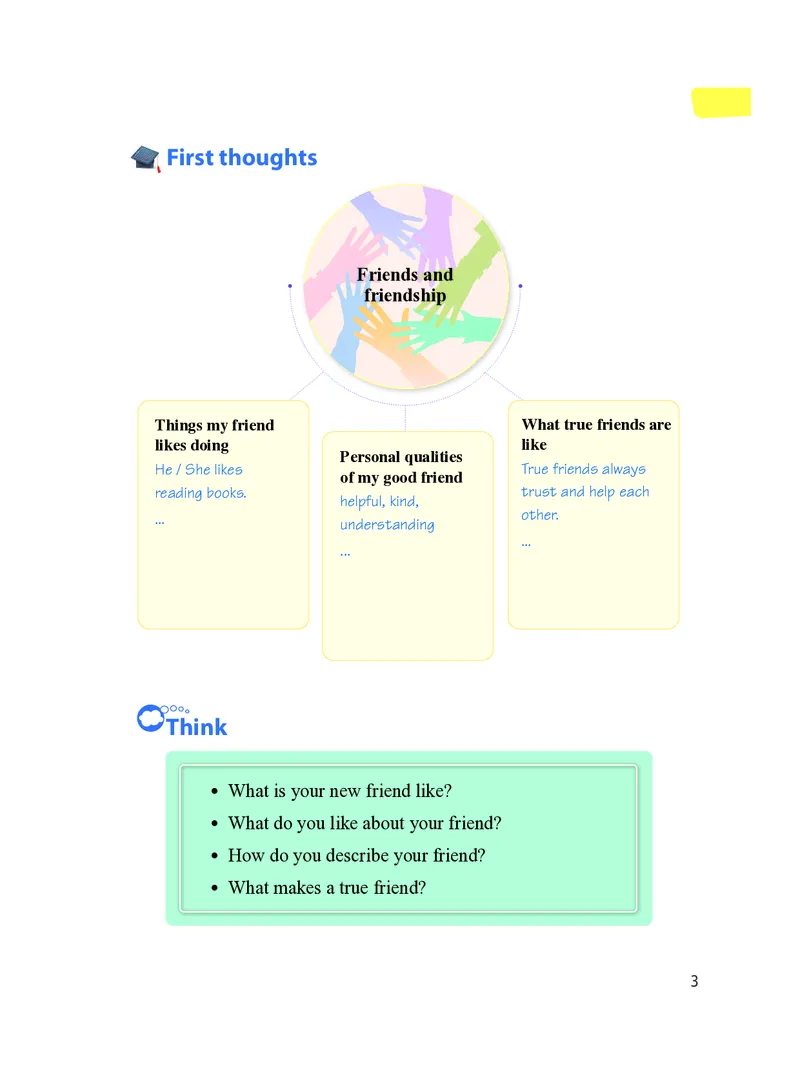
2First thoughts
Friends and
friendship
Things my friend What true friends are
likes doing like
Personal qualities
He / She likes True friends always
of my good friend
reading books. trust and help each
helpful, kind,
other.
...
understanding
...
...
Think
• What is your new friend like?
• What do you like about your friend?
• How do you describe your friend?
• What makes a true friend?
31
SSSeeeccttiiioon Experiencing and understanding language
Reading
TThhiinnkk
What is your new friend like?
Before you read
1 Friends may share the same hobbies. Talk in pairs about the things you like doing.
ride a bicycle
swim
play the guitar
paint pictures
read books
play basketball
do crossword puzzles① play football
I like swimming a lot. What do you
like doing?
I like swimming too. I also
love doing crossword puzzles.
2 Do you have any new friends at school? Describe in pairs what your new friends are
like.
friendly hard-working helpful honest patient
① crossword puzzle /9krBswF:d pVzl/ n. 纵横字谜
4Section 1
Chen Ming started his new school life this month. Read his post about his new friend.
New school, new friends
What is your new friend like?
Chen Ming, 13 8:00 p.m.
I love my new school! I have made a lot of new friends
there. Li Hua is one of them.
Li Hua is helpful and patient. He is also good at maths.
When I meet difficult maths problems, I turn to him for
5 help. When something interesting happens to me, I share
my happiness with him. When one of us feels sad, we tell
the other one and this makes us feel better. We really
like doing things together. Li Hua loves playing ping-
pong with me after school. “It’s fun to play with a good
10 player like you,” he says.
With his help, my maths has improved a lot. I am also
more confident now, and I have the courage to try new
things. My parents also tell me that I am more open and
willing to help than before. I think this is all thanks to
15 Li Hua. Close friends can really help us in our lives!
My friendship with Li Hua teaches me that friends
count on each other for love, admiration, respect and
support. Friendships are not only about having fun, but
also about love, honesty, understanding and trust.
Reading strategy
Understanding personal pronouns
Personal pronouns usually refer to nouns or noun phrases that appear earlier in
a text.
Li Hua is helpful and patient. He is also good at maths.
Can you fi nd out who the personal pronoun “he” in line 10 refers to?
5Unit 1 Friendship
Reading comprehension
1 Choose the best topics for the paragraphs in the post on page 5. There are two topics
you do not need.
a The importance of maths skills
Paragraph 1 _______
b A better me
Paragraph 2 _______
c A description of my new school
Paragraph 3 _______
d Why friendship is important
Paragraph 4 _______
e Making friends at my new school
f A description of Li Hua
2 Read the post again and answer the questions below.
(1) Why does Chen Ming think Li Hua is helpful and patient?
_______________________________________________________________________________
_______________________________________________________________________________
(2) How do Chen Ming and Li Hua get along with each other?
_______________________________________________________________________________
_______________________________________________________________________________
(3) Is Chen Ming changing for the better? How?
_______________________________________________________________________________
_______________________________________________________________________________
(4) What does Chen Ming say about friendship?
_______________________________________________________________________________
_______________________________________________________________________________
Your ideas
3 Do you agree with Chen Ming’s understanding of friendship? Why or why not? Share
your ideas with the class.
6Section 1
Vocabulary practice
1 Find the words and phrases in the post on page 5 and match them with their meanings.
(1) be good at (line 3) a to trust somebody to do something
(2) turn to (line 4) b to get better
(3) improve (line 11) c can do something well
(4) confi dent (line 12) d to go to somebody or something for help
(5) count on (line 17) e feeling sure about yourself
2 Read what Winston the Cat says and fill in the blanks with the words and phrases from
Exercise 1. Change the form if necessary.
Hi, I’m Winston. I live with Jenny and Jake. Jenny loves music.
She (1)______________ singing. Every day after school, she sings
her favourite songs to me. She is very (2)______________ and
does not mind singing in front of lots of people! She wants to
be a singer one day! Jake also likes music. He plays the piano for
an hour every evening. Jake always (3)______________ Jenny
for advice on how to play, and they often practise together. He
(4)______________ a bit more each day and he is quite good
now! I’m really happy that I live with Jenny and Jake. I know that
I can always (5)______________ them to look after and love me!
3 Make sentences about you and your friends. Use the words and phrases below.
confi dent courage friendly fun
be good at be willing to count on turn to
I often turn to my friend for help with my maths study.
Word building
Noun suffi x: -er
We can add -er to the end of some verbs to make nouns.
play→player sing→singer
Can you give more examples of making nouns this way?
72
Unit 1 Friendship Section Exploring and applying rules
Listening
TThhiinnkk
What do you like about your friend?
A survey about friendship
1 Look at the words below. Are they important for friendship? Share your ideas with your
classmates.
Good friends are honest with
Words for personal qualities each other. You can always trust
tthheemm.. II tthhiinnkk tthhaatt’’ss iimmppoorrttaanntt ffoorr
caring helpful kind polite
friendship.
funny honest patient supportive
...
2 Li Na is doing a survey on friendship. Listen and answer the questions.
(1) Who is Li Na?
_______________________________________________________________________________
(2) What does Li Na want to know?
_______________________________________________________________________________
3 Listen again and complete the notes.
Good friends are (1)________________ . They never
Tip Study
Name:
(2)________________ . I can (3)________________ them. the notes
Wu Di
When I’m with them, I can (4)____________________ . before you
listen.
Good friends are (5)____________________________ .
Name:
Su Mei When I feel sad or blue, they (6)_________________ .
Your ideas
4 Discuss the question below.
What personal qualities does your friend have?
82
SSSeeeccttiiioon Exploring and applying rules
Grammar
Wh-questions
We use Wh-questions to ask for information.
Su Mei is asking her cousin Su Wen about his new friend. Read the text messages and pay
attention to the words in bold.
Su Wen
Where are you now?
I’m at home.
How is your new school?
Great! I’ve made a new friend.
Who is your new friend?
Li Chen.
What does he like doing?
He likes painting pictures and swimming.
We share the same hobbies.
What do you two like to talk about?
We like to talk about sport.
Let’s sum up the rules!
• We can make Wh-questions with a Wh-word + am / is / are.
• We use do or does to make Wh-questions with other verbs.
93
Unit 1 Friendship Section Expressing and communicating ideas
1 Su Mei is designing some survey questions for her school project. Help her complete the
questions according to her notes.
How well do you know your friend? I’ll ask questions about:
(1) _H__o_w_ o_l_d_ i_s_ y_o_u_r_ f_ri_e_n_d_?____________________ (1) age
(2) birthday
(2) ____________________ your friend’s birthday?
(3) home address
(3) _________________________ your friend live? (4) favourite book and
(4) _______________ your friend’s favourite book? why he / she likes it
(5) role model
________________________ your friend like it?
(6) dream job
(5) __________________ your friend’s role model?
(6) _______________________________________
Grammar in use
2 Interview one of your classmates to learn more about him or her. Maybe you can
become friends!
• How do you get to school?
• What is your favourite fi lm / song / ...? Why do you like it?
• What do you want to do in the future?
...
May I ask you some questions?
Sure. Please go ahead.
WWhhaatt iiss yyoouurr ffaavvoouurriittee
My favourite book is
bbooookk??
The Little Prince.
103
SSSeeeccttiiioon Expressing and communicating ideas
Speaking
TThhiinnkk
How do you describe your friend?
Describing your friend
Work in pairs and talk about your friends. What makes him / her your good / best / true
friend?
Tip Refer to pages
Words for appearance
4 and 8 for vocabulary
Body: medium height / tall / short related to hobbies and
Face: round / square personal qualities.
Hair: long / short / black / brown /
straight / curly①
Eyes: dark / brown / blue
S1: I’m going to talk about my best friend, Zhou Jing. She is tall. She has long,
straight hair. Her smile is always bright, and it makes everyone around her happy.
She likes to write stories. We like doing the same things.
S2: What makes her your best friend?
S1: She is kind and caring. When I feel sad, she is always
there to help me and cheer me up.
...
Improving your pronunciation
Listen and repeat. Pay attention to the letters in blue.
/ i: / me meet / I / his thin
/ æ / have maths / e / many tell
/ p / help powerful / b / basketball hobby
(1) We meet Tim in the canteen② and see him eat beef.
(2) Cat, cat! Catch that fat rat stealing bread and eggs!
(3) Bob likes to play basketball and ping-pong.
① curly /9kF:li/ adj. 有鬈发(或毛)的 ② canteen /kCn9ti:n/ n. 食堂;餐厅
11Unit 1 Friendship
WWrriittiinngg
Writing a post about your friend
What is your friend like?
We all have friends. What is your friend like? Please write a post about your
best friend / a good friend / a new friend.
1 Wang Yao drew a mind map before she wrote about her best friend. Look at the mind
map and label the parts of the text below.
Basic information
Tip Using mind
Hobbies
Han Li
maps is a good way to
dancing
12 years old
organize your ideas.
You do not have to
Han Li
write full sentences in
mind maps.
Appearance
Personal qualities tall
kind long, straight hair
helpful big, dark eyes
Wang Yao
2023/10/20 19:09
My best friend
(1)________ Han Li is my best friend. She is 12 years old.
Han Li is tall. She has long, straight hair and big, dark eyes.
(2)________
I think she is lovely. She is good at dancing and likes modern
(3)________ dance.
Han Li is very kind and helpful. When I need help, she is
(4)________
always there for me. I can trust her and I share my thoughts
with her. I often tell her how I feel about people or things.
It is wonderful to have such a good friend.
Like Reply
12Section 3
2 Now write a post about your friend.
Step 1 Plan Draw your own mind map.
Step 2 Write Write your post. Focus on your friend’s personal qualities in
your post.
My _______ friend
______________ is my (new / good / best) friend.
Like Reply
Step 3 Check and revise Tick (✓) the boxes to check your writing, and then
revise it.
I provided basic information about my friend and described his / her
▪
appearance, hobbies and personal qualities.
I used suitable adjectives, such as __________________________, to
▪
describe my friend’s personal qualities.
I used the words and expressions I learnt in this unit.
▪
I used correct spelling, grammar and punctuation.
▪
134
SSSeeeccttiiioon Extending and developing competencies
FFooccuussiinngg oonn ccuullttuurree
TTThhhiiinnnkkk
What makes a true friend?
Many books explore the power and beauty of
strong and lasting friendships. Let’s dive into one of the classic books.
1 Read an excerpt from the book Charlotte’s Web by E. B. White about the friendship
between Wilbur the Pig and Charlotte the Spider①.
Charlotte’s Web is the story of two friends on a farm: Wilbur the Pig and Charlotte
the Spider. The farmer, Zuckerman, wants to eat Wilbur, but Charlotte has a plan
to save his life. Thanks to Charlotte’s clever plan, Zuckerman lets the pig live.
However, Charlotte is dying of old age. Wilbur is very sad, but he tells Charlotte he
will take care of her children.
A true friend
Wilbur often thought of Charlotte. All winter Wilbur watched over Charlotte’s eggs.
For Wilbur, nothing in life was as important. He waited patiently for the big day to
come.
One sunny morning, Wilbur saw something move— a very small spider that looked
5 like Charlotte. Then three more, then eight, then ten ... Charlotte’s children were
here at last.
“I am an old friend of your mother’s,” said Wilbur. “I am glad to see you.” The
little spiders were glad to see him too.
One day, Wilbur felt a warm wind come into the barn②. As he watched, one baby
10 spider rose into the air.
“Good-bye!” it said.
“Wait,” Wilbur cried out. “Where are you going?”
“We are leaving on the warm wind.”
“You can’t all go. I will have no friends,” said Wilbur.
15 “Good-bye!” they called. “Good-bye, good-bye!”
This felt like the end of the world to Wilbur. He cried himself to sleep.
When he woke up, there were three small spiders on the wall.
“Hello! Three of us are staying. We like this place, and we like you,” said
a very small spider.
20 It was a happy day for Wilbur. And there were many more happy days.
① spider /9spaIdR(r)/ n. 蜘蛛 ② barn /bA:n/ n. 谷仓;畜棚
14Section 4
As the months and years came and went, he was never without friends. Wilbur
never forgot Charlotte. He loved her children and grandchildren, but they could
never take her place in his heart. It is not often that a true friend like her comes
along.
E. B. White was an American writer. He wrote books for children.
Notes
Charlotte’s Web is one of the most loved children’s books of all time.
2 Answer the questions below with the information from the excerpt on pages 14–15.
(1) What was “the big day” for Wilbur? What happened on that day?
(2) Do you think Wilbur is a true friend to Charlotte? Why or why not?
3 Complete the sentences with the words and phrases below. Change the form if necessary.
end glad heart rise wake up watch over
(1) Every school day I am ____________ to see my friends.
(2) Sam always _____________ his little sister when his parents are busy in the
kitchen.
(3) My _____________ is full of joy when I meet up with my old friend.
(4) My grandma lives near the sea. She likes to get up early and watch the sun
_____________.
(5) Every morning I _____________ at around 6:30 a.m.
(6) On school days, I meet my friend at the ____________ of my street and we
walk to school together.
Your ideas
4 Discuss the question below.
How do you understand the sentence “This felt like the end of the world to
Wilbur”?
Exploring more
To learn more about Charlotte’s Web, you can:
▪ read the book or watch the fi lm;
▪ note down details that impress you and share them with your classmates.
15Unit 1 Friendship
CCrroossss--ccuurrrriiccuullaarr ccoonnnneeccttiioonn Education
You and your friends are all good at something and intelligent in different ways.
Scientists say we have multiple intelligences, but usually only one or two of them
are very strong.
1 Read the text. Complete the labels with the words below.
Body Music Nature
LEARNING IN ddiiff ff eeeerr nntt WAYS
______ Smart Picture Smart
11 2
LLii DDoonngg lloovveess ddiinnoossaauurrss Jack loves drawing,
aanndd hhee hhaass ggoott aa rroocckk painting and taking
ccoolllleeccttiioonn ttoooo.. HHee lliikkeess photos. He can read
ssttuuddyyiinngg oouuttssiiddee.. maps very well.
Word Smart ______ Smart
3 4
Zhou Jing likes writing Caro is sporty. She’s
stories and reading books. a good dancer and she
She is a great actress and is plays football too.
always in the school play.
______ Smart Number Smart
55 6
Lucas can play the OOlliivviiaa ccaann ppllaayy cchheessss
guitar. He likes listening very well and she
to music in his free likes solving maths
time. puzzles.
2 What kinds of intelligence do you and your friend(s) have? Do you have the same
intelligence(s)? Share your findings with the class.
I have body intelligence. I am good at doing sport. My best friend has picture
intelligence. He is good at drawing.
16Checking your progress
Project
Making a presentation on friends and friendship
You are at a new school, and you are making new friends there. How will you introduce
your old friends to them? Discuss friends and friendship in groups and make a
presentation to the class.
Step 1 Think about your friend:
• What is he / she like?
Tip You may refer
• What is he / she good at?
to what you have
• What do you and your friend
learnt in this unit.
like doing together?
Step 2 Describe your friend and discuss the
questions below in your group.
• What do you like about your friend?
• What can you learn from him / her?
• What makes a strong friendship?
...
Step 3 Prepare a presentation about your friend and your group’s thoughts about
friendship. Follow the example below. Choose a group member to present
to the class.
... (name) is my best friend. He / She has ... (appearance). He / She
is good at ... We like ... together.
... (name) is ... (personalqualities). When I’m with him / her, I can ...
Our group thinks that true / good friends usually take care of
each other / ...
Trust / ... makes a strong friendship.
WWiittss ccoorrnneerr
FFrriieennddss sshhooww tthheeiirr lloovvee iinn ttiimmeess ooff ttrroouubbllee,, nnoott iinn hhaappppiinneessss..
— Euripides
17Unit 2
School life
Key question
What is your school life like?
UUnniitt oobbjjeeccttiivveess
I can:
describe my school day.
talk about my favourite subject.
talk about my daily life.
compare the school lives of children in other countries
with my own.
18First thoughts
M I 7 g y : e 3 t s 0 c t h o a o . s m o c . l h e d o v o a e l r y a y r t m o a o u b r t o n i u n in t e g . M I f .. . r p i l e y a n y s d c p s h i n a o g f o - t l p e o a r n c s g t c i h v w o i i t t o i h e l. s my
...
My school
life
Changes I’d like to make to my school life
I want to do more sport.
...
Think
• What is your routine on a school day?
• What is your favourite subject and why?
• What is your daily life like?
• How is your school life different from that of
children in other countries?
191
SSSeeeccttiiioon Experiencing and understanding language
Reading
TTThhhiiinnnkkk
What is your routine on a school day?
Before you read
1 We do different things every day. Talk in pairs about your daily lives.
6:30 a.m. 7:15 a.m. 12:30 p.m.
brush teeth go to school by bus listen to music
4:30 p.m. 7:30 p.m. 8:00 p.m.
do sport do the dishes do some reading
Which of these things do you ...
a do every day? b do several times a day / a week? c never do?
WWhhiicchh ooff tthheessee tthhiinnggss ddoo
yyoouu ddoo eevveerryy ddaayy??
II lliisstteenn ttoo mmuussiicc aanndd ddoo ssppoorrtt
every day. What about you?
...
2 Discuss the question in pairs.
What do you usually do on school days?
20Section 1
Read the article about Li Hua’s school day.
My school day
My name is Li Hua. I started junior high school this
September. I have a lot to say about my time there!
Classes start at 8:00 a.m. I have seven classes each
day, four in the morning and three in the afternoon.
Geography is a new subject in junior high. The teacher
5
sometimes teaches us by playing games. It’s a great way to
learn.
Morning break starts at 9:40 a.m., and I run to the sports ground. I often do some
morning exercise or play a ball game with my friends. The break ends at 10:10 a.m.
How short it is!
10
We have a lunch break from 12:00 p.m. to 2:00 p.m. We go to the canteen for
lunch. There are different foods I can choose from. I really enjoy eating there!
After that, I usually go to the book corner in the classroom. I can always find
something interesting to read.
Classes end at 4:25 p.m., and many students take part in after-school activities. I
15
go to the Ping-pong Club with my friend Chen Ming. We plan to take part in the
school ping-pong game next month. We look forward to it and will practise very
hard.
It’s exciting to be a junior high student. I have a good time at school, and I enjoy
every minute of it.
20
Reading strategy
Understanding time order
When we describe our daily routine, we usually present the events in the time
order. If you identify the time markers in the article, it is easier to understand
the order of events.
Classes start at8:00 a.m.
After that, I usually go to the book corner in the classroom.
Can you fi nd more time markers in the article?
21Unit 2 School life
Reading comprehension
1 Help Li Hua complete his school day schedule with the information from the article on
page 21.
Time Things I do
8:00 – 9:40 have classes
9:40 – 10:10 (1)____________________________________________
10:10 – 12:00 have classes
(2)____________________________________________
12:00 – 14:00
(3)____________________________________________
14:00 – 16:25 have classes
After 16:25 (4)____________________________________________
2 Read the article again and answer the questions below.
(1) What does Li Hua think of playing games in geography class?
_______________________________________________________________________________
(2) Does Li Hua like the morning break? Find sentences to support your answer.
_______________________________________________________________________________
(3) What does Li Hua like to do during the lunch break?
_______________________________________________________________________________
(4) What does Li Hua think of his school life?
_______________________________________________________________________________
Your ideas
3 Is Li Hua’s school day similar to or different from yours? Complete the diagram below.
Li Hua’s school day My school day
22Section 1
Vocabulary practice
1 Find the words and the phrase in the article on page 21 and match them with their
meanings.
(1) geography (line 5) a a group of people doing things together
(2) activity (line 15) b to be excited about something that is going to
happen
(3) club (line 16) c to work hard to get better at something (e.g. a
sport)
(4) look forward to (line 17) d a school subject about the world, the oceans,
different countries, etc.
(5) practise (line 17) e something that you do or take part in
2 Mike, Li Hua's British friend, is asking him about his new school life. Complete their
conversation with the words and the phrase from Exercise 1. Change the form if
necessary.
Mike: How is your new school, Li Hua? Is it close to your home?
Li Hua: My new school is great, and it’s only a 10-minute walk from home.
Mike: Do you like your teachers?
Li Hua: Yes. I really like our (1)____________ teacher. In the fi rst lesson, he
taught us a lot of interesting things about the world’s oceans.
Mike: When does the school day usually end?
Li Hua: At 4:25 p.m., but there are lots of fun after-school (2)____________. I’m
a member of the Ping-pong (3)____________. We play for two hours
on Tuesdays and Thursdays. In fact, I will play a match next month. I
(4)____________ it, but it will not be easy! I need to (5)____________
very hard before the game!
3 Make your school day schedule.
Time Things I do
Word building
Adverb suffi x: -ly
We can add -ly to the end of adjectives to make adverbs.
real→really different→differently
But there are some exceptions. true→truly automatic→automatically
Can you give more examples of making adverbs this way?
232
Unit 2 School life Section Exploring and applying rules
Listening TTThhhiiinnnkkk
What is your favourite subject
My favourite subject and why?
1 What subjects do you have? Write them down.
2 Li Hua and Chen Ming are talking about their favourite subjects. Listen to their
conversation and complete the sentence.
Li Hua likes ___________ best, and Chen Ming’s favourite subject is ___________.
3 Listen again and complete the speech bubbles.
I like (1)__________________. I can use what I learn to
(2)__________________ in daily life. Besides①, I have to
(3)__________________ when I’m solving difficult
problems. I enjoy that.
Li Hua
In this class, I develop (4)___________________ and learn basic
life skills, such as (5)___________________.
Chen Ming
Your ideas
4 Discuss the questions below.
(1) What is / are your favourite subject(s)?
(2) Why do you like it / them?
① besides /bI9saIdz/ adv. 此外
242
SSSeeeccttiiioon Exploring and applying rules
Grammar
The simple present
We use the simple present to talk about regular actions.
Jack is an 8-year-old student in the UK. Read about his daily life and pay attention to the
words in bold and the underlined adverbs and adverbial phrase.
Jack lives in Southampton in the UK. He usually gets up at 7:45 a.m.
He often meets his friends at 8:15 a.m. and walks to school with them.
School always starts at 9:00 a.m. and finishes at 3:30 p.m. Every
Monday, Jack takes part in after-school club activities. Back home, Jack
does his homework. He and his parents usually have dinner around 7:00
p.m. They seldom eat out. Jack manages his time well. He never goes to
bed late!
Let’s sum up the rules!
• In statements, we add -s or -es to verbs after he / she / it. In questions, we
use do before I / you / we / they and does before he / she / it.
• We use adverbs and adverbial phrasesof frequency to talk about how
often things happen.
Adverbs of frequency
always / usually / often /
I go to school on foot.
sometimes / seldom / never
Look!
• Adverbs of frequency come before the main verbs.
My mother often goes to the supermarket near our home.
• Adverbial phrases of frequency often come at the end of a sentence.
Sometimes they come at the beginning.
My mother goes to the supermarket every Sunday.
253
Unit 2 School life Section Expressing and communicating ideas
1 Complete the conversation below with do / does and the information from the
passage on page 25.
S1: What time does Jack usually get up?
S2: He usually getsup at 7:45 a.m.
S1: How (1)__________ Jack and his friends go to school?
S2: (2)_______________________________________________
S1: When (3)__________ school fi nish?
S2: (4)_______________________________________________
S1: What (5)__________ Jack do every Monday?
S2: (6)_______________________________________________
S1: When (7)__________ Jack and his parents usually have dinner?
S2: (8)_______________________________________________
S1: How often (9)__________ Jack and his parents eat out?
S2: (10)_______________________________________________
Grammar in use
2 Play a guessing game in pairs. One chooses a student from the table and says three
or four sentences about him / her. The other guesses who he / she is.
Walk to school Swim Play the guitar Read books
Li Hua
Su Mei
Chen
Ming
Li Na
These adverbs mean:
This student always walks to school. He or
always she usually reads books in his or her free time.
He or she never swims or plays the guitar.
usually
often
sometimes
seldom
I know the answer.
never It must be Li Hua!
263
SSSeeeccttiiioon Expressing and communicating ideas
Speaking
TThhiinnkk
What is your daily life like?
Talking about daily life
Work in pairs and take turns asking and answering questions about your daily lives. Then
complete the notes below with your classmate’s daily schedule.
do morning exercises go to bed have lunch
go home have classes
__________‛s daily life
Tip Remember
Time Activities
to use what,
____ a.m. gets up when, how and
sometimes,usually,
_______ washes face, brushes teeth
always, etc. in your
_______ has breakfast (usually eats ___________ conversation.
and drinks ______________________ )
_______ goes to school (on foot or by _________ )
_______ __________________________________
_______ __________________________________
_______ __________________________________
What time do you usually
get up?
I usually get up at 7:00 a.m.
Improving your pronunciation
Listen and repeat. Pay attention to the letters in blue.
/ s / glass place school this
/ z / activities always games puzzle
/ Iz / buses classes dishes washes
(1) Classesstart at 8:00 a.m. I have seven classes each day.
(2) The teacher sometimes teaches us by playing games.
(3) Olivia can play chess very well and she likessolving maths puzzles.
27Unit 2 School life
WWrriittiinngg
Writing an email about your daily life
Teen Life Magazine
Every year, teenagers like you start junior high school. We want to know about
your daily lives. Write an email and tell us about it!
1 Read the email written by Su Wen and label the parts of the email with the words
below.
a Body b Closing c Greeting d Signature①
Teen Life Magazine
My daily life
(1)_____ Dear Teen Life Magazine,
My name is Su Wen, and I am writing to tell you about my daily
life.
I am a Grade 7 student and my school day is very busy.
I start the day with a big, healthy breakfast at 7:20 a.m. It makes me
feel full of energy all day. Classes start at 8:00 a.m. I always listen
carefully in class. During the breaks between classes, I usually
talk with my classmates and get myself ready for the next lesson.
(2)_____ Tuesday is my favourite school day because I have a drama lesson
in the afternoon. It is fun to learn how to put on a play.
After school, I usually play football with my friends. After dinner, I
always help my parents clean up. Then I do my homework and play
the piano for half an hour. I usually do some reading before I go to
bed at 9:30 p.m.
Thank you for reading my email.
(3)_____
Yours sincerely,
(4)_____ Su Wen
① signature /9sIGnRtSR(r)/ n. 署名
28Section 3
2 Now write an email to Teen Life Magazine to describe your daily life.
Step 1 Plan List the things you want to write about your daily life. Then
think about how to organize the information.
Step 2 Write Write your email.
Teen Life Magazine
My daily life
Step 3 Check and revise Tick (✓) the boxes to check your writing, and then
revise it.
I described my daily life in a clear way.
▪
I used the simple present and time markers, such as _______________
▪
__________________________________________________, correctly.
I used the words and expressions I learnt in this unit.
▪
I used correct spelling, grammar and punctuation.
▪
294
SSSeeeccttiiioon Extending and developing competencies
FFooccuussiinngg oonn ccuullttuurree
TTThhhiiinnnkkk
How is your school life different
What do children in other countries do at from that of children in other
school? Is their school life similar to or different countries?
from yours?
1 Read an Australian student’s diary entry① about his school day.
Simon’s diary
Dear Diary,
The day didn’t begin well. We had to present our project about an
Australian animal today, but I left the project poster on my desk.
When I realized I didn’t have it, I was halfway to school. I ran
home to pick up the poster and then hurried to school. Luckily,
5
I got there in time for my first class, just before the teacher
arrived!
Our project presentation was about koalas②. I gave the
presentation together with David and Jenny. They are my best
friends, so it’s easy to work with them. The presentation went well,
10
and our classmates really enjoyed it. Everyone loved the koala
pictures on the poster! I was in a great mood, and I didn’t even
mind that the next lesson was Maths, a subject I’m not good at.
The weather was really nice, so I ate my lunch outside. My mum
always packs a lunch box for me. Today, I had an egg sandwich
15
and a banana.
The rest of the day flew by. In the afternoon, I had Art. Our class
painted different Australian animals on a big wall.
It’s going to look really cool when it’s finished.
20 Jenny, David and I wanted to celebrate our
success, so we went to the ice cream shop after
school. After a rocky start, it was the best day
ever!
① diary entry /9daIRri entri/ 日记 ② koala /kRW9A:lR/ n. 树袋熊;考拉
30Section 4
In Australia, students go to school for about 200 days per year.
A typical school day is from 9:00 a.m. to 3:30 p.m. Students
Notes
in Australia have four school terms separated by two-week
holidays in each school year.
2 Answer the questions below with the information from Simon’s diary entry on page 30.
(1) Why was Simon in a hurry this morning?
(2) How did the project presentation go?
(3) What did Simon do in the art class?
3 Complete the sentences with the words below. Change the form if necessary.
diary luckily pack realize success
(1) I left my umbrella on the bus, but __________ a classmate picked it up and
gave it back to me.
(2) Susan will go on a school trip tomorrow, so she needs to __________ some
food and drinks.
(3) Each night before I go to bed, I write about the day’s events in my __________.
(4) We won the fi rst prize! Let’s celebrate our __________!
(5) Tom was sitting in the wrong classroom, but he didn’t __________ it.
Your ideas
4 Discuss the questions below.
Have you ever had a day with a rocky start but a happy ending? What was it like?
Exploring more
What do children in other countries do on school days and at weekends? Go
online and fi nd out more about children’s daily lives in other countries.
31Unit 2 School life
CCrroossss--ccuurrrriiccuullaarr ccoonnnneeccttiioonn Technology
In our daily lives, we use clocks and watches to tell the time. How did ancient people
do this?
1 Read the passage and find out how a sundial ① works.
Sundials
In ancient times, people used sundials to tell the
time. A sundial is a fl at circle with a stick in the
middle. The circle looks like a clock face. It is
marked with the hours from 1 to 12. When the sun
is shining, the shadow of the stick will point to
the correct time on the circle. Today, we can see
sundials in parks and city squares.
2 The following pictures and captions show you how to make your own sundial. Put the
steps in the correct order.
Go out with the bucket② at 7:00 a.m. and put it down
a
on the ground. Mark the shadow of the stick with a
ssttoonnee.. WWrriittee ““77”” oonn tthhee ssttoonnee.. DDoonn’’tt mmoovvee tthhee bbuucckkeett!!
Mark the shadow of the stick every hour.
b
Stop at night. Your sundial is fi nished!
Prepare a stick, a bucket, a watch and
c
some chalk and stones.
Check the bucket again at 8:00 a.m. Mark the shadow
d
of the stick with a stone. Write “8” on the stone.
Put the stick in the bucket.
e
(1) ________ (2) ________ (3) ________ (4) ________ (5) ________
3 Do you know any other ways of telling the time? Discuss in groups.
① sundial /9sVndaIRl/ n. 日晷 ② bucket /9bVkIt/ n. 桶
32Checking your progress
Project
Making a “My day wheel”
Make a “My day wheel” about the things you do at different times of day.
Step 1 Maria, a Grade 7 student from the UK, made a “My day wheel”. Look at
her wheel and think about how you can make your own wheel.
b w o i r n i I e t t h ’ d t s h . m e 5 : y s 3 u m 0 p e p o r . t m m he a . r r . I k ’ m I e ’ t m 6 My daybyMaria It’s m 7 : s 0 l 0 e e a p . m y. . I get up.
I’
1
It’s 11:30 a.m.
I’m on the school I’m in PE. It’s my
2
bus. It’s 4:40 p.m. favourite subject.
5
I’m tired. I’m excited!
It’s 3
m
:3
a
0
C
p.
l
m ub . . I ’ I m ’ m i n h a t p h p e y. 4 3 fo in c I u t m ’ s s e a 2 d t : h . 4 s 5 c p la .m ss . . I I ’ ’ m m
Dra
Step 2 Think of four or fi ve activities that you do at different times of day. Write
two or three sentences about each activity on sticky notes.
Step 3 Draw your “My day wheel” and draw a picture or stick a photo in each
section. Put the sticky notes on your wheel.
Step 4 Present your wheel to the class. Think about what changes you would like
to make to your daily life.
WWiittss ccoorrnneerr
NNeevveerr ppuutt ooffff uunnttiill ttoommoorrrrooww wwhhaatt yyoouu ccaann ddoo ttooddaayy..
— Wen Jia①
① Wen Jia 文嘉(1501 — 1583),明代诗文作家、书画家。该句译自《今日歌》。
33Unit 3
The seasons
Key question
What do you know about the seasons?
UUnniitt oobbjjeeccttiivveess
I can:
describe the features of the four seasons.
explain how seasons are different in different places.
describe my favourite season.
understand the 24 solar terms and explain why they are
important.
34First thoughts
What each season is like What people usually
Spring is warm. do in each season
People like to / enjoy ...
...
The four
seasons and
people’s lives
My favourite season
Summer is my favourite season because ...
Think
• What are the features of each season?
• How are seasons different in different parts of the world?
• Which season do you like best?
• What is the importance of China’s 24 solar terms?
351
SSSeeeccttiiioon Experiencing and understanding language
Reading
TTThhhiiinnnkkk
What are the features of each season?
Before you read
1 Complete the poem with the words below. Then read the poem aloud.
autumn spring summer winter
Footprints
In (1)_______________ In (3)_______________
Watch us go, By the sea,
Making footprints Sandy footprints
In the snow. Made by me.
In (2)_______________ In (4)_______________
My shoes are wet. Trees are brown.
See how deep I kick the leaves
The puddles① get. All over town.
2 Talk in pairs about things you like to do in each season.
What do you like to do in spring?
I like to go to parks with my friends.
We have picnics there.
What’s your favourite
II eennjjooyy ffllyyiinngg kkiitteess.. ......
springtime activity?
① puddle /9pVdl/ n. 水洼;小水坑
36Section 1
Read the article about the four seasons.
The four seasons
There are four seasons in a year, and each season has its special features.
Spring
Life begins again in spring. The snow melts①, and nature wakes
up after the long winter. Warm rain falls on the forests and fields.
5 Plants start to grow, and birds come back from the south. Farmers
begin to work their land. It is a time of new life and new hope. It is
exciting to take a trip in the countryside in springtime.
Summer
Summer is bright and noisy. The weather is hot. The sun shines
10 brightly in the clear, blue sky. Cicadas② sing loudly. There is often
thunder and lightning in the afternoon. Many people like to go to
the beach and swim in the sea. It is nice to eat ice cream or fresh
fruit in summer.
Autumn
15 Autumn is beautiful and full of colour. The weather is cool and
dry. In autumn, everything changes. Leaves turn brown, red or
yellow and start falling from the trees. Squirrels③ gather food for
the cold winter. Farmers are busy with the harvest④. It is great to
go on a family outing at this time of year.
Winter
20
Winter is peaceful and fun. It is cold and snowy in many places.
Bears and snakes find warm places to sleep through the winter.
Children love winter because they love to play in the snow.
Reading strategy
Previewing
Previewing a text helps you learn about the text before you read it. You may
follow the steps below.
▪ Read the title and subheadings.
▪ Look at the pictures and read the captions.
▪ T hink about what you already know about the subject.
① melt /melt/ v. 融化 ② cicada /sI9kA:dR/ n. 蝉;知了 ③ squirrel /9skwIrRl/ n. 松鼠
④ harvest /9hA:vIst/ n. 收获
37Unit 3 The seasons
Reading comprehension
1 Summarize the main features of each season with the information from the article on
page 37.
Spring Summer Autumn Winter
Weather
Plants and
animals
Human
activities
2 Read the article again and answer the questions below.
(1) What words best describe each of the four seasons?
_______________________________________________________________________________
_______________________________________________________________________________
(2) Which season is best for plants and wild animals? Why?
_______________________________________________________________________________
_______________________________________________________________________________
(3) Which season is best for farmers? Why?
_______________________________________________________________________________
_______________________________________________________________________________
Your ideas
3 Discuss the questions below.
(1) What do you like best about each season?
(2) What festivals do we celebrate in each season?
38Section 1
Vocabulary practice
1 Find the words in the article on page 37 with these meanings.
(1) without clouds ____________ (line 10)
(2) a sudden bright light in the sky when there is a storm ____________ (line 11)
(3) recently picked or made ____________ (line 12)
(4) to move around and collect things (e.g. fruit) ____________ (line 17)
(5) calm and quiet ____________ (line 21)
2 Complete the sentences with the words from Exercise 1. Change the form if necessary.
(1) The best part of winter is the winter holiday. My family always visit my
grandparents. Life there is very ____________ and relaxing.
(2) The weather is usually warm and rainy in spring. On ____________ sunny
days, the parks are always full of people.
(3) Summer is usually hot and sunny, but sometimes it is cloudy. There are often
bright fl ashes of ____________ and loud thunder at night. We eat a lot of
____________ fruit and vegetables at this time of year.
(4) In autumn, many animals start preparing for winter. Birds fl y south, and
squirrels ____________ food for the long, cold months ahead.
3 Make sentences about the weather, colours and sounds of your favourite season. How
does this season make you feel? Use the words below.
cold cool hot warm
rainy snowy sunny windy
brown green red yellow
exciting nice noisy quiet
calm excited happy relaxed
Word building
Adjective suffi x: -y
We can add -y to the end of some nouns to make adjectives. snow → snowy
Note the spelling changes with some words. sun → sunny fog → foggy
Can you give more examples of making adjectives this way?
392
Unit 3 The seasons Section Exploring and applying rules
Listening
TThhiinnkk
How are seasons different in
The four seasons in Auckland
different parts of the world?
1 Discuss the questions in pairs.
(1) When does each season start and end in your hometown?
(2) When it is summer in China, it is winter in some other parts of the world. Can
you name a few such places?
2 Listen to Kelly telling her Chinese friends about the weather in Auckland, New Zealand.
Then complete the table below.
Season Starts in Ends in Weather
Spring September November rainy, starts getting warmer
Summer (1)__________ (2)__________ warm during the daytime and
(3)_______________________
Autumn March (4)__________ (5)_______________________
Winter (6)__________ August (7)_______________________
3 Listen again and answer the questions below.
(1) What does Kelly often do in summer?
_______________________________________________________________________________
(2) Which season does Kelly like best?
_______________________________________________________________________________
(3) Where can Kelly and her friends go skiing?
_______________________________________________________________________________
(4) Which season is the best time to do outdoor activities in Auckland?
_______________________________________________________________________________
Your ideas
4 Discuss the questions below.
(1) Which season do you think is the best time to visit Auckland? Why?
(2) How are the seasons in Auckland different from those in your hometown?
402
SSSeeeccttiiioon Exploring and applying rules
Grammar
Adjectives
We use adjectives to describe people or things.
Read the descriptions. Pay attention to the words in bold.
Winter is cold in my city. I always wear a
warm coat and a long scarf. It is fun to
play in the snow!
It’s sunny today. I’m hot and thirsty. It
is nice to eat ice cream on a hot day.
Let’s sum up the rules!
• We can put adjectives before nouns.
abrightstar a warm coat heavy rain
a funny snowman an old umbrella lovely children
• We can also use adjectives after the verb to be (e.g. am, is, are).
Winter ispeaceful and fun.
• We can use It is + adjective + to + verb to express our feelings or attitudes
towards different activities.
It is exciting to take a trip in the countryside in springtime.
Look!
We often use these adjectives with It is ... to ...:
dangerous easy good important nice
difficult exciting hard interesting
413
Unit 3 The seasons Section Expressing and communicating ideas
1 Complete the passage about the climate in China with the words and phrases below.
cold and wet exciting rainy
comfortable heavy sunny and hot
The climate in China
In the north of China, it is very cold and dry in
winter. There is sometimes (1)_____________ snow.
It is (2)_____________ to go skiing then. In summer,
it is usually (3)_____________ during the day and
cool in the evening. Spring and autumn are the
nicest seasons.
The weather in the middle and east of China is quite different. It is
hot in summer and (4)_____________ in winter.
In many places in the south of China, winters are usually short and
cool. In summer, the weather is often hot and wet, and it can be very
(5)_____________. You’d better bring an umbrella
when you go out.
The south-west of China has a very
(6)_____________ climate, so many people like
to live there. The summers are cool and the
winters are warm.
Grammar in use
2 Describe the seasons in your area. What activities do you often do in each season? Why
do you like these activities? Remember to use adjectives in your description.
In my city / town, it is always very hot in summer. It is fun to go swimming at the
weekends.
Autumn is usually sunny, cool and dry. It is nice to go on long walks in the
countryside at that time of year.
...
423
SSSeeeccttiiioon Expressing and communicating ideas
Speaking TThhiinnkk
Which season do you like best?
Talking about your favourite season
Play a guessing game in pairs. Describe your favourite season and explain why you like it.
Then ask your classmate to guess which season it is.
You can talk about:
Tip You may fi nd useful
• the weather in this season
words and expressions on
• why this season is beautiful
pages 36–42.
• things you enjoy doing in this season
...
In this season, it is usually warm. Sometimes
it is sunny, and sometimes it is cloudy. It often
rains.
PPllaannttss aanndd fflloowweerrss bbeeggiinn ttoo ggrrooww.. EEvveerryytthhiinngg
iiss ggrreeeenn.. IItt iiss eexxcciittiinngg ttoo ggoo ttoo tthhee ppaarrkk ttoo sseeee
tthhee nneeww lliiffee.. WWhhiicchh sseeaassoonn iiss iitt??
It is spring!
YYoouurr ttuurrnn,, pplleeaassee!!
Improving your pronunciation
Listen and repeat. Pay attention to the letters in blue.
change raindrop brightly like
/ eI / / aI /
may they dry shine
boy join autumn summer
/ OI / / m /
enjoy noisy many warm
know snowy exciting long
/ n / / N /
nice turn falling spring
(1) Rain, rain, go away. Come again another day.
(2) Nine white tigers like fl ying kites and riding bikes.
(3) The boy enjoys playing with toys.
(4) Mary likes swimming and eating ice cream in summer.
(5) Naughty Nicky knocked onnine windows.
(6) It is exciting to take a trip in spring.
43Unit 3 The seasons
WWrriittiinngg
Writing an article about your favourite season
Which season do you like best? Why? Write about your favourite season.
1 Before Jenny wrote about her favourite season, summer, she listed the reasons why she
likes summer. Read her article to see how she organized her ideas.
Reasons why I like summer:
• plants or animals
• things I like to do in this season
• holiday(s) / festival(s) in this season
My favourite season: summer
I live in Guangzhou. My favourite season is summer.
Everything is alive. The trees have a lot of green leaves, and they
can help keep me cool on sunny days. There are also many beautiful
flowers in summer. They smell really nice.
The best thing about summer is the summer holiday! I have lots
of time to do fun things. I enjoy going swimming with my friends. I
also love going running in the park with my best friend. It is great
to exercise outdoors in summer, and it is nice to eat ice cream on a
hot day. Sometimes I go to the beach with my family. I like to build
ssaannddccaassttlleess tthheerree wwiitthh mmyy lliittttllee ssiisstteerr..
Summer is the best for sure!
44Section 3
2 Now write an article about your favourite season.
Step 1 Plan List the things you like best about this season.
Step 2 Write Write your article.
My favourite season: ____________
Step 3 Check and revise Tick (✓) the boxes to check your writing, and then
revise it.
I explained the reasons why __________________ is my favourite
▪
season.
I used adjectives, such as __________________, to describe this season.
▪
I used the words and expressions I learnt in this unit.
▪
I used correct spelling, grammar and punctuation.
▪
454
SSSeeeccttiiioon Extending and developing competencies
FFooccuussiinngg oonn ccuullttuurree TTThhhiiinnnkkk
What is the importance
Do you wonder when and how Chinese people first of China’s 24 solar terms?
began to mark the changing seasons?
1 Read the article to find out how ancient Chinese people divided up the year.
The 24 solar terms
The months of the traditional Chinese calendar follow the moon, but did
you know that the calendar also follows the sun? In fact, the year is divided
into 24 parts, based on where the sun is in the sky. Each part starts with a
solar term, or jieqi in Chinese. These solar terms follow the changes of the
5 seasons and the weather.
The “Start of Spring”, “Start of Summer”, “Start of Autumn” and “Start
of Winter” divide the year into four seasons. Each of the seasons is then
divided into six parts, and each part lasts about 15 days. The solar terms
can fall on different dates. They sometimes move a day or two.
10 The 24 solar terms are very useful in daily life. For example, they help
farmers decide when to plant their crops. The solar terms also play an
important part in traditional Chinese culture. People celebrated these days
in different ways in the past, such as eating special local dishes. Many of
these traditions continue in our times. For example, people still eat spring
15 rolls and spring pancakes to celebrate the “Start of Spring”.
46Section 4
The 24 solar terms are a traditional Chinese way of dividing
the year. This tradition was added to the UNESCO’s Intangible Notes
Cultural Heritage List① in the year 2016.
2 Answer the questions below with the information from the article on page 46.
(1) Why does the writer say “... the calendar also follows the sun”?
(2) Why are the 24 solar terms very useful in daily life?
(3) How do people celebrate the “Start of Spring”?
3 Find the words in the article and match them with their meanings.
(1) follow (line 1) a to move or change along with something
else
(2) decide (line 11) b to keep happening without stopping
(3) local (line 13) c to choose what to do
(4) tradition (line 14) d something that people have done or believed
for a long time
(5) continue (line 14) e of a place (e.g. food, people)
Your ideas
4 Discuss the questions below.
(1) Which solar terms are you familiar with? What do people often eat or do on
them?
(2) Do you think the 24 solar terms are still important today? Why or why not?
Exploring more
You can search for more information about the 24 solar terms. The questions
below may help you:
▪ How did the 24 solar terms get their names?
▪ What are some traditions of each solar term?
▪ Are there any ancient Chinese poems about the solar terms?
① UNESCO’s Intangible Cultural Heritage List /ju:0neskRWz In0tændZRbl kVltSRrRl 9herItIdZ
lIst/ 联合国教科文组织非物质文化遗产名录
47Unit 3 The seasons
CCrroossss--ccuurrrriiccuullaarr ccoonnnneeccttiioonn Earth science
We have learnt about the four seasons in this unit, but why does the Earth have four
seasons? Does every place on Earth have four seasons?
1 Read the article and find out why we have different seasons.
Why do we have different seasons?
As our planet moves around the Sun, the light from the Sun falls on the Earth
from different directions. This helps create the seasons. At different times of
year, there is more sunlight in some places, and less sunlight in others. More
sunlight means longer days and warmer weather, and this is why we have
spring and summer. It gets colder in autumn and winter because the days are
shorter, and we get less light from the Sun (see the picture below①).
The seasons fall at different
spring
times of year around the equinox②
winter
world. China is north of the
solstice
equator. Here, we experience
summer from June to August.
South of the equator, June,
July and August are winter summer
months. In Australia, it is solstice③
summer from December to
February, and Australians
autumn
have their spring when we
equinox
have our autumn.
The hottest and the coldest parts of the world don’t have four seasons. It is
always hot in places close to the equator. These places are called the tropics④.
Instead of our four seasons, many parts of the tropics have a rainy season and a
dry season. Around the North and South Poles, there are only two seasons too:
a very, very cold winter and a somewhat less cold summer.
2 Discuss the questions below.
(1) Why do seasons change?
(2) Can you give some examples of places that don’t get spring and autumn?
① 图中二分二至日均指北半球 ② equinox /9ekwInBks/ n. 昼夜平分时;(春或秋)分
③ solstice /9sBlstIs/ n. 至(点);(夏或冬)至
④ the tropics /QR 9trBpIks/ 热带;热带地区
48Checking your progress
Project
Keeping a seasons journal①
A seasons journal helps you explore and record the four seasons. In this project, you are
going to learn how to keep a seasons journal.
Step 1 Think about what you want to record in each season. For example:
• P lants and animals. Choose something easy to observe, such as the
trees outside your window. Write down what they look like every two
or three days, or every week.
• F estivals and activities. There are some traditional festivals in each
season. Write down what you do on those days.
• Your feelings. Write down how you feel in this season.
• Q uotes or poems you like about each season, as well as suitable photos.
Step 2 Design the layout of your journal. In a journal, the date, weather and
temperature are usually included. If there is a festival or solar term on that
day, write it down. Here is an example:
Date: ________ Weather: _____________ Temperature: ______________
Plants: Animals:
Buds start The silkworms③are
to grow on thin and small. It is
the peach② interesting to see
trees. them get bigger
and bigger.
Solar term: Start of Spring
Step 3 Share your journal with your classmates every month or every two
mmoonntthhss.. YYoouu wwiillll fifi nndd iinntteerreessttiinngg cchhaannggeess iinn yyoouurr jjoouurrnnaall..
WWiittss ccoorrnneerr
IIff wwee hhaadd nnoo wwiinntteerr,, tthhee sspprriinngg wwoouulldd nnoott bbee ssoo pplleeaassaanntt..
— Anne Bradstreet
① journal /9dZF:nl/ n. 日志;日记 ② peach /pi:tS/ n. 桃子
③ silkworm /9sIlkwF:m/ n. 蚕
49Unit 4
The Earth
Key question
Why should we learn about the Earth?
UUnniitt oobbjjeeccttiivveess
I can:
share some amazing facts about the Earth.
understand why the sea is important, and how pollution
is harming sea animals.
describe the problems our planet is facing.
explain ways to protect the Earth.
50First thoughts
Amazing facts Problems the
about the Earth Earth is facing
The Earth is believed air pollution
to be about 4.5 ...
billion years old.
...
What I know
about the Earth
Why the Earth Ways to protect the
is important Earth
The Earth is home to all use fewer plastic bags
living things. ...
...
Think
• What amazing facts do you know about the Earth?
• What do you know about the sea?
• What problems is the Earth facing?
• What can we do to protect the Earth?
511
SSSeeeccttiiioon Experiencing and understanding language
Reading
TThhiinnkk
What amazing facts do you know about the Earth?
Before you read
1 Look at the pictures and fill in the blanks with the words and the phrase below.
clouds the Earth the solar system
land the sea the Sun
(1)__________
(2)__________
((33))____________________
(4)__________ ((55))____________________ (6)__________
2 Complete the fact file with the words and phrases from Exercise 1.
Earth fact fi le
(1)_______________ is our home. This amazing planet is around 4.5
billion years old. It travels around (2)_______________. About 70% of the
Earth is covered by (3)_______________. The green and brown parts are
(4)_______________. There are many white (5)_______________ above the
ground. As far as we know, out of all the planets in (6)_______________,
only one, the Earth, can support life.
52Section 1
Read the science magazine article and find out some amazing facts about the Earth.
The amazing planet
The Earth is an amazing planet!
Some places are very hot, like the areas near the
equator①. Some are freezing cold, like the North
and South Poles. There are fields and mountains,
rivers and seas, forests and deserts. The highest
5
mountain on Earth is over 8,800 metres above sea level. And the deepest
part of the sea is more than 10,000 metres down.
The plants on Earth are wonderful in many different ways. The tallest trees
in the world can reach over 100 metres in
height. The smallest plant is as small as a
10
grain of rice.
The Earth is home to millions of animals.
Some, like tigers and lions, live on land.
Other animals, like birds, enjoy the wide
open sky. Big blue whales call the sea
15
home, along with many amazing fish. From bears to birds, from butterflies
to seahorses, animals make our planet lovely
and interesting.
And what’s more, the Earth provides us with
all the things we need, such as food, water, air
20
and energy. It is our home and the only planet
we know that supports life. Let’s explore,
learn about and take care of our home.
Reading strategy
Identifying the topic sentence of a paragraph
The topic sentence of a paragraph introduces the main idea. It is usually at the
beginning or the end of the paragraph.
For example, the topic sentence of paragraph 3 above is The plants on Earth
are wonderful in many different ways.
Can you fi nd more topic sentences in the article?
① equator /I9kweItR(r)/ n. 赤道
53Unit 4 The Earth
Reading comprehension
1 Find sentences in the article on page 53 to go with these photos.
(1) (2)
_____________________________ _____________________________
_____________________________ _____________________________
(3) (4)
_____________________________ _____________________________
_____________________________ _____________________________
2 Read the article again and find evidence to support the statements below.
(1) There are both hot and cold places on Earth.
_______________________________________________________________________________
_______________________________________________________________________________
(2) The Earth is full of life.
_______________________________________________________________________________
_______________________________________________________________________________
(3) The Earth is very important to us.
_______________________________________________________________________________
_______________________________________________________________________________
Your ideas
3 Discuss the questions below.
(1) What do you think makes the Earth an amazing planet?
(2) How can we show our care for our planet?
54Section 1
Vocabulary practice
1 Below are some sentences from the article on page 53. Choose the correct meaning for
the words and phrases in italics.
(1) Some places are very hot, like the areas near the equator.
a towns b deserts c places
(2) The tallest trees in the world can reach over 100 metres in height.
a grow to b touch c feel
(3) And what’s more, the Earth provides us with all the things we need ...
a however b fi nally c besides; in addition
(4) And what’s more, the Earth provides us with all the things we need ...
a gives b stops ... from c protects
(5) Let’s explore, learn about and take care of our home.
a understand b discuss c fi nd out more about
2 Complete the passage with the words and phrases in italics from Exercise 1. Change
tthhee ffoorrmm iiff nneecceessssaarryy..
The Earth is an amazing planet with beautiful forests. Some of
the trees are so tall! They (1)_______________ high into the sky.
There are so many exciting places on our amazing planet for us
to (2)_______________. However, many (3)_______________
are now in danger because of us. We cut down too many trees.
(4)_______________, we pollute the air and water. The Earth
(5)_______________ us _______________ everything we need. It
is the only planet we know that supports life. So let’s take care of it!
3 What else do you know about the Earth? Make sentences to list some facts.
There is ... / There are ... Some places are ..., like ... / Some are ..., like ...
Word building
Adjective suffi x: -ly
We can add -ly to the end of some nouns to make adjectives.
love → lovely friend → friendly
Can you give more examples of making adjectives this way?
552
Unit 4 The Earth Section Exploring and applying rules
Listening
TTThhhiiinnnkkk
A quiz① about the sea What do you know about the sea?
1 Discuss the questions about the sea in pairs.
(1) How many big oceans are there on Earth?
(2) What do you know about the sea?
2 Listen to a quiz about the sea and tick (✓) the problems that the speakers mention.
coral reefs② disappearing rising sea levels
plastic pollution overfi shing
3 Listen again and complete the table below.
WWhhaatt iiss hhaappppeenniinngg?? WWhhyy iiss iitt aa bbaadd tthhiinngg??
TThhee sseeaa iiss ((11))__________________________________.. AA lloott ooff tthhee iiccee iinn tthhee
NNoorrtthh aanndd SSoouutthh PPoolleess
((22))________________________________________..
•• P Peeooppllee ((33))__________________________________..
•• F Fiisshh aanndd ootthheerr sseeaa aanniimmaallss
((44))__________________________________ aanndd MMaannyy kkiinnddss ooff fifi sshh
ggeett iillll.. SSoommee eevveenn ((55))________________..
((66))________________________________________..
Your ideas
4 Discuss the question below.
What can we do to protect the sea?
① quiz /kwIz/ n. 小测验;知识竞赛 ② coral reef /9kBrRl ri:f/ 珊瑚礁
562
SSSeeeccttiiioon Exploring and applying rules
Grammar
Using there is / are …
We often use there is ... or there are ... to say that something exists somewhere.
Su Mei and Su Wen are talking about how to protect the sea. Read the dialogue and pay
attention to the words in bold and the underlined nouns and noun phrases.
Su Mei: The sea is very important to us. But there is more and more plastic
pollution in the sea. What can we do to help protect the sea?
Su Wen: T here are many things we can do. We should organize a Beach
Clean-up Day. You see, there are always many bottles and plastic
bags, and a lot of other rubbish on the beaches in our area. These
things all end up in the sea.
Su Mei: That’s a good idea! Are there any other things we can do to help?
Su Wen: Yes, of course. I will send you an article with some good
suggestions.
Let’s sum up the rules!
• We use there is with a singular noun or an uncountable noun.
• We use there are with a plural noun.
Look!
• there is = there’s
there is not = there isn’t
there are = there’re
there are not = there aren’t
• Note the difference below:
There are always many paper bags and a lot of plastic rubbish on the
beaches.
There is always a lot of plastic rubbish and many paper bags on the
beaches.
573
Unit 4 The Earth Section Expressing and communicating ideas
1 The bins are full at the end of the Beach Clean-up Day. What rubbish is there in each
bin? Look at the list below and write sentences with there is / there are.
broken glass fish bone paper plastic bottle
clothes lithium① battery plastic bag tin can
Recyclable②waste Residual③ waste Food waste Hazardous④ waste
_T_h_e_r_e_ _is_ _a_ _lo__t_ o_f_ _p_a_p__e_r_ i_n_ _t_h_e_ _b_lu_e__ b_i_n_ _fo__r_ r_e_c_y_c_l_a_b_l_e_ _w_a_s__t_e_.______________________
_T_h_e_r_e_ _a_r_e_ _s_o_m__e_ _p_la_s__t_ic_ _b_a__g_s_ _in_ _t_h_e_ _b_l_a_c_k_ _b_in_ _f_o_r_ _re__s_id__u_a_l_ w__a_s_t_e_._________________
________________________________________________________________________________
________________________________________________________________________________
________________________________________________________________________________
________________________________________________________________________________
Grammar in use
2 You want more people to take part in the Beach Clean-up Day. Prepare a short speech
to ask people to join. Use the following questions to help you.
• Why are you asking people to take part in the Beach Clean-up Day?
• What can you see on the beach?
• What can people do to protect the sea?
The sea is very important to us. We should try our best to
protect it. On the beach, there are ... There is also ... All these
things end up in the sea. We can pick them up on the Beach
Clean-up Day. I hope you can join us. Let’s not leave any
rubbish on the beach. Thank you!
① lithium /9lIPiRm/ n. 锂 ② recyclable /0ri:9saIklRbl/ adj. 可回收利用的
③ residual /rI9zIdjuRl/ adj. 剩余的;残留的 ④ hazardous /9hCzRdRs/ adj. 有害的
583
SSSeeeccttiiioon Expressing and communicating ideas
Speaking TTThhhiiinnnkkk
What problems is the Earth facing?
Talking about the problems the Earth is facing
Look at the photos below. Work in pairs and take turns asking and answering questions
about the problems the Earth is facing.
catch a lot of fi sh, use a lot of burn oil and gas cut down trees,
fewer and fewer dangerous farm to make energy, build farms, less
fi sh in the sea chemicals, less more and more and less forest
and less clean harmful gases land
groundwater
S1: What problem is the Earth facing?
S2: People catch a lot of fish. There are fewer and fewer fish in the sea each year.
...
Improving your pronunciation
Listen and repeat. Pay attention to the letters in blue.
colour rubbish after large
/ V / / A: /
other under card plant
hot want August short
/ B / / O: /
on wash four small
could put blue pollute
/ W / / u: /
full wood food shoe
cow like bag grain
/ k / / G /
cute kill dog ground
(1) Some places are very hot, like the areas near the equator.
(2) The smallest plant is as small as a grain of rice.
(3) And what’s more, the Earth provides us with all the things we need,
such as food, water, air and energy.
59Unit 4 The Earth
WWrriittiinngg
Writing an article about protecting the Earth
Teen Post
Next week is Green Week. We want your ideas on how to protect the Earth.
Please email your article to us. We will put your great ideas on our website.
1 Think about how we can protect the Earth, and tick (✓) the things you are going to
write about. You may add your own ideas.
The Earth is a beautiful planet
• high mountains
• blue seas and beautiful rivers
____________________________________________________________
____________________________________________________________
The problems the Earth is facing
• water pollution
• sea animals are dying because of plastic pollution
____________________________________________________________
____________________________________________________________
Things we can do to protect the Earth
• factories stop polluting rivers and lakes
• bring our own shopping bags to the supermarket
____________________________________________________________
____________________________________________________________
60Section 3
2 Now write an article about protecting the Earth.
Step 1 Plan Organize the information in the notes on page 60.
Step 2 Write Write your article.
_______________________
The Earth is a beautiful planet. There are __________________________
____________________________________________________________
____________________________________________________________
This beautiful planet is our only home. However, we are harming the
Earth in many ways. For example, _______________________________
____________________________________________________________
____________________________________________________________
____________________________________________________________
We only have one Earth, so we have to protect it. ___________________
____________________________________________________________
____________________________________________________________
____________________________________________________________
Step 3 Check and revise Tick (✓) the boxes to check your writing, and then
revise it.
I provided enough details to support the topic sentence of each
▪
paragraph.
I suggested ways to protect the Earth, such as __________________
▪
_________________________________________________, clearly.
I used the words and expressions I learnt in this unit.
▪
I used correct spelling, grammar and punctuation.
▪
614
SSSeeeccttiiioon Extending and developing competencies
FFooccuussiinngg oonn ccuullttuurree TThhiinnkk
What can we do to protect the Earth?
Many people have worked hard to protect our beautiful planet. What challenges do
they face? What achievements have they made?
1 Read the article about Saihanba and find out how the desert became a forest.
Saihanba: turning desert into forest
Saihanba is a forest park in the north of Hebei. It is about 400 km
from Beijing. For hundreds of years, the emperors went there to
hunt. But in the 1800s, things began to change. There were forest
fires and wars, and people cut down many trees. Saihanba slowly
turned into a desert.
5
When the forest disappeared, there were terrible sandstorms in
the Beijing area. In the early 1960s, a group of scientists travelled
to Saihanba to find a solution. They found an old tree in the middle
of the desert. “Maybe we can still plant trees here,” they thought. In
1962, the first tree planters arrived in Saihanba. The cold and dry
10
weather made their work very difficult, and strong winds blew away
many young trees. In winter, it got as cold as -40°C.
Three generations of forest workers
continued the hard work. Thanks to
them, Saihanba is green again. It is
15
today the world’s biggest man-made
forest. There are hundreds of millions
of trees there. The forest helps
provide the capital with clean water,
and there are fewer sandstorms in the
20
Beijing area now.
62Section 4
In 2007, the government listed Saihanba as one of the most
important national nature reserves in China. In 2017, the
Notes
Saihanba Afforestation Community received the Champions of
the Earth award from the UN Environment Programme.
2 Answer the questions below with the information from the article on page 62.
(1) How did Saihanba become a desert?
(2) Why was it diffi cult to turn the desert into a forest?
(3) How does the forest improve the environment in the Beijing area?
3 Complete the sentences with the words and the phrase below. Change the form if
necessary.
blow away generation hunt sandstorm solution
(1) The family lived in the village for fi ve _______________ before they moved to
Beijing.
(2) This is a diffi cult problem, but I am sure we can fi nd a _______________.
(3) The strong wind _______________ her hat, and it landed in the lake.
(4) _______________ are very common in the Sahara Desert.
(5) Killer whales usually _______________ seals and sea lions for food.
Your ideas
4 Discuss the questions below.
(1) Why are forests important?
(2) What can we do to protect them?
Exploring more
Have you been to Saihanba? Find out more about the place online.
63Unit 4 The Earth
CCrroossss--ccuurrrriiccuullaarr ccoonnnneeccttiioonn Earth science
Air surrounds the Earth. All living things on Earth need air to survive. What is air like?
Read the poem about air and the text about wind. Then complete the sentences below.
Air
Air has no smell. How does that balloon,
Air has no taste. Float in the sky?
But when the wind blows, Well, it’s simply hot air,
You feel it on your face. That makes balloons fl y!
Look at that kite, We need air to breathe.
Or the plane over there. We need air to survive.
How do they stay up? And when we breathe it,
They ride on the air. It keeps us alive.
Wind
Clouds move across There are weathercocks We can use the wind to
the sky, and it’s all like this one on top produce clean energy.
thanks to the wind. of some buildings. A Windmills provide
These clouds bring in weathercock gives us the people with electricity.
rain for thirsty trees answer to this question,
and fl owers. “Where is the wind
blowing from?”
(1) Air has no ____________ and no ____________.
(2) A kite or a plane ____________ to stay in the sky.
(3) “We need air to survive” means “air ____________ us ____________”.
(4) The wind moves clouds across the sky, and sometimes these clouds bring in
____________.
(5) A(n) ____________ can tell us where the wind is blowing from.
(6) ____________ produce electricity for us.
64Checking your progress
Project
Making a fact file about Earth protection
Thanks to the tree planters’ great efforts, Saihanba has once again turned green. Are
there any other places that faced, or still face, serious problems? Let’s do some research
and make a fact file.
Step 1 Work in groups and choose one place that interests you. Search online for
basic information about it. Then discuss what you want to include in your
fact fi le. You may refer to the following questions.
the Maowusu Desert① Zhanjiang Mangrove National Qiandao Lake③
Nature Reserve②
• Why do you care about this place?
• What kinds of plants and animals are there in this place?
• What serious problems did / does it face?
• What are the causes of these problems?
Step 2 Find out how people solved / are solving these problems. Search online
for different solutions. You may use the questions below to help you.
• What have people done / are people doing to solve the problems?
• What are some important achievements?
• Can you come up with different ways to solve the problems?
Step 3 Organize the fact fi le. You can arrange your information on a large poster
with pictures or make presentation slides. Then present it to the class.
WWiittss ccoorrnneerr
EEaarrtthh pprroovviiddeess eennoouugghh ttoo ssaattiissffyy eevveerryy mmaann’’ss nneeeedd,, bbuutt nnoott
eevveerryy mmaann’’ss ggrreeeedd..
— Mohandas K. Gandhi
① the Maowusu Desert 毛乌素沙地 ② Zhanjiang Mangrove National Nature Reserve
湛江红树林自然保护区 ③ Qiandao Lake 千岛湖
65Unit 5
Off to space
Key question
What is it like to travel in space?
UUnniitt oobbjjeeccttiivveess
I can:
talk about what a trip to the Moon would be like.
talk about what astronauts can do in space.
present my plan for a trip to space.
describe some important Chinese space missions.
66First thoughts
Interesting facts about space Things astronauts can do in
We can’t hear sound in space. space
... Do scientifi c experiments in a
space station.
...
Exploring space
Important Chinese Other ideas
space missions
On 15 October
2003, Yang Liwei①
went into space in
the Shenzhou-5
spaceship.
...
Think
• What would a trip to the Moon be like?
• What can we do in space?
• How will you prepare for a trip to space?
• How have Chinese people explored space over the years?
① Yang Liwei 杨利伟 671
SSSeeeccttiiioon Experiencing and understanding language
Reading
TThhiinnkk
What would a trip to the Moon be like?
Before you read
1 Match the words and the phrase with the parts of the picture below.
the Earth the Moon space space station spaceship spacesuit
(1)____________
(4)____________
(2)____________
(3)____________
(5)____________
(6)____________
2 Discuss in pairs what astronauts can do in space.
How do astronauts
ttrraavveell ttoo tthhee MMoooonn?? They travel to the Moon in a
spaceship.
Cool! What can astronauts
TThheeyy ccaann wwaallkk oonn tthhee MMoooonn
do on the Moon?
and collect Moon rocks.
68Section 1
Read Li Jun’s diary entry and think about what a trip to the Moon would be like.
1 October 2053
Flying to the Moon
I’m so happy! Tomorrow I’ll be one of the first students to travel
into space. The spaceship will leave the Earth at 9:00 a.m. It’ll take
us to the Moon. I can’t wait!
The Moon is around 380,000 kilometres from the Earth, so it’ll
5 take us about three days to get there. The gravity① in space is
very weak, so we’ll all be floating② around in the spaceship. And
we won’t sleep in beds— we’ll sleep in sleeping bags. We need to
tie the sleeping bag to the wall so that we won’t float away in our
sleep! Because of the low gravity, our bodies may get weak, so we’ll
10 have to do exercise every day.
When we arrive, I’m going to walk on the Moon. The Moon has
much weaker gravity than the Earth. A person weighs much
less on the Moon, so we can jump very high. I’ll have to wear a
spacesuit to help me breathe because there’s no air on the Moon.
15 That also means there is no sound there. We can only hear the
sounds inside our spacesuits.
The Moon is a strange and mysterious③ place. I’m going to take
as many photos as I can. I’m sure that it’ll be a wonderful trip!
Reading strategy
Recognizing cause and effect
Writers often use conjunctions, such as because and so, to show cause (why
something happened / will happen) and effect (what happened / will happen as
a result).
I’ll have to wear a spacesuit to help me breathe because there’s no air on the
Moon.
Can you fi nd more examples of cause and effect in the diary entry?
① gravity /9GrCvRti/ n. 重力;地球引力 ② fl oat /9flRWt/ v. 浮;飘浮
③ mysterious /mI9stIRriRs/ adj. 神秘的
69Unit 5 Off to space
Reading comprehension
1 Complete Li Jun’s travel plan with the information from the diary entry on page 69.
Travel plan
Destination: (1)_________________ Departure time: (2)_____________________
Transport: (3)_________________
Travel time: (4)_________________
Difficulties: (5)_____________________________________________________________
Things I want to do:
(6)__________________________________________________________________________
2 Read Li Jun’s diary entry again and decide whether the statements are true (T) or
false (F). Find evidence in the text to support your answers.
(1) Li Jun is the only student to travel into space. T / F
_______________________________________________________________________________
_______________________________________________________________________________
(2) Li Jun is very excited about the trip. T / F
_______________________________________________________________________________
_______________________________________________________________________________
(3) Li Jun does not have to do exercise in space. T / F
_______________________________________________________________________________
_______________________________________________________________________________
(4) There are lots of strange sounds on the Moon. T / F
_______________________________________________________________________________
_______________________________________________________________________________
Your ideas
3 Discuss the questions below.
Would you like to travel to the Moon? Why or why not?
70Section 1
Vocabulary practice
1 Find the words in italics from the diary entry on page 69. Then match the sentence
halves.
(1) If something is low, a it is very heavy.
(2) A kilometre b you take air into and send it out of your
body.
(3) If something weighs 1,000 kg, c is one thousand metres.
(4) If you tie something, d it is not very high.
(5) When you breathe, e you hold two or more things together
with a rope (or something similar).
2 Complete Li Jun’s next diary entry with the words in italics from Exercise 1. Change the
form if necessary.
Life in space is difficult but exciting. There is much less gravity in space,
so things in the spaceship float in the air. Before we go to bed, we need to
(1)_________ our sleeping bags to something.
We are already hundreds of thousands of (2)_________ away from the Earth.
Tomorrow, we will land on the Moon. I am nervous but also very excited.
There is no air there, so I need to wear a spacesuit when I go out of the
spaceship—I cannot (3)_________ without it. The gravity on the Moon is very
(4)_________. This means we (5)_________ less on the Moon—only about 1/6 of
what we do on Earth.
Next Thursday, we will travel back to the Earth. I really wish I could stay longer!
3 Make sentences about the Moon with the words below.
because fl oat so weak
breathe gravity tie weigh
There is no air on the Moon, so I will have to wear a spacesuit to help me breathe.
Word building
Compound nouns
You can put two nouns together to make a compound noun.
space + ship = spaceship space + suit = spacesuit
Can you give more examples of making compound nouns this way?
712
Unit 5 Off to space Section Exploring and applying rules
Listening
TTThhhiiinnnkkk
A space hotel What can we do in space?
1 What do you think a hotel in space will be like? Discuss the questions in pairs.
(1) What facilities do you think a space hotel will have?
(2) What do you think you can do there?
2 Listen to a robot talking about the Starlight Hotel. Which places are mentioned? Fill in
the different parts of the hotel (a–g) in Exercise 3.
3 Listen again and complete the notes below.
aa __C__in__e__m____a__________ PPaassss oovveerr ((77))________________ aatt 99::0000 aa..mm..
FFiillmm:: SSppaaccee AAddvveennttuurree ttoommoorrrrooww..
TTiimmee:: T Toommoorrrrooww aatt ((11))________________ pp..mm.. OOppeenn aallll ddaayy..
aanndd ((22))________________ pp..mm..
ee ______________________
bb ______________________ EExxeerrcciissee mmaacchhiinneess aanndd ((88))________________ ffoorr
GGrrooww ((33))________________ ffoorr tthhee hhootteell cchhiillddrreenn..
rreessttaauurraanntt.. OOppeenn ffrroomm 1100::0000 aa..mm.. ttoo 33::0000 pp..mm..
OOppeenn ffrroomm 22::0000 pp..mm.. ttoo 55::0000 pp..mm..
ff ______________________
cc ______________________ DDoo ssoommee ((99))________________ eexxppeerriimmeennttss aanndd
BBuuyy ggrreeaatt tthhiinnggss,, ssuucchh aass ((44))________________ fifi nndd oouutt hhooww tthhiinnggss wwoorrkk ddiiffffeerreennttllyy iinn
aanndd ssppaaccee TT--sshhiirrttss.. ssppaaccee..
OOppeenn ffrroomm ((55))________________ aa..mm.. ttoo 66::0000 pp..mm.. gg ______________________
dd ______________________ EEnnjjooyy ((1100))________________ aatt tthhee bbeesstt
rreessttaauurraanntt iinn ssppaaccee..
TTThhheee bbbeeesssttt ppplllaaaccceee tttooo wwwaaatttccchhh ((66))________________________ aaannnddd
sseeee tthhee EEaarrtthh.. OOppeenn ffrroomm 77::0000 aa..mm.. ttoo 1111::0000 pp..mm..
Your ideas
4 Discuss the questions below.
Which part of the Starlight Hotel would you most like to visit? Why?
722
SSSeeeccttiiioon Exploring and applying rules
Grammar
A The simple future (will)
We use the simple future to talk about future events.
Mr Green and Mrs Green are talking about the advertisement for the Starlight Hotel. Pay
attention to the words in bold.
CCoommee aanndd vviissiitt tthhee SSttaarrlliigghhtt HHootteell..
YYoouu wwiillllbbee aammaazzeedd bbyy aallll tthhee wwoonnddeerrffuull vviieewwss
ooff tthhee EEaarrtthh aanndd tthhee MMoooonn..
TTwwoo nniigghhttss iiss oonnllyy ¥¥88,,000000 ffoorr aa ffaammiillyy ooff ffoouurr!!
WWee kknnooww yyoouu wwiilllleennjjooyy yyoouurr ssttaayy..
CCaallll uuss oonn 667777--99999999 oorr vviissiitt oouurr wweebbssiittee ttooddaayy.. Will we visit the hotel?
wwwwwwwww... ...cccooommm
Yes, we will.
Let’s sum up the rules!
• We use the base form of the verb after will to talk about the future.
• The base form of am, is and are is be.
Look!
we will = we’ll we will not = we won’t
1 Mr Green is talking to his wife about the advertisement. Complete their conversation
using will (’ll) or will not (won’t) and the words in brackets.
Mr Green: Let’s visit the Starlight Hotel for our next holiday!
Mrs Green: That’s a good idea. What(1)_____w_il_l w__e _s_e_e______ (we / see) when we
get to the hotel?
Mr Green: Lots of things! (2)__________________ (We / see) the whole Earth,
for example.
Mrs Green: Wonderful! (3)__________________ (we / see) Mars too?
Mr Green: No, (4)__________________, but I’m sure (5)__________________
(there / be) wonderful views of the Moon from the Moon Garden.
Mrs Green: I see! (6)__________________ (Tim / be) interested to come with us?
Mr Green: Oh yes, defi nitely! (7)__________________ (He / enjoy) the trip.
73B The simple future (be going to)
We can use the pattern be + going to + verb to talk about future plans.
What are Mr Green and his pets thinking about? Read the thought bubbles and pay
attention to the words in bold.
I am going to plan our
Are they going to take
trip to the Starlight Hotel.
us to space as well?
2 Mr Green is telling his son about his plan. Complete their conversation using be (not)
going to and the words in brackets.
Mr Green: Come here, Tim. (1)______________________ (I / tell) you something
exciting. (2)______________________ (We / have) a holiday in the
Starlight Hotel!
Tim: Great! (3)______________________ (we / visit) it tomorrow?
Mr Green: No, (4)______________________. (5)______________________
(We / visit) the hotel next week!
Tim: (6)______________________ (we / bring) the dogs to the hotel?
Mr Green: No. (7)______________________ (They / stay) here.
Tim: ( 8)________________________________ (Aunt Alice / look after
them) when we are away?
Mr Green: Yes. I’ve asked her to help.
Grammar in use
3 Work in pairs. Ask and answer questions about what the Greens will see and do during
their stay at the Starlight Hotel.
What will the Greens see at the
Starlight Hotel?
... ...
3
Unit 5 Off to space Section Expressing and communicating ideas
Let’s sum up the rules!
We use the base form of the verb after be going to.
They’ll see the stars and the Earth.
What are they going to do there?
743
SSSeeeccttiiioon Expressing and communicating ideas
Speaking
TTThhhiiinnnkkk
How will you prepare
Talking about plans for a trip to space for a trip to space?
Imagine that you are going to go on a trip to space. Talk in pairs about your plan for
the trip.
When you plan for the trip, you need to know:
• how long the trip will take
• what the ride in a spaceship will be like
• what to see and do in space
...
S1: Life in space is quite different from life on Earth. What will you prepare for your
trip?
S2: I will pack ...
S1: What are you going to do when you are in the spaceship?
S2: I’m going to ...
S1: Where will you travel, and what will you do there?
...
Improving your pronunciation
Listen and repeat. Pay attention to the letters in blue.
camera tomorrow earth turn
/ R / / F: /
gravity weaker first work
leave kilometre breathe return
/ l / / r /
less travel gravity wrong
happy help
/ h /
have hope
(1) I’m so happy! Tomorrow I’ll be one of the first students to travel
into space.
(2) The spaceship willleave the Earth at 9:00 a.m.
(3) Because of thelow gravity, our bodies may get weak, so we’llhave
to do exercise every day.
(4) The Moon is a strange and mysterious place.
75Unit 5 Off to space
WWrriittiinngg
Writing a post about a dream trip to space
Space Adventure
Have you ever dreamt of travelling to space? Now comes your chance: write
a post about your dream trip and send it to us. The writer of the best post will
win a free trip to space!
1 David drew a mind map before he wrote about his dream trip. Complete the mind
map and then read the post to see if you were right.
a What the trip will be like b Things I am going to do there
c Things I will have to do there d Introduction
when
(1)________
how
with whom
(2)________ tie my sleeping bag to the wall
wash in a different way
Visiting a space
look at the Earth from space
station
(3)________
do some experiments
go on a spacewalk
(4)________
amazing
David
2053/11/5 20:05
I hope I can travel into space with my family one day. This is what my dream trip looks
like. First, my family and I will fly out into space on a spaceship. When we get into
orbit①, we will visit a space station. It will take us about six hours to get there.
Things are very different in space. There is much less gravity, so we will have to tie our
sleeping bags to the wall when we sleep. We will also have to wash our hands and
brush our teeth in a different way.
When we arrive at the space station, I will first look out of the windows and enjoy the
view of the Earth. After that, I would like to do some experiments. I really want to study
how plants grow in space. Next, I’m going to put on a spacesuit and go on a spacewalk.
I really look forward to travelling into space someday—it will be an amazing
experience!
Like Reply
76 ① orbit /9O:bIt/ n. (天体等运行的)轨道Section 3
2 Now write a post about your dream trip to space.
Step 1 Plan Think about where you want to go (e.g. the Moon, Mars). Then,
list the things you want to write about. Use the mind map in Exercise 1
to help you organize the information.
Step 2 Write Write your post.
Like Reply
Step 3 Check and revise Tick (✓) the boxes to check your writing, and then
revise it.
I focused on a clear topic in each paragraph.
▪
I described what I will have to do in space, such as ________________,
▪
and what I am going to do there, such as _______________________.
I used the words and expressions I learnt in this unit.
▪
I used correct spelling, grammar and punctuation.
▪
774
SSSeeeccttiiioon Extending and developing competencies
FFooccuussiinngg oonn ccuullttuurree TThhiinnkk
How have Chinese
Among all the planets in the solar system, Mars is the
people explored space
one that humans have been most curious about. Let’s
over the years?
learn about Tianwen-1 and find out more about Mars
exploration.
1 Read the article and find out how Chinese people have studied Mars.
Exploring Mars
On 23 July 2020, China’s first Mars lander, Tianwen-1, was sent into space
from Wenchang, Hainan Island. The spacecraft① takes its name from an
ancient poem by Qu Yuan② (340–278 BCE③). “Tianwen” means “Questions
to Heaven” and expresses China’s determination to explore the universe.
5 Mars has interested people for thousands of years. Around 3,000 years ago,
in ancient China, people already knew about the planet and began to study
how it moved in the sky. However, it was difficult to find out more about it
before the 20th century. Thanks to the work of scientists, we have learnt a
lot about Mars. Spacecraft like Tianwen-1 will help us find out more about
10 our red neighbour.
After travelling more than 470 million
kilometres, Tianwen-1 reached the
red planet on 10 February 2021. The
craft circled around the planet for three
15 months before landing on the surface
on 15 May. There, it
released a 240-kilogram
rover④ named Zhurong.
During the next 100 days, Zhurong drove 1,000 metres on the
20 planet’s surface and continued its travel. It took photos of Mars and studied
different kinds of rocks, and then it sent the information back to the Earth.
The success of Tianwen-1 is only the beginning of China’s Mars
exploration programme. Maybe one day Chinese astronauts will visit Mars.
① spacecraft /9speIskrA:ft/ n. 航天(飞行)器;宇宙飞船 ② Qu Yuan 屈原
③ BCE /0bi: si: 9i:/ abbr. 公元前 ④ rover /9rRWvR(r)/ n. 天体登陆车
78Section 4
The Chinese offi cial Wan Hu① of the Ming dynasty is said to be
the world’s fi rst “astronaut”. He tried to launch himself into outer
Notes
space by sitting in a chair with rockets attached. The crater②
“Wan-Hoo” on the far side of the Moon is named after him.
2 Answer the questions below with the information from the article on page 78.
(1) How did the spacecraft Tianwen-1 get its name? What does it mean?
(2) How long did Tianwen-1 circle around Mars before it landed?
(3) What did Zhurong do on the surface of the red planet?
3 Complete the sentences with the words below. Change the form if necessary.
express neighbour programme surface universe
(1) There are bright and dark areas on the Moon’s ______________.
(2) Mars is the Earth’s red ______________.
(3) The Chang’e Project is part of China’s space ______________.
(4) When I grow up, I want to become an astronaut so that I can explore the
______________.
(5) Words can’t ______________ how excited I am now.
Your ideas
4 Research the achievements of Chinese space exploration and draw a timeline.
Exploring more
Do some research on Chinese space exploration. You can find out:
▪ What important missions do we have?
▪ How many people have been to space? Who are they?
▪ What achievements have been made?
① Wan Hu 万户 ② crater /9kreItR(r)/ n.(由巨物撞击形成的)坑
79Unit 5 Off to space
CCrroossss--ccuurrrriiccuullaarr ccoonnnneeccttiioonn Space science
For thousands of years, human beings dreamt of exploring the night sky. It took a lot
of hard work to make this dream come true.
1 Read about different firsts in space below. Match the years and headings (1–6) with the
paragraphs (a–f).
Famous firsts in space
a The Soviet Union① sent the space station
(1) 1957
Salyut 1 into orbit. Later that year, three
the fi rst satellite
Soviet astronauts visited the space station.
They spent 23 days there.
(2) 1961
b The Chinese spacecraft Chang’e-4 landed
the fi rst manned space
on the far side of the Moon. The spacecraft
fl ight
brought with it the second Chinese lunar
rover Yutu-2.
(3) 1965
the fi rst spacewalk
c The American astronauts Neil Armstrong
and Buzz Aldrin landed on the Moon. They
collected rocks and brought them back to the
(4) 1969
Earth.
the fi rst manned Moon
landing
d The Soviet astronaut Yuri Gagarin fl ew
into space on the spacecraft Vostok 1. He
(5) 1971
travelled around the Earth once. The whole
the fi rst space station fl ight lasted 108 minutes.
e The Soviet astronaut Alexei Leonov went
(6) 2019
on a 12-minute spacewalk.
the fi rst unmanned
spacecraft on the
Moon’s far side f The Soviet Union sent the satellite
Sputnik 1 into space. It stayed in orbit for
three months.
2 Work in groups. Find information about different firsts in Chinese space exploration
and share your findings with the class.
① the Soviet Union /QR 0sRUviRt 9ju:niRn/ 苏联
80Checking your progress
Project
Making a leafl et① about space travel
In this project, you will make a leaflet to get people to sign up for a trip to space.
SStteepp 11 W Woorrkk iinn ggrroouuppss.. DDeecciiddee oonn wwhheerree ppeeooppllee wwiillll ggoo ffoorr tthhee ssppaaccee ttrriipp aanndd
tthhiinnkk ooff aa nnaammee ffoorr tthhee ttrriipp..
DDuurriinngg tthhee ttrriipp,, yyoouu wwiillll vviissiitt::
tthhee MMoooonn MMaarrss aa ssppaaccee hhootteell aa ssppaaccee ssttaattiioonn
SStteepp 22 P Pllaann yyoouurr lleeaaflfl eett.. YYoouu mmaayy ccoonnssiiddeerr tthheessee qquueessttiioonnss wwhheenn ppllaannnniinngg..
•• HHooww wwiillll yyoouu ggeett tthheerree??
• When and where will you take off?
• How long will it take to get there?
• What will travellers see and do there?
• How much will it cost?
• How can people get in touch with you?
...
Step 3 Think of an eye-catching slogan② and decorate your leafl et with pictures
to get people to sign up.
Step 4 Present your leafl et to the class, and vote for the best slogan, the best
ddeessiiggnn aanndd tthhee mmoosstt iimmpprreessssiivvee lleeaafflleett..
WWiittss ccoorrnneerr
TThhee EEaarrtthh iiss tthhee ccrraaddllee ooff hhuummaanniittyy,, bbuutt oonnee ccaannnnoott rreemmaaiinn iinn tthhee
ccrraaddllee ffoorreevveerr..
— Konstantin Tsiolkovsky
① leafl et /9li:flRt/ n. 传单 ② slogan /9slRWGRn/ n. 标语;口号
81Unit 6
Travelling around Asia
Key question
How do we introduce a city or town?
UUnniitt oobbjjeeccttiivveess
I can:
describe some tourist spots in my city or town.
talk about what we can see and do in some famous
Asian cities.
make suggestions on what tourists can do in my city
or town.
understand the importance of World Heritage Sites.
8822First thoughts
Name: Beijing
Name:
Famous for: Tiantan Park
Famous for:
Fun facts:
Fun facts:
An Asian city
or town
Name:
My hometown:
Famous for:
Famous for:
Fun facts:
Fun facts:
Think
• What tourist spots are there in your city or town?
• What do you know about some famous cities in Asia?
• What can tourists see and do in your city or town?
• Why are World Heritage Sites important?
831
SSSeeeccttiiioon Experiencing and understanding language
Reading
TThhiinnkk
What tourist spots are there in your city or town?
Before you read
1 Look at the map of a city. Label the places on the map with the words and phrases
below. Then describe a similar place in your city or town.
bridge museum theatre TV tower
library park train station square
(1)____________ (2)____________ (3)____________ (4)____________
(5)____________ (6)____________ (7)____________ (8)____________
2 Talk in pairs about your favourite place in your city or town.
MMyy ffaavvoouurriittee ppllaaccee iiss tthhee cciittyy ppaarrkk.. IItt’’ss aa llaarrggee ggrreeeenn
aarreeaa iinn tthhee cciittyy cceennttrree,, aanndd iitt’’ss aa nniiccee ppllaaccee ttoo wwaallkk
aarroouunndd.. II ssoommeettiimmeess ffllyy kkiitteess tthheerree.. WWhhaatt aabboouutt yyoouu??
My favourite place is ...
3 Shanghai is a big city. In pairs, share what you know about it.
84Section 1
Read the Shanghai travel guide and find out more about the city.
A guide to Shanghai
In Shanghai, East meets West, and tradition meets modernity. When you
visit the city, you can explore famous places and see China’s past and
present. Here are three of Shanghai’s best tourist spots.
Xintiandi
Xintiandi is famous for its shikumen buildings from the 19th
5
century. These buildings are a mix of traditional Chinese and
Western styles. Today, the area is a very popular tourist spot, with lots of
restaurants and shops. You can also visit the Site of the First National
Congress of the Communist Party of China (CPC) in Xintiandi, and there is
a large museum there. You can learn a lot about the history of the CPC if
10
you go inside.
The Bund
The Bund is where old meets new. Look west, and you will see many
old Western-style buildings. Look east across the Huangpu River, and
you will see skyscrapers①. At night, these tall buildings light up the sky.
15
Yu Garden
Yu Garden, or Yuyuan, is in the centre of the old city. This garden is over
400 years old. If you enjoy history and culture, you will love this place.
Inside, there are many beautiful traditional buildings. You can also buy local
food and gifts there.
20
Other information:②
• Site of the First National Congress of the CPC: open from
Tuesday to Sunday, 9:00–17:00; free.
• Yu Garden: open from Tuesday to Sunday, 9:00–16:30; adults ¥30, students
25 and seniors ¥15.
Reading strategy
Using text features
Text features, such as the title, subheadings, pictures or maps, help readers
understand the information in the text. Look at the title, subheadings and
pictures in the travel guide. What information can you get from them?
① skyscraper /9skaIskreIpR(r)/ n. 摩天大楼
② 此处信息仅供参考,景区开放时间和票价可能随政策或季节变化而调整。
85Unit 6 Travelling around Asia
Reading comprehension
1 Kelly is going to visit Shanghai. Complete her notes below with the information from
the travel guide on page 85.
Place Things I can see there Things I can do there
Xintiandi (1)___________ buildings • go to (2)__________________
_________________________
• visit the Site of the First
National Congress of the CPC
(3)___________ (4)__________________ walk along the Bund and enjoy
__________________ the amazing night views on both
sides of the Huangpu River
(5)___________ an over 400-year-old (7)_ ________________________
garden with (6)________ _________________________
____________________
2 Read the travel guide again and answer the questions below.
(1) What is the text about?
__________________________________________________________________________
__________________________________________________________________________
(2) Why did the writer use the pronoun “you” in the description?
__________________________________________________________________________
__________________________________________________________________________
(3) Find sentences to support the idea of “East meets West, and tradition meets
modernity”.
__________________________________________________________________________
__________________________________________________________________________
Your ideas
3 Discuss the questions below.
Which tourist spot in the travel guide would you most like to visit? Why?
86Section 1
Vocabulary practice
1 Find the words in italics from the travel guide on page 85. Then match the sentence
halves.
(1) In a travel guide, a its design and how it looks.
(2) If you are an adult, b you will fi nd interesting information
about a place.
(3) The style of something c many people like it.
(e.g. a building, clothes) is
(4) If something is popular, d you are 18 or older.
(5) A site is e a place you can visit.
2 Complete the travel guide of Guangzhou with the words in italics from Exercise 1.
Change the form if necessary.
Guangzhou is an amazing city, and there are many (1)______________ places
to visit there. Here is some information about a few must-see tourist
(2)______________:
• If you want to see traditional buildings, you should visit the Chen Clan
Ancestral Hall. It was built in the Qing dynasty and is now a museum. (Open
every day 9:00–17:30; (3)______________ ¥10, children under 18 or seniors 60
and older free.)
• The Guangzhou Opera House is on the north side of the Pearl River and is one
of the most beautiful buildings in the city. The (4)______________ of the building
is very unusual, and it looks like something from a science fi ction fi lm!
• Go on a boat trip on the Pearl River. You will get a great view of the 600-metre
tall Canton Tower from the river. Make sure you read about this famous
landmark in your travel (5)_____________ before you go!
3 What are some popular tourist spots in your city or town? Make sentences to introduce
two or three of these places with the words and phrases below.
a mix of famous for modern tourist spot
explore in the centre of the site of traditional
Word building
Adjective suffi x: -al
We can add -al to the end of some nouns to make adjectives.
nation → national tradition → traditional
Can you give more examples of making adjectives this way?
872
Unit 6 Travelling around Asia Section Exploring and applying rules
Listening TTThhhiiinnnkkk
What do you know about some famous
Famous cities in Asia cities in Asia?
1 Imagine that you are a travel agent. You need to introduce three cities in Asia to a
customer. Which three cities would you like to introduce? Why?
2 Miss Zhou is a travel agent. She is describing three famous cities in Asia. Listen and
complete the notes.
City Famous local food Popular tourist spots
Beijing (1)_____________ (2)_____________ and the Great Wall
Hainanese the (4)_____________ Botanic①
Singapore
(3)_____________ _______________________________
spicy② food and
Bangkok temples③
(5)_____________
3 Listen again. Then complete Miss Zhou’s recommendations for her customers.
Customer 1: I love plants, and I enjoy looking at interesting fl owers.
Miss Zhou: You should visit (1)_______________________________________.
You can see many unusual plants there.
Customer 2: I’m interested in traditional South East Asian culture.
Miss Zhou: You can visit (2)__________________________________________
and learn about the (3)________________________________ iinn TThhaaiillaanndd..
Customer 3: I love old Chinese gardens.
Miss Zhou: You can see some amazing examples of Chinese
garden designs at (4)_______________________
in Beijing.
Your ideas
4 Discuss the questions below.
(1) What else do you know about these cities?
(2) Which tourist spot there would you most like to visit? Why?
① botanic /bR9tCnIk/ adj. 植物的 ② spicy /9spaIsi/ adj. 加有香料的
③ temple /9templ/ n. 庙宇;寺院
882
SSSeeeccttiiioon Exploring and applying rules
Grammar
Conditional sentences (1)
We use conditional sentences to talk about possible actions and the likely results
of these actions.
Read the passage about Ocean Park in Hong Kong and underline the sentences with if.
Ocean Park is one of the most interesting places in Hong Kong. If you visit the
park, you will have a lot of fun. You can see lots of sea animals there. There are
also giant pandas and other unusual animals in the park. If you want to try
something exciting, you can try the diff erent rides at the Summit①. You will get
a bird’s-eye view of the whole park if you ride on the cable car.
Let’s sum up the rules!
• The verb in the if-clause is in the simple present. The verb in the main
clause is in the simple future.
The if-clause describes a possible action.
If you visit the park, you will have a lot of fun.
The main clause shows the likely result.
• We can also put the if-clause after the main clause.
main clause
You will get a bird’s-eye view of the whole parkif you ride on the cable car.
if-clause
Look!
We can also use modal verbs, such as can, should, in the main clause.
If you go to Beijing, you canvisit the Summer Palace.
① the Summit /QR 9sVmIt/ (香港海洋公园内的)高峰乐园
893
Unit 6 Travelling around Asia Section Expressing and communicating ideas
1 William is planning a trip, and he is asking his friend Su Wen for travel advice. Complete
Su Wen’s advice by matching the sentence halves. Then fill in the blanks.
If it is rainy, you can go shopping.
If you want to relax in the sun, you should try the roller coasters
If you want to go to tourist spots there.
outside the city, you can go to the beach.
If you are brave enough, you can rent a car.
Su Wen: Hi, William, what are you going to do this weekend?
William: I’m going to Shenzhen. Can you recommend some places to go?
Su Wen: ( 1)________________________________________________________
Shenzhen has a lot of beautiful beaches. You can make sandcastles or
swim in the sea. You can also go to the amusement parks in Shenzhen.
(2)_______________________________________________________
William: That sounds good! I’ve checked the weather report, and it says it will
be rainy on Saturday and Sunday.
Su Wen: I see. (3)__________________________________________________
There are many fancy shopping malls. You can also try some local
food.
William: That’s a good idea! Can I take public transport everywhere?
Su Wen: Public transport is fi ne if you stay in the city centre. (4)_____________
_________________________________________________________
William: Thank you for your advice.
Su Wen: You’re welcome.
Grammar in use
2 Your friend is planning to come and visit you during the school holiday. He / She wants
to do some activities in your city / town. Use conditional sentences to give him / her
some suggestions on what to do.
There are many things you can do here. If you go to / want to ..., you will / can ...
903
SSSeeeccttiiioon Expressing and communicating ideas
Speaking TThhiinnkk
What can tourists see and do in your city or town?
Making suggestions on visiting your city / town
Role-play a conversation between a travel agent and a tourist. The travel agent should
give advice on what to do in his / her city / town.
The tourist may ask some of these questions:
• Which places can I visit in ...? • How do I get there?
• What is special about the place? • What can I see and do there?
S1: Which places can I visit in Beijing? I’m really
interested in ancient Chinese art.
S2: Well, if you want to see ancient art, you can visit the
National Art Museum of China. The museum is in the
centre of Beijing, near the Palace Museum. It has ...
...
Improving your pronunciation
Listen and repeat. Pay attention to the letters in blue.
/ f / beautiful enough famous photo
/ v / every love very visit
/ S / dish machine shoe shop
/ Z / garage measure pleasure usually
/ P / both maths three twentieth
/ Q / other there these with
(1) If you visit the city, you can explore some famous places and see
boththe past and present ofthe city.
(2) You can visit the Site ofthe First National Congress ofthe
Communist Party of China in Xintiandi.
(3) There is now a large museum. Thousands of visitors come to see the
amazing art treasures inside.
(4) Today, this place is a popular tourist spot with lots of restaurants and
shops.
91Unit 6 Travelling around Asia
WWrriittiinngg
Writing a travel guide
“Travel China 24 / 7” website wants your travel guides!
We want local people to write travel guides for diff erent cities and towns in
China. Please send us your travel guides with travel tips for your city or town!
1 Sun Hui drew a mind map before she wrote a travel guide. Complete the mind map
with the phrases below, and then read the guide to see if you were right.
historic sites things to do try local food
beautiful landscape things to see
(2)___________
(1)___________
(3)___________
Hangzhou
(4)___________ (5)___________
A local’s guide to Hangzhou
Welcome to my hometown—Hangzhou. It is a city with a long history,
amazing views and delicious food. There are a lot of things to see and do
here.
West Lake is a must-see spot in Hangzhou. The lake is to the west of
the old city centre. It is on the UNESCO World Heritage List because of
its long history and beautiful landscape. If you go there, you will see the
mountains and parks around the lake. There are also many historic sites,
such as the Yuewang Temple. It was built in memory of the famous general
Yue Fei①.
Hangzhou is famous for its local food. You should try some traditional
Zhejiang dishes like Xiaoshan chicken.
If you come to Hangzhou, I am sure you will love this beautiful city at first
sight.
① Yue Fei 岳飞
92Section 3
2 Now write a travel guide for your city or town.
Step 1 Plan Think about your city or town. List different things (e.g. tourist
spots, local food) to include in the article. Use the mind map in Exercise
1 to help you organize the information.
Step 2 Write Write your travel guide.
Step 3 Check and revise Tick (✓) the boxes to check your writing, and then
revise it.
I introduced ___________________________________ in the
▪
city / town.
I focused on a clear topic in each paragraph.
▪
I used the words and expressions I learnt in this unit.
▪
I used correct spelling, grammar and punctuation.
▪
934
SSSeeeccttiiioon Extending and developing competencies
FFooccuussiinngg oonn ccuullttuurree
TTThhhiiinnnkkk
Why are World Heritage
Before you travel, how do you decide where to go?
Sites important?
A list of World Heritage Sites may give you some ideas.
1 Read the introduction to two World Heritage Sites on a travel agency’s website.
World Heritage Sites in Asia
There are over 1,000 World Heritage Sites around the world. Some
of them are natural, and some are man-made. We protect these
places because they are very special and important to world culture.
There are almost 300 heritage sites in Asia. China has the second
5 largest number of heritage sites in the world.
Here are two famous World Heritage Sites in Asia.
Mogao Caves, Dunhuang, China
Dunhuang is a historic city in Gansu. As the
Silk Road developed, Dunhuang became
China’s western gateway to the world. Here,
10
different cultures met and influenced each
other. If you visit Dunhuang, you can see the
Mogao Caves. You will see amazing artworks if you go inside. Many
of the paintings show scenes from daily life along the Silk Road.
Taj Mahal, India
15
The Taj Mahal is one of the most wonderful
buildings in the world. Emperor Shah Jahan
built it in the 17th century in memory of his
wife. Beautiful white stone covers the walls,
and there is a long pool in front of the building. If you visit the Taj
20
Mahal on a clear day, you will see its reflection in the water.
If you travel around Asia, you must visit these amazing World Heritage
Sites!
94Section 4
World Heritage Sites are very important places in world history.
Experts from UNESCO have made a list of the most important
sites to protect. There are more than 50 World Heritage Sites
Notes
in China, such as the Great Wall, West Lake, Imperial Palaces of
the Ming and Qing dynasties in Beijing and the Mogao Caves in
Dunhuang.
2 Answer the questions below with the information from the introduction on page 94.
(1) Why do people protect World Heritage Sites?
(2) What will tourists see in the Mogao Caves?
(3) What makes the Taj Mahal different from other buildings?
3 Find the words and the phrase in the introduction and match them with their
meanings.
(1) become (line 9) a to start to be something
(2) infl uence (line 11) b an image in a mirror, on water, etc.
(3) scene (line 14) c a view of a place or an event
(4) in memory of (line 18) d to have an effect on
(5) refl ection (line 21) e made, built (etc.) to remember someone
after they died
Your ideas
4 Discuss the questions below.
Which of the two World Heritage Sites in the introduction do you want to visit fi rst?
Why?
Exploring more
There are many other World Heritage Sites in China and around the world.
Which sites have you heard of, and what do you know about them?
Find three more World Heritage Sites and learn something about them. The
questions below may help you:
▪ Where is the site?
▪ What is special about it?
95Unit 6 Travelling around Asia
CCrroossss--ccuurrrriiccuullaarr ccoonnnneeccttiioonn Geography
The first compass was invented in China, and the points of the compass are still very
important in everyday life. We use them when we read maps and give directions.
1 Read the passage and learn how to use compass points to read a map.
The compass and the map
This is a compass. It’s got four points in a cross, like this: ++.
The points of the compass are north, east, south, and west.
The red needle points north.
nneeeeddllee
We can add more points to the compass. These points are in
a cross like this: ××. North-east is between north and east. Its symbol is NE.
What do N, W, E, S and NE, SE, SW, NW mean on the compass?
2 Look at the map. Then use compass directions to complete Mrs Li’s route.
Yangguang
Junior High
School
Renmin Hospital
Happy
Supermarket
bus station
MMrrss LLii iiss aa sscchhooooll bbuuss ddrriivveerr.. SShhee ddrriivveess tthhee ssaammee rroouuttee eevveerryy ddaayy.. WWee ccaann ddeessccrriibbee
her route with compass points.
She starts at the bus station. Then she drives north to bus stop D. She goes (1)_______
to bus stop A and passes Happy Supermarket on the way. Then she goes (2)________
to bus stop B. After bus stop B, she goes (3)________ and passes Yangguang
Junior High School. Then she goes (4)________ to bus stop J. After that, she drives
(5)________ to bus stop H and passes the Renmin Hospital on the way. After bus
stop H, she goes back to the bus station.
3 Work in pairs and draw a map of your area. Describe how to go from your house to
your school.
96Checking your progress
Project
Making a two-day travel plan of an Asian city
In this project, you are going to make a travel plan of an Asian city.
Step 1 In groups, think of an Asian city you would like to visit and fi nd some
basic information about it.
• Location
• Tourist attractions / scenic spots
• Local food and special products
• Transport
Step 2 Find more information about that city on the internet. Complete the table
below.
Places to visit in _________________ (city)
Place Things to see / do Opening time Transport Ticket
Step 3 Use the table in step 2 to plan your activities in the city. Then complete
the schedules below.
Day 1
Day 2
Time Place to go How to Things to Time Place to go How to Things to
get there see / do
_ _ _ _ _ _ _ _ _ _ _ _ _ _ _ _ _ _ _ _ _ _ _ _ _ _ _ _ _ _ _ _ _ _ _ _ _ _ _ _ _ _ _ _ _ _ _ _ _ _ _ _ _ _ _ _ _ _ _ _ _ _ _ _ _ _ _ _ _ _ _ _ _ _ _ _ _ _ _ _ _ _ _ _ _ _ _ _ _ _ _ _ _ _ _ _ _ _ _ _ _ _ _ _ _ _ _ _ _ _ _ _ _ _ _ _ _ _ _ _ _ _ _ _ _ _ g _ _ _ e _ _ _ t _ _ _ t _ _ _ h _ _ _ e _ _ _ r _ _ _ e _ _ _ s _ e _ _ _ e _ _ _ _ _ / _ _ _ d _ _ _ o _ _ _
Step 4 Share your group’s travel plan with the class.
WWiittss ccoorrnneerr
RReeaadd tteenn tthhoouussaanndd bbooookkss aanndd ttrraavveell tteenn tthhoouussaanndd li.
—— DDoonngg QQiicchhaanngg①
① Dong Qichang 董其昌(1555 — 1636),明代书画家、文学家。该句译自《画禅室
随笔·卷二》。
97Unit 7
Fun after school
Key question
How do you make after-school activities fun and educational?
UUnniitt oobbjjeeccttiivveess
I can:
talk about my after-school activities.
explain why we join school clubs.
make suggestions on improving after-school activities.
talk about special days at my school.
98First thoughts
My
school
clubs
My
after-school
the Music Club
activities
...
play
ping-pong
...
Having fun
after school
What I can learn from
after-school activities
I learn how to stay happy and healthy.
...
Think
• Why do you attend school clubs?
• What club activities have you taken part in?
• What after-school activities did you do recently?
• What special days do you have at your school?
991
SSSeeeccttiiioon Experiencing and understanding language
Reading
TTThhhiiinnnkkk
Why do you attend school clubs?
Before you read
1 Match the school clubs with the activities below. Do you have any similar clubs at your
school?
the Baking① Club
the Computer Club
the Science Club
the Drama Club
the Chinese Literature Club
the Craft② Club
In this club, you will / can …
(1) do some amazing experiments ______________
(2) learn computer skills ______________
(3) make kites and paper-cuts ______________
(4) learn to act and put on a play ______________
(5) appreciate Chinese literature ______________
(6) make delicious cakes and sweets ______________
2 DDiissccuussss iinn ppaaiirrss wwhhiicchh ooff tthheessee sscchhooooll cclluubbss yyoouu wwaanntt ttoo jjooiinn aanndd wwhhyy..
WWhhiicchh sscchhooooll cclluubb ddoo yyoouu wwaanntt ttoo jjooiinn??
I will definitely join the Science Club. I like
doing science experiments. What about you?
The Baking Club looks interesting. I want to learn how to
make cakes.
① bake /beIk/ v. 烘烤;焙 ② craft /krA:ft/ n. 手艺;工艺
100Section 1
Read the story and find out which clubs Li Na and Liu Wei visited.
The Clubs Fair
Li Na and Liu Wei are new students at
Yangguang Junior High School. Last month, they
went to the Clubs Fair. The fair was very crowded,
but it was also a lot of fun.
5 First, Li Na and Liu Wei learnt about the Rocket
Club.
“Our club will teach you how to design and build
rockets. Then you can launch them into the sky,” a boy said. “Watch!”
He took a rocket and launched it. The rocket took off into the sky and
disappeared. Li Na and Liu Wei were very surprised.
10
A girl suddenly shouted, “Watch out!”
A moment later, a toy plane quickly flew past Li Na and Liu Wei.
“I’m so sorry!” said the girl. “It’s a cool plane, isn’t it? It runs on solar
power.”
“It’s amazing! Which club are you in?” asked Li Na.
15
“The Solar Power Club, of course! We build all kinds of wonderful machines.
They get their energy from the sun.” The girl then passed the remote control
to Li Na. “It is fun to fly the plane around the sports ground!” said Li Na.
“Wow, look at those beautiful paper-cuts over there,” Liu Wei said excitedly. Li
Na turned around and looked at the Craft Club’s table.
20
A member of the club started telling them about their club activities, “If
you join our club, you will learn how to cut paper into many different pretty
shapes. Would you like to have a try?”
Li Na and Liu Wei were very excited about those clubs.
“I want to join all the clubs!” said Li Na.
25
“Me too!” said Liu Wei.
Reading strategy
Summarizing
Summarizing means identifying the main idea and most important information,
and then writing a brief summary. When you make a summary, keep in mind
that you are answering the basic questions of who, what, when, where, why,
and how. Leave out small details.
Can you write a summary of the article above?
101Unit 7 Fun after school
Reading comprehension
1 What did Li Na and Liu Wei see at the Clubs Fair? Complete the table with the
information from the story on page 101.
Name of the club Club activities
learn how to design
the Rocket Club
and build rockets
(1)___________________________________ (2)___________________________________
(3)___________________________________ (4)___________________________________
2 Read the story again and answer the questions below.
(1) What surprised Li Na and Liu Wei at the Rocket Club?
_______________________________________________________________
(2) How did the girl from the Solar Power Club introduce the club?
_______________________________________________________________
(3) What did Li Na and Liu Wei see at the Craft Club’s table?
_______________________________________________________________
(4) How did Li Na and Liu Wei feel about attending the Clubs Fair?
_______________________________________________________________
Your ideas
3 Discuss the questions below.
(1) Which club(s) on pages 100 and 101 would you like to join? Why?
(2) What clubs do you have at school? What can you learn in these clubs?
102Section 1
Vocabulary practice
1 The words and the phrase in italics are from the story on page 101. Choose the correct
answers to complete the sentences.
(1) A rocket is a kind of spacecraft. It can ________ .
a move on water b fl y very high c run very fast
(2) If something runs on solar power, ________.
a it gets its energy from the air
b its energy comes from the sun
c it is controlled by the sun
(3) If you are a member of a club, you ______.
a take part in club activities
b lead the club
c cannot join other clubs
(4) If someone shouts, he / she ________ .
a laughs happily b cries out c talks quietly
(5) The shape of something is the ________ it has.
a height b colour c form
2 Li Na wrote about the fair in her diary. Complete the diary entry with the words and the
phrase in italics from Exercise 1. Change the form if necessary.
Dear Diary,
Today, we went to our school’s Clubs Fair. We saw lots of interesting things.
At one of the clubs, they showed us how to launch a (1)__________ into the air. Then
we heard someone (2) ________ “Watch out!” It was a girl from another club. She
was flying a toy plane, and it quickly flew past us. She said sorry to us and explained
that it runs on (3)__________. She let me have a try myself. It was really cool.
Then Liu Wei noticed lots of beautiful paper-cuts. They were all cut into interesting
(4)__________, and a (5)__________ of the club told us all about their different
activities.
We really want to join all the clubs, so I think we will sign up tomorrow.
3 Make an info sheet about a school club you are in or want to join.
Name of the school club
Things I do / want to do there
Why I joined / want to join
1032
Unit 7 Fun after school Section Exploring and applying rules
Listening TThhiinnkk
What club activities have you taken
An interesting outing part in?
1 Work in pairs and talk about your last outing.
(1) Where did you go?
(2) What did you do there?
2 Listen to Liu Wei talking about his trip to Lucky Island with the Hiking Club. Put the
pictures below in the correct order (1–4).
b
a
c d
3 Listen again and decide whether the statements are true (T) or false (F).
(1) Liu Wei met the other students and Mr Li on Saturday morning. T / F
(2) They travelled to the island by bus. T / F
(3) When they arrived, they went on a long hike. T / F
(4) In the afternoon, they took some photos on the beach. T / F
(5) They went home after dinner. T / F
Your ideas
4 Share with the class a memorable outing experience or an exciting club activity.
1042
SSSeeeccttiiioon Exploring and applying rules
Grammar
The simple past
We use the simple past to talk about things that happened (or did not happen) in
the past.
Read the dialogue and pay attention to the words in bold.
Last Saturday, our parents came to our
school for the Art Festival. Students from
ddiiffffeerreenntt cclluubbss performed on stage.
Did they enjoy the festival?
YYeess,, tthheeyy did!
Let’s sum up the rules!
• For most verbs, we add -ed to form the simple past.
• We use did (i.e. the past form of do) to ask and answer Yes / No questions in
the simple past.
• We often use time expressions with the simple past, such as yesterday, last
Saturday, last month, two weeks ago.
Verbs Simple past form Examples
Most verbs + -ed walk ➞ walked
Verbs ending in -e + -d use ➞ used
Verbs ending in y ➞i + -ed carry ➞ carried
consonant + -y
Verbs ending in one Double the plan ➞ planned
stressed vowel + one consonant + -ed stop ➞ stopped
consonant (except w
or y)
1053
Unit 7 Fun after school Section Expressing and communicating ideas
Look!
For some verbs, the past form does not follow the rules on page 105. We call
these irregular verbs. For example:
be →was / were feel →felt make →made wear →wore
break →broke give →gave sleep →slept write →wrote
bring →brought go →went read →read take →took
come →came leave →left think →thought
1 Liu Wei is telling Li Na what he did yesterday. Complete the conversation with the
correct form of the verbs in brackets.
Li Na: What did you do yesterday, Liu Wei?
Liu Wei: I (1)________ (go) for a walk in the woods. It (2)________ (be) quite hot.
Li Na: Did you (3)________ (wear) a cap?
Liu Wei: Yes, I (4)________ (do). I (5)________ (wear) my sunglasses too. But, I
(6)________ (drop) them onto the ground and (7)________ (break) them!
Li Na: Oh, I’m sorry to hear that. What did you do next?
Liu Wei: I (8)________ (feel) tired, so I (9)________ (sleep) under a tree.
Li Na: Did you (10)________ (enjoy) your day out?
Liu Wei: No, I (11)________ (not do)! I broke my sunglasses and I (12)________
(leave) my cap on a tree!
Grammar in use
2 Write sentences about interesting things you did in the past two weeks.
Last Saturday, I took part in a book-sharing event at school. We talked about
books we recently read and explained why we like them. ...
1063
SSSeeeccttiiioon Expressing and communicating ideas
Speaking
TThhiinnkk
What after-school activities did you do recently?
Talking about after-school activities
Work in groups and talk about some interesting after-school activities you recently did.
Choose the most interesting activity and share it with your classmates.
S1: What interesting after-school activity
did you do recently? You can talk about:
S2: Last Sunday, I attended the opening of • what the activity was
a Chinese paper-cutting show at the city • things you did
museum with the Craft Club.
• how you liked it
S3: What did you do there?
• how to improve it
S2: I saw many different kinds of paper-cuts
...
on show, such as ...
S4: How did you like it?
S2: I enjoyed the show because ...
S1: Was there anything you didn’t like
about this activity? What can the
club improve to make your experience
better?
S2: I think ...
...
Improving your pronunciation
Listen and repeat. Pay attention to the letters in blue.
/ t / launched remote rocket teach
/ d / disappear surprised turned wonderful
/ Id / attended excited shouted visited
(1) Last month, Li Na and Liu Wei attended the Clubs Fair.
(2) Li Na and Liu Wei turned around and looked at the Craft Club’s table.
(3) Li Na and Liu Wei were very excited about those club activities.
107Unit 7 Fun after school
WWrriittiinngg
Writing a description of an after-school activity
Teen Post
What do you do after school? Write about an interesting after-school activity
and share it with us. The best description will go on our website.
1 Wang Yao wrote about one of her after-school activities. Read the description and
label the paragraphs.
a What did I do?
b How did I feel about it?
c What was the
after-school
activity?
A fun charity sale
Last Wednesday, I took part in a fun charity sale
(1)________
at our school. We sold things to help those in
need.
All the things on the tables were from students.
There were fun toys, delicious snacks, interesting
books and so on. I brought some handmade
(2)________ postcards. I made them myself. Students helped
with the sale. I decorated the tables with posters
and got all the cool things ready for sale. Our
school gave the money to different charities.
It was so exciting to be a part of it. I am quite
happy that everyone at our school came together,
(3)________
and it made a difference. I can’t wait for the next
charity sale.
108Section 3
2 Now write a description about your after-school activity.
Step 1 Plan Think about the after-school activity and list the things you want
to write about. Use the questions in Exercise 1 to help you organize the
information.
Step 2 Write Write your description.
Step 3 Check and revise Tick (✓) the boxes to check your writing, and then
revise it.
I wrote in detail about what I did in the after-school activity, such as
▪
___________________________________, and how I felt about it.
I used the simple past and suitable time expressions.
▪
I used the words and expressions I learnt in this unit.
▪
I used correct spelling, grammar and punctuation.
▪
1094
SSSeeeccttiiioon Extending and developing competencies
FFooccuussiinngg oonn ccuullttuurree
TThhiinnkk
What special days do you
What special days do children in other countries
have at school? Do you do similar things at your have at your school?
school?
1 Read the article and learn about special days at schools in the UK and Australia.
Special days at school
Sports Day at Hillside Primary School
OOuurr sscchhooooll iiss iinn NNoorrwwiicchh,, EEnnggllaanndd.. WWee hhaavvee SSppoorrttss DDaayy
at school in June. It’s a day for all the family. We have
races for dads, mums and teachers.
5 We compete in different traditional races on Sports Day.
I love the sack race①. You stand in a sack and jump to
the fi nishing line. It’s a fun event! I like the egg and
ssspppoooooonnn rrraaaccceee tttoooooo... TTThhheee eeeggggggsss fffaaallllll oooffffff ttthhheee ssspppoooooonnnsss... LLLuuuccckkkiiilllyyy ttthhheee eeeggggggsss aaarrreee hhhaaarrrddd!!!
The School Fête② at Little Hampton Primary School
10 Our school is in Melbourne, Australia. Our annual school fête is in November.
It’s a fantastic day. The school is open to family and friends. You can do great
activities for one or two dollars. You can buy cakes, books, and toys too. Last year,
my mum baked apple pies for the fête, and they were very popular. The school
uses the money for books, computers, and sports
equipment. We also collect money for charity at
15
the fête.
My maths teacher has got a tractor③. It’s very
big. He gives tractor rides at the fête. It’s great!
You can try horse riding too. It’s my sister’s
favourite activity!
20
① sack race /9sCk reIs/ 套袋赛跑 ② fête /feIt/ n. 露天游乐会 ③ tractor /9trCktR(r)/ n. 拖
拉机
110Section 4
Every year, most primary schools in Australia organize a school
fête. Diff erent schools have their fêtes in diff erent months.
Some school fêtes have a history of many years. It’s a chance Notes
for students to take part in a fun event with their families. Many
local people join in the fête too.
2 Write down the activities on the special days with the information from the article on
page 110.
Sports Day The School Fête
3 Find the words in the article and match them with their meanings.
(1) compete (line 5) a happening once a year
(2) spoon (line 8) b amazing; really good
(3) annual (line 10) c special things that you need for doing
something
(4) fantastic (line 11) d a thing with a round end that you use for
eating or mixing food
(5) equipment (line 15) e to take part in a race or game
Your ideas
4 Discuss the questions below.
(1) Which of the two special days would you like to have at your school? Why?
(2) What special days do you have at your school? What can you do on those days?
Exploring more
What are school trips like in other countries? Go online and fi nd out more
about school trips in different countries.
111Unit 7 Fun after school
CCrroossss--ccuurrrriiccuullaarr ccoonnnneeccttiioonn Mathematics
Many students do different sports activities after school, and these play an important
role in their daily lives. Doing regular exercise can help us become healthier and
happier.
How active are you?
Class 7B did a survey about physical activity. They used charts to show their data.
Different charts are good for showing different kinds of data.
a b c
Hours of sport
Sports in Class 7B Fiona’s steps in a week Hours poef rs wpoeret kp einr wcleaesks 7inB Class 7B
2
102 4
12 12000 2 10 4
Girls Fiona 10
10 10000
Boys
8 8000
4 10
6 6000 1100
4 4000
2 2000
170 hhoouurrss a a w weeekek 3 1h4ou hros uar ws aee wkeek
0 0 10 hours a week 14 hours a week
basketballfootballtable tennisskating Mon Tue WedThur Fri Sat Sun 1 142 2 h h hoo ouu urr rss s a a a w w wee eeeke k k 21 1 5h 5ohu o hru osr uas r aws w aee e wkek eek
1 Look at the charts above and answer the questions.
(1) Which chart is
a bar chart? ____ a pie chart? ____ a line chart? ____
(2) Which chart gives information about
the sports students play? ____
the number of hours students play sport? ____
the number of steps a student takes in a week? ____
(3) Which chart shows information about
boys and girls? ____ one student? ____ 26 students? ____
2 Look at the charts again. How are they used to visualize the data? Match the sentence
halves.
(1) The bar chart compares a how things change over time.
(2) The line chart shows b different groups.
(3) The pie chart shows c different parts of one group.
3 Do a survey in your class. Ask your classmates one question about their after-school
activities, and then choose a suitable chart to present your data.
112Checking your progress
Project
Making a poster about a new school club
School clubs allow students to do fun after-school activities. Now it is your turn to create
a new school club and make a poster to attract students.
Step 1 Think of a school club that your school does not have. Decide on the
name and objective. Make sure the club is interesting enough to attract
students. You may use the example below to help you.
Club: Insect Club
Objective: learn about insects in a fun way
Step 2 Plan exciting club activities that are connected with the club’s objective.
Possible activities for the Insect Club
• go on insect excursions①
• meet insect experts
• collect different insects
...
Step 3 Make a poster about the school club and present it to the class. You may
also add some pictures to it to make it more attractive.
Come and join our club!
Club: ____________________ Activities: ____________________
Objective: ________________ Meeting times: ________________
Recent club activities
_________ (time), we __________________________. picture
Then we _____________________________ (activities).
Step 4 Vote for the school club you want to join.
WWiittss ccoorrnneerr
IItt iiss aa hhaappppyy ttaalleenntt ttoo kknnooww hhooww ttoo ppllaayy..
— Ralph Waldo Emerson
① excursion /Ik9skF:Sn/ n. 远足
113Unit 8
Collecting as a hobby
Key question
Why do people collect things?
UUnniitt oobbjjeeccttiivveess
I can:
talk about what is interesting about collecting
different things.
describe what people often collect and how they feel about
their collections.
express my views on different kinds of collections.
explain why we have museums.
114First thoughts
T
c P o
h
e l
i
o l
n
e p
g
c le
s
t u
p
s
e
u
o
a
p
ll
l
y
e
c
u
o
s
ll
u
ec
a
t
ll
.
y
.. b S
R
e o c
e
m a
a
u e
s
s
o
p e
n
e .
s
o .. p
fo
le
r
c
c
o
o
ll
l
e
l
c
e
t
c t
t
i
h
n
i
g
n g
t
s
h ings
Others
...
Collecting as a hobby
• What I / people around me collect
I ... My friend ...
• What I think of these collections
I think my / my friend’s collection of ... is ...
Think
• What is interesting about collecting different things?
• What do you think of collecting things?
• What do people usually collect?
• What can we learn from collections in museums?
1151
SSSeeeccttiiioon Experiencing and understanding language
Reading TThhiinnkk
What is interesting about
Before you read collecting different things?
1 These students are talking about their collections. Complete the sentences with the
words and phrases below.
key rings model planes shells① stamps
This is my collection I’m a collector of
(1) (2)
ooff ___________________________________________________________________.. ___________________________________________________________________.
I love my collection of I love collecting
(3) (4)
___________________________________________________________________.. _________________________________.
2 Talk in pairs about collecting things.
DDoo yyoouu ccoolllleecctt aannyytthhiinngg??
Yes. I collect paper clips② ooff ddiiffffeerreenntt
shapes. What about you?
......
① shell /Sel/ n. 贝壳 ② paper clip /9peIpR klIp/ 回形针
116Section 1
Zhao Rui gave a presentation about his stamp collection. Read what he said about his
collection.
Stamps have stories to tell
Dear class,
Today, I’m going to talk about my hobby. Some
people play sports and others build models, but my
hobby is collecting stamps. I love stamps because
tthheeyy aarree vveerryy bbeeaauuttiiffuull.. TThheeyy ccaann aallssoo tteeaacchh mmee aabboouutt tthhee hhiissttoorryy aanndd
5
culture of different countries.
I developed this hobby thanks to my grandpa. He is a stamp
collector, and he owns thousands of stamps. Some of them are
valuable, so he always handles them with great care. He even wears
white gloves to protect his stamps! Every Sunday my grandpa adds
10
new ones to his collection, and I sometimes help him take old stamps
from envelopes and postcards. He likes to tell me interesting stories
about the different stamps. It is almost like a history lesson.
Let me show you an absolutely wonderful stamp of the Palace
15 Museum. It is my favourite because it was my first one. My grandpa
bought it for me. “They built these buildings hundreds of years ago.
It may seem impossible, but they built them without using a single
nail!” he explained. My grandpa also shared many other interesting
bits of history about the old palace. Thanks to this stamp, I became
20 interested in traditional Chinese buildings, and I started to collect
similar stamps. Now I have over a hundred of them, and I am
learning more and more about Chinese history and culture.
Thank you for listening! Any questions?
Reading strategy
Connecting personal experience to a reading passage
Good readers connect the information in a reading passage to their own
experience. This makes it easier to understand the passage. For example, when
you read the text above, you may ask:
Is Zhao Rui similar to or different from me?
Do I have the same hobby as my grandparents / parents?
117Unit 8 Collecting as a hobby
Reading comprehension
1 One of Zhao Rui’s classmates took notes during the presentation. There are four
mistakes in the notes. Underline and correct them.
Zhao Rui likes collecting stamps because they are
beautiful. He started collecting stamps thanks to his
grandpa. His grandpa has hundreds of stamps, and
he adds new ones to his collection every month.
Zhao Rui got his favourite stamp from his grandpa.
It is a stamp of modern Chinese buildings. Zhao
Rui can learn a lot about the future of China by
collecting stamps. He thinks stamp collecting is both
meaningful and interesting.
2 Read the presentation again and answer the questions below.
(1) Does Zhao Rui’s grandpa take good care of his stamps? How do you know that?
______________________________________________________________________________
(2) Why does Zhao Rui like the stamp of the Palace Museum best?
______________________________________________________________________________
(3) Why does Zhao Rui love collecting stamps?
______________________________________________________________________________
Your ideas
3 Discuss the questions below.
(1) Do people around you collect things, or do you know of any famous collectors?
(2) What do they collect?
(3) Why do they collect those things?
118Section 1
Vocabulary practice
1 Find the words and the phrase in italics from the presentation on page 117. Then
match the sentence halves.
(1) This stamp is very valuable because a you provide them with a part of it.
(2) If you think something is absolutely b you put in new ones.
wonderful,
(3) If you add coins to your collection, c it is the only one in the world.
(4) If you give someone a bit of d it will be easier for you to
information, understand it.
(5) If your teacher explains something e you think it is very, very good.
clearly,
2 Zhao Rui’s grandpa talked about Zhao Rui’s stamp collecting. Fill in the blanks with the
words and the phrase in italics from Exercise 1. Change the form if necessary.
I discovered this stamp of the Palace Museum online. It looked really
interesting, so I bought it and gave it to my grandson Zhao Rui. He really
liked this stamp, and I (1)_________ to him how the palace was built.
He got really curious about it, so he asked me to tell him some other
interesting (2)_________ of history about the buildings.
MMyy ggrraannddssoonn iiss aa ssttaammpp ccoolllleeccttoorr nnooww,, aanndd hhee hhaass (3)_________ many
bbeeaauuttiiffuull ssttaammppss _________ his collection. He has over a hundred now,
aanndd hhee eessppeecciiaallllyy lliikkeess ssttaammppss ooff ttrraaddiittiioonnaall CChhiinneessee bbuuiillddiinnggss.. ZZhhaaoo RRuuii
aallwwaayyss ttaakkeess ggoooodd ccaarree ooff hhiiss ccoolllleeccttiioonn.. II’’mm (4)_________ sure that many
ooff hhiiss ssttaammppss wwiillll bbeeccoommee vveerryy (5)_________ in the future.
3 Make sentences about things you collect or would like to collect with the words and
expressions below.
collection explain own thousands of valuable
I collect / want to collect ... because ... It is ... to collect ...
Word building
Negative prefi xes: in-, im-
We can add in- or im- to the beginning of some adjectives to make
antonyms (i.e. words with the opposite meaning).
possible → impossible
Can you give more examples of making adjectives this way?
1192
Unit 8 Collecting as a hobby Section Exploring and applying rules
Listening TThhiinnkk
What do you think of collecting things?
Things we collect
1 Discuss the questions about collecting things.
(1) How do people usually build up a collection?
(2) Does collecting things take a lot of money or time?
2 Listen to some TV interviews and tick (✓) the collections mentioned.
car models exotic① plants pens stamps
coins key rings soft drink bottles stickers
3 Who says these sentences? Listen again and tick (✓) the correct box.
Sentences Xia Wei Dong Ming Rex
(1) I’ve got 28. They’re from different
cities and countries.
(2) My parents support me. They love my
collection.
(3) My parents think it’s a waste of time
and money.
(4) I bought some of them at the fl ower
market. I also got some from my
friends.
(5) They aren’t expensive. I used my
pocket money to buy them.
Tip When you listen to a conversation between two or more people,
pay attention to people’s names and what they say. Note down the key
words connected to their identity and relationship.
Your ideas
4 Discuss the questions below.
(1) Would you like to collect these things? Why or why not?
(2) Which of them are easier / harder to collect and take care of? Why?
① exotic /IG9zBtIk/ adj. 来自异国的;奇异的
1202
SSSeeeccttiiioon Exploring and applying rules
Grammar
A Personal pronouns
We use personal pronouns to replace nouns that we have already talked about.
There are subject pronouns and object pronouns.
Subject pronoun I you he she it we you they
Object pronoun me you him her it us you them
Read the short passage about Su Mei’s collection and pay attention to the words in bold.
Then find out who or what each personal pronoun refers to.
Su Mei collects rocks in her free time. She has rocks of different colours,
shapes and sizes. They are from lakes, rivers, forests
and mountains. Most of them are small, but some are
as big as apples. Her favourite rock is a green one.
She found it in the river near her home. It looks like
a duck egg and has beautiful patterns.
Let’s sum up the rules!
• We use subject pronouns in front of verbs.
• We use object pronouns after verbs or prepositions.
B Possessive adjectives and possessive pronouns
We use possessive adjectives and possessive pronouns to show that something
belongs to someone or something.
Possessive adjectives my your our their his / her / its
Possessive pronouns mine yours ours theirs his / hers
1213
Unit 8 Collecting as a hobby Section Expressing and communicating ideas
Read what Jason said about his collection and pay attention to the words in bold.
I’m Jason. My friends and I like collecting things. Let me show you our
collections! This is my favourite coin. I found it in a shop in Hamelin,
Germany. Those beautiful bookmarks over there are mine too. These little
clay① fi gures are Sam’s. His collection also includes some coffee cups.
Look at that smiley face cup. It’s his too! These cute little plants belong to
Susan. This purple one is her favourite.
Let’s sum up the rules!
We need to put a noun after a possessive adjective, but we do not need to add
anything after a possessive pronoun.
Look!
Its is only used as a possessive adjective. For example:
The baby has her favourite toy, and the dog has its favourite toy too.
1 Complete the sentences using appropriate personal pronouns, possessive adjectives
and possessive pronouns.
(1) My elder brother collects model robots. ___________ has 28 of them.
___________ favourite robot was made in Shenzhen.
(2) ___________ mother just came back from a trip to Xiamen. ___________
brought me many beautiful shells.
(3) The little girl loves bottles. Those pretty little bottles are ___________.
(4) — Look at the red and white car models. Are they ___________, Lucas?
— No. They are Tina’s. ___________ are green and black.
Grammar in use
2 Talk about what your friends, family or relatives collect. Share your findings with your
classmates.
My friend ... / father / uncle ... collects ...
He / She usually finds them in / buys them from ...
① clay /kleI/ n. 黏土;陶土
1223
SSSeeeccttiiioon Expressing and communicating ideas
Speaking TThhiinnkk
What do people usually collect?
Doing a survey about your classmates’ collections
Work in groups. Ask your classmates about their collections and complete the table
below. Then share the results with the class. You may add more columns to the table.
Name: _______ Name: _______
Things he / she collects
The number of items
in the collection
Reasons for collecting
S1: Do you collect things?
I’ll share our group’s survey results.
S2: Yes. I collect pens. Our group asked ... (number)
S3: How many pens do you have? students. Two / Three / ... of them
collect things. The others do not
S2: About twenty.
collect anything. ... collects pens.
S4: Why do you collect them?
She has about twenty of them.
S2: B ecause I like pens with
She collects them because she
different colours.
likes pens with different colours. ...
...
Improving your pronunciation
Listen and repeat. Pay attention to the letters in blue.
/ RW / know over own road
/ aW / brown found now thousand
/ w / always wear what when
/ j / year yellow yes you
(1) Joe knows his father owns a collection of rocks from all over the world.
(2) Howard found many beautiful stamps in town.
(3) William even wears white gloves to protect his collection.
(4) I ask the young man, “How many rocks have you collected this year?”
123Unit 8 Collecting as a hobby
WWrriittiinngg
Writing an article about a collection
Amazing collections
Do you or the people around you collect something? We want to know
about interesting and even unusual collections. Write an article about your
collection or the collection you know about and send it to us.
1 Wang Yao drew a mind map before she wrote an article about her collection. Look at
the mind map and label the parts of the article.
c Why do I like
collecting these things?
a What do I collect?
My collection
d What does my
b How did I start collecting?
collection look like?
My collection—chocolate wrappers
My hobby is a bit unusual. I have a collection of over 100
(1)________
different chocolate wrappers from all over the world.
I started collecting them when I was 8. One day, my father
came back from a trip to Europe, and he gave me two bars
(2)________
of chocolate. The wrappers were very beautiful, so I decided
to keep them. This is how I started my collection.
My collection includes wrappers in different shapes, sizes
and colours, and I really like those with unusual patterns
and designs. Two years ago, my friend Helen gave me my
(3)________
favourite chocolate wrappers. They are special because each
wrapper has an interesting sentence on it. Our favourite is “The
sky is full of stars and there is room for them all to shine.”
There are three reasons why I collect chocolate wrappers.
Firstly, I love chocolate. Secondly, they are often very pretty.
(4)________ Finally, they make me think of happy moments in life
together with family and friends. I guess you can say that I
collect sweet memories.
124Section 3
2 Now write an article about a collection. It may belong to yourself, a friend, a family
member or a relative.
Step 1 Plan Draw a mind map of your ideas. Use the mind map in Exercise
1 to help you.
Step 2 Write Write your article.
Step 3 Check and revise Tick (✓)) tthhee bbooxxeess ttoo cchheecckk yyoouurr wwrriittiinngg,, aanndd tthheenn
revise it.
I provided key information about the collection, such as ___________
▪
________________________________________________________.
I used personal pronouns and possessive adjectives correctly.
▪
I used the words and expressions I learnt in this unit.
▪
I used correct spelling, grammar and punctuation.
▪
1254
SSSeeeccttiiioon Extending and developing competencies
FFooccuussiinngg oonn ccuullttuurree
TTThhhiiinnnkkk
Collecting can be a personal hobby. We can also What can we learn from
find collections in museums. Let’s learn about some collections in museums?
interesting museum collections.
1 Read the article about two famous places in the UK and find out what is interesting about
their collections.
Interesting collections
The Eden Project, Cornwall, UK
The Eden Project has an amazing collection of plants. These plants are from different
parts of the world. There is a collection of food plants, and the Eden Project also has
a collection of other useful plants, like bamboo. If you visit, you can also see their
collection of exotic plants.
5
The plant in the picture on the left is from the rainforests of Indonesia.
The plant can grow up to 3 metres tall and about 1 metre
across. When it fl owers, it produces a strong smell to
attract insects. It’s a very special plant!
insect
10 The plant in the picture on the right is from Borneo and
Sumatra. It has special cups. When insects fall in the cups, cup
titan arum① the plant eats the insect. It is a meat-eating plant. pitcher plant②
The British Museum, London, UK
The British Museum has a collection of things from different parts of the world: China,
15 Greece, Egypt, Mexico, Italy, etc.
The Rosetta Stone is a must-see object in the museum. It’s a big, fl at stone
with ancient writing on it. It says the same things written in two languages—
Egyptian and Greek. This stone helps us understand Egyptian hieroglyphics③
and learn about ancient cultures. It’s like a treasure that
20 unlocked a secret code④!
You can see animals at the British Museum too. For example, there are
mummies⑤ of real cats. They are part of the mummy collection in the
ancient Egypt room. Some of them are from the 1st century BCE.
① titan arum /0taItn 9eRrRm/ n. 泰坦魔芋 ② pitcher plant /9pItSR plA:nt/ n. 猪笼草
③ hieroglyphics /0haIRrR9GlIfIks/ n.(尤指古埃及的)象形字
④ code /kRWd/ n. 密码 ⑤ mummy /9mVmi/ n. 木乃伊
126Section 4
The British Museum was founded in 1753 and opened in 1759.
It has about eight million objects from various countries. Some
Notes
were bought or donated, but some were taken from other
countries during Britain’s colonial period.
2 Answer the questions below with the information from the article on page 126.
(1) What kind of collections can you see at the Eden Project?
(2) Why is the titan arum special? What is special about the pitcher plant?
(3) Where are the collections in the British Museum from?
3 Complete the sentences with the words below. Change the form if necessary.
insect language real treasure unlock
(1) My uncle can speak three foreign __________: English, Spanish and Japanese.
(2) Bees and butterfl ies are __________, but spiders are not.
(3) The museum has a large collection of art __________.
(4) I need to use a password to __________ my phone.
(5) If you want to see __________ dinosaur fossils①, you can visit the Natural
History Museum.
Your ideas
4 Discuss the questions below.
Which of the collections on page 126 would you like to see? Why?
Exploring more
Have you ever been to museums? What collections do they have? Explore
some museums and their collections online.
① fossil /9fBsl/ n. 化石
127Unit 8 Collecting as a hobby
CCrroossss--ccuurrrriiccuullaarr ccoonnnneeccttiioonn History
Some people like collecting shells, coins and paper money. These are all money in
different forms. Some types of money are still being used for trading today.
1 Read the article about the history of money.
Money in diff erent forms
Over the years, people have used different forms of money as a way
to trade or save.
Seashells
Generally, people think the fi rst form of money was seashells.
Shells were used about 3,000 years ago in some East Asian
countries like China and some countries in Africa. Shells were
considered a good choice because they were easy to carry, similar
in size and lasted a long time.
Coins
Then, people developed skills for making metal things, and metal
coins appeared. Metal coins were made of bronze①, iron, gold
or silver. The earliest metal coins were gold coins from Lydia,
which were used around 600 BCE. Coins had different shapes.
For example, in ancient China, people had daobi (knife coins),
fangkongqian (round coins with a square hole in the centre), etc.
Paper money
The fi rst known paper money appeared in China during the Song
dynasty, which is called jiaozi. The paper was a promise to pay a
certain amount of money. Six centuries later (in the 1600s), banks
in Europe started to give out paper money. Paper money became
common in almost all currencies②, and it is still widely used.
Digital money
These days, people are used to paying for things electronically.
Now many countries are developing digital currencies. Money is
used in a new form.
2 Draw a timeline to show the development of money.
① bronze /brBnz/ n. 青铜 ② currency /9kVrRnsi/ n. 货币
128Checking your progress
Project
Creating an online museum
In this project, you and your classmates are going to present your collections in your own
online museum.
Step 1 Discuss what you or your family collect. Form different groups according
to the type of your collections (e.g. wrapper group, toy group). If you do
not collect anything, you can join any group you like.
Step 2 Put together items for a collection. Each group member provides a
video or some pictures of the most cherished item in their collection and
introduces it to the group.
The introduction may include:
• the name of the chosen item
• basic information about it
• the story behind it
...
Tip Those who do not have collections can prepare a general
introduction to your group’s collection. You may introduce the number of
items, reasons why people collect these things, etc.
Step 3 Each group puts together all the content (introduction, pictures, videos)
and posts it online to make the online museum. Invite teachers, students,
and parents to visit your museum.
WWiittss ccoorrnneerr
AA mmaann iiss oonnllyy aass ggoooodd aass wwhhaatt hhee lloovveess..
—— SSaauull BBeellllooww
129Appendices
SSttuuddyy sskkiillllss
1 Managing your time
Junior high school students have a lot of schoolwork to do. It is important to manage your time well.
1 Tom has a lot of things to do on Sunday. Help him make a schedule.
My name is Tom. I have so many things to do on Sunday. I have my guitar lesson from 9:00 a.m. to
11:00 a.m. At noon, I need to help my mother cook lunch and wash the dishes. I am going to go to
the park to fl y kites with my friends in the afternoon. In the evening, I am going to play tennis with
my father from 7:00 to 8:00. The most important thing is to fi nish my homework! And I really want
to have time to read the new book by my favourite author. Can you help me make a schedule?
Time Things to do
2 You just got home from school. You have a lot of things to do. What should you do first, and how much
time do you need for each activity? Put the activities in order (1–5).
What to do fi rst? How much time?
read a new book by my favourite
author
take a shower 15 mins
have dinner
do my homework
play with friends
Your ideas
3 What do you usually do on Sundays? List the things you need to do this Sunday and try to make a
schedule.
1302 Using a dictionary (1): Finding the words quickly
The words in a dictionary appear in alphabetical order. If you know the alphabet well, you can fi nd
the words quickly.
Tip If two words begin with the same first letter, the second letter decides
the alphabetical order.
Guide words can also help us fi nd the words we want more quickly.
The guide words tell you the fi rst word and the last word on the page.
1 Look at the dictionary pages above. On which page would you find these words? Write page 338 or 339
in the blanks.
(1) length _____ (2) lemon _____ (3) left _____ (4) lecture _____
2 Where would you find these words? Write A if you would find it before page 338 and B if you would find it
after page 339.
(1) learn _____ (2) lesson _____ (3) life _____ (4) leaf ______
3 Find the words below in the dictionary. Write down all the meanings they have.
address battle colour design fl at
________________________________________________________________________
________________________________________________________________________
________________________________________________________________________
________________________________________________________________________
1313 Using a dictionary (2): Understanding and using the
information in your dictionary
What information can you fi nd in a dictionary?
1 Look at the dictionary page below and label the parts of the page.
examples meaning part of speech pronunciation
(2)
spelling canmodal v. [BrE] /kRn/ [AmE] /kCn/
1 used to say that it is possible for sb/sth to do sth, or for sth to happen
• We can catch the bus here.
2 used to say that sb knows how to do sth
• She can speak Spanish.
3 used with the verbs “feel”, “hear”, “see”, “smell”, “taste”
(1) • I can hear music.
4 used to show that sb is allowed to do sth
• We can wear jeans at work.
5 (informal) used to ask permission to do sth
• Can I read your newspaper? (3)
6 (informal) used to ask sb to help you
• Can you help me with this box?
cann. [BrE] /kCn/ [AmE] /kCn/
(4)
1 [C] a metal container in which food and drink is sold
• a can of beans, a beer/paint can
2 the can [sing.] (AmE, slang) prison
• He spent 30 years in the can.
IDIOMS
no can do (informal) used to say that you are not able or willing to do sth
• Sorry, no can do. I’m busy at the moment.
a can of worms (informal) if you open up a can of worms, you start doing sth
that will cause a lot of problems and be very difficult
• Do not open a can of worms by giving Matthew any suggestions.
2 Discuss the questions below in pairs.
(1) What do the abbreviations “v.”, “n.”, “sing.”, “C”, “BrE” and “AmE” mean?
(2) What parts of speech does “can” have?
(3) What meanings does “can” have in the sentence “I can open the can”?
(4) What meaning does “can” have in this sentence “Can I borrow your dictionary?”
(5) What do the words “informal”, “slang” and “idiom” mean?
3 Find the words below in your dictionary. Write the pronunciation, part(s) of speech, meaning, and an
example sentence for each word.
cheerful encourage member patient support
1324 Making your own vocabulary notebook
Have you ever thought about making your own vocabulary notebook? This can help you learn and
remember new words and phrases. Different people use different ways to make their own vocabulary
notebooks.
1 Follow the steps and make one page for your vocabulary notebook.
(1) Choose a word and write it on the top.
(2) Write down the English defi nition or Chinese translation.
(3) Find a good example sentence.
(4) Write down synonyms① and / or antonyms②.
(5) Note down your own thoughts (draw a picture / make a sentence / think of a situation).
Word: _______________________ Date: ______________
What it means:
Example sentence:
Synonyms / Antonyms: My thoughts:
2 Now try a different way to make one page for your vocabulary notebook.
Defi nition
Example sentences
Word
How to use it (part of speech) Collocations
Your ideas
3 Prepare a vocabulary notebook. Make a page for each of the words you want to learn.
① synonym /9sInRnIm/ n. 同义词 ② antonym /9æntRnIm/ n. 反义词
133GGrraammmmaarr rreevviieeww
Unit 1 Wh-questions
We use Wh-questions to ask for information about someone or something. When the main verb is to
be, we can make a Wh-question with a Wh-word and am / is / are; we use do or does to make Wh-
questions with other verbs.
What is the boy’s name?
Where is he from?
Who are they?
How old are they?
When does he get up?
Why does she like Maths?
How does he go to school?
Which subject do you like?
How many classes do you have tomorrow?
Su Mei is telling Tang Wen about her cousin. Complete Tang Wen’s questions below.
Su Mei: I just talked to Su Hua.
Tang Wen: (1)________________ is Su Hua?
Su Mei: He is my cousin.
Tang Wen: (2)________________ does he live?
Su Mei: He lives in London.
Tang Wen: (3)________________ is he?
Su Mei: He’s 12.
Tang Wen: (4)________________ does he go to school?
Su Mei: He goes to school by bike.
Tang Wen: (5)________________ long are his school days?
Su Mei: About eight hours.
Tang Wen: (6)________________ are his hobbies?
Su Mei: Swimming and playing basketball. He also likes watching football.
Tang Wen: (7)________________ team does he like?
Su Mei: Liverpool.
Tang Wen: (8)________________ does he like Liverpool?
Su Mei: Because the players are very good.
134Unit 2 The simple present
We use the simple present to talk about regular actions, often with adverbs and adverbial phrases of
frequency.
run fast. runs fast.
I / You /
He / She / It
We / They
do not run fast. does not run fast.
Do I / you / we / they run fast? Does he / she / it run fast?
Yes, I / you / we / they do. Yes, he / she / it does.
No, I / you / we / they don’t. No, he / she / it doesn’t.
He sometimes buys bread at the bakery. She usually goes to school on foot.
We go shopping every Sunday. Every Saturday, she has her piano lessons.
For most verbs, we add -s to the base form if the subject is he / she / it or a singular noun; for other
verbs, the spelling changes are:
catch catches
enjoy enjoys
Verbs ending in -ch, push pushes Verbs ending in
-sh, -ss, -zz or -x: pass passes vowel + -y:
add -es. buzz buzzes add -s. play plays
mix mixes
Verbs ending in cry cries Verbs with do does
consonant + -y: fly flies irregular third go goes
change y to i and add person form: do,
study studies have has
-es. go, have
Complete the passage with the correct form of the words below. Add not if necessary. Each word can be
used more than once.
eat get go like make
On school days, I usually (1)__________ up at 7 o’clock. I (2)__________ the bed myself.
After that, I always (3)__________ bread for breakfast. I (4)__________ bread, but I
(5)__________ noodles. I (6)__________ to school by bus after breakfast. My little brother
often (7)__________ up at 8 o’clock. He is very little, so my mother (8)__________ the
bed for him. For breakfast he seldom (9)__________ bread. Unlike me, he (10)__________
bread, but he (11)__________ noodles very much. After breakfast he sometimes
(12)__________ to the playground to play.
135Unit 3 Adjectives
We use adjectives to describe people or things. They can be put before nouns or after the verb to be
(e.g. am, is, are).
It is hot today, so we want to buy some cold drinks.
It’s so windy. You need to put on some warm clothes.
We use Itis + adjective + to + verb to express our feelings or attitudes towards different activities.
It is exciting to visit new places.
It is difficult to learn a new language.
It is dangerous to feed wild animals.
Complete the passage with the words below.
cold diffi cult dry good hot popular warm
The climate in Shenyang is known for its seasonal extremes of weather. Let’s have a
look at what the weather is like in each season.
Winter in Shenyang is cold, (1)________ and windy, but it is also the best time for
skiing. The city is a (2)________ destination for skiers during winter.
Although it is usually (3)________ in winter, as soon as spring arrives, the temperatures
go up quickly. The weather is nice and (4)________, with temperatures around 20℃on
sunny days in May.
Summer lasts from June to August. It is
rather (5)________ with a lot of rain showers.
During this rainy season, it is usually
(6)________ to know if it’s going to rain, so
it’s best to keep an umbrella in your bag!
In Autumn, the weather is sunny nearly
every day. It is a (7)________ time of the
year to visit Shenyang.
136Unit 4 Using there is / are
We use there with is / are to say what exists in a certain place.
There is There is not
a lot of
in the air. a lot of pollution in the air.
pollution
There’s There isn’t
There are There are not
many animals in this forest. many animals in this forest.
There’re There aren’t
Is there any milk in the fridge? Are there any students in the classroom?
Yes, there is. Yes, there are.
No, there isn’t. No, there aren’t.
When two nouns or more follow there is or there are, the verb usually agrees with the fi rst noun.
There is a bookshop and two coffee shops on the first floor.
There are two coffee shops and a bookshop on the first floor.
Complete the passage with there is, there are, there isn’t, there aren’t, is there or are there.
(1)________________ many different kinds of pollution. Most people know
about air pollution and water pollution, but nowadays, (2)________________
also a lot of talk about plastic pollution.
Every year, at least 8 million tonnes of plastic end up in the sea. Today,
(3)________________ more pieces of plastic fl oating around than there are
stars in the Milky Way. In fact, (4)________________ any parts of the world’s
sea that aren’t polluted by plastic.
Plastic pollution can be very harmful. (5)________________ many kinds of sea
animals that get ill or even die because they eat plastic.
As you can see, plastic pollution is a serious problem. (6)________________
any ways to stop it? Well, we can try to clean up the sea. In the long run,
however, (7)________________ just one solution: we must use less plastic!
Remember, (8)________________ only one Earth, so we have to try our best to
protect it.
137Unit 5 The simple future (will / be going to)
We use will + verb to talk about future events.
visit the Moon someday.
I / You / He / She / It / We / They will (not)
be happy to travel into space.
wear a spacesuit?
Will I / you / he / she / it / we / they
be hungry in space?
Yes, will.
I / you / he / she / it / we / they
No, will not / won’t.
We use be + going to + verb to talk about future plans.
I am (not)
walk on the Moon.
You / We / They are (not) going to
be back to Earth next week.
He / She / It is (not)
Am I
take photos on the Moon?
Are you / we / they going to
be back to the Earth next week?
Is he / she / it
I am. I am not.
Yes, you / we / they are. No, you / we / they are not / aren’t.
he / she / it is. he / she / it is not / isn’t.
Underline the mistakes in the conversation below and correct them. There are 7 mistakes. The first mistake
is already corrected.
Mr Green: What did Professor Lin say about the future of our planet?
will be
Mrs Green: He thinks the world population be a lot bigger in the future. Cities are going be very
crowded.
Mr Green: It’s not hard to imagine. What else did he say?
Mrs Green: In the year 2100, there is going to be cities in the sea.
Mr Green: Oh, really? That sounds incredible.
Mrs Green: He also says that we go on trips to the Moon or even Mars.
Mr Green: You mean there is space tourism in the future?
Mrs Green: Yes, that will be amazing!
Mr Green: But will it to cost a lot to travel to space?
Mrs Green: According to Professor Lin, it doesn’t.
Mr Green: Well, I hope we can go on a holiday to space someday!
138Unit 6 Conditional sentences (1)
We use conditional sentences to talk about possible results of actions or events. We use the simple
present in the if-clause and the simple future or modal verbs, such as can / should + verb, in the
main clause.
You can still catch the first bus if you leave now.
If you don’t hurry, you will miss the train.
I’ll visit Mount Taishan if I get the chance.
If you want to keep fit, you should exercise regularly.
If you want to improve your studies, you should work hard.
1 Li Hua is thinking about visiting Xinjiang or Hainan. He made a mind map of possible things to do in
each place. Write conditional sentences based on his list.
climb Mount Tianshan
Xinjiang
visit Kanas Lake
enjoy fruit like grapes and
watermelon
Where to go
try different water sports
play at the beach
Hainan
enjoy fruit like coconuts
(1) I_f _I _t_ra_v_e_l t_o_ _Xi_n_jia_n_g_, _I _ca_n_ _/ _w_ill_ c_li_m_b_ M__o_un_t_ _Ti_a_n_sh_a_n_.______________________________________
(2) _____________________________________________________________________________
(3) _____________________________________________________________________________
(4) _____________________________________________________________________________
(5) _____________________________________________________________________________
(6) _____________________________________________________________________________
2 What place do you want to visit? If you travel there, what can / will you do?
______________________________________________________________________________
______________________________________________________________________________
139Unit 7 The simple past
We use the simple past to talk about events and situations in the past.
I sat on the sofa. I did not / didn’t sit on the Did I sit on the sofa?
sofa.
You sat on the sofa. You did not / didn’t sit on the Did you sit on the sofa?
sofa.
He / She / It sat on the sofa. He / She / It did not / didn’t sit Did he / she / it sit on the
on the sofa. sofa?
We / You / They sat on the sofa. We / You / They did not / didn’t Did we / you / they sit on the
sit on the sofa. sofa?
Yes, I / you / we / they did. No, I / you / we / they didn’t.
he / she / it he / she / it
I was there. I was not / wasn’t there. Was I there?
You were there. You were not / weren’t there. Were you there?
He / She / It was there. He / She / It was not / wasn’t Was he / she / it there?
there.
We / You / They were there. We / You / They were not / Were we / you / they there?
weren’t there.
Yes, I / he / she / it was. No, I / he / she / it wasn’t.
you / we / they were. you / we / they weren’t.
Complete the passage below with the correct form of the verbs in brackets.
The Science Club (1)____________ (start) a new project at the beginning of the term. Last
Saturday, Mr Wang (2)____________ (tell) us to introduce the project to the whole school,
so the club members (3)____________ (have) a meeting. We (4)____________ (decide)
that I would give the presentation. I (5)____________ (think) a lot about our goals and
activities, and then I (6)____________ (write) a presentation script. Two weeks later, I
(7)____________ (give) the presentation in front of all the students and teachers, and Mr
Wang (8)____________ (praise) me afterwards.
140Unit 8 Personal pronouns and possessives
We use personal pronouns to refer to people or things that we have already talked about. We use
subject pronouns in front of verbs. We use object pronouns after verbs or prepositions.
I love stamps because they are very beautiful.
He owns thousands of stamps. Some of them are very valuable.
We use possessives to show ownership. We use possessive adjectives before nouns. We use
possessive pronouns to replace nouns.
This is my stamp. It is mine.
These are our toys. They are ours.
Here are personal pronouns and possessives:
Subject pronoun Object pronoun Possessive adjective Possessive pronoun
I me my mine
we us our ours
you you your yours
he him his his
she her her hers
it it its /
they them their theirs
Complete the passage with the missing personal pronouns and possessives.
My name is Liu Lei. (1)______ have two sisters. (2)______ are both older than (3)______.
My sister Liu Xin likes collecting stamps. Look, these beautiful
ones are (4)______. (5)______ other sister’s name is Liu Min. She
enjoys collecting sports T-shirts, and she has a lot of (6)______.
She usually gives me (7)______ old clothes when she gets tired
of them. (8)______ father likes collecting dictionaries, and he
encourages (9)______ to look up the diffi cult words in (10)______
dictionaries.
141IIrrrreegguullaarr vveerrbbss
Base Simple Past Base Simple Past
form past participle form past participle
be (am, is, feel felt felt
was, were been
are)
fi nd found found
bear bore born / borne
fl y fl ew fl own
become became become
forget forgot forgotten
begin began begun
get got got / gotten
blow blew blown
give gave given
break broke broken
go went gone
bring brought brought
grow grew grown
build built built
have had had
burnt / burnt /
burn
hear heard heard
burned burned
hurt hurt hurt
buy bought bought
keep kept kept
can could —
know knew known
catch caught caught
choose chose chosen learnt / learnt /
learn
learned learned
come came come
leave left left
cut cut cut
let let let
do did done
light lit / lighted lit / lighted
draw drew drawn
make made made
dreamt / dreamt /
dream
dreamed dreamed may might —
drink drank drunk mean meant meant
drive drove driven meet met met
eat ate eaten must must —
fall fell fallen put put put
142Base Simple Past Base Simple Past
form past participle form past participle
read /ri:d/ read /red/ read /red/ speak spoke spoken
ride rode ridden stand stood stood
rise rose risen sweep swept swept
run ran run
swim swam swum
say said said
take took taken
see saw seen
teach taught taught
sell sold sold
tell told told
send sent sent
think thought thought
shall should —
understand understood understood
shine shone shone
wake woke woken
sing sang sung
wear wore worn
sit sat sat
will would —
sleep slept slept
win won won
smelt / smelt /
smell
smelled smelled write wrote written
143PPhhoonneettiicc ssyymmbboollss
说明:
本书词汇表主要以英式英语的发音为标准。表音符号如下:
Consonants Vowels and diphthongs
辅音 元音和双元音
p pen /pen/ i: meet /mi:t/
b bad /bæd/ i happy /9hæpi/
t tea /ti:/ I sit /sIt/
d did /dId/ e ten /ten/
k cat /kæt/ æ fat /fæt/
G get /Get/ A: father /9fA:ðR(r)/
tS watch /wBtS/ B hobby /9hBbi/
dZ joy /dZOI/ O: four /fO:(r)/
f fall /fO:l/ W put /pWt/
v brave /breIv/ u actually /9æktSuRli/
P thin /PIn/ u: too /tu:/
ð this /ðIs/ V cup /kVp/
s see /si:/ F: work /wF:k/
z zoo /zu:/ R about /R9baWt/
S shoe /Su:/ eI say /seI/
Z usually /9ju:ZuRli/ RW go /GRW/
h hat /hæt/ aI my /maI/
m man /mæn/ OI boy /bOI/
n now /naW/ aW how /haW/
N sing /sIN/ IR near /nIR(r)/
l leg /leG/ eR hair /heR(r)/
r red /red/ WR sure /SWR(r)/
j yes /jes/
w wet /wet/
144WWoorrddss aanndd pphhrraasseess iinn eeaacchh uunniitt
说明:
标*的单词只要求理解。
Unit 1 heart /hA:t/ n. 心 p. 15
guitar /GI9tA:(r)/ n. 吉他 p. 4 ____________________________________
honest /9BnIst/ adj. 诚实的 p. 4 be good at 擅长…… p. 5
patient /9peISnt/ adj. 有耐心的 p. 4 turn to somebody for help 求助于
improve /Im9pru:v/ v. 改进;改善 p. 5 某人 p. 5
confident /9kBnfIdRnt/ adj. 自信的; after school 放学后 p. 5
有自信心的 p. 5 be willing to do something 愿意做
courage /9kVrIdZ/ n. 勇气;胆量 p. 5 某事 p. 5
friendship /9frendSIp/ n. 友谊; thanks to 幸亏;由于;因为 p. 5
朋友关系 p. 5 count on 依靠(某人做某事) p. 5
admiration /0CdmR9reISn/ n. 钦佩; medium height 中等身高 p. 11
赞赏 p. 5 modern dance 现代舞 p. 12
respect /rI9spekt/ n. 尊敬;尊重 p. 5 take care of 照顾;照料 p. 14
support /sR9pO:t/ n. 支持;鼓励 p. 5 watch over 照管;监督 p. 14
trust /trVst/ n. 信任;信赖 p. 5 rise into 上升到 p. 14
survey /9sF:veI/ n. 调查 p. 8 cry out 大叫;叫喊 p. 14
personal /9pF:sRnl/ adj. 个性的 p. 8 cry oneself to sleep 哭着入睡 p. 14
quality /9kwBlRti/ n. 品质;品德 p. 8 wake up 醒;醒来 p. 14
caring /9keRrIN/ adj. 关心他人的; come and go 来去 p. 15
体贴人的 p. 8 take somebody’s place 替代某人 p. 15
describe /dI9skraIb/ v. 描述;形容 p. 11 come along 出现 p. 15
appearance /R9pIRrRns/ n. 外貌 p. 11
straight /streIt/ adj. 直的 p. 11 Unit 2
dark /dA:k/ adj. 褐色的;乌黑的 p. 11 geography /dZi9BGrRfi/ n. 地理(学) p. 21
same /seIm/ adj. 同一的;相同的 p. 11 corner /9kO:nR(r)/ n. 角;墙角 p. 21
basic /9beIsIk/ adj. 基本的;基础的 p. 12 activity /Ck9tIvRti/ n. 活动 p. 21
thought /PO:t/ n. 想法 p. 12 club /klVb/ n. 社团 p. 21
however /haW9evR(r)/ adv. 然而; practise /9prCktIs/ v. 练习;训练 p. 21
solve /sBlv/ v. 解答 p. 24
不过 p. 14
glad /Glæd/ adj. 高兴的;愉快的 p. 14 develop /dI9velRp/ v. 加强;增强 p. 24
rise /raIz/ v. 上升 p. 14 skill /skIl/ n. 技术;技能 p. 24
end /end/ n. 结局 p. 14 teen /ti:n/ adj. 青少年的 p. 28
145magazine /0mæGR9zi:n/ n. 杂志 p. 28 Unit 3
teenager /9ti:neIdZR(r)/ n. (13至19岁 footprint /9fWtprInt/ n. 脚印;足迹 p. 36
之间的)青少年 p. 28 wet /wet/ adj. 潮湿的 p. 36
greeting /9Gri:tIN/ n. 问候;招呼 p. 28 deep /di:p/ adj. 深的 p. 36
grade /GreId/ n. 年级 p. 28 sandy /9sCndi/ adj. 铺满沙子的;
energy /9enRdZi/ n. 精力;活力 p. 28 含沙的 p. 36
drama /9drA:mR/ n. 戏;剧 p. 28 kick /kIk/ v. 踢;踹 p. 36
*sincerely /sIn9sIRli/ adv. 真诚地; town /taWn/ n. 镇;市镇 p. 36
诚实地 p. 28 feature /9fi:tSR(r)/ n. 特色;特征 p. 37
diary /9daIRri/ n. 日记;日记簿 p. 30 south /saWP/ n. 南;南方 p. 37
project /9prBdZekt/ n. 课题 p. 30 clear /klIR(r)/ adj. 晴朗的 p. 37
poster /9pRWstR(r)/ n. 海报 p. 30 loudly /9laWdli/ adv. 喧闹地;响亮地 p. 37
realize /9ri:RlaIz/ v. 意识到 p. 30 thunder /9PVndR(r)/ n. 雷 p. 37
luckily /9lVkIli/ adv. 幸运地;幸好 p. 30 lightning /9laItnIN/ n. 闪电 p. 37
just /dZVst/ adv. 恰好 p. 30 fresh /freS/ adj. 新鲜的 p. 37
*presentation /0prezn9teISn/ n. 演示 p. 30 gather /9GæðR(r)/ v. 采集(植物、
*mood /mu:d/ n. 情绪;心情 p. 30 水果等) p. 37
mind /maInd/ v. 介意 p. 30 peaceful /9pi:sfl/ adj. 安静的;
pack /pæk/ v. (把……)打包 p. 30 平静的 p. 37
celebrate /9selIbreIt/ v. 庆祝;庆贺 p. 30 snake /sneIk/ n. 蛇 p. 37
success /sRk9ses/ n. 成功 p. 30 through /Pru:/ prep. 自始至终;
rocky /9rBki/ adj. 困难的 p. 30 从头到尾 p. 37
____________________________________ part /pA:t/ n. 区域;地区 p. 40
do the dishes 洗碗 p. 20 article /9A:tIkl/ n. 文章 p. 44
junior high school 初级中学 p. 21 reason /9ri:zn/ n. 原因;理由 p. 44
take part in 参与 p. 21 alive /R9laIv/ adj. 有生气;有活力 p. 44
look forward to 期待;盼望 p. 21 *sandcastle /9sændkA:sl/ n. 沙堡 p. 44
daily life 日常生活 p. 24 follow /9fBlRW/ v. 按……方式发展 p. 46
go to bed 去睡觉 p. 27 divide /dI9vaId/ v. (使)分开 p. 46
get up 起床 p. 27 decide /dI9saId/ v. 对……作出抉择;
on foot 步行 p. 27 决定 p. 46
full of energy 充满活力 p. 28 *crop /krBp/ n. 庄稼;作物 p. 46
get … ready for 准备好…… p. 28 culture /9kVltSR(r)/ n. 文化;文明 p. 46
put on 举办;上演 p. 28 local /9lRWkl/ adj. 地方的;当地的 p. 46
clean up 打扫干净 p. 28 tradition /trR9dISn/ n. 传统 p. 46
pick up 取(某物) p. 30 continue /kRn9tInju:/ v. 持续;
继续存在 p. 46
____________________________________
146have picnics 野餐 p. 36 groundwater /9GraWndwO:tR(r)/
work one’s land 耕种土地 p. 37 n. 地下水 p. 59
take a trip 去旅行 p. 37 burn /bF:n/ v. 燃烧;烧 p. 59
solar term 节气 p. 46 oil /OIl/ n. 石油;原油 p. 59
in fact 事实上 p. 46 gas /Gæs/ n. 天然气 p. 59
be divided into 被划分成…… p. 46 harmful /9hA:mfl/ adj. 有害的 p. 59
be based on 基于…… p. 46 website /9websaIt/ n. 网站 p. 60
play an important part in 在……上 own /RWn/ adj. 自己的;本人的 p. 60
发挥重要作用 p. 46 emperor /9empRrR(r)/ n. 皇帝 p. 62
hunt /hVnt/ v. 打猎 p. 62
Unit 4
war /wO:(r)/ n. 战争 p. 62
system /9sIstRm/ n. 系统 p. 52
sandstorm /9sændstO:m/ n. 沙暴 p. 62
file /faIl/ n. 档案 p. 52
solution /sR9lu:Sn/ n. 解决办法 p. 62
amazing /R9meIzIN/ adj. 令人大为
blow /blRW/ v. 刮;吹 p. 62
惊奇的 p. 52
generation /0dZenR9reISn/ n. (统称)
planet /9plænIt/ n. 行星 p. 52
一代人 p. 62
*billion /9bIljRn/ num. 十亿 p. 52
____________________________________
cover /9kVvR(r)/ v. 盖;覆盖 p. 52
solar system 太阳系 p. 52
area /9eRriR/ n. 地区;地域 p. 53
fact file 事实档案 p. 52
freezing /9fri:zIN/ adj. 极冷的 p. 53
be covered by 被……覆盖 p. 52
north /nO:P/ n. 北;北方 p. 53
as far as we know 据我们所知 p. 52
pole /pRWl/ n. (行星的)极;地极 p. 53
sea level 海平面 p. 53
desert /9dezRt/ n. 沙漠;荒漠 p. 53
what’s more 更重要的是 p. 53
metre /9mi:tR(r)/ n. 米 p. 53
provide ... with ... 提供;供应;给予 p. 53
reach /ri:tS/ v. 足够达到 p. 53
plastic pollution 塑料污染 p. 56
*grain /GreIn/ n. 谷粒 p. 53
cut down 砍倒 p. 59
wide /waId/ adj. 宽的;宽阔的 p. 53
hundreds of 数以百计 p. 62
whale /weIl/ n. 鲸 p. 53
blow away 吹走 p. 62
butterfly /9bVtRflaI/ n. 蝴蝶 p. 53
provide /prR9vaId/ v. 提供;供应 p. 53 Unit 5
explore /Ik9splO:(r)/ v. 探索 p. 53 spacesuit /9speIssu:t/ n. 航天服;
disappear /0dIsR9pIR(r)/ v. 消失;不见 p. 56 宇航服 p. 68
plastic /9plCstIk/ n. 塑料 p. 56 collect /kR9lekt/ v. 收集;采集 p. 68
pollution /pR9lu:Sn/ n. 污染 p. 56 leave /li:v/ v. 离开 p. 69
protect /prR9tekt/ v. 保护 p. 56 kilometre /9kIlRmi:tR(r)/ n. 千米;
*chemical /9kemIkl/ n. 化学制品; 公里 p. 69
化学品 p. 59 weak /wi:k/ adj. 虚弱的;无力的 p. 69
tie /taI/ v. (用线、绳等)拴 p. 69
147low /lRW/ adj. 低于通常(或平均) surface /9sF:fIs/ n. 表面;表层;面 p. 78
数量(或水平、价值)的 p. 69 *release /rI9li:s/ v. 放开;松开;
weigh /weI/ v. 有……重;重 p. 69 使自由移动(或飞翔、降落等) p. 78
breathe /bri:ð/ v. 呼吸 p. 69 kilogram /9kIlRGræm/ n. 千克;公斤 p. 78
facility /fR9sIlRti/ n. 设施;设备 p. 72 programme /9prRWGræm/ n. 计划;
adventure /Rd9ventSR(r)/ n. 冒险; 方案 p. 78
冒险经历;奇遇 p. 72 ____________________________________
pass /pA:s/ v. 沿某方向前进; space station 空间站 p. 68
向某方向移动 p. 72 do exercise 锻炼;运动 p. 69
experiment /Ik9sperImRnt/ n. 实验; take photos 拍照 p. 69
试验 p. 72 get into orbit 进入轨道 p. 76
prepare /prI9peR(r)/ v. 使做好准备; thousands of 数以千计;成千上万 p. 78
把……预备好 p. 75
Unit 6
dream /dri:m/ n. 梦想;理想
guide /GaId/ n. 指南;手册 p. 85
v. 做梦;梦见 p. 76
east /i:st/ n. 东;东方 p. 85
chance /tSA:ns/ n. 机会;机遇 p. 76
send /send/ v. 邮寄;发送 p. 76
adv. 朝东 p. 85
west /west/ n. 西;西方 p. 85
introduction /0IntrR9dVkSn/ n. 序言;
adv. 朝西 p. 85
引言 p. 76
mix /mIks/ n. 混合;结合 p. 85
view /vju:/ n. 景色;风景 p. 76
western /9westRn/ adj. 西方的;
someday /9sVmdeI/ adv. 总有一天;
西方国家的 p. 85
有朝一日 p. 76
style /staIl/ n. 风格 p. 85
experience /Ik9spIRriRns/ n. 经历;
popular /9pBpjRlR(r)/ adj. 大众喜爱的;
阅历 p. 76
广受欢迎的 p. 85
lander /9lændR/ n. 着陆器 p. 78
site /saIt/ n. (建筑物、城镇等的)
island /9aIlRnd/ n. 岛 p. 78
地点 p. 85
ancient /9eInSRnt/ adj. 古老的;
across /R9krBs/ prep. 在……对面;
很老的 p. 78
在……对过 p. 85
poem /9pRWIm/ n. 诗 p. 78
adult /9ædVlt/ n. 成年人 p. 85
express /Ik9spres/ v. 表示;表达;
senior /9si:niR(r)/ n. 老年人;长者 p. 85
表露 p. 78
customer /9kVstRmR(r)/ n. 顾客;主顾;
determination /dI0tF:mI9neISn/ n. 决心;
客户 p. 88
坚毅;坚定 p. 78
design /dI9zaIn/ n. 设计 p. 88
universe /9ju:nIvF:s/ n. 宇宙 p. 78
else /els/ adv. 其他的;别的 p. 88
already /O:l9redi/ adv. 已经;早已 p. 78
suggestion /sR9dZestSRn/ n. 建议;
century /9sentSRri/ n. 世纪 p. 78
提议 p. 91
neighbour /9neIbR(r)/ n. 邻居 p. 78
tip /tIp/ n. 指点;实用的提示 p. 92
circle /9sF:kl/ v. 环行 p. 78
148*historic /hI9stBrIk/ adj. 历史上著名 definitely /9defInRtli/ adv. 肯定;
(或重要)的;可名垂青史的 p. 92 没问题;当然;确实 p. 100
list /lIst/ n. 名单;目录 p. 92 fair /feR(r)/ n. 集市 p. 101
landscape /9lændskeIp/ n. 风景;景色 p. 92 rocket /9rBkIt/ n. 火箭 p. 101
memory /9memRri/ n. 回忆;记忆 p. 92 *launch /lO:ntS/ v. 发射 p. 101
general /9dZenrRl/ n. 将军 p. 92 shout /SaWt/ v. 大声说;叫 p. 101
sight /saIt/ n. 看见 p. 92 power /9paWR(r)/ n. 力量;能量 p. 101
natural /9nCtSrRl/ adj. 自然的; moment /9mRWmRnt/ n. 片刻;瞬间 p. 101
天然的 p. 94 member /9membR(r)/ n. 成员 p. 101
almost /9O:lmRWst/ adv. 几乎;差不多 p. 94 shape /SeIp/ n. 形状;外形 p. 101
become /bI9kVm/ v. 开始变得;变成 p. 94 hike /haIk/ v. 去……远足;做徒步
gateway /9GeItweI/ n. (通往其他 旅行 p. 104
地区的)门户 p. 94 recently /9ri:sntli/ adv. 不久前;最近 p. 107
influence /9InfluRns/ v. 影响; attend /R9tend/ v. 出席;参加 p. 107
对……起作用 p. 94 charity /9tSCrRti/ n. 慈善机构
artwork /9A:twF:k/ n. 艺术作品 p. 94 (或组织) p. 108
painting /9peIntIN/ n. 绘画 p. 94 sale /seIl/ n. 出售;销售 p. 108
scene /si:n/ n. 场面;情景 p. 94 snack /snCk/ n. 点心;小吃 p. 108
wife /waIf/ n. 妻子 p. 94 decorate /9dekRreIt/ v. 装饰;装潢 p. 108
stone /stRWn/ n. 石头;石料 p. 94 difference /9dIfrRns/ n. 差别;差异 p. 108
reflection /rI9flekSn/ n. 映像; compete /kRm9pi:t/ v. 参加比赛
映照出的影像 p. 94 (或竞赛) p. 110
____________________________________ event /I9vent/ n. 公开活动;社交场合 p. 110
tourist spot 旅游景点 p. 85 spoon /spu:n/ n. 勺;匙 p. 110
light up 点亮;照亮 p. 85 annual /9CnjuRl/ adj. 每年的;
in the centre of 在……的中心 p. 85 一年一次的 p. 110
be interested in 对……有兴趣 p. 88 fantastic /fCn9tCstIk/ adj. 极好的;
historic site 古迹;历史遗迹 p. 92 了不起的 p. 110
in memory of 作为对……的纪念 p. 92 dollar /9dBlR(r)/ n. 元(美国、加拿大、
澳大利亚等国的货币单位) p. 110
Unit 7
pie /paI/ n. 果馅饼;果馅派 p. 110
literature /9lItrRtSR(r)/ n. 文学;
equipment /I9kwIpmRnt/ n. 设备;
文学作品 p. 100
器材 p. 110
act /ækt/ v. 扮演(戏剧、电影中的
____________________________________
角色) p. 100
clubs fair 社团招募展 p. 101
*appreciate /R9pri:SieIt/ v. 欣赏;赏识 p. 100
solar power 太阳能 p. 101
join /dZOIn/ v. 成为……的一员;
of course 当然 p. 101
参加 p. 100
remote control 遥控器 p. 101
149turn around 转身 p. 101 sticker /9stIkR(r)/ n. 贴纸 p. 120
make a difference 有作用;有影响 p. 108 waste /weIst/ n. 白费;糟蹋 p. 120
primary school 小学 p. 110 *item /9aItRm/ n. 一件商品
fall off 掉落 p. 110 (或物品) p. 123
result /rI9zVlt/ n. 后果;结果 p. 123
Unit 8
*wrapper /9ræpR(r)/ n. 包装纸 p. 124
ring /rIN/ n. 环状物;圈形的东西 p. 116 bar /bA:(r)/ n. (长方形)条 p. 124
collection /kR9lekSn/ n. (常指同类的) include /In9klu:d/ v. 包括;包含 p. 124
收集物 p. 116 size /saIz/ n. 大小 p. 124
own /RWn/ v. 拥有;有 p. 117 pattern /9pCtn/ n. 图案;花样 p. 124
valuable /9væljuRbl/ adj. 贵重的 p. 117 produce /prR9dju:s/ v. 生产;制造 p. 126
*handle /9hændl/ v. (用手)触 p. 117 attract /R9trCkt/ v. 吸引;招引 p. 126
glove /GlVv/ n. (分手指的)手套 p. 117 insect /9Insekt/ n. 昆虫 p. 126
add /Cd/ v. 增加;添加 p. 117 object /9BbdZIkt/ n. 物体;物品 p. 126
envelope /9envRlRWp/ n. 信封 p. 117 flat /flCt/ adj. 平滑的 p. 126
absolutely /9CbsRlu:tli/ adv. 极其 p. 117 language /9lCNGwIdZ/ n. 语言 p. 126
seem /si:m/ v. 好像;似乎 p. 117 treasure /9treZR(r)/ n. 珍宝;宝物 p. 126
impossible /Im9pBsRbl/ adj. 不可能的 p. 117 unlock /0Vn9lBk/ v. 发现;揭示 p. 126
single /9sINGl/ adj. 单个的 p. 117 real /9ri:Rl/ adj. 真的 p. 126
*nail /neIl/ n. 钉;钉子 p. 117 ____________________________________
explain /Ik9spleIn/ v. 解释;说明 p. 117 add … to… 把……添加到…… p. 117
bit /bIt/ n. 一部分 p. 117 soft drink 软饮料(不含酒精) p. 120
similar /9sImRlR(r)/ adj. 相像的; a waste of time 浪费时间 p. 120
类似的 p. 117 pocket money (父母给孩子的)
coin /kOIn/ n. (一枚)硬币 p. 120 零花钱 p. 120
soft /sBft/ adj. 软的 p. 120 all over the world 全世界 p. 123
150WWoorrddss aanndd pphhrraasseess iinn aallpphhaabbeettiiccaall oorrddeerr
A B
a waste of time 浪费时间 p. 120 bar /bA:(r)/ n. (长方形)条 p. 124
absolutely /9CbsRlu:tli/ adv. 极其 p. 117 basic /9beIsIk/ adj. 基本的;基础的 p. 12
across /R9krBs/ prep. 在……对面; be based on 基于…… p. 46
在……对过 p. 85 be covered by 被……覆盖 p. 52
act /ækt/ v. 扮演(戏剧、电影中的 be divided into 被划分成…… p. 46
角色) p. 100 be good at 擅长…… p. 5
activity /Ck9tIvRti/ n. 活动 p. 21 be interested in 对……有兴趣 p. 88
add /Cd/ v. 增加;添加 p. 117 be willing to do something 愿意做
add … to… 把……添加到…… p. 117 某事 p. 5
admiration /0CdmR9reISn/ n. 钦佩; become /bI9kVm/ v. 开始变得;变成 p. 94
赞赏 p. 5 *billion /9bIljRn/ num. 十亿 p. 52
adult /9ædVlt/ n. 成年人 p. 85 bit /bIt/ n. 一部分 p. 117
adventure /Rd9ventSR(r)/ n. 冒险; blow /blRW/ v. 刮;吹 p. 62
冒险经历;奇遇 p. 72 blow away 吹走 p. 62
after school 放学后 p. 5 breathe /bri:ð/ v. 呼吸 p. 69
alive /R9laIv/ adj. 有生气;有活力 p. 44 burn /bF:n/ v. 燃烧;烧 p. 59
all over the world 全世界 p. 123 butterfly /9bVtRflaI/ n. 蝴蝶 p. 53
almost /9O:lmRWst/ adv. 几乎;差不多 p. 94
C
already /O:l9redi/ adv. 已经;早已 p. 78
amazing /R9meIzIN/ adj. 令人大为 caring /9keRrIN/ adj. 关心他人的;
惊奇的 p. 52 体贴人的 p. 8
ancient /9eInSRnt/ adj. 古老的; celebrate /9selIbreIt/ v. 庆祝;庆贺 p. 30
很老的 p. 78 century /9sentSRri/ n. 世纪 p. 78
annual /9CnjuRl/ adj. 每年的; chance /tSA:ns/ n. 机会;机遇 p. 76
一年一次的 p. 110 charity /9tSCrRti/ n. 慈善机构
appearance /R9pIRrRns/ n. 外貌 p. 11 (或组织) p. 108
*appreciate /R9pri:SieIt/ v. 欣赏;赏识 p. 100 *chemical /9kemIkl/ n. 化学制品;
area /9eRriR/ n. 地区;地域 p. 53 化学品 p. 59
article /9A:tIkl/ n. 文章 p. 44 circle /9sF:kl/ v. 环行 p. 78
artwork /9A:twF:k/ n. 艺术作品 p. 94 clean up 打扫干净 p. 28
as far as we know 据我们所知 p. 52 clear /klIR(r)/ adj. 晴朗的 p. 37
attend /R9tend/ v. 出席;参加 p. 107 club /klVb/ n. 社团 p. 21
attract /R9trCkt/ v. 吸引;招引 p. 126 clubs fair 社团招募展 p. 101
coin /kOIn/ n. (一枚)硬币 p. 120
151collect /kR9lekt/ v. 收集;采集 p. 68 diary /9daIRri/ n. 日记;日记簿 p. 30
collection /kR9lekSn/ n. (常指同类的) difference /9dIfrRns/ n. 差别;差异 p. 108
收集物 p. 116 disappear /0dIsR9pIR(r)/ v. 消失;不见 p. 56
come along 出现 p. 15 divide /dI9vaId/ v. (使)分开 p. 46
come and go 来去 p. 15 do exercise 锻炼;运动 p. 69
compete /kRm9pi:t/ v. 参加比赛 do the dishes 洗碗 p. 20
(或竞赛) p. 110 dollar /9dBlR(r)/ n. 元(美国、加拿大、
confident /9kBnfIdRnt/ adj. 自信的; 澳大利亚等国的货币单位) p. 110
有自信心的 p. 5 drama /9drA:mR/ n. 戏;剧 p. 28
continue /kRn9tInju:/ v. 持续; dream /dri:m/ n. 梦想;理想
继续存在 p. 46 v. 做梦;梦见 p. 76
corner /9kO:nR(r)/ n. 角;墙角 p. 21
E
count on 依靠(某人做某事) p. 5
east /i:st/ n. 东;东方 p. 85
courage /9kVrIdZ/ n. 勇气;胆量 p. 5
cover /9kVvR(r)/ v. 盖;覆盖 p. 52
adv. 朝东 p. 85
else /els/ adv. 其他的;别的 p. 88
*crop /krBp/ n. 庄稼;作物 p. 46
emperor /9empRrR(r)/ n. 皇帝 p. 62
cry oneself to sleep 哭着入睡 p. 14
end /end/ n. 结局 p. 14
cry out 大叫;叫喊 p. 14
energy /9enRdZi/ n. 精力;活力 p. 28
culture /9kVltSR(r)/ n. 文化;文明 p. 46
envelope /9envRlRWp/ n. 信封 p. 117
customer /9kVstRmR(r)/ n. 顾客;主顾;
equipment /I9kwIpmRnt/ n. 设备;
客户 p. 88
器材 p. 110
cut down 砍倒 p. 59
event /I9vent/ n. 公开活动;社交场合 p. 110
D experience /Ik9spIRriRns/ n. 经历;
daily life 日常生活 p. 24 阅历 p. 76
dark /dA:k/ adj. 褐色的;乌黑的 p. 11 experiment /Ik9sperImRnt/ n. 实验;
decide /dI9saId/ v. 对……作出抉择; 试验 p. 72
决定 p. 46 explain /Ik9spleIn/ v. 解释;说明 p. 117
decorate /9dekRreIt/ v. 装饰;装潢 p. 108 explore /Ik9splO:(r)/ v. 探索 p. 53
deep /di:p/ adj. 深的 p. 36 express /Ik9spres/ v. 表示;表达;
definitely /9defInRtli/ adv. 肯定; 表露 p. 78
没问题;当然;确实 p. 100
F
describe /dI9skraIb/ v. 描述;形容 p. 11
facility /fR9sIlRti/ n. 设施;设备 p. 72
desert /9dezRt/ n. 沙漠;荒漠 p. 53
fact file 事实档案 p. 52
design /dI9zaIn/ n. 设计 p. 88
fair /feR(r)/ n. 集市 p. 101
determination /dI0tF:mI9neISn/ n. 决心;
fall off 掉落 p. 110
坚毅;坚定 p. 78
fantastic /fCn9tCstIk/ adj. 极好的;
develop /dI9velRp/ v. 加强;增强 p. 24
了不起的 p. 110
152feature /9fi:tSR(r)/ n. 特色;特征 p. 37 have picnics 野餐 p. 36
file /faIl/ n. 档案 p. 52 heart /hA:t/ n. 心 p. 15
flat /flCt/ adj. 平滑的 p. 126 hike /haIk/ v. 去……远足;做徒步
follow /9fBlRW/ v. 按……方式发展 p. 46 旅行 p. 104
footprint /9fWtprInt/ n. 脚印;足迹 p. 36 *historic /hI9stBrIk/ adj. 历史上著名
freezing /9fri:zIN/ adj. 极冷的 p. 53 (或重要)的;可名垂青史的 p. 92
fresh /freS/ adj. 新鲜的 p. 37 historic site 古迹;历史遗迹 p. 92
friendship /9frendSIp/ n. 友谊; honest /9BnIst/ adj. 诚实的 p. 4
朋友关系 p. 5 however /haW9evR(r)/ adv. 然而;
full of energy 充满活力 p. 28 不过 p. 14
hundreds of 数以百计 p. 62
G
hunt /hVnt/ v. 打猎 p. 62
gas /Gæs/ n. 天然气 p. 59
gateway /9GeItweI/ n. (通往其他 I
地区的)门户 p. 94 impossible /Im9pBsRbl/ adj. 不可能的 p. 117
gather /9GæðR(r)/ v. 采集(植物、 improve /Im9pru:v/ v. 改进;改善 p. 5
水果等) p. 37 include /In9klu:d/ v. 包括;包含 p. 124
general /9dZenrRl/ n. 将军 p. 92 in fact 事实上 p. 46
generation /0dZenR9reISn/ n. (统称) in memory of 作为对……的纪念 p. 92
一代人 p. 62 in the centre of 在……的中心 p. 85
geography /dZi9BGrRfi/ n. 地理(学) p. 21 influence /9InfluRns/ v. 影响;
get into orbit 进入轨道 p. 76 对……起作用 p. 94
get … ready for 准备好…… p. 28 insect /9Insekt/ n. 昆虫 p. 126
get up 起床 p. 27 introduction /0IntrR9dVkSn/ n. 序言;
glad /Glæd/ adj. 高兴的;愉快的 p. 14 引言 p. 76
glove /GlVv/ n. (分手指的)手套 p. 117 island /9aIlRnd/ n. 岛 p. 78
go to bed 去睡觉 p. 27 *item /9aItRm/ n. 一件商品
grade /GreId/ n. 年级 p. 28 (或物品) p. 123
*grain /GreIn/ n. 谷粒 p. 53
J
greeting /9Gri:tIN/ n. 问候;招呼 p. 28
join /dZOIn/ v. 成为……的一员;
groundwater /9GraWndwO:tR(r)/
参加 p. 100
n. 地下水 p. 59
junior high school 初级中学 p. 21
guide /GaId/ n. 指南;手册 p. 85
guitar /GI9tA:(r)/ n. 吉他 p. 4
just /dZVst/ adv. 恰好 p. 30
K
H
kick /kIk/ v. 踢;踹 p. 36
*handle /9hændl/ v. (用手)触 p. 117
kilogram /9kIlRGræm/ n. 千克;公斤 p. 78
harmful /9hA:mfl/ adj. 有害的 p. 59
153kilometre /9kIlRmi:tR(r)/ n. 千米; north /nO:P/ n. 北;北方 p. 53
公里 p. 69
O
L object /9BbdZIkt/ n. 物体;物品 p. 126
lander /9lændR/ n. 着陆器 p. 78 of course 当然 p. 101
landscape /9lændskeIp/ n. 风景;景色 p. 92 oil /OIl/ n. 石油;原油 p. 59
language /9lCNGwIdZ/ n. 语言 p. 126 on foot 步行 p. 27
*launch /lO:ntS/ v. 发射 p. 101 own /RWn/ adj. 自己的;本人的 p. 60
leave /li:v/ v. 离开 p. 69 v. 拥有;有 p. 117
light up 点亮;照亮 p. 85
P
lightning /9laItnIN/ n. 闪电 p. 37
pack /pæk/ v. (把……)打包 p. 30
list /lIst/ n. 名单;目录 p. 92
painting /9peIntIN/ n. 绘画 p. 94
literature /9lItrRtSR(r)/ n. 文学;
part /pA:t/ n. 区域;地区 p. 40
文学作品 p. 100
pass /pA:s/ v. 沿某方向前进;
local /9lRWkl/ adj. 地方的;当地的 p. 46
向某方向移动 p. 72
look forward to 期待;盼望 p. 21
patient /9peISnt/ adj. 有耐心的 p. 4
loudly /9laWdli/ adv. 喧闹地;响亮地 p. 37
pattern /9pCtn/ n. 图案;花样 p. 124
low /lRW/ adj. 低于通常(或平均)
peaceful /9pi:sfl/ adj. 安静的;
数量(或水平、价值)的 p. 69
平静的 p. 37
luckily /9lVkIli/ adv. 幸运地;幸好 p. 30
personal /9pF:sRnl/ adj. 个性的 p. 8
M pick up 取(某物) p. 30
magazine /0mæGR9zi:n/ n. 杂志 p. 28 pie /paI/ n. 果馅饼;果馅派 p. 110
make a difference 有作用;有影响 p. 108 planet /9plænIt/ n. 行星 p. 52
medium height 中等身高 p. 11 plastic /9plCstIk/ n. 塑料 p. 56
member /9membR(r)/ n. 成员 p. 101 plastic pollution 塑料污染 p. 56
memory /9memRri/ n. 回忆;记忆 p. 92 play an important part in 在……上
metre /9mi:tR(r)/ n. 米 p. 53 发挥重要作用 p. 46
mind /maInd/ v. 介意 p. 30 pocket money (父母给孩子的)
mix /mIks/ n. 混合;结合 p. 85 零花钱 p. 120
modern dance 现代舞 p. 12 poem /9pRWIm/ n. 诗 p. 78
moment /9mRWmRnt/ n. 片刻;瞬间 p. 101 pole /pRWl/ n. (行星的)极;地极 p. 53
*mood /mu:d/ n. 情绪;心情 p. 30 pollution /pR9lu:Sn/ n. 污染 p. 56
popular /9pBpjRlR(r)/ adj. 大众喜爱的;
N
广受欢迎的 p. 85
*nail /neIl/ n. 钉;钉子 p. 117
poster /9pRWstR(r)/ n. 海报 p. 30
natural /9nCtSrRl/ adj. 自然的;
power /9paWR(r)/ n. 力量;能量 p. 101
天然的 p. 94
practise /9prCktIs/ v. 练习;训练 p. 21
neighbour /9neIbR(r)/ n. 邻居 p. 78
154prepare /prI9peR(r)/ v. 使做好准备; *sandcastle /9sændkA:sl/ n. 沙堡 p. 44
把……预备好 p. 75 sandstorm /9sændstO:m/ n. 沙暴 p. 62
*presentation /0prezn9teISn/ n. 演示 p. 30 sandy /9sCndi/ adj. 铺满沙子的;
primary school 小学 p. 110 含沙的 p. 36
produce /prR9dju:s/ v. 生产;制造 p. 126 scene /si:n/ n. 场面;情景 p. 94
programme /9prRWGræm/ n. 计划; sea level 海平面 p. 53
方案 p. 78 seem /si:m/ v. 好像;似乎 p. 117
project /9prBdZekt/ n. 课题 p. 30 send /send/ v. 邮寄;发送 p. 76
protect /prR9tekt/ v. 保护 p. 56 senior /9si:niR(r)/ n. 老年人;长者 p. 85
provide /prR9vaId/ v. 提供;供应 p. 53 shape /SeIp/ n. 形状;外形 p. 101
provide ... with ... 提供;供应; shout /SaWt/ v. 大声说;叫 p. 101
给予 p. 53 sight /saIt/ n. 看见 p. 92
put on 举办;上演 p. 28 similar /9sImRlR(r)/ adj. 相像的;
类似的 p. 117
Q
*sincerely /sIn9sIRli/ adv. 真诚地;
quality /9kwBlRti/ n. 品质;品德 p. 8
诚实地 p. 28
single /9sINGl/ adj. 单个的 p. 117
R
site /saIt/ n. (建筑物、城镇等的)
reach /ri:tS/ v. 足够达到 p. 53
地点 p. 85
real /9ri:Rl/ adj. 真的 p. 126
size /saIz/ n. 大小 p. 124
realize /9ri:RlaIz/ v. 意识到 p. 30
skill /skIl/ n. 技术;技能 p. 24
reason /9ri:zn/ n. 原因;理由 p. 44
snack /snCk/ n. 点心;小吃 p. 108
recently /9ri:sntli/ adv. 不久前;最近 p. 107
snake /sneIk/ n. 蛇 p. 37
reflection /rI9flekSn/ n. 映像;
soft /sBft/ adj. 软的 p. 120
映照出的影像 p. 94
soft drink 软饮料(不含酒精) p. 120
*release /rI9li:s/ v. 放开;松开;
solar power 太阳能 p. 101
使自由移动(或飞翔、降落等) p. 78
solar system 太阳系 p. 52
remote control 遥控器 p. 101
solar term 节气 p. 46
respect /rI9spekt/ n. 尊敬;尊重 p. 5
solution /sR9lu:Sn/ n. 解决办法 p. 62
result /rI9zVlt/ n. 后果;结果 p. 123
solve /sBlv/ v. 解答 p. 24
ring /rIN/ n. 环状物;圈形的东西 p. 116
someday /9sVmdeI/ adv. 总有一天;
rise /raIz/ v. 上升 p. 14
有朝一日 p. 76
rise into 上升到 p. 14
south /saWP/ n. 南;南方 p. 37
rocket /9rBkIt/ n. 火箭 p. 101
space station 空间站 p. 68
rocky /9rBki/ adj. 困难的 p. 30
spacesuit /9speIssu:t/ n. 航天服;
宇航服 p. 68
S
sale /seIl/ n. 出售;销售 p. 108 spoon /spu:n/ n. 勺;匙 p. 110
same /seIm/ adj. 同一的;相同的 p. 11 sticker /9stIkR(r)/ n. 贴纸 p. 120
155stone /stRWn/ n. 石头;石料 p. 94 trust /trVst/ n. 信任;信赖 p. 5
straight /streIt/ adj. 直的 p. 11 turn around 转身 p. 101
style /staIl/ n. 风格 p. 85 turn to somebody for help 求助于
success /sRk9ses/ n. 成功 p. 30 某人 p. 5
suggestion /sR9dZestSRn/ n. 建议;
U
提议 p. 91
universe /9ju:nIvF:s/ n. 宇宙 p. 78
support /sR9pO:t/ n. 支持;鼓励 p. 5
unlock /0Vn9lBk/ v. 发现;揭示 p. 126
surface /9sF:fIs/ n. 表面;表层;面 p. 78
survey /9sF:veI/ n. 调查 p. 8
V
system /9sIstRm/ n. 系统 p. 52 valuable /9væljuRbl/ adj. 贵重的 p. 117
view /vju:/ n. 景色;风景 p. 76
T
take a trip 去旅行 p. 37
W
take care of 照顾;照料 p. 14
wake up 醒;醒来 p. 14
take part in 参与 p. 21
war /wO:(r)/ n. 战争 p. 62
take photos 拍照 p. 69
waste /weIst/ n. 白费;糟蹋 p. 120
take somebody’s place 替代某人 p. 15
watch over 照管;监督 p. 14
teen /ti:n/ adj. 青少年的 p. 28 weak /wi:k/ adj. 虚弱的;无力的 p. 69
teenager /9ti:neIdZR(r)/ n. (13至19岁 website /9websaIt/ n. 网站 p. 60
之间的)青少年 p. 28
weigh /weI/ v. 有……重;重 p. 69
thanks to 幸亏;由于;因为 p. 5
west /west/ n. 西;西方 p. 85
thought /PO:t/ n. 想法 p. 12
adv. 朝西 p. 85
thousands of 数以千计;成千上万 p. 78
western /9westRn/ adj. 西方的;
through /Pru:/ prep. 自始至终;
西方国家的 p. 85
从头到尾 p. 37
wet /wet/ adj. 潮湿的 p. 36
thunder /9PVndR(r)/ n. 雷 p. 37 whale /weIl/ n. 鲸 p. 53
tie /taI/ v. (用线、绳等)拴 p. 69
what’s more 更重要的是 p. 53
tip /tIp/ n. 指点;实用的提示 p. 92 wide /waId/ adj. 宽的;宽阔的 p. 53
tourist spot 旅游景点 p. 85
wife /waIf/ n. 妻子 p. 94
town /taWn/ n. 镇;市镇 p. 36
work one’s land 耕种土地 p. 37
tradition /trR9dISn/ n. 传统 p. 46 *wrapper /9ræpR(r)/ n. 包装纸 p. 124
treasure /9treZR(r)/ n. 珍宝;宝物 p. 126
156PPrrooppeerr nnoouunnss
Names of people
Alexei Leonov /Vlek0seI 9li:RnRf/ Li Na 李娜 p. 8
阿列克谢·列昂诺夫 p. 80 Liu Lei 刘磊 p. 141
Anne Bradstreet /0Cn 9brCdstri:t/ Liu Min 刘敏 p. 141
安妮·布雷兹特里特 p. 49 Liu Wei 刘伟 p. 101
Bruce /bru:s/ 布鲁斯(男名) p. 31 Liu Xin 刘欣 p. 141
Buzz Aldrin /0bVz 9O:ldrIn/ 巴兹·奥尔 Lucas /9lu:kRs/ 卢卡斯(男名) p. 16
德林 p. 80 Maria /mR9ri:R/ 玛丽亚(女名) p. 33
Caro /9kA:rRW/ 卡罗(女名) p. 16 Mike /maIk/ 迈克(男名) p. 23
Charlotte /9SA:lRt/ 夏洛特(女名) p. 14 Mohandas K. Gandhi /mRW9hCndRs keI
Chen Ming 陈明 p. 5 9GCndi/ 莫罕达斯·卡拉姆昌德·
David /9deIvId/ 戴维(男名) p. 30 甘地 p. 65
Dong Ming 董明 p. 120 Neil Armstrong /0ni:l 9A:mstrBN/
Dong Qichang 董其昌 p. 97 尼尔·阿姆斯特朗 p. 80
E. B. White /0i: bi: 9waIt/ 埃尔文·布鲁 Olivia /R9lIviR/ 奥利维娅(女名) p. 16
克斯·怀特 p. 14 Qu Yuan 屈原 p. 78
Emily /9emRli/ 埃米莉(女名) p. 31 Ralph Waldo Emerson /0rClf 0wO:ldRW
Emperor Shah Jahan /9empRrR 0SA: 9emRsRn/ 拉尔夫·沃尔多·爱默生 p. 113
dZR9hA:n/ 沙·贾汗皇帝 p. 94 Rex /reks/ 雷克斯(男名) p. 120
Euripides /jW9rIpIdi:z/ 欧里庇得斯 p. 17 Sam /sCm/ 萨姆(男名) p. 15
Green /Gri:n/ 格林(姓) p. 73 Saul Bellow /0sO:l 9belRW/ 索尔·贝娄 p. 129
Han Li 韩莉 p. 12 Simon /9saImRn/ 西蒙(男名) p. 30
Helen /9helRn/ 海伦(女名) p. 124 Su Hua 苏华 p. 134
Howard /9haWRd/ 霍华德(男名) p. 123 Su Mei 苏梅 p. 8
Jack /dZCk/ 杰克(男名) p. 16 Su Wen 苏文 p. 9
Jason /9dZeIsn/ 贾森(男名) p. 122 Sun Hui 孙慧 p. 92
Jenny /9dZeni/ 珍妮(女名) p. 7 Susan /9su:zn/ 苏珊(女名) p. 31
Joe /dZRW/ 乔(男名) p. 123 Tang Wen 唐文 p. 134
Kelly /9keli/ 凯莉(女名) p. 40 Tim /tIm/ 蒂姆(男名) p. 11
Konstantin Tsiolkovsky /0kBnstRnti:n Tina /9ti:nR/ 蒂娜(女名) p. 122
0tsi:Bl9kBfski/ 康斯坦丁·齐奥尔 Tom /tBm/ 汤姆(男名) p. 31
科夫斯基 p. 81 Wan Hu 万户 p. 79
Li Chen 李辰 p. 9 Wang Yao 王瑶 p. 12
Li Dong 李东 p. 16 Wen Jia 文嘉 p. 33
Li Hua 李华 p. 5 Wilbur /9wIlbR(r)/ 威尔伯(男名) p. 14
Li Jun 李俊 p. 69 William /9wIljRm/ 威廉(男名) p. 90
157Winston /9wInstRn/ 温斯顿(男名) p. 7 Yuri Gagarin /0jWRri GR9GA:rIn/
Wu Di 吴迪 p. 8 尤里·加加林 p. 80
Xia Wei 夏薇 p. 120 Zhao Rui 赵锐 p. 117
Yang Liwei 杨利伟 p. 67 Zhou Jing 周静 p. 11
Yue Fei 岳飞 p. 92 Zuckerman /9zWkRmRn/ 朱克曼(姓) p. 14
Names of places
Africa /9CfrIkR/ 非洲 p. 128 New Zealand /0nju: 9zi:lRnd/ 新西兰 p. 40
Asia /9eISR/ 亚洲 p. 82 Norwich /9nBrIdZ/ 诺里奇(英格兰
Auckland /9O:klRnd/ 奥克兰(新西兰城市) 诺福克郡行政中心) p. 110
p. 40 Ocean Park /0RWSn 9pA:k/ 海洋公园 p. 89
Australia /B9streIliR/ 澳大利亚 p. 31 Qiandao Lake 千岛湖 p. 65
Bangkok /bCN9kBk/ 曼谷(泰国首都) Renmin Hospital 人民医院 p. 96
p. 88 Saihanba Afforestation Community
Borneo /9bO:niRW/ 婆罗洲(马来群岛 塞罕坝林场 p. 63
的一个大岛) p. 126 Singapore /0sINR9pO:(r)/ 新加坡 p. 88
Cornwall /9kO:nwRl/ 康沃尔 Southampton /saW9PæmptRn/
(英格兰郡名) p. 126 南安普敦 p. 25
Egypt /9i:dZIpt/ 埃及 p. 126 Sumatra /sW9mA:trR/ 苏门答腊岛
England /9INGlRnd/ 英格兰 p. 110 (印度尼西亚大岛) p. 126
Europe /9jWRrRp/ 欧洲 p. 124 Thailand /9taIlænd/ 泰国 p. 88
Germany /9dZF:mRni/ 德国 p. 122 Tiantan Park 天坛公园 p. 83
Greece /Gri:s/ 希腊 p. 126 the British Museum
Hamelin /9hCmlIn/ 哈梅林 /ðR 0brItIS mju9zi:Rm/ 大英博物馆 p. 126
(德国西北部城市) p. 122 the Bund /ðR 9bVnd/ 外滩 p. 85
Hillside Primary School /0hIlsaId the Canton Tower /QR 0kæntBn 9taWR(r)/
9praImRri sku:l/ 希尔赛德小学 p. 110 广州塔 p. 87
Hong Kong /0hBN 9kBN/ 香港 p. 89 the Chen Clan Ancestral Hall 陈家祠 p. 87
Imperial Palaces of the Ming and the Eden Project /Qi 9i:dn prBdZekt/
Qing Dynasties in Beijing 伊甸园工程 p. 126
北京明清故宫 p. 95 the Huangpu River 黄浦江 p. 85
Indonesia /0IndR9ni:ZR/ 印度尼西亚 p. 126 the Great Wall /QR 0GreIt 9wO:l/ 长城 p. 88
Italy /9ItRli/ 意大利 p. 126 the Guangzhou Opera House
Little Hampton Primary School /0lItl 广州大剧院 p. 87
hCmptRn 9praImRri sku:l/ the Maowusu Desert 毛乌素沙地 p. 65
小汉普顿小学 p. 110 the Mogao Caves 莫高窟 p. 94
London /9lVndRn/ 伦敦(英国首都) p. 126 the National Art Museum of China
Lydia /9lIdiR/ 吕底亚(古国名) p. 128 /QR 0nCSnRl A:t mju0zi:Rm Rv 9tSaInR/
Melbourne /9melbRn/ 墨尔本 p. 110 中国美术馆 p. 91
158the North and South Poles /ðR 0nO:P Rnd the Summit /QR 9sVmIt/ (香港海洋公
0saWP 9pRWlz/ 南北两极 p. 48 园内的)高峰乐园 p. 89
the Palace Museum /QR 0pælRs mju9zi:Rm/ the Taj Mahal /QR 0tA:dZ mR9hA:l/
故宫博物院 p. 91 泰姬陵 p. 94
the Pearl River /QR 0pF:l 9rIvR(r)/ 珠江 p. 87 the United Kingdom (the UK) /QR
the Silk Road /QR 9sIlk rRWd/ 丝绸之路 p. 94 ju0naItId 9kINdRm (QR 0ju: 9keI)/ 英国 p. 25
the Singapore Botanic Gardens the United States of America (the USA)
/QR 0sINRpO: bR0tCnIk 9GA:dnz/ /QR ju0naItId 0steIts Rv R9merIkR (QR 0ju:
新加坡植物园 p. 88 es 9eI)/ 美国 p. 31
the Site of the First National Congress of the Wenchang 文昌市 p. 78
Communist Party of China (CPC) Xintiandi 新天地 p. 85
/QR 0saIt Rv QR 0fF:st 0nCSnRl 0kBNGres Yangguang Junior High School
Rv QR 0kBmjRnIst 0pA:ti Rv 9tSaInR (0si: 阳光初级中学 p. 96
pi: 9si:)/ 中国共产党第一次全国代表 Yu Garden 豫园 p. 85
大会会址 p. 85 Yuewang Temple 岳庙 p. 92
the Soviet Union /ðR 0sRWviRt 9ju:niRn/ Zhanjiang Mangrove National Nature
苏联 p. 80 Reserve 湛江红树林自然保护区 p. 65
the Summer Palace /QR 0sVmR 9pClRs/
颐和园 p. 89
Others
Champions of the Earth /0tSCmpiRnz Rv the Start of Winter /QR 0stA:t Rv 9wIntR(r)/
Qi 9F:P/ 地球卫士(奖) p. 63 立冬 p. 46
Chang’e-4 嫦娥四号 p. 80 Tianwen-1 天问一号 p. 78
Ming dynasty 明朝 p. 79 UN Environment Programme /0ju: 9en
Qing dynasty 清朝 p. 87 In9vaIrRnmRnt 9prRWGrCm/
Salyut 1 /sæl9ju:t wVn/ 礼炮一号 p. 80 联合国环境规划署 p. 63
Shenzhou-5 神舟五号 p. 67 UNESCO’s Intangible Cultural
Song dynasty 宋朝 p. 128 Heritage List /ju:0neskRWz In0tændZRbl
Sputnik 1 /9spWtnIk wVn/ 斯普特尼克 0kVltSRrRl 9herItIdZ lIst/ 联合国教科
一号 p. 80 文组织非物质文化遗产名录 p. 47
the Rosetta Stone /QR rRW0zetR 9stRWn/ Vostok 1 /9vBstBk wVn/ 东方一号 p. 80
罗塞塔石碑 p. 126 World Heritage Site /0wF:ld 9herItIdZ saIt/
the Start of Autumn /QR 0stA:t Rv 9O:tRm/ 世界遗产保护区 p. 82
立秋 p. 46 Xiaoshan chicken 萧山鸡 p. 92
the Start of Spring /QR 0stA:t Rv 9sprIN/ Yutu-2 玉兔二号 p. 80
立春 p. 46 Zhurong 祝融号 p. 78
the Start of Summer /QR 0stA:t Rv 9sVmR(r)/
立夏 p. 46
159GGlloossssaarryy
adjective 形容词 p. 13 personal pronoun 人称代词 p. 121
adverb 副词 p. 23 plural 复数 p. 57
adverbial phrase of frequency possessive adjective 形容词性
频度副词短语 p. 25 物主代词 p. 121
base form 原形 p. 73 possessive pronoun 名词性物主代词 p. 121
body 主体 p. 28 prefix 前缀 p. 119
cause and effect 因果关系 p. 69 preposition 介词 p. 121
closing 结束语 p. 28 pronoun 代词 p. 5
collocation 搭配 p. 133 punctuation 标点符号 p. 13
compound noun 复合名词 p. 71 singular 单数的 p. 57
conditional sentence 条件句 p. 89 subject pronoun 人称代词主格 p. 121
conjunction 连词 p. 69 suffix 后缀 p. 7
consonant 辅音字母 p. 105 the simple future 一般将来时 p. 73
if-clause 条件状语从句 p. 89 the simple past 一般过去时 p. 105
layout 布局 p. 49 the simple present 一般现在时 p. 25
main clause 主句 p. 89 time expression 时间表达法 p. 105
modal verb 情态动词 p. 89 time marker 时间标志词 p. 21
noun 名词 p. 5 uncountable 不可数的 p. 57
object pronoun 人称代词宾格 p. 121 verb 动词 p. 7
paragraph 段落 p. 6 vowel 元音字母 p. 105
160后 记
本教材以教育部颁布的《义务教育英语课程标准(2022 年版)》为依据修订
编写。
本教材由舒白梅教授担任主编,程林编审担任副主编。参与本教材编写的
有何琳、陈皓曦、秦文娟、向宗平、倪宏、李睿、叶方兴以及上海教育出版社英
语教材编辑团队。在保留原教材优势和特色的基础上,本教材的修订编写优化
了结构与内容,整合了英语的学科逻辑、教学逻辑与学习逻辑,明确了由体验到
理解,由探索到运用,由表达到交流,再到发展核心素养的英语学习路径,以落
实立德树人根本任务,促进学生核心素养的发展。
本次修订编写工作得到了国内英语教育、教学、测评等领域专家的鼎力支
持和悉心指导。曲卫国教授、汤青老师、徐雯老师审读了本教材内容,提出了
很多宝贵的指导性意见和建议;童欣老师参与编写了本教材的部分内容;陈琼
老师编写了本教材附录中的语法回顾(Grammar review)部分;金敏老师针对
本教材各单元项目(Project)提出了优化建议。在此,向各位专家和教师表示
衷心的感谢!在教材编写完成后,深圳市、广州市、沈阳市、西安市、晋城市和
长治市等地的部分学校参加了本教材的试教试用和一线教师审读工作,为教材
质量的提升提出了有价值的意见和建议,在此一并表示诚挚的感谢!
欢迎广大师生来电来函指出教材的不足,提出宝贵意见和建议。电话:
021-64319241。电子邮箱:jcjy@seph.com.cn。通讯地址:上海市闵行区号景路
159 弄 C 座上海教育出版社(201101)。
初中《英语》编写组
上海教育出版社YINGYU 义务教育教科书
英语
英语
七年级 上册
七
年
级
七年级
上册
英
上
册
义
务
教
育
教
科
书
ENGLISH
语
定价:10.30元
英英语语 七七年年级级 上上册册 封封面面..iinndddd 11 22002244//77//2244 1133::4422::5522