2023 年高考英语概要写作技巧(解析版)
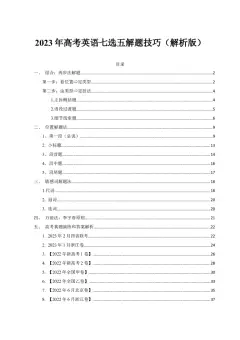
目录
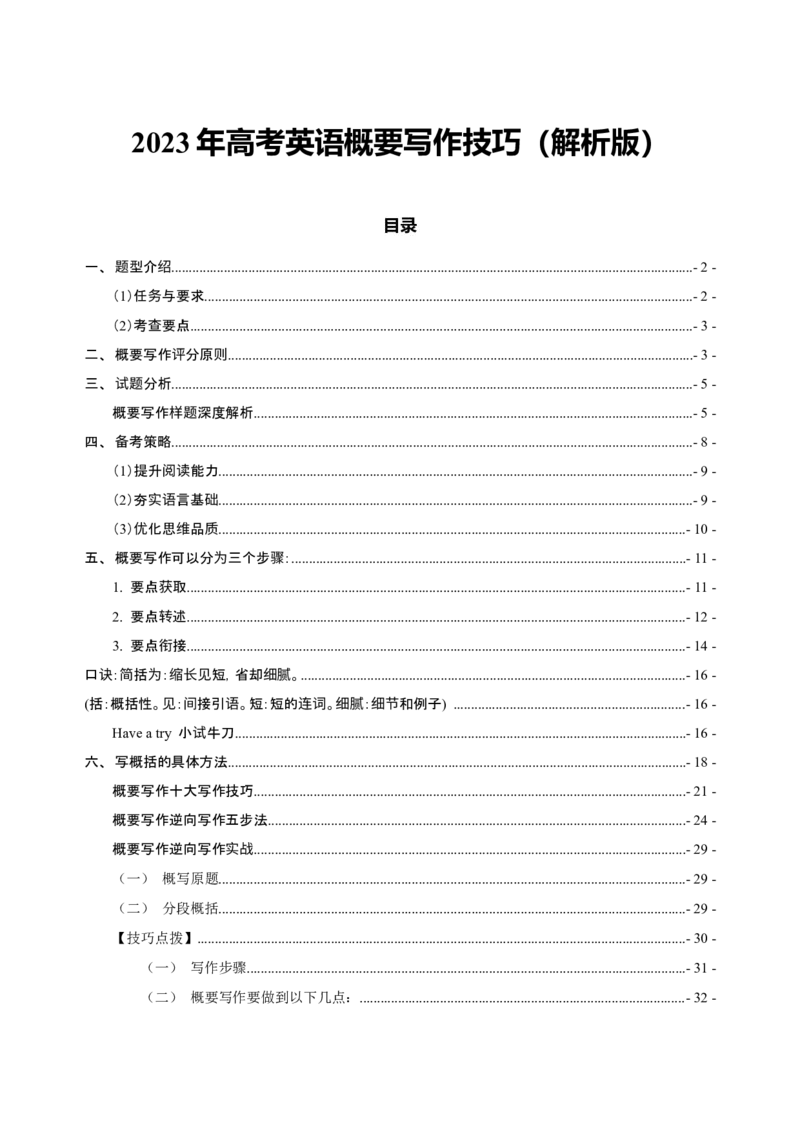
一、 题型介绍.....................................................................................................................................................- 2 -
(1)任务与要求...........................................................................................................................................- 2 -
(2)考查要点...............................................................................................................................................- 3 -
二、 概要写作评分原则.....................................................................................................................................- 3 -
三、 试题分析.....................................................................................................................................................- 5 -
概要写作样题深度解析.............................................................................................................................- 5 -
四、 备考策略.....................................................................................................................................................- 8 -
(1)提升阅读能力.......................................................................................................................................- 9 -
(2)夯实语言基础.......................................................................................................................................- 9 -
(3)优化思维品质.....................................................................................................................................- 10 -
五、 概要写作可以分为三个步骤:................................................................................................................- 11 -
1. 要点获取..............................................................................................................................................- 11 -
2. 要点转述..............................................................................................................................................- 12 -
3. 要点衔接..............................................................................................................................................- 14 -
口诀:简括为:缩长见短,省却细腻。..............................................................................................................- 16 -
(括:概括性。见:间接引语。短:短的连词。细腻:细节和例子) ..................................................................- 16 -
Have a try 小试牛刀................................................................................................................................- 16 -
六、 写概括的具体方法...................................................................................................................................- 18 -
概要写作十大写作技巧...........................................................................................................................- 21 -
概要写作逆向写作五步法.......................................................................................................................- 24 -
概要写作逆向写作实战...........................................................................................................................- 29 -
(一) 概写原题.....................................................................................................................................- 29 -
(二) 分段概括.....................................................................................................................................- 29 -
【技巧点拨】...........................................................................................................................................- 30 -
(一) 写作步骤.............................................................................................................................- 31 -
(二) 概要写作要做到以下几点:.............................................................................................- 32 -(三) 阅卷时将主要考虑以下内容:.........................................................................................- 32 -
(四) 改写句子基本方法.............................................................................................................- 33 -
(五) 高分技巧.............................................................................................................................- 34 -
真题再现...................................................................................................................................................- 36 -
七、 高考真题汇总...........................................................................................................................................- 37 -
2019年6月浙江卷...................................................................................................................................- 37 -
2018年11月浙江卷.................................................................................................................................- 39 -
一、题型介绍
(1)任务与要求
摘要写作:一份不超过 350 个单词的文章,并被要求以此文章为基础,撰写一份约 60 个
单词的摘要。在对此任务要求的理解过程中,考生应该掌握三点:1.以原文为基础,也就是
用自己的话复述文章所要表达的中心思想,切忌加入自己的观点。2.60 个单词(40 个到 80
个单词),这意味着语言要简洁、简洁。3.要概括全文,也就是说,必须包括全文的主要观点,
同时不要有一些与题目无关的细节。
(2)考查要点
概要写作以语篇为载体,要求考生对所提供的文本进行简要的概括。考生需在理解文章、
把握文章中心意思的基础上进行信息整合。故该题型考查学生的综合语言运用能力,即阅
读能力、分析查找能力、逻辑思维能力、理解判断能力及概括能力等。
二、概要写作评分原则
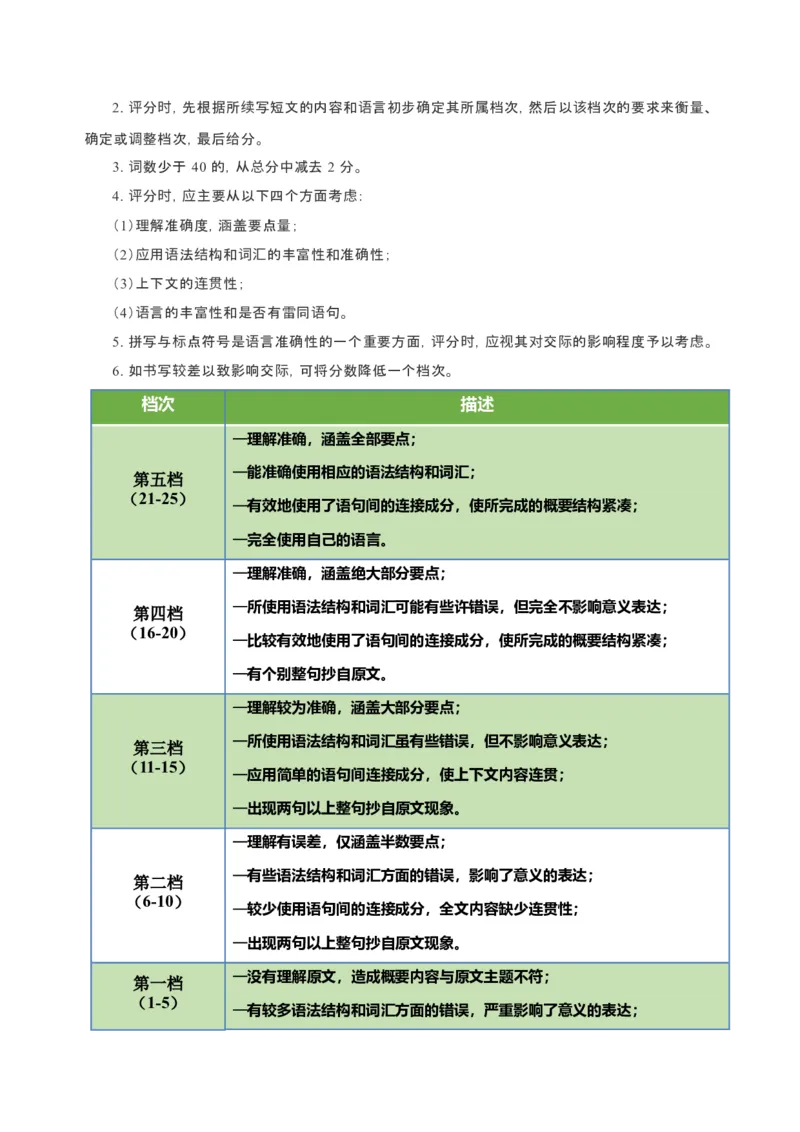
1. 本题总分为 25 分,按 5 个档次给分。2. 评分时,先根据所续写短文的内容和语言初步确定其所属档次,然后以该档次的要求来衡量、
确定或调整档次,最后给分。
3. 词数少于 40 的,从总分中减去 2 分。
4. 评分时,应主要从以下四个方面考虑:
(1)理解准确度,涵盖要点量;
(2)应用语法结构和词汇的丰富性和准确性;
(3)上下文的连贯性;
(4)语言的丰富性和是否有雷同语句。
5. 拼写与标点符号是语言准确性的一个重要方面,评分时,应视其对交际的影响程度予以考虑。
6. 如书写较差以致影响交际,可将分数降低一个档次。
档次 描述
—理解准确,涵盖全部要点;
—能准确使用相应的语法结构和词汇;
第五档
(21-25)
—有效地使用了语句间的连接成分,使所完成的概要结构紧凑;
—完全使用自己的语言。
—理解准确,涵盖绝大部分要点;
—所使用语法结构和词汇可能有些许错误,但完全不影响意义表达;
第四档
(16-20)
—比较有效地使用了语句间的连接成分,使所完成的概要结构紧凑;
—有个别整句抄自原文。
—理解较为准确,涵盖大部分要点;
—所使用语法结构和词汇虽有些错误,但不影响意义表达;
第三档
(11-15)
—应用简单的语句间连接成分,使上下文内容连贯;
—出现两句以上整句抄自原文现象。
—理解有误差,仅涵盖半数要点;
—有些语法结构和词汇方面的错误,影响了意义的表达;
第二档
(6-10)
—较少使用语句间的连接成分,全文内容缺少连贯性;
—出现两句以上整句抄自原文现象。
—没有理解原文,造成概要内容与原文主题不符;
第一档
(1-5)
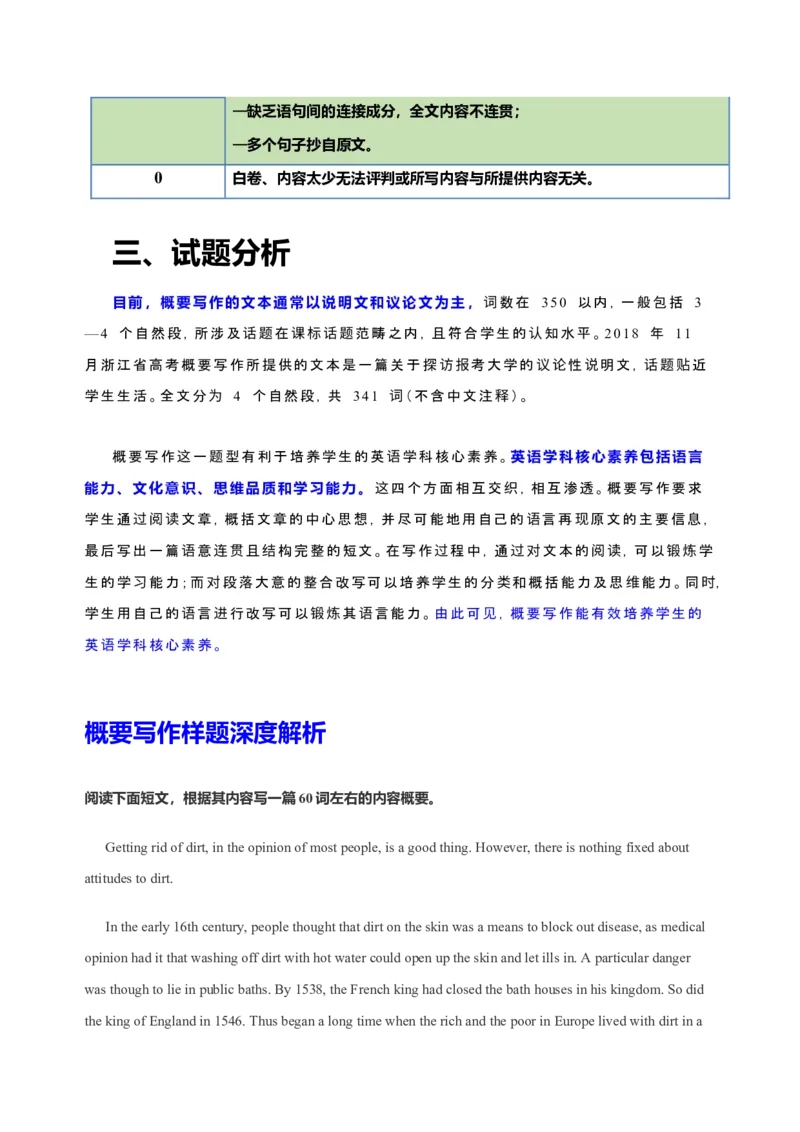
—有较多语法结构和词汇方面的错误,严重影响了意义的表达;—缺乏语句间的连接成分,全文内容不连贯;
—多个句子抄自原文。
0 白卷、内容太少无法评判或所写内容与所提供内容无关。
三、试题分析
目前,概要写作的文本通常以说明文和议论文为主,词数在 350 以内,一般包括 3
—4 个自然段,所涉及话题在课标话题范畴之内,且符合学生的认知水平。2018 年 11
月浙江省高考概要写作所提供的文本是一篇关于探访报考大学的议论性说明文,话题贴近
学生生活。全文分为 4 个自然段,共 341 词(不含中文注释)。
概要写作这一题型有利于培养学生的英语学科核心素养。英语学科核心素养包括语言
能力、文化意识、思维品质和学习能力。这四个方面相互交织,相互渗透。概要写作要求
学生通过阅读文章,概括文章的中心思想,并尽可能地用自己的语言再现原文的主要信息,
最后写出一篇语意连贯且结构完整的短文。在写作过程中,通过对文本的阅读,可以锻炼学
生的学习能力;而对段落大意的整合改写可以培养学生的分类和概括能力及思维能力。同时,
学生用自己的语言进行改写可以锻炼其语言能力。由此可见,概要写作能有效培养学生的
英语学科核心素养。
概要写作样题深度解析
阅读下面短文,根据其内容写一篇60词左右的内容概要。
Getting rid of dirt, in the opinion of most people, is a good thing. However, there is nothing fixed about
attitudes to dirt.
In the early 16th century, people thought that dirt on the skin was a means to block out disease, as medical
opinion had it that washing off dirt with hot water could open up the skin and let ills in. A particular danger
was though to lie in public baths. By 1538, the French king had closed the bath houses in his kingdom. So did
the king of England in 1546. Thus began a long time when the rich and the poor in Europe lived with dirt in afriendly way. Henry IV, King of France, was famously dirty. Upon learning that a nobleman had taken a bath,
the king ordered that, to avoid the attack of disease, the nobleman should not go out.
Though the belief in the merit (好处) of dirt was long-lived, dirt has no longer been regarded as a nice
neighbor ever since the 18 century. Scientifically speaking, cleaning away dirt is good to health. Clean water
supply and hand washing are practical means of preventing disease. Yet, it seems that standards of cleanliness
have moved beyond science since World War II. Advertisements repeatedly sell the idea: clothes need to be
whiter than white, cloths ever softer, surfaces to shine. Has the hate for dirt, however, gone too far?
Attitudes to dirt still differ hugely nowadays. Many first-time parents nervously try to warn their children
off touching dirt, which might be responsible for the spread of disease. On the contrary, Mary Ruebush, an
American immunologist (免疫学家), encourages children to play in the dirt to build up a strong immune
system. And the latter (后者) position is gaining some ground.
One possible version:
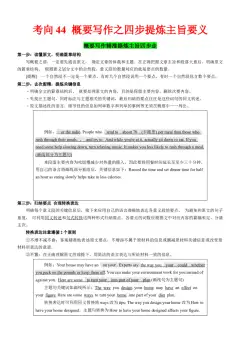
People have mixed opinions towards dirt on our skin. (要点 1 ) For a long time in history, people of some
European countries, such as France, believed that dirt protected people from getting ill. (要点 2 ) However,
people began to change their attitudes to dirt about 200 years ago. People have been told that washing dirt off
our body can keep us healthy. (要点 3) However, some scientists believe that exposure to some dirt may help
our immune system. (要点 4)
【范文点拨】
(一)要点分析
1. 文章第一段就是本篇文章的主题句,亮明了总的观点:However, there is nothing fixed about attitudes
to dirt. 换句话说:Different people have different attitudes towards dirt. 再结合下文谈到的主题可知
Different people have different attitudes towards dirt on the skin. 范文中的要点1“People have mixed opinions
towards dirt on our skin. ”概括非常精炼。
2.第二段主要谈到了在16世纪,人们认为dirt on the skin was a means to block out disease,尤以英、
法两国的贵族为代表。结合第三段第一句Though the belief in the merit of dirt was long-lived, dirt has nolonger been regarded as a nice neighbor ever since 18 century.可知,直到18世纪之前,人们都认为dirt是很
“友好的”,有助于预防疾病。范文中的要点2 “For a long time in history, people of some European countries,
such as France, believed that dirt protected people from getting ill.”很好地总结了这些要点。
3. 第三段用Though引出人们对dirt观点的转变“…since the 18th century. Scientifically speaking,
cleaning away dirt is good to health.”再结合本段最后一部分Advertisements repeatedly sell the idea…可得
出要点3“However, people began to change their attitudes to dirt about 200 years ago. People have been told
that washing dirt off our body can keep us healthy.”
4. 文章最后一段第一句指出,现在人们对于dirt的态度还是有所不同,On the contrary引出专家的观
点,一位免疫学家认为dirt有助于增强免疫系统。这一观点获得了一些支持。范文中的要点4“However,
some scientists believe that exposure to some dirt may help our immune system.”表达很恰切。
(二) 要点连接
文章概要,在写完了要点之后,下一步的工作就是要把这些要点用适当的连接词进行连接,使上下句
之间具有连贯性。本篇文章整篇结构是总分的结构,要点2和要点3在观点上截然相反,因此,之间需要
表示转折的连接词,范文用了However恰到好处。要点3和要点4在观点上又存在不同,因此,还是用表
转折的连接词However。不过小编认为,此处用Nevertheless可以避免三句话内出现两次However。
(三) 关键词汇
第一段:fixed (确定的;不变的) 第二段:means (手段,方法), block out (挡住), open up (打开), upon
(……之后;立即) 第三段:long-lived (长期存在的), sell the idea (说服某人接收某个观点) 第四段:warn sb
off (警告某人不要靠近), position (观点), gain some ground (取得优势)
以上这些关键词对于整篇文章的理解与转化成自己的语言都很关键,如果不能准确领会其用意,语
篇理解的效果会大打折扣。所以,概要写作的基础是理解语篇,而读懂语篇的基础是词汇,尤其是对关键
词汇的掌握与运用。在此基础上,综合运用语法与句法结构,按照行文逻辑组织语言,形成概要。
四、备考策略概要写作集语言输入与输出为一体,属综合性语言测试,是对语言、阅读、思维的综合
考查。因此,考生应在日常学习中注意提升以下三个方面的能力。
(1)提升阅读能力
在进行概要写作时,考生应注重使用科学的阅读策略,先通读文章理解文章大意,然后细读
每段,理清段与段之间的关系以及各段的主要信息,为后面的信息整合与改写打好基础。
注意:
考生在平时进行阅读时,要善于总结不同体裁的文本常用的语篇结构。如说明文的核心
内容锁定在所描述的对象,说明顺序(时间、空间、方位等)和说明方法(举例子、列数据、打
比方、下定义、列图表等)。记叙文则锁定其六要素——时间、地点、人物,事情的起因、经过
和结果。议论文主要集中在论点、论据和论证。描写性的文本则关注描写的对象及其主要特
点。
此外,要多总结寻找语篇中心句的方法。文本的中心句通常在文本的开头、结尾,有时
在中间,如不够明确时,考生可查看复现率高的信息来确定中心句。
(2)夯实语言基础
阅读完文本,理清文章大意与各段核心意思之后,考生需对文本进行改写,尽可能用简
短的语言再述文章的核心意思,这需要考生有扎实的语言基础。在改写过程中考生需要掌
握一些技巧,如:三大从句用短语来替换,短语用单词来替换;原句中的定语从句改为 V-
ing 作定语的形式,使主从复合句简化为单句;主动语态与被动语态灵活转换等。
注意:考生在日常学习中,一方面要扩大词汇量,多了解一些重点词汇、短语的用法,这样才
能自如地进行近义词的转换,同时,要多掌握一些表示转折关系、因果关系、递进关系、并
列关系的连词,以便所表达的内容能够更加连贯。
另一方面,考生应吃透一些重点句式,这样才能根据表达的需要灵活运用各种句式,用
最简洁精炼的句子转化所要表达内容。
(3)优化思维品质
阅读文本、整合及再述文本主要信息的过程中,需要进行分析、概括、比较、创新等思维
活动,因此对考生的思维能力提出了更高的要求。
注意:
平时阅读材料时,考生应注重对语篇的分析,尝试从多维度分析文章结构,从而快速地
分清文章的主要信息与次要信息,找出关键句与主旨句。教师在教学活动中,也可通过任务
驱动的方式培养学生对语篇的分析概括能力,从而达到训练学生思维品质的目的。
五、概要写作可以分为三个步骤:
1. 要点获取
2. 要点转述
3. 要点衔接。
1. 要点获取要点的获取过程就是文本的解读过程,对于结构清晰的段落,可以通过筛选主题句找出要
点,但是并不是所有文章都可以直接找出主题句,对于主题句不明确的文章或段落,也可以使
用找关键词或设计主问题的方法。
1筛选主题句:主题句是指能够概括全文或者整个段落的关键句。通常情况下自然段是由
主题句和细节句组成的,段落可以是总—分或是分—总的结构。因此一个段落的主题句通常位于
段落的首尾。 如人教版Module 3 Unit 1 Festivals and celebrations 的第一段,该段第一句陈述人
们用节日来纪念名人,并举了屈原、哥伦布和甘地的例子来说明,学生比较容易就能找到主题
句,从而抓住该段落的要点。另外,我们也可以特别关注如so,therefore,thus这样的标志性词,
这些词后往往是作者对前文的一个总结,很可能就是主题句。
2寻找关键词 :在实际写作中,我们会发现某些段落并不能直接找出主题句,那么,可以
通过找出段落关键词,进而连词成句,得出段落要点。
例1 [浙江省新高考模拟试卷精编第十二套概要写作]
Is there water on the planet Mars? Is there life on Mars? Was there ever life on Mars?
Scientists from NASA wanted to know the answer to these questions. They built a spacecraft
called the Mars Climate Orbiter to travel around Mars and get information.
通过阅读,我们可以提取关键词Scientists from NASA,built,the Mars Climate Orbiter,travel
around,get information,然后把关键词进行整合,连词成句得出这段话的要点:Scientists from
NASA built the Mars Climate Orbiter to travel around Mars and get information.
3 设计主问题:主问题是指,阅读教学中从教学内容整体的角度或学生的整体参与性上引
发思考、讨论、理解、探究的“牵一发动全身”的重要问题。由于概要写作是对原文篇章结构或段
落中的主要事实或观点进行简要重述,把握住原文的各要点,读懂、读透原文是重点。因此,主
问题的设计可以在有效的课堂教学时间下尽快帮学生们提炼出关键词,缩小切入点。
例2:[Module 1 Unit 4 A night the Earth didn’t sleep]为引导学生从整体上快速抓住文本信息,
笔者设计了这样一个主问题:In what order is this passage organized?学生抓住文章以时间为主线,
分为before—during —after 三个部分。在清晰文章脉络和结构后,学生继而提炼出了文本的三个关键词:sign、damage和rescue,
这样各个段落的主题句也就顺理成章地出来了。Para 1: Strange things were happening, but people
thought little of these events.Para 2~3: It seemed as if the world was at an end. Everywhere they
looked nearly everything was destroyed.Para 4: Slowly the city began to breathe again.
2. 要点转述
《考试说明》对概要写作时“使用自己的语言”提出了较高的要求,这就要求学生不
照抄原文,进行自主表达。可以从下面四个方向进行转述。
1 同义替换同义替换指的是用相同意义的单词、短语、句子成分或者句子代替从原文当中找
出的要点。上文例 1,我们把关键词连词成句得到了要点 Scientists from NASA built the Mars
Climate Orbiter to travel around Mars and get information,但这个句子带有原文色彩,很可能会被
评卷教师认为是抄自原文。对于这个句子,可以使用同义替换的方法,用sent/ made/created等代
替built,用explore代替travel around Mars and get information。如此,我们得到要点Scientists from
NASA sent the Mars Climate Orbiter to explore Mars。
2语态转换 语态转换就是把句子在主动语态和被动语态之间进行转换。比如将上文
例 2 中的第 1 段要点从主动语态转换成被动语态。原要点:Strange things were happening,
but people thought little of these events.语态转换后的要点:Strange things were happening, but they
were ignored.
3 词性改变在进行要点转换的过程中,由于词汇量或其他原因,可能会遇到某些词很难找到
同义词。这时,可以尝试改变该词词性,如把动词改成名词或者把形容词改成名词等。
例如学生在金丽衢十二校2016学年高三第一次联考的概要写作中,得到了以下要点:Most
students experience a lot of stress while preparing for exams, as both their parents and teachers expect
them to get high scores.前半句话可以同义转换成 Many students are stressed during the exam
period,后半句可以用词性转换,将expect改成expectation,这样得到了转换后的要点:Because
of the high expectation from their parents and teachers, many students are stressed during the exam
period.4句子重构只有掌握了多种形式的句式,如定语从句、非谓语动词等,才能写出层
次清晰、内容练达的概要文章。概要写作在语言表达上也要求“以简为贵”。因此,教师可以对学生进行针对性训练,使其体会并学习如何能化复杂句式为简单句和整合重组
松散句这两种缩写技能。对于意义松散的几个句子,理清各句之间的逻辑关系之后重新改写,
用一句话表达意思,如上文提到的例2。
原要点:It seemed as if the world was at an end. Everywhere they looked nearly everything was
destroyed.改写后的要点:In a few seconds, the whole city was in ruins.
例3:[Module 4 Unit 5 Theme parks]Theme Parks是一篇脉络清晰、结构简单、通俗易懂的文
章。学生在阅读完全文之后,可以快速找到每个主题公园所在段落的主题句为每段的首尾句。
但课文原句结构复杂,内容较长,我们可以用一句多译、结构重组的方法把它变成通俗易懂、紧
凑型的句子。Disneyland: Disneyland is a theme park which…Dollywood : Dollywood is quite
remarkable, because…Camelot Park: Camelot Park will offer you a fantastic experience of ancient
England.
3. 要点衔接
概要写作并不是简单的要点罗列和堆砌,《考试说明》要求一篇优秀的概要写作应
该有效地使用语句间的连接成分,使所完成的概要结构紧凑。
因此,在获取要点和转述要点之后,应该特别关注各要点内部的联系和逻辑结构,
用适当的衔接将要点进行连接,从而连句成篇,最终得到一篇结构紧凑的概要。
通常,Summary 的定义如下:A summary is a written, shortened version of a piece of writing in
which you use your wording to express the main ideas. (Lee Brandon, Kelly Brandon, 2014)
解读:概要写作就是用自己的语言概括原文的主旨大意和核心信息。其中,关键词是:main
ideas, shortened version, your wording,强调用“自己的语言”“浓缩地”表述出阅读材料的“主旨”。
其实,summary writing 中不仅仅包括主旨,也还应该包含文中最主要的核心信息。
How to write a summary?如何写一个总结呢?
英语强调学习过程,所以summary writing也不例外。我们可以将summary writing分为两个环节:
before you write a summary
when you write a summary.并可以大致细化为以下步骤:
1. Before you write a summary写总结之前
1) Read the entire text and ask yourself what the author’s purpose is.阅读全文,问问自己作者的
目的是什么。
2) Re-read the introductory paragraph(s)and find the thesis statement.重新阅读介绍性的段落,并
找到论文的陈述。
3) Re-read the rest of the text.In each paragraph, highlight, underline, or circle the main idea and
key points. You can also annotate(注释) the important information. 重读文本的其余部分。在每
一段中,突出、下划线或圈主要思想和关键点。您还可以注释这些重要的信息。
2. When you write a summary写总结时
1) Begin by stating the title of the text, the author’s full name (if it’s given), and his or her purpose
for writing.首先说明文本的标题,作者的全名(如果有的话),以及他或她的写作目的。
2) Use the text you highlighted or annotated to explain the author’s thesis and main ideas.使用你突
出显示或注释的文本来解释作者的论文和主要观点。
3) Remember to:keep the summary short (about one-third to one-fourth as long as the
original).Include only the original text’s main ideas.Do not include details, examples,
information that is not in the original, or your own opinion.Write the summary mostly in your
own words but do not change the author’s ideas.记住:缩短摘要(大约是摘要的三分之一到四
分之一)。只包括原文的主要思想。不要包括原来没有的细节、例子、信息,或你自己的意见。
主要用你自己的话来写总结,但不要改变作者的想法。
解读:
1、内容:除了文章的标题和作者之外,主旨和核心信息必不可少。如何概括主旨以及提取核心
信息这又是一个新话题了,牵涉到学生对文本主旨的把握、对文章结构的理解、对核心细节
的甄别等。
2、语言:必须是你自己的语言(your wording)。即,你必须通过paraphrase的方式用自己的语言进
行概要写作。如果一定要用到原文的句子,必须使用quotation mark(“引号”)表示引用。3、长度:Lee Brandon和Kelly Brandon (2014)认为,summary应该是原文的1/3到1/4之间。
Debra Daise(2016)等人认为,Reduce the length of the original by about two-thirds, although
the exact reduction will vary, depending on the content of the original.所以,summary的长度大
约就应该在原文的1/3左右。
口诀:简括为:缩长见短,省却细腻。
(括:概括性。见:间接引语。短:短的连词。细腻:细节和例子)
Have a try 小试牛刀
下面的活动设计有很多Scaffolding(脚手架)帮到你,感受一下summary writing的写作过程吧。
Summarize the following passage.
Preparing for Your First Job Interview By Jim Sweeny
You’ve just graduated from school. Now comes the scary part: interviewing for your first job. For
many recent graduates, this is an anxiety-provoking time. However, there are some simple ways to
prepare for this challenging experience.First, you should make a list of the questions you might be
asked. In many job interviews, you have to answer questions about your academic experience and how
it has prepared you for the job. For example, you might be asked to discuss how your participation in
student government or sports has given you experience working on a team. You will, of course, also be
asked how your experience and talents fit with the company’s goals. Once you’ve got your question,
you should then think about possible answers and practice responding to them. Employers will expect
you to talk in detail about your experience and use examples. Make sure that your answers describe
particular situations you faced, the actions you took and the results you achieved. Once you’ve got your
responses, try practicing on your friends or family members. This will make you feel comfortable
speaking in front of a person. Finally, don’t get discouraged if you aren’t hired the first, second, or third
time you interview. Think of every interview as practice for the most important one: the interview thatwill get you a job. (222 words)
如果觉得一下子有困难,不妨先尝试思考并回答以下问题:
1. What is the author’s purpose for writing the text? A. He’s describing his first job interview
experience. B. He’s comparing and contrasting two interviewing styles. C. He’s explaining how
to get ready for a job interview.
2. What is the thesis statement?
3. What are the two main ideas that support the thesis statement?
4. In the last paragraph, how does the author conclude the article?A. He re-states the article’s main
points. B. He makes a final suggestion.C. He makes a prediction about the future.
如果你回答了以上问题,你已经对原文的main idea和 key information有了大致了解,动手写概
要吧,八九不离十了。
写概要的时候,下面的 checklist 或许还可以帮你反思并规范内容。
Your summary…
1. presents the original text’s title. 呈现原文的标题。
3. presents the author’s full name. 呈现作者的全名。
4. presents the author’s purpose for writing. 提出了作者的写作目的。
5. identifies the thesis statement. 确定论文陈述。
6. identifies all of the text’s main ideas. 确定了文本的所有主要思想。
7. selects the key information in the text. 选择文本中的关键信息。
8. does not include details or other information not included in the text. 不包括文本中未包括的细
节或其他信息。
9. is mostly written in your own words. 大多是用你自己的话写的。
10. is clear and easy to follow.是清晰而容易理解的。
Summary范文欣赏:
In the essay “Preparing for Your First Job Interview,” author Jim Sweeny gives advice to recent
graduates who are interviewing for their first job. Specifically, he says that there are things they can do to
prepare for the interview. First, Sweeny tells students that they should make a list of questions they might
be asked. These questions are usually about how a person’s school experience relates to the job he or she isapplying for. Then Sweeny says that students should prepare answers to the questions and practice responding
to them, and he explains a way to do this. In conclusion, he tells students not to get discouraged by the
interviewing process.
六、写概括的具体方法
A.定时态:如果阅读材料是过去时,那么基本时态用过去时;如果是现在的,那么基本时态用现在时;
不过,模板的开头语一般为现在时如The passage tells us that...
B.定人称:一般情况下采用第三人称来写作。(特殊如书信的,可能会使用第一、二人称;)
C.定技巧:结合相关技巧,重新组句。
1)Use words of similar meanings同义替换法I didn’t catch any fish owing to the fact that I was not patient.I
didn’t catch any fish_________ I was not patient.
2)Adopt the opposite way when saying a sentence正话反说法You will fail. = You will ____________.
3)Change the part of speech词性转换法Patience is very important. Patience is of _____________________ .
4)Change the structure of a sentence 句式变化法 语态变换:Parents should give children more
praise.→Children should ________ more praise.
简单句变复合句:Children should be encouraged more. This will help them learn faster.Children should be
encouraged more, _______ will help them learn faster..
5)Use the shortest possible transitions 连词衔接法 注意使用一些短而精的连词,如 but, and, so, while,
however, then, yet, for, therefore, thus, including, instead of 等。We should encourage children. We should not
scold them.We should encourage children__________ scolding them.
6) Change the order of the words.词序改变法D. 下列是常规的实用技巧。
Skill1: Omit (省略) the details省略详细信息
Skill2: Omit the repetitions省略重复
Skill3: Omit the examples省略示例
Skill4: Use general(概括性) words instead of specific(具体的) words
Skill5: Put the main points of a dialogue in indirect speech把对话的要点放在间接的讲话中
写摘要时可以采用下列几种小技巧:
1) 删除细节。只保留主要观点。
2) 避免重复。在原文中,为了强调某个主题,可能会重复论证说明。但是这在摘要中是不能使用的。应
该删除那些突出强调的重述句。
3) 删除具体例子。不过,阅读材料本身是由几个具体例子构成的,如阅读材料是谈西方种种节日的,如删
除具体例子,则概括很难达到30个词,那就选择一至两个例子(即一两个主要节日)。注:原文中可能包括
5个或更多的例子,你只需从中筛选一至二个例子。
4) 使用概括性的名词代替具体的词,比如:“She brought home several Chinese and English novels, a few
copies of Time and Newsweek, and some textbooks. She intended to read all of them during the winter
vacation.”
可以概括为:“She brought home a lot of books to read during the vacation.”
5) 把文章的对话或直接引语(的要点)改成间接引语叙述。
6) 把长段的描述变成短小、简单的句子。如果材料中描述某人或某事用了十个句子,那么你只要把它
们变成一两句即可。
7) 7) 压缩长的句子。如下列两例:“His courage in battle might without exaggeration be called lion-like.” 可
以概括为:“He was very brave in battle.”“He was hard up for money and was being pressed by his creditor.”
可以概括为:“He was in financial difficulties.”8) 8) 你还可以使用词组代替整句或者从句。
9) 9)掌握各种文体的写作特点和框架。如: 记叙文:what / who / when / where / why / how
议论文:opinion / idea + argument (supporting ideas / reasons)
说明文:phenomenon / problem + reason + solution (cause and effect), the introduction of an object (how it
is made, how it is used, how it may change, what makes it new or significant)
新闻:a focus on the first paragraph and the first and last sentences of the other paragraphs
概要写作十大写作技巧
概要写作时一定要注意拼写和语法(行文时态、动词三单一等)不要出现低级错误;其次要学会
快速抓住各种文体的要点,并且借助某些语法(比如从句,非谓语作状语等)精准提炼成summary语
言;最后是模仿,平时可以多观摩一些参考答案,多思考琢磨并有意识地去仿写。
1) 删除细节,只保留主要观点。
画出主题句或关键词,主题句一般出现在段首或段尾。在找到主题句后,要分析主题句的意义,进一步
确定衬托主题句的一些关键词(组)如动词、名词等。
2) 把长段的描述变成短小、简单的句子。
如果材料中描述某人或某事用了十个句子,那么你只要把它们变成一两句即可。
3) 避免重复。
在原文中,为了强调某个主题,可能会重复论证说明。但是这在摘要中是不能使用的。应该删除那些
突出强调的重述句。
4) 压缩长的句子。
如下列两例:
“His courage in battle might without exaggeration be called lion-like.”
可以概括为:”He was very brave in battle.”
“He was hard up for money and was being pressed by his creditor.”可以概括为:“He was in financial difficulties.”
5) 可以使用词组代替整句或者从句。
请看下面的例子:
“Beautiful mountains like Mount Tai, Lushan Mountain, and Mount Huang, were visited by only
a few people in the past. Today, better wages, holidays with pay, new hotels on these mountains, and
better train and bus services, have brought them within reach of many who never thought of visiting
them ten years ago.”
可以概括为:”Beautiful mountains like Mount Tai, once visited by only a few people, are today
accessible to many, thanks to better wages, paid holidays, new hotels and better transportation
services.”
6) 使用概括性的名词代替具体的词,比如:
“She brought home several Chinese and English novels, a few copies of Time and Newsweek
and some textbooks. She intended to read all of them during the winter vocation.”
可以概括为:”She brought home a lot of books to read during the vocation.”
7)巧妙使用连接词。
比如,可以使用but, then, thus, yet, though,不能使用at the same time, in the first place, because of
these, on the other hand等较长的连接词。通常,使用分号就能够达成使用连接词的效果。
8) 文章中的第一人称说的话通常在摘要中转换成第三人称,从而把大段的对白简化,比如:
Kate looked at Paul disapprovingly: You use too much salt on your food, Paul — it’s not good for
you!” Paul put down his knife and frowned:” Why on earth not! If you didn’t have salt on your food it
would taste awful… like eating card board or sand… just imagine bread without salt in it, or potatoes
or pasta cooked without salt!” Kate was patient. She didn’t want to quarrel with Paul. She wanted to
persuade him. She said firmly:” But too much salt is bad for you. It cause high blood pressure and late
on, heart-attacks. It also disguises the taste of food, the real tastes which are much more subtle than
salt, and which we have lost the sensitivity to appreciate any more.”
上面可以用第三人称概括为:Kate suggested to Paul that he should eat less salt. She thought that eating too much salt would do
harm to Paul’s health and that it could reduce the real tastes of food. But Paul disagreed. He said that
food without salt would be tasteless.
9)客观
在进行概要写作时,要依据原文作者的观点,客观地转述文中的要点,不要把自己个人的观点和看
法掺杂进去,不要使用“ I think”和“ I believe”等主观性的词句。由于概要写作不允许照抄原文中的句子,
因此,可采用句型转换、同义词转化、语态互换等手法将原文中的句子进行改头换面,达到“雁过不留痕”
的效果。如可用单个词汇替换具有相同语法功能的单词和词组:用 determine代替“ make up ones mind”;
用 therefore和to等表示逻辑意义的连接词代替较长的词组“ as a result”和“ in order to”等。
10)连贯
连接词是内容概要的桥梁,它在句与句或段与段之间起铺垫的作用,能够把内容概要有机地串联起来,
确保行文流畅,衔接紧凑。因此,概要写作哪怕只有一个段落,也要根据原文的层次结构,在适当的地
方添加连接词,如表示顺序关系的“ firstly”¨ secondly"“ finally”;表示并列关系的“ besides”“ in addition”
等;表示总结关系的“ to sum up”“in conclusion”等,使所写的内容概要衔接紧密,条理清楚。
概要写作逆向写作五步法
第一步:通读理解全文,了解文章结构,理清各段落之间的逻辑关系,提取全文中
心词,尤其是名词与动词。
通读理解全文以后,首先要提取全文中心词。全文中心词指的是说明什么或议论什么,以名词
与动词为主。可以说,概写的每一句话几乎都是围绕全文中心词进行的,抓住中心词可以有效地避
免离题或跑题。
任务二是,明确原文段与段之间的逻辑关系,这有助于理清概写句与句之间的逻辑关系,确保正确
使用连接副词,从而使概写各要点之间意义连贯,衔接紧密。但如果上下句之间的意义连贯,也不一
定每一句前要加上连接副词。如下图所示,第一步要解决两个问题∶第二步:细读原文,划出各段的主题句与关键词,关键词以动词与名词为主,涵盖
段落全部要点。
如何提取原文的主题句与关键词句(段落要点)?这是问得最多的问题。如果原文各段落有明显
的主题句,问题不是很大,因为对主题句进行转述就可以了,漏点的可能性不大。但有时我们会遇到
某-段落主题句不是很明显,或者根本就没有主题句,怎么办?
我们可以通过逆向思维来处理这个问题。我们知道,一篇概写一般由四、五个较长的句子组成,
那么一个句子由什么组成呢?这一点我们可能借鉴语文的缩句教学,无非是"某人或什么,做了什么?
是什么?为什么做? 怎么做?为了什么做?在何时何地做?"不是每一句话都含有这些要素,但可以根
据段落内容按照这个思路来提取要点,合成句子。自然而然,关键词常常以动词、名词以及形容词等
实词为主。第三步:根据所划内容,结合理解,理清句内逻辑关系,然后转述或合成句子。可
用中文概括出段落大意,然后用一句话翻译出来(合理利用原词)。
所划内容可能是多个动词或者名词,因此,在整合句子时,要理清这些词在句内的逻辑关系,
用对用好连词或介词等逻辑关系词,写出合乎逻辑的句子。我们还可以利用这些关键词用中文概括
出段落大意,用一句话翻译出来,看看是否涵盖了所有划出的要点与次要点,同时,要确保正确表达,
没有语法错误。
下表是概写中经常用到的句内逻辑关系词,主要以作修饰成分的状语为主。状语与句子的逻辑
关系是说明句子的方式、地点、时间、条件、原因、目的、结果、程度、让步和伴随等。可见,句内的逻
辑关系主要通过状语来说明的。在实践中,你会用到状语从句以及介词所构成的介词短语在句中作
状语,当然,还会用到非谓语动词作状语等。
四个有代表性的并列连词在合成句子时分别说明前后分句的转折关系(but)、同等关系(and)因
果关系(so)以及选择关系(so)。总之,在转述或合并句子时,要先理清句内的逻辑关系,选择正确的
句法手段,写出正确的句子。第三步其实是草稿阶段,建议尽可能快地打好草稿。先不要过多地考虑字数或用词等问题,只
要考虑所概括的句子是否覆盖全部要点,是否准确概括了整段大意。
第四步:通读修改。
要考虑句首连接词的使用、高级词汇的替换、句式的多样、语法是否正确以及字数的多少等。
完成草稿以后,修改是一个重要环节,一般会花较长时间。要考虑句首连接词的使用、高级词
汇的替换、句式的多样、语法是否正确以及字数的多少等。修改时有几点值得注意∶
● 在用词上,能简则简,能用一个词,就不用两个词。不要用There is no doubt that…;It is obvious
that.;last but not least 这一类的句型或短语,你完全可以用 undoubtedly,obviously,lastly来替换;
● 找不到合适的替换词时,可以合理利用上一段或下一段的词汇,避免在同一段概括时使用原词;
● 除了在用词上要避免重复以外,要注意句式的多样。某个句型用过一次,就不要用第二次;
● 同义转述不能解决概写的所有问题,一定要学会通过句法变化用自己的语言进行转述。
第五步:用衡水体抄到试卷上,力求清楚美观。
衡水体有两个基本笔划∶一是会写一个有 一定倾斜
度的(/);二是会一个圈(o),可以说所有的字母 都是由这
两个基本笔划组成的。学习衡水体可分三个阶 段∶先学会
准确书写字母与单词;再学习句子书写与整体 排版;最后,
练习书写速度,做到又快又好。在练习书写以 后,书写有
了质的变化。从评卷中可以看出,高分考生往 往是书写
很好的同学,同样内容的书面表达,书写会拉 开分数差
距。概要写作逆向写作实战
(一)概写原题
Most of the new diseases we humans have faced in the past several decades have come from
animals. The more we come into contact with wild animals, the more we risk a so-clled
disease"spillover"from animals to humans.
"As people move and wildlife move in response to a changing environment, humans and wildlife and
animals will come in contact more regularly,"said Jeanne Fair from the Los Alamos National Laboratory
in New Mexico. Fair argues that by shifting animal habitats, climate change will also make the
opportunities for disease spillover more frequent."Everything is sort of shifting and will shift into the
future as the environment changes through climate change," Fair said.
Scientists, including climatologists and epidemiologists on Fair's team at Los Alamos, are beginning
to model how changes to the climate will impact the spread of infectious diseases. It's early days for this
kind of research, but previous studies suggest that extreme weather has already played a role in at least
one outbreak. Scientists say drought and deforestation have combined to force bats out of rainforests
and into orchards(果园)in Malaysia to find food. Those bats,a common disease reservoir, then passed
the Nipah virus through pigs to humans for the first time in the late 1990s."We're going by the past data to
really predict what's going to happen in the future," Fair said,"And so,anytime you increase that wildlife-
human interface(界面),the disease hot spot is just increasing as we go forward."
Jeffrey Shaman, head of the climate and health program at Columbia University, argues we don't yet
know whether climate change will cause a net increase in infectious disease rates throughout the
world.For example, mosquitoes carry disease that affects millions of people across the world every
year.As their habitats expand in some parts of the world, they might contract diseases elsewhere.Shaman
says what we know for certain about climate change is that it will make it harder to predict where disease
outbreaks will pop up(突然出现)。
(二)分段概括关键词句已在原文标出,结合理解,用中文概括出一句话并译成英文。
1. 经常接触动物会增加疾病外溢的风险,从而迫使人类与新的疾病作斗争。
Regular exposure to animals increases the risks of disease spillover, thus forcing humans to fight new
diseases.
2. 一位科学家指出,由于气候和环境的变化,人类与动物会有更多的接触,这使得疾病外溢不可
避免。
One scientist points out that, due to climate and environment changes, humans will have more contact
with animals, which makes disease spillover unavoidable.
3. 此外,早期的研究表明,极端天气影响动物栖息地,确实会引发风险。
Besides, earlier research demonstrates that extreme weather, which affects animal habitats, does trigger
the risks.
4. 然而,另一位科学家认为,气候变化是否会加速传染病的发病率还有待观察。
However, another scientist holds that it remains to be seen whether climate change accelerates infectious
disease rates.
参考范文:
With increasing exposure to animals lately, human's risk of developing novel diseases has greatly boosted.
Owing to climate change, viruses from animals have easier access to humans with their living habitats
change. Actually, former researches reveal that some eruptions have been impacted greatly by unusual
climate, thus whenever the contact with wildlife is inreased, the dangerous disease areas will be enlarged.
While it is uncertain whether climate change will lead to global disease spillover, it is tougher to foretellits
eruption.【78字】
【技巧点拨】
写概要写作时要先读懂原文,把握文章主旨大意和作者观点,抓关键词,筛选与主旨有关的主要
信息。然后,借助已掌握的语言知识,对原语篇进行“浓缩”,写出一个新的语篇。而新的语篇,既要做到在语篇结构、语篇衔接和连贯各要素上与原文保持一致,又要做到简明扼要、意义完整、结构严密
和语句通顺。
(一)写作步骤
考生可以从以下五个步骤来进行概要写作:
1.通读全文,判断体裁
一篇概要写作是否正确、有条理,能否把握文章的体裁,都是建立在理解原文的基础上的。因此,通
读全文可以为考生从宏观上把握文章的主旨和结构、行文逻辑,判断文章的体裁奠定基础。
2.查找信息,分清主次
概要写作,要求考生具有从文章中抽取主干和找到关键信息的能力。在第二遍细读时,要弄清主要信
息和次要信息,把次要信息剔除,以免影响概要写作的简洁性;同时,要养成在重点词句下做出标记
的习惯。
3.概括大意,提炼内容
考生在理解全文内容,弄清主次关系之后,可以初步写出每段的段落大意,注意要忠于原文,避免出
现遗漏要点或增添要点的情况。
4.获取要点,灵活表达
为了使所写概要简明、扼要,要对罗列的每段大意进行整合;同时为了避免使用原文的句子,需要考
生灵活采用同义词或近义词进行替换,用不同的句式进行转换,并在必要的地方使用连接词,使表达
连贯通顺。
5.检查修改,整理誊写
写完初稿后,需要在内容上、语言上以及上下文的连贯性上进行检查:看是否包括了原文的所有要点,
语言词汇的运用是否准确和地道,以及行文是否流畅;另外,还要注意词数限制和书写规范。(二)概要写作要做到以下几点:
1.简洁性:即用尽量少的语言对较长原文的简洁重述;
2.自主性:即用自己的话语进行概写,避免对原文进行抄袭照搬;
3.理解性:即表现作者对原文本的精准理解。需要注意的是,考生不能对原文进行
解释和评论,也不能掺杂任何个人想法,或做出任何评判,因此不能出现“I
believe”, “I think”等字句;
4.忠实性:即概写内容和中心思想必须忠于原文主旨,不可偏离主题、肆意篡改;
5.连贯性:概要写作并非简单罗列要点,各个要点之间要有恰当衔接,使概要衔接
紧密、脉络清晰。写出的概要读起来要完整连贯、独立成篇。
(三)阅卷时将主要考虑以下内容:
(1)对原文要点的理解和呈现情况;
(2)应用语法结构和词汇的准确性;
(3)上下文的连贯性;
(4)对各要点表达的独立性情况。
(四)改写句子基本方法
1.同义替换法
Tom thought of an idea.
→An idea occurred to Tom.
2.正话反说法
I think wealth is less important than health.
→I don’t think wealth is more important than health.
3.词性转换法
Your suggestions are super valuable.→Your suggestions are of great value.
4.利用介词短语法
We are sure to finish it in time because so many people are helping us.
→With so many people helping us, we are sure to finish it in time.
5.句式变化法
(1)语态变换
It is widely accepted that more people use computers in the world today.
→Computers are widely used in the world today.
(2)简单句变复合句
The weather turned out to be very good.This was more than we could expect.
→The weather turned out to be very good, which was more than we could expect.
(3)连词衔接法
He insisted on staying.He was not willing to go.
→He insisted on staying rather than going.
(4)词序改变法
Professor White, Professor Smith and many other guests were present at the meeting.
→Present at the meeting were Professor White, Professor Smith and many other guests.
(5)利用特殊句式法
Jim wants to go boating and his parents want to go boating, too.
→Jim wants to go boating, and so do his parents.
(五)高分技巧
【技巧点拨】
写概要写作时要先读懂原文,把握文章主旨大意和作者观点,抓关键词,筛选与主旨有关的主要
信息。然后,借助已掌握的语言知识,对原语篇进行“浓缩”,写出一个新的语篇。而新的语篇,既
要做到在语篇结构、语篇衔接和连贯各要素上与原文保持一致,又要做到简明扼要、意义完整、
结构严密和语句通顺。
1. 写作步骤
考生可以从以下五个步骤来进行概要写作:1.通读全文,判断体裁
一篇概要写作是否正确、有条理,能否把握文章的体裁,都是建立在理解原文的基础上的。因此,
通读全文可以为考生从宏观上把握文章的主旨和结构、行文逻辑,判断文章的体裁奠定基础。
2.查找信息,分清主次
概要写作,要求考生具有从文章中抽取主干和找到关键信息的能力。在第二遍细读时,要弄清主
要信息和次要信息,把次要信息剔除,以免影响概要写作的简洁性;同时,要养成在重点词句下
做出标记的习惯。
3.概括大意,提炼内容
考生在理解全文内容,弄清主次关系之后,可以初步写出每段的段落大意,注意要忠于原文,避
免出现遗漏要点或增添要点的情况。
4.获取要点,灵活表达
为了使所写概要简明、扼要,要对罗列的每段大意进行整合;同时为了避免使用原文的句子,需
要考生灵活采用同义词或近义词进行替换,用不同的句式进行转换,并在必要的地方使用连接
词,使表达连贯通顺。
5.检查修改,整理誊写
写完初稿后,需要在内容上、语言上以及上下文的连贯性上进行检查:看是否包括了原文的所有
要点,语言词汇的运用是否准确和地道,以及行文是否流畅;另外,还要注意词数限制和书写规
范。
2. 二)改写句子基本方法
1.同义替换法
Tom thought of an idea.
→An idea occurred to Tom.
2.正话反说法
I think wealth is less important than health.
→I don’t think wealth is more important than health.
3.词性转换法
Your suggestions are super valuable.
→Your suggestions are of great value.
4.利用介词短语法
We are sure to finish it in time because so many people are helping us.→With so many people helping us, we are sure to finish it in time.
5.句式变化法
(1)语态变换
It is widely accepted that more people use computers in the world today.
→Computers are widely used in the world today.
(2)简单句变复合句
The weather turned out to be very good.This was more than we could expect.
→The weather turned out to be very good, which was more than we could expect.
(3)连词衔接法
He insisted on staying.He was not willing to go.
→He insisted on staying rather than going.
(4)词序改变法
Professor White, Professor Smith and many other guests were present at the meeting.
→Present at the meeting were Professor White, Professor Smith and many other guests.
(5)利用特殊句式法
Jim wants to go boating and his parents want to go boating, too.
→Jim wants to go boating, and so do his parents.
真题再现
阅读下面短文,根据其内容写一篇 60 词左右的内容概要。
It's a really good idea to visit colleges before you apply because their websites
can all start to lookand sound the same. Nothing will give you the sense of what it
will actually belike to live on a college campus (校园) like visiting and seeing for
yourself the dorms, classrooms and athletice quipment and, of course, the
students. It seems a little crazy once senior year hits to find the time to visit
college campuses, and it can also be pricey if the schools you are applying to
happen to be more than a car ride away. But keep in mind that you are making a
decision about the next four years of yourlife, and do all the research you can to
make sure you are making the right one.There's no excuse not to visit the schools in your local area. In fact, a lot of
college applications even ask if you have visited campus, and obviously, if you
live across the country that won't be as much of a possibility, but if you live
nearby, go check itout!
If campus visits aren't going to happen before you apply, at the very least you
should find some time between applying and getting your acceptance letters to
visit the schools you'd like to attend. It can save you a lot of heartache if you rule
out now the things that you don't like about certain campuses, things that you
wouldn't know unless you actually visit.
Now, if time and money are making it impossible, then check out the online
college fairs at CollegeWeekLive. It's a chance to chat online with admissions
officers, students, and college counselors (顾问) ,and it won't cost you a penny!
You can register for its online college fair at collegeweeklive.com. While visiting
an online college fair can't take the place of an actual campus visit, it can be a
very useful tool that along with all your other research will help you make an
informed decision about which colleges or universities you'd like to attend.
七、高考真题汇总
2019 年 6 月浙江卷
阅读下面短文,根据其内容写一篇60词左右的内容概要。
Parents everywhere praise their kids. Jenn Berman, author of The A to Z Guide to Raising Happy and
Confident Kids, says, "We've gone to the opposite extreme of a few decades ago when parents tended to be more
strict." By giving kids a lot of praise, parents think they're building their children's confidence, when, in fact, itmay be just the opposite. Too much praise can backfire and, when given in a way that's insincere, make kids
afraid to try new things or take a risk for fear of not being able to stay on top where their parents' praise has put
them.
Still, don't go too far in the other direction. Not giving enough praise can be just as damaging as giving too
much. Kids will feel like they're not good enough or that you don't care and, as a result, may see no point in trying
hard for their accomplishments.
So what is the right amount of praise? Experts say that the quality of praise is more important than the
quantity. If praise is sincere and focused on the effort not the outcome, you can give it as often as your child does
something that deserves a verbal reward. "We should especially recognize our children's efforts to push themselves
and work hard to achieve a goal, " says Donahue, author of Parenting Without Fear: Letting Go of Worry and
Focusing on What Really Matters. "One thing to remember is that it's the process not the end product that
matters."
Your son may not be the best basketball player on his team. But if he's out there every day and playing hard,
you should praise his effort regardless of whether his team wins or loses. Praising the effort and not the outcome
can also mean recognizing your child when she has worked hard to clean the yard, cook dinner, or finish a
book report. But whatever it is, praise should be given on a case-by-case basis and be proportionate (相称的)to the
amount of effort your child has put into it.
参考答案:
Nowadays, parents tend to offer considerate praise to their children, hoping to boost their confidence, but it
may produce the opposite effect. However, no praise from parents also does harm to their self-confidence.
Therefore, experts claim that sincere praise should be given for the process not for the result. Meanwhile, kids
do deserve praise if they strive to do their duty. Anyway, the amount of praise you have depends on how hard
they work.
解析:
明确文章的主旨思想,通过给出的具体事例进行提炼,本篇文章主要表达亲子关系中,赞美的重要性,通
过事例对比,得出我们需要重视赞美,表达对孩子的认可。
2018 年 11 月浙江卷阅读下面短文,根据其内容写一篇60词左右的内容概要。
It's a really good idea to visit colleges before you apply because their websites can all start to look and sound
the same. Nothing will give you the sense of what it will actually be like to live on a college campus (校园) like
visiting and seeing for yourself the dorms, classrooms and athletic equipment and, of course, the students. It
seems a little crazy once senior year hits to find the time to visit college campuses, and it can also be pricey if
the schools you are applying to happen to be more than a car ride away. But keep in mind that you are making
a decision about the next four years of your life, and do all the research you can to make sure you are making the
right one.
There's no excuse not to visit the schools in your local area. In fact, a lot of college applications even ask if
you have visited campus, and obviously, if you live across the country that won't be as much of a possibility, but
if you live nearby, go check it out!
If campus visits aren't going to happen before you apply, at the very least you should find some time between
applying and getting your acceptance letters to visit the schools you'd like to attend. It can save you a lot of
headache if you rule out now the things that you don't like about certain campuses, things that you wouldn't know
unless you actually visit.
Now, if time and money are making it impossible, then check out the online college fairs at College
WeekLive. It's a chance to chat online with admissions officers, students, and college counselors (顾问), and it
won't cost you a penny! You can register for its online college fair at collegeweeklive. com. While visiting an
online college fair can't take the place of an actual campus visit, it can be a very useful tool that along with all
your other research will help you make an informed decision about which colleges or universities you'd like to
attend.
参考答案
It's really worthwhile to pay a visit to their desired colleges personally before applying. Undoubtedly,
students should visit their local colleges, which may be included in applications. At least, they should visit the
school and figure out its real conditions in advance. For students who are short of money and time, registering
online is a good alternative to help them better understand schools.--- End ---