文档文本内容
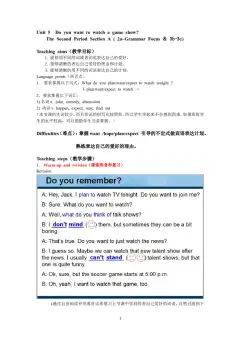
(Unit 2 How often do you exercise?)
Period1(1a-1c)
Teaching aims(教学目标)
1.学会谈论做事情的频率。
2. 能够理解区分并熟练运用本节课表示频率的副词。
Language points(语言点)
1.要求掌握以下句式: What do you usually do on weekends?
I usually watch TV.
Do you go shopping?
No/Yes, I never go shopping./I sometimes go shopping.
2.要求掌握以下词汇及短语:
housework, hardly ever, always, usually, often, sometimes, never, exercise, help with
housework, do some cleaning
Difficulties(难点):频率副词的区别及正确使用
Teaching steps(教学步骤)
1. Brainstorm & Lead in
T: What kind of activities do people usually do?
S: Help our parents with the housework.
S: …
Get into groups of three or four and write as many weekend activities as possible.
Have some Ss present their group reports to the class.
help with housework
Weekend activities
(教师把各组同学的讨论结果板书在黑板上,教师再领读一遍以确保大家会读并明白理解)
教学设计说明:从贴近学生熟悉的话题入口,通过头脑风暴把常见的周末活动汇总出来,为
下一步讨论自己的周末活动提供基础。
12. Work on 1a
T: Look at the picture on page 9 and make a list of the weekend activities.
Go through the answers together as a class.
1. help with housework 2. watch TV 3. go shopping
4. do some reading/read 5. exercise
教学设计说明:有了课前的讨论导入,这些有关周末的短语已经基本复习了,所以这一步对
于学生来说很简单,所以直接和学生一起对答案就可以了。
3. Work on 1b
Go through the six frequency words as a class.
Then, have Ss write down the activities next to the correct frequency words.
always (100%) ______________________
usually ______________________
often ______________________
sometimes _______________________
hardly ever _______________________
never (0%) _______________________
(教师放录音,教师可以在放完一遍录音以后订正答案)
After listening, encourage Ss to look at the screen and fill in the blanks with what they hear.
T: Listen again and fill in the blanks on the screen with what you hear.
教学设计说明:听并完成1b任务不难,所以增加了听读并填出缺词的活动。这样就充分利用
了听力材料,有利于培养学生听力和口语水平。
4. Work on 1c
Have Ss practice the conversation in 1a. Then, have them make their own conversations about
what they do on weekends.
T: I usually read books on weekends. What do you do on weekends?
S1: I usually watch TV and help with housework.
T: Do you go shopping?
S1: No, I never go shopping./Yes, I often go shopping with my mother.
(给学生练习的时间,然后抽查5对看对话情况,特别是频度副词使用情况)
教学设计说明:进一步巩固本节课所学内容,让学生在讨论、听的基础上学会谈论自己和询
问他人的周末活动。
5. Homework
Oral:
Listen , then read the conversation aloud.
Written:
2Finish Activity 3b on Page 11.
教学设计说明:课后充分利用现有资源进行学习,模仿磁带是最方便有效的方法。完成课后
练习3b,通过调查同伴周末活动的的频率巩固本节课对频率副词的使用。
3