文档文本内容
期末复习之单词词性分类汇总
单词词性:动词、名词、形容词、副词、连词、介词、数词等。词性是解题的关键
。首先要从句子结构入手,谓语动词和形容词是所有词性中相对容易判断出来的;其次再
根据技巧判断出其他词性;最后根据其他关键信息判断词形的改变。
1. 助动词结构:
主语(冠词/名词等)+ 谓语(动词)+ 宾语(冠词/代词/名词等)。
I did my homework.
2. 系动词结构:
(1)主语(冠词/名词等)+ 系动词(be动词/感官动词)+ 表语(形容词)。
You are excited.
You look excited.
(2)主语(冠词/名词等)+ 系动词(be动词/感官动词)+ 表语(名词)。
She is a teacher.
They are students.
(二)动词呈现
动词:表示动作的词语,动词一般作谓语,通过谓语动词可以判断动词的形式。
1. 解题步骤
第一步:熟记词义;
第二步:根据句子结构,判断词性为动词;
第三步:根据语境、固定搭配,判断时态、其他动词形式。
2. 解题技巧
【技巧一】助动词后除主语外要紧跟动词(原形);
助动词一般出现在疑问句和否定句。分别有: do 、 does 、 did 、 will 、 would 。
否定形式:don’t, doesn’t, didn’t, won’t, wouldn’t。
1. They don't realize that that wasn't always the case.
2. I sure do miss you something fierce!
3. Why did I not marry King Grisly-beard?
【技巧二】情态动词后除主语外要紧跟动词(原形);
情态动词: can 、 could 、 need 、 should 、 must 、 may 、 might 等。否定形式: can’t, couldn’t, needn’t, mustn’t, may not, might not 。
1. I can realize all my dreams.
2. I' ll miss you, kiddo.
3. They could communicate with her.
【技巧三】介词to后一般是动词(原形);
介词可跟动词、名词和动名词。一般to 后跟动词原形。
1. She wasn't slow to realize what was going on.
2. Don't expect it to improve overnight.
3. It was too good an opportunity to miss.
【技巧四】不带to的不定式,其后也跟动词(原形);
一感(feel sb do sth.);二听( hear /listen to sb do sth);三让( make / let /have sb do
sth);四看( watch / see /look/notice sb do sth);help sb(do/to do sth)。
1. Let me dig a hole.
2. Please make him realize the importance of healthy food
3. Nowadays, phone calls and messages help us communicate with others more often.
【技巧五】有些固定句型后要用动词(原形);
had better do sth, Why not do sth.
1. We 'd better hurry or we'll miss the train.
2. Why not book the tickets in advance?
【技巧六】以上情形都没有,找主语,一般主语后就是谓语动词(有时态变化);
主语一般在句子开头,主语是名词的形式。常见有人名(Tom)、人称代词主格(She/he/
They等)、形物代+名词(My bag)等,一般紧跟主语后的就是谓语动词。
再根据时间、标志词、结构判断时态:一般现在时、一般过去时、一般将来时、现在进行
时、过去进行时、现在完成时。
1. She realized the stress he was under just now.
2. People communicate with words.
3. I still dream of home now.
【技巧七】以上情形都没有,注意连词前后主语是同一个时,时态保持一致。
1. I'll come by this evening and pick up the books.
2. I returned home and explained why I so late.
原形 词性&释义 动词三单 过去式 动词ing(现在分词/动名
词)
arrive v. 到达 arrives arrived arriving
blow v. 吹 blows blow-blew-blown blowing
bring-brought-
bring v. 带来;取来 brings bringing
brought
camp v. 扎营;搭帐篷 camps camped camping
climb v. 爬 climbs climbed climbing
cook v. 做饭 cooks cooked cooking
could modal v. 能;可以 could could -
cross v. 横过;越过 crosses crossed crossing
cut v. 砍;切 cuts cut-cut-cut cutting
describe v. 描述 describes described describing
draw v. 画 draws draw-drew-drawn drawing
drive v. 开车 drives drive-drove-driven driving
enjoy v. 享受;喜爱 enjoys enjoyed enjoying
feed v. 喂养;饲养 feeds feed-fed-fed feeding
feel v. 感受;觉得 feels feel-felt-felt feeling
fly v. 飞 flies fly-flew-flown flying
follow v. 遵循;跟随 follows followed following
forget-forgot-
forget v. 忘记;遗忘 forgets forgetting
forget
grow v. 种植;生长;发育 grows grow-grew-grown growing
hear v. 听到;听见 hears hear-heard-heard hearing
join v. 参加;加入 joins joined joining
jump v. 跳;跃 jumps jumped jumping
keep v. 保持;保留 keeps keep-kept-kept keeping
kill v. 杀死;弄死 kills killed killing
learn v. 学习;学会 learns learned learning
leave v. 离开;留下 leaves leave-left-left leaving
listen v. 听;倾听 listens listened listening
live v. 居住,生活 lives lived living
make v. 使成为;制造 makes make-made-made making
modal v. 也许;可
may may might -
能;可以
milk v. 挤奶 milks milked milking
miss v. 怀念;思念;错过 misses missed missing
move v. 移动 moves moved moving
pick v. 采;摘 picks picked picking
put v. 放 puts put-put-put putting
read v. 读;阅读 reads read-read-read reading
relax v. 放松;休息 relaxes relaxed relaxing
remember v. 记住;记起 remembers remembered remembering
run v. 跑;奔 runs run-ran-run running
save v. 救;救助 saves saves saving
shout v. 呼叫;喊叫 shouts shouted shouting
sing v. 唱歌 sings sing-sang-sung singing
sit v. 坐 sits sit-sat-sat sitting
skate v. 滑冰 skates skated skating
v. 说(某种语言); speak-spoke-
speak speaks speaking
说话 spoken
spend v. 花(时间、钱等) spends spend-spent-spent spendingstart v. 开始;着手 starts started starting
stay v. 停留;待 stays stayed staying
teach v. 教;讲授 teaches teach-taught-taught teaching
tell v. 讲述;告诉 tells tell-told-told telling
turn v. 转向;翻 turns turned turning
use v. 使用;运用 uses used using
visit v. 拜访;参观 visits visited visiting
wake v. 弄醒;醒 wakes wake-woke-woken waking
wash v. 洗 washes washed washing
wear v. 穿;戴 wears wear-wore-worn wearing
will v. 将要,会 will would willing
wish v. 希望 wishes wished wishing
modal v. ( 表 示 意
would would would -
愿)愿意
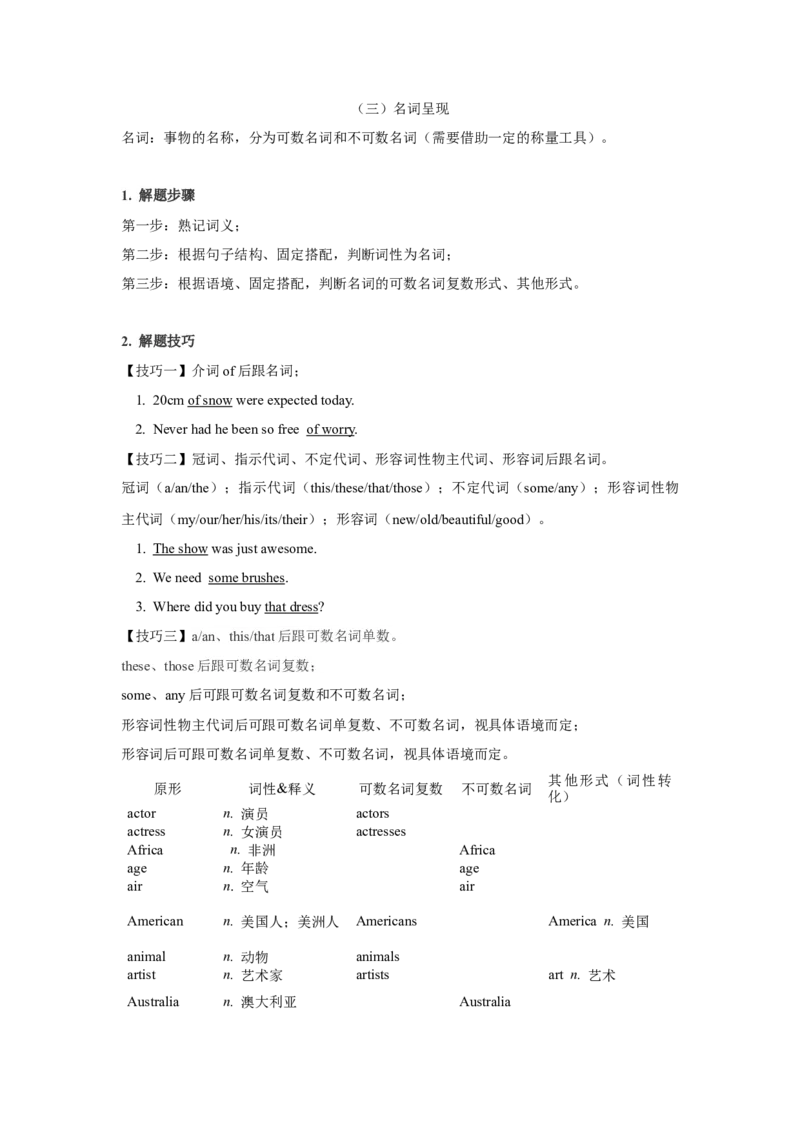
write v. 写作;写字 writes write-wrote-written writing(三)名词呈现
名词:事物的名称,分为可数名词和不可数名词(需要借助一定的称量工具)。
1. 解题步骤
第一步:熟记词义;
第二步:根据句子结构、固定搭配,判断词性为名词;
第三步:根据语境、固定搭配,判断名词的可数名词复数形式、其他形式。
2. 解题技巧
【技巧一】介词of后跟名词;
1. 20cm of snow were expected today.
2. Never had he been so free of worry .
【技巧二】冠词、指示代词、不定代词、形容词性物主代词、形容词后跟名词。
冠词(a/an/the);指示代词(this/these/that/those);不定代词(some/any);形容词性物
主代词(my/our/her/his/its/their);形容词(new/old/beautiful/good)。
1. The show was just awesome.
2. We need some brushes.
3. Where did you buy that dress ?
【技巧三】a/an、this/that后跟可数名词单数。
these、those后跟可数名词复数;
some、any后可跟可数名词复数和不可数名词;
形容词性物主代词后可跟可数名词单复数、不可数名词,视具体语境而定;
形容词后可跟可数名词单复数、不可数名词,视具体语境而定。
其他形式(词性转
原形 词性&释义 可数名词复数 不可数名词
化)
actor n. 演员 actors
actress n. 女演员 actresses
Africa n. 非洲 Africa
age n. 年龄 age
air n. 空气 air
American n. 美国人;美洲人 Americans America n. 美国
animal n. 动物 animals
artist n. 艺术家 artists art n. 艺术
Australia n. 澳大利亚 Australiababy n. 婴儿 babies
badminton n. 羽毛球运动 badminton badminton
bank n. 银行 banks
beach n. 海滩;沙滩 beaches
beef n. 牛肉 beef
bike n. 自行车 bikes
boat n. 小船 boats
bowl n. 碗 bowls
bridge n. 桥 bridges
bus n. 公共汽车 buses
butterfly n. 蝴蝶 butterflies
cabbage n. 卷心菜;洋白菜 cabbage
cake n. 蛋糕 cakes
Canada n. 加拿大 Canada
candle n. 蜡烛 candles
candy n. 糖果 candies
car n. 小汽车;轿车 cars
cat n. 猫 cats
center n. 中心;中央 centers
chess n. 国际象棋 chess
child n. 儿童 children
cinema n. 电影院 cinemas
club n. 俱乐部;社团 clubs
country n. 国;国家 countries
countryside n. 乡村;农村 countrysides
cow n. 奶牛 cows
crime n. 犯罪活动 crimes
criminal n. 罪犯 criminals
crossing n. 十字路口 crossings cross v. 穿过
dangerous adj.危险
danger n. 危险 dangers
的
dish n. 碟;盘 dishes
dragon n. 龙 dragons
drum n. 鼓 drums
dumpling n. 饺子 dumplings
ear n. 耳朵 ears
elephant n. 大象 elephants
end n. 结尾;尽头 end
Europe n. 欧洲 Europe
eye n. 眼睛 eyes
face n. 脸 faces
farmer n. 农民;农场主 farmers farm n. 农场
fire n. 火;火灾 fire
fish n. 鱼;鱼肉 fishflag n. 旗;旗帜 flags
flower n. 花 flowers
forest n. 森林 forests
front n. 前面 front
gift n. 礼物;赠品 gifts
giraffe n. 长颈鹿 giraffes
glasses n. 眼镜 glasses
group n. 组;群 groups
guide n. 导游;向导 guides
guitar n. 吉他 guitars
hair n. 头发;毛发 hair
half n. 一半;半数 halves
hall n. 大厅;礼堂 halls
height n. 身高;高度 height high adj. 高的
homework n. 家庭作业 homework
horse n. 马 horses
hospital n. 医院 hospitals
host n. 主人;东道主 hosts
hotel n. 旅馆;酒店 hotels
house n. 房子 houses
idea n. 想法;主意 ideas
ivory n. 象牙 ivories
jeans n. 牛仔裤 jeans
job n. 工作;职业 jobs
juice n. 果汁;饮料 juice
kilometer n. 千米;公里 kilometers
kind n. 种类 kinds
kitchen n. 厨房 kitchens
kite n. 风筝 kites
koala n. 树袋熊,考拉 koalas
kung fu n. (中国)功夫 kung fu
lake n. 湖;湖泊 lakes
language n. 语言 language
leg n. 腿 legs
life n. 生活;生命 lifelion n. 狮子 lions
luck n. 幸运;运气 luck lucky adj. 幸运的
man n. 男人;人 men
meat n. (可食用的)肉 meat
message n. 信息;消息 messages
minute n. 分钟 minutes
money n. 钱 money
monkey n. 猴子 monkeys
moon n. 月亮 moon
mountain n. 高山 mountains
mouse n. 老鼠;耗子 mice
mouth n. 嘴 mouths
movie n. 电影 movies
museum n. 博物馆 museums
musician n. 音乐家 musicians music n. 音乐
mutton n. 羊肉 mutton
neighborhood n. 街区;街坊 neighborhoods neighbor n. 邻居
newspaper n. 报纸 newspapers
night n. 晚上;夜晚 nights
noodle n. 面条 noodles
north n. 北;北方 north
nose n. 鼻子 noses
office n. 办公室 offices
onion n. 洋葱 onions
painting n. 油画;绘画 paintings paint v. 绘画
pancake n. 烙饼;薄饼 pancakes
panda n. 熊猫 pandas
park n. 公园 parks
people n. 人;人们 people
person n. 人 people
pet n. 宠物 pets
piano n. 钢琴 pianos
place n. 地点;位置 places
police n. 警察 polices
pool n. 游泳池;水池 pools
porridge n. 粥;面糊 porridge
post n. 邮政 postspotato n. 土豆;马铃薯 potatoes
problem n. 困难;难题 problems
n. 一刻钟;四分之
quarter quarters
一
race n. 竞赛 races
restaurant n. 餐馆 restaurants
river n. 河;江 rivers
road n. 路 roads
robot n. 机器人 robots
rope way n. 索道 rope ways
rule n. 规则;规章 rules
Russian n. 俄罗斯人;俄语 Russians
sheep n. 羊;绵羊 sheep
singer n. 歌手 singers sing v. 唱歌
size n. 大小;尺码 sizes
snake n. 蛇 snakes
snowman n. 雪人 snowmen
soup n. 汤 soup
southern adj. 南方
south n. 南;南方 south
的
special n. 特色菜;特价品 specials
state n. 州 states
n. 电(视)台;车
station stations
站
stop n. 车站;停止 stops
story n. 故事;小说 stories
street n. 大街 streets
subway n. 地铁 subways
summer n. 夏天;夏季 summers
sun n. 太阳 sun
sunshine n. 阳光 sunshine
supermarket n. 超市 supermarkets
symbol n. 象征 symbols
tea n. 茶;茶叶 tea
tent n. 帐篷 tentsthe UK n. 英国 the UK
tiger n. 老虎 tigers
tofu n. 豆腐 tofu
tooth n. 牙齿 teeth
town n. 镇;市镇 towns
train n. 火车 trains
tree n. 树 trees
uniform n. 校服;制服 uniforms
vacation n. 假期 vacations
village n. 村庄;村镇 villages villager n. 村民
villager n. 村民 villagers village n. 村庄
violin n. 小提琴 violins
visitor n. 游客;访问者 visitors visit v. 访问
water n. 水 water
way n. 方式;路线 ways
weather n. 天气 weather
weekend n. 周末 weekends
winter n. 冬天;冬季 winters
world n. 世界 world
year n. 年;岁 years
zoo n. 动物园 zoos
(四)形容词呈现
形容词:形容某个事物、某个人怎么样。
1. 解题步骤
第一步:熟记词义;
第二步:根据句子结构,判断词性为形容词;
第三步:根据语境、固定搭配,确定正确的形式。
2. 解题技巧
【技巧一】形容词跟在be动词后,作表语;
1. I suppose you think you're funny.
2. It's best if you go now.3. ”Be quiet,”said the teacher.
【技巧二】形容词跟在名词前,作定语。
1. I'll tell you a funny story .
2. He's one of my best friends .
3. She was a shy, quiet girl .
【技巧三】so, very, too后跟形容词。
The kitchen is so dirty.
原形 词性&释义 其他形式(词性转化)
afraid adj. 害怕;畏惧
American adj. 美国的;美洲的 America n. 美国
another adj. 另一个的;又一
any adj. 任何的;任一的
baby adj. 幼小的
bad adj. 坏的;糟的
beautiful adj. 美丽的;美好的
best adj. 最好的 good 好的
adj. (blond) (头发)金黄色
blonde
的
cheap adj. 廉价的;便宜的
clean adj. 干净的 clean v. 打扫
cloudy adj. 多云的 cloud n. 云
cold adj. 寒冷的;冷的
curly adj. 卷曲的
cute adj. 可爱的;机灵的
dark adj. 黑暗的;昏暗的 darkness n. 黑暗
delicious adj. 可口的;美味的
different adj. 不同的 difference n. 不同
dirty adj. 脏的
dry adj. 干燥的
each adj. 每个;各自的
early adj. 早(的)
every adj. 每一;每个
excellent adj. 极好的;优秀的
exciting adj. 使人兴奋的;令人激动的 excited adj. 感到兴奋的
expensive adj. 昂贵的
far adj. 远;远的
fast adj. 快的
free adj. 免费的
friendly adj. 友好的 friend n. 朋友
funny adj. 奇怪的;滑稽好笑的 fun n. 有趣
handsome adj. 英俊的
hard adj. 困难的
heavy adj. 重的
high adj. 高的 height n. 高度
hot adj. 热的
important adj. 重要的 importance n. 重要性
interested adj. 感兴趣的 interesting adj. 令人感兴趣的large adj. 大号的;大的
lazy adj. 懒散的;懒惰的
little adj. 小的
lovely adj. 可爱的 love n. 爱
lucky adj. 幸运的 luck n. 运气
many adj. 许多
medium adj. 中等的
more adj. 更多(的)
natural adj. 自然的 nature n. 自然
new adj. 新的;刚出现的
noisy adj. 吵闹的 noise n. 吵闹
north adj. 北方的
other adj. 另外的;其他的
outside adj. 外面的
past adj. 过去的 past n. 过去
popular adj. 受欢迎的;普遍的
quiet adj. 安静的 quietly adv. 安静地
rainy adj. 阴雨的;多雨的 rain n. 雨
real adj. 真正的;真实的 really adv. 确实
round adj. 圆形的
Russian adj. 俄罗斯的 Russia n. 俄罗斯
scared adj. 惊慌的;吓坏了的 scaring adj. 令人惊慌的
scary adj. 吓人的;恐怖的 scaring adj. 令人恐惧的
shy adj. 羞怯的;腼腆的
slow adj. 缓慢的;迟缓的 slowly adv. 慢地
smart adj. 聪明的
snowy adj. 下雪的 snow n. 雪
sorry adj. 抱歉的;难过的;惋惜的
South adj. 南方的
special adj. 特别的;特殊的 specially adv. 特别地
straight adj. 直的
strict adj. 严格的;严厉的 strictly adv. 严格地
sunny adj. 晴朗的 sun n. 太阳
tall adj. 高的
terrible adj. 非常讨厌的;可怕的 terrorist n. 恐怖分子
thin adj. 瘦的
tired adj. 疲倦的;疲劳的 tiring adj. 令人疲倦的
true adj. 真的;符合事实的 truth n. 真理
warm adj. 温暖的
windy adj. 多风的 wind n. 风
young adj. 幼小的;年轻的
(五)副词呈现
副词:修饰形容词和动词,表示这个状态怎么样或者这个动作发生的时间、地点、程度等。
1. 解题步骤
第一步:熟记词义;第二步:根据句子结构,判断词性为副词;
第三步:根据语境、固定搭配,确定正确的形式。
2. 解题技巧
【技巧一】句子结构完整,用副词修饰做某动作的程度;
1. I usually go to work by bike.
2. Turn left at the first robot.
3. He worked hard.
【技巧二】句子结构完整,表示句子的时间、地点和程度等。
1. I'll see you tomorrow evening.
2. A large bus was sitting outside.
3. We arrived home at dusk.
原形 词性&释义 其他形式(词性转化)
across adv.过;穿过
again adv. 再一次;又一次
ago adv. 以前
also adv. 也;而且
around adv. 在周围;大约
as adv. 作为;当作
away adv. 离开;远离
back adv. 回来;回原处
before adv. 以前
best adv. 最好地;最
differently adv. 不同地 different adj. 不同的
down adv. (坐、躺、倒)下
early adv. 早地
easily adv. 容易地 easy adj. 容易的
either adv. 也(用在否定词组后)
far adv. 远地
fast adv. 快地
hard adv. 努力地
high adv. 高地 height n. 高度
home adv. 到家;在家 homeless adj. 无家可归的
just adv. 只是;恰好
later adv. 以后 late adj. 迟的
left adv. 向左边
luckily adv. 幸运地;好运地 lucky adj. 幸运的
never adv. 从不;绝不
o’clock adv. (表示整点)……点钟
often adv. 时常;常常
out adv. 外出
outside adv. 在外面
quickly adv. 很快地 quick adj. 快的
quite adv. 相当;完全right adv. 向右边
sometimes adv. 有时
soon adv. 不久;很快
still adv. 还;仍然
today adv. 在今天
tomorrow adv. 在明天
tonight adv. 在今晚;在今夜
up adv. 向上
usually adv. 通常地;一般地 usual adj. 通常的
yesterday adv. 昨天
adv. (常用于否定句或疑问
yet
句)还;仍然
(六)数词呈现
数词:表示某个事物的数量,一般用在名词前。
1. 解题步骤
第一步:熟记词义;
第二步:根据句子结构,判断词性为数词;
第三步:根据语境、固定搭配,确定正确的形式。
2. 解题技巧
【技巧】与可数名词连用表示数量。
1. There are 12 boys in the park.
2. At a guess , there were forty people at the party.
3. It cost him five hundred
数词 释义 其他形式 序数词
eighty num. 八十 eighteen eightieth
fifty num. 五十 fifteen fiftieth
forty num. 四十 fourteen fortieth
hundred num. 一百 hundreds of hundredth
ninety num. 九十 nineteen ninetieth
seventy num. 七十 seventeen seventieth
sixty num. 六十 sixteen sixtieth
(七)介词呈现
介词:介于句子和时间、地点或其他事物之间,构成固定搭配,介于句子之间。
1. 解题步骤
第一步:熟记词义;第二步:根据句子结构,判断词性为介词;
第三步:根据语境、固定搭配,确定正确的介词。
2. 解题技巧
【技巧一】介于句子和时间、地点或其他事物之间;
She climbed over the wall.
【技巧二】构成固定短语;
All around the world, people drink tea.
across prep. 过;穿过
along prep. 沿着
around prep. 在……周围
as prep. 作为;当作
before prep. 在……以前
behind prep. 在……的后面
between prep. 介于……之间
by prep.(表示方式)乘(交通工具)
down prep. 向下;沿着
into prep. 到……里面;进入
like prep. 像;怎么样
near prep. 在……附近
over prep. 超过,多于;在……上方
past prep. 晚于;过(时间)
(八)连词呈现
连词:连接单词和单词、短语和短语、句子和句子。
1. 解题步骤
第一步:熟记词义;
第二步:根据句子结构,判断词性为连词;
第三步:根据语境、固定搭配,确定正确的连词。
2. 解题技巧:
【技巧一】连接单词和单词,词性保持一致;
Would you prefer red or white?
【技巧二】连接短语和短语,结构保持一致;
He was in the front room , or the lounge.
【技巧三】连接句子和句子,前后时态保持一致。You may come if you wish .
before conj. 在……以前
either conj. 或者
if conj. 如果
or conj. 或者;也不(用于否定句)