第 9 单元 Can you come to my party?
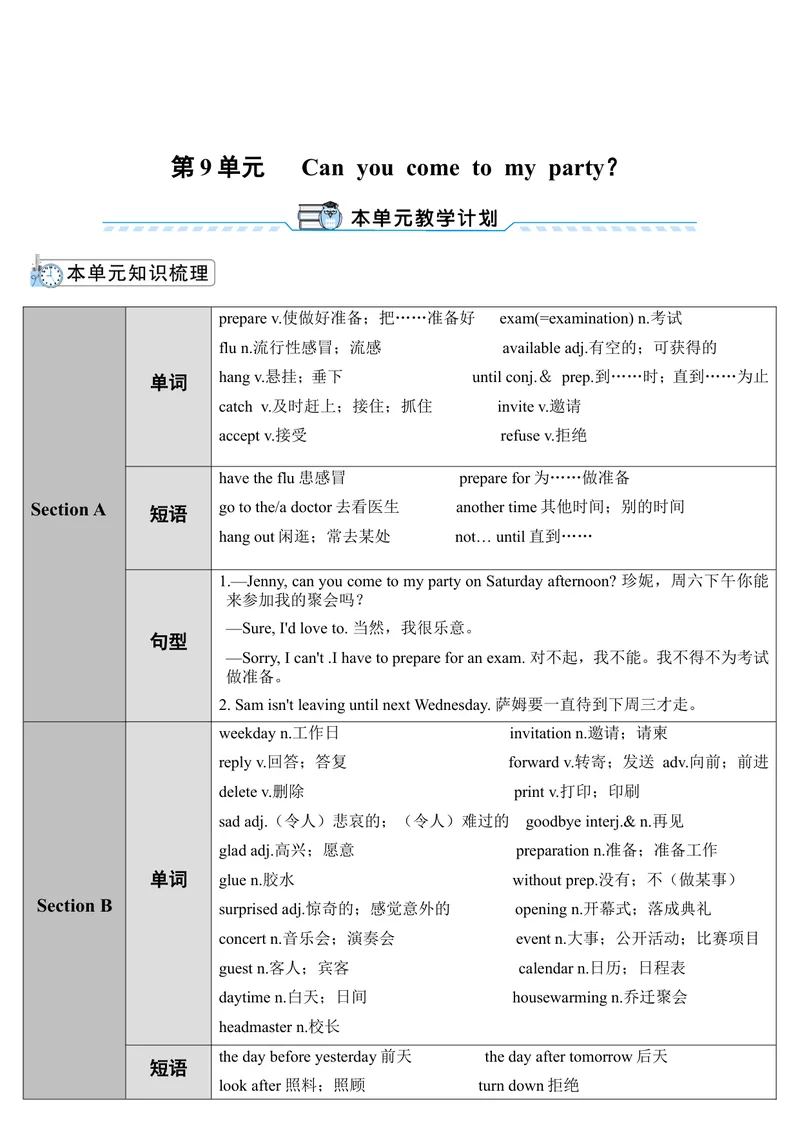
prepare v.使做好准备;把……准备好 exam(=examination) n.考试
flu n.流行性感冒;流感 available adj.有空的;可获得的
单词 hang v.悬挂;垂下 until conj.& prep.到……时;直到……为止
catch v.及时赶上;接住;抓住 invite v.邀请
accept v.接受 refuse v.拒绝
have the flu患感冒 prepare for为……做准备
Section A 短语 go to the/a doctor去看医生 another time其他时间;别的时间
hang out闲逛;常去某处 not… until直到……
1.—Jenny, can you come to my party on Saturday afternoon? 珍妮,周六下午你能
来参加我的聚会吗?
—Sure, I'd love to. 当然,我很乐意。
句型
—Sorry, I can't .I have to prepare for an exam. 对不起,我不能。我不得不为考试
做准备。
2. Sam isn't leaving until next Wednesday. 萨姆要一直待到下周三才走。
weekday n.工作日 invitation n.邀请;请柬
reply v.回答;答复 forward v.转寄;发送 adv.向前;前进
delete v.删除 print v.打印;印刷
sad adj.(令人)悲哀的;(令人)难过的 goodbye interj.& n.再见
glad adj.高兴;愿意 preparation n.准备;准备工作
单词 glue n.胶水 without prep.没有;不(做某事)
Section B surprised adj.惊奇的;感觉意外的 opening n.开幕式;落成典礼
concert n.音乐会;演奏会 event n.大事;公开活动;比赛项目
guest n.客人;宾客 calendar n.日历;日程表
daytime n.白天;日间 housewarming n.乔迁聚会
headmaster n.校长
the day before yesterday前天 the day after tomorrow后天
短语
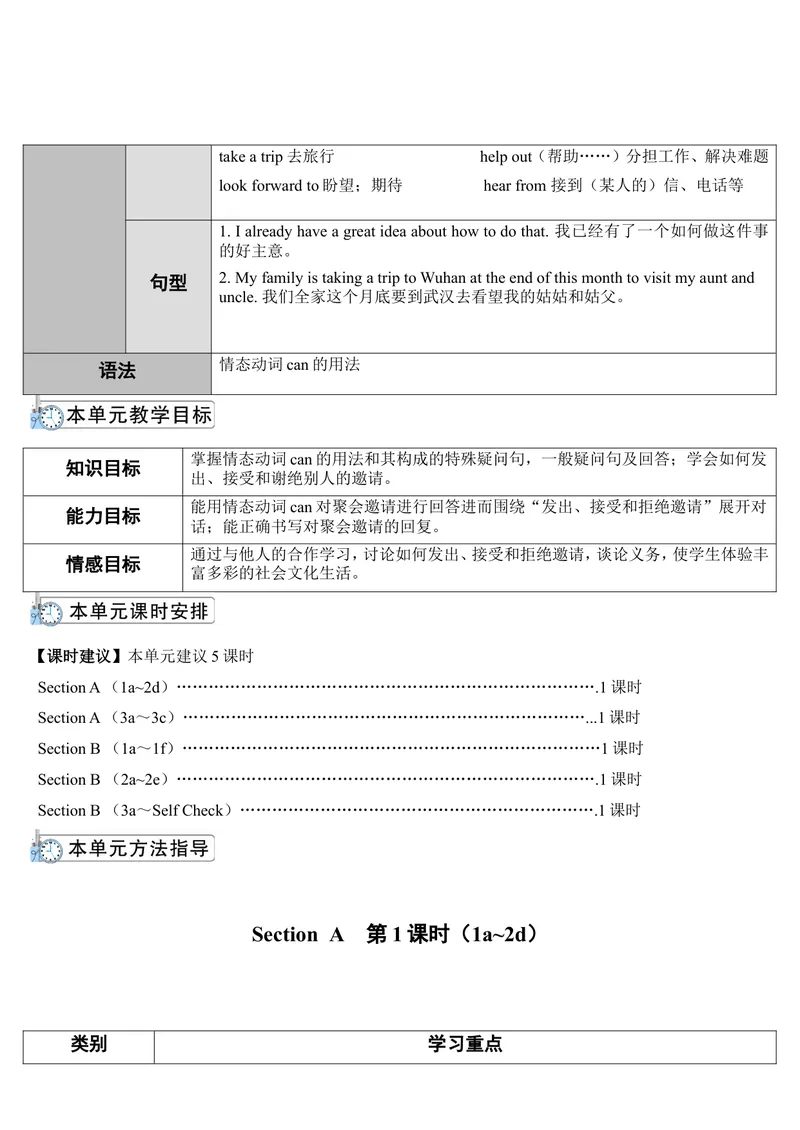
look after 照料;照顾 turn down拒绝take a trip去旅行 help out(帮助……)分担工作、解决难题
look forward to盼望;期待 hear from 接到(某人的)信、电话等
1. I already have a great idea about how to do that. 我已经有了一个如何做这件事
的好主意。
句型 2. My family is taking a trip to Wuhan at the end of this month to visit my aunt and
uncle. 我们全家这个月底要到武汉去看望我的姑姑和姑父。
语法
情态动词can的用法
掌握情态动词can的用法和其构成的特殊疑问句,一般疑问句及回答;学会如何发
知识目标
出、接受和谢绝别人的邀请。
能用情态动词can对聚会邀请进行回答进而围绕“发出、接受和拒绝邀请”展开对
能力目标
话;能正确书写对聚会邀请的回复。
通过与他人的合作学习,讨论如何发出、接受和拒绝邀请,谈论义务,使学生体验丰
情感目标
富多彩的社会文化生活。
【课时建议】本单元建议5课时
Section A (1a~2d)…………………………………………………………………….1课时
Section A (3a~3c)…………………………………………………………………...1课时
Section B (1a~1f)……………………………………………………………………1课时
Section B (2a~2e)…………………………………………………………………….1课时
Section B (3a~Self Check)………………………………………………………….1课时
Section A 第 1 课时(1a~2d)
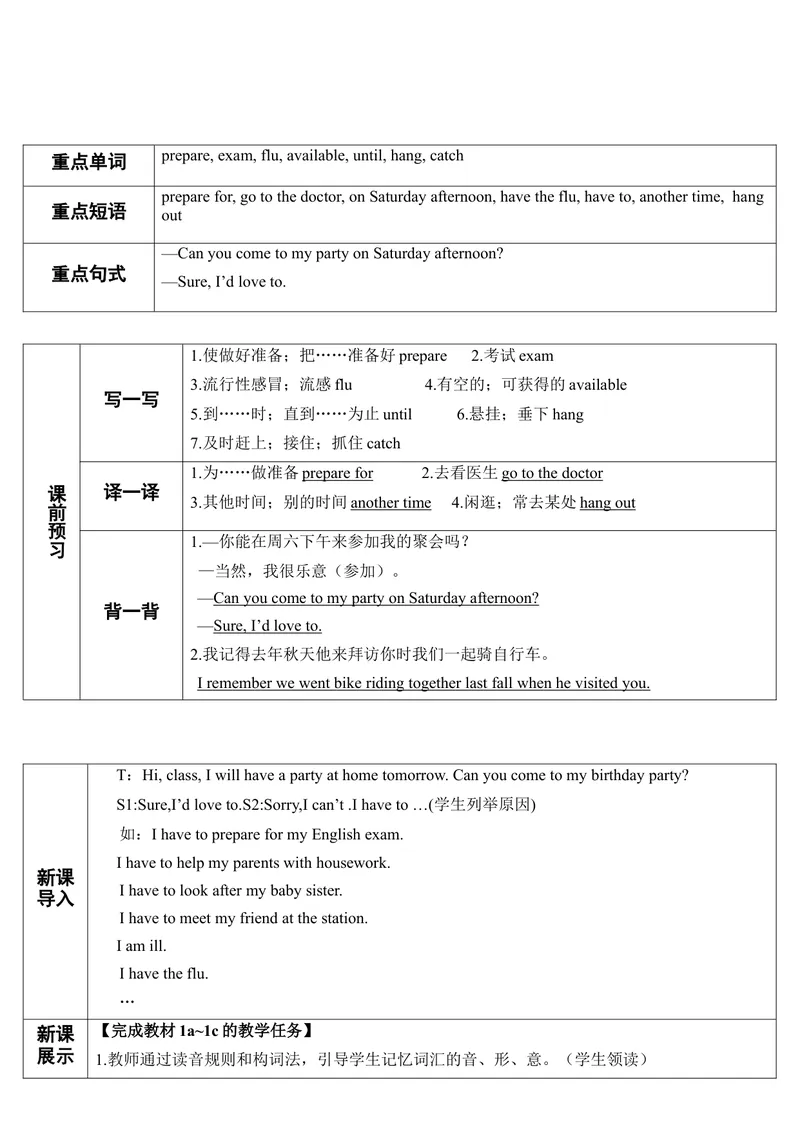
类别 学习重点prepare, exam, flu, available, until, hang, catch
重点单词
prepare for, go to the doctor, on Saturday afternoon, have the flu, have to, another time, hang
重点短语
out
—Can you come to my party on Saturday afternoon?
重点句式
—Sure, I’d love to.
1.使做好准备;把……准备好prepare 2.考试exam
3.流行性感冒;流感flu 4.有空的;可获得的available
写一写
5.到……时;直到……为止until 6.悬挂;垂下hang
7.及时赶上;接住;抓住catch
1.为……做准备prepare for 2.去看医生go to the doctor
课 译一译
3.其他时间;别的时间another time 4.闲逛;常去某处hang out
前
预
1.—你能在周六下午来参加我的聚会吗?
习
—当然,我很乐意(参加)。
—Can you come to my party on Saturday afternoon?
背一背
—Sure, I’d love to.
2.我记得去年秋天他来拜访你时我们一起骑自行车。
I remember we went bike riding together last fall when he visited you.
T:Hi, class, I will have a party at home tomorrow. Can you come to my birthday party?
S1:Sure,I’d love to.S2:Sorry,I can’t .I have to …(学生列举原因)
如:I have to prepare for my English exam.
I have to help my parents with housework.
新课
I have to look after my baby sister.
导入
I have to meet my friend at the station.
I am ill.
I have the flu.
…
新课 【完成教材1a~1c的教学任务】
展示
1.教师通过读音规则和构词法,引导学生记忆词汇的音、形、意。(学生领读)prepare for=get ready for, exam=examination, flu=cold, available=free
2.学生听1b的录音,完成1b任务。
3.教师让学生根据1c提供的信息编写对话,练习新的目标句型“Can you come to my party?”及其
肯定回答和否定回答。(利用1a的短语)
【完成教材2a~2d的教学任务】
1.学生听2a的录音,完成2a任务。
2.再听一遍,完成2b任务。
3.跟读录音,纠正语音语调。
4.教师让学生根据2c提供的信息编写对话,必要的情况可以列举更多的原因,以更广泛地培养学
生的英语口头表达能力和实际生活能力。
5.学生朗读2d对话,读熟后与同伴结对练习,分角色表演对话。
【语法提要】
1. —Can you come to my party on Saturday afternoon? 星期六下午你能来参加我的聚会吗?
—Sure, I'd love to. 当然,我很乐意。
(1)Can you…?意为“你能……吗?”,是客气地请求某人做某事的句子。接受邀请通常用I
would(I'd) love to…/Thanks a lot./Certainly.来应答。如有事不能接受邀请,则说:I'm sorry, but I
can't.在这种句式中,用could 比can语气委婉,显得有礼貌,而用can比较随便。如:
—Can you go shopping with me? 你能和我一起去购物吗?
—Sure, I'd love to.当然可以,我很乐意。
(2)on Saturday afternoon意为“周六下午”,在具体的某一天或某一天的早上、中午、晚上用介
词on。如:
I met my friend Li Ming on the morning of October 1, 2013.2013年10月1日的早上我见到了我的
朋友李明。
(3)I'd love to.是由 I would love to…缩写而来。其义与 I would like to …相近,均表示“我想
要……”,但若省略助动词would,语意就随之改变了,即I like/love to…表示“我喜欢……”。
如:
They'd love to meet their teacher. 他们想去看看他们的老师。
2. Sorry, I can't. I have to prepare for an exam.对不起,我不能。我必须要准备考试。
(1)have to 意为“不得不,必须”,表示客观情况要求某人必须做某事,有人称和时态的变化,后
接动词原形,第三人称单数为has to。如:
I have to go now. 我必须走了。
He has to study. 他必须学习。
(2)prepare是动词,意为“使做好准备;把……准备好”。如:
He is preparing his speech for the meeting tomorrow.他正准备明天集会的演说。
①prepare for是动词短语,意为“为……做准备”。如:They made a fire to prepare for supper.他们生火为晚饭做准备。
②prepare to do表示“因要……而做准备”,prepared to do表示“愿意且有能力做什么”。如:
I am preparing to undertake the task.我正为要着手这个工作做准备。
I am prepared to undertake the task.我愿意且能够担任这项工作。
3.Maybe another time.也许换个其他时间吧。
(1)another意为“另一个,再一个”,后接可数名词单数,通常用于表示三者或三者以上不确定
数量中的任意一个人或物。如:
This pair of shoes is too small for me. Please show me another pair.这双鞋我穿太小了。请再给我一
双。
(2)another+数词+名词复数=数词+more+名词复数,意为“再来……个”。如:
We need another five desks /five more desks.我们还需要五张课桌。
【拓展】the other指两者中的“另一个”,有特定的数量范围,不是任意的“另一个”。如:
Here are two rulers. One is short. The other is long.这儿有两把尺子。一把短,另一把长。
【问题探究】
( C )1.—What is your mother doing?
—She is preparing dinner for us.
A. in B. at C. for D. to
( B )2.—Can you come to my birthday party?
—.
A. Yes ,I do B. Sorry, I can’t
C. No, I’d love to D. Sorry, I don’t
( C )3. I don’t like the dress. Could you please show me one?
A. other B. the other C. another D. others
1.—Can you come to our English party?
活
—Sure, I'd love to(非常想).
学
活 2.My father is preparing for(正在准备) the meeting.
练
3.I’m hungry, I want another egg(还要一个鸡蛋).
布置作业:完成课后提升作业。本课时以聚会为话题开始,通过邀请学生参加聚会,让学生学会邀请别人、接受邀请和拒绝邀
请的英语表达方式。通过结对对话练习的形式,使语言目标得以强化,更加广泛地培养了学生的英
语口头表达能力和实际生活能力。
教学过程中老师的疑问:
教
学
反
思
教师点评和总结: