文档文本内容
主题语境:人与自然
主题群:植物与动物
语篇类型:说明文
来源:cleveland.com,20200406
Word count:346
Flesch-Kincaid Grade Level:9.8


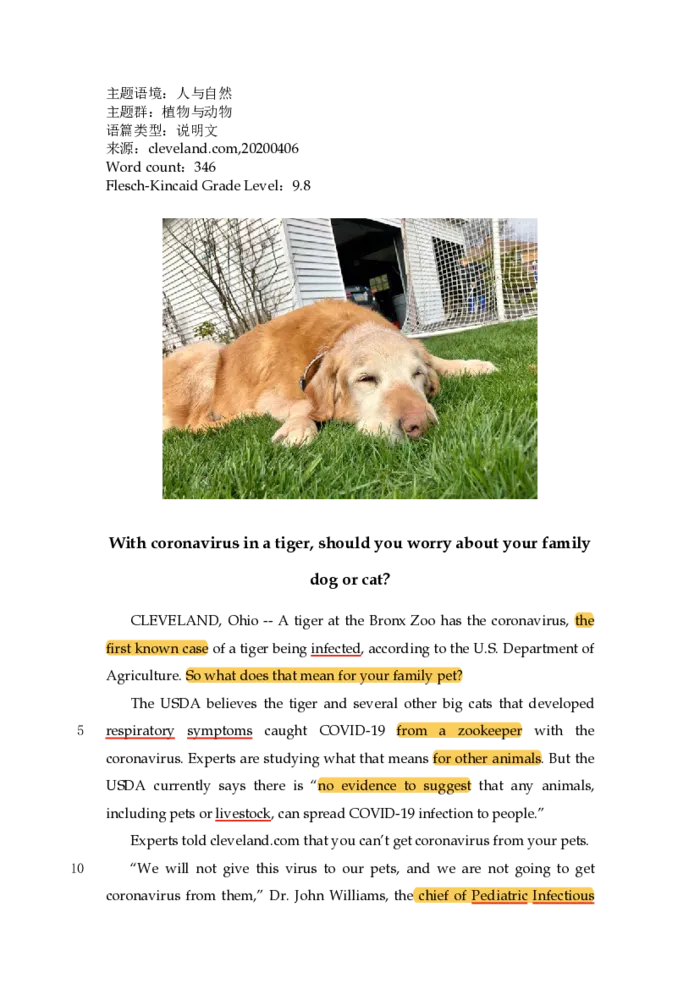
With coronavirus in a tiger, should you worry about your family
dog or cat?
CLEVELAND, Ohio -- A tiger at the Bronx Zoo has the coronavirus, the
first known case of a tiger being infected, according to the U.S. Department of
Agriculture. So what does that mean for your family pet?
The USDA believes the tiger and several other big cats that developed
respiratory symptoms caught COVID-19 from a zookeeper with the
5
coronavirus. Experts are studying what that means for other animals. But the
USDA currently says there is “no evidence to suggest that any animals,
including pets or livestock, can spread COVID-19 infection to people.”
Experts told cleveland.com that you can’t get coronavirus from your pets.
“We will not give this virus to our pets, and we are not going to get
10
coronavirus from them,” Dr. John Williams, the chief of Pediatric Infectious
Diseases at the University of Pennsylvania Medical Center’s Children’s
Hospital, told cleveland.com’s Adam Ferrise.
The World Health Organization and U.S. Centers for Disease Control and
Preparedness both issued guidelines that say there is no evidence that pets
15
can spread COVID-19. Williams said there is no evidence to suggest the virus
can live on pet hair.
According to National Geographic, several domestic animals have had
COVID-19, including dogs in Hong Kong and a domestic cat in Belgium,
reports National Geographic. Experts told the magazine that it’s possible the
20
virus could take hold in a new species and reinfect people in the future.
Health organizations say anyone sick with the coronavirus should not
interact with their pets.
The Animal Protective League recommends keeping two weeks of pet
food and medications on hand and having a back-up person who could care
25
for your pet.
“Although there have not been reports of pets becoming sick with
COVID-19 in the United States, it is still recommended that people sick with
COVID-19 limit contact with animals until more information is known about
the virus,” said the USDA.
30
Pet stores and their employees are considered essential under the
stay-at-home order issued Sunday by the Ohio Department of Health.