主题语境:人与自然
主题群:动物与植物
语篇类型:说明文
来源:integrisok.com, 2019/3/18
Word count: 434
Flesch-Kincaid Grade Level: 12.2
Lexile Range: 1210L - 1400L

The Health Benefits of Superfoods
Eating a nutritious diet rich in vitamins, minerals and antioxidants is one
of the most important parts of living a healthy lifestyle. Science says
nutrient-dense foods not only make you feel great, but may even reduce your
risk of certain chronic health conditions while providing multiple health
benefits.
5
You’ve most likely heard the term “superfoods” to describe foods that
will supposedly make you look great, feel great and help you live a longer,
healthier life — but what are “superfoods” and what makes them so super?
We’ve taken a look at these so-called superfoods to see what about them
packs that extra nutrient punch and how you should incorporate them into
10
your everyday diet.

What is a superfood?
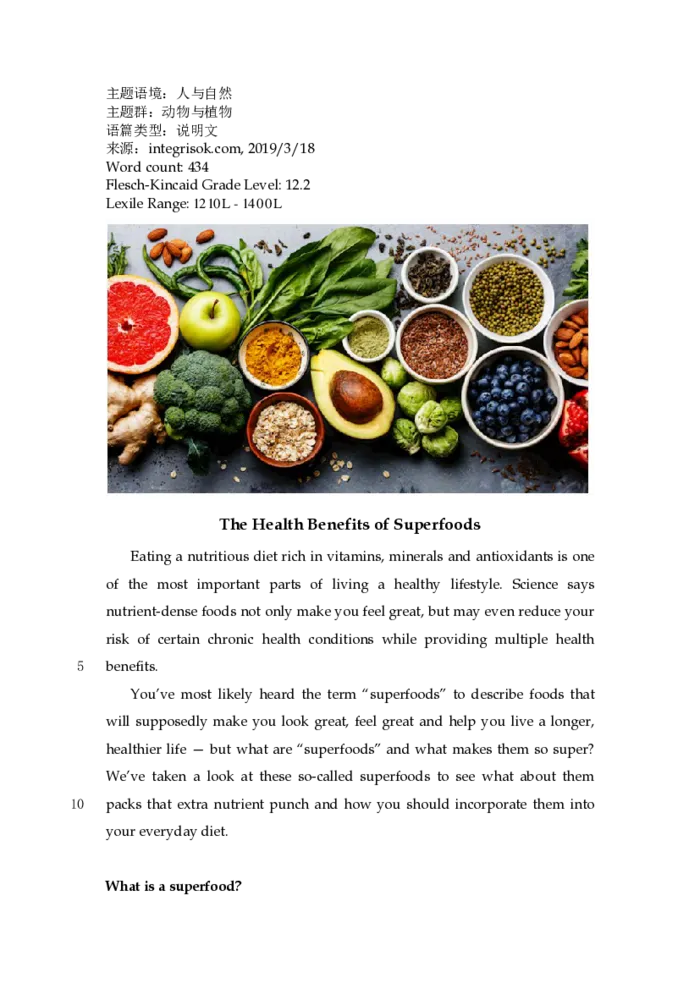
There is no exact definition of what makes a “superfood.” However,
superfoods are considered to be nutrient powerhouses that provide large
15
quantities of antioxidants, phytochemicals (chemicals in plants responsible for
colors and smells), vitamins and minerals. Most superfoods are plant-based,
but some fish and dairy also make the cut.
Examples of popular superfoods include salmon, kale, açaí berries, kefir
and almonds, just to name a few. Since there is not a strict definition of
20
superfoods, any food that is nutrient-dense is commonly put into this
category.

Benefits of superfoods
The high vitamin and mineral content found in superfoods can help your
body ward off diseases and keep you healthier. When incorporated into a
25
well-balanced diet, these foods can promote heart health, weight loss,
improve energy levels and even reduce the effects of aging.
Antioxidants found in many superfoods may help prevent cancer, while
healthy fats can reduce your risk of heart disease. Fiber, which is also found in
many superfoods, can help prevent diabetes and digestive problems while
30
phytochemicals have numerous health benefits including reducing your risk
of developing cardiovascular diseases. Superfoods are also known to protect
your organs from toxins, help lower cholesterol, regulate metabolism and
reduce inflammation.

Eating a well-balanced diet
35
It’s important to note that while superfoods are good for your health and
provide many nutrients you need on a daily basis, eating superfoods alone
does not contribute to a healthy diet. Eating too much of one type of food can
actually be detrimental to your health and prevent you from getting all of the
nutrients you need. For this reason, superfoods should be added to a
40
well-balanced diet, not replace one.
“No one food can provide you all of the essential vitamins, minerals and
antioxidants you need,” says INTEGRIS dietitian Meagan Ballard. “It is very
important to eat a wide variety of nutrient-rich foods to obtain the health
benefits our bodies need. There is nothing wrong with eating a food item that
45
provides you a good amount of a specific vitamin or mineral that you need,
but our bodies require many vitamins and minerals to function properly, so
don’t rely on one superfood alone to achieve this.”
A well-balanced and nutritious diet should include fruits, vegetables, lean
protein, whole grains, legumes and nuts while limiting the intake of sodium,
50
bad fats and refined sugar. When combined with exercise and regular
physical activity, a healthy and nutritious diet can work wonders for your
health. As Ballard says, “Food IS medicine.”