 夜雨聆风
夜雨聆风


【Word In Surprise: late】
你有没有过这种社死瞬间:单词库塞得满满当当,一开口想说“我晚点到”,结果嘴瓢蹦出个late,老外直接一脸懵圈?讲真,咱们从小背到大的late,根本不是你以为的那种用法——超多人用了十几年,从四六级一路错到日常唠嗑,连最基础的搭配都能翻车。今天就给你把late的用法彻底整明白,看完这篇,下次不管是写邮件还是跟人侃大山,保准不再栽在这个小学词汇上!
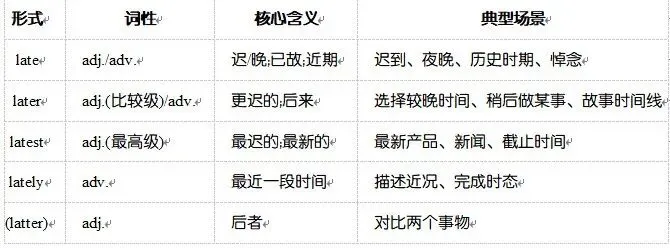
“late”是一个多功能的形容词和副词,它的常见变形包括比较级later、最高级latest,以及派生副词lately。此外,还有一个容易混淆的关联词latter(虽不是直接变形,但常被一起讨论)。下面逐一说明它们的含义、用法和典型场景。

表示时间上的“迟”I’m sorry I’m late.(抱歉我迟到了)The train was 10 minutes late.(火车晚点10分钟)
表示“已故的”(只能放在名词前)Her late husband was a painter.(她已故的丈夫是位画家)
表示“近期的”(只用于“late+时间段”,如late 18th century)The building was built in the late 19th century.(这栋楼建于19世纪末)

表示“迟于预期或通常时间”He arrived late for the meeting.(他开会迟到了)I stayed up late last night.(我昨晚熬夜了)
典型场景:日常迟到、交通延误、工作截止时间、夜晚活动、历史分期、悼念语境。

直接修饰名词,表示“更晚的”The later train will arrive at 8 pm.(晚一点的火车晚上8点到)In his later years,he became a writer.(他晚年成了作家)

表示“将来某个时间”I’ll call you later.(我稍后打给你)See you later.(回头见)
表示“在…之后”(常与than连用)She arrived later than expected.(她到得比预期晚)
固定搭配:sooner or later(迟早)later on(后来;过后)
独立使用(叙事中)Three days later,he came back.(三天后他回来了)典型场景:日程安排(选更晚的班次)、承诺未来行动(稍后联系)、叙述故事时间顺序、比较两个时间点。
This is the latest time I can leave.(这是我所能离开的最晚时间)The latest arrival time is 9 am.(最迟到达时间是早上9点)

”Have you seen her latest movie?(你看过她最新的电影吗?)The latest news from the front.(来自前线的最新消息)The latest model of this phone.(这款手机的最新型号)

at the latest(最晚…)Please arrive by 10 am at the latest.(请最晚上午10点到)
副词用法(极少见)She came latest among us.(她是我们中来最晚的)——口语中通常用last代替。
典型场景:科技产品发布、新闻标题、时尚趋势、时间截止要求、比较多个时间点中的最晚。
I haven’t seen her lately.(我最近没见过她)What have you been doing lately?(你最近在忙什么?)
Lately,I’ve been feeling tired.(近来我一直觉得累)
注意:lately不表示“迟”,而是表示“近来的一段时间”,与recently相似。它不能用于表示具体时间点。
典型场景:寒暄问候、描述近况、报告近期变化、医疗或心理咨询(最近感觉如何)。
latter是形容词,意为“后者”(与former“前者”相对)。I like both apples and oranges,but the latter is juicier.(我喜欢苹果和橘子,但后者更多汁)
注意:late的古英语比较级确实有later和latter两个形式,但现代英语中latter已完全独立,不再表示“更迟”。
常见易错点
late≠lately:I came late(我迟到了)vs I’ve been busy lately(我最近很忙)。
latest≠last:latest news(最新消息)vs last news(最后一条消息,可能不再更新)。
later可以单独作副词,而latter不能。

起床晚了的一天早上闹钟没响,李明醒来时已经late(迟了)。他飞快冲出家门,刚好错过7点的校车,只好等下一班later(更晚的)车。
到了学校,果然迟到。班主任皱着眉说:“你lately(最近)已经迟到三次了。”然后举起手机:“看,学校latest(最新的)规定——迟到超过三次要留校打扫卫生。”
老师给了他两个选择:要么写500字检讨,要么放学后打扫教室。李明选了latter(后者),因为实在不想写字。
放学后,他一边扫地一边叹气。同桌小陈跑回来找他:“你怎么还没走?”李明苦笑:“我留校了,你later(后来)来找我干嘛?”小陈说:“提醒你明天早点啊,别总当那个latest(最晚到校的)人。”
李明点点头,心想:明天一定不能再late了。
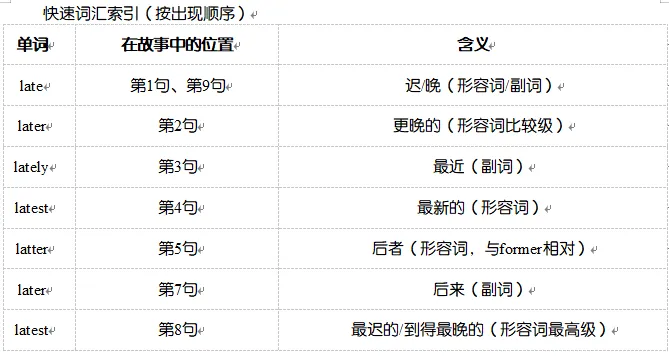
每个词在文中的位置(快速对照)
late–醒来已经迟了;明天不能再迟到
later–下一班更晚的车(形容词比较级)
lately–最近迟到三次(副词,与完成时连用)
latest–最新的规定(形容词“最新的”)
latter–后者(指打扫教室)
later–后来(副词“后来”)
latest–最晚到校的人(形容词最高级“最迟的”)
下面是中英对照版的故事。每个目标词用粗体标出,方便定位。
1.The alarm didn’t go off in the morning.When Li Ming woke up,it was already late.
早上闹钟没响。李明醒来时,已经晚了。
2.He rushed out and just missed the 7:00 school bus,so he had to wait for the next,later one.他冲出门,刚好错过7点的校车,只好等下一班更晚的车。
3.At school,he was late.The homeroom teacher frowned and said,“You’ve been late three times lately.”
到了学校,他迟到了。班主任皱着眉说:“你最近已经迟到三次了。”
4.Then she held up her phone:“Look at the school’s latest rule—if you’re late three times,you have to stay after school and clean the classroom.”
然后她举起手机:“看学校最新的规定——迟到三次要留校打扫教室。”
5.The teacher gave him two choices:write a 500-word reflection,or clean the classroom after school.Li Ming chose the latter because he really didn’t want to write.
老师给了他两个选择:写500字检讨,或者放学后打扫教室。李明选了后者,因为他实在不想写字。
6.After school, he was sweeping the floor,sighing.His deskmate Xiao Chen ran back:“Why aren’t you gone yet?”
放学后,他一边扫地一边叹气。同桌小陈跑回来找他:“你怎么还没走?”
7.Li Ming smiled bitterly:“I’m staying after school.Why did you come to find me later?”
李明苦笑:“我留校了。你后来来找我干嘛?”
8.Xiao Chen said,“Just to remind you to get up earlier tomorrow.Don’t always be the latest person to arrive.”
小陈说:“提醒你明天早点起。别总当那个到得最晚的人。”
9.Li Ming nodded and thought,“Tomorrow I must not be late again.”李明点点头,心想:“明天一定不能再迟到了。”