 夜雨聆风
夜雨聆风


【外刊解析】AI outperforms doctors in ER diagnoses |AI看急诊居然比人类医生还准?
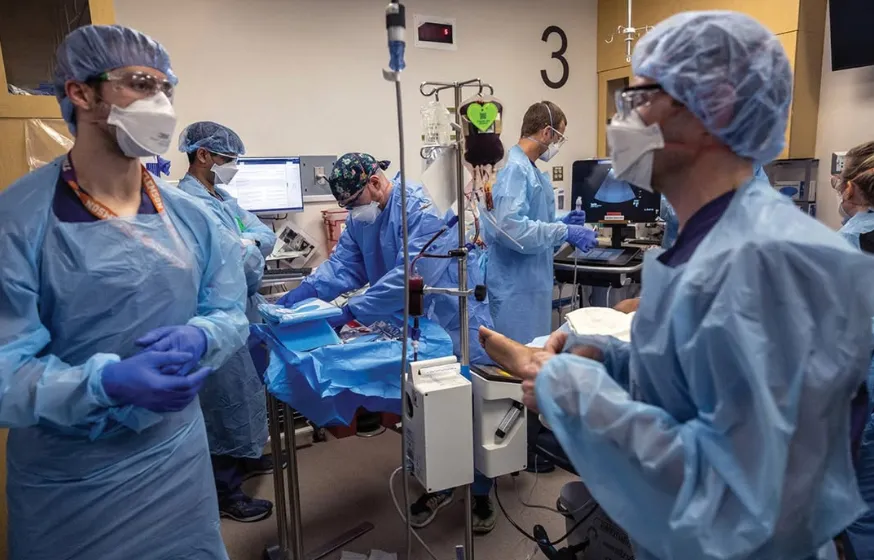
导读
在信息有限、时间紧迫且生死攸关的急诊室环境下,AI模型的诊断准确率竟然超越了人类医生!
精读文本
An AI model outperformed physicians at diagnosing in emergency room conditions, a study showed.
ER diagnoses are challenging, characterized by limited information and little time, but high-stakes outcomes: A fever could be a seasonal flu, or it could be life-threatening sepsis. The researchers tested an OpenAI model, giving it medical profiles and patient history; it achieved a correct or close-to-correct diagnosis in 67% of cases, compared to 55% for physicians.
In 10 years, AI agents will likely be commonplace in emergency medicine, Science reported, leading to faster and more informed decisions. The CEO of one medical AI startup thinks that timeline should be faster, and that it borders on “malpractice” if doctors do not use frontier models for second opinions already.
生词
-
outperform /ˌaʊtpərˈfɔːrm/ (v.): 胜过;在表现上超过 -
physician /fɪˈzɪʃn/ (n.): 内科医生;医师 -
diagnose /ˌdaɪəɡˈnoʊs/ (v.): 诊断 -
emergency room (ER) /ɪˈmɜːrdʒənsi ruːm/ (n.): 急诊室 -
diagnosis /ˌdaɪəɡˈnoʊsɪs/ (n.): 诊断 (复数: diagnoses /ˌdaɪəɡˈnoʊsiːz/) -
characterize /ˈkærəktəraɪz/ (v.): 赋予…特色;描述…的特征 -
outcome /ˈaʊtkʌm/ (n.): 结果;后果 -
life-threatening /ˈlaɪf θretnɪŋ/ (adj.): 威胁生命的;致命的 -
sepsis /ˈsepsɪs/ (n.): 败血症 -
profile /ˈproʊfaɪl/ (n.): (此处指)档案;资料 -
agent /ˈeɪdʒənt/ (n.): (此处指)智能体,代理程序 -
commonplace /ˈkɒmənpleɪs/ (adj.): 常见的;普遍的 -
timeline /ˈtaɪmlaɪn/ (n.): 时间表;时间线 -
malpractice /ˌmælˈpræktɪs/ (n.): 医疗事故;玩忽职守 -
frontier /frʌnˈtɪər/ (adj./n.): 前沿的;边界
表达解析
-
high-stakes outcomes: “High-stakes” 意为“高风险的,利害攸关的”。在急诊室(ER)的语境中,这不仅意味着经济损失,更直接关系到患者的生命健康,强调了急诊诊断极高的容错成本。 例句:Negotiating a peace treaty is a high-stakes diplomatic mission. (谈判和平条约是一项高风险的外交任务。)
-
close-to-correct: 指“接近正确的”。在医疗诊断中,有时疾病的早期症状模糊,AI可能无法给出绝对单一的确诊,但能提供范围极其接近的正确方向,这同样具有很高的参考价值。 例句:Even if your answer isn’t perfect, a close-to-correct estimate is helpful. (即使你的答案不完美,一个接近正确的估计也是有帮助的。)
-
informed decisions: “Informed” (基于信息的,知情的) 修饰 decision (决定),指在充分了解情况和数据支持的基础上做出的明智判断。这里指出了AI在急诊医学中的核心价值:通过快速处理海量数据,辅助医生做出更科学的决策。 例句:Consumers need transparent labeling to make informed decisions about what they eat. (消费者需要透明的标签,以便对他们的饮食做出明智的决定。)
-
borders on “malpractice”: 动词短语 “border on” 意思是“接近于,简直是”,常用于夸张地形容某种行为或情况的极端程度。“Malpractice” 指专业人员(尤指医生或律师)的失职或渎职。这位CEO的话非常具有争议性,他认为不使用最先进的AI工具就是对患者生命的不负责任,几近渎职。 例句:His obsession with cleanliness borders on paranoia. (他对清洁的痴迷简直近乎偏执狂。)
翻译
一项研究表明,在急诊室条件下,一种人工智能模型在诊断方面胜过了内科医生。
急诊室的诊断极具挑战性,其特征是信息有限、时间紧迫,但后果却性命攸关:发烧可能只是季节性流感,也可能是危及生命的败血症。研究人员测试了一个OpenAI模型,向其提供医疗档案和病史;在67%的病例中,它得出了正确或接近正确的诊断,相比之下,医生的准确率为55%。
据《科学》杂志报道,在10年内,AI智能体在急诊医学中可能会变得非常普遍,从而带来更快速、更明智的决策。一家医疗AI初创公司的首席执行官认为,这个时间表应该更快,而且如果医生现在还不使用前沿模型来获取第二意见,那简直近乎于“玩忽职守”。
练习
1. According to the first paragraph, what did the recent study demonstrate about the performance of AI models in medicine?
A. They have completely replaced physicians in diagnosing seasonal flu and sepsis.
B. They are capable of making better diagnoses than human doctors in emergency rooms.
C. They require significantly more time and information than physicians to form a diagnosis.
D. They have proven to be largely ineffective when dealing with high-stakes medical outcomes.
2. Why does the author state that emergency room diagnoses are “challenging”?
A. Because doctors often disagree on whether a symptom like a fever is a flu or sepsis.
B. Because patients frequently refuse to provide their complete and accurate medical history.
C. Because doctors must make critical, high-consequence decisions quickly with limited data.
D. Because the integration of OpenAI models into the diagnostic process is highly complex.
3. In the passage, the phrase “high-stakes” is closest in meaning to
A. extremely costly
B. strictly regulated
C. highly competitive
D. critically important
4. According to the study mentioned in the passage, what was the diagnostic accuracy rate of the physicians?
A. 10%
B. 55%
C. 67%
D. 100%
5. What prediction did the publication Science make regarding the future of AI in emergency medicine?
A. AI agents will completely eliminate the need for human physicians within a decade.
B. AI will likely become a standard, everyday tool in emergency medicine within 10 years.
C. The CEO of OpenAI will oversee the implementation of AI agents in all major hospitals.
D. Doctors who refuse to use AI models in 10 years will be formally charged with malpractice.
完整内容可扫码订阅专栏: