ARTICLE · 1032104
AI研讨会 | AI and Statistical Methods for Variant Interpretation

研讨会信息
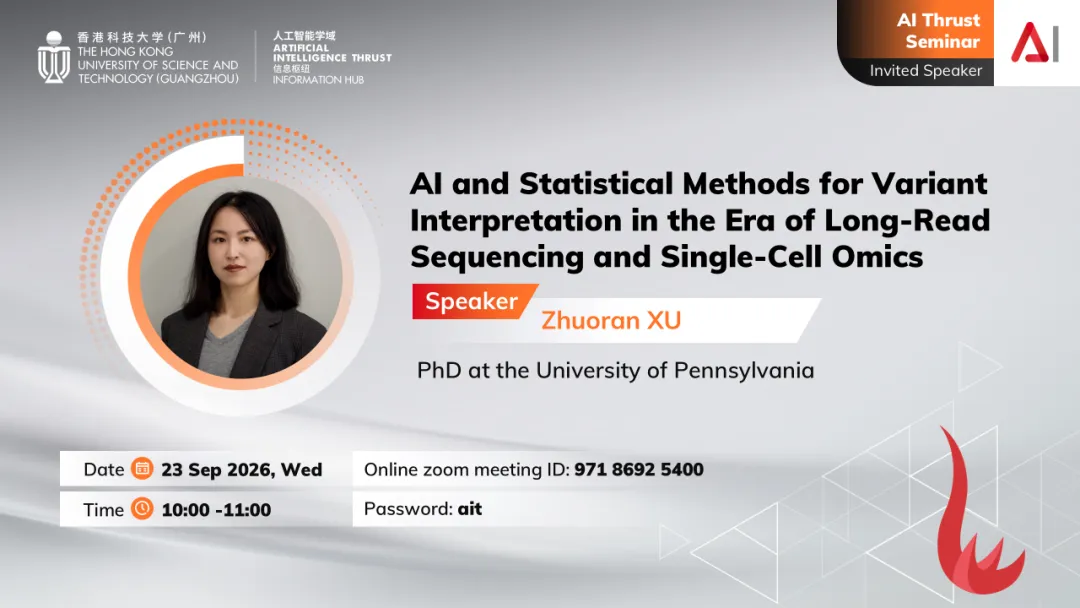
🎤 Speaker
Zhuoran XU
PhD at the University of Pennsylvania
📰 Title
AI and Statistical Methods for Variant Interpretation in the Era of Long-Read Sequencing and Single-Cell Omics
⏰ Time
10:00 -11:00, Beijing Time
📅 Date
23 Sep 2026, Wed
🤝 Online Zoom link
https://hkust-gz-edu-cn.zoom.us/j/97186925400?pwd=zA7nTrSMib3FbVTLINbPPbQRb29gXj.1
Meeting ID: 971 8692 5400
PW: ait


研讨会内容
Modern sequencing technologies generate information-rich but noisy molecular measurements, yet translating them into an understanding of how genetic variants alter gene regulation and contribute to disease remains a central challenge. In this talk, I will present AI and statistical methods that interpret variant effects across DNA, RNA, and phenotype layers, at gene, isoform, and allele levels, using long-read and single-cell sequencing.
I will first present PhenoSV, a phenotype-aware transformer model that directly bridges DNA alterations to disease phenotypes by predicting structural variant (SV) pathogenicity, dissecting multi-gene impacts, and generalizing zero-shot prediction across all major SV types. I will then move to the intermediate transcriptomic layer, where long-read sequencing provides full-length transcript structures and long-range phasing information for fine-grained regulatory insights. Here, SCOTCH adopts an exon-centric representation to reconstruct known and novel isoforms and to detect differential transcript usage across heterogeneous cell populations. Building on this, LongAllele formulates variant calling, haplotype phasing, and read assignment as a single expectation-maximization problem, and performs multiscale allelic analysis to quantify context-dependent variant effects across gene expression, isoform composition, and local splicing.
Together, these methods demonstrate how coupling dedicated computational frameworks with emerging sequencing technologies enables fine-grained, multi-scale resolution across molecular layers and cellular contexts, advancing functional variant interpretation toward a mechanistic understanding of disease genetics.


分享者简介
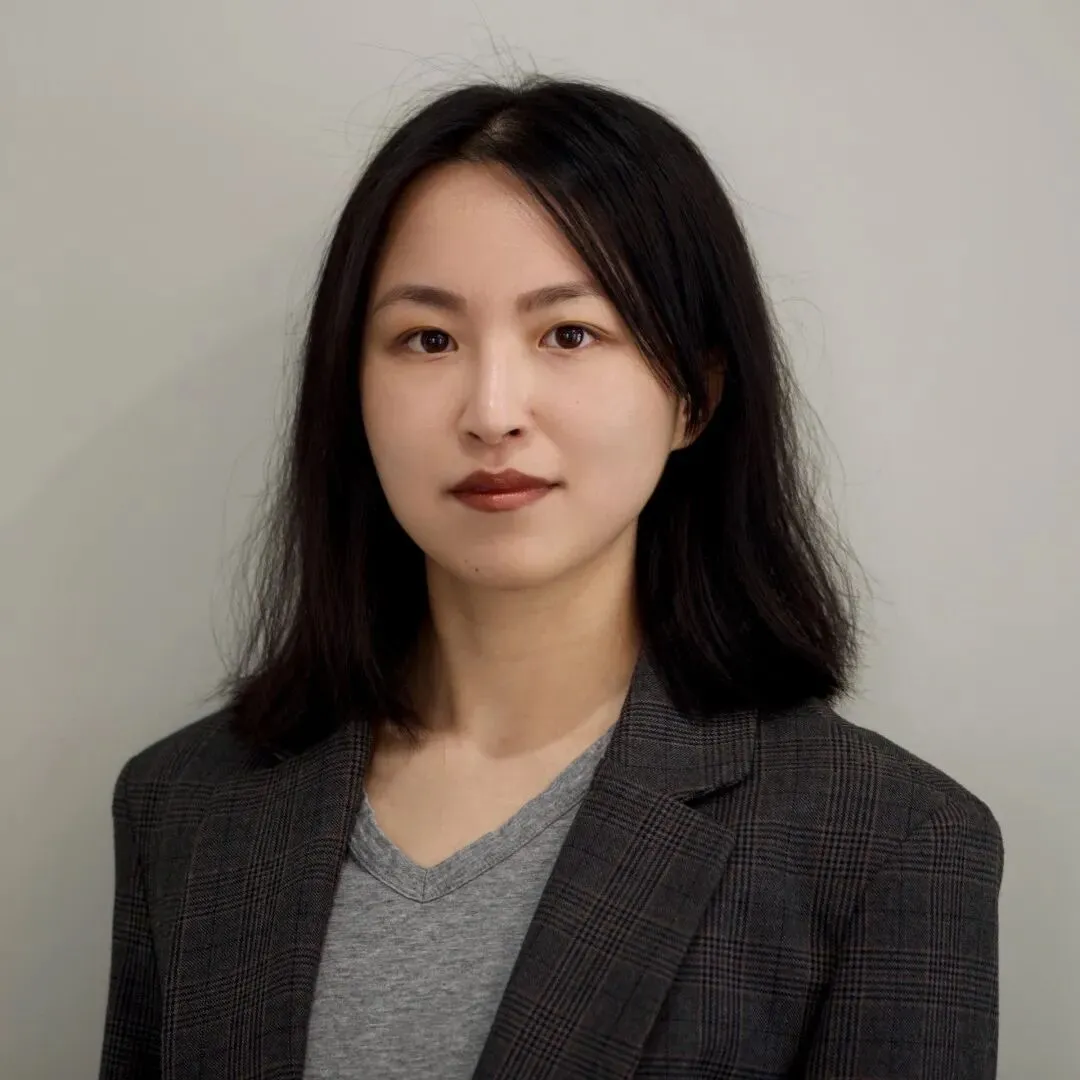
Zhuoran XU
Ph.D. at the University of Pennsylvania
Zhuoran Xu is a Ph.D. candidate in Genomics and Computational Biology at the University of Pennsylvania, advised by Professor Kai Wang, with degree conferral expected in December 2026. Prior to Penn, she completed her medical training with a bachelor's degree from Fudan University and a master's degree from Shanghai Jiao Tong University. She then earned a master's degree in biostatistics from Columbia University and worked as a data scientist at Weill Cornell Medicine in computational pathology and multi-omics integration.
Her research sits at the intersection of machine learning, statistics, and genomics, with a specific focus on method development for long-read sequencing and functional genomics. Her research encompasses deep learning for variant interpretation, represented by PhenoSV, a transformer-based method for phenotype-aware structural variant prioritization; and statistical modeling for bulk and single-cell transcriptome analysis, including SCOTCH, a computational and probabilistic framework for isoform reconstruction and analysis, and LongAllele, an EM-based joint inference method for multi-scale allele-specific analysis.
She has authored 20 publications, including first-author studies in journals such as Nature Communications, and has presented her work as a platform speaker at the American Society of Human Genetics Annual Meeting and as an invited speaker at conferences and institutions. She received the Predoctoral Basic Research Award from the Association of Chinese Geneticists in America in 2024. Her long-term goal is to develop next-generation AI and statistical methods to translate genomic complexity into mechanistic insights and actionable therapeutic opportunities.



扫描加关注
获取更多AI学域消息
SCAN & FOLLOW US!