ARTICLE · 1307421
AI创新教育|AI不是工具,而是底座:解密中国首个AI创新学校
我们的判断:AI 时代的学校,必须重新设计
Our View: In the AI Era, a School Has to Be Redesigned
MIS AI Plus School (Qianhai) | 深圳曼彻斯特通前海 AI 未来学院
当大多数学校还在讨论“课堂上能不能用 AI”时,前海 AI 未来学院给出的答案是:AI 不是工具,而是底座。
从学生进入学校开始,学习、教学、成长、升学和管理成为一个统一系统——这是“一所 AI 时代重新设计的学校”的真正含义,也是中国首个 AI 创新学校的完整实践:每个孩子,都拥有自己的 AI Agent。
Most schools are still asking one question: is AI allowed in the classroom? At MIS AI Plus School (Qianhai), our answer is different: AI is not a tool. It is the foundation.
From the day a student walks through the door, learning, teaching, personal growth, university planning and school management become one connected system. That is what “a school redesigned for the AI era” actually means. It is also what China’s first AI innovation school is building in practice: every child has an AI Agent of their own.
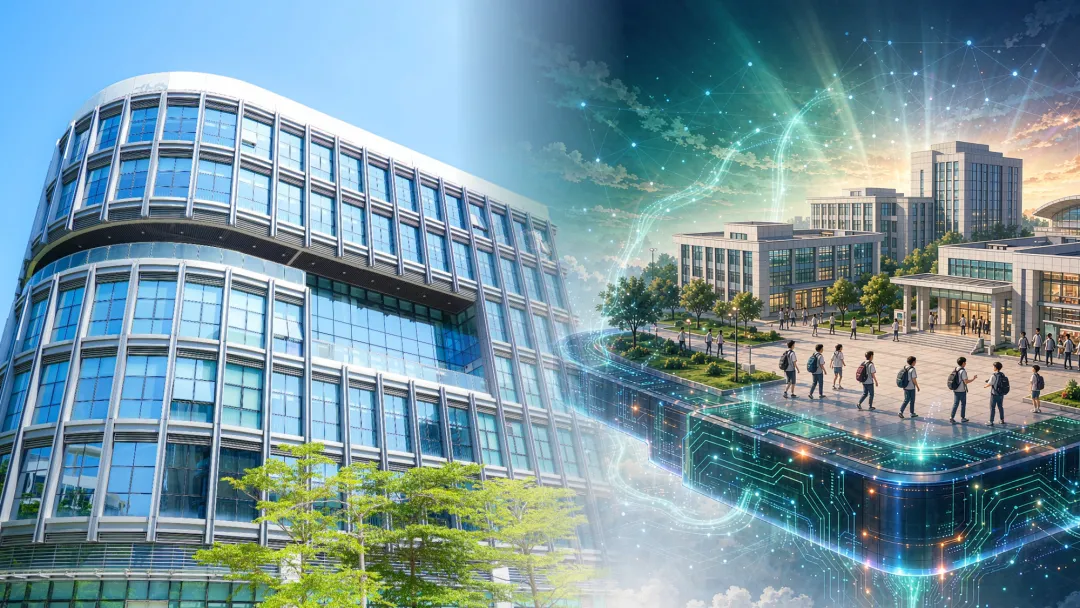
前海校区实景(左)与 AI 未来校园构想(右) | The Qianhai campus today (left) and the AI campus vision (right)
▍ AI 赋能三脚架:三根支柱,撑起一个新学校
The “AI Tripod”: Three Legs Hold Up a New School
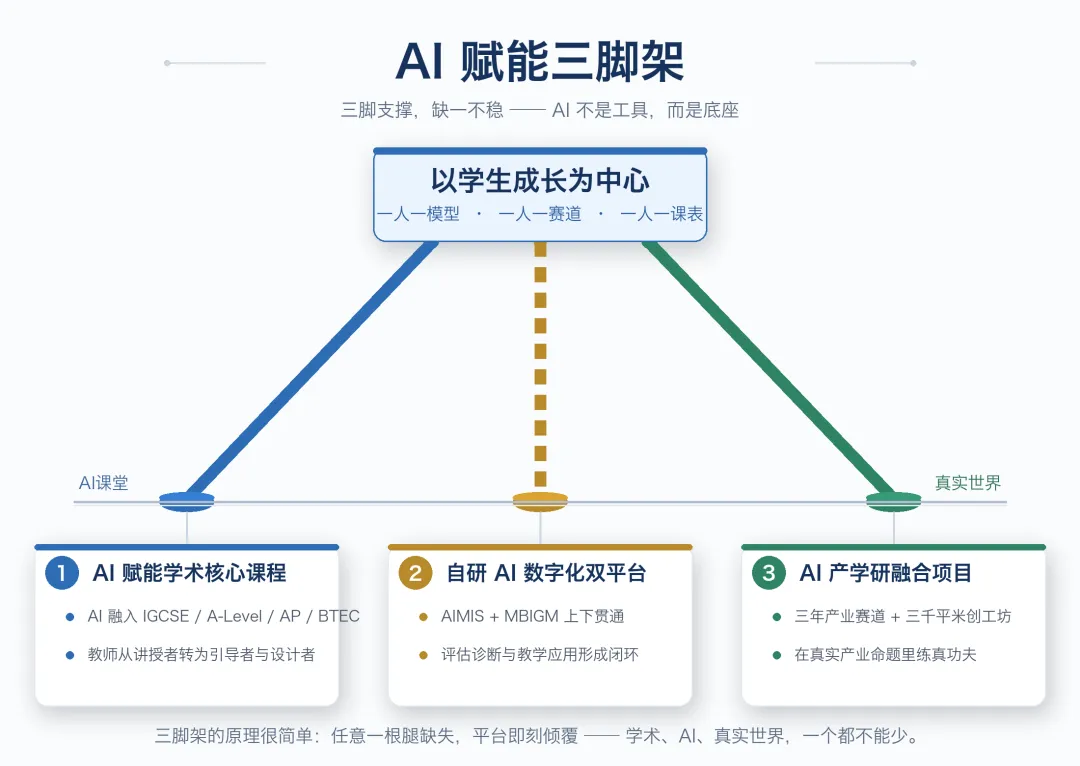
图 1 AI 赋能三脚架:学术课程 · 双平台 · 产业项目,三足鼎立 | Fig. 1 The AI Tripod: academic courses, platforms and industry projects
第一根支柱:AI 赋能国际主流学术核心课程。
AI 深度融入 IGCSE、A-Level、美高 AP、BTEC 课程,支持学生主导式学习——教师从“讲授者”转型为“引导者与设计者”,课堂的主角还给学生。
The first leg: AI-powered core academic courses.
AI is built deep into the international curricula we teach — IGCSE, A-Level, US AP and BTEC. It makes student-led learning possible: teachers move from being “lecturers” to “guides and designers”, and the classroom belongs to the students again.
第二根支柱:自研 AI 教学数字化双平台。
MBIGM 学生成长大数据平台以六大核心维度描绘每个孩子的成长轨迹,用校本 AI 算法做深度评估诊断;AIMIS 全生态服务平台覆盖师生、家长、全球社区四大场景,贯穿“教、学、研、评、预、导”全环节。
两平台上下贯通,评价诊断与教学应用形成闭环——这是“个人学校”能够落地、而不仅仅是一句口号的技术前提。
The second leg: two self-developed digital platforms.
MBIGM, our student growth big-data platform, maps every child’s development across six core dimensions, with school-based AI algorithms providing in-depth assessment and diagnosis. AIMIS, our full-ecosystem service platform, serves four groups — students, parents, teachers and the wider community — and runs through the entire cycle of teaching, learning, research, assessment, prediction and guidance.
The two platforms connect from top to bottom, so assessment and teaching feed into each other in a closed loop. This is the technical groundwork that makes a truly personal school possible, rather than just a slogan.
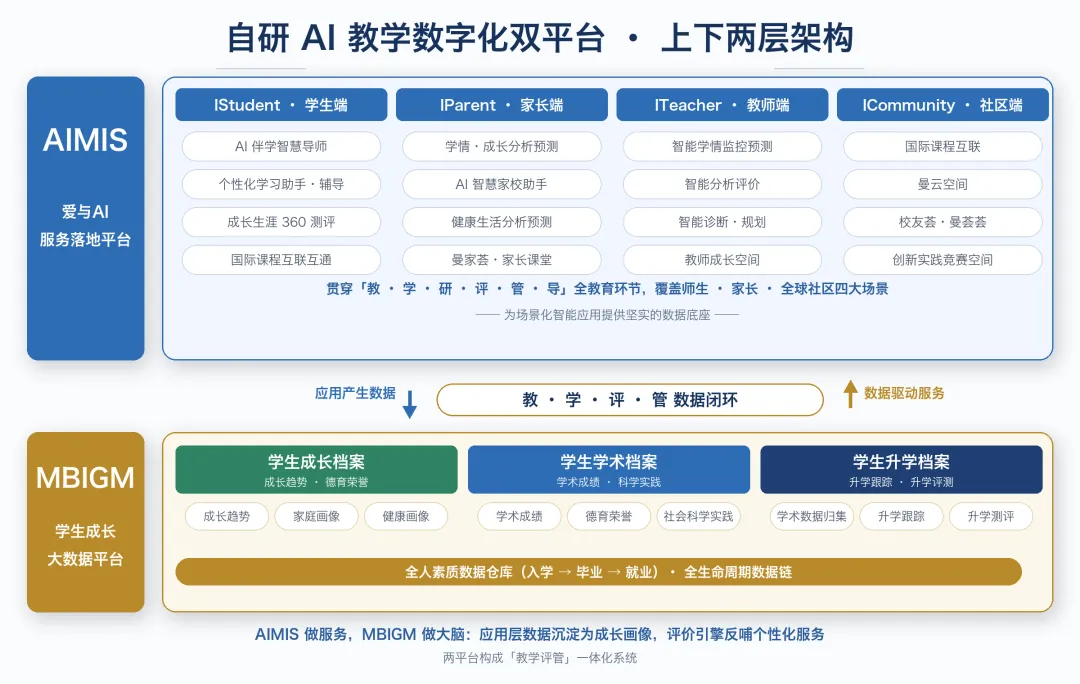
图 2 自研 AI 教学数字化双平台:AIMIS 服务层 + MBIGM 数据层 | Fig. 2 The two-platform architecture: AIMIS on top, MBIGM underneath
第三根支柱:AI 产学研融合项目体系。
三年产业赛道项目制学习加三千平科创实践工坊,让学生在真实产业命题中练真功夫。
The third leg: AI industry-academia projects.
Three-year industry tracks plus a 3,000 m² innovation workshop let students build real skills by working on real industry problems.
▍ 三年产业赛道:在真实世界里练真功夫
Three-Year Industry Tracks: Real Skills in the Real World
学生高一即选定一条赛道,进行为期三年持续性、递进式长线课题探究,以 AI 为工具在真实产业命题中开展调研、实验、设计与落地。四大产业方向分别为:
•AI + 硬件 / 机器人工业(3D 打印、智能硬件、工业自动化)
•AI + 医疗健康 / 药物研发(文献调研、生物医药基础研究)
•AI + 创意产业(内容生成、跨境电商、产品设计)
•AI + 通用工业制造(智能制造、生产流程优化)
Students choose a track in their first year of senior high and spend three years on one continuous, step-by-step research project. Using AI as their tool, they investigate, experiment, design and deliver against a genuine industry brief. There are four directions:
•AI + hardware and robotics (3D printing, smart hardware, industrial automation)
•AI + healthcare and drug discovery (literature research, basic biomedical research)
•AI + creative industries (content generation, cross-border e-commerce, product design)
•AI + general manufacturing (smart manufacturing, production-process optimisation)
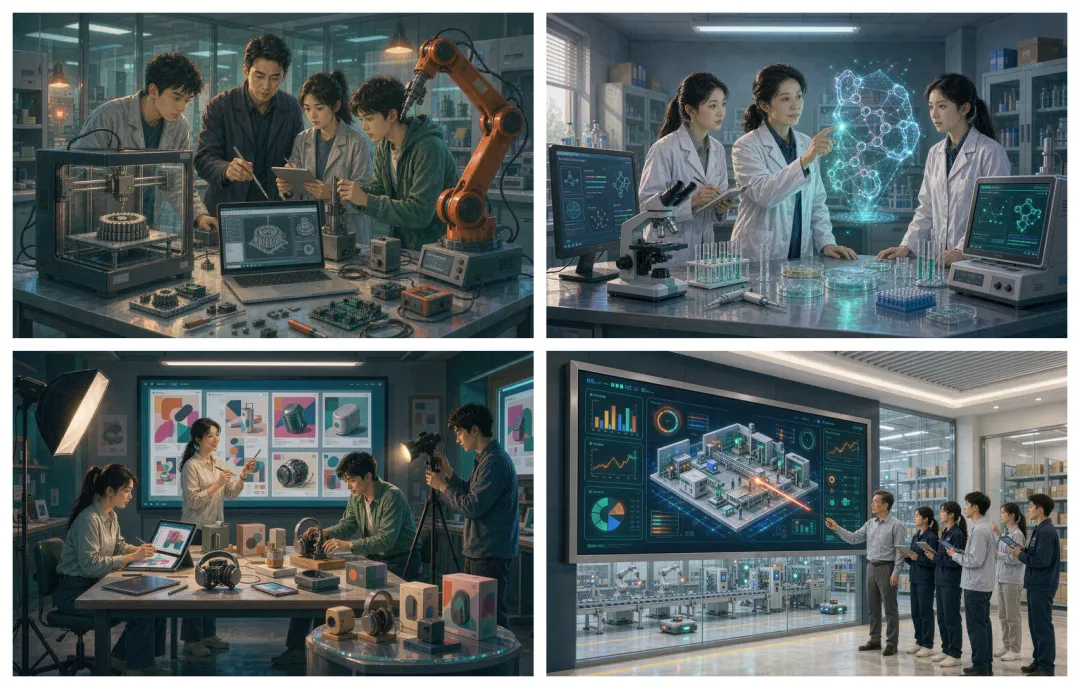
图 3 四大产业方向的教学场景:硬件机器人 · 医疗健康 · 创意产业 · 通用制造 | Fig. 3 Learning scenes from the four industry tracks
▍ 三千平科创实践工坊与合作生态
The 3,000 m² Innovation Workshop and Its Ecosystem
三千平科创实践工坊重点布局具身机器人、3D 打印、无人驾驶、无人机、量子物理五大技术方向,完整覆盖构想、设计、仿真、实物迭代全流程。
The workshop focuses on five technology areas: embodied robotics, 3D printing, autonomous driving, drones and quantum physics. Students go all the way from idea and design to simulation and working prototypes.
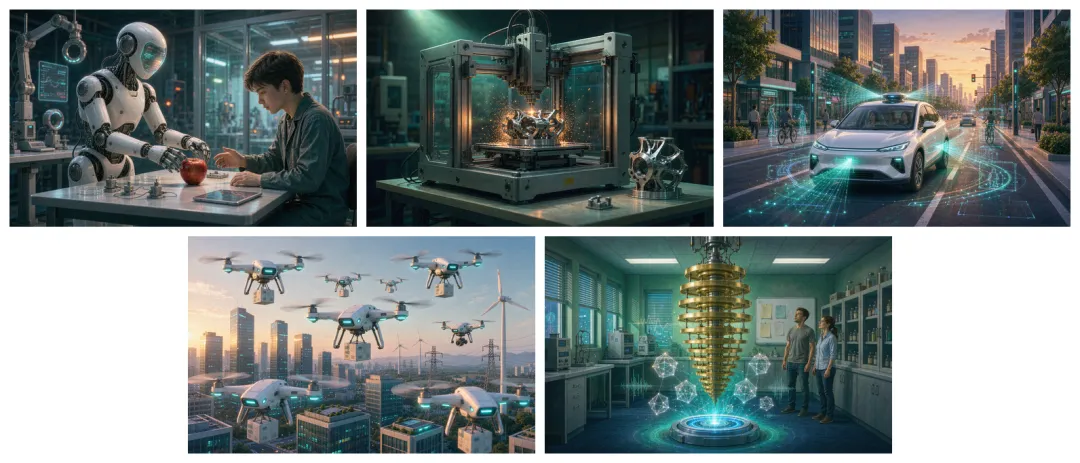
图 4 五大技术方向:具身机器人 · 3D 打印 · 无人驾驶 · 无人机 · 量子物理 | Fig. 4 Five technology areas of the innovation workshop
支撑工坊的,是一个开放的合作生态:华为、大疆、比亚迪、理想、优必选、腾讯、字节跳动等头部科技企业对接新能源、新材料、生命科学等前沿领域;中科院先进院、鹏城实验室、深圳湾实验室、零一学院等国家级、省级科研平台联动中国航天资源;香港大学、香港中文大学、香港科技大学、南方科技大学等大湾区高校提供学术纵深。
Behind the workshop is an open network of partners. Leading technology companies — Huawei, DJI, BYD, Li Auto, UBTECH, Tencent and ByteDance — connect students to frontier fields such as new energy, new materials and life sciences. National and provincial research platforms, including SIAT (Chinese Academy of Sciences), Peng Cheng Laboratory, Shenzhen Bay Laboratory and Zero One College, link the school with China’s aerospace resources. Universities across the Greater Bay Area — HKU, CUHK, HKUST and SUSTech — add academic depth.
合作生态 · 部分合作伙伴与学术支持机构(正式发布时以各机构授权标识为准) | Partner ecosystem · selected partners and academic supporters (official logos subject to authorisation at the time of publication)
孩子在这里触碰的,是真实世界的产业与科研一线。
What students touch here is the real front line of industry and research.
▍ AI 有边界:机器辅助,人来负责
AI Has Limits: Machines Assist, People Take Responsibility
AI 辅助生成个性化培养方案,但所有机器结果必须经人工复核——技术负责效率与精度,教师负责温度与价值判断。
AI helps draft personalised learning plans, but every machine-generated result must be reviewed by a human. Technology handles efficiency and precision; teachers handle warmth and judgement.
这是我们对 AI 教育的底线,也是“爱与 AI 赋能”中“爱”字排第一的原因。
This is our bottom line for AI education — and the reason “love” comes first in “Love and AI”.
MIS AI Plus School (Qianhai) · 深圳曼彻斯特通前海 AI 未来学院