ARTICLE · 1437979
2026年中考英语真题及答案和题目解析——河北省初中毕业生升学文化课考试(英语)

试卷来源:2026年河北省初中学业水平考试 试卷结构:满分 120 分,考试时间 120 分钟(共五部分,81 小题;含听力录音原文) 整理说明:严格依据原卷及官方解析整理,按题型分节呈现,每题均附【正确答案】与【详细解析】。 |
第一部分听力(共四节,满分 30 分) |
第一节听句子,选择最佳答语(共 5 小题;每小题 1 分,满分 5 分)
下面你将听到 5 个句子,每个句子读两遍。请你听完句子的第二遍朗读后,从每小题所给出的 A、B、C 三个选项中,选出该句的最佳答语。
第 1 题(1 分)
A. Come on.B. Enjoy yourself.C. Nice to meet you, too.
【正确答案】C |
【详细解析】
【听力原文】No. 1. Nice to meet you, Betty.
【解析】句意为“见到你很高兴,贝蒂”。对初次见面问候语“Nice to meet you.”的常见礼貌回答为“Nice to meet you, too.”,故选 C。
第 2 题(1 分)
A. Try again.B. Sounds interesting.C. OK, here you are.
【正确答案】C |
【详细解析】
【听力原文】No. 2. Bill, could you please pass me the pen?
【解析】句意为“比尔,你能把钢笔递给我吗?”。对方请求递东西,应回答“OK, here you are.(好的,给你)”,故选 C。
第 3 题(1 分)
A. Quite right.B. My pleasure.C. Well done.
【正确答案】A |
【详细解析】
【听力原文】No. 3. This dictionary is really helpful.
【解析】句意为“这本词典真的很有帮助”。对他人观点的赞同可用“Quite right.(完全正确 / 确实如此)”,故选 A。
第 4 题(1 分)
A. I'm hungry.B. Juice, please.C. A large one.
【正确答案】B |
【详细解析】
【听力原文】No. 4. Would you like tea or juice?
【解析】句意为“你想要茶还是果汁?”。选择疑问句应从二者中择一作答,“Juice, please.(请给我果汁)”,故选 B。
第 5 题(1 分)
A. With my sister.B. Last week.C. To exercise.
【正确答案】B |
【详细解析】
【听力原文】No. 5. When did the sports meeting take place?
【解析】句意为“运动会是什么时候举行的?”。When 提问时间,“Last week.(上周)”符合题意,故选 B。
第二节听对话和问题,选择正确答案(共 13 小题;每小题 1 分,满分 13 分)
下面你将听到 6 组对话和 13 个问题,每组对话和问题读两遍。请你听完对话和问题的第二遍朗读后,根据所听内容,从每小题所给出的 A、B、C 三个选项中,选出正确答案。
第 6 题(1 分)
请听第 1 组对话,回答第 6 小题。
6. How did the boy travel to Shijiazhuang?
|
|
|
A. | B. | C. |
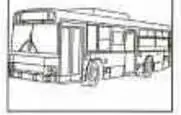
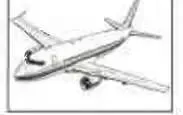
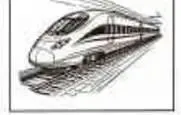
【正确答案】C |
【详细解析】
【听力原文】
M: Hi, Mom. I've just arrived in Shijiazhuang.
W: Wow! The high-speed train is so fast. Have fun there.
Question No. 6. How did the boy travel to Shijiazhuang?
【解析】对话中提到“The high-speed train is so fast.”,说明男孩乘坐高铁去石家庄,对应图 C,故选 C。
第 7 题(1 分)
请听第 2 组对话,回答第 7 小题。
7. Where will the speakers probably go?
|
|
|
A. | B. | C. |
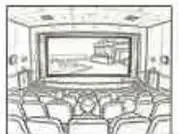
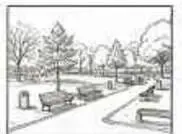
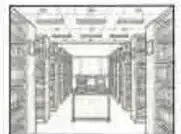
【正确答案】B |
【详细解析】
【听力原文】
W: We have worked on the physics problems for a long time.
M: Yes, we need a break. Let's go out for some fresh air.
W: All right.
Question No. 7. Where will the speakers probably go?
【解析】对话中提到“Let's go out for some fresh air.”(出去呼吸新鲜空气),图 B 为户外公园,故选 B。
第 8—9 题(共 2 小题;每小题 1 分,满分 2 分)
请听第 3 组对话,回答第 8、9 小题。
8. What is Li Ting?
A. A news reporter.B. A doctor.C. An engineer.
9. Where does Peter work?
A. In Shenzhen.B. In Shanghai.C. In Hangzhou.
【正确答案】8. A9. B |
【详细解析】
【听力原文】
W: Hi, Peter. Long time no see.
M: Oh, it's you, Li Ting. It's nearly 9 years since we met last time. What do you do now?
W: I'm a news reporter. And you?
M: I work as an engineer in Shanghai.
W: Great.
Question No. 8. What is Li Ting?
Question No. 9. Where does Peter work?
【解析】第 8 题:Li Ting 回答“I'm a news reporter.”,故选 A。第 9 题:Peter 回答“I work as an engineer in Shanghai.”,故选 B。
第 10—12 题(共 3 小题;每小题 1 分,满分 3 分)
请听第 4 组对话,回答第 10 至 12 小题。
10. How many people will take part in the discussion?
A. Two.B. Three.C. Four.
11. What time will the speakers meet on Saturday morning?
A. At 7:00.B. At 8:00.C. At 9:00.
12. What is the probable relationship between the speakers?
A. Classmates.B. Father and daughter.C. Husband and wife.
【正确答案】10. B11. C12. A |
【详细解析】
【听力原文】
M: Hey, Mary. We are doing a project for the geography class. Would you like to join us?
W: Sure. Thank you, Tony. What shall we do then?
M: You, Tina and I, we three will have a discussion on Saturday morning.
W: OK. When and where shall we meet?
M: We'll meet at the children's center at 9 o'clock.
W: All right. What do I need to take?
M: You just need to take a ruler, and I'll take a map.
W: OK. Bye.
Question No. 10. How many people will take part in the discussion?
Question No. 11. What time will the speakers meet on Saturday morning?
Question No. 12. What is the probable relationship between the speakers?
【解析】第 10 题:Tony 说“You, Tina and I, we three will have a discussion”,共 3 人,故选 B。第 11 题:“at 9 o'clock”,故选 C。第 12 题:两人一起做地理课项目,应为同学关系,故选 A。
第 13—15 题(共 3 小题;每小题 1 分,满分 3 分)
请听第 5 组对话,回答第 13 至 15 小题。
13. What does Jane need to do?
A. Complete a form.B. Go to a class.C. Attend a meeting.
14. Who teaches Mark to play the guitar?
A. His uncle.B. His mother.C. His grandfather.
15. What does Mark plan to learn?
A. To sing.B. To skate.C. To play the piano.
【正确答案】13. A14. C15. B |
【详细解析】
【听力原文】
W: Hi, I'm Jane. Welcome to the talent club. I need to complete a form. What's your name?
M: Hi, I'm Mark.
W: How old are you?
M: 12.
W: What are you good at, Mark?
M: I'm good at singing.
W: Excellent. Can you play the piano?
M: No, I can't. But I can play the guitar. My grandfather teaches me.
W: Lucky you! Can you skate? We sometimes go skating.
M: No, I can't. But I plan to learn to skate.
W: Fantastic.
Question No. 13. What does Jane need to do?
Question No. 14. Who teaches Mark to play the guitar?
Question No. 15. What does Mark plan to learn?
【解析】第 13 题:Jane 说“I need to complete a form.”,故选 A。第 14 题:Mark 说“My grandfather teaches me.”,故选 C。第 15 题:Mark 说“But I plan to learn to skate.”,故选 B。

第 16—18 题(共 3 小题;每小题 1 分,满分 3 分)
请听第 6 组对话,回答第 16 至 18 小题。
16. What fruit does the mother like?
A. Bananas.B. Apples.C. Oranges.
17. Who suggests buying some mooncakes?
A. Tom.B. The father.C. Cindy.
18. What are the speakers mainly talking about?
A. A shopping list.B. A fruit cake.C. A Chinese festival.
【正确答案】16. A17. C18. A |
【详细解析】
【听力原文】
M: Cindy, we need to go shopping for the weekend picnic. Let's write down what to buy.
W: All right, Tom. Let me see. We have enough milk and eggs.
M: Um... We need some fresh fruit.
W: You know Dad likes apples, and Mom likes bananas. You and I both like oranges.
M: OK, I put them down on the list. Do we need to buy a cheesecake, Cindy?
W: No, I suggest buying some mooncakes. They taste better.
M: OK, that's all.
Question No. 16. What fruit does the mother like?
Question No. 17. Who suggests buying some mooncakes?
Question No. 18. What are the speakers mainly talking about?
【解析】第 16 题:Cindy 说“and Mom likes bananas.”,故选 A。第 17 题:Cindy 说“I suggest buying some mooncakes.”,故选 C。第 18 题:两人围绕周末野餐需要购买的物品列清单,故选 A。
第三节听短文和问题,选择正确答案(共 7 小题;每小题 1 分,满分 7 分)
下面你将听到两篇短文和 7 个问题,每篇短文和问题读两遍。请你听完短文和问题的第二遍朗读后,根据所听内容,从每小题所给出的 A、B、C 三个选项中,选出正确答案。
第 19—21 题(共 3 小题;每小题 1 分,满分 3 分)
请听第 1 篇短文,回答第 19 至 21 小题。
19. How is the weather?
A. Rainy.B. Sunny.C. Snowy.
20. What should the students do?
A. Call their parents.B. Wait in the classroom.C. Clean the roads.
21. Where can the students get help from Mr. Zhang?
A. In Room 1.B. In Room 5.C. In Room 6.
【正确答案】19. A20. B21. B |
【详细解析】
【听力原文】
Boys and girls, attention please. School is finishing soon, but it is still raining heavily outside. For your safety, please wait in the classroom. We have told your parents to meet you in the classroom. The roads in the school are wet. Please walk slowly when you leave. If your parents don't arrive on time, you can get help from Mr. Zhang in Room 5. That's all. Thank you.
Question No. 19. How is the weather?
Question No. 20. What should the students do?
Question No. 21. Where can the students get help from Mr. Zhang?
【解析】第 19 题:“it is still raining heavily outside”,故选 A。第 20 题:“please wait in the classroom”,故选 B。第 21 题:“get help from Mr. Zhang in Room 5”,故选 B。

第 22—25 题(共 4 小题;每小题 1 分,满分 4 分)
请听第 2 篇短文,回答第 22 至 25 小题。
22. Which is the speaker's favorite season?
A. Spring.B. Summer.C. Winter.
23. How long does it take the speaker to walk to the beach?
A. 10 minutes.B. 15 minutes.C. 20 minutes.
24. What does the speaker like to do best on the beach?
A. Play volleyball.B. Sit on the sand.C. Listen to music.
25. What does the speaker advise visitors to take?
A. A coat.B. A camera.C. An umbrella.
【正确答案】22. B23. C24. A25. C |
【详细解析】
【听力原文】
Hello everybody, welcome to my video. This is my hometown. I live near the sea. Summer is my favorite season. It is not too hot here in summer. The day is long, so I have lots of time to do things I like. I go to the beach every weekend in summer. It only takes me 20 minutes to walk there. Usually, I just sit on the sand and listen to music. But I like to play volleyball best on the beach. If you have a chance, come to my hometown in summer. I'm sure you will have a good time here. But I advise you to take an umbrella, because the sunlight is a little strong at noon.
Question No. 22. Which is the speaker's favorite season?
Question No. 23. How long does it take the speaker to walk to the beach?
Question No. 24. What does the speaker like to do best on the beach?
Question No. 25. What does the speaker advise visitors to take?
【解析】第 22 题:“Summer is my favorite season.”,故选 B。第 23 题:“It only takes me 20 minutes to walk there.”,故选 C。第 24 题:“But I like to play volleyball best on the beach.”,故选 A。第 25 题:“But I advise you to take an umbrella”,故选 C。
第四节听短文填空(共 5 小题;每小题 1 分,满分 5 分)
下面你将听到一篇短文,短文读两遍。请你听完短文的第二遍朗读后,根据短文的内容和提示,在信息表中相应的横线上填入所缺信息。

第 26—30 题(共 5 小题;每小题 1 分,满分 5 分)
A Beautiful Picture | 信息内容 |
Painter | 26. Amy, from ________ |
Time of painting | 27. in ________ 2025 |
In the middle | 28. a long ________ |
On the right | 29. green ______ |
【正确答案】26. England27. July28. river29. grass30. tree |
【详细解析】
【听力原文】
Dear friends, let's go on to enjoy the pictures by the students. Look at the first one. The picture is beautiful. The painter Amy is from England. She is a student of our school, and she painted the picture in July 2025. In the middle of the picture, there is a long river. On the left, the buildings are in different shapes. Can you see a school here? It is our school. Look at the right of the picture. The grass is bright green. On the green grass, a cat is running after a butterfly. There is a big tree beside the river. We can see some birds in the tree. I love the picture. It makes me happy every time I see it.
【解析】26. 来自英国“England”(注意首字母大写)。27. 创作时间“July”(注意首字母大写)。28. 中间是一条长河“river”。29. 右边是绿草“grass”。30. 大树里的小鸟“tree”。
第二部分语言运用(共两节,满分 25 分) |
第一节完形填空(共 10 小题;每小题 1 分,满分 10 分)
阅读下面短文,从每题所给的 A、B、C、D 四个选项中选出最佳选项。
完形填空短文 It was exciting to go to work with my father as a young boy. I remember him buying me a 31 just like his, and my mother packed lunch into them for both of us. My father was a skilled repairman and he worked very hard. Usually, he 32 early and left the house while it was still dark outside. During my holidays, I 33 climbed up into my father's truck and went to his company. In the company, we put the 34 on the truck and then went to work in different places. I usually 35 him and passed him the tools. When he was 36, I would get him some water. He always told me to be careful and not to 37 myself. For all of my "help", my father always praised me. His words made me 38. One afternoon, we took a walk around the town 39 we finished the work. In the town center, we found a sports store. There my father bought me a 40 and I liked it very much. "Thank you, Dad. You are the best dad in the world," I said happily. The experiences of working with my father have a great influence on me. Those experiences are always encouraging me to work hard in my life. |
31. A. fishbowlB. handbagC. lunchboxD. bookshelf
32. A. got upB. came backC. moved inD. lay down
33. A. wiselyB. politelyC. secretlyD. excitedly
34. A. petsB. toolsC. medalsD. vegetables
35. A. visitedB. followedC. thankedD. hugged
36. A. activeB. sleepyC. strictD. thirsty
37. A. hateB. doubtC. hurtD. punish
38. A. proudB. braveC. luckyD. curious
39. A. ifB. afterC. untilD. although
40. A. roseB. lanternC. basketballD. computer
【正确答案】31—35 CADBB36—40 DCABC |
【详细解析】
【短文大意】作者小时候经常跟随做修理工的父亲去工作,在帮父亲递工具、送水的过程中感受到父亲的关爱与鼓励。这段经历对作者产生了深远影响,一直激励着他在生活中努力奋斗。
• 31. C本题考查名词。根据设空后的“just like his”以及“my mother packed lunch into them for both of us”可知,父亲给作者买了一个和自己一样的、可以装午饭的午餐盒(lunchbox)。fishbowl 鱼缸;handbag 手提包;bookshelf 书架。
• 32. A本题考查动词短语。根据设空后的“left the house while it was still dark outside”可知,外面天还没亮,父亲就离开了家,说明他通常起得很早(got up)。come back 回来;move in 搬进;lie down 躺下。
• 33. D本题考查副词。根据上文中的“It was exciting to go to work with my father”可知,假期里作者应是兴奋地(excitedly)爬上父亲的卡车。wisely 明智地;politely 有礼貌地;secretly 秘密地。
• 34. B本题考查名词。根据上文中的“My father was a skilled repairman”以及下文中的“passed him the tools”可知,去不同地方工作前,应是把工具(tools)放到卡车上。pet 宠物;medal 奖牌;vegetable 蔬菜。
• 35. B本题考查动词。根据设空后的“and passed him the tools”可知,作者跟在父亲身边(followed)并给他递工具。visit 拜访;thank 感谢;hug 拥抱。
• 36. D本题考查形容词。根据设空后的“I would get him some water”可知,当父亲口渴(thirsty)时,作者会给他送水。active 积极的;sleepy 困倦的;strict 严格的。
• 37. C本题考查动词。根据设空前的“He always told me to be careful”可知,父亲总是提醒作者要小心,不要伤到自己(hurt)。hate 讨厌;doubt 怀疑;punish 惩罚。
• 38. A本题考查形容词。根据设空前的“my father always praised me”可知,父亲的表扬让作者感到自豪(proud)。brave 勇敢的;lucky 幸运的;curious 好奇的。
• 39. B本题考查连词。完成工作之后(after)在镇上散步,符合逻辑。if 如果;until 直到……为止;although 虽然。
• 40. C本题考查名词。根据设空前的“we found a sports store”可知,在体育用品商店买的是篮球(basketball)。rose 玫瑰;lantern 灯笼;computer 电脑。

第二节短文填空(共 15 小题;每小题 1 分,满分 15 分)
阅读下面短文,在空白处填入一个适当的单词或填入括号内单词的正确形式。
短文填空(第 41—55 题) Last Sunday, I went to Handan Cizhou Kiln Site (邯郸磁州窑遗址) with my classmates. It was a bright day and we went there 41 bus. On the bus, my best friend 42 I sat next to each other. We 43 (talk) and sang happily along the way. A guide was waiting 44 us when we arrived. He first took us to the museum 45 (see) the unearthed ceramics (陶瓷制品). At the gate, we 46 (tell) not to touch the ceramics. Then he shared several interesting 47 (story) about ceramics with us. After that, the guide showed us around the museum. He said, "Cizhou ceramics often had pictures of many 48 (flower) and daily activities on them. In ancient times, they were used not only by local people but also by people in some other Asian areas." An hour later, the guide brought us to a workshop. He 49 (clear) explained how to make a cup. Then he pointed to a man and said, "Look! The man 50 (make) a cup now. Please be quiet and watch 51 (careful). Then you can have a try." After the man finished, all of us tried 52 (we) best to make cups by ourselves. I succeeded on my 53 (six) try. I shouted happily, "My cup is much 54 (big) than that one." The visit to Handan Cizhou Kiln Site is 55 wonderful learning experience for me. I hope I'll have more chances to learn about traditional Chinese culture. |
【正确答案】41. by42. and43. talked44. for45. to see46. were told47. stories48. flowers49. clearly50. is making51. carefully52. our53. sixth54. bigger55. a |
【详细解析】
【短文大意】上周日,作者和同学们参观了邯郸磁州窑遗址,在导游的带领下了解出土陶瓷及其故事,还观看并体验了陶瓷杯子的制作过程。
• 41. by考查介词。“by + 交通工具”表示乘坐某种交通工具,by bus 意为“乘公共汽车”。
• 42. and考查连词。连接并列主语“my best friend”和“I”,应用并列连词 and。
• 43. talked考查动词时态。由“Last Sunday”可知用一般过去时,故填 talked。
• 44. for考查介词。wait for 意为“等待”,为固定搭配。
• 45. to see考查动词不定式。此处作目的状语,“带我们去博物馆看……”,故填 to see。
• 46. were told考查被动语态与主谓一致。主语 we 与 tell 为被动关系,且描述上周日发生的事,应用一般过去时的被动语态,故填 were told。
• 47. stories考查名词复数。several 后接可数名词复数,story 变 y 为 i 加 -es。
• 48. flowers考查名词复数。many 后接可数名词复数,故填 flowers。
• 49. clearly考查副词。修饰动词 explained 作状语,应用副词 clearly。
• 50. is making考查动词时态。由“Look!”和“now”可知用现在进行时,主语 The man 为单数,故填 is making。
• 51. carefully考查副词。修饰动词 watch 作状语,应用副词 carefully。
• 52. our考查代词。try one's best to do sth. 意为“尽某人最大努力做某事”,主语为 all of us,故填 our。
• 53. sixth考查数词。表示“第六次尝试”,应用序数词 sixth。
• 54. bigger考查形容词比较级。由“than that one”可知用 big 的比较级 bigger。
• 55. a考查冠词。泛指“一次很棒的学习经历”,wonderful 以辅音音素开头,故填 a。

第三部分阅读(共两节,满分 40 分) |
第一节阅读理解(共 15 小题;每小题 2 分,满分 30 分)
阅读下列短文,从每题所给的 A、B、C、D 四个选项中选出最佳选项。
A 篇 Last month, we introduced ball games suitable for kids. This month, another two screen-free games are strongly recommended. Freeze Dance Freeze Dance is one of the easiest games for kids — and maybe the most fun to play. Only a little bit of space and some music are needed. When the music starts, everyone dances. When the music stops, kids should stand still. The kids who are dancing are out. No one can move again until the music starts. ▲ No running. No pushing other kids. Safety comes first. Spider Web (蜘蛛网) Spider Web is a great outdoor game. Ropes are necessary for kids to play the game. With the ropes, create a spider web pattern (图案) on the ground. Kids try to jump between the ropes, but they can't touch the "spider web". Anyone who jumps into every open space without touching the web wins. |
56. What should kids do when the music stops in Freeze Dance?
A. Jump up.B. Have a dance.C. Stand still.D. Create a web.
57. What are necessary for kids to play Spider Web?
A. Ropes.B. Balls.C. Music players.D. Touch screens.
58. Where is this text most probably from?
A. A diary.B. A magazine.C. A history book.D. A personal letter.
【正确答案】56. C57. A58. B |
【详细解析】
【短文大意】本文介绍了两种适合孩子们玩的远离电子屏幕的游戏,包括所需条件、玩法及安全提示。
• 56. C细节理解题。根据 Freeze Dance 部分“When the music stops, kids should stand still.”可知,音乐停止时孩子们应该站着不动(stand still)。故选 C。
• 57. A细节理解题。根据 Spider Web 部分“Ropes are necessary for kids to play the game.”可知,玩蜘蛛网游戏必须用到绳子(Ropes)。故选 A。
• 58. B文章出处题。开头提到“Last month, we introduced ball games suitable for kids. This month, another two screen-free games are strongly recommended.”,符合杂志(A magazine)连载推荐栏目的行文特征,故选 B。
B 篇 Nina is a seventh grade student. On January 1st of each year, she chooses to buy a book to read, instead of shopping for a dress as her new year gift. And then she reads lots of books through the year. In fact, the girl thought reading was a waste of time before she met her teacher, Mr. White, in the fourth grade. Mr. White believed reading was great and he thought that students needed to read more. With Mr. White's help, Nina changed her idea about reading and found pleasure in books. In that year alone, the girl read over 100 books. She was chosen as Reading Star of the Year in her school and got a chance to interview her favorite writer at the school's reading festival. And she began working as a volunteer in the community to help young readers enjoy the pleasure of reading. Reading has become part of Nina's life. Now Nina spends at least two hours reading books every day. She writes book reviews when she finishes reading each book. Sometimes, she reads interesting parts of a book again and again. In her eyes, books are a treasure for human creativity and a form of human expression. Reading books is an act of discovering fresh views with each new book. She advises kids to make lifelong friends with books because reading helps learn more about human imagination and personal experiences from different cultures. |
59. What do we know about Nina from paragraph 1?
A. She reads a lot.B. She has wide interests.C. She often goes shopping.D. She likes January best.
60. Who helped Nina change her idea about reading?
A. A volunteer.B. A teacher.C. A famous writer.D. A young reader.
61. What is paragraph 4 mainly about?
A. Nina's daily plan.B. Nina's school life.C. Nina's favorite books.D. Nina's reading habits.
62. What does Nina advise kids to do?
A. Describe their experiences.B. Design creative reading activities.
C. Express their own opinions.D. Make lifelong friends with books.
【正确答案】59. A60. B61. D62. D |
【详细解析】
【短文大意】本文讲述了七年级学生尼娜在怀特老师的影响下爱上阅读,并把阅读融入日常生活,同时鼓励其他孩子与书为伴的故事。
• 59. A细节理解题。根据第一段“And then she reads lots of books through the year.”可知,她阅读量很大(She reads a lot.)。故选 A。
• 60. B细节理解题。根据第二、三段可知,四年级时怀特老师(Mr. White,her teacher)帮助她改变了对阅读的看法。故选 B。
• 61. D段落大意题。第四段首句“Reading has become part of Nina's life.”总述阅读已成为生活一部分,后文具体介绍她每天读两小时、写书评、反复读有趣部分等,概括为“尼娜的阅读习惯(Nina's reading habits)”。故选 D。
• 62. D细节理解题。根据最后一段“She advises kids to make lifelong friends with books”可知选 D。
C 篇 A Chinese robot became the unexpected star in an international kite festival. At the beginning of the festival, the robot held the string (线) of a kite flying in the sky and made up-and-down movements. The show lasted for 20 minutes and drew crowds of visitors to take photos. The robot in the international festival is a good example of human-like robots. In recent years, human-like running robots have greatly improved and surprised the world. This year, a robot from a Chinese company broke the men's record for the half-marathon (半程马拉松). In another event, a robot, also from a Chinese company, came close to the men's 100-meter world record. Robots are not just for flying a kite or running in competitions. They are also helping on farms. Picking tomatoes is tiring work for humans. Now farming robots can help with it. The robots first get information about the tomatoes on their own. The information is about whether the tomatoes are ripe (成熟的) or not and whether there is any tomato hidden behind leaves. With the information, the robots can work out the most effective way to pick the fruit. When picking tomatoes, the robots must choose ripe tomatoes and leave unripe ones untouched. There are many reasons for the rapid improvement of robots in recent years. The cost of building robots has fallen a lot. New computer chips allow machines to perform better. With the development of technology, robots are playing an increasingly important role in everyday life. |
63. What did the robot do in the international kite festival?
A. It made kites.B. It flew a kite.C. It hosted a kite show.D. It took photos of kites.
64. What did the two human-like running robots have in common?
A. Coming from Chinese companies.B. Breaking the men's running records.
C. Taking part in an international festival.D. Winning first place in the half-marathon.
65. What is the first step for the robots to pick tomatoes?
A. Finding hidden leaves.B. Learning farming methods.
C. Collecting information.D. Taking away fallen tomatoes.
66. What does the text mainly talk about?
A. The future of robot industry.B. An international kite festival.
C. The rapid development of robots.D. A race between robots and humans.
【正确答案】63. B64. A65. C66. C |
【详细解析】
【短文大意】本文通过机器人在国际风筝节、跑步比赛和农业采摘中的表现,介绍了机器人技术的快速发展及其原因与重要作用。
• 63. B细节理解题。根据第一段“the robot held the string (线) of a kite flying in the sky and made up-and-down movements”可知,机器人在放风筝(It flew a kite)。故选 B。
• 64. A细节理解题。第二段提到两个跑步机器人均“from a Chinese company”,即都来自中国公司。故选 A。
• 65. C细节理解题。第三段明确指出“The robots first get information about the tomatoes on their own.”,即第一步是收集信息(Collecting information)。故选 C。
• 66. C主旨大意题。前三段举例说明机器人多领域应用,第四段总结其快速发展的原因与重要意义,全文主要讲述机器人的快速发展(The rapid development of robots)。故选 C。

D 篇 Scientists have studied animals' feelings for hundreds of years. However, the past research mainly focused on animals' negative feelings, such as expressions of pain and fear. This can help reduce animals' suffering, but it doesn't tell what brings them happiness. Now some scientists are working together to better understand animals' joy. They are trying to measure (测量) joy in animals. In a new study, the scientists define (下定义) joy as a strong positive feeling which is caused by an event, such as seeing a friend or a favorite food. They have created a set of ways to measure the feeling in different animals. The scientists want to make sure that the final result is not from just guessing animals' mind, but from scientific research. Some signs of joy are connected with actions. For example, some scientists have noticed that chimpanzees (黑猩猩) make laugh-like sounds while they are playing. Other scientists have noticed that dolphins (海豚) produce joyful sounds when happy things happen to them. However, actions do not tell the whole story. Horses seem to be happily playing, but they may actually have the opposite feeling: they are downcast. So the scientists are also examining animals' brain chemistry and studying their body temperature changes to help tell if the animals are truly happy. Learning about joy in animals can improve the care of animals. And the new study about animals' happiness can also help better understand humans' happiness. |
67. What does the new study about animals focus on?
A. Their fear.B. Their happiness.C. Their food.D. Their friendship.
68. Why are chimpanzees and dolphins mentioned in paragraph 3?
A. To record the challenge of studying animals.B. To explain the ways of making happy sounds.
C. To show the connection between joy and actions.D. To tell the differences between two kinds of animals.
69. What does the underlined word "downcast" in paragraph 4 mean?
A. Sad.B. Calm.C. Moved.D. Surprised.
70. What does the writer think of the new study?
A. It makes people get close to nature.B. It improves animals' daily behavior.
C. It encourages people to keep animals.D. It benefits both animals and humans.
【正确答案】67. B68. C69. A70. D |
【详细解析】
【短文大意】本文介绍了科学家正在开展的一项关于动物快乐感受的新研究,阐述了测量动物快乐的方法及这项研究对动物和人类的双重意义。
• 67. B细节理解题。第二段指出“Now some scientists are working together to better understand animals' joy.”,其中 joy 与 B 项 happiness 同义替换。故选 B。
• 68. C推理判断题。第三段首句提出观点“Some signs of joy are connected with actions.”,随后列举黑猩猩和海豚的例子正是为了说明快乐与行为之间的联系。故选 C。
• 69. A词义猜测题。第四段“Horses seem to be happily playing, but they may actually have the opposite feeling: they are downcast.”中,“but”和“opposite feeling”表明 downcast 与 happily 意思相反,意为“悲伤的、沮丧的(Sad)”。故选 A。
• 70. D推理判断题。最后一段指出研究动物的快乐既能改善对动物的照顾(improve the care of animals),也能帮助更好地理解人类的幸福(understand humans' happiness),即对动物和人类都有益。故选 D。
第二节阅读表达(共 5 小题;每小题 2 分,满分 10 分)
阅读下面短文,简略回答问题。
阅读表达短文(第 71—75 题) Packing for a family holiday often feels like a rush to remember necessary things like socks or medicine. However, for children, packing can be valuable because it helps them learn math in real life. Counting is a basic math skill. Before they pack, children should first think about the activities in the holiday. Different activities require different things. Then they will count the days about the trip and how many things they will take. For example, if swimming is included, they may need to take swimming clothes. If the trip lasts seven days, they will consider how many clothes they need. In this process (过程), they practice counting. Sometimes, the suitcase is not big enough. After they fail to pack everything in, children quickly learn the importance of space. They might try folding (折叠) their clothes in different ways to make them smaller. By trying again and again, children start to understand something like volume (容积). More importantly, the questions from adults can guide children toward deep thinking. For example, when the mother sees her child put milk and clothes together, she may ask her child if it is OK to do so. The child has to consider whether it is proper to pack that way. If not, the child will think about what the proper way is. Deep thinking is what children need when they solve difficult math problems. Learning math happens not only at school, but also in other places. Therefore, when parents do housework, children should try to take part if possible. |
71. Why can packing be valuable to children?
72. What should children first think about before they pack?
73. When do children quickly learn the importance of space according to paragraph 3?
74. What can guide children toward deep thinking when they pack?
75. What other daily activities can help children learn math? Give one example and explain.
【正确答案】71. Because it helps them learn math in real life. / It helps them learn math in real life. |
【详细解析】
• 71由第一段末句“However, for children, packing can be valuable because it helps them learn math in real life.”可直接作答。
• 72由第二段第二句“Before they pack, children should first think about the activities in the holiday.”直接提取答案。
• 73由第三段第二句“After they fail to pack everything in, children quickly learn the importance of space.”提取时间状语即可。
• 74由第四段首句“More importantly, the questions from adults can guide children toward deep thinking.”直接提取主语即可。
• 75开放性设问,列举一项日常活动(如购物、做饭、上学等)并结合计数、空间、时间等数学思维合理说明即可,注意语法和拼写正确。

第四部分情景交际(满分 10 分) |
补全对话(共 5 小题;每小题 2 分,满分 10 分)
根据下面的对话情景,在空白处填入一个适当的句子,使对话的意思连贯、完整。
情景交际对话(第 76—80 题) (Bob meets Lin on his way home from school.) Bob: Hello, Lin. Lin: 76. ______________________ Is there anything new? Bob: Nothing special. And you? Lin: I took part in a Tang poem reading activity in the poem club. Bob: 77. ______________________ Lin: I dressed up as Li Bai and read a poem by him. Bob: Why did you read Li Bai's poem? Lin: 78. ______________________ Bob: You know, I also like reading Tang poems. Lin: 79. ______________________ There will be a talk on Tang poems in the school hall this afternoon. Bob: Who will give the talk? Lin: Wang Jian, a famous poet. Would you like to go? Bob: Sure, I'd love to. 80. ______________________ Lin: It will start at 3 o'clock. Let's get there 10 minutes earlier. Bob: OK. See you then. |
【正确答案】76. Hello, Bob. / Hi, Bob. |
【详细解析】
• 76对方打招呼“Hello, Lin.”,礼貌回应问好“Hello, Bob. / Hi, Bob.”即可。
• 77下句回答“I dressed up as Li Bai and read a poem by him.”,说明此处询问对方在活动中做了什么。
• 78上句用 Why 提问原因,用 Because 回答喜欢李白或其诗歌的原因即可。
• 79上句 Bob 表示自己也喜欢读唐诗,Lin 随后告知下午有唐诗讲座,此处可用感叹或过渡句“Great! / Good news for you.”回应。
• 80下句回答“It will start at 3 o'clock.”,可知此处询问讲座何时开始。
第五部分写作(满分 15 分) |
书面表达(第 81 题,满分 15 分)
81. 假定你是冀方,上周你和家人一起去加拿大旅行,受到了好友 Helen 及其家人的热情接待。请你根据以下提示给 Helen 写一封邮件。
(1) Express your thanks.
(2) Recall (回想) the happy time with Helen's family:
● attend a welcome party for your family
● visit a library
(3) ……
注意:
(1) 邮件须包括以上提示中的所有信息(含需要补充的信息),可适当发挥;
(2) 邮件中不得出现真实的人名、校名和地名;
(3) 词数 80 个左右(开头和结尾已给出,不计入总词数)。
邮件开头与结尾框架 Dear Helen, I have just come back home with my parents. ________________________ ________________________________________________________________ Yours, Ji Fang |
【正确答案】参考范文见【详细解析】 |
【详细解析】
【审题指导】
• 主题:向好友 Helen 及其家人表达感谢并回忆在加拿大旅行的美好时光,同时补充第三点(如邀请对方来中国游玩、保持联系等)。
• 人称与时态:以第一人称为主;表达感谢与邀请用一般现在时/一般将来时,回忆旅行经历用一般过去时。
【One possible version(参考范文)】
Dear Helen,
I have just come back home with my parents. I'm writing to express my warmest thanks to you and your family.
I still remember the wonderful time with you. First, the welcome party for my family was so lively that I felt right at home. Also, it was a great experience to visit the library. I learned a lot about your culture there.
I hope you can visit China soon. I will show you around my hometown and introduce Chinese culture to you. Looking forward to hearing from you!
Yours,
Ji Fang