 夜雨聆风
夜雨聆风News
长征瞭望
英国陆军在埃塞克斯实地测试一种支持人工智能的无人机系统,该系统可以检测和分类埋藏的地雷和爆炸物危险。
The British Army has field-tested an AI-enabled drone system in Essex that detects and classifies buried landmines and explosive hazards.
该系统由英国国防部国防科学技术实验室开发,使用配备多传感器有效载荷和人工智能模型的小型无人驾驶空中平台,经过训练可以识别不同地形上的爆炸威胁。33工兵团进行的试验使用了数十枚复制地雷,并展示针对新威胁类型的算法的快速再训练,这是乌克兰和其他战区地雷战不断发展的关键要求。
Developed through the UK Ministry of Defence’s Defence Science and Technology Laboratory, the system uses small uncrewed aerial platforms equipped with multi-sensor payloads and AI models trained to identify explosive threats across varied terrain. Trials conducted by 33 Engineer Regiment used dozens of replica mines and demonstrated rapid retraining of algorithms for new threat types, a key requirement as mine warfare continues to evolve in Ukraine and other theaters.
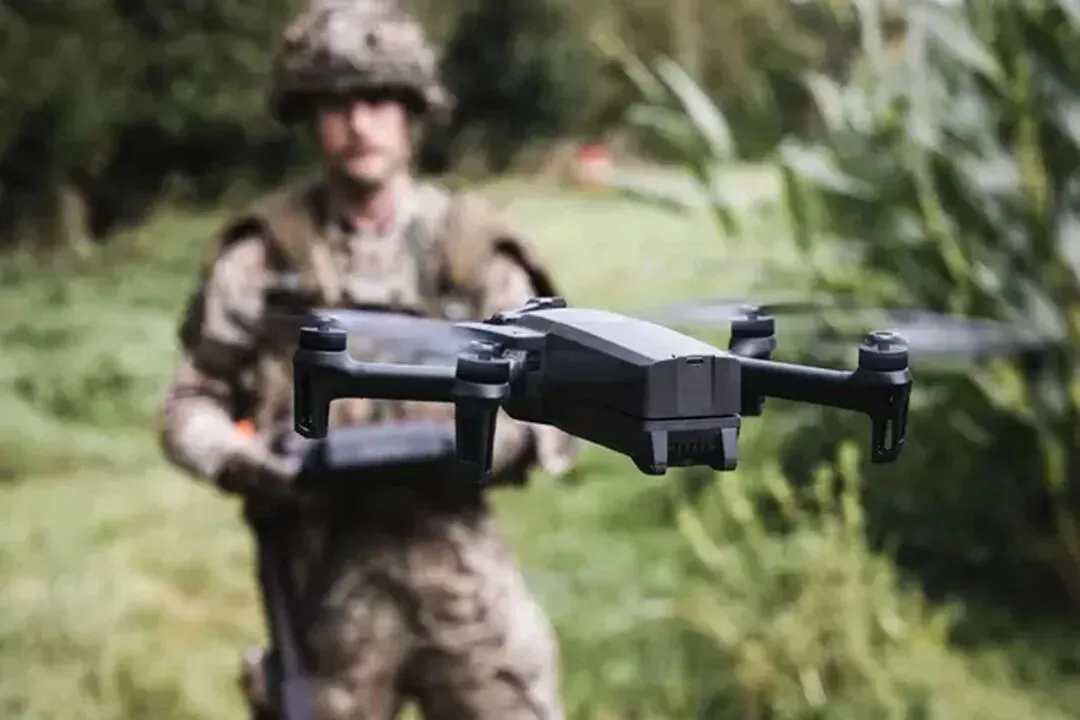
来自33工兵团的英国陆军工程师正在测试AI驱动无人机系统
根据英国国防部2026年4月2日公告,该试验持续数周,在不同地形上使用数十枚复制地雷和其他军械,并证明人工智能模型可快速重新训练以适应新的威胁类型和不同的环境。鉴于现代地雷战是自适应的,不能快速重新调整的探测系统在战术上已过时。
According to the UK Ministry of Defence’s April 2, 2026, announcement, the trial ran over several weeks, used dozens of replica mines and other ordnance across varied terrain, and proved that the AI models could be rapidly retrained for new threat types and different environments. That matters because modern mine warfare is adaptive, and a detection system that cannot be re-tuned quickly becomes tactically obsolete.
目前该领域的研究表明,有效的基于无人机的地雷探测通常依赖于传感器融合,结合热成像、多光谱传感、探地雷达和磁力计等方式,因为没有任何一种方式能在所有土壤、深度、植被条件或目标集提供有保证的解决方案。
Current research in this field shows that effective drone-based mine detection often relies on sensor fusion, combining modalities such as thermal imaging, multispectral sensing, ground-penetrating radar, and magnetometers, because no single method provides a guaranteed solution in all soils, depths, vegetation conditions, or target sets.
该系统设计用于寻找的武器种类繁多。挑战不仅在于常规杀伤人员地雷和反坦克地雷,还在于最小金属或塑料体装置、简易爆炸危险以及金属特征、热对比、埋深和杂波变化剧烈的混合爆炸性弹药领域。对机载地雷探测的研究表明这一点的重要性:联合探地雷达和磁强计架构旨在帮助识别金属和最小金属地雷,而长波红外和多光谱方法可以改善对受干扰土壤、温度异常或部分暴露设备的探测。实际上,人工智能在此具有价值,因为其可以比人类操作员逐个扫描更快地对多个数据层的模式进行分类。
The armament this system is designed to find is highly diverse. The challenge is not only conventional anti-personnel and anti-tank mines, but also minimum-metal or plastic-bodied devices, improvised explosive hazards, and mixed explosive ordnance fields in which metallic signatures, thermal contrast, burial depth, and clutter vary sharply. Research on airborne mine detection has demonstrated why this matters: joint GPR-and-magnetometer architectures are intended to help identify both metallic and minimum-metal mines, while long-wave infrared and multispectral methods improve detection of disturbed soil, temperature anomalies, or partially exposed devices. In practical terms, AI is valuable here because it can classify patterns across several data layers faster than a human operator working scan by scan.
对于英国陆军来说,作战价值是立竿见影的。33工兵团是陆军领先的爆炸物处理和搜索团,拥有简易爆炸装置处理、常规弹药处理、搜索、俯冲爆炸物处理、空中支援和突击队支援能力。无人机领导的侦察层使这样一个团能够在徒步小组行动之前调查可疑地面,生成地理定位的威胁图片,优先考虑可疑点,并保留专业人员进行确认和清除,而不是缓慢的初步搜索。在暴露时间可能致命的战场上,这是生存能力和效率的显著提高。
For the British Army, the operational value is immediate. 33 Engineer Regiment is the Army’s leading Explosive Ordnance Disposal and Search regiment, with improvised explosive device disposal, conventional munitions disposal, search, dive EOD, airborne support, and commando support capabilities. A drone-led reconnaissance layer gives such a regiment the ability to survey suspicious ground before dismounted teams commit, generate a geolocated threat picture, prioritise suspect points, and preserve specialist manpower for confirmation and neutralisation rather than slow initial search. On a battlefield where exposure time can be fatal, that is a meaningful increase in survivability as well as efficiency.
这种能力不应被视为破坏资产的替代品,而是更广泛的工程师杀伤链的前端。英国已经在测试WEEVIL遥控犁,该犁围绕“勇士”底盘研制,带有全宽犁、遥控器和车载摄像头,这样一名操作员就可以在几英里外清理车道;英国防部还指出,目前的扫雷方法仍然包括有人驾驶的TROJAN装甲车。因此,新的无人机在逻辑上比重型突破系统更先进:首先检测,然后分类、标记,躲避、清除或机械突破。在这种情况下,这项试验补充英国在机器人工程系统方面的更广泛投资,而不是与其竞争。
This capability should not be seen as a replacement for breaching assets but as the front end of a broader engineer kill chain. Britain is already testing the WEEVIL remote-controlled mine plough, built around a Warrior chassis with a full-width plough, remote controls, and vehicle cameras so that one operator can clear a lane from miles away; the MOD also notes that current mine-clearing methods still include the crewed TROJAN armoured vehicle. The new drone, therefore, fits logically ahead of heavy breaching systems: first detect, then classify, then mark, then either avoid, neutralise, or mechanically breach. Read in that context, this trial complements Britain’s wider investment in robotic engineering systems rather than competing with them.
世界银行、联合国、欧盟委员会和乌克兰政府评估称,截至2024年12月,138,503平方千米土地和14,000平方千米水域仍面临爆炸物污的风险,到2024年11月,地雷和其他遗留爆炸物造成的平民伤亡估计已达到1,094人。这一规模解释为什么伦敦方面明确将该计划与乌克兰的经验教训和2025年战略防御评估联系起来。地雷战不再是一个专门的后方问题;这是对机动、后勤保障、农业恢复和部队保护的战区级限制。
The World Bank, the United Nations, the European Commission, and the Government of Ukraine assessed that as of December 2024, 138,503 square kilometres of land and 14,000 square kilometres of water were still at risk of explosive contamination and, while civilian casualties from landmines and other explosive remnants had reached an estimated 1,094 by November 2024. That scale explains why London is explicitly linking this program to lessons from Ukraine and to the 2025 Strategic Defence Review. Mine warfare is no longer a specialist rear-area problem; it is a theatre-level constraint on manoeuvre, logistics, agricultural recovery, and force protection.
2025年7月,美国陆军的C5ISR中心表示,正在使用人工智能和机器学习来改变反地雷作战,包括基于热原理的“斯崔克”探测工具,旨在为士兵提供“额外的一双眼睛”。因此,英国的努力是战斗工程中更广泛的人机协同行动的一部分,在这种行动中,自主性不仅用于打击任务,还用于在雷区或爆炸物污染的地形中实现机动的更古老、更困难的业务。
In July 2025, the U.S. Army’s C5ISR Center said it was using AI and machine learning to transform countermine operations, including thermal-enabled Stryker-based detection tools designed to give soldiers “an extra set of eyes.” The UK effort is therefore part of a wider move toward human-machine teaming in combat engineering, where autonomy is used not only for strike missions but for the older, harder business of enabling manoeuvre through mined or explosive-contaminated terrain.
现在的关键问题是,英国的系统能否从有前景的试验过渡到可部署的现场能力。英国防部表示,今年将进行更多试验,以使技术成熟并指导采购,并将该项目纳入更广泛的政府决定,即在本届议会期间将对自主平台的投资从20亿英镑增加到40亿英镑。这令人鼓舞,但高级操作员会知道,地雷探测系统不是在实验室里失败的,而是在混乱的现实中失败的:潮湿的土壤会改变雷达行为,植被掩盖异常,误报速度慢,一个误报就可能致命。即便如此,如果英国能够部署一个强大的基于无人机的探测层,为其爆炸物处理团队和机器人闯入者提供支持,其将朝着数字突破架构迈出有意义的一步,在这个架构中,侦察、识别和清除被压缩到一个更快、更安全的作战工程系统中。
The critical question now is whether the British system can transition from a promising trial to a deployable field capability. The MOD says more trials will take place this year to mature the technology and guide procurement, and it frames the project within a wider government decision to double investment in autonomous platforms from £2 billion to £4 billion during this parliament. That is encouraging, but senior operators will know that mine detection systems fail not in the laboratory but in cluttered reality: wet soil alters radar behaviour, vegetation masks anomalies, false positives slow tempo, and a single false negative can kill. Even so, if Britain can field a robust drone-based detection layer that feeds its EOD teams and robotic breachers, it will have taken a meaningful step toward a digital breaching architecture in which reconnaissance, identification, and clearance are compressed into one faster, safer combat-engineering system.