 夜雨聆风
夜雨聆风AI-最优解
而下午三点,隔壁的小优打开终端,输入了一段自然语言指令。三分钟后,Agent 在沙箱里跑完了同样的清洗流程,附带输出了一份描述性统计的 LaTeX 表格。早早做完所有任务的她,半夜三点正在梦会周公。
但小优的电脑屏幕仍然亮着,Agent正不知疲倦夜以继日地工作着。
你的三点,我的三点,好像不一样。
2026 了,
你还停留在科研刀耕火种的时代吗?
这就是 2026 年的经济研究者必须同时凝视的两种幻觉:一种是"AI 还只是润色工具"的滞后幻觉,一种是"Agent 无所不能"的光环幻觉。Anton Korinek 在《AI Agents for Economic Research》(2025, NBER)中提到:AI 正在从"快思考的文本生成器"进化为"能自主执行的科研代理"。这是现实的一角,但还远远不是全部。
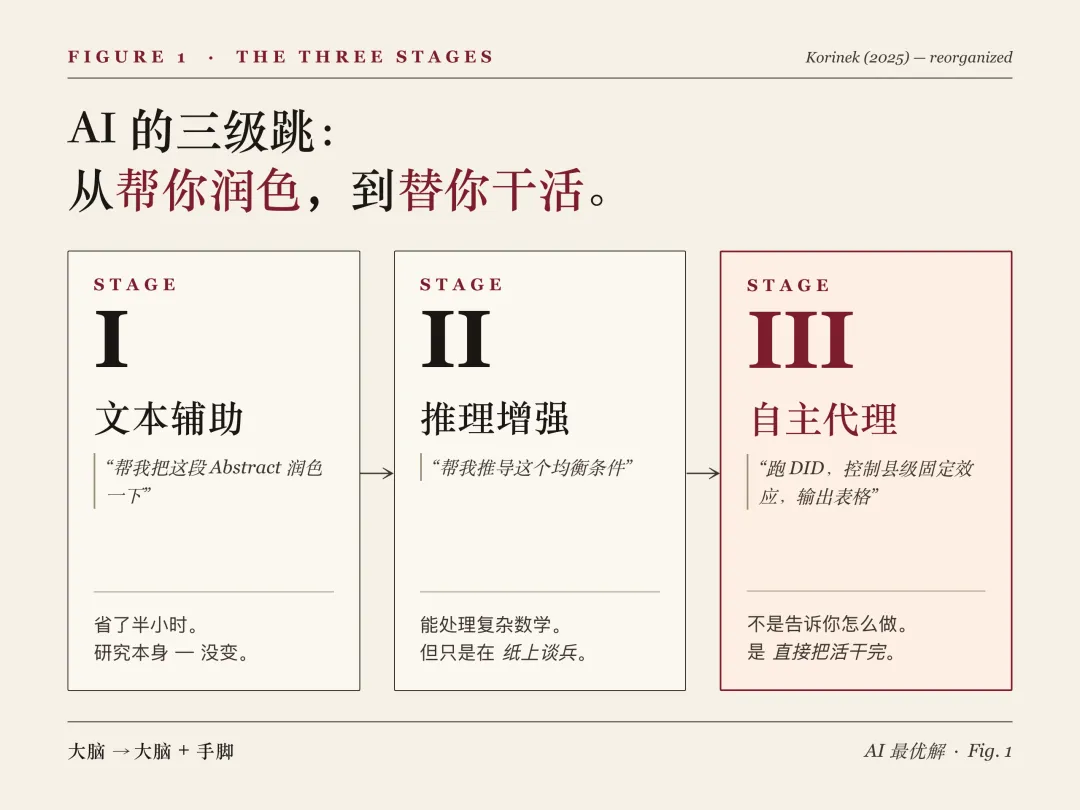
从"大脑"到"大脑 + 手脚",才是这一轮真正的跨越。
生产力、质量与异质性
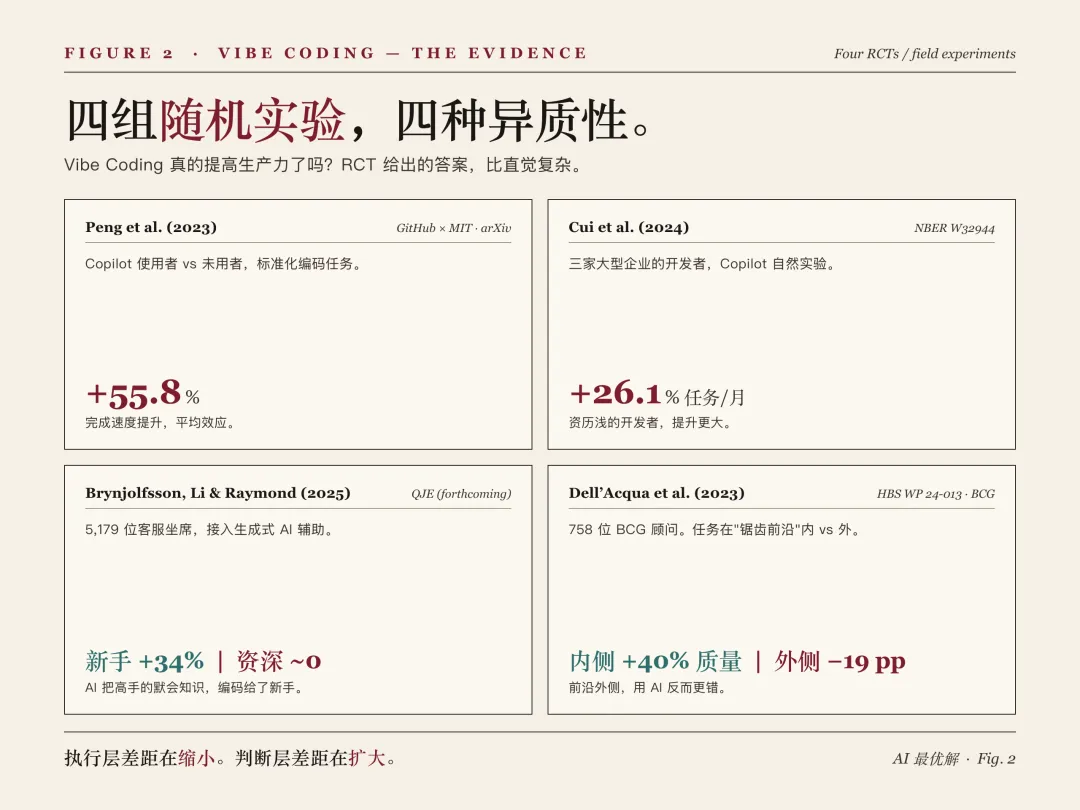
"Vibe Coding"一词由 OpenAI 联合创始人 Andrej Karpathy 于 2025 年初普及:你不再写代码,你用自然语言描述研究意图,Agent 替你搞定一切。
换言之,Vibe Coding 抹平了技术层面的编程异质性,却把新的异质性推向了更高的一层:你是否知道 Agent 何时会失败。
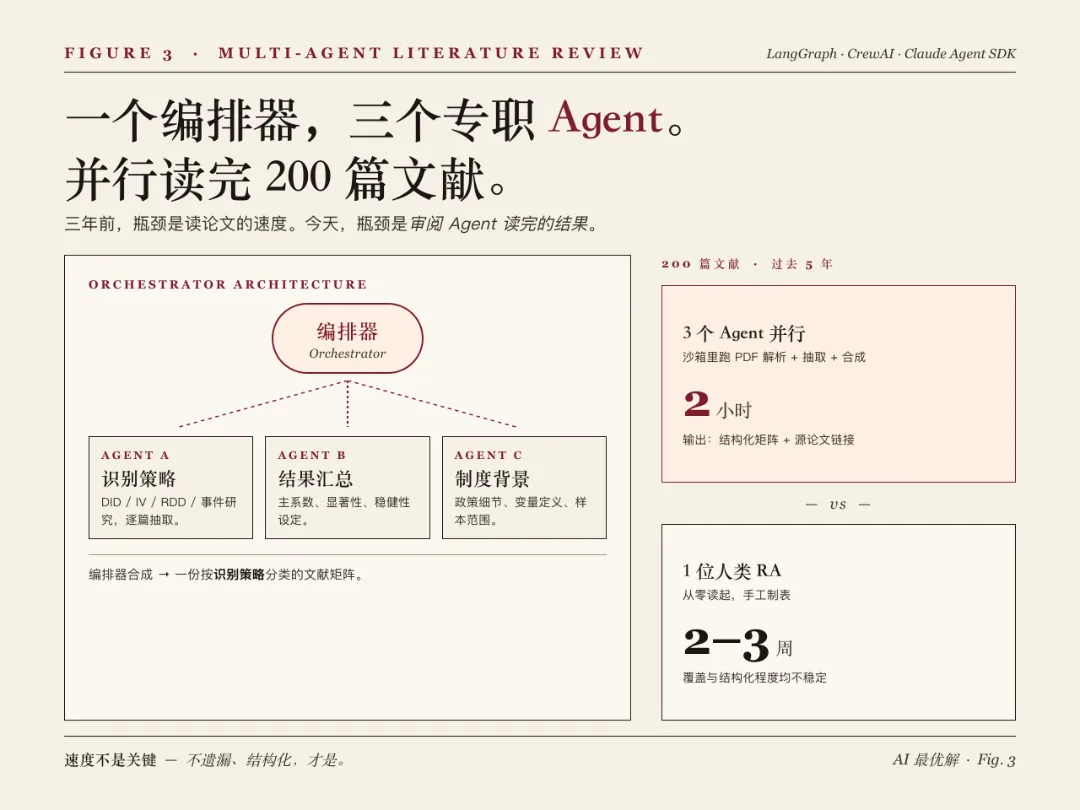
 ://bexp.135editor.com/files/users/1679/16799051/202604/v8QRZFpr_dncX.png?auth_key=1776614399-0-0-281b9616e6d4a459954b82770b070163&https://bexp.135editor.com/files/users/1679/16799051/202604/v8QRZFpr_dncX.png?auth_key=1776614399-0-0-281b9616e6d4a459954b82770b070163&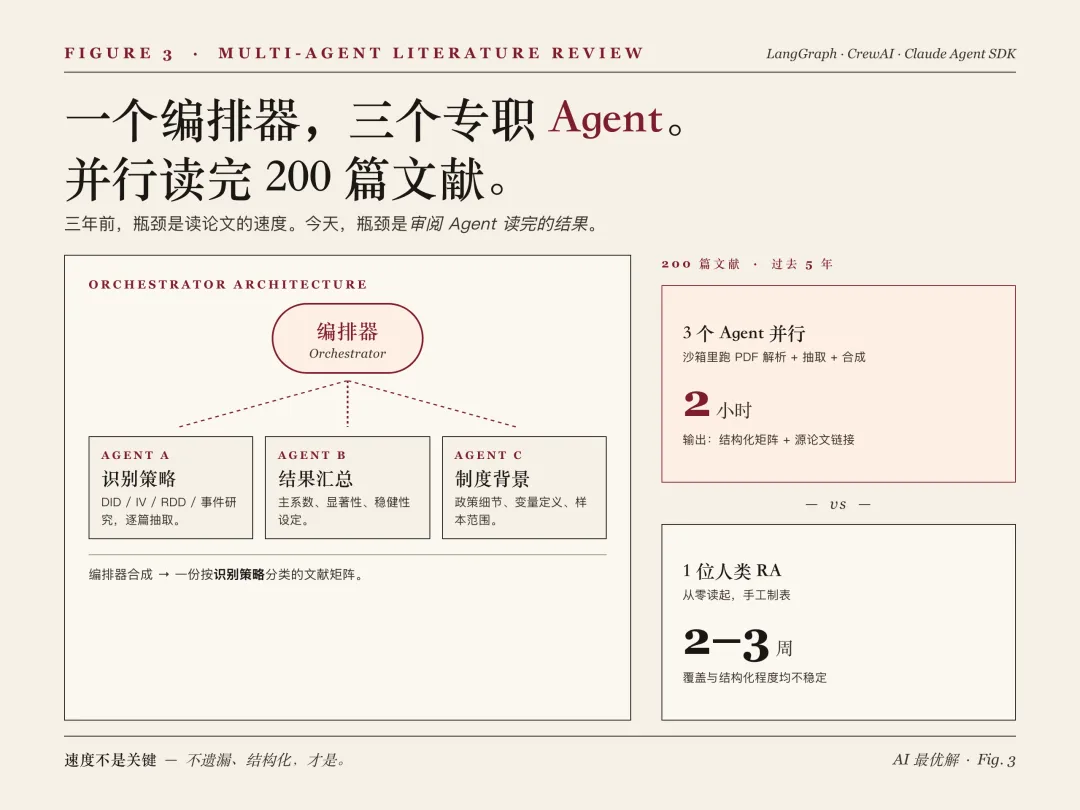
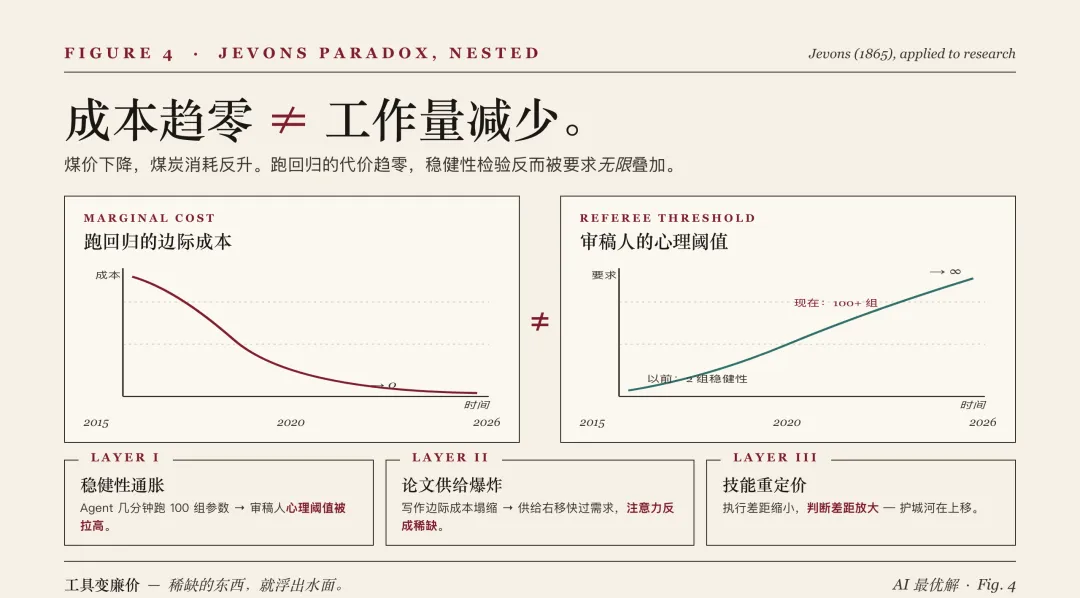
因为只有建造者才能理解工具的真实边界,而不是旁观者。
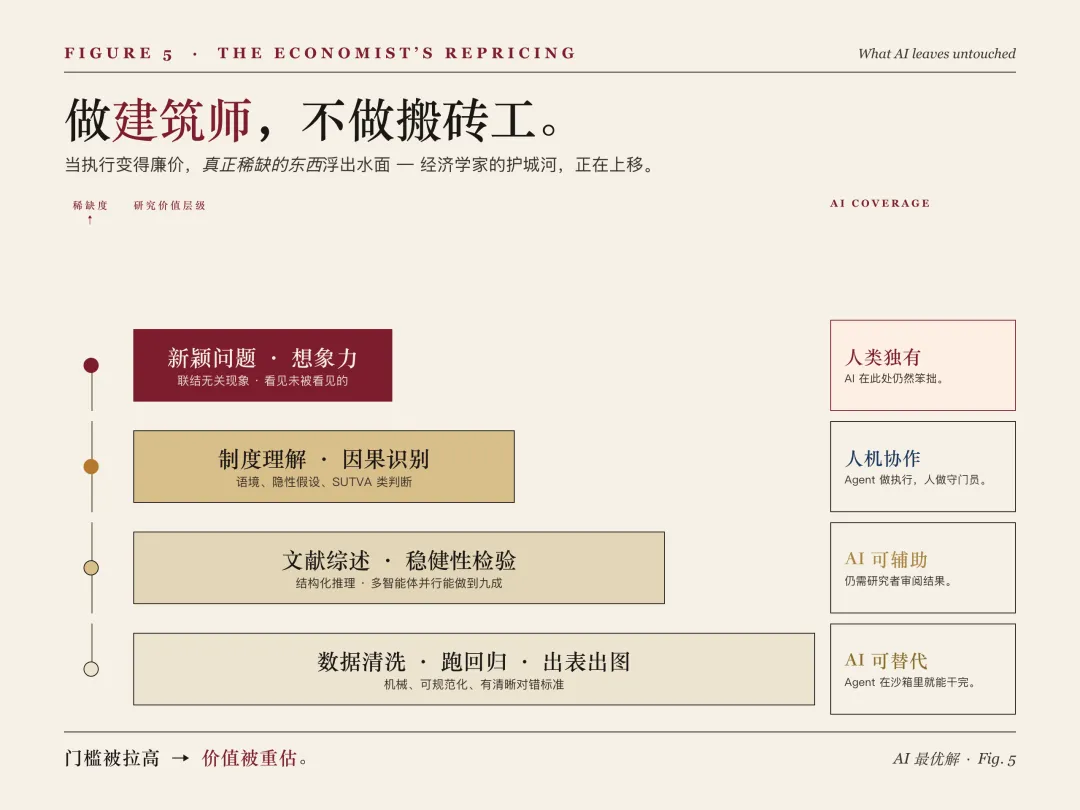
在算力平权的时代,研究将回归其本质:
下一期,我们手把手拆解:如何用 Claude Agent SDK + Sandbox 在本地跑通一条完整的实证流水线,从 Zotero 的文献知识库,到原始微观数据清洗,到双重差分回归,再到自动出表出图,全程自然语言驱动。
关注「AI最优解」,前沿精彩不错过。

从研究前沿到经济现实,
寻找理解变化的更优路径。
AI与技术变迁中的观察笔记。
Acemoglu, Daron. (2024). "The Simple Macroeconomics of AI." NBER Working Paper 32487.
Agrawal, A., Gans, J., & Goldfarb, A. (2022). Power and Prediction. HBS Press.
Bick, A., Blandin, A., & Deming, D. J. (2024). "The Rapid Adoption of Generative AI." NBER Working Paper 32966.
Becker, B., et al. (2025). "Measuring the Impact of Early-2025 AI on Experienced Open-Source Developer Productivity." METR Technical Report.
Brynjolfsson, E., Li, D., & Raymond, L. (2025). "Generative AI at Work." Quarterly Journal of Economics.
Cui, Z., Demirer, M., Jaffe, S., Musolff, L., Peng, S., & Salz, T. (2024). "The Effects of Generative AI on High-Skilled Work: Evidence from Three Field Experiments with Software Developers." NBER Working Paper 32944.
Dell'Acqua, F., et al. (2023). "Navigating the Jagged Technological Frontier: Field Experimental Evidence of the Effects of AI on Knowledge Worker Productivity and Quality." HBS Working Paper 24-013.
Eloundou, T., Manning, S., Mishkin, P., & Rock, D. (2024). "GPTs are GPTs: Labor Market Impact Potential of LLMs." Science, 384, 1306–1308.
Handa, K., et al. (2025). "Which Economic Tasks are Performed with AI? Evidence from Millions of Claude Conversations." Anthropic Economic Index.
Horton, J. J. (2023). "Large Language Models as Simulated Economic Agents." NBER Working Paper 31122.
Korinek, A. (2023). "Generative AI for Economic Research: Use Cases and Implications for Economists." Journal of Economic Literature, 61(4), 1281–1317.
Korinek, A. (2025). "AI Agents for Economic Research." NBER Working Paper 34202.
Ludwig, J., & Mullainathan, S. (2024). "Machine Learning as a Tool for Hypothesis Generation." Quarterly Journal of Economics.
Manning, B., Zhu, K., & Horton, J. J. (2024). "Automated Social Science: Language Models as Scientists and Subjects." NBER Working Paper 32381.
Mei, Q., Xie, Y., Yuan, W., & Jackson, M. O. (2024). "A Turing Test of Whether AI Chatbots are Behaviorally Similar to Humans." PNAS, 121(9).
Mullainathan, S., & Rambachan, A. (2024). "From Predictive Algorithms to Automatic Generation of Anomalies." Working paper.
Noy, S., & Zhang, W. (2023). "Experimental Evidence on the Productivity Effects of Generative Artificial Intelligence." Science, 381, 187–192.
Otis, N., Clarke, R., Delecourt, S., Holtz, D., & Koning, R. (2024). "The Uneven Impact of Generative AI on Entrepreneurial Performance." Working paper.
Peng, S., Kalliamvakou, E., Cihon, P., & Demirer, M. (2023). "The Impact of AI on Developer Productivity: Evidence from GitHub Copilot." arXiv:2302.06590.