 夜雨聆风
夜雨聆风
Evaluation of the Strengths and Weaknesses of Android and iOS
PART.1
Research Objective
The primary purpose of this study is to conduct a comprehensive evaluation and comparison between Android and iOS, two dominant operating systems in the m-obile industry. Through an indepth analysis of their respective strengths and weaknesses, we aim to provide insights into which platform may be more suitable for different types of users based on their needs and preferences. This study also seeks to explore how these platforms con-tinuously evolve to meet the changing demands of consumers and technological advancements. By understanding the nuances of each system, stakeholders such as developers, businesses, and end-users can make informed decisions re-garding software development, application compatibility, and device selection.
Furthermore, this research aims to highlight the impact of ecosystem lock-in effects associ-ated with both Android and iOS. It will examine how these ecosystems influence user behavior, including app purchasing habits, brand loyalty, and switching costs. Understanding these dy-namics is crucial for stakeholders looking to optimize their strategies in marketing, product development, and customer retention. Lastly, by presenting our findings, we hope to foster a broader discussion on the future trends of mo-bile operating systems and encourage conti-nuous innovation within the tech community.
PART.2
Research Methods
Survey Design and Participant Profile
To systematically evaluate user per-ceptions of Android and iOS, a structured online survey was designed and distribut-ed to 220 smartphone users across diverse demographic and geographic backgrounds. The questionnaire compris-ed 24 questions addressing core aspects such as system performance, customiza-tion options, app ecosystem quality, security perceptions, and cross-platform compatibility. Participants were recruited through digital platforms and screened to ensure balanced representation between Android and iOS users.
Data Collection Procedures
Primary data were collected via the online survey, which utilized Likert-scale, multiple-choice, and open-ended question formats. Secondary data were obtained from app store analytics (Google Play Store and Apple App Store) and public industry reports on device usage, security incidents, and market share trends. This mixed-method approach allowed for triangulation of user feedback with behavioral and market data.
PART.3
Research Findings
Questionnaire Survey Questions
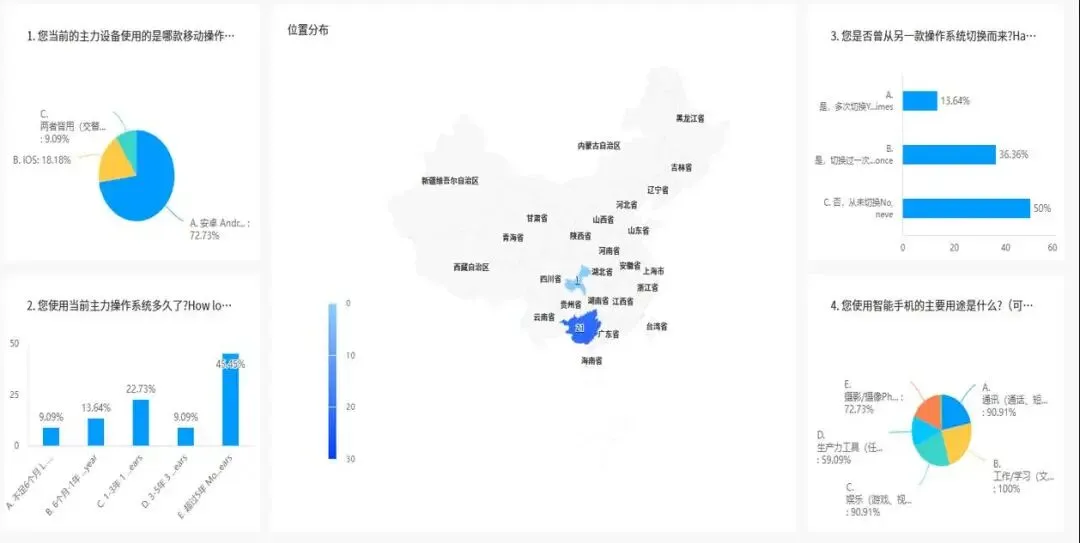
1.Which mobile operating system do you currently use as your primary device?
2.How long have you been using your current primary operating system?
3.What is your main purpose for using a smartphone?
Questionnaire Statistics Data
Android VS IOS
Data Analysis
All participants (100%) use their smartphones for work/study, indicating that respondents are generally students or working professionals who rely heavily on their devices for productivity.Communication (90.91%) and entertainment (90.91%) are also high-frequency uses, showing that smartphones continue to serve essential roles in social interaction and leisure.Photography/videography accounts for 72.73%, suggesting that the sample group commonly uses their devices for content creation and recording (taking photos/videos).The usage rate of productivity tools reaches 59.09%, demonstrating that respondents rely on their smartphones not only for entertainment but also for improving efficiency.The proportion selecting “Others” is very low (4.55%), indicating that user needs are highly concentrated and consistent.
Questionnaire Statistics Data

Questionnaire Statistics Data
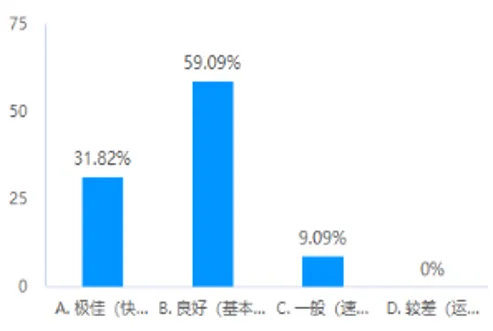
The majority of users rated their OS performance positively, with over 90% selecting "Good" or "Excellent." No respondents reported "Poor" performance.
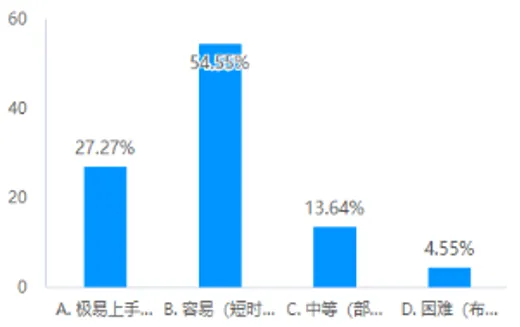
The results indicate a predominantly positive user experience, with a combined 81.82% finding the OS "Extremely easy" or "Easy" to learn and navigate. However, a notable minority reports some level of difficulty.
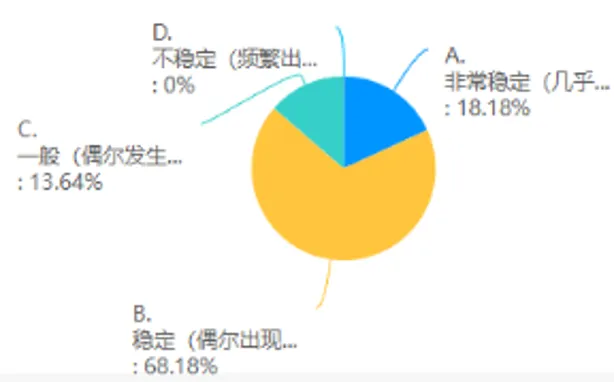
The results paint a highly positive picture of perceived system stability. An overwhelming 86.36% of users rated their OS as "Very stable" or "Stable." Crucially, no respondents (0%) reported "Unstable" or "Very unstable" performance.And the operating system demonstrates excellent core stability, with no users reporting.
PART.4
Research Significance
Central Importance of the Study
Deepen Systemic Understanding: By comparing Android’s openness and iOS’s closed ecosystem, reveal how different models shape innovation, security, and user experience.Guide Technological Development: Analyzing strengths and weaknesses provides direction for future OS design, encouraging integration of advantages.
Practical Application Value
Support User Decision-Making: Clearly outline features to help users make informed choices based on needs (e.g., customization, privacy, device synergy).Inform Industry Strategies: Provide evidence-based insights for app development, market positioning, and cross-platform solutions, reducing trial and error.Promote Ecosystem Improve-ment: Foster healthy competition that advances both platforms, driving global mobile ecosystems toward greater efficiency, security, and user-centric design.
文字 / 编辑:
250082202023-杨坷
250082305013-张玲玲
250022304012-曹亚冰
250022304006-梁惠琳
250022201081-范一凡
审核:王亚舟
--第1028篇