夜雨聆风
夜雨聆风READING PASSAGE 3
You should spend about 20 minutes on Questions 27-40, which are based on Reading Passage 3 on pages 10 and 11.
Leo Burnett 1891-1971
The advertising man who first exploited the power of the visual image
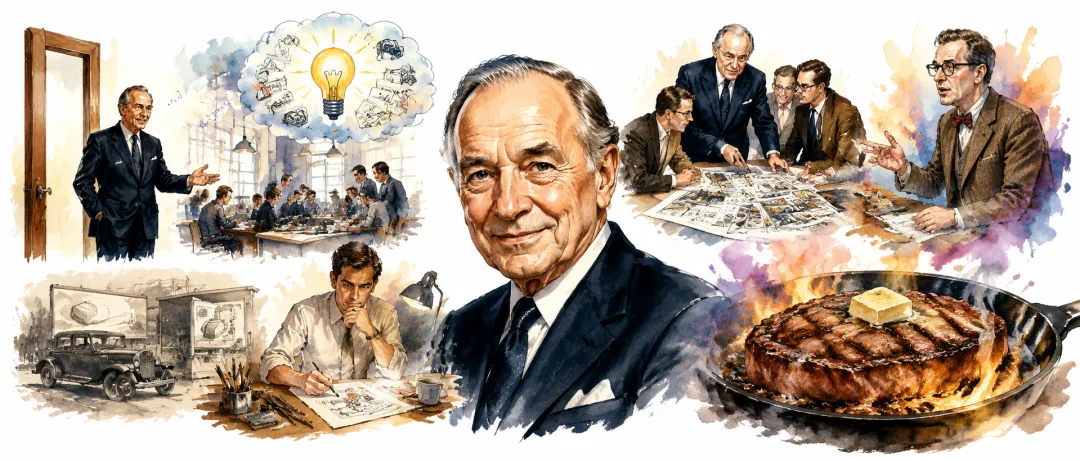
ALeo Burnett, founder of the multibillion-dollar advertising agencyLeo Burnett Worldwide, had a career spanning nearly six decades, and an aptitude for inventing newbusiness strategies. He is widely regarded as one of the most influentialfigures in the history of advertising. Unlike many of his contemporaries who viewed advertising as acynical manipulation of consumer weaknesses, Burnett held high expectancy that every employee should be bowed down to the work. But heavenhelp you if you were lazyin your approach to dealing with one of his clients. However, if you had awell-thought-out idea, even if he didn't like it, he would respect the effort behind it.
BBurnett's management style was unconventional for its time. He practised the Removal of physical barriers -- famously takinghis office door off its hinges to signalapplicability. He also rejected the Group Think approach common in other agencies, believing that collective consensus often diluted creative edge. Instead, he relied onan internal role he called The Creative Right Bower, his number one man who could turn even the wildest idea into a viable campaign. Another innovation was that Burnettregularly invited a professor, a writer, or a businessman from a completely different industry to critique the agency's work. The Outside Expertoffered blunt, unfilteredopinions, and knowing their work would be judged by someone unfamiliarwith advertising's internal politics, Burnett's employees strove much hardto produce outstandingideas.
CBefore Burnett entered the advertising field in the 1920s, the industry was dominated by what he called 'advertese' --a straightedge style of descriptive words emphasizingadvantages of products. Advertisements of that era typically described a car as 'superbly engineered' or a soap as 'unquestionablypure', without any attempt to connectemotionally with the consumer. Burnett rejected this approach entirely.He argued that advertising should tell a story, and that the story shouldbe rooted in the product'sfundamental truth.
Questions 27-31
Choose the correct letter, A, B, C or D.
Write the correct letter in boxes 27-31 on your answer sheet.
27 What quality did Burnett expect all his employees to demonstrate in their work?
A A deep understanding of market trends
B Dedication to the profession
C Willingness to work long hours
D Originality in design and copywriting
28Which of Burnett's management methods encouraged his staff to perform better?
A The Star Reacher
B Secret Ballots
C The Outside Expert
D Creative Review Committee
29 Before Burnett entered the advertising field, what was the main emphasis of most advertisements?
A Visual imagery and artwork
B Catchy slogans and humor
C Language describing positive features of the product
D Endorsements by famous personalities
30 Why was Burnett's campaign for the American Meat Institute considered original?
A It introduced color photography in newspaper advertisements.
B It emphasised a feature of the product seldom seen in advertising.
C It focused primarily on health and nutritional benefits.
D It targeted male shoppers instead of traditional household buyers.
31What was significant about the Marlboro campaign created by Burnett?
A It became the longest-running print campaign in media history.
B It was the first to use real professional models in television ads.
C It drastically reduced the overall budget required for tobacco promotion.
D It targeted a group of consumers not previously attracted to the brand.

完整版原文+答案私信沫沫学雅领取~机考题库和干货资料留言123~更多雅思资料PDF评论区留言666~