文档文本内容
1.
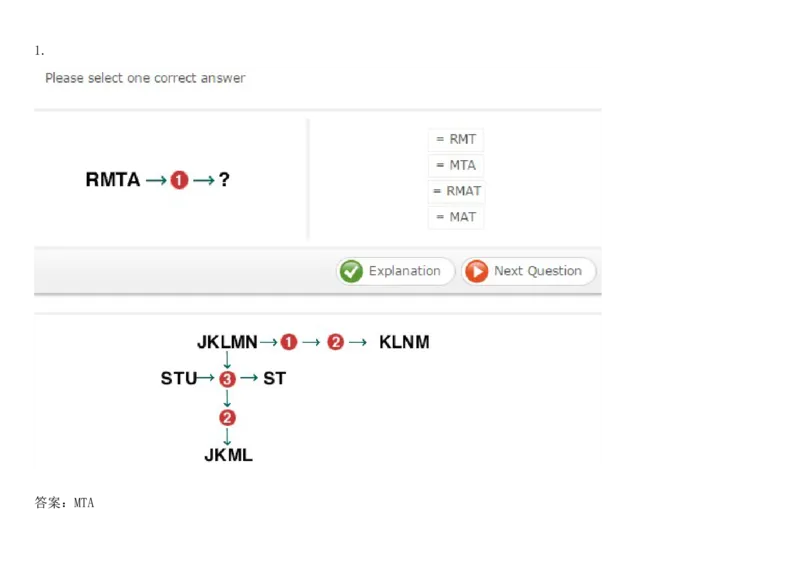
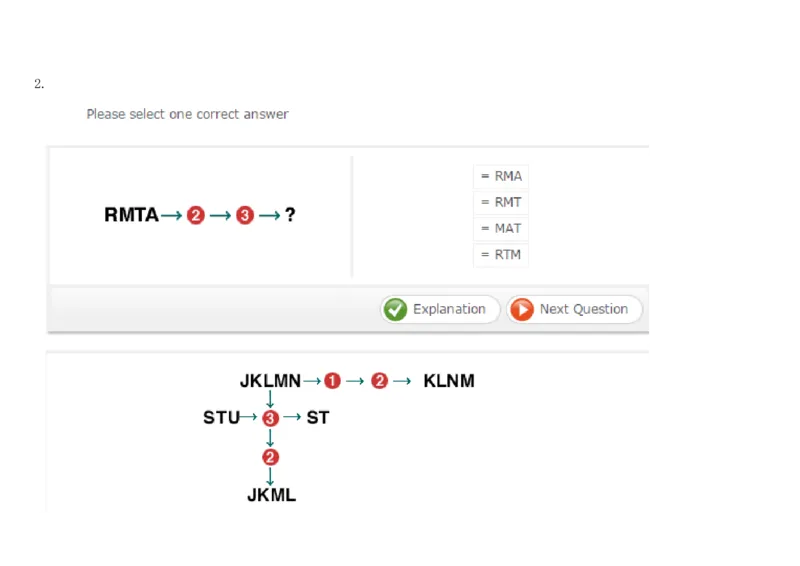
答案:MTA2.答案:RMA
解析:3.答案:323
解析:
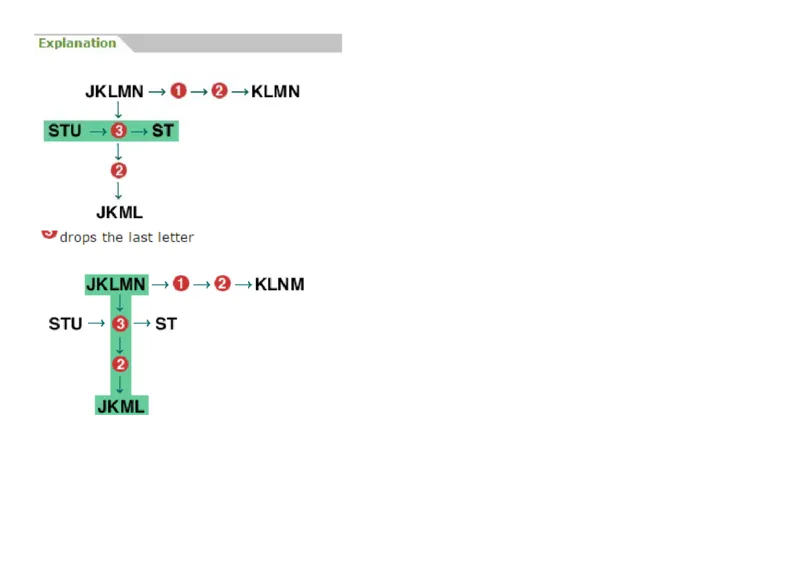
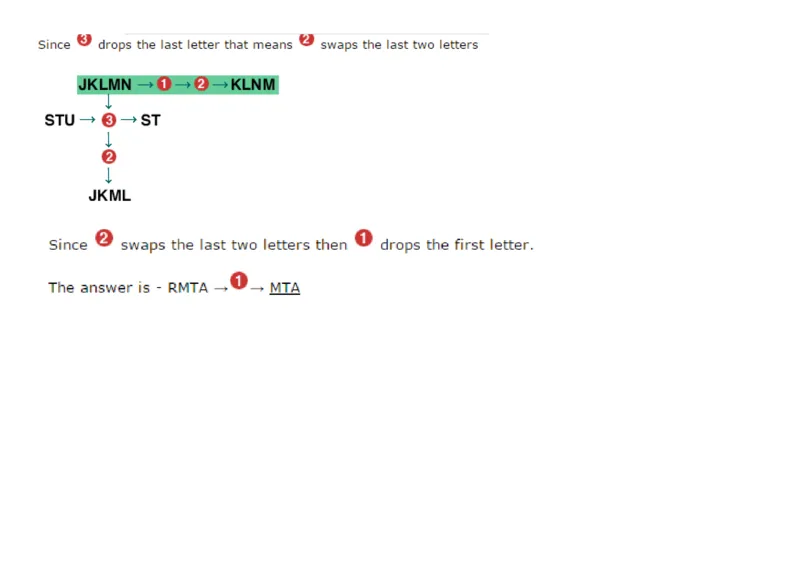
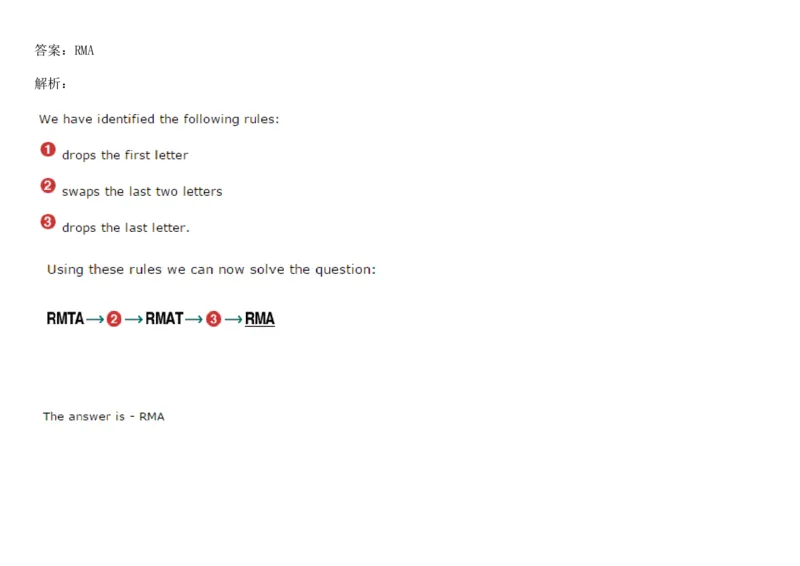
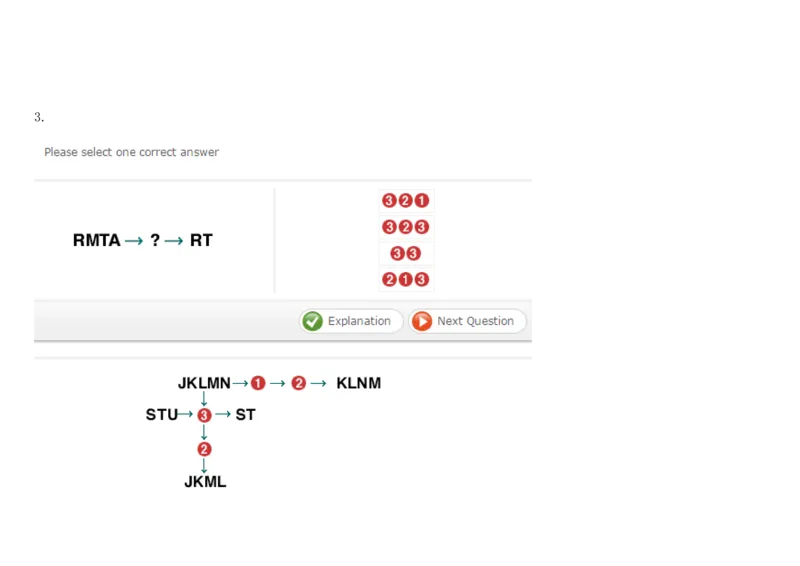
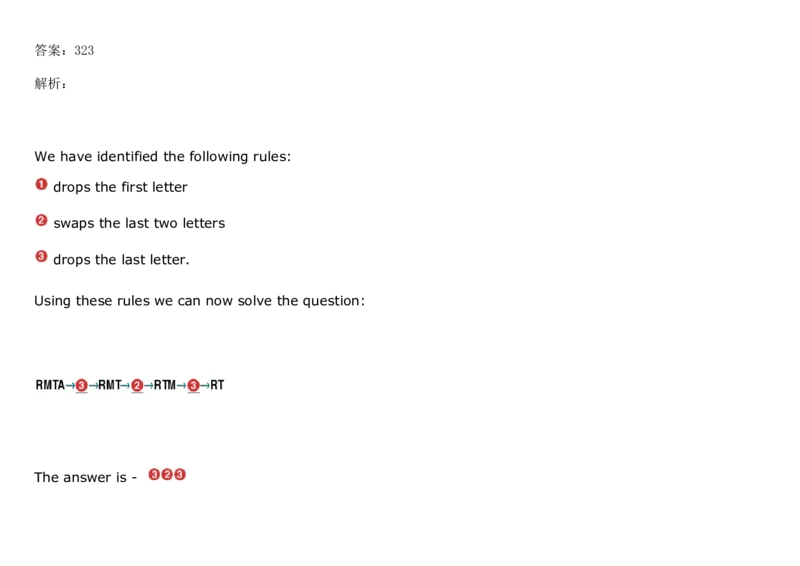
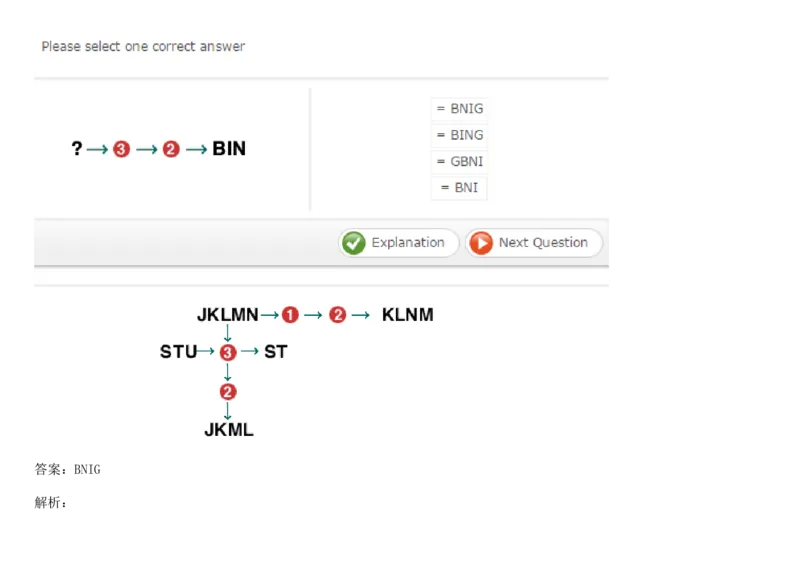
We have identified the following rules:
drops the first letter
swaps the last two letters
drops the last letter.
Using these rules we can now solve the question:
The answer is -4.答案:BNIG
解析:Using these rules we can now solve the question. We have to work our way backwards. We know that
swaps the last two letters, therefore BIN→BNI. Since we are working our way backwards, will add a letter
to the end rather than drop it. Looking at the possible answers we recognize that there are three options that
have the letters BNI in that order but only one option is made up of a combination of 4 letters with an additional
letter at the end (rather than the beginning) – BNIG.
The answer is – BNIG5.答案:IRNO
解析:
The letter order reverses in the transition from AND to DNA. We can conclude that reverses the letter
order.
Since reverses the letter order we can conclude that swaps the last two letters.The answer is IRON → → IRNO.
6.
答案:RON解析:
Since reverses the letter order we can conclude that drops the first letter.
The answer is – RON7.
答案:2 1解析:
We identified the following rules:
reverses the letter order
swaps the last two letters
drops the first letter
Using these rules we can solve the question:
The answer is -8.答案:BLOKC
解析:
We identified the following rules:
reverses the letter order
swaps the last two letters
drops the first letter
Using these rules we can solve the question. We have to work our way backwards. We know that command
drops the first letter. This means that any letter could be added to create a 5 letter combination. Yet,
command swaps the last two letters, therefore _LOCK → _LOKC. The only possible answer available that
ends with KC and consists of 5 letters is BLOKC.
The answer is – BLOKC9.答案:HOEM
解析:
The transition from ABCD → BADC requires two instances of letter swaps. One step switches the first two
letters and the other step switches the last two letters. We have to figure out which step does what (
and ).The transition from EFG → FFEG requires one instance of letter swapping from EF-FE and an additional step
where the first letter is duplicated. Since we already know that swaps letters but didn’t know if it was the
first two or the last two, we can now deduce that it is the first two. We also know by now that duplicates
the first letter. Looking back at step 1, we can now deduce that swaps the last two letters.
The answer is -10.答案:HEM
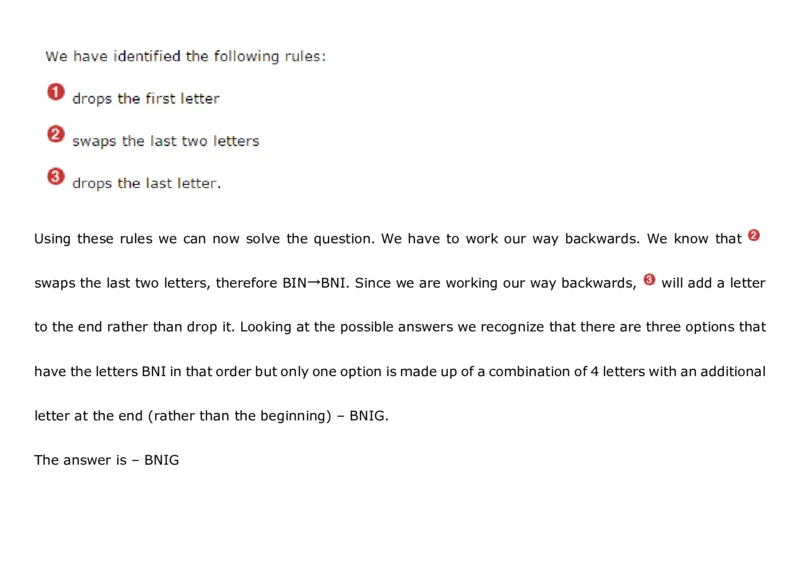
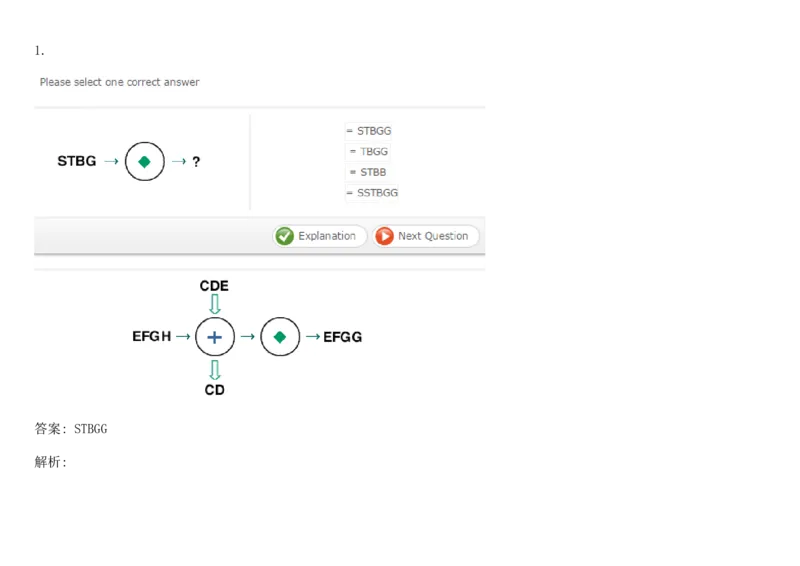
解析:We have identified the following rules:
swaps the first two letters
swaps the last two letters
duplicates the first letterThe transition from LMNO →OMN involves , and . Since and swap letters therefore must drop a
letter. From the diagram we can deduce that drops the first letter. Therefore the answer is -11.
答案:1 4 2解析:
We have identified the following rules:
swaps the first two letters
swaps the last two letters
drops the first letter
duplicates the first letter
Based on these rules we can solve the question:
The answer is -12.答案:HOEM
解析:
We have identified the following rules:
swaps the first two letters
swaps the last two letters
drops the first letter
duplicates the first letter
Based on these rules we can solve the question. We have to work our way backwards: swaps the last two
letters so HOME → → HOEM. We know that and drop the first letter and double the first letter
respectively. This means that overall they counter effect each other.
The answer is – HOEM13.答案:ERR
解析:
We can deduce that the transition from ALT → TTLA involves reversing the letter order and duplicating the
first letter. We can also deduce that the transition from IF → II involves duplicating the first letter and
dropping the last one. Since both transitions involve rule we can conclude that rule duplicates the first
letter. Furthermore, we can now deduce that rule drops the last letter and that rule reverses the letter
order.Since we know that the transition from DNE →EEND involves a reverse in the letter order ( ) we can conclude
that rule duplicates the last letter.
The answer is – ERR14.
答案:4 3 4
解析:We identified the following rules:
duplicates the first letter
duplicates the last letter
drops the last letter
reverses the letter order
We can now solve the problem:
The answer is -15.
答案:TFIHS
解析:We identified the following rules:
duplicates the first letter
duplicates the last letter
drops the last letter
reverses the letter order
In this question we will work our way backwards. Since duplicates the last letter, working our way backwards
the last letter is therefore dropped (SSHIFTT → SSHIFT). Since reverses the letter order, this works both
ways (SSHIFT → TFIHSS). Once more, rule duplicates the last letter, so in reverse order the last letter is
dropped (TFIHSS → TFIHS).
The answer is – TFIHS16.
答案:3
解析:We have identified the following rules:
duplicates the first letter
duplicates the last letter
drops the last letter
reverses the letter order
Using these rules we can now solve the question. We have to work our way from both ends: Working from
the left hand side, rule duplicates the last letter, so REPE→REPEE. Working from the right hand side, drops
the last letter but in reverse.
So we now know:
To get from REPEE to REPE we must drop the last letter, therefore, the missing rule is rule .
The answer is -