
文档内容
1.
解析:
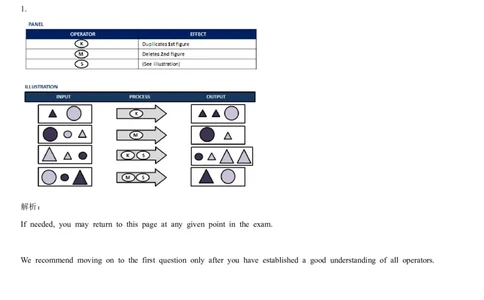
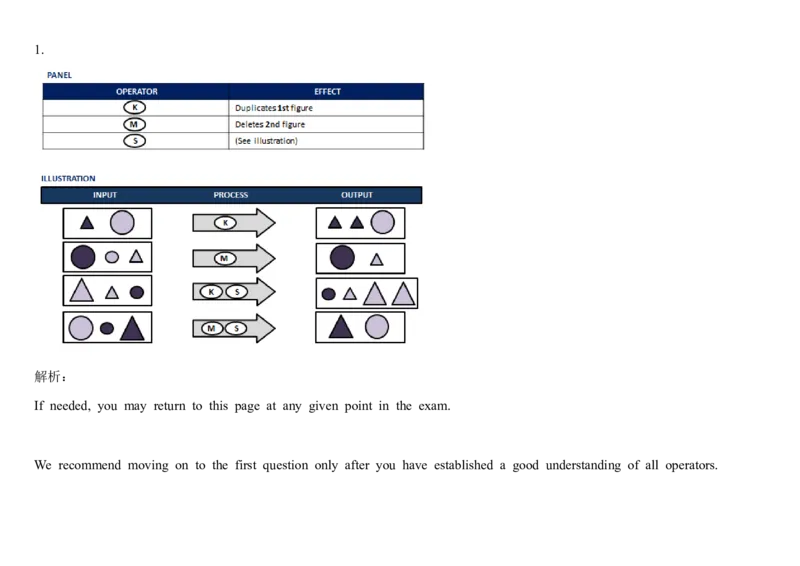
If needed, you may return to this page at any given point in the exam.
We recommend moving on to the first question only after you have established a good understanding of all operators.2.
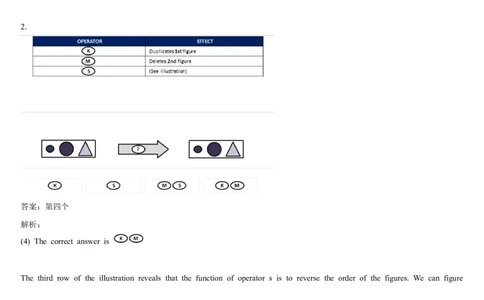
答案:第四个
解析:
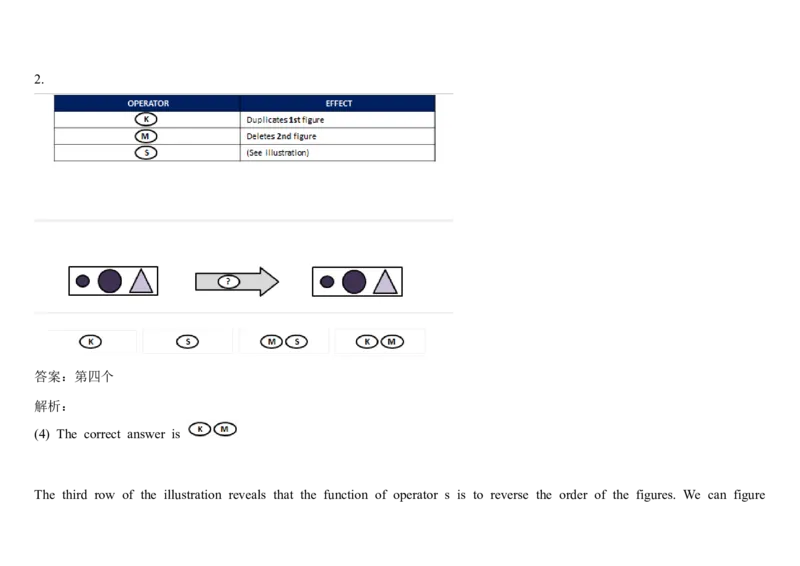
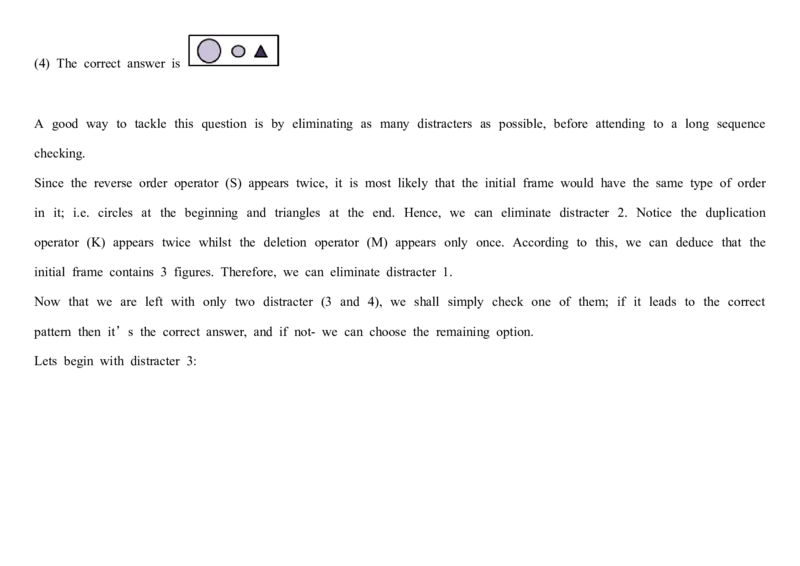
(4) The correct answer is
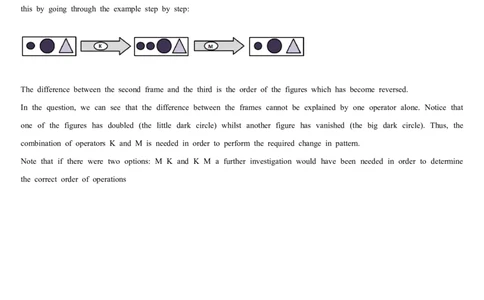
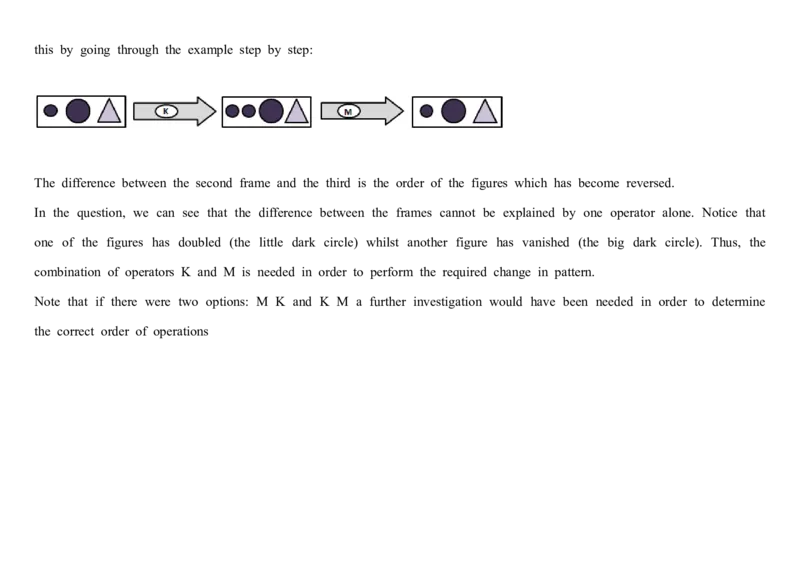
The third row of the illustration reveals that the function of operator s is to reverse the order of the figures. We can figurethis by going through the example step by step:
The difference between the second frame and the third is the order of the figures which has become reversed.
In the question, we can see that the difference between the frames cannot be explained by one operator alone. Notice that
one of the figures has doubled (the little dark circle) whilst another figure has vanished (the big dark circle). Thus, the
combination of operators K and M is needed in order to perform the required change in pattern.
Note that if there were two options: M K and K M a further investigation would have been needed in order to determine
the correct order of operations3.
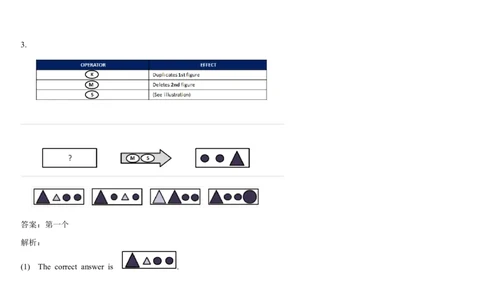
答案:第一个
解析:
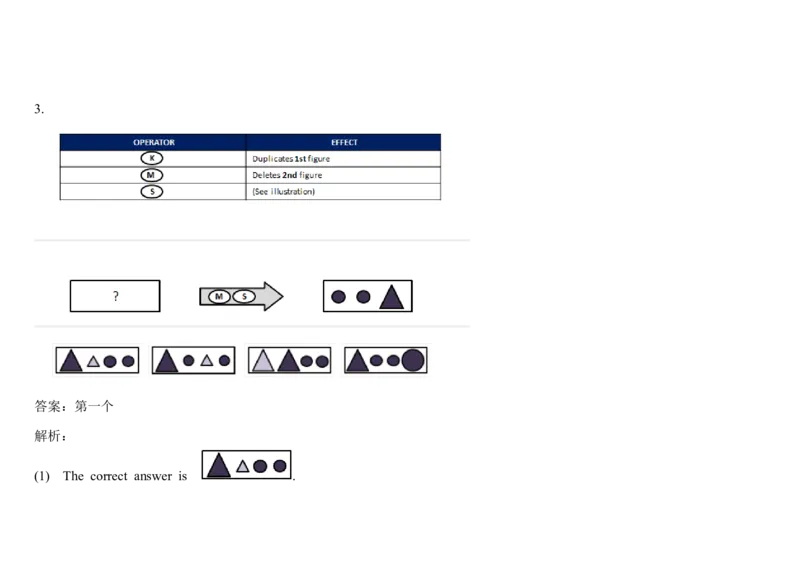
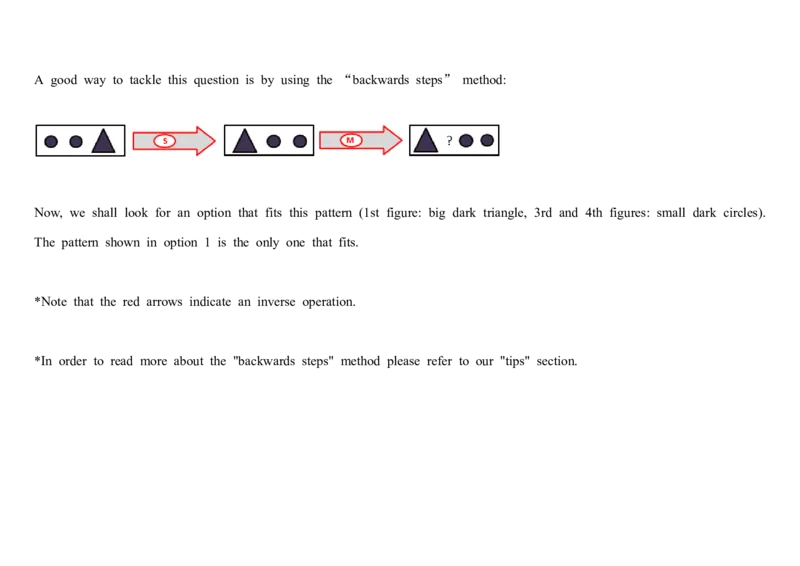
(1) The correct answer is .A good way to tackle this question is by using the “backwards steps” method:
Now, we shall look for an option that fits this pattern (1st figure: big dark triangle, 3rd and 4th figures: small dark circles).
The pattern shown in option 1 is the only one that fits.
*Note that the red arrows indicate an inverse operation.
*In order to read more about the "backwards steps" method please refer to our "tips" section.4.
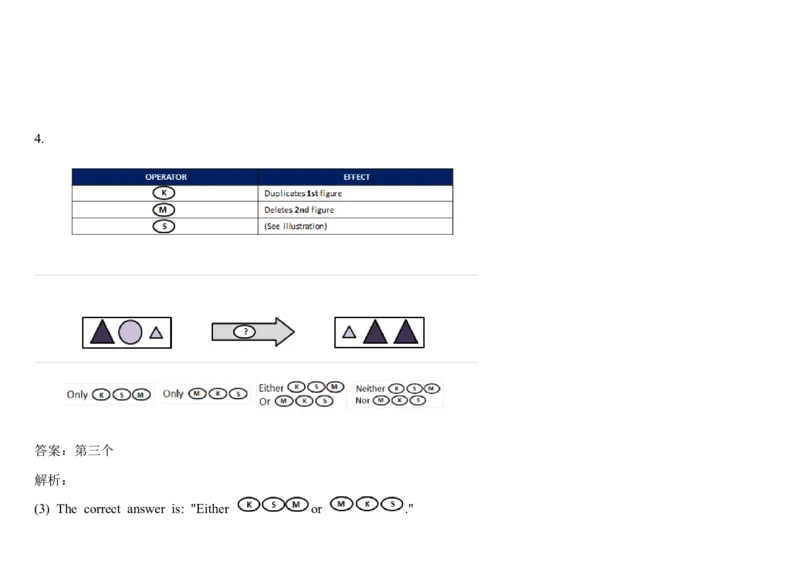
答案:第三个
解析:
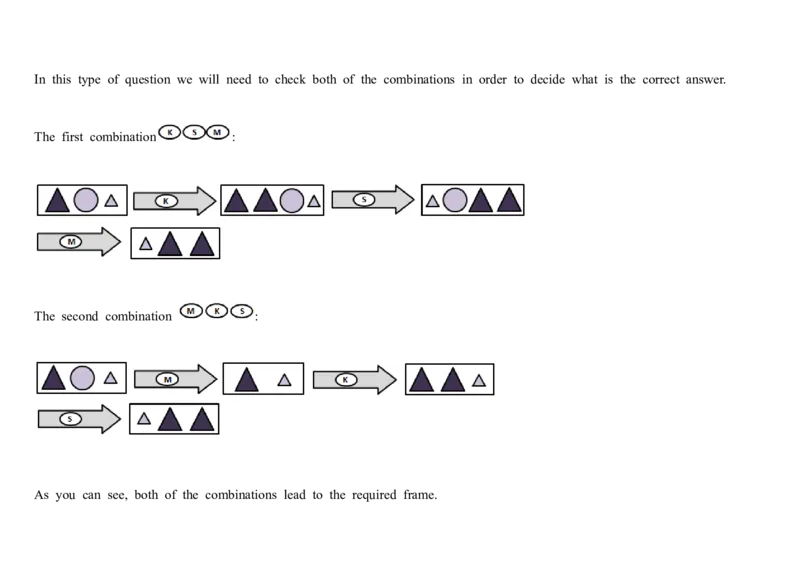
(3) The correct answer is: "Either or ."In this type of question we will need to check both of the combinations in order to decide what is the correct answer.
The first combination :
The second combination :
As you can see, both of the combinations lead to the required frame.5.
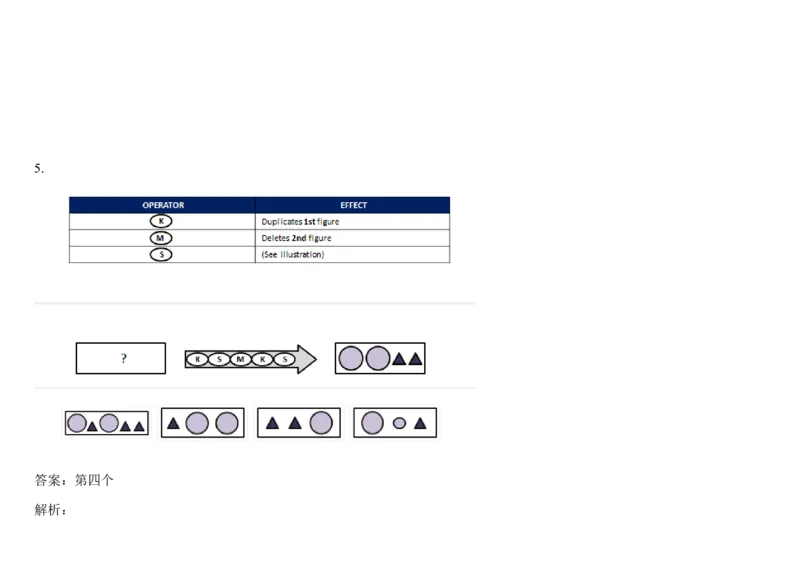
答案:第四个
解析:(4) The correct answer is
A good way to tackle this question is by eliminating as many distracters as possible, before attending to a long sequence
checking.
Since the reverse order operator (S) appears twice, it is most likely that the initial frame would have the same type of order
in it; i.e. circles at the beginning and triangles at the end. Hence, we can eliminate distracter 2. Notice the duplication
operator (K) appears twice whilst the deletion operator (M) appears only once. According to this, we can deduce that the
initial frame contains 3 figures. Therefore, we can eliminate distracter 1.
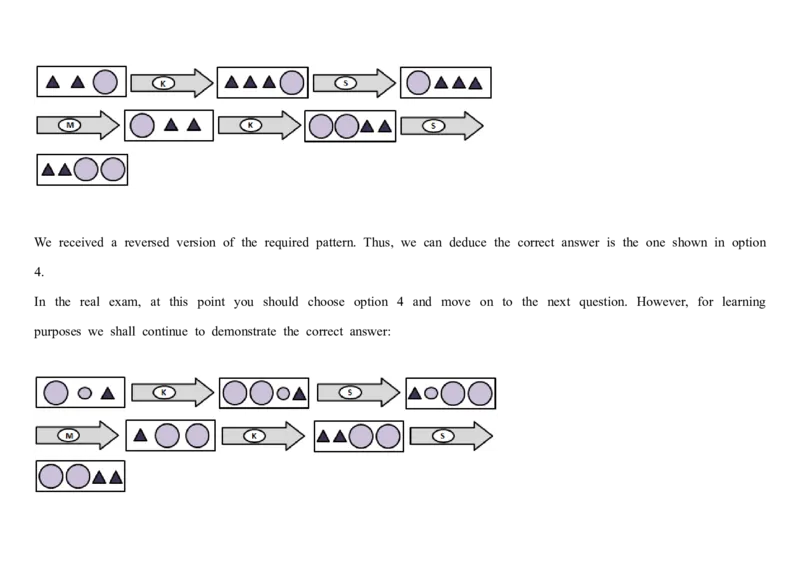
Now that we are left with only two distracter (3 and 4), we shall simply check one of them; if it leads to the correct
pattern then it’s the correct answer, and if not- we can choose the remaining option.
Lets begin with distracter 3:We received a reversed version of the required pattern. Thus, we can deduce the correct answer is the one shown in option
4.
In the real exam, at this point you should choose option 4 and move on to the next question. However, for learning
purposes we shall continue to demonstrate the correct answer:6.
解析:
If needed, you may return to this page at any given point in the exam.
We recommend moving on to the first question only after you have established a good understanding of all operators.7.
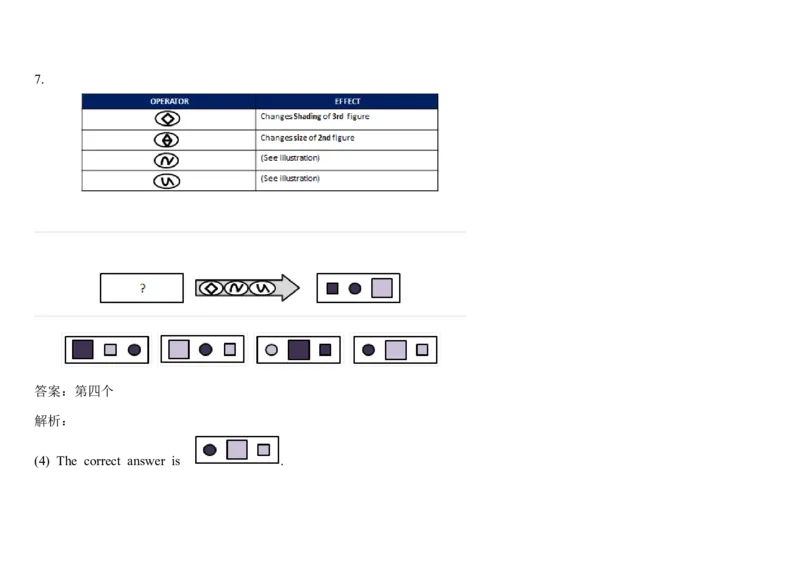
答案:第四个
解析:
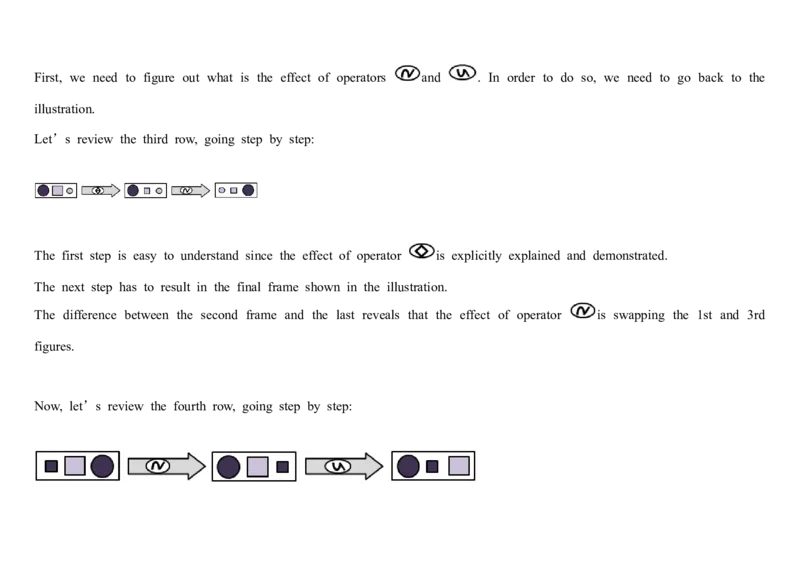
(4) The correct answer is .First, we need to figure out what is the effect of operators and . In order to do so, we need to go back to the
illustration.
Let’s review the third row, going step by step:
The first step is easy to understand since the effect of operator is explicitly explained and demonstrated.
The next step has to result in the final frame shown in the illustration.
The difference between the second frame and the last reveals that the effect of operator is swapping the 1st and 3rd
figures.
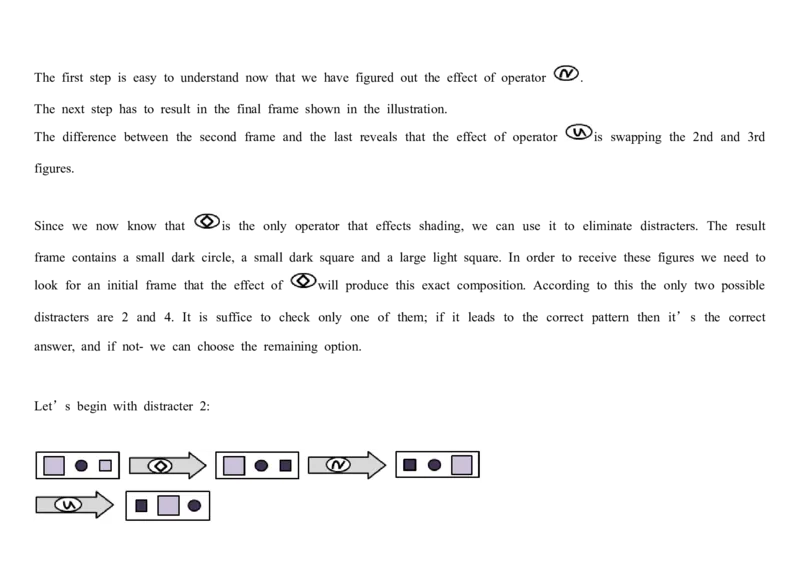
Now, let’s review the fourth row, going step by step:The first step is easy to understand now that we have figured out the effect of operator .
The next step has to result in the final frame shown in the illustration.
The difference between the second frame and the last reveals that the effect of operator is swapping the 2nd and 3rd
figures.
Since we now know that is the only operator that effects shading, we can use it to eliminate distracters. The result
frame contains a small dark circle, a small dark square and a large light square. In order to receive these figures we need to
look for an initial frame that the effect of will produce this exact composition. According to this the only two possible
distracters are 2 and 4. It is suffice to check only one of them; if it leads to the correct pattern then it’s the correct
answer, and if not- we can choose the remaining option.
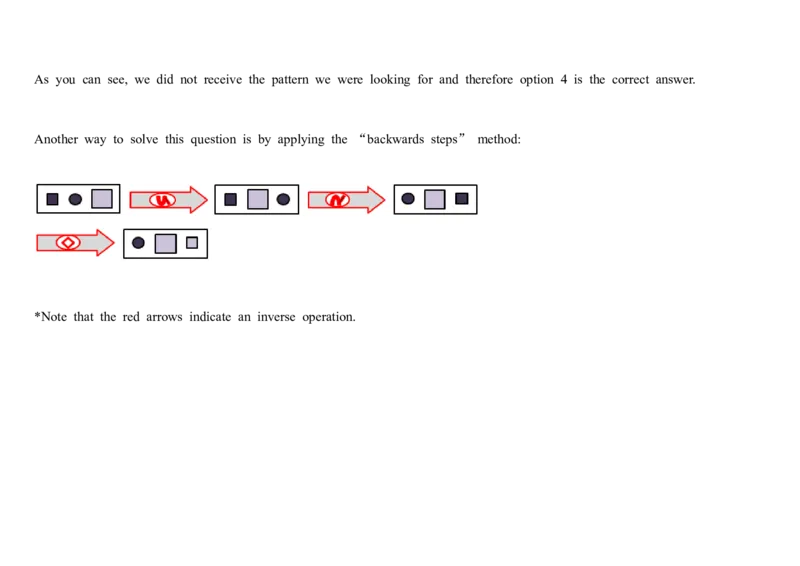
Let’s begin with distracter 2:As you can see, we did not receive the pattern we were looking for and therefore option 4 is the correct answer.
Another way to solve this question is by applying the “backwards steps” method:
*Note that the red arrows indicate an inverse operation.8.
答案:第四个
解析:
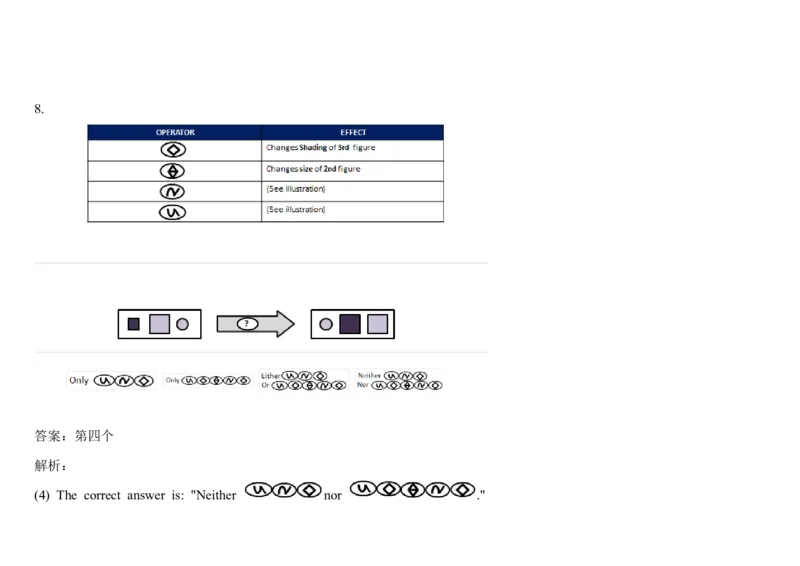
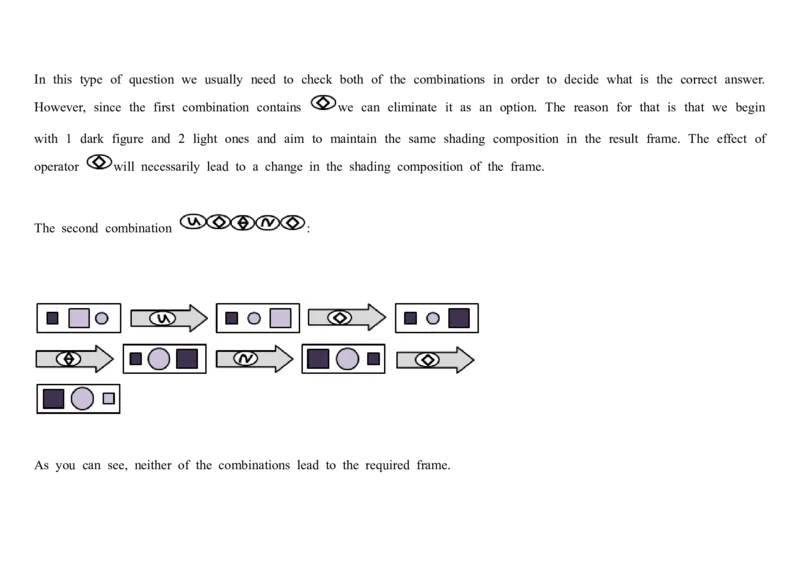
(4) The correct answer is: "Neither nor ."In this type of question we usually need to check both of the combinations in order to decide what is the correct answer.
However, since the first combination contains we can eliminate it as an option. The reason for that is that we begin
with 1 dark figure and 2 light ones and aim to maintain the same shading composition in the result frame. The effect of
operator will necessarily lead to a change in the shading composition of the frame.
The second combination :
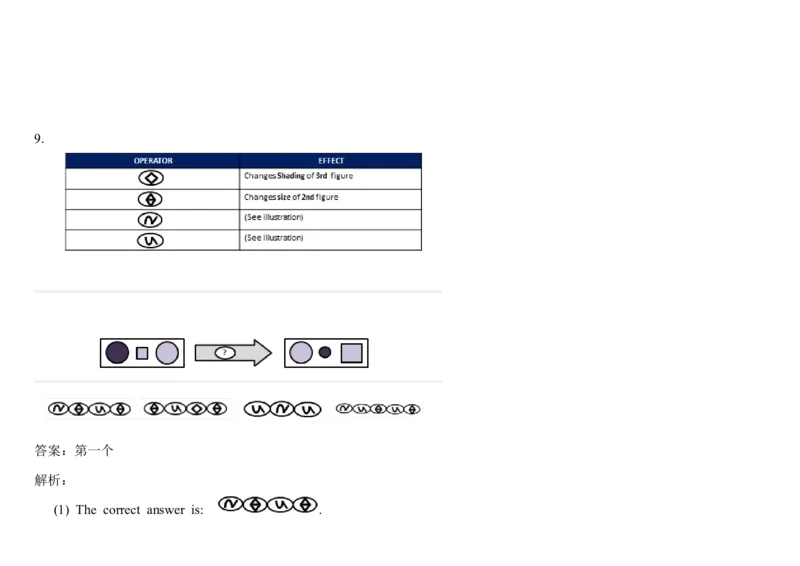
As you can see, neither of the combinations lead to the required frame.9.
答案:第一个
解析:
(1) The correct answer is: .A good way to tackle this type of question (when you have many long combinations to check) is to begin by
eliminating as many distracters as possible .
First, we will look to see whether all of the original shades and sizes appear in the result frame.
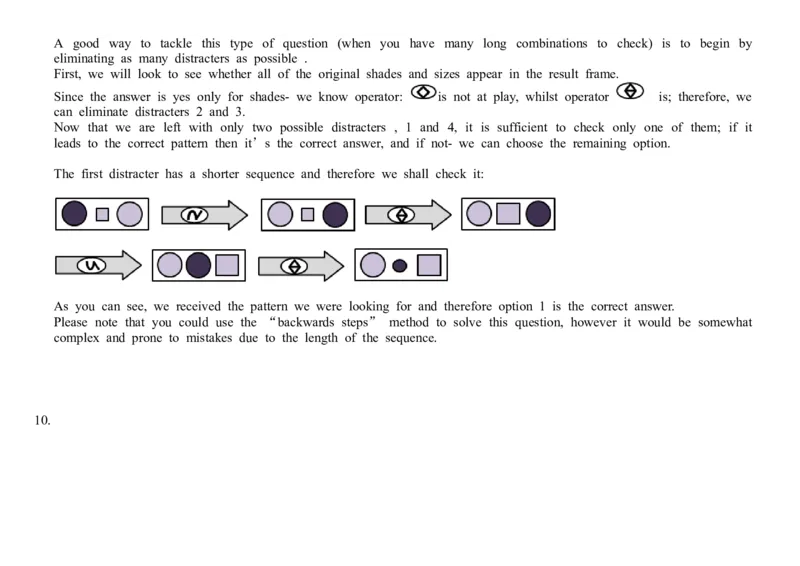
Since the answer is yes only for shades- we know operator: is not at play, whilst operator is; therefore, we
can eliminate distracters 2 and 3.
Now that we are left with only two possible distracters , 1 and 4, it is sufficient to check only one of them; if it
leads to the correct pattern then it’s the correct answer, and if not- we can choose the remaining option.
The first distracter has a shorter sequence and therefore we shall check it:
As you can see, we received the pattern we were looking for and therefore option 1 is the correct answer.
Please note that you could use the “backwards steps” method to solve this question, however it would be somewhat
complex and prone to mistakes due to the length of the sequence.
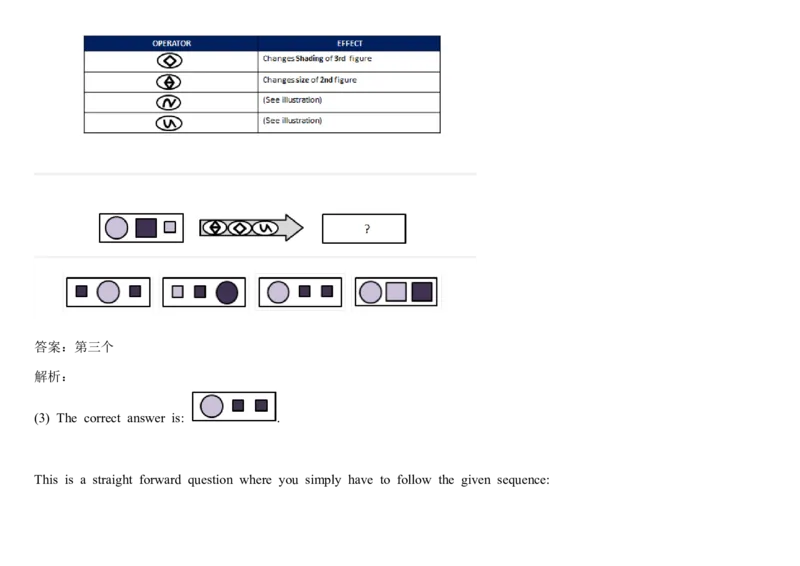
10.答案:第三个
解析:
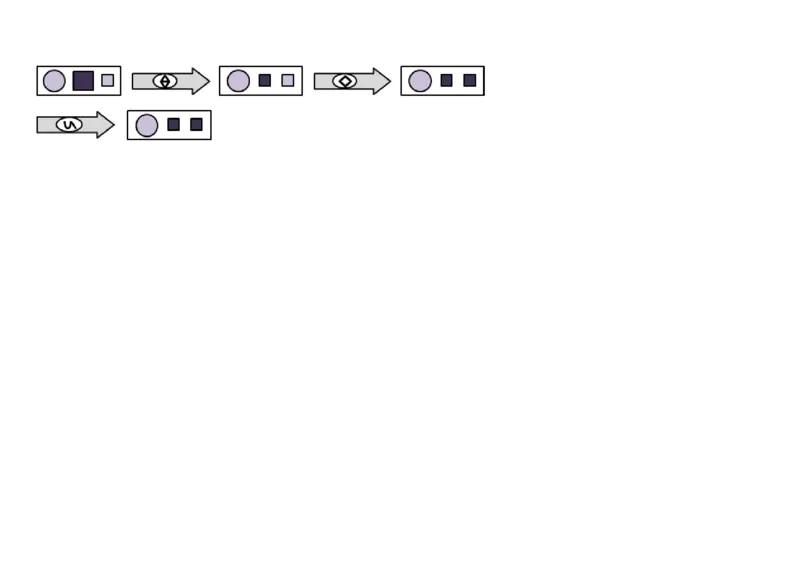
(3) The correct answer is: .
This is a straight forward question where you simply have to follow the given sequence: