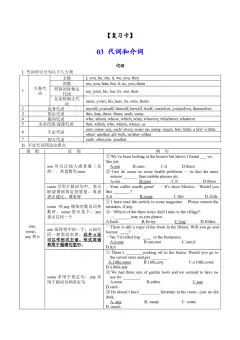
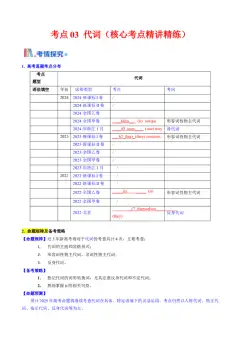
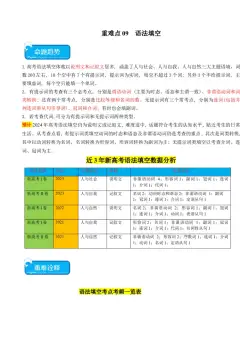
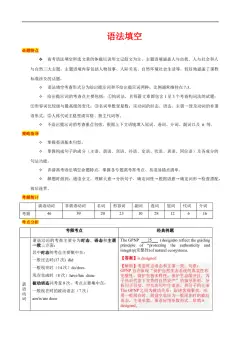
高考英语一轮复习语法填空专题应对策略
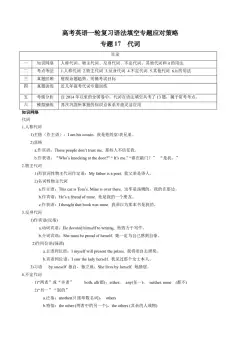
专题 06 代词
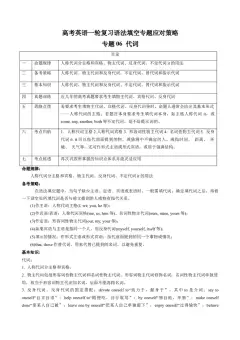
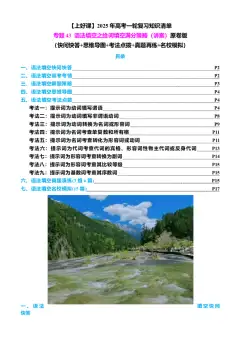
目录
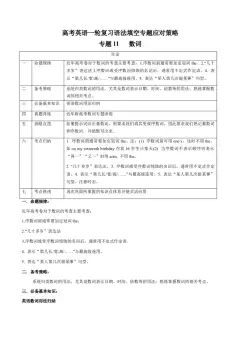
一 命题规律 人称代词分主格和宾格、物主代词、反身代词、不定代词it的用法
二 备考策略 人称代词、物主代词和反身代词,不定代词,替代词和指示代词
三 基本知识 人称代词、物主代词和反身代词、不定代词,替代词和指示代词
四 真题训练 近几年的高考真题要求考生填物主代词、宾格代词、反身代词
五 思路点拨 若要求考生填物主代词、宾格代词、反身代词等时,命题人通常会给出其基本形式
——人称代词的主格;若题目本身要求考生填代词本身,如主格人称代词 it,或
some, any, another, both等不定代词,是不给提示词的。
六 考点归纳 1. 人称代词主格2.人称代词宾格3. 形容词性物主代词4. 名词性物主代词5. 反身
代词6. it可以指代前面提到的物,或猜测中不确定的人,或指时间、 距离、 环
境、 天气等,还可作形式主语或形式宾语,或用于强调结构。
七 考点练透 再次巩固所掌握的知识点体系并能灵活应用
命题规律:
人称代词分主格和宾格、物主代词、反身代词、不定代词it的用法
备考策略:
在语法填空题中,当句子缺少主语、定语、宾语或表语时,一般需填代词;确定填代词之后,再看
一下设空处所填代词是否与前文提到的人或物有指代关系。
(1)作主语:人称代词主格(I, we, you, he等);
(2)作宾语/表语:人称代词宾格(me, us, him等)、名词性物主代词(ours, mine, yours等);
(3)作定语:形容词性物主代词(our, my, your等);
(4)如果宾语与主语是指同一个人,用反身代词(myself, yourself, itself等);
(5)填it的情况:作形式主语或形式宾语;指代前面提到的同一个事物或情况;
(6)that, those作替代词,用来代替已提到的名词,以避免重复。
基本知识:
代词:
1. 人称代词分主格和宾格。
2. 物主代词包括形容词性物主代词和名词性物主代词。形容词物主代词修饰名词;名词性物主代词单独使
用,相当于形容词物主代词加名词,后面不能再跟名词。
3. 反身代词。反身代词的固定搭配:devote oneself to“致力于,献身于”,其中 to 是介词;say to
oneself“自言自语”;help oneself to“随便吃,自行取用”;by oneself“独自地,单独”;make oneself
done“使某人自己被”;leave one by oneself“把某人自己单独留下”;enjoy oneself“过得愉快”;behaveoneself“举止规矩”;come to oneself“苏醒过来”。
4. 不定代词。指人的不定代词:someone,anyone,somebody,anybody,everyone,everybody,nobody,
no one;指物的不定代词:something;anything;everything;nothing;none既可指人也可指物,表示“一
个也没有”或“一点也没有”。
5. it的用法
(1)it作形式主语或形式宾语,代指动词不定式、动名词、名词性从句。
(2)用于强调句型:It is/was ...that/who...例如:It was he that/who broke the door.(是他弄坏的门);It was
not until his father came back that he left home.(直到他的父亲回来,他才离开的家。)温馨提示:这个句型
不能强调谓语动词,强调谓语动词时应该用:助动词do/does/did+动词原形,意为“确实,务必,一定”。
例如:He did break the door.(他确实弄坏了门。)
(3)it的固定搭配:When it comes to...“当谈到......的时候”,其中to是介词;make it“成功做成某事”;as
it is “事实上,照原样”;get it“明白了”;put it“叙述,说明”;see to it that,意为“注意,务必,一定要
做到”。
(4)动词+it+if / when从句:当enjoy, like, dislike, love, hate, prefer, appreciate等动词后需要接一个if或
when引导的从句时,此时需要先在动词后接it作形式宾语。例如:I would appreciate it very much if you
would help me with it. (如果你能帮助我做这事,我会十分感激。)
考点1 人称代词、物主代词和反身代词
代词 第一人称 第二人称 第三人称
单数 复数 单数 复数 单数 复数
人称代词
I we you you he she it they
主格
人称代词
me us you you him her it them
宾格
形容词性
my our your your his her its their
物主代词
名词性物
mine ours yours yours his hers its theirs
主代词
反身代词 myself ourselves yourself yourselves himself herself itself themselves
知识1 人称代词
人称代词的句法功能。在句中,人称代词作不同的成分对应其不同的格:
作主语→用主格 作宾语→用宾格 作表语→ 指代主语用主格,指代宾语用宾格单独使用或放not后→多用宾格
We all grew up hearing people tell us to "go out and get some fresh air."人们告诉我们"出去呼吸点新鲜空气",我
们都是听着这些长大的。[2019全国Ⅰ](主格We作主语,宾格us作tell的宾语)
1.在It is/was...that/who...强调句型中,若被强调部分是人称代词,作主语用主格,作宾语用宾格。
►It was we that met him at the school gate. (主格we作主语)
►It was him that we met at the school gate.(宾格him作宾语)
2.句中没有谓语动词时,人称代词常用宾格。
►—I'd like to go to climb the mountain this weekend.
—Me,too.
3.当说话者不清楚或没必要知道谈论对象的性别时,常用it来表示。
►What a lovely baby! Is it a boy or a girl?
知识2 物主代词
物主代词可分为形容词性物主代词和名词性物主代词。
1.形容词性物主代词相当于形容词:置于名词之前,作定语,不可单独使用。
►Those people are my schoolmates.
拓展延伸 含形容词性物主代词的常用结构:
1.形容词性物主代词+own(+名词) 某人自己的(……)
►I have my own room.
►I need a room of my own.
2.形容词性物主代词+v-ing,可作主语或宾语
►His being ill made his mother worried.
2.名词性物主代词相当于"形容词性物主代词+名词":可单独使用(作主语、表语和宾语),也可用"of+名词性物
主代词"结构作后置定语。
► Your bike is black. Mine is red. (=My bike is red.)
►There is something wrong with my bike. May I use yours?(= May I use your bike?)►Kate went on holiday with a cousin of hers.
知识3 反身代词
1.反身代词可作宾语:常在 enjoy, teach, hurt, behave, introduce(介绍)等动词后作动宾和by, for, to, in, of等介
词后作介宾。
►He is teaching himself English. ►She was talking to herself.
2.反身代词可作同位语:用于加强语气,强调"亲自,本人,亲身"。
►He himself went to the bank.
3.反身代词可作表语:常用于be, feel, look, seem等系动词后作表语,表示身体或精神状态。
►I'm not myself today. ►I am feeling myself again.
归纳总结 含有反身代词的常用短语
1.介词+反身代词:by oneself 单独,独自 for oneself 亲自,为自己
in oneself 本身,本来 to oneself 独自拥有的,独享的
2.动词+反身代词:enjoy oneself过得愉快 amuse oneself自娱 seat oneself就座 boast oneself自夸
teach oneself自学
express oneself表达自己 behave oneself举止得 hide oneself自己藏
dress oneself自己穿衣 apply/devote oneself to致力于
feel oneself觉得身体好 help oneself to随便吃/用 lose oneself in沉迷于make yourself at home不拘束
adapt/adjust oneself to使自己适应于
考点 2 不定代词
不定代词是高考考查的内容之一,考生一定要注意不定代词在具体语境中的用法。此外,大多数不定代词还
可以作限定词(两者在用法上基本是相通的)。下面具体讲解一下常见的不定代词的用法。
知识1 either, both, neither, all, none, any
either 肯定意义 表示“两者中的一个”,作主语时,谓语动词常用单数形式。
both 肯定意义 表示“两者都”,作主语时,谓语动词常用复数形式。
neither 否定意义 表示“两者都不”,作主语时,谓语动词常用单数形式。
作主语时,谓语动词的人称和数应与all所指代的人或事物保持一
all 肯定意义
致。作主语后接复数名词时,谓语动词可用单数也可用复数;后接不可
none 否定意义
数名词时,谓语动词用单数形式。
any 肯定意义 作主语时,谓语动词的数要根据其代指的名词确定,常与of连用。
►There are two ways leading to the woods. Either seems (=Both seem) to be passable. 有两条路通往森林,任何
一条/两条似乎都走得通。
►Neither of the two cars is mine.这两辆汽车都不是我的。
►All of the food has gone.所有食物都没了。
►None of the money is mine.钱都不是我的。
►Mr. Smith refused to accept any of the three suggestions.史密斯先生拒绝接受三条建议中的任何一条。
知识 2 the other, another, the others, others
指“两者中的另一个”,常与one连用,构成one...the other ...结构,意为“一个……另一
the other
个……”;作定语修饰复数名词时,表示“全部其余的”。
other 不能单独使用,只能修饰名词,表示泛指意义。
可单独使用,也可修饰名词,泛指三者或三者以上的人或物中的“另一个”,代替或修饰
another 单数可数名词。另外,another后可接“基数词/few+复数名词”形式,表示“另外
的……”。
单独使用,表示泛指意义,意为“其他的人或事物”,常与some一起出现;特指“其他
others
的全部人或事物”时用the others。
1.the other还可作定语修饰可数名词,修饰可数名词复数时,表示"其余全部的"。如:
the other book另一本书 the other books其余的书
2.another也可作定语,后可跟"基数词/few(+可数名词复数)",表示"另外的……"。"another+基数词+可数名词
复数"相当于"基数词+more+可数名词复数"。
►I have been here for two weeks and I will stay here for another three weeks (=three more weeks).
知识3 none, nobody/no one, nothing
既可指人也可指物,多与表示范围的介词of连用;与数量有关,可回
none
答how many或how much类的问句,表示“一个也没有”。
nobody/ 不能与of连用,只能指人,表示“什么人也没有”,可回答who引导
no one 的疑问句。
nothing 表示“什么也没有”,用来否定一切,可回答what引导的疑问句。
►—How much money do you have?你有多少钱?—None.一点也没有。
►—Who is in the room?谁在屋里? —No one/Nobody.没有人。
►—What are you doing now?你现在在做什么?
—Nothing.什么也没有做。
对"some/any/every+名词"进行全部否定的词是none;
someone/somebody/everyone/everybody/anyone/anybody进行全部否定的词是nobody/no one;
对something/anything/everything 进行全部否定的词是nothing。
►If I had some money, I would lend him, but unfortunately, I have none.如果我有些钱的话,我会借给他,但不幸
的是,我一点钱也没有。
1.none作主语时谓语动词的单复数
指代不可数名词→单数 指代可数名词复数时→单、复数均可
►We had three cats once — none is/are alive now.2.none可与of连用,作主语时谓语动词的单复数
none of +不可数名词→单数形式 none of +可数名词复数→单、复数均可
►None of the telephones is/are working.
知识 4 many,much,(a)few,(a)little
many,much,(a)few,(a)little既可作代词,又可作限定词,总结如下:
替代或修饰不可数名
含义 替代或修饰名词复数
词
表示"多" many much
表示"少" few little
表示"肯定" a few a little
表示"否定" few little
(注意:not a little,quite a little相当于much;not a few,quite a few相当于many)
►Many wanted to change their life in the town.
►You have a lot of free time, but I don't have much
►A lot of guests were invited, but few came.
►If you have any spare milk, could you give me a little?知识 5 some和any
some常用于肯定句,any则常用于否定句和疑问句。
►Some of the milk has gone bad.
►I need some stamps. Are there any in your bag?
特别提醒 any还可用于肯定句,表示"任一"。
►I'll take any you don't want.
some和any均可作限定词,修饰可数名词复数和不可数名词。
1.some常用于肯定句,any常用于否定句和疑问句。
►There's still some wine in the bottle.
►Are there any meat? I didn't eat any meat.
2.some也可用于疑问句。若疑问句表示请求、建议或邀请,或期望得到对方肯定的答复,用some,不用any。
►May I ask you some questions? (请求)
►Would you like some coffee? (邀请)
【注意】 some和any均可修饰可数名词单数。
(1)"some+可数名词单数"表示"某一……"。
►John, some student is waiting for you downstairs.
(2)"any+可数名词单数"表示"任一……"。
►Take any book you like.
知识6 each
1.each可直接作主语,也可接“of+名词复数”作主语,此时,谓语动词用单数。
►Each (of the students) has a dictionary.
2.each可作同位语,放在主语(复数)后,谓语动词用复数。
►They each have a dictionary.
拓展延伸 each还可作限定词,修饰可数名词单数,常与every进行区别辨析:each指 “两者或两者以上中的每一个”, 强调个体
every指 “三者或三者以上中的每一个”, 强调全体,相当于all
►There are lots of flowers on each side of the road. 路两边有许多花。
►She knows every student in the school. 她认识学校里的每一个学生。
知识 1.常见的复合不定代词
某 任何 每个,所有 没有
someone anyone everyone no one
人
somebody anybody everybody nobody
物 something anything everything nothing
2.复合不定代词的基本用法
(1)复合不定代词作主语时,谓语动词通常用单数。
►Everyone knows this.
(2)当形容词修饰复合不定代词时,形容词通常后置。
►There's something wrong with the TV.
知识8 不定代词构成的固定搭配
anything but 决不,根本不 nothing but 仅仅,只有
none but=only仅仅,只有 all but几乎,差不多; 除……外全部
anybody/everybody but除……外的任何人
not anything=nothing没有什么(表示全部否定)
not everything并非每件东西(表示部分否定)
not much of a...不是很好,不怎么样
...or something ……诸如此类的什么
something like... 有点像……,大概……,大约……
something or other 一件什么东西(事情)
something of a... 有些……,有几分……►He is anything but a clerk.他根本不是一名职员。
►He is a scientist or something.他是科学家之类的人物。
►I have something like 20 dollars in cash.我大概有20美元现金。
►His life is something of a mystery. 他的生活有几分神秘。
考点 3 替代词和指示代词
知识1 替代词one, the one, that, it
it 特指前面提到过的同一个人或物
that指代前面出现过的不可数名词或单数可数名词,指代单数可数名词时,相
that/those
当于the one。其复数形式为those,相当于the ones。
one/ones one指代前面出现过的那类事物中的“一个”,其复数形式为ones。
In Canada,the tipping situation is very similar to _______ of the US.
分析语境及句子结构,尤其是空后的介词短语of the US,可知此处用that替代前面提到的the tipping situation,
表示同类事物。故填that。
The Chinese have known about the benefits of green tea since ancient times, and they use _______ to treat various
diseases such as headaches and depression.
句意:自古以来中国人就知道绿茶的好处,并用绿茶来治疗各种疾病,如头痛和抑郁症。此处指代的是前面提
到的green tea,故用it。
知识2 指示代词this, that, these, those
1.指代前面提到过的事物,常用that或those,起"承上"的作用;指代将要提及的事物,常用this或these,起"启
下"的作用。
►He was ill.That's why he didn't come.
►What do you think of this? Jack broke my camera,but he refused to pay for the repairs.(此句中this指代下文将
要提到的事物,不能换成that)
2.在打电话时,用this来介绍自己,用that来询问对方。
►Hello. This is Tom. Who is that speaking?
3.含有this, that的习惯用法。
this and that 这样那样,各种事情that is (to say) 也就是说
Is that so?真的是这样吗?
That’s all. 就这些。
That’s it. 好了。
That’s enough. 够了。
知识3 指示代词such和the same
1.such指代如前所述的那样的人或事物。
►Such is Albert Einstein, a simple man with great achievements.这就是阿尔伯特·爱因斯坦,一个简朴而又成就
卓越的人。
2.the same指同样的人或事物。
►The same happened once.同样的事情曾经发生过。
难点1 it的用法
1.it作形式主语
it可以作形式主语,而把真正的主语后置。常用it作形式主语的句型有:
(1)It+be+adj.+(for sb.) to do sth.常用于此句型的形容词有:easy, difficult, hard, necessary, unnecessary, possible
等。
►It is necessary to change your job.
(2)It takes/took sb.+一段时间+to do sth.
表示"做某事花费某人多长时间"。
►It took us half an hour to get to the town.
(3)It+be+adj.+of sb. to do sth. 此句型中的形容词通常描述人的性格、品质等。常用于该句型的形容词有:
kind, nice, wise, silly, polite, impolite, friendly, foolish, clever等。
►It is friendly of the family to try to make me feel at home.(4)It+be+n.+(for sb./sth.)to do sth.常用于此句型的名
词(短语)有: pity, shame, pleasure, fun, joy, good/bad manners等。
►It is bad manners for the young to take up the seats for the old.
(5)It+be+adj./n.+doing sth.常用于此句型的形容词和名词(短语)有: useless, fun, no/little use, no/much good等。►It's no use crying over spilt milk.为打翻的牛奶哭泣是没有用的。(覆水难收,悔恨无益。)
(6)It+be+adj./n.+主语从句.在"It is necessary/important+that从句"中,从句的谓语常用"should+动词原形",且
should可以省略。
►It's necessary and important that one should master the skills of operating computers.
(7)It+be+过去分词+that从句.say, report, think, believe, hope, expect, agree, accept, decide, intend, plan,
understand, know, demand, request, require, order, suggest, advise, recommend等动词的过去分词常用于此句
型。
►It is reported that another satellite has been in orbit.
特别提醒 在"It's suggested/advised/ ordered/ requested/ insisted(坚决要求)/required/demanded+that从句"中,
从句要用虚拟语气,即从句谓语要用"should+动词原形",should可省略。
(8)It makes no difference/doesn't matter+主语从句.
►It makes no difference to me whether you go or not.你去或不去对我来说无所谓。
(9)It seems/appears/happens+that从句.
►It seemed that she had made some mistakes in the design of the machine.她好像在机器的设计上出了一些错
误。
2.it作形式宾语
(1)当宾语是动词-ing、动词不定式或that从句,且其后有宾语补足语时,为了保持句子结构的平衡,通常用it作
形式宾语,而将真正的宾语置于句末。常用结构是:find/feel/think/believe/consider/make等+it+宾
补+动词-ing/动词不定式/that从句。
►I feel it hard to climb the mountain.
►We find it useless waiting here all the time.
(2)某些及物动词(短语)后不能直接跟从句。此时应先用it作形式宾语,然后接宾语从句。常用结构是:hate/
like/appreciate/depend on
等+it+从句。
►I would appreciate it if you paid in cash.
►You may depend on it that all the goods will be shipped abroad in time.3.it构成强调句(It is/was…that/who…)
►It was I that/who told him about it.是我告诉他这件事的。
(it构成强调句型的具体用法详见"强调句型")
4.it的特殊用法
(1)it指天气、时间、环境、距离等
►It is a lovely day today, isn't it?
►It was nearly midnight when she came back.
►It was very quiet in the cafe.
►It is half an hour's walk to the city centre.
(2)含有it的固定结构
as it is事实上 as sb. puts it 正如某人所说
It depends.视情况而定。 Don't mention it.不客气。
Take it easy.别紧张。 believe it or not 信不信由你
see to it that…确保…… make it 成功,做到
mean it说话算数 can't help it无能为力
call it a day到此为止 go for it 大胆试一试
take it for granted that…认为……是理所当然的
(3)it可以用来替代整个句子或句中谓语部分所表示的意思。
►Mrs. Anderson is already past fifty, but she doesn't look it.安德逊夫人已经年过五十,可是看上去不像。
难点2 it构成的几个易混淆的句型
1.It+be+时间段+since引导的状语从句 "自……以来已多久了"。
表示现在的情况时,主句多用一般现在时或现在完成时,从句多用一般过去时;表示过去的情况时,主句用一般
过去时,从句用过去完成时。
►It is three years since his father passed away.
►It was 10 years since they had married.2.It+be+时间段+before引导的状语从句 过了...才...
该句型中的"时间段"一般为some time,…years,…months,…weeks, …days, …hours, …minutes等。
主句可用一般过去时或一般将来时(will be):若主句用一般过去时,before从句用一般过去时;若主句用一般将
来时,before从句常用一般现在时。
►It was some time before I knew the truth.过了一段时间我才了解到真相。
►It will be many years before the situation improves.这种状况要过许多年才能得到改善。
3.It+be+时间点+when引导的状语从句
该句型中, it 指时间,而且表示时间点的词语前没有介词(时间一般为具体时间)。主句的谓语动词和从句的
谓语动词在时态上一般是一致的,但若主句用将来时,从句常用一般现在时代替将来时。
►It was already 8 o'clock when we got home.
►It will be next morning when we finish our work.
4.It+be+ (high/about) time+ (that)引导的从句 "是做……的时候了"。从句要用虚拟语气,即从句的谓语动词
用过去式(be动词用were)或"should+动词原形", should不可省略。
►It is high time (that) she called her mother.
5.It+be+the first/second/third…time+(that)引导的从句
"这/那是某人第几次做某事"。
►It was the fifth time (that) he had paid a friendly visit to Africa.
难点3 部分否定与全部否定
1.no one, none, nobody, nothing以及"no+名词"等都表示全部否定。
►None of us was going to the party.我们当中没人打算去参加那个聚会。
2.当not与不定代词all, both, everyone, everybody, everything等或"every+名词"连用时,不管not在它们之前还
是之后,都表示部分否定。此外,not与总括性副词(如everywhere, always, wholly, altogether等)连用时也表示
部分否定。
►Not all of them smoke.=All of them don't smoke.
►Such a thing can't be found everywhere.
真题训练:1.(2023年新高考Ⅰ卷·62) Nanxiang aside, the best Xiao long bao have a fine skin, allowing them 61
(to be lifted) out of the steamer basket without allowing them tearing or spilling any of ____62____
(they) contents.
2. (2022年全国乙卷·70) The Chinese Ancient Tea Museum was officially unveiled (揭幕) at the ceremony,
opening _____ (it) first exhibition: The Avenue of Truth—A Special Exhibition of Pu’er Tea.
3. (2021年新高考Ⅰ卷·64) As the song goes, this long and winding road “will never disappear”, and it will always
stick in the visitor’s memory. It sure does in ______ (I).
4. (2021年全国乙卷·63) Ecotourism has ____ (it) origin with the environmental movement of the 1970s.
5. (2020年全国Ⅰ卷·70) Data about the moon’s composition could help China decide whether ____ (it) plans for a
future lunar(月球的) base are practical.
6. (2018年全国Ⅰ卷·70) If you are time poor, you need run for only half the time to get the same benefits as other
sports, so perhaps we should all give ____________ a try.
7. (2018年全国Ⅲ卷·68) When the gorillas and I frightened each other, I was just glad to find ______ (they)
alive.
8. (2017全国Ⅱ卷·67) However, the railway quickly proved to be a great success and within six months, more than
25,000 people were using ____ every day.
9. (2014全国II卷·69) Then the driver stood up and asked, “Did anyone lose a suitcase at the last stop?”A woman
on the bus shouted,“Oh dear! It’s _________(I).”She pushed her way to the driver and took the suitcase thankfully.
思路点拨:
从近几年的高考真题来看,若要求考生填物主代词、宾格代词、反身代词等时,命题人通常会给出其基本
形式——人称代词的主格;若题目本身要求考生填代词本身,如主格人称代词it,或some, any, another,
both等不定代词,是不给提示词的。
1. 当括号中所给词是人称代词时,可能是填以下形式:
(1) 宾格形式:在句中作宾语或表语。
(2) 形容词性物主代词:在名词前作定语。
(3) 名词性物主代词:作主语、宾语或表语。
(4) 也可能是反身代词。
2. 在纯空格题中:(1) 句子缺宾语时,到目前为止,高考只要求考生填it,即“宾语位置填it”,来指代前文提到的物或事。
以下两点到目前为止全国卷暂未考过。尽管今后考查的可能性也不大,但还是建议考生了解:
(2)句子缺主语时,可能填:① 人称代词主格;② 不定代词;③ it,包括用作形式主语的it,替代后面作
真正主语的不定式、动名词或从句。如:
Behind him were other people to whom he was trying to talk, but after some minutes _______ walked away and sat
near me,looking annoyed.
解析:因but后的并列句中缺主语,故应填代词;根据语境,不难推出走开坐到“我”附近的应是他后面
的那些人,即other people,指人,是复数,且作主语,应当填they。
因为充当主语或宾语的应是名词或代词,而在语法填空的纯空格题中一般是不要求考生填名词的,所以只
要句子缺主语或宾语,就该填代词。此时,要根据前后语境, 看该空格是指人还是事物,指男还是指女,
是单数还是复数。
(3) 空格后是名词,即名词前需要填限定词时,可能是填不定代词。如:
The young man went home with a happy heart. After the student left, the teacher let _________ student taste the
water.
解析:空格后是名词student,且为单数,作let的宾语,故应填限定词;由句意“在送水的这个学生走了
之后,这位老师让他的另外一个学生尝一尝”可知填another。
考点归纳:
1.人称代词主格有I, you, he, she, it, we, you, they等,在句中只能作主语用。一般在纯空格题中考查。
2.人称代词宾格有me, you, him, her, it, us, you, them等,在句中作及物动词或介词的宾语。
3. 形容词性物主代词有my, your, his, her, its, our, your, their等,在句中只能作定语。
4. 名词性物主代词有mine, yours, his, hers, its, ours, yours, theirs等,相当于“形容词性物主代词+名
词”, 在句中可以作主语、宾语或表语。
5. 反身代词有myself, yourself, himself, herself, itself, ourselves, yourselves, themselves等,在句中作宾
语,或者主语或宾语的同位语。
6. it可以指代前面提到的物,或猜测中不确定的人,或指时间、 距离、 环境、 天气等,还可作形式主语
或形式宾语,或用于强调结构。
考点练透:
1. After what seemed to be a hundred years, I found my audience applauding—I made ____! From then on, my fearof talking before an audience disappeared.
2. As you lie in bed, tense the muscles in your feet and then relax _______ (they).
3. The students returned to school with a sense of achievement, a feeling that _______ helped people in need.
4.The boy you saw was ______ image. This should teach you an important lesson, my son.
5. Finally I found that she was trying to ask me whether I had an extra pen. She showed me that ______ (her) was
out of ink and would not write.
6.I would appreciate________if you could allow me to relate a personal anecdote.
7. I thought that school in China was too hard for ____ (we) students, and that we didn’t get to do enough fun
exercise except running around playgrounds together.
8. However, before I got on the bike, I felt extremely nervous and I was afraid that I would fall off and hurt
________ (me).
9.The frozen parts of the city also make ___ easier for residents to skate around.
10. Now it occurred to _____ (he) that his farm had much potential and that the death of the cow was a bit of luck.
11. It is said that a short-tempered man in the Song Dynasty (960~1279) was very anxious to help ____ (he) rice
crop grow up quickly.
12. I wanted to reward the old woman for the trouble I had caused _____ (she).
13.The man distinguished _________ (he) by his wisdom.
14. I had an amazing conversation with the man who sat next to me, which made ______ of us feel good.
15. Jane was walking round the department store. She remembered how difficult ___ was to choose a suitable
Christmas present for her father.
16.He had a good disguise (伪装), but as soon as he spoke he betrayed ________ (he).
17. I had noticed three hens running free in my hostess’s courtyard and that night one of them ended up in a dish on
my table. _____________ villagers brought me goat’s cheese and honey.
18.He really felt ________ an honour to win the championship in the international competition.
19. They lived mostly on vegetables from ______ (they) garden.
20. She said to _________ (she) that the idea was absurd.
21. A study shows the students who are engaged in after-school activities are happier than _________ who are not.
22.When interacting with others, people should put ________ (they) in the other person’s position, regarding it asa code of conduct to live harmoniously with others.
23. Your photos are lovely. Do you want to see some of ______ (our)?
24. He can’t sell the house. It isn’t _____ (he); it’s mine.
25. She wore ______(she) diamonds to the party.
26.However, dangerous conditions and damaged roads will make________ difficult to deliver food and supplies.
27.You are a team star!Working with _____ is really your cup of tea.
28.She took ________ for granted that he would follow her.
29.The computers in your office are more expensive than________ in our school
30.The research group produced two reports based on the survey , but ____ contained any useful
suggestions.
31.The cost of renting a house in central Xi'an is higher than _____ in any other area of the city.
32.They are calmer and____(they)mood improves.
33.Recycling is one way to protect the environment; reusing is ____.
34.When parents bring home a pet, their child gladly bathes __ and brushes its fur.
35.She remembered how difficult____was to choose a suitable Christmas present for her father.
36.I had to raise my voice to make ____ heard in the noisy crowd.
37.Cultural shock is a feeling which most travelers experience in a foreign country where they find the
culture is quite different from that of __ own.
38.To her joy, Della earned first the trust of her students and then ____of her colleagues.
39.The ship buffeted__________ (it) way through the waves.
40.Despite his serious illness, the old man had lost _____ of his enthusiasm for life.
41.He got a new haircut and got ________ up in a suit, then headed for the hall.
![《专题06代词(原卷版)_3.2025英语总复习_2024年新高考资料_3.2024专项复习_[高考字典]2024年高考英语一轮复习语法填空专题应对策略(通用版)》第1页预览](https://static.diaifu.net/ssd/ssd5/wenku/2026-03-11/27b27994ed465e8a38dbf2ddee3f8240/27b27994ed465e8a38dbf2ddee3f8240_1.webp)
![《专题06代词(原卷版)_3.2025英语总复习_2024年新高考资料_3.2024专项复习_[高考字典]2024年高考英语一轮复习语法填空专题应对策略(通用版)》第2页预览](https://static.diaifu.net/ssd/ssd5/wenku/2026-03-11/27b27994ed465e8a38dbf2ddee3f8240/27b27994ed465e8a38dbf2ddee3f8240_2.webp)
![《专题06代词(原卷版)_3.2025英语总复习_2024年新高考资料_3.2024专项复习_[高考字典]2024年高考英语一轮复习语法填空专题应对策略(通用版)》第3页预览](https://static.diaifu.net/ssd/ssd5/wenku/2026-03-11/27b27994ed465e8a38dbf2ddee3f8240/27b27994ed465e8a38dbf2ddee3f8240_3.webp)
![《专题06代词(原卷版)_3.2025英语总复习_2024年新高考资料_3.2024专项复习_[高考字典]2024年高考英语一轮复习语法填空专题应对策略(通用版)》第4页预览](https://static.diaifu.net/ssd/ssd5/wenku/2026-03-11/27b27994ed465e8a38dbf2ddee3f8240/27b27994ed465e8a38dbf2ddee3f8240_4.webp)
![《专题06代词(原卷版)_3.2025英语总复习_2024年新高考资料_3.2024专项复习_[高考字典]2024年高考英语一轮复习语法填空专题应对策略(通用版)》第5页预览](https://static.diaifu.net/ssd/ssd5/wenku/2026-03-11/27b27994ed465e8a38dbf2ddee3f8240/27b27994ed465e8a38dbf2ddee3f8240_5.webp)
![《专题06代词(原卷版)_3.2025英语总复习_2024年新高考资料_3.2024专项复习_[高考字典]2024年高考英语一轮复习语法填空专题应对策略(通用版)》第6页预览](https://static.diaifu.net/ssd/ssd5/wenku/2026-03-11/27b27994ed465e8a38dbf2ddee3f8240/27b27994ed465e8a38dbf2ddee3f8240_6.webp)
![《专题06代词(原卷版)_3.2025英语总复习_2024年新高考资料_3.2024专项复习_[高考字典]2024年高考英语一轮复习语法填空专题应对策略(通用版)》第7页预览](https://static.diaifu.net/ssd/ssd5/wenku/2026-03-11/27b27994ed465e8a38dbf2ddee3f8240/27b27994ed465e8a38dbf2ddee3f8240_7.webp)
![《专题06代词(原卷版)_3.2025英语总复习_2024年新高考资料_3.2024专项复习_[高考字典]2024年高考英语一轮复习语法填空专题应对策略(通用版)》第8页预览](https://static.diaifu.net/ssd/ssd5/wenku/2026-03-11/27b27994ed465e8a38dbf2ddee3f8240/27b27994ed465e8a38dbf2ddee3f8240_8.webp)
![《专题06代词(原卷版)_3.2025英语总复习_2024年新高考资料_3.2024专项复习_[高考字典]2024年高考英语一轮复习语法填空专题应对策略(通用版)》第9页预览](https://static.diaifu.net/ssd/ssd5/wenku/2026-03-11/27b27994ed465e8a38dbf2ddee3f8240/27b27994ed465e8a38dbf2ddee3f8240_9.webp)