2025 春季版本六年级英语下册
《必须掌握的四大时态》为孩子收藏(2025 新课改)
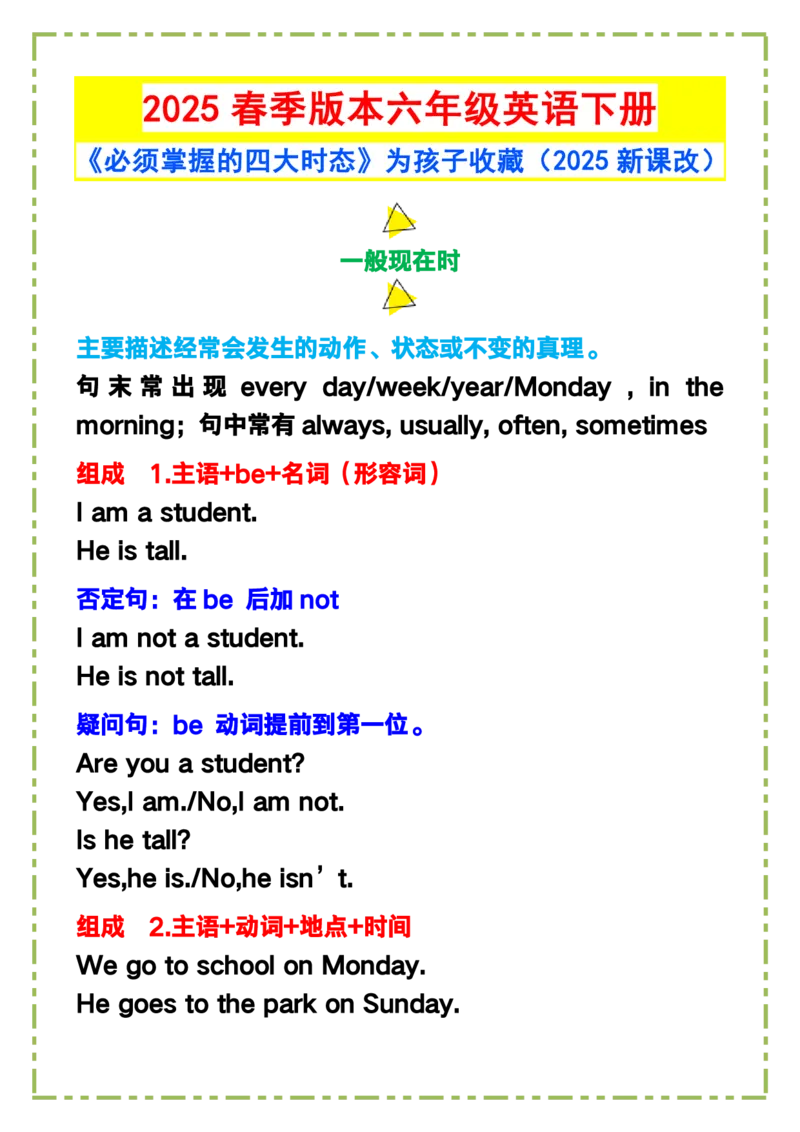
一般现在时
主要描述经常会发生的动作、状态或不变的真理。
句 末 常 出 现 every day/week/year/Monday , in the
morning;句中常有 always, usually, often, sometimes
组成 1.主语+be+名词(形容词)
I am a student.
He is tall.
否定句:在 be 后加 not
I am not a student.
He is not tall.
疑问句:be 动词提前到第一位。
Are you a student?
Yes,I am./No,I am not.
Is he tall?
Yes,he is./No,he isn’t.
组成 2.主语+动词+地点+时间
We go to school on Monday.
He goes to the park on Sunday.否定句:主语+don’t/doesn’t’t+动词原形+地点+时间
We don’t go to school on Monday.
He doesn’t go to the park on Sunday.
疑问句:在句首加 do 或 does
Do you go to school on Monday?
Yes, we do./ No, we don’t.
Does he go to the park on Sunday?
Yes, he does./ No, he doesn’t.
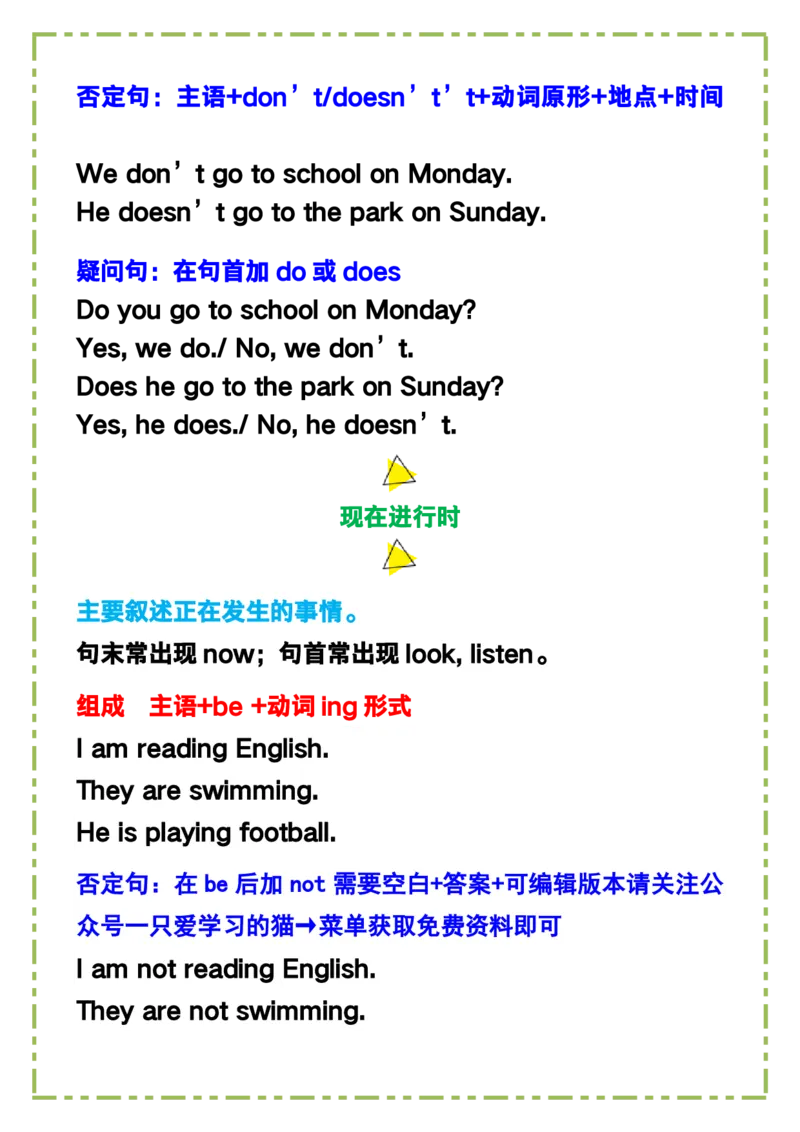
现在进行时
主要叙述正在发生的事情。
句末常出现 now;句首常出现 look, listen。
组成 主语+be +动词 ing 形式
I am reading English.
They are swimming.
He is playing football.
否定句:在 be 后加 not 需要空白+答案+可编辑版本请关注公
众号一只爱学习的猫→菜单获取免费资料即可
I am not reading English.
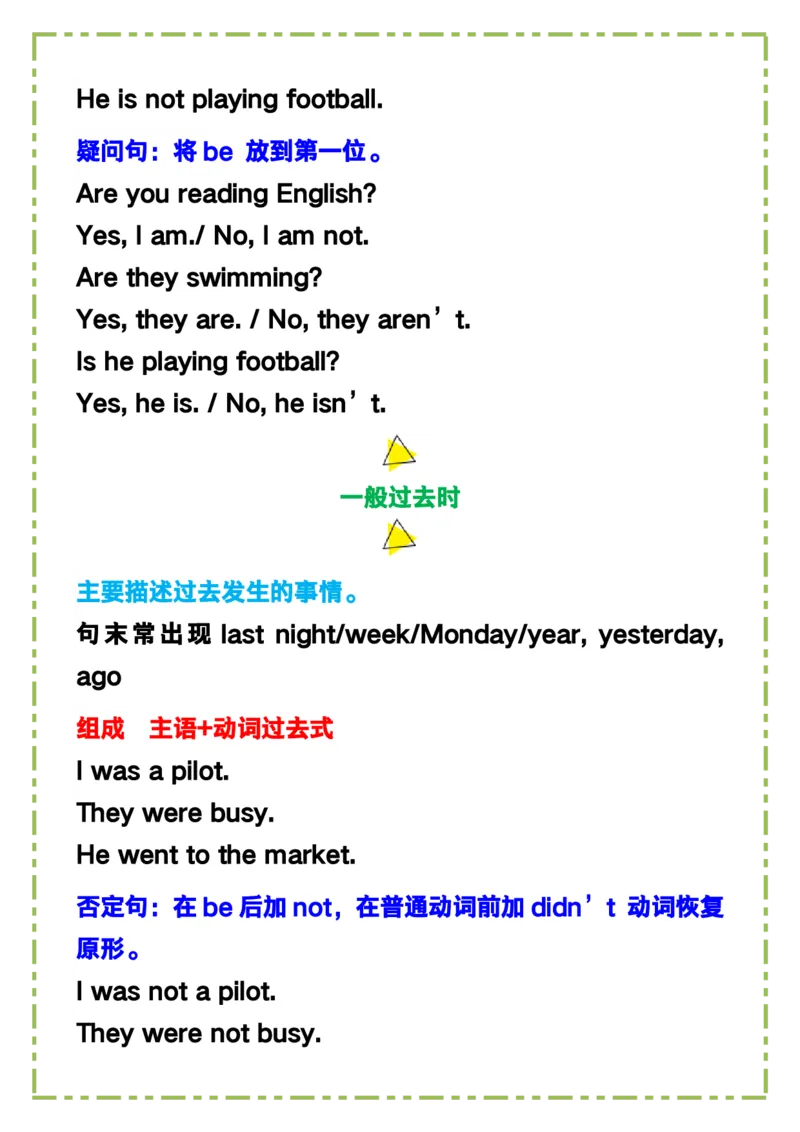
They are not swimming.He is not playing football.
疑问句:将 be 放到第一位。
Are you reading English?
Yes, I am./ No, I am not.
Are they swimming?
Yes, they are. / No, they aren’t.
Is he playing football?
Yes, he is. / No, he isn’t.
一般过去时
主要描述过去发生的事情。
句末常出现 last night/week/Monday/year, yesterday,
ago
组成 主语+动词过去式
I was a pilot.
They were busy.
He went to the market.
否定句:在 be 后加 not,在普通动词前加 didn’t 动词恢复
原形。
I was not a pilot.
They were not busy.He didn’t go to the market.
疑问句:提前 be 动词或在句前加 did
Were you a pilot?
Yes, I was./ No, I wasn’t.
Were they busy?
Yes, they were./ No, they weren’t.
Did they go to the market?
Yes, they did. / No, they didn’t.
一般将来时
主要描述将来要发生的事情。
句末常出现 next Monday/week/ year, tomorrow
组成 1.主语+be going to +动词原形本资料更多版本+其他
相关资料请关注公众号学海无涯甜作舟→菜单获取免费资料
即可
I am going to visit Ann.
They are going to draw a dog.
She is going to ride a horse.
否定句:在 be 后加 not
I am not going to visit Ann.
They are not going to draw a dog.She is going to ride a horse.
疑问句:将 be 提前
Are you going to visit Ann?
Yes, I am. / No, I am not.
Are they going to draw a dog?
Yes, they are./ No, they aren’t.
Is she going to ride a horse?
Yes, she is. / No, she isn’t.
组成 2.主语+will+动词原形
I will go to the library.
They will clean the house.
She will eat breakfast at home.
否定句:在 will 后加 not 或将 will not 写为 won’t
I will not go to the library.
They will not clean the house.
She will mot eat breakfast at home.
疑问句:将 will 提前
Will you go to the library?
Yes, I will./ No, I won’t.
Will they clean the house?
Yes, they will. / No, they won’t.
Will she eat breakfast at home?Yes, she will. /No, she won’t.