ENGLISH
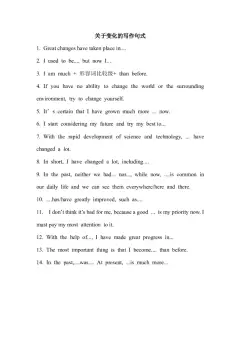
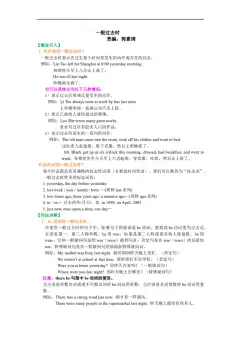
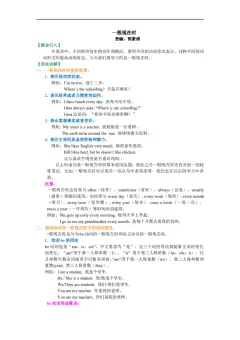
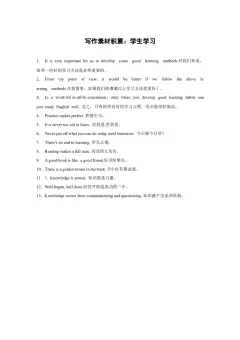
Learning
九年级
义务教育教科书·英语
教师用书
( 衔接三年级起点)
Teacher’s Guide
义
务
教
育
教
科
书
·
英
语

教
师
用
书
(
衔
接
三
年
级
起
点
)
九
年
级
定价:51.00 元( 含光盘)
微信公众号:电子课本大全
微信公众号:电子课本大全
微信公众号:电子课本大全
微信公众号:电子课本大全
微信公众号:电子课本大全
微信公众号:电子课本大全
微信公众号:电子课本大全
微信公众号:电子课本大全
微信公众号:电子课本大全
微信公众号:电子课本大全
微信公众号:电子课本大全
微信公众号:电子课本大全
微信公众号:电子课本大全
微信公众号:电子课本大全
微信公众号:电子课本大全
微信公众号:电子课本大全
127
Unit 7: Work for Peace
GENERAL OBJECTIVES
In this unit students will learn about what it means to work for peace. They will consider how to keep good
relations with the people in their own lives, as well as what good relations mean on a global scale. They
will understand the importance of communication and teamwork. The grammar focus for this unit is the
conjunctions and, but, or, so. Students will learn when and how to use these conjunctions effectively. In
addition, students will review and build on their knowledge of prepositions and look at some common, tricky
grammar errors.
SPECIFIC OBJECTIVES
语言
知识
词汇
掌握
词汇
victory, beat, repair, service, message, check, secretary, separate, gentleman, president,
provide, agreement, lock, asleep, snake, situation, satisfy, silence, silent
接触
词汇
bounce, ouch, behave, Danielle, council, organization, religion, dispute, interaction,
upset, argument, lower, volume, option, mutual, distant, suffer, headquarters, security,
permanent, forever, elder, directly, rather, peacemaker
短语和
句型
break down, the day before yesterday, be out of service, text message,  jump in, Me neither,
student council, provide... for..., in the end, reach an agreement, rather than, fall asleep, after
all, suffer through, World War II, the United Nations (the UN), the Secretary-General, the UN
Security Council, permanent member, agree on, in silence, keep silent, mean to do…, thanks
to…, hold a meeting, fight over…
功能意念谈论争端与和解  Talking about Disputes and Settlements
语法
连词and, but, or 和so  Conjunctions: and, but, or, so
语言
技能
听
1. 在听录音时能够有目的地获取所需的关键信息。
2. 以词或词组的形式简单记录所获取的信息。
说
1. 就简单话题提供信息,表达自己的观点,参与讨论。
2. 与他人沟通信息,合作完成任务。
读
1. 根据不同的阅读目的,运用简单的阅读策略来获取文章大意。
2. 找出文章主题,理解故事情节,预测故事发展和结局。
写
1. 利用所获取的信息来写作。
2. 掌握介绍自己和他人的基本句型和词组。
学习
策略
1. 树立自主学习的概念和意识。
2. 使用简单工具书查找信息。
3. 总结所学语言材料中的语言规律并加以利用。
4. 善于抓住用英语交际的机会。
情感
态度
1. 在学习中,敢于用英语来表达自己的看法。
2. 培养学习英语的兴趣和学好英语的信心。
3. 乐于接触并了解异国文化。
文化
意识了解世界上为和平作做杰出贡献的人物及其事迹。
微信公众号:电子课本大全
128
Lesson 37: Don’t Fight!
LESSON PREPARATION
LANGUAGE KNOWLEDGE
◎掌握词汇: victory, beat, repair, service, message,
check, secretary, separate, gentleman
◎接触词汇: bounce, ouch, behave
◎短语和句型: break down, the day before
yesterday, be out of service, text message, jump
in, Me neither.
RESOURCES
• audiotape
LESSON STRUCTURE
CLASS OPENING
Greeting
Greet the class and introduce the new unit.
Teacher: Hello, class. Today we are starting a new
unit. Who can tell me the title of Unit 7?
Student: I can. The title is “Work for Peace”.
Teacher: Very good. What does “peace” mean?
Students: Peace is freedom from war./Peace is
freedom from disputes or arguments with others./
Peace is calmness and quiet.
Teacher: Excellent answers. Based on the title, what
do you think this unit is about? In other words, what
does “Work for Peace” mean?
Students: It means that peace is not always an easy
thing to achieve and sometimes you must work to
have peace.
Teacher: That’s exactly right! Disputes typically
occur when people disagree with one another. Often,
disputes lead to fights. In English, the word “fight”
can refer to physical fights or verbal fights. Fighting
is never pleasant. It is always better to settle your
dispute and work for peace. Fights can happen
anytime between anyone. Sometimes we fight with
our friends or family. Other times, countries fight with
one another. This can be a serious problem. When
countries fight with one another, we call it “war”.
Nobody likes war. It is much better to have peace.
Review
Review the theme from Unit 6.
Teacher: In the last unit we talked about the film and
theatre. Who can tell me some of the differences
between the two? What did you learn about making
movies or putting on a play that you didn’t know
before we did that unit? What did you enjoy most
about Unit 6? What did you not enjoy about Unit 6?
KEY CONCEPTS
FOCUS STRUCTURES:
I tried calling you, but your phone was out of
service.
I sent you a text message.
Me neither!
Step 1: Present
CLASS WORK: Pre-reading discussion
Introduce Lesson 37.
Teacher: Can you guess what happens in this lesson
by looking at the pictures?
Students: It looks like Danny and Steven get into a
fight.
Teacher: That’s right. Let’s read and find out why.
Step 2: Read Aloud
CLASS WORK: Reading aloud and Think About It
1) Read Lesson 37 as a class. Monitor students’
pronunciation and comprehension.
2) Go over the mastery words and phrases as you
read.
3) Discuss the Think About It questions as a class.
Step 3: Read
GROUP WORK: Let’s Do It! No.1
1) Instruct the students to read Lesson 37 and
answer the questions in groups of four.
2) Check and discuss the answers as a class.
Step 4: Listen
INDEPENDENT/CLASS WORK: Let’s Do It!
No.3
微信公众号:电子课本大全
129
1) Play the listening material for Lesson 37 and ask
the students to read along as they listen.
2) Play the audiotape a second time and have the
students complete Danny’s diary.
3) Check and discuss the answers as a class.
Step 5: Task
PAIR WORK: Let’s Do It! No.4
1) Instruct the students to work in pairs to talk about
a time they got into a serious dispute with a friend.
They should explain what caused the dispute and
how they resolved it in the end.
2) You may want to have the students write a short
sketch based on one of their stories. (A sketch is a
short script).
3) If time allows, ask some pairs to present their
sketches to the class.
CLASS CLOSING
1) Complete Let’s Do It! No.2.
Students do the exercise independently, then check
the answers in groups, and finally as a class.
2) Assign homework:
• Diary Entry: Write a short diary entry about a time
you got into a fight or dispute with a friend or family
member. Explain the following:
o Who was the dispute between?
o What caused the dispute?
o Did you resolve the dispute? If so, how?
o How did you feel during this period of time?
EXTENSION
GROUP/CLASS WORK: TWO TRUTHS AND A
LIE
Play TWO TRUTHS AND A LIE to review
vocabulary and concepts from this lesson.
1) Play this game in groups or as a class. Provide
each student with a slip of paper. Instruct everyone
to write down three statements that describe
different disputes they have been in. Two of the
statements should be true and one of them should be
a lie. Allow everyone about 5 minutes to come up
with three good statements.
2) Select one student volunteer to go first. That
student should read aloud his or her three statements.
Then, have the other students vote by having the
student read his or her statements again. Ask for a
show of hands among the group/class as to which
statement they think is a lie.
3) Ask the volunteer to reveal the correct answer.
The students who guessed correctly should earn a
point for a correct guess.
4) Continue the game by having each student read
his or her statements and then conducting a vote.
Participants should continue marking down a point
each time they make a correct guess.
5) Once all the students have had a chance to share
their statements, each student or group should tally
up their points. The student or group with the most
correct guesses at the end has won the game.
LANGUAGE NOTES
1. The other team was strong, but you beat them. 对
方颇有实力,但你们打败了他们。
team 是集体名词。集体名词表示一群人或一类物
的结合体,如audience, committee, class( 班级),
family, government, public, team 等。这些集体名
次如视为“一个整体”,用单数形式的谓语动词;
如将侧重点放在组成集团的成员上,则用复数形
式的谓语动词。例如:
My family is a happy one. 我的家庭是个幸福的家
庭。
The group always votes the way its leader tells it to
vote. 这个组总是按照领导的指挥投票。
Your team always beat ours. 你们队总是打败我们
队。
Their class are having an English class. 他们班正在
上英语课。
2. By the way, where was Steven today? 顺便问问,
今天史蒂文去哪儿了?
本句中by the way 的意思是“顺便问;附带说”
的意思。例如:
By the way, have you received the letter from your
mother? 顺便问问,你收到你母亲的来信了吗?
By the way, while you were away, I got a gift. 顺便
告诉你,你不在的时候我得到了一份礼物。
by the way 还有“在途中;在路旁”的意思。例如:
They stopped by the way to have a rest. 他们在途中
停下来休息。
3. Danny is just about to say something when
微信公众号:电子课本大全
130
he sees Steven running towards them carrying a
basketball. 丹尼正要说什么,这时他看到史蒂文
抱着一个篮球向他们跑来。
(1) be (seem) about to do 的意思是“刚要;行将”。
例如:
We are (just) about to start. 我们( 刚刚) 正要出发。
be about to do sth. when… /be doing sth. when… 结
构中的when 要理解为“这时……”。例如:
Jenny was about to go out for a walk when the
phone rang. 詹妮正要出去散步,这时电话响了。
Jenny and Steven were talking about Danny when
Danny came in. 詹妮和史蒂文正在谈论丹尼,这
时丹尼进来了。(根据上下文的意思,也可理解为:
丹尼进来时,詹妮和史蒂文正在谈论他。)
(2) see sb. doing sth. 表示“看到某人在做某事”;
see sb. do sth.表示“看到某人做某事(的全过程)”。
例如:
Jenny saw Danny and Steven fighting on the
playground. 詹妮看到丹尼和史蒂文正在操场上打
架。
I saw Steven hit Danny’s head with a basketball. 我
看见史蒂文用篮球打了丹尼的头。
listen to, hear, watch, notice 等也是这样使用。
(3) carrying a basketball 在句中作running 的伴随
状语,而不是与running 并列,作sees 的宾语补
足语。
4. Well, my computer broke down the day before
yesterday and it’s still being repaired. 噢,前天我
的计算机坏了,现在还在修理呢。
(1) 此处break down 的意思是“损坏;出毛病;
失效”的意思。例如:
I’m sorry to be late again, but my bike broke down
on my way. 很抱歉,我又迟到了,在路上我的自
行车坏了。
If you keep on eating too much unhealthy food, your
body will break down. 如果你继续吃过多的不健
康食品,你的身体就会出毛病。
Those rules have broken down. 那些规定已经失效
了。
(2) be being done 结构是进行时的被动语态,表
示“正在被……”。例如:
You cannot move into the new house, for it is being
painted now. 你不能搬进那所新房子,因为现在
正在粉刷呢。
5. I tried calling you, but your phone was out of
service. 我试着给你打过电话,但你的电话不在
服务区。
out of 在本句中是“离开;脱离”的意思。例如:
Fish cannot live out of water. 鱼离开水就不能存
活。
These soldiers will be out of army in one year. 这些
士兵一年后将退役。
The wounded tiger is not yet out of danger. 那只受
伤的老虎还没脱离危险。
out of 还有“从……里面;用……制成”的意思。
例如:
Don’t look out of the window. 别往窗外看。
He took some money out of his pocket. 他从口袋掏
出一些钱。
Many things are made out of bamboo. 很多东西是
用竹子制成的。
I made a small basket out of wire. 我用细铁丝编了
个小篮子。
6. Danny almost hits Steven, but Brian and Jenny
jump in to separate them. 丹尼差点儿打了史蒂文,
布莱恩和詹妮急忙把他们拉开。
jump in 在本句中的意思是“匆忙行动;急于从
事”。例如:
Onlookers jumped in to break up the fight. 旁观者
很快围拢过来制止这场打斗。
jump in 还有“跳入;一步进入( 汽车等)”的意思。
例如:
Jump in, Tom. There’s a seat for you in the car. 快进
来,汤姆。车里有你的座位。
7. You are good friends, not enemies. 你们是好朋
友,不是敌人。
这是一个省略句,补全后是:You are good
friends, and you are not enemies.
微信公众号:电子课本大全
131
Lesson 38: Making School a
Better Place
LESSON PREPARATION
LANGUAGE KNOWLEDGE
◎掌握词汇: president, provide, agreement
◎接触词汇: Danielle, council, organization,
religion, dispute
◎短语和句型: student council, provide… for…, in
the end, reach an agreement
RESOURCES
•  audiotape  • Conjunctions worksheet
LESSON STRUCTURE
CLASS OPENING
Greeting
Greet the class.
Teacher: Good morning/afternoon, class. Let’s get
started with today’s lesson.
Review
1) Homework check.
2) Ask the students to hand in their diary entries.
KEY CONCEPTS
FOCUS STRUCTURES:
I’m in Grade 9 this year, and I’m president of the
student council at my school.
In December, we decided to raise money for an
organization that provides food for poor people in
our city.
We sold tickets and, in the end, we made about $300.
During student council meetings, we have to work
together, but it’s not always easy for us to reach an
agreement.
Step 1: Present
CLASS WORK: Dig In and Think About It
Discuss the title of Lesson 38 (Making School a
Better Place) and the Dig In as a class.
Teacher: We have a great school. And even though
we love our school, there are always ways we can
improve. What do you think we can improve at our
school? How can we improve it?
Students: We need to improve our library. We need
more new books. We can raise money and buy new
books or ask bookstores to donate books to our
school library.
Teacher: Good idea. Now, in order to raise the
money or ask for a donation, we must be organized
and create a plan. A student council is a group
of students that discusses possible changes and
improvements they can make in their school, and
then they make a plan.
2) Discuss the Think About It questions and explain
some of the mastery phrases.
Teacher: Is there a student council in our school?
What does it do?
Allow several students to respond.
Teacher: Is it always easy working in groups? What
are some challenges that you might face when you
work in a group?
Students: Sometimes there are disagreements
between group members. This can be a challenge.
Teacher: That’s right. Why is it a challenge?
Students: A group can only work well if they can get
along and work together. If people in the group are
fighting, they cannot work together and they cannot
get work done.
Teacher: Very good. When you work in a group, it is
important that you all do your best to work together.
Write the phrase reach an agreement on the board.
Explain.
If there is a dispute, you must try to reach an
agreement by listening to one another and trying
to understand one another. To reach an agreement
means that everyone involved in the decision agrees.
We are all different. That is what makes this world
so beautiful and interesting, but our differences can
sometimes cause us to have disputes. We must work
together to resolve our disputes in a peaceful and
positive way. In the end, peace can only be achieved
if we work together.
微信公众号:电子课本大全
132
Write the phrase in the end on the board. Explain.
What do I mean when I say “in the end”? I mean
eventually or upon reflection. Now let’s read Lesson
38 and find out how Danielle helps to make her
school a better place.
Step 2: Read
PAIR/CLASS WORK: Let’s Do It! No.1
1) Have the students read Lesson 38 and answer the
true or false questions with a partner.
2) Discuss the answers as a class. Correct any false
statements.
3) Go over the mastery words and phrases for this
lesson.
Step 3: Explain
CLASS WORK: Conjunctions (Learn to Learn)
1) Explain what conjunctions are and how they are
used.
Conjunctions: A conjunction is a word or
phrase that shows the relationship between two
words, phrases or clauses.
and is used to show an agreement between
words/clauses
EXAMPLE
She is happy and excited.
In this example, “and” is used to show the
positive agreement between the two positive
words “happy” and “excited”.
but is used to show a disagreement between
words/clauses
EXAMPLE
She is happy but nervous.
In this example, “but” is used to show
disagreement between the words “happy” (a
positive word) and “nervous” (a negative word).
so is used to show a reason between words/
clauses
EXAMPLE
I went to sleep early, so that I could wake up
early.
In this example, “so” is used to show that the
reason for going to sleep early is to wake up
early.
or is used to show agreement or disagreement
between words/clauses
EXAMPLE
I don’t like blue or yellow.
In this example, “or” is used to show agreement
between the fact that both the colours “blue”
and “yellow” are not liked.
2) Have the students complete the Conjunctions
worksheet.
Conjunctions Worksheet
Underline the conjunctions and then circle
agreement, disagreement or reason to show what
the conjunction is being used for.
1. I usually ride my bike to school, but today I am
walking.
   agreement/disagreement/reason
2. I like strawberries and chocolate.
   agreement/disagreement/reason
3. I don’t do well in math or science class.
   agreement/disagreement/reason
4. I studied hard, so that I could do well on the
exam.
   agreement/disagreement/reason
5. She is good at drawing, but she is not very
good at cooking.
   agreement/disagreement/reason
6. I enjoy playing sports and listening to music.
   agreement/disagreement/reason
7. After dinner, I go to my room to read and
relax.
   agreement/disagreement/reason
8. It’s raining outside, so I think I’ll take an
umbrella.
   agreement/disagreement/reason
9. He is always smiling, but he is never happy.
   agreement/disagreement/reason
10. We can go to the movies tonight or tomorrow
night.
   agreement/disagreement/reason
Practice creating your own sentences using the
conjunctions “and”, “but”, “or” and “so”.
微信公众号:电子课本大全
133
1. ___________________________________
__________________________________
2. __________________________________
__________________________________
3. __________________________________
__________________________________
3) Check the answers as a class.
Step 4: Task
GROUP WORK: Let’s Do It! No.4
1) Try this activity on the board as a class before
you divide the class into groups.
2) Divide the class into groups of three. Student A
and B each write one sentence on a slip of paper.
Student A and B’s sentences should somehow
complement each other. Students should refer to the
example in the student book. Student C then joins
the two sentences that Student A and B wrote with
the appropriate conjunction.
EXAMPLE
Student A
I like cookies.
Student B
I don’t like cake.
Student C
I like cookies, and I don’t like cake.

I like cookies, but I don’t like cake.
3) Students should do the exercise a few times until
they’ve each had a turn to be Student A, B and C.
4) Have the students present their final sentences to
the class.
CLASS CLOSING
1) Complete Let’s Do It! No.3.
Students do the exercise independently. Then check
and correct their answers in groups.
2) Assign homework:
• Read Lesson 38 and write down all of the
sentences in the lesson that use conjunctions. Then
indicate whether those conjunctions are to show
agreement, disagreement or reason.
• Complete Let’s Do It! No.2.
EXTENSION
CLASS WORK: Spell It
Play Spell It to review any vocabulary and
conjunctions.
1) Divide the class into two large teams. Write
blanks for any word or phrase across the blackboard
(leave space between words in phrases).
2) The teams take turns guessing letters that go in
the blanks.
3) You or a volunteer from the class write correct
guesses in the correct blanks. A team may guess the
word or phrase before all the letters are filled in, but
must then correctly spell the entire word or phrase
from the beginning. The first team to do this wins.
Sample Words and Phrases:
I didn’t enjoy the movie, but my mom and my sister
did.
Barak Obama is the president of the United States.
The two countries made an agreement not to fight
anymore.
Animals provide us with food and materials.
** See the “Games” section at the back of this guide
for further instructions on how to play.
LANGUAGE NOTES
1. I’m in Grade 9 this year, and I’m president of the
student council at my school. 今年我上九年级,担
任学校的学生会主席。
表示独一无二的职务的名词前,通常不用冠词。
但用这些词指代任职的人时,要用冠词。例如:
Who’s (the) captain of your team? 谁是你们的队
长?
John was elected monitor of the class. 约翰被选为
班长。
They elected John (the) chairman of the committee.
他们选约翰当委员会主席。
Mr. Smith asked me to act as interpreter. 史密斯要
我当翻译。
Once there lived an old mayor in the city. 从前这座
城市里有一位老市长。
The governor visited our village last week. 上周州
长参观了我们村。
2. Student councils work to make schools better
places to learn. 学生会的工作就是使学校成为更
好的学习场所。
微信公众号:电子课本大全
134
to learn 在句中作places 的定语,learn 用作不及
物动词。不及物动词的不定形式作定语时,通常
搭配适当的介词。例如:
I need a room to live in. 我需要一间屋子住。
She has a lot of friends to talk with. 她有很多可以
交谈的朋友。
但是,这样的不定式作place 的定语时,可以省
略介词。例如:
It was very difficult for them to find a place to sleep
(in). 他们很难找到睡觉的地方。
3. In the council, we share our ideas, interests and
concerns with teachers and others. 在学生会里,我
们与老师们和其他同学们分享我们的思想、兴趣
和事务。
(1) share 的意思是“分享”。share 还可以表示“与
他人共用;允许他人使用;与他人均分某物;与
他人共同承担责任或费用;与他人共有相同的经
历或观点等;告诉他人自己的观点、秘密或困难”。
例如:
Sam and I share a room. 山姆和我合住一屋。
We don’t have enough books so you’ll have to share.
我们没有足够的书,因此,你们要一块看。
The three of us shared a taxi. 我们三人搭乘一辆出
租车。
As a kid, he’d never share his toys. 小时候,他从
不让别人玩他的玩具。
You don’t have to buy a newspaper; you can share
mine. 你不必买报纸,可以看我的。
They shared the cake between them. 他们分了那块
蛋糕。
At his death, his property was shared out between
his children. 他死后,他的财产由其孩子们平分。
We all share some of the blame for the accident. 关
于这场事故,我们都难辞其咎。
I believe my view is widely shared. 我相信我的观
点能得到广泛认同。
(2) concern 用复数形式,意思是“事务”。例如:
Mind your own concerns. 别多管闲事。
She is busy with some household concerns. 她在忙
家务。
4. In December, we decided to raise money for an
organization that provides food for poor people in
our city. 在12 月份,我们决定为本市一个给穷人
提供食物的组织集资。
(1) 表示“为某人提供某物”可以用provide sth.
for/to sb.结构,也可以用provide sb. with sth.结构。
例如:
This restaurant provides good meals for this area. 这
家饭店为这个地区供应上好的膳食。
It is our duty to provide aid to them. 为他们提供援
助是我们的责任。
Mary provides him with money. 玛丽供给他钱。
(2) that provides food for poor people in our city 是
定语从句,修饰an organization,that 在从句中作
主语。例如:
My father works in a factory that produces washing
machines. 我父亲在一家生产洗衣机的工厂上班。
5. We sold tickets and, in the end, we made about
$300. 我们出售比赛的门票,最后,我们赚了大
约300 美元。
in the end 和at the end 一样,都可以表示“最终,
最后,结果”。例如:
At/In the end everything was all right. 最后一切正
常了。
Although we had many difficulties, we were
successful in/at the end. 虽然我们困难重重,但终
于还是成功了。
6. I think we should work together towards peace in
our schools and in the world. 我认为我们应该共同
努力让学校氛围融洽,让世界和平。
work toward(s) 的意思是“努力达到;设法获得”。
例如:
The United Nations is working towards having the
two countries sign a peace agreement. 联合国正在
努力促成那两个国家签订一项和平协议。
We should work towards a solution as soon as
possible. 我们应尽快设法找到解决的办法。
7. We need to learn about different countries and
make friends with people from other cultures. 我们
需要了解不同的国家,与不同文化背景的人交朋
友。
learn about 的意思是“知道;了解”。例如:
Learning about foreign cultures is very important.
了解外国文化很重要。
微信公众号:电子课本大全
135
Lesson 39: Having Good
Relationship in Your Community
LESSON PREPARATION
LANGUAGE KNOWLEDGE
◎掌握词汇: lock, asleep, snake
◎接触词汇: interaction, upset, argument, lower,
volume, option, mutual, distant
◎短语和句型: fall asleep, rather than, after all
RESOURCES
• audiotape
LESSON STRUCTURE
CLASS OPENING
Greeting
Greet the class.
Teacher: Good morning/afternoon, everyone. I’d
like to read you some quotes about peace that were
said by some very important people. Read the
quotes, discuss their meaning and and look up
information about the person who said them.
Peace begins with a smile. – Mother Teresa
If you want to make peace with your enemy, you
have to work with your enemy. Then he becomes
your partner. – Nelson Mandela
Peace is its own reward. – Mahatma Gandhi
Peace cannot be kept by force. It can only be
achieved by understanding. – Albert Einstein
Review
1) Homework check.
2) Take up the homework as a class and review the
use of conjunctions.
3) Review the use of prepositions.
KEY CONCEPTS
FOCUS STRUCTURES:
Do this not only for family and friends, but also for
the people who live in your neighbourhood.
This allows you to express your ideas without
damaging your relationship.
Should you politely suggest they lower the volume?
Step 1: Present
CLASS/GROUP WORK: Think About It
Discuss the Think About It questions as a class.
Teacher: To work towards a peaceful life, what
should you do? How do you get along with your
family and friends, as well as your neighbours?
Students: I’m kind to them. I help those in need.
Teacher: Very good. Can anyone tell me other things
you do to develop a good relationship with others?
Students: I always smile and say hello to my
neighbours.
Teacher: Good work. If your neighbours do
something that upsets you, how will you respond?
Would you argue about it or discuss the matter in a
friendly way?
Students: I think it is better to avoid arguments.
Teacher: That’s right. We should create a relationship
of mutual respect and understanding. Do you know
the Chinese saying about neighbours?
Allow several students to respond. Students may
choose to come to the board to write the saying.
Encourage them instead of correcting the mistakes
immediately.
Step 2: Read Aloud
CLASS WORK: Reading aloud
1) Read Lesson 39 as a class. Monitor students’
pronunciation and comprehension.
2) Explain new concepts, mastery words and
phrases.
→We use “not only... but also...”  in formal
contexts. We can sometimes leave out “also”: He is
famous not only as an actor but as a writer.
→Allow someone to do something means to give
permission for a specific action or event. If your
mother allows you to go swimming, you can go
enjoy the pool without breaking any rules.
→When suggest means  “to mention an idea,
possible plan, or action for other people to consider”,
the object clause following it takes “should + verb”
as the predicate, and “should” can be omitted.
微信公众号:电子课本大全
136
Step 3: Read
GROUP/CLASS WORK: Let’s Do It! No.1
1) Have the students read Lesson 39 and complete
the exercise with a partner.
2) Discuss the answers as a class. Correct any false
statements.
Step 4: Do and Discuss
INDEPENDENT/CLASS WORK: Let’s Do It!
No.3
1) Instruct the students to work independently to fix
the mistakes in each sentence and come up with an
explanation for each mistake.
2) Discuss the answers as a class. Explain each
mistake. Also, have the students come up with other
sentences that use the rules correctly.
1. The task wasn’t as boring as I first thought.
“Bored” is an adjective. It means “feeling tired
and impatient”, so it is used to modify a person,
not an object. If we describe an object, we
choose “boring”.
2. I left the day without doing anything at
all. “Without” is a preposition and it must be
followed by an object. A verb can’t act as an
object, so we need to change “do” into “doing”.
3. His parents won’t allow him to stay out late.
In this sentence, “staying” should be “to stay”.
4. He put the animals — dogs, cats, birds and
snakes on the ship and locked the door. In this
sentence, there are two predicate verbs, “put”
and “lock”. This sentence uses the simple past
tense, so “lock” should be “locked”.
5. There are times when my neighbour asks
me to look after their pet dog. “Time” here
is a countable noun and can be replaced by
“occasions”, so it must use “times” to match
“there are”.
Step 5: Task
PAIR WORK: Let’s Do It! No.4
1) Instruct the class to work in pairs to write 3 to 5
tips about working towards peace in the community.
2) Ask the students to share their tips with the class.
CLASS CLOSING
1) Complete Let’s Do It! No.2.
Students do the exercise independently then check
and discuss the answers in groups or as a class.
2) Assign homework:
• Grammar Quiz: include the following:
o write 5 sentences that incorrectly use or are
missing prepositions
o write 3 sentences that incorrectly use countable
and non-countable nouns
o write 2 sentences that have dangling modifiers
EXTENSION
SMALL GROUP/PAIR WORK: WHAT’S
WRONG?
Play WHAT’S WRONG? to review grammar
structures and fix common grammar errors.
1) Write sentences on the blackboard that contain
errors (and some that don’t contain errors).
2) Divide the class into two teams. The teams take
turns trying to correct each sentence. They erase
the incorrect words and write in the correct words. If
a team cannot correct a sentence, or answers
incorrectly, the other team can try. Keep score.
3) Write sentences that pair concepts incorrectly, or
that contain verb tense or plural errors.
For example:
• I always lock the door before I leave the house.
(correct)
• A snake is a tall, fat animal. (incorrect)
 A snake is a long, thin animal. (correct)
• I still remember the factory who we visited
together. (incorrect)
 I still remember the factory (that/which) we
visited together. (correct)
• I am preparing for my exam by studying. (correct)
• It also include people who are your neighbours.
(incorrect)
 It also includes people who are your neighbours.
(correct)
** See the “Games” section at the back of this guide
for further instructions on how to play.
微信公众号:电子课本大全
137
LANGUAGE NOTES
1. Do this not only for family and friends, but also
for the people who live in your neighbourhood.
不仅对亲朋好友如此(友好并帮助他们),对邻
居们也是如此。
not only... but also... 用于连接两个表示并列关系
的成分,着重强调后者,其意为“不仅……而
且……”,其中的also 有时可以省略。例如:
I know not only English but also Russian. 我不仅
懂英语,而且懂俄语。
He is famous not only in China but (also) in the
whole world. 他不仅闻名中国,而且闻名全球。
2. If everyone had the same ideas, the world would
be a boring place. 如果每个人的想法都一样,世
界会成为乏味之地。
这是一个虚拟语气的句子,if 引导的是与现在事
实相反的非真实条件句,主句谓语用“would+
动词原形”形式。例如:
If I had time, I would go with you. 如果我有时间
的话,我就跟你去。(事实是我没有时间)
注意:虚拟语气初中阶段不做要求。
3. Social interactions are often limited to a “Hi”
on the street. 社会交际经常局限于大街上的打招
呼。
limit... to... 意为“使(某事只在某地或某群体内)
存在(或发生)” 。例如:
Violent crime is not limited to big cities. 暴力犯罪
并不局限于大城市。
The teaching of history should not be limited to
dates and figures. 教授历史不应该局限于讲年代
和人物。
4. However, there may be times when someone
does something that upsets you. 然而,可能有时
会有人做烦扰你的事情。
这个句子中含有一个关系副词when 引导的定语
从句,先行词为times,关系副词在定语从句中
作时间状语。例如:
I can’t forget the time when we studied together. 我
无法忘记我们曾经一起学习的日子。
5. Avoid arguments, especially ones that judge the
nature of the person rather than the actions. 避免争
论,尤其是那些评判人性而非行为的言论。
这个句子中包含一个由关系代词that 引导的
定语从句,修饰先行词ones, ones 指代前面的
arguments。当先行词为某物而且关系代词在定
语从句中作主语或者宾语时,定语从句用which
或者that 引导。例如:
The season that/which comes after spring is
summer. 春季之后的季节是夏季。
6. Should you politely suggest they lower the
volume? 你应该礼貌地建议他们调低音量吗?
suggest 后面的宾语从句省略了关系代词that,
suggest 表示“建议”时,后面的宾语从句用虚
拟语气,谓语用“should+ 动词原形” 形式,
should 经常省略。例如:
He suggests that we (should) have a meeting at
once. 他建议我们马上开个会。
7. After all, good neighbours are better than distant
relatives. 毕竟,远亲不如近邻。
after all 意为“毕竟;终归”。例如:
Don’t be angry with him. He is a child after all. 不
要和他生气。他毕竟是个孩子。
Lesson 40: The UN — The
Power of Words
LESSON PREPARATION
LANGUAGE KNOWLEDGE
◎掌握词汇: situation, satisfy
◎接触词汇: suffer, headquaters, security,
permanent, forever
◎短语和句型: suffer through, World War II, the
United Nations (UN), the Secretary-General, the
UN Security Council, permanent member
RESOURCES
• audiotape
微信公众号:电子课本大全
微信公众号:电子课本大全
微信公众号:电子课本大全
140
动词不定式的逻辑主语由for 引出,这与前面作
表语的形容词有关系。如果前面是表示人的品格
的形容词,如kind, clever, foolish, careful, nice 等
作表语,则用of 引出动词不定式的逻辑主语。
例如:
It is kind of you to help me with my English. (=You
are kind to help me with my English.) 你帮我学英
语太好了。
It was foolish of him to meet her again. (=He was
foolish to meet her again.) 他跟她再次见面是愚蠢
的。
It was careless of her to make such a mistake. (=She
was careless to make such a mistake.) 犯这样一个
错误,她太粗心了。
5. Just imagine how difficult it is to satisfy all 193
members! 试请想像一下,让所有193 个成员( 国)
都满意是多么的困难呀!
just是副词,用于祈使句中的意思是“试请,且请”,
起加强语气的作用。例如:
Just look at the strange figure! 且看那个奇怪的东
西!
Just listen to him! 且听他说些什么!
Just a moment! 请稍等!
6. Let’s hope that the great idea they had in 1945 to
prevent war will last forever. 让我们期待着他们
1945 年想出的阻止战争的理念永远传下去吧。
that 引导hope 的宾语从句,从句的谓语是will
last。they had in 1945 和 to prevent war 都是idea
的定语,前者是省略了that 的宾语从句,后者是
动词不定式。表示“……理念( 思想)”,还可
用of 短语作定语。例如:
Do you understand the general idea of what I said?
你明白我的话的大意吗?
My purpose is to get a better idea of education. 我的
目的是更好地了解教育。
Lesson 41: Jenny’s Good
Advice
LESSON PREPARATION
LANGUAGE KNOWLEDGE
◎掌握词汇: silence, silent
◎接触词汇: elder, directly
◎短语和句型: agree on, in silence, keep silent,
mean to do…
RESOURCES
• audiotape
LESSON STRUCTURE
CLASS OPENING
Greeting
Greet the class.
Teacher: Good morning/afternoon, class. Let’s get
started.
Review
1) Homework check.
2) Choose some students to present their UN News
Report to the class.
KEY CONCEPTS
FOCUS STRUCTURES:
I’m glad you can agree on something.
Now, do you two want to keep silent forever?
I didn’t mean to do it, Danny.
After all, it’s just a game!
Step 1: Present
CLASS WORK: Lesson Review and Think About It
Review Lesson 37 and discuss the Think About It
questions as a class.
Teacher: Who remembers what happened in Lesson
37?
Students: I remember. Danny and Steven got into a
fight.
微信公众号:电子课本大全
微信公众号:电子课本大全
微信公众号:电子课本大全
143
Home and help the elders that morning. 那天上午,
我的几位同班同学必须去养老院帮助老人。
elder 是形容词,与the 连用相当于名字。the
elder 可用于区别两个同名的名人,意思是“老;
大”;the elders 的意思是“老年人;长者;年龄
较大的人”。例如:
I heard of Peter the Elder. 我听说过老皮特。
We should respect the elders. 我们应该尊敬老人。
5. Steven, I think Danny really tried to reach you. 史
蒂文,我想丹尼确实设法与你取得联系了。
reach 在本句中的意思是“同……取得联系”。
例如:
When I need your help, I will reach you. 当我需要
你帮助时,我会联系你的。
6. I didn’t mean to do it, Danny. 我没想那样做,丹尼。
mean to do sth. 的意思是“意欲( 打算) 做某事”;
mean doing sth. 的意思是“意味着做某事”。例如:
I meant to go to the concert but couldn’t afford the
ticket. 我本来打算去听音乐会,但没钱买门票。
I didn’t mean to hurt you. 我无意伤害你。
Money doesn’t mean getting happiness. 金钱并不意
味着得到幸福。
7. After all, it’s just a game! 这毕竟只是场比赛。
after all 的意思是“毕竟,终究;究竟”。例如:
Pay attention to the problem. After all, it has
something to do with our everyday life. 注意这个问
题,它毕竟与我们的日常生活有关。
The day turned out fine after all. 结果天还是转晴
了。
After all, what was it that prevented her coming to
my house? 究竟是什么使她没来我家呢?
Lesson 42: Peace at Last
LESSON PREPARATION
LANGUAGE KNOWLEDGE
◎接触词汇: rather, peacemaker
◎短语和句型: thanks to…, hold a meeting, fight
over…
RESOURCES
• Song: “With a Little Help from My
Friends (see Greeting)  • poster paper
LESSON STRUCTURE
CLASS OPENING
Greeting
Greet the class. Play the song “With a Little Help
from My Friends” by The Beatles.
Teacher: Good morning/afternoon, class. I’d like
to listen to a song about friendship. I want you to
listen carefully to words in the song. Then I want
you to tell me what you think the song saying about
friendship.
With a Little Help from My Friends
By The Beatles
What would you think if I sang out of tune
Would you stand up and walk out on me?
Lend me your ears and I'll sing you a song
And I'll try not to sing out of key
Oh I get by with a little help from my friends
Mm I get high with a little help from my friends
Mm going to try with a little help from my friends
What do I do when my love is away?
(Does it worry you to be alone?)
How do I feel by the end of the day?
(Are you sad because you're on your own?)
No I get by with a little help from my friends
Mm I get high with a little help from my friends
Mm going to try with a little help from my friends
(Do you need anybody?)
I need somebody to love
(Could it be anybody?)
I want somebody to love
(Would you believe in a love at first sight?)
Yes I'm certain that it happens all the time
微信公众号:电子课本大全
微信公众号:电子课本大全
微信公众号:电子课本大全
微信公众号:电子课本大全
微信公众号:电子课本大全
微信公众号:电子课本大全
微信公众号:电子课本大全
微信公众号:电子课本大全
微信公众号:电子课本大全
微信公众号:电子课本大全
微信公众号:电子课本大全
微信公众号:电子课本大全
微信公众号:电子课本大全
微信公众号:电子课本大全
微信公众号:电子课本大全
微信公众号:电子课本大全
微信公众号:电子课本大全
微信公众号:电子课本大全
微信公众号:电子课本大全
微信公众号:电子课本大全
微信公众号:电子课本大全
微信公众号:电子课本大全
微信公众号:电子课本大全
微信公众号:电子课本大全
微信公众号:电子课本大全
微信公众号:电子课本大全
微信公众号:电子课本大全
微信公众号:电子课本大全
微信公众号:电子课本大全
微信公众号:电子课本大全
微信公众号:电子课本大全
微信公众号:电子课本大全
微信公众号:电子课本大全
微信公众号:电子课本大全
微信公众号:电子课本大全
微信公众号:电子课本大全
微信公众号:电子课本大全
微信公众号:电子课本大全
微信公众号:电子课本大全
微信公众号:电子课本大全
微信公众号:电子课本大全
微信公众号:电子课本大全
微信公众号:电子课本大全
186
Unit 10:  Get Ready for the Future
GENERAL OBJECTIVES
In this unit students will reflect on their final year of junior high school and look toward the future. They will
set goals and learn time-management, planning and decision-making skills that will help them achieve their
goals. They will learn how to express their dreams and hopes for the future and how to send warm wishes
to others. This unit will provide students with some final words of wisdom and is designed to inspire and
motivate them as they enter a new phase in their lives.
SPECIFIC OBJECTIVES
语言
知识
词汇
掌握
词汇
boss, doubt, wealth, weekday, primary, asleep, notebook, review, itself, wallet, row,
speech,  period, valuable, achieve
接触
词汇
manage, astronaut, besides, owner, senior, behalf, congratulation, merchant, mall, faint,
agency, definitely
短语和
句型
as for, on top of..., senior high (school),  junior high (school), go by, fall down, pick yourself up,
on behalf of, hold out, the Canadian Space Agency, keep one’s eye on
功能意念谈论未来并给予祝愿 Talking about the Future and Giving Wishes
语法
无
语言
技能
听
1. 听懂接近正常语速、熟悉话题的语段,识别主题,获取主要信息。
2. 听懂简单故事的情节发展,理解其中主要人物和事件。
3. 根据连续的指令完成任务。
说
1. 根据提示给出连贯的简单指令。  2. 引出话题并进行简单的交谈。
3. 在教师的帮助下或根据图片用简单的语言描述自己或他人的经历。
4. 在教师的指导下参与角色扮演活动。  5. 在上述口语活动中使用正确的语音、语调。
读
1. 连贯、流畅地朗读课文。  2. 从简单的文章中找出有关的信息,理解大意。
3. 根据上下文猜测生词的意思。  4. 理解简易读物中的事件发生顺序和人物行为。
写
1. 能简单描述人物或事件。   2. 能用词组或简单句为自己创作的图片写出说明。
3. 能写出简短的文段,如简单的指令、规则。
4. 能在教师的帮助下或以小组讨论的方式起草和修改作文。  5. 正确使用复合句。
学习
策略
1. 树立自主学习的概念和意识。  2. 使用简单工具书查找信息。
3. 总结所学语言材料中的语言规律并加以利用。  4. 善于抓住用英语交际的机会。
情感
态度
1. 在学习中,敢于用英语来表达自己的看法。
2. 培养学习英语的兴趣和学好英语的勇气。
3. 乐于接触并了解异国文化。
4. 培养学生对未来的一种积极的态度。
文化
意识
1. 了解更多的名人励志事迹。
2. 了解更多的世界知识,开阔视野。
微信公众号:电子课本大全
微信公众号:电子课本大全
微信公众号:电子课本大全
微信公众号:电子课本大全
190
Do you doubt that I love you? 我爱你,对此你有
怀疑吗?
doubt 在肯定句中也可接that 引导的宾语从句,
此时它的意思是“认为……未必可能”。例如:
I doubt that Danny will be a good boss. 我看丹尼未
必会当个好老板。
5. As for me, I’m going to choose the most fun and
exciting job in the world. 至于我,我打算选择世
界上最有趣、最激动人心的工作。
as for 的意思是“至于;关于”。例如:
As for the thief, he was caught by the police. 至于
那个小偷,他被警察抓住了。
As for my achievement, I have much to say. 关于我
的成就,我有很多要说的。
6. Astronauts need to know a lot about science,
Danny. 丹尼,宇航员需要懂得很多( 知识)。
lot 在本句中用作名词,a lot 的意思是“大量;
许多”。表示“大量( 许多……)”时,后接of
短语,of 后的名词既可以是可数名词,也可以是
不可数名词。例如:
He has a lot (of things) to do today. 今天他有很多
事要做。
She has a lot of money. 她有很多钱。
These boys get lots in common. 这些男孩子有许多
共同之处。
There’s lots of juice left. 还剩下很多果汁。
There are lots of bottles on the table. 桌子上放着许
多瓶子。
a lot 还可以用作副词,可以修饰形容词和副词的
比较级。例如:
Thanks a lot. 多谢。
He waited a lot when he saw the doctor. 他看病时
等了很久。
The patient felt a lot better. 病人觉得好多了。
I am a lot taller than your brother. 我比你弟弟高多
了。
Lesson 56: Manage Your Time
LESSON PREPARATION
LANGUAGE KNOWLEDGE
◎掌握词汇: weekday, primary, asleep, notebook,
review, itself
◎接触词汇: besides
◎短语和句型: on top of …
RESOURCES
• audiotape  • task cards (see Extension)
LESSON STRUCTURE
CLASS OPENING
Greeting
Greet the class and introduce the topic of today’s
lesson.
Teacher: Who can read the title of today’s lesson?
Students: I can. It’s “Manage Your Time”.
Teacher: Right. What does manage your time mean?
Students: It means to organize your time into a
schedule.
Teacher: Very good. Do you think it’s important to
manage you time? Why or why not?
Students: Yes. Sometimes life can be very busy, and
if you don’t manage your time, you could create
more problems for yourself.
Teacher: Exactly! Good time management will help
you stay focused, clear and can reduce stress.
Review
1) Homework check.
2) Choose some students to present their passage
“My Life in 10 Years” to the class.
3) Review what you learned in the last lesson. What
do you need to do to succeed?
1. Know what your skills and talents are.
2. Choose a job that interests you and suits your
talents.
微信公众号:电子课本大全
微信公众号:电子课本大全
192
group with a series of cards — each card should
have a task and time duration written on it (i.e. do
homework: 1 hour and 30 minutes, clean my room:
30 minutes, go to basketball practice: 2 hours, take
a shower: 15 minutes). Have these cards prepared
in advance or ask the groups to make up their own
cards. If groups make up their own cards, have them
trade their cards with another group before you
begin playing.
2) Ask each group to create their own blank
timetable for one day, like the one below.
3) Then have the groups organize the task cards in
the timetable according to when the task should take
place and the amount of time it takes to complete
the task. The group to organize all of their task cards
first wins.
LANGUAGE NOTES
1. She just started primary school and has some
difficulties in maths. 她刚上小学,学习数学有困
难。
表达“在( 做) 某事方面有困难”还可用have/
find difficulty (in) sth./doing sth. 结构。例如:
She had/found no difficulty (in) math/learning math.
她学习数学没有困难。
2. On top of all that, I have classes in dance, piano,
art… 除此之外,我还上舞蹈课、钢琴课、美术
课……
on top of 在本句中的意思是“除……之外( 还)”。
例如:
On top of his poverty, he had heart disease. 除贫穷
外,他还患有心脏病。
表示“在顶端”这种意思时,on (the) top of 和at
the top of 都可以使用,on 侧重“面上”,at 侧重“位
置”。例如:
The old woman once lived in a house standing on
(the)/at the top of a hill. 那位老太太曾住在一座山
顶上的房子里。
但是,若表示“重叠”情况的“上面”或“紧挨
在一起”的情况,多用on top of。例如:
They came out of the woods with their hands on top of
their heads. 他们把双手放在头上从树林里走出来。
I have a habit of wearing one shirt on top of another.
我习惯把两件衬衫套着穿。
The all lived on top of each other. 他们彼此住得很
近。
3. Yesterday, I fell asleep during class. 昨天,我上
课时睡着了。
fall 在本句中的意思是“进入(某状态);开始
变成(某事物)”。例如:
When he heard the surprising question, his mouth
fell open. 他听到那令人吃惊的消息时,变得张口
结舌。
The classroom suddenly fell quiet. 教室里突然静下
来了。
4. Sorry to hear about your trouble. 得知你的麻烦
我很难过。
hear 的意思是“( 直接) 听见,听到”。例如:
I heard the news over the radio. 我从收音机里听到
了那个消息。
hear about/of 的意思是“听说;得知”。例如:
I heard about/of the artist, but haven’t seen him. 我
听说过那位艺术家,但还没见过他。
hear from 的意思是“收到……的信”。例如:
I expect to hear from my parents soon. 我盼望很快
收到父母的来信。
5. You are such a busy kid! 你是个那么忙碌的孩子
呀!
such 和so 都可以用来表示“这样( 的);那样
( 的);如此( 的)”。such 后可以直接跟单数可
TIMETABLE FOR MONDAY
MORNING
7 am –
8 am
8 am –
9 am
9 am –
10 am
10 am –
11 am
11 am –
12 pm
AFTERNOON
12 pm –
 1 pm
1 pm –
2 pm
2 pm –
3 pm
3 pm –
4 pm
4 pm –
5 pm
EVENING
5 pm –
6 pm
6 pm –
7 pm
7 pm –
8 pm
8 pm –
9 pm
9 pm –
 10 pm
微信公众号:电子课本大全
微信公众号:电子课本大全
微信公众号:电子课本大全
微信公众号:电子课本大全
微信公众号:电子课本大全
微信公众号:电子课本大全
微信公众号:电子课本大全
微信公众号:电子课本大全
微信公众号:电子课本大全
微信公众号:电子课本大全
微信公众号:电子课本大全
微信公众号:电子课本大全
微信公众号:电子课本大全
微信公众号:电子课本大全
微信公众号:电子课本大全
微信公众号:电子课本大全
微信公众号:电子课本大全
微信公众号:电子课本大全
微信公众号:电子课本大全
微信公众号:电子课本大全
微信公众号:电子课本大全
微信公众号:电子课本大全
微信公众号:电子课本大全
微信公众号:电子课本大全
微信公众号:电子课本大全
微信公众号:电子课本大全
微信公众号:电子课本大全
微信公众号:电子课本大全
微信公众号:电子课本大全
微信公众号:电子课本大全
微信公众号:电子课本大全
微信公众号:电子课本大全
微信公众号:电子课本大全
微信公众号:电子课本大全
微信公众号:电子课本大全
微信公众号:电子课本大全
微信公众号:电子课本大全
微信公众号:电子课本大全
微信公众号:电子课本大全
微信公众号:电子课本大全
微信公众号:电子课本大全
微信公众号:电子课本大全
微信公众号:电子课本大全
微信公众号:电子课本大全
微信公众号:电子课本大全
微信公众号:电子课本大全
微信公众号:电子课本大全
微信公众号:电子课本大全
微信公众号:电子课本大全
微信公众号:电子课本大全
微信公众号:电子课本大全
微信公众号:电子课本大全
微信公众号:电子课本大全
微信公众号:电子课本大全
微信公众号:电子课本大全
微信公众号:电子课本大全
微信公众号:电子课本大全
微信公众号:电子课本大全
微信公众号:电子课本大全
微信公众号:电子课本大全
微信公众号:电子课本大全
微信公众号:电子课本大全
微信公众号:电子课本大全
微信公众号:电子课本大全
微信公众号:电子课本大全
微信公众号:电子课本大全
微信公众号:电子课本大全
微信公众号:电子课本大全
微信公众号:电子课本大全
微信公众号:电子课本大全
微信公众号:电子课本大全
微信公众号:电子课本大全
微信公众号:电子课本大全
微信公众号:电子课本大全
微信公众号:电子课本大全
微信公众号:电子课本大全
微信公众号:电子课本大全
微信公众号:电子课本大全
微信公众号:电子课本大全
微信公众号:电子课本大全
Keys & Listening Materials (Student Book)
《英语》答案及听力材料
微信公众号:电子课本大全
微信公众号:电子课本大全
微信公众号:电子课本大全
微信公众号:电子课本大全
微信公众号:电子课本大全
277
Unit Review
Building Your Vocabulary
I. 1. couple  2. directed  3. serve  4. whatever  5. mad
6. marry  7. action
II. 1. divided up  2. jumped into  3. focus on  4. went
off  5. a couple of
Grammar in Use
1. will be given  2. Were, planted  3. was knocked
4. are not invited  5. be treated
Listening and Speaking
I. 1. T  2. T  3. T  4. F
Unit 7
Lesson 37
① 1. No, he didn’t. He missed the basketball game.
2. Danny sent Steven an e-mail, called him and sent
him a text message.  3. Because Steven threw his
ball on the ground and it hit Danny’s head.
② 1. polite  2. different  3. broke down  4. tell you
something  5. lost  6. hungry
③ fight, beat, message, hit, angry
Lesson 38
① 1. T  2. F  3. T  4. F
② 2. The hotel provides a shoe-cleaning service for
guests.  3. The rich land provides enough food for
the people.
③ 1. or  2. and  3. but  4. or  5. but  6. or, so  7. and
8. or
Lesson 39
① 1, 2, 4
② 1. in 2. with 3. to 4. in 5. of
③ 1. bored 改为boring 2. do 改为doing 3. staying
改为to stay 4. lock 改为locked 5. time 改为times
④ 略
Lesson 40
①193 member states; the headquarters in New York
City; the UN Security Council; to help countries talk
about problems; to prevent war
② Secretary-General, agreement, situation, satisfy
Lesson 41
① 1. Yes, he is.  2. Steven.  3. Because Danny and
Steven haven’t talked to each other for a few days
and Jenny wants to help them.
② kept silent, agreed on, mean to, After all
Lesson 42
① 1. T  2. F  3. T
② 1. Thanks to  2. knocking at  3. held a meeting
4. rather than
③ Group A: 1. C  2. B  3. A         Group B: 1. C
2. A  3. B
④患难见真情。/ 患难之交才是真正的朋友。
好朋友就像一面镜子。
告诉我你的朋友,我就能了解你。
真正的朋友是一个可以援手帮助并感动你心扉
的人。
朋友的朋友就是我们的朋友。
Unit Review
Building Your Vocabulary
I. 1. check  2. snake  3. beat  4. separated  5. lock
II. 1. out of service  2. preparing for  3. provide…
for  4. reached an agreement  5. in silence
Grammar in Use
He can understand French, but he can’t speak it.
I fell off my bike and hurt my knees.
I know her face, but I can’t remember her name.
Hurry up, or we will be late for school.
Do you want to play the game or will you just watch?
That man never tells the truth, so/and nobody likes
to talk with him.
June had a bad headache, so/and she stayed in bed.
Listening and Speaking
CBDA
Putting It All Together
1. Because sometimes they disagree with each other
and begin to argue. 2. The best kind of person is
someone who knows both sides. 3. Do not be angry
and listen to what your friend has to say. Then tell
your point of view.
Unit 8
Lesson 43
① 1. T  2. F  3. F  4. T
② cup, glass, fork, spoon, chopsticks, knife, plate,
bowl
a bowl and chopsticks/a plate and a fork; a knife, a
plate and a fork; a bowl and a spoon; a glass; a cup
微信公众号:电子课本大全
微信公众号:电子课本大全
微信公众号:电子课本大全
微信公众号:电子课本大全
微信公众号:电子课本大全
微信公众号:电子课本大全
微信公众号:电子课本大全
微信公众号:电子课本大全
微信公众号:电子课本大全
微信公众号:电子课本大全
微信公众号:电子课本大全
微信公众号:电子课本大全
微信公众号:电子课本大全
微信公众号:电子课本大全
微信公众号:电子课本大全
微信公众号:电子课本大全
微信公众号:电子课本大全