文档文本内容
主题语境:人与自然
主题群:卫生与健康
语篇类型:说明文
来源:Nature, April 22, 2020
Word count:492
Flesch-Kincaid Grade Level:8.5
Lexile Range:1010L - 1200L


Why do my allergies change as I age?
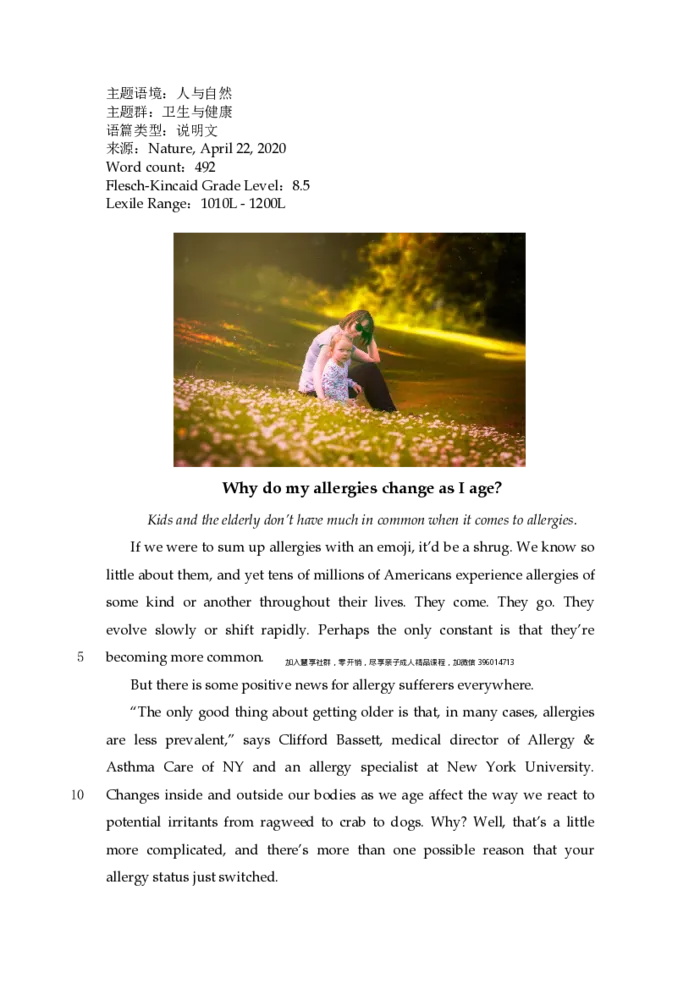
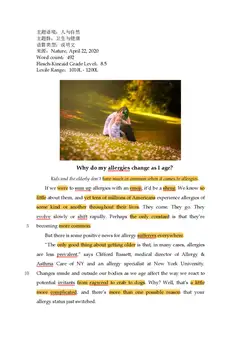
Kids and the elderly don’t have much in common when it comes to allergies.
If we were to sum up allergies with an emoji, it’d be a shrug. We know so
little about them, and yet tens of millions of Americans experience allergies of
some kind or another throughout their lives. They come. They go. They
evolve slowly or shift rapidly. Perhaps the only constant is that they’re
becoming more common.
5
But there is some positive news for allergy sufferers everywhere.
“The only good thing about getting older is that, in many cases, allergies
are less prevalent,” says Clifford Bassett, medical director of Allergy &
Asthma Care of NY and an allergy specialist at New York University.
Changes inside and outside our bodies as we age affect the way we react to
10
potential irritants from ragweed to crab to dogs. Why? Well, that’s a little
more complicated, and there’s more than one possible reason that your
allergy status just switched.
加入慧享社群,零开销,尽享亲子成人精品课程,加微信 396014713
You outgrew it
Around 60 to 80 percent of kids with milk and egg allergies outgrow them
15
by age 16. Only 20 percent of kids with peanut allergies do so, and only 14
percent of those allergic to tree nuts. Just 4 or 5 percent outgrow a shellfish
allergy.
Why? Unfortunately, the answer is that we mostly have no idea. We
know some general associations—the earlier a child has an adverse reaction to
20
food, the more like they are to outgrow it—but scientists don’t yet understand
why some kids age out of their reactions and others don’t. We do know that
early exposure to small amounts of food allergens, especially peanuts, helps
prevent allergies in the first place. But we have no idea how to actively
reverse them once they happen. If you get allergies as a kid, you just have to
25
wait and see if your tolerances change in the future.
You’re moving to new places
Allergies, especially the seasonal variety, can change a lot over a lifetime,
but it might not have anything to do with your body. Every place you live has
its own set of allergens, so moving from one town to the next will likely
30
change your allergies too. Teens moving out of their parents’ houses or adults
changing jobs may experience a sudden surge of allergies, or sweet,
sneeze-less relief.
You’re just allergy-prone
Some people are just unlucky. Again, we have no idea why, but clearly a
35
subset of humans have immune systems primed to identify allergens as
potential dangers, giving those poor folks a whole host of allergies while
others go sneeze-free. People with one allergy are far more likely to develop
another, and as far as we can tell there’s no way to avoid that unless you
prevent exposure altogether. And since most of us don’t want to live in
40
bubbles, that means allergy-prone folks are likely to suffer the sniffles their
whole lives.