 夜雨聆风
夜雨聆风


【Word版试卷下载】(巴蜀月考九)26.5重庆巴蜀中学高三月考(九)英语试卷
注意事项:
1.答题前,考生务必用黑色碳素笔将自己的姓名、准考证号、考场号、座位号在答题卡上填写清楚。
2.每小题选出答案后,用2B铅笔把答题卡上对应题目的答案标号涂黑。如需改动,用橡皮擦干
净后,再选涂其他答案标号。在试题卷上作答无效。
3.考试结束后。请将本试卷和答题卡一并交回。满分150分,考试用时120分钟。
第一部分听力(共两节,满分30分)
注意,回答听力部分时,请先将答案标在试卷上。听力部分结束前,你将有两分钟的时间将你的答案转涂到答题卡上。
第一节(共5小题;每小题1.5分,满分7.5分)
听下面5段录音。每段录音后有一个小题,从题中所给的A、B、C三个选项中选出最佳选项。听完每段录音后,你都有10秒钟的时间来回答有关小题和阅读下一小题。每段录音播放两遍。
1.Why didn’t the carwork?
A.It hadno gas.B. It had a flat tire.
2.What was wrong with thesteak?
A.Itwas dry.B. It was cold.
3.What will Marie most probably majorin?
A.Bioscience.B. Tourismmanagement.
4.What happened to theinterview?
A.Itwas canceled.B. It was put off.
5.What does Mrs. Carter do for thecommunity?
A.Teach kids to repairbikes.
B.Runa community b汰e shop.
C.Hold monthly bookexchanges.
第二节(共15小题;每小题1.5分,满分22.5分)
C. It ran out of battery.
C. It was salty.
C. Landscape architecture.
C. It was moved online.
听下面5段录音。每段录音后有几个小题,从题中所给的A、B、C三个选项中选出最佳选项。听每段录音前,你将有时间阅读各个小题,每小题5秒钟;听完后,每小题都有5秒钟的作答时间, 每段录音播放两遍。
听下面的录音,回答第6和第7小题。
6.What is the woman in chargeof?
A.Contacting employees. B. Hosting ameeting.
7.What will the man dofirst?
A.Speak tothe chef.B. Call thecompany.
听下面的录音,回答第8和第9小题。
8.What does Jim value most about the apartment?
A.Thesize.B. The sunoundings.
9.How much rent will the woman pay per month? A.$300.B. $320.
听下面的录音,回答第10至第12小题。
10.Why does Anna come toShanghai?
A.Tostudy Chinese.B. To gosightseeing.
11.What makes Anna a bit regretful in Shanghai?
A.Theweather.B. The food.
12.Where does the conversation takeplace?
A.At theman’s house.B. At theairport.
C. Arranging a dinner.
C. Prepare for lunch.
C. The location.
C. $350.
C. To travel for work.
C. The language banier.
C. I n an. office.
听下面的录音,回答第13至第16小题。
13.What is the relationship between thespeakers?
A.Writerand fan.B. Radio host andguest.
14.What, book are the speakersdiscussing?
A.Anovel.B. A textbook.
15.How does the woman describe the language in herbook?
A.Reader-friendly.B. Rich in scientificterms.
16.Which subject was the woman good at inschool?
A.Math.B.Science.
听下面的录音,回答第17至第20小题。
17.Where did the idea of 10,000 steps a day first comefrom?
C. Teacher and student.
C. A science book.
C. Humorous and playful.
C. English.
A. Amarketingactivity.B. A medicalstudy.C. An expert suggestion.
18.How many steps do, most Americans walk daily onaverage?
A.About2,000 steps.B. 3,000 to 4,000 steps.C. Over 10,000steps.
19.What can experienced walkers do to make their exercise morechallenging?
A.Carryheavy weights.B. Chooseharder routes.C. Walk without stopping.
20.What is true about the group City Girls WhoWalk?
A.It was startedin 2022.B. It meets twiceaweek.C. It was set up by a teacher.
第二部分阅读(共两节,满分50分)
第一节(共15小题;每小题2.5分,满分37.5分)
阅读下列短文,从每题所给的A、B、C、D四个选项中选出最佳选项。
A
Meet Your Robotic Friend!
Thames & Kosmos Robotics: Smart Machines-Junior is an entry-level STEM kit designed for you to build and code your own 9-inch robotic pal. Featuring 150 pieces, it allows you to assemble (组装)a robot and learn basic programming through a free app or a built-in keypad.
To take advantage of all of the functionality this robot has to offer, you must first download the T&K Junior app to a smartphone or tablet. The table below introduces the app’s three main modes.
Tip: To learn how to use the built-in keypad buttons to control or program your robot, see page 27.
21.Whichbutton should you press to makeJunior move fhster?
A.B. 
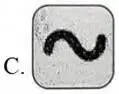

22.What can users get by leveling up in Workshopmode?
A.Extraenor folders.B. Newcharacters.C. Free STEM lessons. D. Built-in buttons.
23.Where is the text most probably takenfrom?
A.A userguide.
C. A toy magazine.
B. A STEM textbook.
D. A workshop brochure.
B
Many artists worry that artificial intelligence may interfere with artistic creation. But Sougwen Chung, a Canadian-Chinese artist, instead sees AI as an opportunity for artists to embrace uncertainty and challenge people to think about technology and creativity in unexpectedways.
Chungs art exhibitions are driven by technology. The artwork, she says, emerges not just in the finished piece but in all the messy in-betweens. “My goal,“ she explains, tcisn,t to replace traditional methods but to deepen and expand them, allowing art to arise from a genuine meeting of human and machine perspectives.,5
Such a meeting took place in January 2025 in Switzerland, where Chung presentedSpectral, aperformative art installation featuring painting by robotic arms whose motions are guided by AI thatcombinesdatafromearlierworkswithreal-timeinputfromanelectroencephalogram(脑电图).“My
alpha state drives, the robot5s behavior, translating an internal experience into tangible gestures‘says Chung.
The goal was simple: As the artist drew, the arm copied. Except it didn’t work out that way. The arm made unexpected movements, creating sketches that were similar to Chung’s-but not identical. These “mistakes“ became part of the creative process. “One of the most transformative lessons I’ve learned is to ‘poeticize error,“’ Chung says. “I trust that the failures themselves can be generative.”
Zihao Zhang, an architect at the City. College of New York, sees Chung5 s work as offering a different story about human-machine interactions. “We’re still, kind of trapped in this idea of AI versus human, and which one’s better/5 he says. AI is often, characterized in the media as something that can supplantour workers. He believes works like Chung’s challenge the idea of either-or.
Chung believes that “artificial“ intelligence still relies on human data, shaped by human biases, and it impacts human experiences in turn. She says, “These technologies don’t emerge in a vacuum-there5s real human effort. For me, art remains a space to explore and affirm human agency/5
24.What reflects Chung5s artphilosophy?
A.Keeping art free fromtechnology.
C. Aiming for perfectly finished artworks.
25.What is Spectral presented as in thetext?
A.A tightly controlled art project.
B.A combination of different artforms.
C.A painting made without humaninput.
D.A live artwork taking shape inperformance.
B. Letting art grow from unpredictability.
D. Relying on conventional craftsmanship.
26.What does the underlined word “supplant“ in Paragraph 5 probablymean?
A.Replace.B.Discourage.C. Assist.D. Satisfy.
27.What, is the purpose of thetext?
A.To introducerobot-made artworks.B. To examine concerns about AI inart.
C. To explore an artist’s, creative useof ALD. To promote an exhibition by a risingartist.
Have you ever felt “velvetmist”? It’s a “complex and subtle emotion that brings comfort and a gentle sense of floating.,5 If you haven’t, that’s not surprising. An online forum user named Noahjeadie generated it with a chatbot, along with advice on how to create the feeling. Researchers say more and more terms for these “neo-emotions“ are showing up online, describing new dimensions and aspects of feeling. But most neo-emotions aren’t created by chatbots. Humans come up with them in response to a changing world.
The sociologist Marci Cottingham believes that these coinages help us relate to one another and make sense of our experiences. So even when a neo-emotion is just a subtle variation on, or combination of, existing feelings, getting super-specific about those feelings helps us reflect and connect with other people.
Theseneo-emotionsarepartofaparadigm(范式)shiftinemotionscience.Fordecades,researchers argued that humans all share a set of a half-dozen or so basic emotions. But Lisa Feldman Banett, a clinical psychologistatNortheasternUniversity,thinksotherwise.Byusingtoolslikeadvancedbrainimagingand
studyingbabiesandpeoplefromrelativelyisolatedcultures,shehasconcludedthere5snosuchthingasa
basicemotionalpalette(调色板).Thewayweexperienceandtalkaboutourfeelingsisculturally determined. “How do you know what anger and fear are? Because somebody taught you,“ Banett says.
Justlikeanyothertoolhumansmakeanduse,emotionsareapracticalresourcepeopleareusingas
they navigate the world. Some neo-emotions, like velvetmist, might be mere novelties. But others, like eco- anxiety,can take on a life of their own and help drive social movements.
Both reading about and crafting your own neo-emotions could be surprisingly helpful. Lots of research supportsthebenefitsofemotionalgranularity(粒度).Itturnsoutthatpeoplewhousemoredetailedand specificwordstodescribetheirfeelingsgotothedoctorlessfrequently.Andmanystudiesshowthisskill
can be developed at any age.
Are you sure you’ve never felt velvetmist?
28.What areneo-emotions?
A.Online terms foremotional disorder.B. Widely shared basic human emotions.
C. Newly recognizedemotional experiences.D. Complex emotions generated by chatbots.
29.Which statement would Banett probably agreewith?
A.Emotional categories arenot fixed.B. Emotions are simpler than oncebelieved.
C. People have inbornemotional, knowledge.D. Culture plays little role in definingemotions.
30.In describing feelings, what does emotional granularity mainlyinvolve?
A.Morepositivity.B.Higherprecision.C.Greateropenness.D.Better,consistency.
31.What is the best title for thetext?
A.Can Neo-emotions EnrichCultures?
B.Ignoring Emotions Comes at aCost
C.Inventing New Emotions Feels ReallyGood
D.Can Chatbots Understand HumanEmotions?
D
A tiny piece of lab-grown wood could be a big step, towards reducing the number of trees cut down. “As far as we know, our early prototype (原型)is the first piece of interconnected wood-like tissue ever produced from, cell culture/5 says Tom Clement at start-up New Dawn Bio.
What the firm calls “cultured wood“ is a wood-based version of lab-grown meat. The first piece of material was made using stem cells from Arabidopsis thaliana, a small plant commonly used in lab studies. The piece, which Clement says is dark brown, is only about an eighth of the size of a postage stamp. The goal, however, is to use stem cells from various tree species and produce larger pieces of wood, such as an entire tabletop.
The company aims to produce wood more efficiently with lower environmental impact. Clement says the approach involves two main stages. First, plant stem cells are put in sugar water, enabling them to grow fast. Then, they are exposed to chemical or genetic cues to make them differentiate into fibre cells filled with cellulose-the primary component of plant cell walls-or vessel cells, which help transportwaterandminerals through the tissue. Together, these are the main structural components of wood. Once these cells become strong and bond with each other, they are combined to form anyshape.
Eventually, the researchers aim to replicate (复制) wood from rare species threatened by illegal logging. Clement says cultured wood could displace harmful logging through relatively small-scale production. Lab-grown wood will be expensive, but it can still compete with costly rare wood.
This isn’t the first attempt at cultured wood. Researchers previously tried to print wood-like material,
but were never able to produce material with the same mechanical properties as actual wood, says Fernando Velasquez-Garcia at MIT. “The million-dollar question is whether the cells connect. Are they just sitting together or are they shaking hands?” Clement declined to share how the cells connect or the mechanical properties of the resulting wood. Without more details, it is impossible to judge whether the start-up has done so, Fernandosays.
32.What do we know about the lab-grown wood produced by New DawnBio?
A.It has replaced natural wood products.B. It is considered an earlybreakthrough.
C. It is already large enoughfor tabletops.D. It comes from a rarely studied labplant.
33.What is formed in the second stage of making culturedwood?
|
A. Rare wood tissue. C. Fast-growing stem cells. |
B. Water and minerals. D. Fibre cells and vessel cells. |
|
34.What is Paragraph 4 mainlyabout? A. The prospects of rare wood products. |
B. The growing threat of illegal logging. |
|
C. The potential value of cultured wood. |
D. The disadvantages of lab-grown wood |
35.Why does Fernando call cell connection “the million-dollarquestion”?
A. It makes rare tree specieseven rarer.B. It affects how much the research costs.
C. It changes the properties ofactualwood.D. It determines how wood-like the material is.
第二节(共5小题;每小题2.5分,满分12.5分)
阅读下面短文,从短文后的选项中选出可以填人空白处的最佳选项。选项中有两项为多余选项
A Piece of Cake
From sharing a tasty snack to allocating (分配)resources between nations, having a strategy to divide things fairly will make everyone happier. But it gets complicated when things aren’t indistinguishable substances.36 Luckily, maths has some ideas.
When splitting between two parties, you might know a simple and mathematically optimal (最优的)
rule: I cut, you choose. Since the person cutting the cake doesn’t choose, they are motivated to cut the cake fairly. Then when the other person chooses, everyone is satisfied.37 Neither participant can
claim they would rather have the other person’s share.
38 It is more complicated, but still possible, to produce an envy-free allocation with several so-called fair-sharing algorithms.
Lefs say Alex, Blake and Chris are sharing a cake. Alex cuts the cake into three pieces, equal in value to him. Then Blake judges if there are at least two pieces he would be happy with. If Blake says yes, Chris chooses a piece; Blake chooses next, pleased to get one of the two pieces he liked, followed by Alex, who would be satisfied with any of the pieces. If Blake doesn’t think Alex’s split was far, Chris looks to see if there are two pieces he wouldtake.39
If both Blake and Chris reject Alex’s initial chop, then there must be at least one piece they both thought was no good. This piece goes to Alex.40 The remaining two pieces are back togetherto
create one piece of cake for Blake and Chris-to perform the rule “I cut, you choose” on.
So whatever is being shared, maths can help prevent arguments.
A.What if there are morepeople?
B.If not, Chris cuts the remainingpieces.
C.They take turns to pick their favoritepiece.
D.If yes, Blake picks first, then Chris, thenAlex.
E.This results in what is called an envy-freeallocation.
F.He is still happy, because he thought the pieces were allfine:
G.For example, cake pieces with cherries on top seem moredesirable.
第三部分语言运用(共两节,满分30分)
第一节(共15小题;每小题1分,满分15分)
阅读下面短文,从每题所给的A、B、C、D四个选项中选出可以填入空白处的最佳选项。
It was supposed to be a joke.
DawsonGunnpostedavideo ofhis two Labrador retrievers(寻回犬),Stinkand Bink,withpieces of paper _41_ to their backs. In the video, Gunn says in a voice-over: “We have ad _42_ available. Stinkis $20 per spot, Bink $15.“ The caption reads, “Dm if ur interested. tcTo Gunn’s surprise, he received over a thousand_43_. “I can’t even scroll (滚屏)to see them all,“Gunn toldTheWashington Post.
Gunn’s account, Too Cute Labs, started as a creative outlet for the many videos of his dogs, doing adorable things. Eventually, as Gunn’s _44_ grew, so did the opportunities to make money. Some buyersare just _45_ or small businesses. They share birthday wishes and shout-outs. Larger brands arealso
_46_ the action.
“Clearly, these dogs are _47_said Laura Kaye of Booking, com, the first large brand to advertiseon the dogs. “And we wanted to be a _48_ ofthat.”
“This is a fun service,,5 Gunn said, adding that people generally don’t _49_ when their adsare destroyed by the dogs rollingover.
_50_ typical ads, Gunn’s advertisements feel organic, silly and a little unpredictable. For some companies, that approach feels just _51_. In a world where people are _52_ marketed to, it is rare tofind something that truly breaks through. These ads did not feel like content people wanted to _53_. They choseto engage with theads, even knowing they were _54_.
|
“One day, people may say they’re _55_ |
of seeing ads on Labs,“ |
Gunn said. But until then, he is |
|
|
enjoying the ride. |
|||
|
41. A. taped |
B. related |
C. lost |
D. delivered |
|
42. A. content |
B. blockers |
C. space |
D. agencies |
|
43. A. videos |
B. requests |
C. dollars |
D. gifts |
|
44. A. interest |
B. age |
C. collection |
D. following |
|
45. A. employees |
B. charities |
C. officials |
D. individuals |
|
46. A. coining up with |
B. going back to |
C. getting in on |
D. running away from |
|
47. A. loved |
B. examined |
C. protected |
D. trained |
|
48. A. part |
B. family |
C. model |
D. reminder |
|
49. A. know |
B. mind |
C. suspect |
D. recall |
|
50. A. Along with |
B. Thanks to |
C. Far from |
D. Instead of |
|
51. A. strange |
B. right |
C. random |
D. formal |
|
52. A. immediately |
B. suddenly |
C. eventually |
D. constantly |
|
53. A. skip |
B.change |
C. share |
D. create |
|
54. A. reliable |
B. amusing |
C. branded |
D. expensive |
|
55. A. fbnd |
B. sick |
C. afraid |
D. capable |
第二节(共10小题;每小题1.5分,满分15分)
阅读下面短文,在空白处填入1个适当的单词或括号内单词的正确形式。
The seats of the Concertgebouw’smainauditorium56.(occupy)bystudentspreparingforupcoming exams as classical music fills the hall. The students aren’t being rude by ignoring the musicianson stage. They’re meant to be studying-and the music is intended 57.(assist) rather than distractthem.
The study sessions have been 58.hit ever since their launch in 2023. During a recentsession,musicians played German composer Johann Pachelbel5s Canon in D.Thesoundsfilledaspace59. ceiling and walls are decorated with elegant paintings and golden details. As the musicians played, more students wandered into the concert hall, some 60.(hold) cups of coffee along with their computers andbooks. 61.(sign) advertise the password of the venue’s free WiFi network. A ticket for the session is just 2.50 euros.
The music helped 21-year-old Mulder fbcus on a project for her degree. She said that the music, combined with just being somewhere different from 62.sheusuallystudies,helpedher enjoylearning and music at the same time 63.feelingdistracted.
“It’s a really quiet environment and nice, quiet music,“ Mulder said. “So that helps me to concentrate.,5 Professor Bas Bloem, a neurologist, says: “It is not a one-size-fits-all. I don’t think ifs been
64.(good) researched,but I thinkthe calming music creates a state of flow. When you reach a state offlow, you can go on endlessly and be enormously65.(produce).,5
第四部分写作(共两节,满分40分)
第一节(满分15分)
假定你是李华,你校即将迎来一批英国交换生,目前计划在校园导览路线中打造一条中国文化长廊。校英文论坛面向中外学生征集布置创意,请你跟帖留言,内容包括:1.你推荐的文化元素; 2.具体呈现方式。
注意:
1.写作词数应为80个左右;
2.请按如下格式在答题卡的相应位置作答。
Adding Chinese Elegance to the Corridor
第二节(满分25分)
阅读下面材料,根据其内容和所给段落开头语续写两段,使之构成一篇完整的短文。
I had been so busy with work that I had little time to spend with my nine-year-old son, Mike. Last summer, when I finally had a day off, Mike told me the school would be hosting a cookie auction (拍卖). Each student was supposed to bake cookies with their father.
rd never baked cookies, so we followed the instructions carefully. We opened a packet of instantcookiemix,addedtherequiredingredients,shapedthedough(面团)intosmallrounds,andconfidently placed them on a baking tray in the oven. Taking them out after fifteen minutes, I was surprised that the cookies were not the golden and perfectly shaped ones I’d seen in ads. In fact, some were unevenly baked, while others had spread too much on the tray. Mike, however, cherished this opportunity to work with me andwas so happy that he didn’t seem to notice the problem.
After letting them cool, we tried decorating the cookies with icing. As a finishing touch, I sprinkled (撒)a few chocolate chips on top, hoping to add a bit of chocolate flavor to the cookies that didn’t look very
appetizing.M汰e gave me a proud grin; he thought they looked good. Bythen, we were already running late. When we finally hunied to the auction, I was stunned. A long table was filled with a fantastic anay of exquisitely designed cookies. In contrast, ours looked embanassing; some were misshapen, the icing had melted, and the chocolate chips were scattered everywhere. I felt a flush coming to my face, but Mike didn’t seem to be ashamed of our creation. He solemnly placed our cookies at the end of the table. I gave Mike eight dollars, telling him to bid (出价)on the cookies he liked, hoping he would get some nicelymade
ones to make up for the embanassment our cookies might bring him.
注意:
L写作词数应为150个左右;
2.请按如下格式在答题卡的相应位置作答。
Soon, the auctioneer lifted the first bag of cookies, and the auction began.
Mike handed over the-eight dollars, smiling as if the cookies were treasure.