ARTICLE · 1135224
AI for cardiac imaging recognition & segmentation: A clearer picture of heart health


AI for cardiac imaging recognition & segmentation: A clearer picture of heart health

HeartVision, developed by the City University of Macau, is an award-winning system that uses AI for cardiac imaging recognition and segmentation.

The Faculty of Data Science at City University of Macau (CityU Macau) has developed a pioneering algorithm that gives cardiologists a better view of coronary branches and vessels, speeding up clinical assessments. According to Wenjian Liu, associate dean of teaching and learning at the faculty, its main goal is simple: “We hope to provide clinicians with a more complete and reliable view of the coronary tree, all the way down to the tiny distal branches and capillary-level vessels.”
The aim is not to replace doctors but to help them see coronary images more clearly so they can quickly and accurately assess heart health. Traditional methods tend to focus on the main trunks and proximal vessels but struggle with thinner, more curved and low-contrast branches, says Liu.
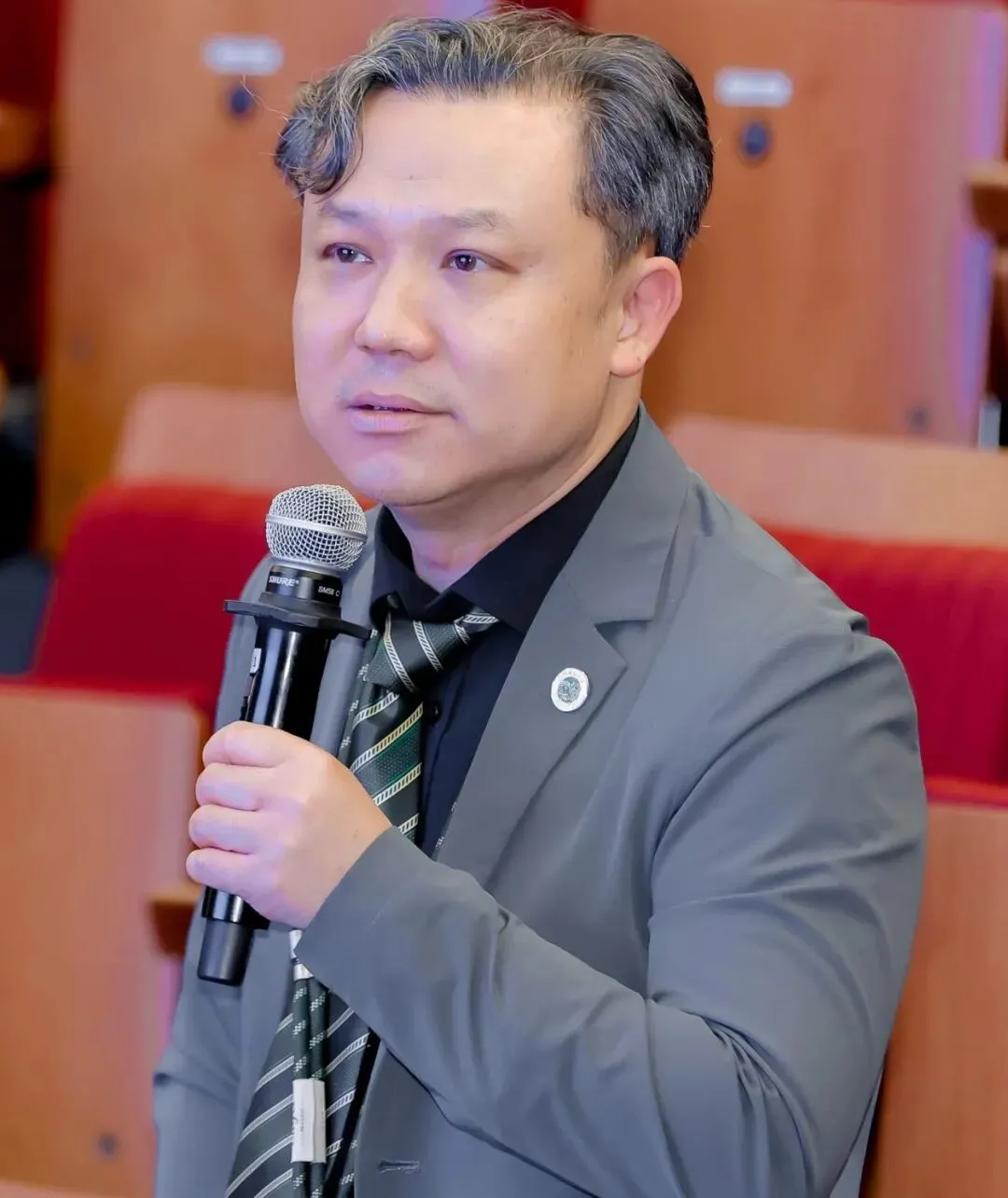
Wenjian Liu, associate dean of teaching and learning, Faculty of Data Science, City University of Macau
“We hope to provide clinicians with a more complete and reliable view of the coronary tree.”
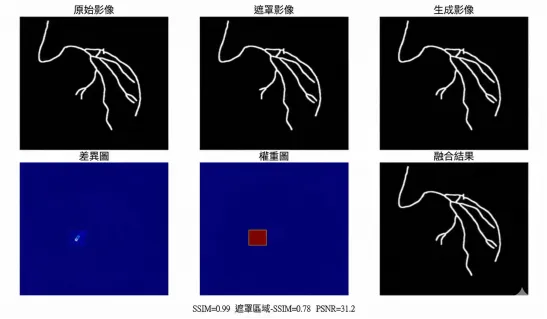
CityU Macau’s Flex-Mamba algorithm uses adaptive scanning that follows vessel trajectories. This method includes a boundary recalibration module that helps to distinguish ambiguous pixels near vessel edges. “We believe this means measurements such as vessel length, diameter and stenosis severity can be derived from more coherent and continuous vascular structures, which can support more reliable clinical assessments,” he says.
Developing the algorithm has not been without challenges. Image quality in coronary angiograms can be affected by motion artefacts, bone overlap, catheter shadows and low contrast. Vessel pixels, especially for smaller branches, can be easy to miss as they occupy a tiny fraction of an image.
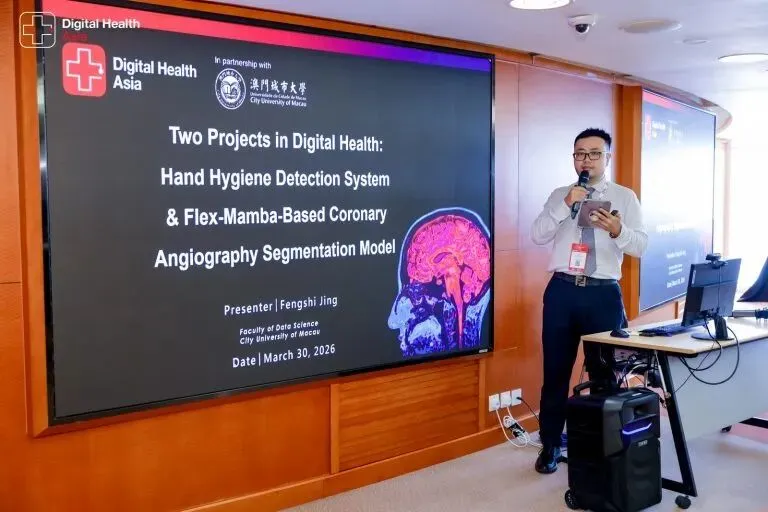
Another challenge is building a system that doctors will trust and use in a busy catheter lab. “We are fully aware that we have not solved everything,” says Fengshi Jing, associate professor in the Faculty of Data Science. “We are still learning, but we believe these challenges are worth tackling.”
The research team collaborated with the Guangdong Second Provincial General Hospital, where it conducted initial clinical validation on real patient data. The system has been piloted in other hospitals so researchers can gather feedback from cardiologists on segmentation accuracy, boundary quality and workflow integration to continue refining it for real-world use. Rather than providing a definitive answer, the algorithm could shorten interpretation time and improve consistency.
Liu notes that bringing an AI tool from research into clinical practice is immensely challenging. “We are not certain that this particular direction will ultimately be the most successful path for AI in cardiovascular care,” he says. “But we believe that it’s important to try. We are happy to be part of the many researchers who contribute their efforts, even if not all of us will see commercial success.”
The team used the global audience at the 2026 THE Digital Health Asia event, hosted by CityU Macau, to spread the word about HeartVision. A Hong Kong-based medical devices company has already expressed interest in introducing the product into hospitals. “This project is a collective effort,” says Liu. “We are proud to contribute, however modestly, to the broader goal of making AI-assisted cardiac care a reality.”