ARTICLE · 1361487
初中英语介词的用法(汇总版)
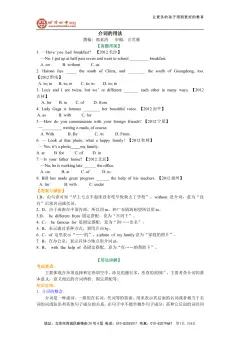
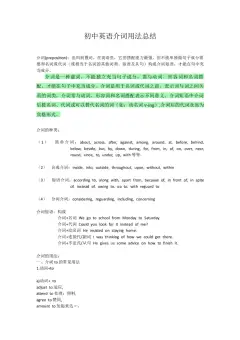
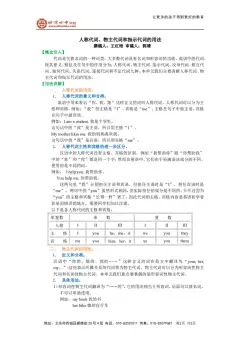
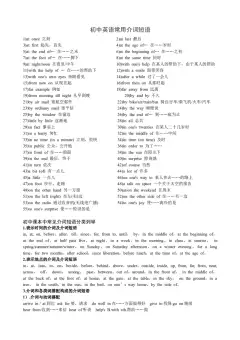
一、时间介词
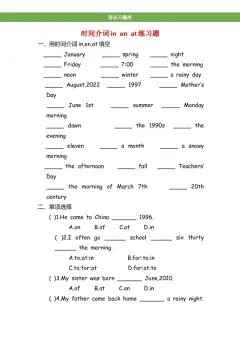
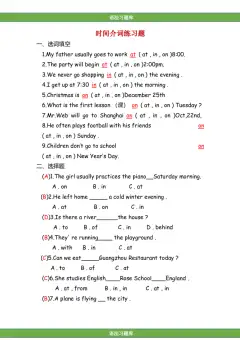
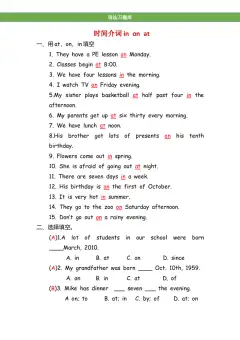
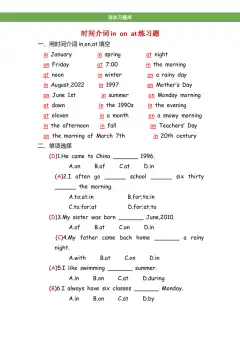
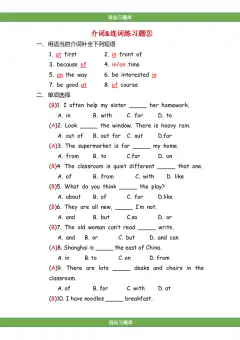
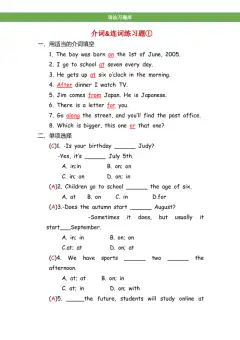
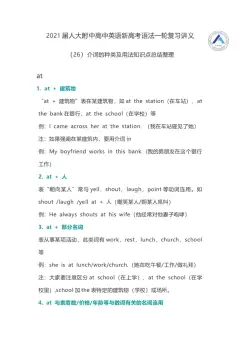
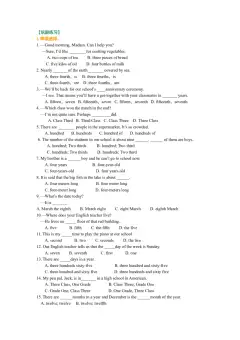
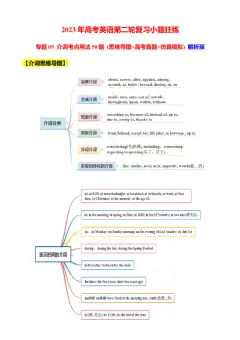
(1) 表具体时间的介词(on, in 与 at)
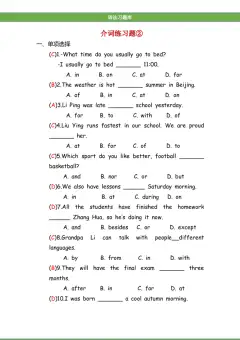
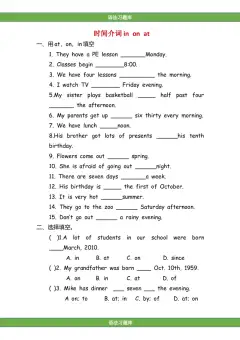
at
表示具体的时间点,常用于 at half past five(在五点半)、at 7:30(在七点半)、at that time(在那时);
表示钟点、年龄等的短语中:at the beginning/end of(在……开始/结束时)、at the age of(在……岁时);
后接中午、午夜、黎明、黄昏:at noon(在中午)、at midnight(在午夜)、at dawn(在黎明)、at dusk(在黄昏)。
记忆口诀:
in 年 in 月 in 四季,
in 早 in 晚 in 世纪,
泛指时间不用急;
on 上 on 下 on 具体,
外加日期和星期;
午夜黄昏用 at,
黎明用它也不错;
at 点 at 刻 at 年龄。
on
后接某一天或某一天的上午、下午或晚上,也可用于一般节日前;
示例:on the weekend(在周末)、on Christmas(在圣诞节)、on Children's Day(在儿童节)、on Monday morning(在星期一上午)、on December 1st, 2024(在 2024 年 12 月 1 日)、on a cold morning(在一个寒冷的早晨)。
in
强调时间段,即在较长的一段时间内,后多接表示年、月份、四季等名词,或泛指某天的上午、下午或晚上;
示例:in the morning(在上午)、in the afternoon(在下午)、in the evening(在晚上)、in July(在七月)、in spring(在春天)、in the 1990s(在二十世纪九十年代)。
(2) 表示时间段的介词(in 与 after)
in
“in+时间段”表示“在……之后”,表示需要多长时间之后动作才能发生,谓语动词常用一般将来时;
示例:in three days(三天后)、in the future(在未来)。
after
意为“在……之后”,后接时间点或时间段;接时间段时,多与过去时连用;接时间点时,多与将来时连用;
示例:He came back after a few days.(几天后他回来了。)
(3) 表示期间的介词(for, during 与 through)
for
“for+一段时间”,强调某动作或状态持续了多长时间;
示例:They have lived in China for five years.(他们已经在中国生活了五年了。)
during
多指事件发生“在……期间”;
示例:She wants Mr. Li to give Jim some work to do during the holiday.(她想让李先生给吉姆一些假期做的工作。)
through
强调事件发生的全过程,表示“从……开始到……结束”;
示例:What the teacher said was so useful that I listened carefully through the whole class.(老师讲的内容很有用,我整节课都在认真听讲。)
(4) 表时间起点的介词(from 与 since)
from
表示从某一时间点开始,常与 to 连用,构成 “from…to…”,意为“从……到……”;
示例:Lunch is from 12:00 a.m. to 1:00 p.m., and after that we have Chinese.(午餐是从中午 12 点到下午 1 点,之后我们上中文课。)
since
后接时间点,指从过去某时延续到现在,通常与完成时连用,意为“自从”;
示例:We've lived in Chengdu since 2015.(自 2015 年以来,我们一直住在成都。)
(5) 表时间节点的介词(by 与 until)
by
by+时间点,意为“到……为止;不迟于;在……前”;
示例:I will finish the work by Monday.(我将在星期一之前完成这项工作。)
until
指时间,意为“直到……;到……为止”,后常接时间点;
示例:Mike didn't get home until 10 o'clock.(迈克直到 10 点钟才到家。)
(6) 表时间前后的介词(before 与 after)
before
表示“在……(时间)之前”;
示例:I will get to the United States before Friday.(我将在周五之前到达美国。)
after
表示“在……(时间)之后”;
示例:After almost two hours, he landed safely back on earth.(将近两个小时后,他安全着陆并返回了地球。)
二、表范围、地点、方位、空间的介词
(1) 表范围的介词(in, on, to, among 与 between)
in
表示“在某范围之内”;
示例:Beijing lies in the north of China.(北京位于中国北部。)
on
表示“接壤”,却互不管辖;也指在任何广阔的面上;
示例:Hebei Province is on the north of Henan Province.(河北省位于河南省的北部。)
to
表示“在某范围之外”,互不接壤,互不管辖;
示例:Xi'an is to the west of Zhengzhou.(西安在郑州的西面。)
among
表示“在……(三者或三者以上)中”;
示例:Among all the subjects, I like English best.(在所有的科目中,我最喜欢英语。)
between
表示“在……(两者)之间”,常与 and 构成短语 between…and…;
示例:The post office is between the supermarket and the bookstore.(邮局在超市和书店之间。)
(2) 表地点的介词(in 与 at)
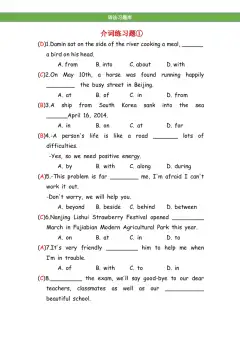
in
后接大地方;也指占某物的一部分,表示“在……里”;
示例:Einstein was born in a city in southern Germany.(因斯坦出生在德国南部的一个城市。)
at
后接小地方;也指具体地点,表示“在某处,在某地”;
示例:at home(在家)、at the bus stop(在公交车站)、We live at No. 36 Renmin Road.(我们住在人民路 36 号。)
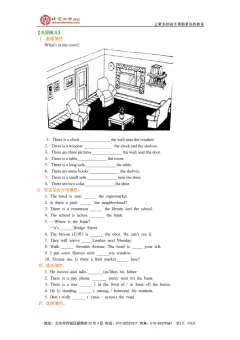
(3) 表方位的介词(above, below, over, under, in front of, in the front of)
below
表示“不接触物体表面的下方”,不一定是正下方;也指“低于”;
示例:The temperature is usually below zero in the South Pole.(南极的温度通常在零度以下。)
above
表示“不接触物体表面的上方”,不一定是正上方;也指“高于”;
示例:The plane is flying above the clouds.(飞机正在云层上方飞行。)
under
表示“不接触物体表面的正下方”;
示例:The cat is lying under the chair.(那只猫正躺在椅子下面。)
over
表示“不接触物体表面的正上方”;
示例:The bridge over the river has a long history.(河上的这座桥历史悠久。)
in front of
表示“在……(外部的)前面”;
示例:There are some trees in front of the classroom.(教室前面有一些树。)
in the front of
表示“在……(内部的)前面”;
示例:The teacher usually stands in the front of the classroom during the class.(上课的时候老师通常站在教室的前面。)
(4) 表空间的介词(across, past, through, along)
across
表示“横过(某个表面)”,指从一边到另一边;
示例:Be careful when walking across the street.(过马路时小心点。)
past
表示“经过 / 走过(某地)”;
示例:On the way to school, I walked past a small garden.(上学的路上,我经过了一个小花园。)
through
表示“从某个立体空间或某一物体内部穿过(如窗户、沙漠、森林、人群等)”;
示例:Walk through the gate, and you'll see the teaching building.(穿过大门,你就会看到教学楼。)
along
表示“沿着(街道、河流等);沿着……边缘”;
示例:In the mornings and evenings, you can see people jogging along city streets.(在早上和晚上,你可以看到人们在沿着城市街道慢跑。)
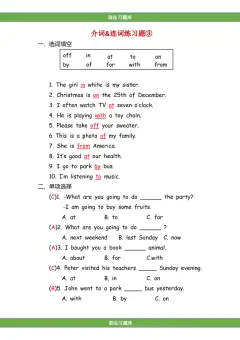
三、表示交通方式的介词(by 与 in/on)
by
by+交通工具或与交通方式相关的名词;
示例:It is important to leave earlier if you are traveling by car.(如果你开车旅行,早点出发是很重要的。)
in
in+限定词+交通工具,表示“在……里”;
示例:Tom's dad saw me on the street and gave me a lift in his car.(汤姆的爸爸在街上看见了我,便开汽车载了我一程。)
on
on+限定词+交通工具,表示“在……上”;
示例:He's gone out for a ride on his bike.(他骑自行车出去兜风了。)
易错警示:
① 没有遮盖物的交通工具前用 on,如 on a bike(骑自行车);
② 有遮盖物的交通工具前用 in 或 on,如 in/on the train(在火车上)。
四、 表工具、材料、手段的介词(with, in, by, through 与 on)
with
with(+限定词)+具体的工具或方法,表示用某种工具或手段,一般接某种具体的工具;
示例:People eat with chopsticks instead of with a fork.(在中国,人们通常用筷子吃饭。)
in
in+某种语言或材料;
示例:What about keeping a diary in English?(用英语写作怎么样?)
by
by+某种手段或方法,表示用某种方式手段或途径等;若 by 后接名词,名词前不加冠词;若 by 后接动词,则要用动词 -ing 形式;
示例:I study English by watching English TV.(我通过看英语电视学习英语。)
through
表示通过某种途径或手段,后常接抽象名词;
示例:I like to learn about the world through the Internet.(我喜欢通过互联网了解世界。)
on
常与电视、收音机、电话、网络等连用,表示“使用、通过”;
示例:After dinner, we watched the Chinese Poetry Competition on TV.(晚饭后,我们在电视上看了《中国诗词大会》。)
五、 表示包括、排除的介词(短语)(including, besides, but, except, except for)
except
意为“除……之外”,表排他含义,侧重于排除同类的人或物,指从整体中除去一部分;
示例:All students are present except Jim.(除了吉姆之外,所有的学生都出席了。)
except for
意为“除……”,侧重不同类事物的排除,表示对整体主要部分的肯定;
示例:The square is tidy except for a car.(除了一辆车之外,广场上非常整洁。)
besides
意为“除……之外(还)……”,后接的人或物包含在整体之内,表示补充说明;
示例:Two others are playing football besides Tom.(除了 Tom 外,还有两个人正在踢足球。)
but
除……之外,多与表示否定意义的词连用,表示“只有”之意;
示例:He had no choice but to get two jobs to earn money.(他别无选择,只能找两份工作挣钱维持生计。)
including
意为“包括……在内”,含有补充说明之意,后常接名词(短语)或动名词(短语);
示例:Your environment, including your education level and your life experience, can change your personality.(你所处的环境,包括你的教育程度、你的人生经历,都可以改变你的个性。)