ARTICLE · 1428605
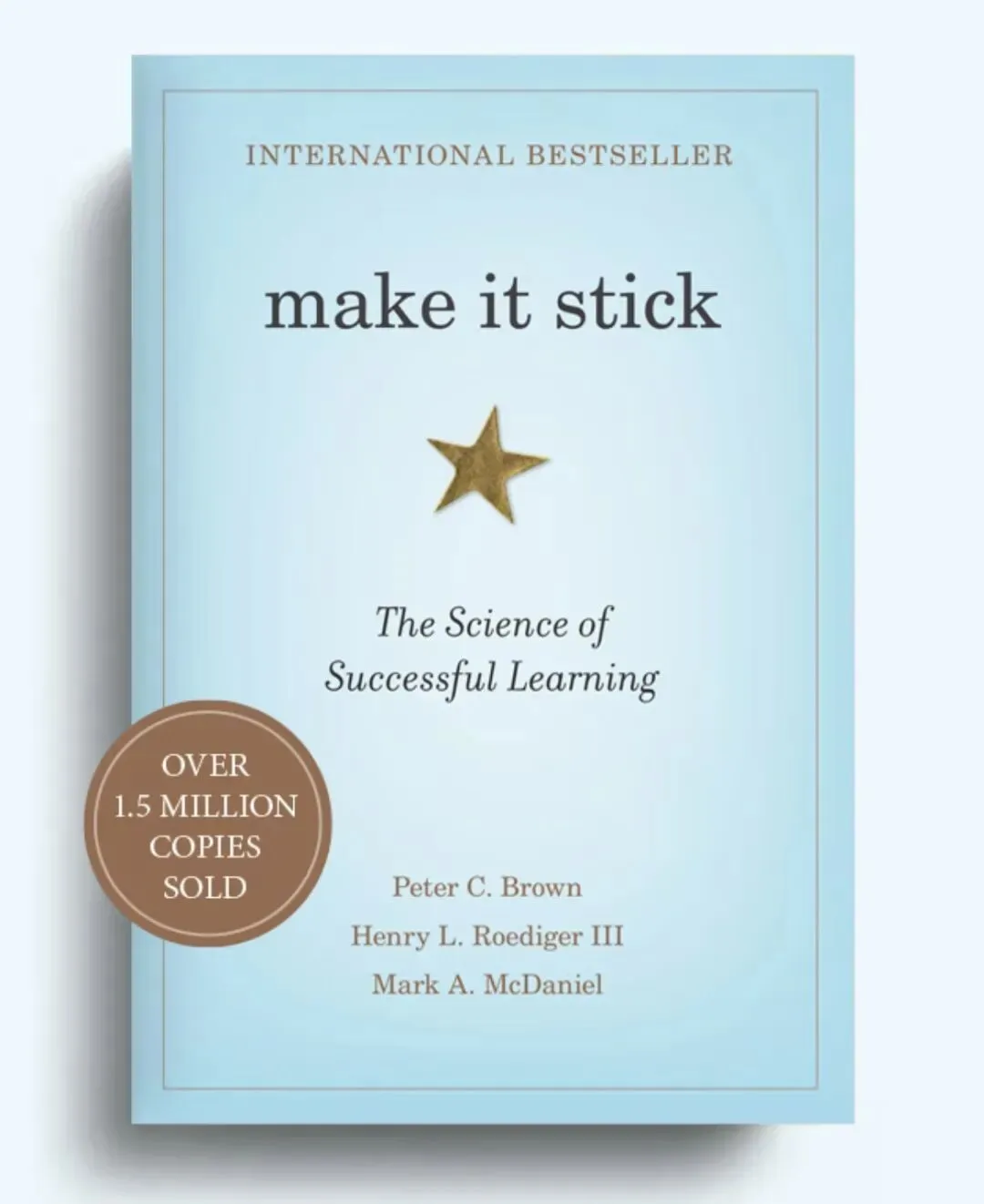
Make It Stick 第三章核心要点(中英对照)
1. 核心论点(Desirable Difficulties)
Some kinds of difficulties during learning help to make the learning stronger and better remembered.
学习过程中的某些困难,会让学习更扎实、记忆更牢固。
Learning is deeper and more durable when it’s effortful. Learning that’s easy is like writing in sand, here today and gone tomorrow.
费力的学习更深刻、更持久;轻松的学习如同在沙上写字,转瞬即逝。
The more effort required to retrieve (or, in effect, relearn) something, the better you learn it.
检索(或再学习)时付出的努力越大,学习效果越好。
2. 集中练习的假象(Massed Practice)
The rapid gains produced by massed practice are often evident, but the rapid forgetting that follows is not.
集中练习带来的快速进步显而易见,但随之而来的快速遗忘却不易察觉。
Massed practice creates an illusion of knowing, not true mastery.
集中练习只会制造“已知”的错觉,而非真正的掌握。
3. 三大有效策略
① Spaced Practice(间隔练习)
Practice that’s spaced out… allows for some degree of forgetting, so the resulting recall is effortful.
间隔练习会产生一定程度的遗忘,让回忆变得费力。
② Interleaved Practice(穿插练习)
Interleaved practice involves learning and practicing several skills or subjects at the same time rather than moving on from one to another.
穿插练习是同时学习与练习多种技能或主题,而非逐个攻克。
Interleaving improves your ability to assess context and discriminate between problems.
穿插练习提升你判断情境、区分问题类型的能力。
③ Varied Practice(多样化练习)
Varied practice aids learning because it improves your ability to transfer learning from one situation and apply it successfully to another.
多样化练习能提升知识迁移能力,让你在不同场景灵活运用。
4. 主动学习与生成效应
Trying to solve a problem before being taught the solution leads to better learning, even when errors are made in the attempt.
在被教解法前先尝试解题,学习效果更好,即便尝试中犯错。
The act of retrieving a memory changes the memory, making it easier to retrieve again later.
主动检索记忆会改变记忆本身,让后续检索更轻松。
5. 核心结论
When learning is effortful, it changes the brain, making new connections and increasing intellectual ability.
费力的学习会改变大脑,建立新联结、提升智力。
Slower, effortful learning = longer-lasting, more flexible mastery.
缓慢且费力的学习,带来更持久、更灵活的掌握。
第三章核心要点总结:
一、核心主题
学习中的“合意困难”(Desirable Difficulties):看似低效、费力的学习方式,反而带来更持久的记忆与更强的迁移能力。
二、批判:集中练习(Massed Practice)
• 定义:短时间内高强度重复同一内容(如考前突击、反复刷题)
• 问题:短期见效、长期遗忘快;制造“我已掌握”的熟悉度错觉(Illusion of Knowing)
• 结论:无效,仅强化短期记忆
三、三大高效练习策略(合意困难)
1. 间隔练习(Spaced Practice)
• 做法:学习后隔一段时间再复习,允许部分遗忘后再检索
• 原理:遗忘后费力回忆,重新触发记忆巩固,强化长期记忆
• 效果:记忆更牢固、持久
2. 穿插练习(Interleaved Practice)
• 做法:同时练习多个相关主题/技能,而非逐个攻克
• 效果:提升辨别、分类、迁移能力,学会在不同情境选对方法
• 体感:学得慢,但长期掌握更扎实
3. 多样化练习(Varied Practice)
• 做法:在不同条件、场景、变式下练习同一技能
• 案例:投沙包练不同距离,比只练目标距离更准
• 效果:增强泛化与迁移能力,适应新情境
四、关键认知机制
• 生成效应(Generation Effect):主动回忆/总结,比被动阅读记得更牢
• 元认知(Metacognition):监控自己的理解,识别知识缺口,调整策略
• 警惕熟悉度陷阱:觉得“眼熟”≠真正掌握,需用检索检验
五、反馈与心态
• 反馈要具体、即时、可行动,聚焦纠错而非表扬
• 拥抱成长型思维:能力可通过努力提升,困难是成长机会
六、核心结论
• 学习速度≠学习质量:慢而费力的方式,带来更持久、可迁移的掌握
• 主动制造“合意困难”(间隔、穿插、多样化),是让知识真正扎根的关键。
这一章还是很有指导意义,通过阅读这一章后,不管是自我的学习,还是在带孩子学习的过程中,都知道了怎么做才是高效的。