文档文本内容
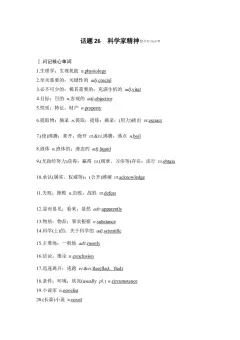
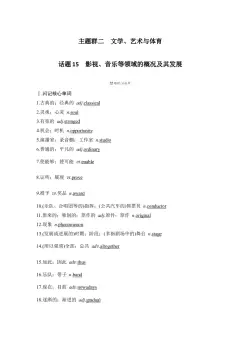
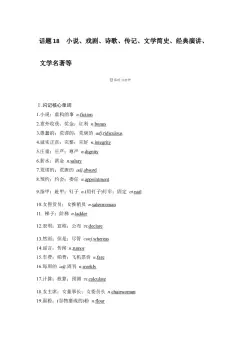
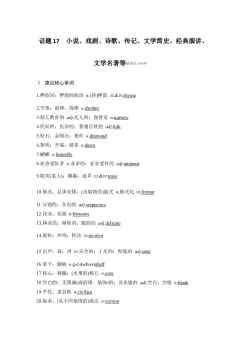
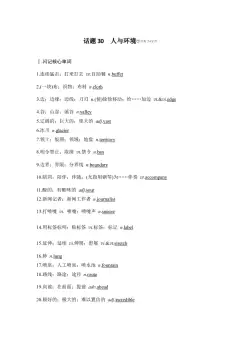
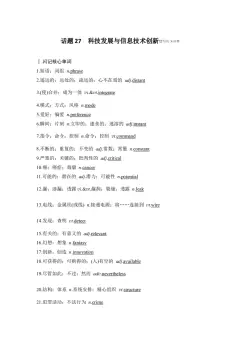
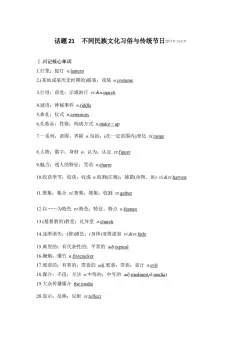
话题 28 科技发展与科学家精神
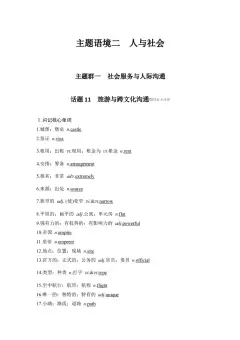
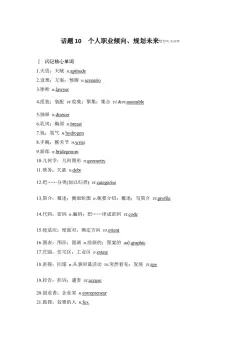
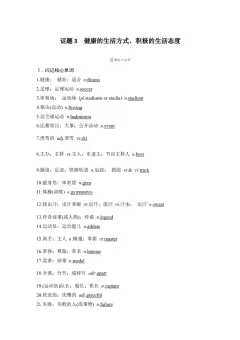
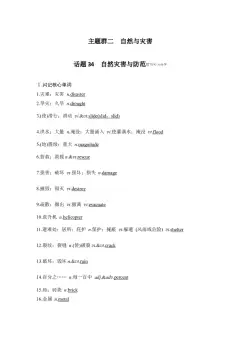
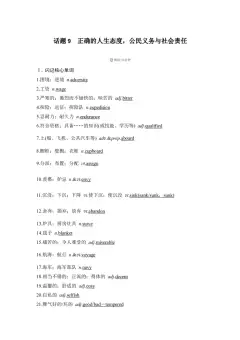
Ⅰ.闪记核心单词
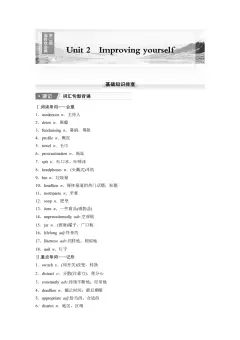
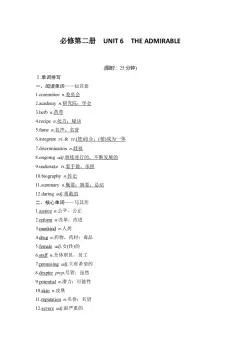
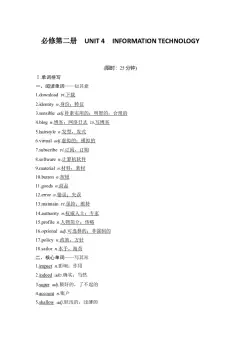
1.懊恼的;沮丧的;失意的 adj.frustrated
2.相互矛盾的;对立的;不一致的 adj.contradictory
3.感染;传染 n.infection
4.数量多的;多种多样的 adj.multiple
5.一家人;家庭;同住一所(套)房子的人 n.household
6.把……归咎于;责怪;指责 vt.责备;指责 n.blame
7.把手;拉手;柄 n.处理;搬动;操纵(车辆、动物、工具等) vt.handle
8.联系;纽带 n.把……连接起来;相关联 vt.link
9.未煮的;生的;未经处理的;原始的 adj.raw
10.大量的;价值巨大的;重大的 adj.substantial
11.减少;降低;减少量 n.(使大小、数量等)减少;减小;降低 vt.&vi.decrease
12.统计数字;统计资料;统计学[pl.-s] n.statistic
13.使改观;使改变形态 vt.改变;转变 vi.transform
14.显微镜 n.microscope
15.思想;思维;见解 n.thinking
16.蛋白质 n.protein
17.细胞;小房间;单间牢房 n.cell
18.病毒 n.virus
19.发现;调查结果;(法律)判决 n.finding
20.最初的;开始的;第一的 adj.initial
21.可靠的;固体的;坚实的 adj.固体 n.solid
22.投射;向……投以(视线、笑容等);投掷(cast,cast) vt.cast23.阴影;影子;背光处 n.shadow
24.彩虹 n.rainbow
25.倒出;倾泻;斟(饮料) vt.pour
26.混凝土 n.混凝土制的;确实的;具体的 adj.concrete
27.机械师;机械修理工 n.mechanic
28.导弹 n.missile
29.领导;领导地位;领导才能 n.leadership
30.优秀的;杰出的;明显的 adj.outstanding
31.有天赋的;有天才的;天资聪慧的 adj.gifted
32.抽象的;理论上的 adj.(文献等的)摘要n.abstract
33.概念;观念 n.concept
34.天文学家 n.astronomer
35.望远镜 n.telescope
36.聪颖的;绝妙的;明亮的 adj.brilliant
37.弱点;过错 n.fault
38.改变;转换;轮班 n.转移;挪动;转向 vi.&vt.shift
39.生动的;鲜明的;丰富的 adj.vivid
40.极为恶劣的;十分严重的;严厉的 adj.severe→恶劣 n.severity
41.认购(股份);定期订购;定期交纳(会费) vi.subscribe→订购;会员费
n.subscription
42.证据;证明;检验 n.proof→证明 v.prove→proofs[pl.]
43.怀疑;疑有;不信任 vt.&vi.犯罪嫌疑人;可疑对象 n.suspect→怀疑
n.suspicion→怀疑的 adj.suspicious
44.介入;出面;干涉 n.intervention→干涉;介入 v.intervene
45.干净的;纯的;纯粹的 adj.pure→纯度 n.purity→净化;提纯 v.purify46.保卫;防守;辩解 vt.defend→防御(物) n.defence
47.助理;助手 n.assistant→帮助,辅助 v.assist→帮助;支持 n.assistance
Ⅱ.速记重点短语
1.得出结论 draw a conclusion
2.最终地;彻底地 once and for all
3.同意;赞同 subscribe to
4.水泵 water pump
5.家喻户晓的名字 a household name
6.怀疑某人做过某事 suspect sb of doing sth
7.应受责备 be to blame
8.把……与……连接起来 link...to...
9.通过不懈的努力 through tireless efforts
10.幸亏;由于 thanks to
11.产生抗药性 develop resistance to medicine
12.理论框架 theoretical framework
13.(战争、打斗等不愉快的事情)突然开始;爆发 break out
14.保卫……免受…… defend...from/against...
15.为了保护;为……辩护(介词) in defence of...
16.在……期间 over the course of...
17.从事……的研究 conduct research into...
18.主管;掌管 in charge of
19.在某人的带领下 under sb’s leadership
20.追溯到 be traced back to /date back to
21.赢得……的名声 earn the name of
22.最重要的是;尤其是 above all
23.染上疾病 come down with a disease
24.跳出思维定式 think outside the box
Ⅲ.快记经典句式
1.Cholera used to be one of the most feared diseases in the world, until a Britishdoctor , John Snow , showed how it could be overcome . (until引导时间状语从句)
在英国医生约翰·斯诺向人们展示如何战胜霍乱之前,霍乱曾是世界上最令人恐
惧的疾病之一。
2.One theory was that bad air caused the disease. The other was that cholera was
caused by an infection from germs in food or water. (that引导表语从句)
一种理论是糟糕的空气导致了这种疾病;另一种理论是霍乱是由食物或水中的
细菌感染引起的。
3.Snow suspected that the water pump was to blame. (be to blame)
斯诺怀疑水泵就是罪魁祸首。
4.It seemed that the woman liked the water from the pump so much that she had it
delivered to her house every day. (so...that...;have +宾语+宾语补足语)
该妇女似乎非常喜欢从水泵抽上来的水,因此每天都让人从那里打水运到家里。
5.Accordingly, he had the handle of the pump removed so that it could not be used.
(so that 引导目的状语从句)
于是,他让人拆掉了水泵的把手,这样水泵就用不成了。
6.The people who drank this water were much more likely to get cholera than those
who drank pure or boiled water. (who引导定语从句)
与饮用纯净水或开水的人相比,饮用被污染的水的人更容易染上霍乱。
7.Most people are familiar with images of him in his wheelchair, unable to move and
using a computer to talk. (形容词短语及现在分词短语作状语)
大多数人都很熟悉他坐在轮椅上,无法动弹、只能通过电脑来说话的样子。
8.The other was the big bang theory, which holds that the universe began at a single
point in time and space. (which引导非限制性定语从句,that引导宾语从句)另一种是大爆炸理论,该理论认为宇宙开始于时间和空间的某个单点。
9.Besides being brilliant, he was brave, though sometimes careless in what he said or
did.(what引导宾语从句)
除了才华横溢外,他还是一个勇敢的人,尽管有时候言行举止比较随意。
Ⅳ.话题语篇填空
The scientist’s main task is to discover 1.how things work in the universe. But few
scientists have placed themselves under the microscope. So even though the brilliant
scientific method, which mainly includes hypotheses data collection, and statistical
analysis, 2.is written(write) down, the method by 3.which scientists come to solid
conclusions is hard 4.to identify (identify). Two of the essential qualities a scientist
needs to have seem to be 5.curiosity (curious) and creativity. People who are curious
usually have a mixture of seemingly 6.contradictory(contradict) desires: They are
looking for originality and yet they also want everything in 7.its(it) proper place. To
settle the conflict between statistics and findings, scientists often have to be creative
and think outside the box—approach the problem from different 8.directions(direct).
They must have a vivid imagination and a strong intuition in order for new theories
9.to be made(make). It echoes something the astronomer Carl Sagan once said. He
believes that every child “starts out 10.as a scientist” and every child is gifted with the
“sense of wonder and awe”.