学习目标
基础积累
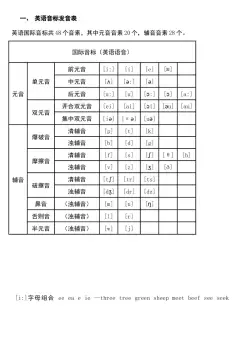
01 语音辨识库:元音弱化、辅音连读、爆破音省略专
练
学完本讲,你将能够:
序号
目标
对应能力
1
识别并理解元音弱化规律,能通过语法结构反推被弱化的词
解决“听不清介词连词”
2
识别辅音连读规律,能将连读后的“怪音”还原为正确短语
解决“明明听到了但反应不过
来”
3
识别爆破音省略规律,能通过残留口型/时长线索判断被吞的
音
解决“听上去少了一个音”
4
综合运用三种规律,对真题原文进行语音标注和影子跟读
建立“耳朵适应真实语速”的能
力
本讲高考考频统计(2023-2026 年) :
元音弱化:每年必考,平均每篇对话出现 3-5 处
辅音连读:每年必考,平均每篇对话出现 2-4 处
爆破音省略:每年必考,平均每篇对话出现 2-3 处
三者同时出现的复合句:每年至少 2-3 句
概况
英语是重音计时语言(stress-timed),即重读音节等距出现,非重读音节被压缩在重音之间的空隙
里。为了“赶时间”,会产生以下三种语音现象:
现象
一句话定义
类比(中文)
元音弱化
非重读的元音向 /ə/ 靠拢,又轻又短
“我的书”中的“的”读得又轻又短
辅音连读
辅音结尾 + 元音开头
 拼在一起读
→
“西安”不连读是 xi-an,连读成
“xian”
爆破音省略
爆破音 + 辅音
 做口型不放气
→
“好的吧”中的“的”说一半不爆破
击穿
当 /t/、/d/、/k/、/g/ 等爆破音位于 /h/ + 元音
之前时,/h/ 被“击穿”省略,导致前词爆破
音与后词元音形成连读
北京话
不知道
不儿道
,中
‘
’→‘
’
间的
知
被
儿化
吞掉了
‘
’
‘
’
击穿 vs 失爆 —— 最容易混淆的两大现象
击穿
失爆
涉及什么音
/h/ 被省略
/p/ /b/ /t/ /d/ /k/ /g/ 不爆破
条件
/h/ 开头的弱读词(him / her / have / has /
he)
爆破音 + 辅音
look him 的情况
him 以 /h/ 开头,/h/ 被击穿 → /lʊ
kɪm/
look 的 /k/ 后面跟的是 /h/(辅音),满足
失爆的辅音相邻条件,但在这里触发的不是
失爆,而是击穿——/h/被省略后,/k/与后面
的 /ɪ/ 形成了连读。失爆要求爆破音直接后
接辅音且不产生连读,而这里产生了连读
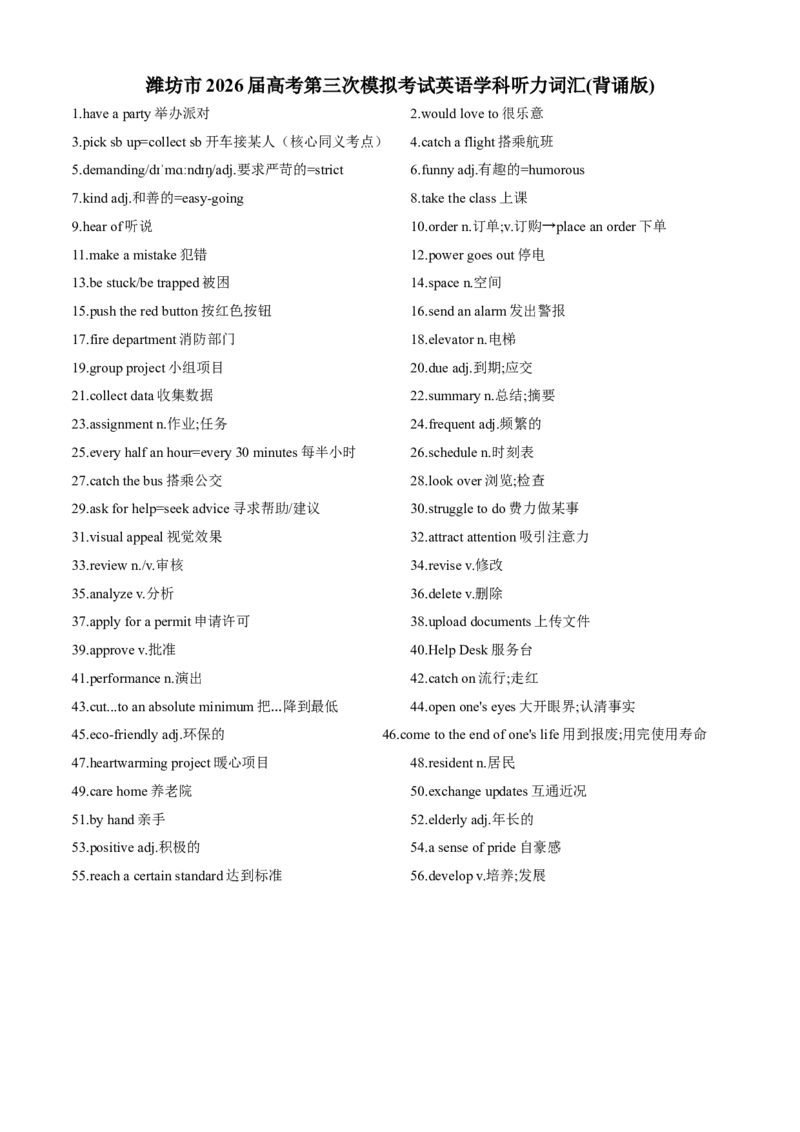
高考必背词汇/短语表
 元音弱化高频词
📌
TOP 10
单词
强读式(单独念)
弱读式(句子里实际听
到)
真题出现次数(2023-
2026)
and
/ænd/
/ən/ 或只读 /n/
高频,每篇必有
to
/tuː/
/tə/(后接辅音)
高频,每篇必有
for
/fɔː/
/fə/
高频
of
/ɒv/
/əv/
高频
can
/kæn/
/kən/
高频
from
/frɒm/
/frəm/
中频
have
/hæv/
/həv/ 或 /əv/
中频
was
/wɒz/
/wəz/
中频
are
/ɑː/
/ə/
中频
there
/ðeə/
/ðə/
低频
 辅音连读高频组合
📌
TOP 10
原短语
逐词读法
连读后实际听感
真题出处
not at all
/nɒt æt ɔːl/
/nɒ tæ tɔːl/(no-ta-tall)
通用高频
pick it up
/pɪk ɪt ʌp/
/pɪ kɪ tʌp/(pi-ki-tup)
通用高频
in an hour
/ɪn æn aʊə/
/ɪ næ naʊə/(i-na-nour)
通用高频
9 o'clock
/naɪn əˈklɒk/
/naɪ nəˈklɒk/(nine-nock-
lock)
2024 新课标I 卷T5
set off on
/set ɒf ɒn/
/se tɒ fɒn/
2026 新课标II 卷T10
miles an hour
/maɪlz æn aʊə/
/maɪl zæ naʊə/
2025 新课标I 卷T6
texts have
/teksts hæv/
/tek stəv/
2026 新课标I 卷T9
thought to be
/θɔːt tə biː/
/θɔː tə biː/
2026 新课标I 卷T9
look at
/lʊk æt/
/lʊ kæt/(/t/失爆)
2025 新课标I 卷T3
 爆破音省略高频组合
📌
TOP 10
考点分析
原短语
被吞的音
实际听感
真题出处
suitcase
/t/(/t/ + /k/相邻)
/ˈsuːkeɪs/
2025 新课标I 卷T1
next day
/t/(后接/d/)
/neks deɪ/
通用高频
flight from
/t/(后接/f/)
/flaɪ frəm/
2025 新课标I 卷T1
card to
/d/(后接/t/)
/kɑː tə/
2026 新课标I 卷T1
missed my
/t/(后接/m/)
/mɪs maɪ/
2024 新课标I 卷T5
announced that
/t/(后接/ð/)
/əˈnaʊns ðæt/
2023 新高考T2
can't afford
/t/(后接/ə/→连读,/t/弱
化)
/kæn təˈfɔː/
2025 新课标II 卷T2
good morning
/d/(后接/m/)
/ɡʊ ˈmɔːnɪŋ/
通用高频
could be
/d/(后接/b/)
/kʊ biː/
通用高频
听觉特征速记口诀
 考场“三字经”:
📣
介词连词助动词,又轻又短只留影(弱化)
辅音后面遇元音,拼音一样拼一起(连读)
爆破音后跟辅音,做口型来不放气(失爆)
听到怪音不要慌,三种规律帮你忙
 考场黄金三问(听到疑似“漏音”时问自己):
📣
1. 这个听不到的“影子”是不是 介词/连词/助动词?(
 弱化)
→
2. 这个多出来的“怪音”是不是 前词辅音被借走了?(
 连读)
→
3. 这个消失的“爆破音”是不是 后面跟了另一个辅音?(
 失爆)
→
元音弱化 —— 高考怎么考?
考点本质:考查学生能否通过语法结构反向补全被弱化的功能词。
真题挖空题型特征:被弱化的词几乎都是不携带主要语义的词(介词、连词、助动词),但它们在句子中
起语法连接作用。听不懂这些词会导致句子结构断裂。
 真题示例
🎯
1(2026 年新课标I 卷 Text 1)
考题:上面这句话中,说话人说出了几个 and?
A. 0 个
B. 1 个
C. 2 个
【答案】C
【解析】两个 and 都弱化为 /ən/,第一个与前面连读为“around n' say”,第二个为“n' then”。如果学生不
知道弱化规律,会以为中间没有 and 或只有一个。
【陷阱指数】⭐⭐⭐⭐(每年必考)
【原文】W:Now let me show you around and say hello to everyone. And then we’ll talk about your job
duties.
【音频实际听感】Now let me show you around n' say hello tə everyone. N' then we'll talk about your job
duties.
辅音连读 —— 高考怎么考?
考点本质:考查学生能否将连读后的“合并音节”正确还原为原始短语。
干扰项设计套路:将连读后的听感写成另一个词/短语,让逐词听的学生上钩。
 真题示例
🎯
2(2024 年新课标I 卷 Text 5)
考题:说话人的火车几点出发?
A. 9 o'clock
B. 8 o'clock
C. 9:10
【答案】A
【解析】nine o'clock 连读为 /naɪ nəˈklɒk/,听起来像“nine-nock-lock”。如果逐词听,中间的 /nə/ 会让不
熟悉连读的学生误以为多了一个词或听成了其他数字。
【陷阱指数】
(
⭐⭐⭐⭐⭐
9 和8 在听觉上极易混淆,尤其在连读语境下)
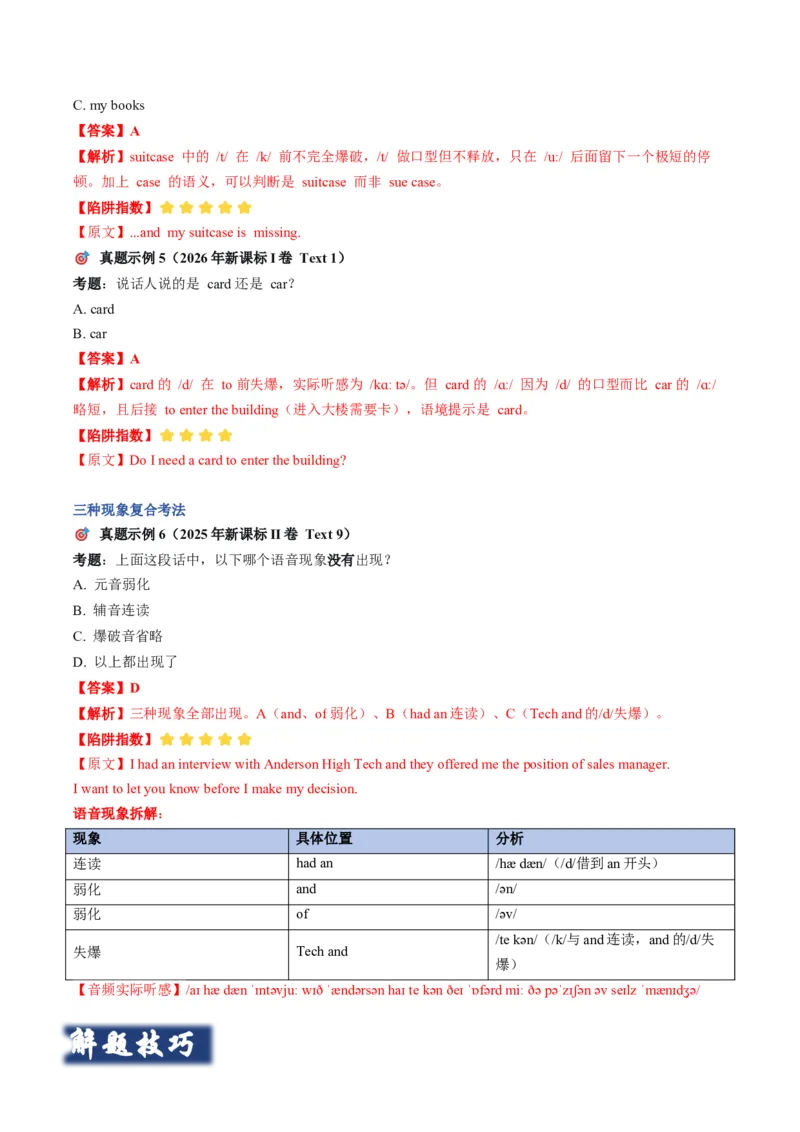
【原文】I missed my 9 o'clock train to Bedford.
 真题示例
🎯
3(2026 年新课标I 卷 Text 9)
考题:这句话中,texts have 的听觉特征是什么?
A. 清晰读出 /teksts hæv/
B. 连读为 /tek stəv/
C. 连读为 /tekst səv/
【答案】B
【解析】正确为 B。have 弱化为 /əv/,与 texts 末尾的 /s/ 连读为 /tek stəv/。如果选C,说明学生听到了
/s/ 但没识别出 have 的弱化。
【陷阱指数】⭐⭐⭐⭐
【原文】These ancient texts have been known since the 1920s...
爆破音省略 —— 高考怎么考?
考点本质:考查学生能否通过残留的发音时长/口型线索 + 语境判断被省略的爆破音。
 真题示例
🎯
4(2025 年新课标I 卷 Text 1)
考题:说话人说的是什么?
A. my suitcase
B. my suit case
解题技巧
C. my books
【答案】A
【解析】suitcase 中的 /t/ 在 /k/ 前不完全爆破,/t/ 做口型但不释放,只在 /uː/ 后面留下一个极短的停
顿。加上 case 的语义,可以判断是 suitcase 而非 sue case。
【陷阱指数】⭐⭐⭐⭐⭐
【原文】...and my suitcase is missing.
 真题示例
🎯
5(2026 年新课标I 卷 Text 1)
考题:说话人说的是 card 还是 car?
A. card
B. car
【答案】A
【解析】card 的 /d/ 在 to 前失爆,实际听感为 /kɑː tə/。但 card 的 /ɑː/ 因为 /d/ 的口型而比 car 的 /ɑː/
略短,且后接 to enter the building(进入大楼需要卡),语境提示是 card。
【陷阱指数】⭐⭐⭐⭐
【原文】Do I need a card to enter the building?
三种现象复合考法
 真题示例
🎯
6(2025 年新课标II 卷 Text 9)
考题:上面这段话中,以下哪个语音现象没有出现?
A. 元音弱化
B. 辅音连读
C. 爆破音省略
D. 以上都出现了
【答案】D
【解析】三种现象全部出现。A(and、of 弱化)、B(had an 连读)、C(Tech and 的/d/失爆)。
【陷阱指数】⭐⭐⭐⭐⭐
【原文】I had an interview with Anderson High Tech and they offered me the position of sales manager.
I want to let you know before I make my decision.
语音现象拆解:
现象
具体位置
分析
连读
had an
/hæ dæn/(/d/借到an 开头)
弱化
and
/ən/
弱化
of
/əv/
失爆
Tech and
/te kən/(/k/与and 连读,and 的/d/失
爆)
【音频实际听感】/aɪ hæ dæn ˈɪntəvjuː wɪð ˈændərsən haɪ te kən ðeɪ ˈɒfərd miː ðə pəˈzɪʃən əv seɪlz ˈmænɪdʒə/
强化训练
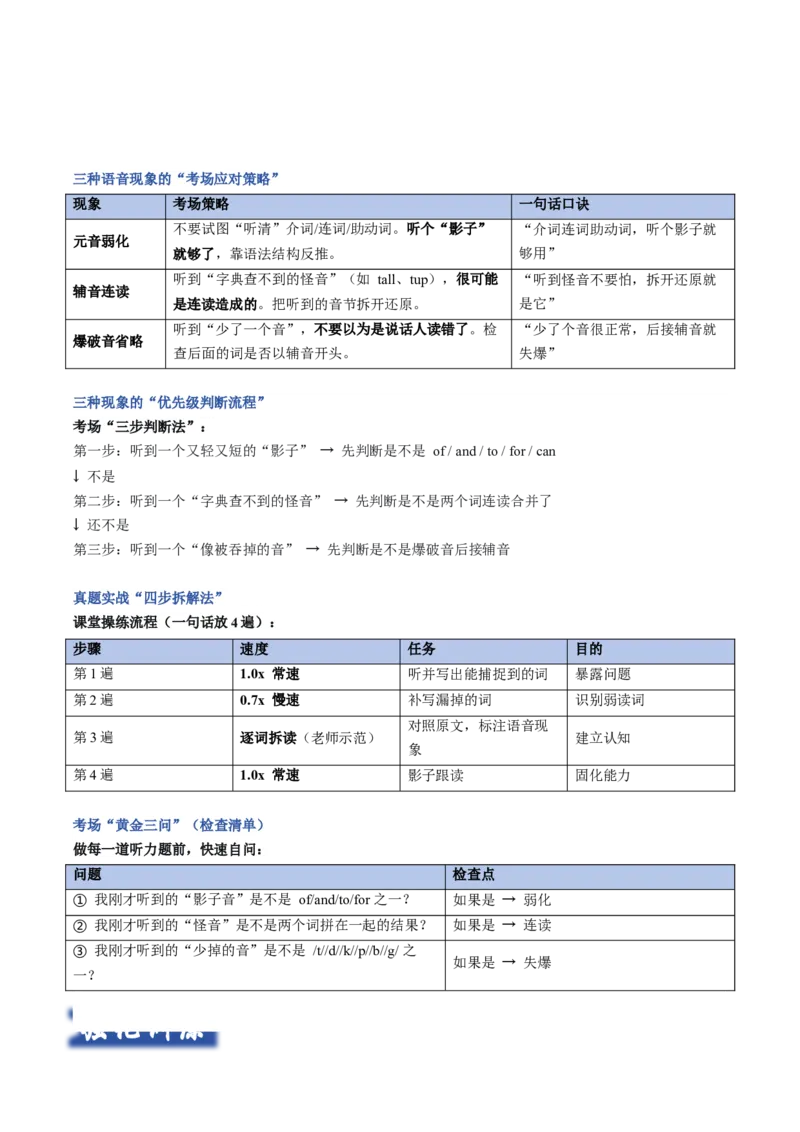
三种语音现象的“考场应对策略”
现象
考场策略
一句话口诀
元音弱化
不要试图“听清”介词/连词/助动词。听个“影子”
就够了,靠语法结构反推。
“介词连词助动词,听个影子就
够用”
辅音连读
听到“字典查不到的怪音”(如 tall、tup),很可能
是连读造成的。把听到的音节拆开还原。
“听到怪音不要怕,拆开还原就
是它”
爆破音省略
听到“少了一个音”,不要以为是说话人读错了。检
查后面的词是否以辅音开头。
“少了个音很正常,后接辅音就
失爆”
三种现象的“优先级判断流程”
考场“三步判断法”:
第一步:听到一个又轻又短的“影子”
 先判断是不是
→
of / and / to / for / can
 不是
↓
第二步:听到一个“字典查不到的怪音”
 先判断是不是两个词连读合并了
→

 还不是
↓
第三步:听到一个“像被吞掉的音”
 先判断是不是爆破音后接辅音
→
真题实战“四步拆解法”
课堂操练流程(一句话放4 遍):
步骤
速度
任务
目的
第1 遍
1.0x 常速
听并写出能捕捉到的词
暴露问题
第2 遍
0.7x 慢速
补写漏掉的词
识别弱读词
第3 遍
逐词拆读(老师示范)
对照原文,标注语音现
象
建立认知
第4 遍
1.0x 常速
影子跟读
固化能力
考场“黄金三问”(检查清单)
做每一道听力题前,快速自问:
问题
检查点
 我刚才听到的“影子音”是不是
①
 of/and/to/for 之一?
如果是
 弱化
→
 我刚才听到的“怪音”是不是两个词拼在一起的结果?
②
如果是
 连读
→
 我刚才听到的“少掉的音”是不是
③
 /t//d//k//p//b//g/ 之
一?
如果是
 失爆
→
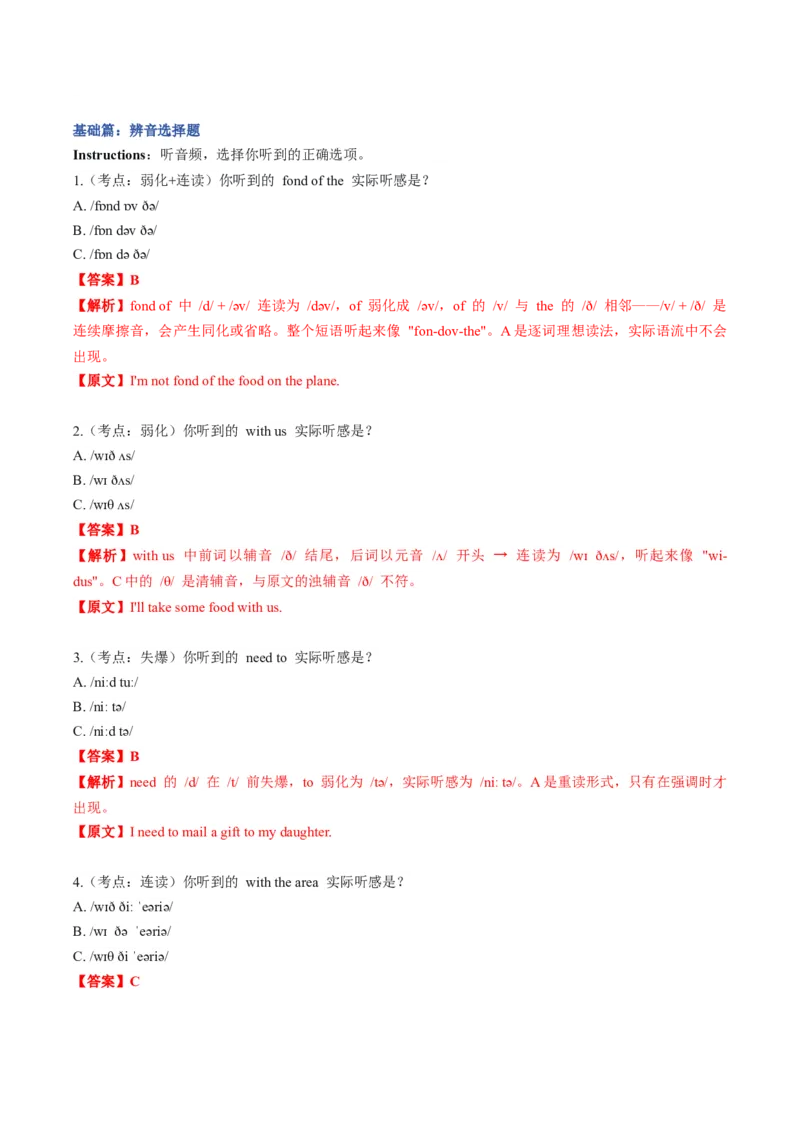
基础篇:辨音选择题
Instructions:听音频,选择你听到的正确选项。
1.(考点:弱化+连读)你听到的 fond of the 实际听感是?
A. /fɒnd ɒv ðə/
B. /fɒn dəv ðə/
C. /fɒn də ðə/
【答案】B
【解析】fond of 中 /d/ + /əv/ 连读为 /dəv/,of 弱化成 /əv/,of 的 /v/ 与 the 的 /ð/ 相邻——/v/ + /ð/ 是
连续摩擦音,会产生同化或省略。整个短语听起来像 "fon-dov-the"。A 是逐词理想读法,实际语流中不会
出现。
【原文】I'm not fond of the food on the plane.
2.(考点:弱化)你听到的 with us 实际听感是?
A. /wɪð ʌs/
B. /wɪ ðʌs/
C. /wɪθ ʌs/
【答案】B
【解析】with us 中前词以辅音 /ð/ 结尾,后词以元音 /ʌ/ 开头
 连读为
→
/wɪ ðʌs/,听起来像 "wi-
dus"。C 中的 /θ/ 是清辅音,与原文的浊辅音 /ð/ 不符。
【原文】I'll take some food with us.
3.(考点:失爆)你听到的 need to 实际听感是?
A. /niːd tuː/
B. /niː tə/
C. /niːd tə/
【答案】B
【解析】need 的 /d/ 在 /t/ 前失爆,to 弱化为 /tə/,实际听感为 /niː tə/。A 是重读形式,只有在强调时才
出现。
【原文】I need to mail a gift to my daughter.
4.(考点:连读)你听到的 with the area 实际听感是?
A. /wɪð ðiː ˈeəriə/
B. /wɪ ðə ˈeəriə/
C. /wɪθ ði ˈeəriə/
【答案】C
【解析】with the 中两个 /ð/ 相邻,前一个被弱化,听感为 /wɪðə/;the 在元音前读 /ði/,但非重读时接近
/ðə/。B 最接近实际听感。
【原文】 I’m a tourist here, so I’m not quite familiar with the area.
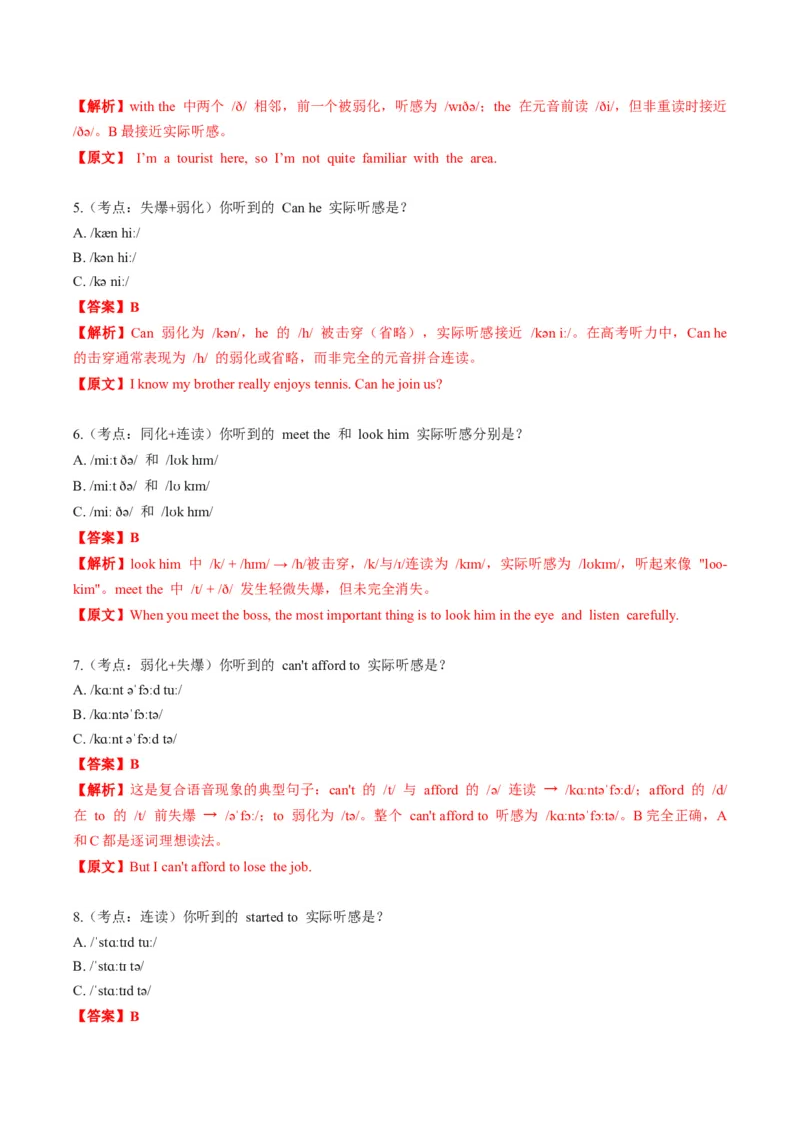
5.(考点:失爆+弱化)你听到的 Can he 实际听感是?
A. /kæn hiː/
B. /kən hiː/
C. /kə niː/
【答案】B
【解析】Can 弱化为 /kən/,he 的 /h/ 被击穿(省略),实际听感接近 /kən iː/。在高考听力中,Can he
的击穿通常表现为 /h/ 的弱化或省略,而非完全的元音拼合连读。
【原文】I know my brother really enjoys tennis. Can he join us?
6.(考点:同化+连读)你听到的 meet the 和 look him 实际听感分别是?
A. /miːt ðə/ 和 /lʊk hɪm/
B. /miːt ðə/ 和 /lʊ kɪm/
C. /miː ðə/ 和 /lʊk hɪm/
【答案】B
【解析】look him 中 /k/ + /hɪm/ → /h/被击穿,/k/与/ɪ/连读为 /kɪm/,实际听感为 /lʊkɪm/,听起来像 "loo-
kim"。meet the 中 /t/ + /ð/ 发生轻微失爆,但未完全消失。
【原文】When you meet the boss, the most important thing is to look him in the eye and listen carefully.
7.(考点:弱化+失爆)你听到的 can't afford to 实际听感是?
A. /kɑːnt əˈfɔːd tuː/
B. /kɑːntəˈfɔːtə/
C. /kɑːnt əˈfɔːd tə/
【答案】B
【解析】这是复合语音现象的典型句子:can't 的 /t/ 与 afford 的 /ə/ 连读

→/kɑːntəˈfɔːd/;afford 的 /d/
在 to 的 /t/ 前失爆

→/əˈfɔː/;to 弱化为 /tə/。整个 can't afford to 听感为 /kɑːntəˈfɔːtə/。B 完全正确,A
和C 都是逐词理想读法。
【原文】But I can't afford to lose the job.
8.(考点:连读)你听到的 started to 实际听感是?
A. /ˈstɑːtɪd tuː/
B. /ˈstɑːtɪ tə/
C. /ˈstɑːtɪd tə/
【答案】B
【解析】started 的 /d/ 在 to 的 /t/ 前失爆,to 弱化为 /tə/,实际听感为 /ˈstɑːtɪtə/。注意:这里 started
末尾的 /ɪd/ + to 的 /tə/ 会产生一个轻微的“双/t/”效果,但第一个/t/被吞掉,只剩下一个/t/。
【原文】I walked quickly and started to sing softly to myself.
9.(考点:弱化+连读)你听到的 look at some 实际听感是?
A. /lʊk æt sʌm/
B. /lʊ kæ sʌm/
C. /lʊk ət sʌm/
【答案】B
【解析】look at 中 /k/ + /æ/ 连读为 /kæ/,at 的 /t/ 在 some 的 /s/ 前失爆,实际听感为 /lʊkætsʌm/ →
/lʊkætsʌm/(但/t/失爆后听起来更像 "loo-kat-some")。注意:look at 是高考连读题中最常考的组合之一。
【原文】I'd like to look at some suits.
10.(考点:失爆+弱化)你听到的 going to 实际听感是?
A. /ˈɡəʊɪŋ tuː/
B. /ˈɡəʊɪn tə/
C. /ˈɡəʊɪŋ tə/
【答案】B
【解析】going to 在常速语流中,/ŋ/ 在 /t/ 前发生鼻腔爆破,实际听感为 /ˈɡəʊɪn tə/,甚至进一步压缩为
/ˈɡʌnə/(gonna)。
【原文】We're going to Thailand this week.
进阶篇:挖空听写
Instructions:听音频,在横线上填入你听到的内容(注意:有些空可能是“听不到的”弱读
词)。
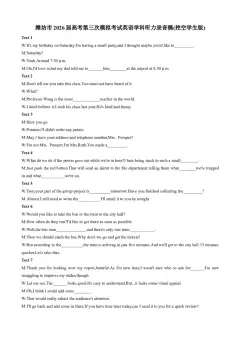
Text 1
W: Hello.
M: Hi Delia, this is Peter. Are you doing anything Tuesday evening?
W: Not really.
M: I've got two tickets _____
_____ the national theatre. Would you like _____
_____ come?
①
②
W: Thanks. I'd love _____
_____. What's on?
③
M: Stafford's latest play.W: Oh, sonny told me it was very good.
M: Yes, everyone says so. Shall I meet you _____
_____ your office _____
_____ six o'clock? Then we can go
④
⑤

and have a quick snack. The play starts _____
_____ seven o'clock.
⑥
W: Sounds great. See you Tuesday then.
M: Good, bye.
【答案与解析】
空
答案
完整短语
语音现象
解析
①
for
tickets for the national
theatre
弱化
for 强读为 /fɔː/,句中非重读弱化为 /fə/,
与 tickets 的 /s/ 连读为 /ˈtɪkɪts fə/,听起来
像 "tickets-fer"。
②
to
Would you like to come?
弱化 + 同化
to 弱读为 /tə/,与 like 的 /k/ 连读为 /laɪktə/;
Would you 中 /d/ + /j/ → /dʒ/,听感为
/wʊdʒuː/。两种现象同时发生!
③
to
I'd love to
弱化
to 弱读为 /tə/,与 love 的 /v/ 连读为 /lʌvtə/,
听起来像 "luv-ta"。I'd love to 是固定回应句
式。
④
at
meet you at your office
弱化 + 连读
at 弱读为 /ət/,与 meet you 连读;your 弱读
为 /jə/(非重读),整个短语听感为 /miːtʃuː ət
jə/。
⑤
at
at six o'clock
失爆 + 连读
at 的 /t/ 在 six 的 /s/ 前失爆,与 six 连读为
/ət sɪks/ → /ə sɪks/。听起来像 "a-six"。
【易错提示】
空
:
②
Would you 的同化是高考必考!/d/ + /j/ → /dʒ/,听到 "wod-ju" 要反应出是 Would you。
空
:
④
your 弱读为 /jə/,不要误以为听到了 you 或 ya。
空
:两个
⑤⑥
 at 连读/失爆条件不同,放在一起对比效果最好。
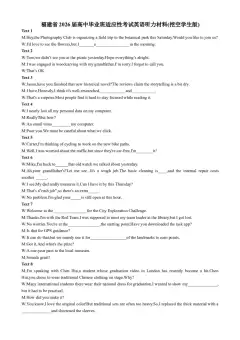
Text 2
W: Did you try that online quiz, Sam?
M: About the moon? Yeah, and I was full _____
_____ confidence when I downloaded it. That didn't last long,
⑦

though. I mean, after all the stuff _____
_____ done in class, I was looking forward _____
_____ seeing what I
⑧
⑨

could do. I'd expected _____
_____ do much better. I'm glad I don't have _____
_____ do it again.
⑩
⑪
W: Well, it was only a bit _____
_____ fun.
⑫
M: At least I got the question about the first man on the moon, right? There was stuff I'd never come across before,
though, like how long a moon day is. Did you know that?
W: Yeah, I got that one.
【答案与解析】
空
答案
完整短语
语音现象
解析
⑦
of
full of confidence
弱化 + 连读
of 弱读为 /əv/,与 full 的 /l/ 连读为 /fʊləv/,
听起来像 "full-ov"。full of 是固定搭配("充
满……")。
⑧
we'd
the stuff we'd done
弱化 + 击穿
we'd 弱读为 /wid/(非重读),与前面 stuff 连
读。we'd 中的 we 弱读,'d 是 had 的缩写,这
里构成过去完成时。
⑨
to
looking forward to seeing
弱化
to 弱读为 /tə/,与 forward 的 /d/ 连读为
/ˈfɔːwəd tə/,听起来像 "forward-ta"。look
forward to 是固定搭配,这里的 to 是介词,后
接动名词 seeing。
⑩
to
expected to do much better
弱化 + 失爆
to 弱读为 /tə/;expected 的 /d/ 在 to 的 /t/ 前
失爆,听感为 /ɪkˈspektɪ tə/。听起来
像 "expected-ta"。
⑪
to
have to do it again
弱化 + 清化
have to 中 to 弱读为 /tə/,have 的 /v/ 在 /t/ 前
清化为 /f/,整个 have to 听感为 /hæftə/("haf-
ta")。这是高考最高频的弱读组合之一。
⑫
of
a bit of fun
弱化 + 连读
of 弱读为 /əv/,与 bit 的 /t/ 连读为 /bɪtəv/,
听起来像 "bit-ov"。a bit of 是固定搭配("一点
儿……")。
【易错提示】
空
:
⑦
full of 连读后 of 几乎消失,靠固定搭配 full of 反推。
空
:
⑧
we'd 中的 'd 表示 had(过去完成时),靠时态判断。
空
:
⑨
look forward to 的 to 是介词,后接动名词 seeing——这是语法考点 + 语音考点的结合!
空
:
⑪
have to → /hæftə/ 是高考听力识别最高频组合,务必练熟。
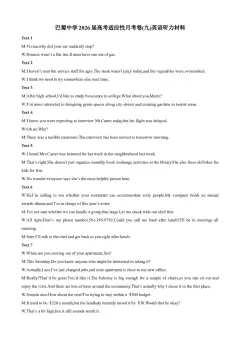
Text 3
W: Green Mountain Golf course, how may I help you?
M: Hello, I'd like _____
_____ make a booking _____
_____ the hotel and a golf course.
⑬
⑭
W: When would you like _____
_____ visit us, sir? I can check if there are available rooms and golfing sessions.
⑮
M: We are thinking _____
_____ any weekend in November and we're going to be six couples, so we'd prefer six
⑯

double rooms if that's possible.
W: Hmm. Well, you're in luck, sir. The fourth weekend is quite empty right now. We have several open golf
sessions and it's rare that we have so many vacancies _____
_____ the weekend.
⑰
M: Oh, that's wonderful. Could I book two sessions, the one _____
_____ Saturday and also Sunday morning?
⑱

We might leave around Sunday afternoon.
W: Well, yes, of course. Now I'll need some specific details. Under whose name will the booking be made?
M: That would be me.
【答案与解析】
空
答案
完整短语
语音现象
解析
⑬
to
I'd like to make
弱化
to 弱读为 /tə/,与 like 的 /k/ 连读为 /laɪktə/,
听起来像 "like-ta"。I'd like to 是最常见的表达
意愿的句式。
⑭
of
a booking of the hotel
弱化 + 连读
of 弱读为 /əv/,与 booking 的 /ɪŋ/ 连读为
/ˈbʊkɪŋəv/,听起来像 "booking-ov"。
⑮
to
like to visit us
弱化
to 弱读为 /tə/,与 like 的 /k/ 连读为 /laɪktə/,
听起来像 "like-ta"。注意 Would you like to 中
的 to 不能漏听。
⑯
of
thinking of any weekend
弱化
of 弱读为 /əv/,与 thinking 的 /ɪŋ/ 连读为
/ˈθɪŋkɪŋəv/,听起来像 "thinking-ov"。think
of 是固定搭配("考虑")。
⑰
at
vacancies at the weekend
失爆 + 弱化
at 的 /t/ 在 the 的 /ð/ 前失爆;the 弱读为
/ðə/。听感为 /ˈveɪkənsiz ət ðə/,at 的 /t/ 几乎完
全听不到。
⑱
for
one for Saturday
弱化
for 弱读为 /fə/,与 one 的 /n/ 连读为 /wʌn
fə/,听起来像 "one-fer"。the one for + 时
间 表示"用于某天的那一个"。
【易错提示】
空
:
⑭
booking of 中 of 弱化后与 booking 的 /ɪŋ/ 连读,听起来像 "booking-gov"。
空
:
⑰
at the weekend 是英式英语中"在周末"的表达(美式多用 on the weekend)。at 的 /t/ 在 the 的 /ð/
前失爆,几乎听不到,靠介词搭配反推。
Text 4
M: Good morning, today we'll talk about goal setting and we have a special guest here, Kate Warwick. Welcome
_____
_____ our program, Mrs. Warwick.
⑲
W: Thank you.
M: So, Mrs. Warwick, can you tell us about your work in goal setting?
W: Well, when it comes _____
_____ goal setting, I'm really focused. For example, if I want _____
⑳
㉑_____ lose
weight, I'll get a group _____㉒_____ close friends around me and tell them I want _____㉓_____ lose weight and
improve my health. Then I'll take action _____㉔_____ achieve this goal by stopping eating unhealthy foods.
M: Why do you gather some close friends together?
W: It's important _____㉕_____ me because I need support. I know I can't do it on my own. Also, it helps because
I'm able _____㉖_____ share my problems with them. And by telling other people I really want _____㉗_____ do
this and I seek your help, they can keep you honest, I suppose.
M: And why is it that most people do so badly _____㉘_____ reaching goals?
W: They lose focus. Everybody's life is busy. There are so many happenings in everybody's life that they might
have a goal, but then something will get in the way _____㉙_____ that.
【答案与解析】
空
答案
完整短语
语音现象
解析
⑲
to
Welcome to our program
弱化
to 弱读为 /tə/,与 Welcome 的 /m/ 连读为
/ˈwelkəm tə/,听起来像 "wel-come-ta"。
⑳
to
when it comes to
弱化
to 弱读为 /tə/,与 comes 的 /z/ 连读为 /kʌmz
tə/,听起来像 "comes-ta"。when it comes to 是
固定搭配("当谈到……")。
㉑
to
want to lose weight
弱化 + 失爆
want 的 /t/ 在 to 的 /t/ 前失爆;to 弱读
为 /tə/,听感为 /wɒn tə/,听起来像 "won-
ta"。
㉒
of
a group of close friends
弱化 + 连读
of 弱读为 /əv/,与 group 的 /p/ 连读为
/ɡruːpəv/,听起来像 "group-ov"。
㉓
to
want to lose weight
弱化 + 失爆
同
,
㉑
want to → /wɒn tə/。注意这里重复出现
了 want to,强化训练。
㉔
to
take action to achieve
弱化
to 弱读为 /tə/,与 action 的 /n/ 连读为 /ˈækʃn
tə/,听起来像 "action-ta"。take action to do 表
示"采取行动做某事"。
㉕
for
important for me
弱化
for 弱读为 /fə/,与 important 的 /t/ 连读为 /ɪm
ˈpɔːtnt fə/,听起来像 "important-fer"。
important for sb 是固定搭配。
㉖
to
able to share
弱化
to 弱读为 /tə/,与 able 的 /l/ 连读为 /ˈeɪbl
tə/,听起来像 "able-ta"。be able to 是固定搭
配。
㉗
to
want to do this
弱化 + 失爆
同
、
,
㉑
㉓
want to → /wɒn tə/。这是全文第三
次出现 want to,专门让学生反复识别这个高频
组合。
㉘
at
badly at reaching goals
弱化 + 连读
at 弱读为 /ət/,与 badly 的 /i/ 连读为 /ˈbædli
ət/,听起来像 "badly-at"。badly at doing 表
示"做某事做得很差"。
㉙
of
in the way of that
弱化 + 连读
of 弱读为 /əv/,与 way 的 /eɪ/ 连读为
/weɪəv/,听起来像 "way-ov"。in the way of 表
示"妨碍、挡路"。
【易错提示】
空
、
、
:全文出现了
㉑
㉓
㉗
三次 want to,每次都是 /t/ 失爆 + to 弱化 → /wɒn tə/。这是高考最高频的失
爆+弱化组合,反复练到形成肌肉记忆。
空
:
⑳
comes to 中 to 弱化后,整个 comes to 听起来像 "comes-ta",靠固定搭配 when it comes to 反推。
Text 5
Recently, I stayed at the Royal Inn in the town _____㉚_____ Bright Bay. It was a disappointing experience _____
㉛_____ say the least. The hotel was not _____ ㉜_____ all as advertised. On its website the pictures showed
beautiful gardens. When in truth, these gardens consisted _____㉝_____ one bed _____㉞_____ roses next _____
㉟_____ the parking lot. The rest _____㊱_____ the space around the hotel was taken up by a busy road and a
vacant lot. A pool was advertised, but we found there was no water in it. The only promise on the website that was
kept was that free Internet access would be available in the rooms. In addition, the rooms were in very poor
condition. The door _____㊲_____ my room was broken and only opened and shut with great difficulty and a loud
Bang, which is just shocking. Even worse, there were muddy handprints in the shower. I felt like I needed _____㊳
_____ clean everything before I could use it. It was disgusting. If this hotel had been very cheap, perhaps the
problems would be forgivable. However, it was an average priced hotel. I would never recommend it _____ ㊴
_____ anyone.
【答案与解析】
空
答案
完整短语
语音现象
解析
㉚
of
the town of Bright Bay
弱化 + 连读
of 弱读为 /əv/,与 town 的 /n/ 连读为
/taʊnəv/,听起来像 "town-ov"。地名结构中的
of 必弱读。
㉛
to
experience to say the least
弱化
to 弱读为 /tə/,与 experience 的 /s/ 连读为 /ɪk
ˈspɪəriəns tə/,听起来像 "experience-ta"。to
say the least 是固定习语("至少可以说")。
㉜
at
not at all as advertised
连读 + 失爆
not at all 中:not 的 /t/ 与 at 的 /ə/ 连读;at 的
/t/ 在 all 的 /ɔː/ 前连读(后接元音,不是失
爆!);all as 中 /l/ + /ə/ 连读。整个 not at
all 听感为 /nɒtætɔːl/("no-ta-tall")。
㉝
of
consisted of one bed
弱化 + 连读
of 弱读为 /əv/,与 consisted 的 /d/ 连读为
/kənˈsɪstɪdəv/,听起来像 "consisted-ov"。
consist of 是固定搭配。
㉞
of
a bed of roses
弱化 + 连读
of 弱读为 /əv/,与 bed 的 /d/ 连读为
/bedəv/,听起来像 "bed-ov"。a bed of roses 是
固定表达("玫瑰花坛"),字面意思。
㉟
to
next to the parking lot
弱化 + 失爆
next to 中 next 的 /t/ 在 to 的 /t/ 前失爆;
to 弱读为 /tə/,听感为 /neks tə/,听起来
像 "nex-ta"。next to 是固定搭配("在
旁
……
边")。
㊱
of
the rest of the space
弱化 + 连读
of 弱读为 /əv/,与 rest 的 /t/ 连读为 /restəv/,
听起来像 "rest-ov"。the rest of 是固定搭配
("剩余的……")。
㊲
to
the door to my room
弱化 + 失爆
to 弱读为 /tə/;door 的 /r/ 与 to 的 /t/ 连读为
/dɔːtə/,听起来像 "door-ta"。the door to 表
示"通往
的门
……
"。
㊳
to
needed to clean everything
弱化 + 失爆
needed 的 /d/ 在 to 的 /t/ 前失爆;to 弱读
为 /tə/,听感为 /ˈniːdɪ tə/,听起来像 "need-
ed-ta"(/d/失爆后更轻)。
㊴
to
recommend it to anyone
连读 + 弱化 +
失爆
recommend it 中 /d/ + /ɪ/ 连读为 /ˌrekə
ˈmendɪt/;it 的 /t/ 在 to 的 /t/ 前失爆;to 弱读
为 /tə/。这是三重语音现象叠加!听感为 /ˌrekə
ˈmendɪ tə/。
㉚
of
the town of Bright Bay
弱化 + 连读
of 弱读为 /əv/,与 town 的 /n/ 连读为
/taʊnəv/,听起来像 "town-ov"。地名结构中的
of 必弱读。
【易错提示】
空
:
㉜
not at all 是高考连读的标志性例句,三重连读同时出现。务必反复听这个短语的常速读法
/nɒtætɔːl/。
空
、
、
:三个
㉝
㉞
㊱
 of 连续出现(consisted of one bed of roses、the rest of),每个都是弱读 + 连读,训
练在一句话中连续识别多个弱读词。
空
:
㊴
recommend it to 同时出现连读(recommend it)、失爆(it 的 /t/ 在 to 的 /t/ 前)、弱化(to →
/tə/),是复合语音现象的经典例句。
综合篇:语音标注
Instructions:在原文中,用不同符号标注语音现象:
元音弱化:在词下方画 波浪线 ~~~(and)
辅音连读:在连读处画 下划线 ___(talk about)
爆破音省略:在被吞的音上画 斜线 /(let)
示例:
原文:Now let me show you around and say hello to everyone.And then we'll talk about your job duties.
标注:Now let me show you around and

   say hello to    everyone. And

   then we'll talk about your job duties.
(and 划波浪线,to 划波浪线,and 划波浪线;let 的/t/画斜线;talk about 连读)
题目1
Peter, you're back. How did the run go? I remember I put it on the table. It's on your bed. I put it there and closed
the door. It got really noisy.
【参考答案】
Peter, you're back. How did the run go? I remember I put it on

 t he table. It's on your bed. I put it there and
closed the door. It got really noisy.
【逐项标注与解析】
序
号
标注
位置
符号
语音现象
解析
1
did
the
斜线 /
失爆
did 的 /d/ 在 the 的 /ð/ 前失爆,/d/只做口型
不爆破,听感为 /dɪ ðə/
2
run
go
下划线 ___
连读
/n/ + /ɡ/ 连读为 /rʌŋɡəʊ/(鼻腔爆破+连读)
3
put it
下划线 ___
连读
/t/ + /ɪ/ 连读为 /pʊtɪt/,/t/被借到 it 开头,听起
来像 "pu-tit"
4
put it
on
下划线 ___
连读
put it on 三连读:put 的 /t/ + it 的 /ɪ/ →
/pʊtɪt/;it 的 /t/ + on 的 /ɒ/ → /tɒn/。整句听感
为 /pʊtɪtɒn/("pu-ti-ton")
5
it on
下划线 ___
连读
/t/ + /ɒ/ 连读为 /tɒn/,听起来像 "ton"
6
on the
下划线 ___ + 波浪
线 ~~~
连读 + 弱化
on the 中 /n/ + /ðə/ 连读为 /ɒnðə/;the 弱读为
/ðə/
7
your
bed
波浪线 ~~~
弱化
your 弱读为 /jə/(非重读),听起来像 "yer"
8
put it
there
下划线 ___ + 斜线 /
连读 + 失爆
put it 连读为 /pʊtɪt/;it 的 /t/ 在 there 的 /ð/
前 失爆,几乎听不到
9
closed
the
斜线 /
失爆
closed 的 /d/ 在 the 的 /ð/ 前失爆,/d/只做口
型不爆破,听感为 /kləʊz ðə/
10
got
really
斜线 /
失爆
got 的 /t/ 在 really 的 /r/ 前失爆,听感为 /ɡɒ
ˈrɪəli/
题目2
Is that everything for dinner? I see we have hamburgers, sausages, sodas and beers. But you know what I just
realized? We haven't considered any fish options. Give me a call when you arrive there and I'll teach you what kind
of fish to buy. I'll get there in about 10 minutes, so keep your phone handy.
【参考答案】
Is that everything for dinner? I see we have hamburgers, sausages, sodas and beers. But you know what I just
realized? We haven't considered any fish options. Give me a call when you arrive there and I'll teach you what
kind   o  f fish to buy. I'll get there in about 10 minutes, so keep   y  our phone handy.
【逐项标注与解析】
序
号
标注位置
符号
语音现
象
解析
1
that
everything
下划线 ___
连读
that 的 /t/ 在 everything 的 /e/ 前——后接元音,不
吞! that everything 连读为 /ðætevrɪθɪŋ/。
2
for dinner
波浪线 ~~~
弱化
for 弱读为 /fə/,与 dinner 的 /n/ 连读为 /fəˈdɪnə/,
听起来像 "fer-dinner"
3
sodas and
beers
波浪线 ~~~ + 下
划线 ___
弱化 +
连读
and 弱读为 /ən/,与 sodas 的 /z/ 连读为 /ˈsəʊdəz
ən/,听起来像 "sodas-zen"
4
just
realized
斜线 /
失爆
just 的 /t/ 在 realized 的 /r/ 前失爆,听感为 /dʒʌs
ˈrɪəlaɪzd/
5
haven't
considered
斜线 /
失爆
haven't 的 /t/ 在 considered 的 /k/ 前失爆,听感为
/ˈhævn kənˈsɪdəd/
6
considered
any
下划线 ___
连读
/d/ + /e/ 连读为 /kənˈsɪdə de ni/(/d/被借到 any 开
头,出现 /d/ 过渡音)
7
fish
options
下划线 ___
连读
fish 的 /ʃ/ 与 options 的 /ɒ/ 之间没有爆破音,
但 options 开头的 /ɒ/ 是元音,fish 的 /ʃ/ 与 /ɒ/ 连
读为 /fɪʃɒpʃnz/
8
Give me
下划线 ___
连读
Give 的 /v/ 在 me 的 /m/ 前——/v/不是爆破音,不
适用失爆规则。这里实际上是 /v/ + /m/ 连读为 /ɡɪv
miː/,/v/被/m/轻微同化。
9
what kind
斜线 /
失爆
what 的 /t/ 在 kind 的 /k/ 前失爆,听感为 /wɒ
kaɪnd/
10
kind of
波浪线 ~~~ + 下
划线 ___
弱化 +
连读
of 弱读为 /əv/,与 kind 的 /d/ 连读为 /kaɪndəv/,
听起来像 "kind-ov"
11
fish to
波浪线 ~~~+ 下划
线 ___
弱化+
连读
fish 的 /ʃ/ 与 to 的 /t/ 相邻——/ʃ/不是爆破音,不
适用失爆规则。to 弱读为 /tə/,与 fish 连读为 /fɪʃtə/
12
get there
斜线 /
失爆
get 的 /t/ 在 there 的 /ð/ 前失爆,听感为 /ɡe ðeə/
13
in about
下划线 ___
连读
/n/ + /ə/ 连读为 /ɪnəˈbaʊt/,听起来像 "i-na-bout"
14
about 10
斜线 /
失爆
about 的 /t/ 在 10 的 /t/ 前失爆,两个 /t/ 合并为一
个,听感为 /əˈbaʊ ten/
15
keep your
波浪线 ~~~+ 下划
线 ___
弱化+
连读
your 弱读为 /jə/,与 keep 的 /p/ 连读为 /kiːp jə/,
听起来像 "keep-yer"
题目3
Welcome back to my channel. That furniture advertisement was appealing, wasn't it? I'm seriously considering
getting a new sofa now. First up, our third prize, a free luxury car wash at shiny wheels on York street, goes to Sara
Thompson. Now move on to the second lucky listener. Oh, this one is a dinner for two at a popular French
restaurant downtown, known for its delicious seafood and romantic atmosphere. Up next, we'll have a chat with a
special guest.
【参考答案】
Welcome back to my channel. That furniture advertisement was appealing, wasn't it? I'm seriously considering
getting a new sofa now. First up, our third prize, a free luxury car wash at shiny wheels on York street, goes to
Sara Thompson. Now move on

 t o the second lucky listener. Oh, this one is a dinner for two at a popular French
restaurant downtown, known   f or its delicious seafood   a  nd romantic atmosphere. Up next, we'll have a chat
with
  a   special guest.
【逐项标注与解析】
序号
标注位置
符号
语音现
象
解析
1
Welcome back
下划线 ___
连读
/m/ + /b/ 连读为 /ˈwelkəm bæk/(/m/与/b/连续,
双唇音连续)
2
back to
斜线 /
失爆
back 的 /k/ 在 to 的 /t/ 前失爆;to 弱读为
/tə/,听感为 /bæ tə/
3
that furniture
斜线 /
失爆
that 的 /t/ 在 furniture 的 /f/ 前失爆,听感为
/ðæ ˈfɜːnɪtʃə/
4
advertisement
was
斜线 /
失爆
was 弱读为 /wəz/;advertisement 的 /t/ 在 was
的 /w/ 前失爆,听感为 /ədˈvɜːtɪsmən wəz/。
5
wasn't it
下划线 ___ + 斜
线 /
连读
+ 失
爆
wasn't it 中 wasn't 的 /t/ 与 it 的 /ɪ/ 连读为
/ˈwɒzntɪt/;it 的 /t/ 在句末轻微失爆
6
getting a
下划线 ___
连读
/ɪŋ/ + /ə/ 连读为 /ˈɡetɪŋə/,听起来像 "getting-
ga"
7
First up
下划线 ___
连读
First 的 /t/ 在 up 的 /ʌ/ 前——后接元音,连
读! First up 连读为 /fɜːstʌp/,听起来像 "fir-
stup"
8
third prize
斜线 /
失爆
third 的 /d/ 在 prize 的 /p/ 前失爆,听感为 /θɜː
praɪz/
9
wash at
下划线 ___
连读
/ʃ/ + /æ/ 连读为 /wɒʃæt/,听起来像 "wo-shat"
10
at shiny
斜线 /
失爆
at 的 /t/ 在 shiny 的 /ʃ/ 前失爆,听感为 /æ
ˈʃaɪni/
11
shiny wheels
下划线 ___
连读
/i/ + /w/ 元音连读,出现 /w/ 过渡音,听感为
/ˈʃaɪni wiːlz/ → /ˈʃaɪni wiːlz/(/i/和/w/连续)
12
wheels on
下划线 ___
连读
/z/ + /ɒ/ 连读为 /wiːlzɒn/,听起来像 "wheels-
zon"
13
on York
下划线 ___
连读
/n/ + /j/ 连读为 /ɒn jɔːk/,/n/和/j/连续发音
14
York street
斜线 /
失爆
York 的 /k/ 在 street 的 /s/ 前失爆,听感为 /jɔː
striːt/
15
goes to
波浪线 ~~~ +
斜线 /
弱化
+ 失
爆
to 弱读为 /tə/;goes 的 /z/ 与 to 的 /t/ 连读为
/ɡəʊz tə/
16
move on
下划线 ___
连读
/v/ + /ɒ/ 连读为 /muːvɒn/,听起来像 "move-
von"
17
on to
下划线 ___ + 波
浪线 ~~~
连读
+ 弱
化
on to 中 /n/ + /tə/ 连读为 /ɒntə/,to 弱读为 /tə/
18
second lucky
斜线 /
失爆
second 的 /d/ 在 lucky 的 /l/ 前失爆,听感为
/ˈsekən ˈlʌki/
19
this one
下划线 ___
连读
/s/ + /w/ 连读为 /ðɪs wʌn/(/s/与/w/连续发音)
20
dinner for
波浪线 ~~~
弱化
for 弱读为 /fə/
21
two at
下划线 ___
连读
/uː/ + /æ/ 元音连读,出现 /w/ 过渡音,听感为
/tuː wæt/
22
at a
下划线 ___ + 波
浪线 ~~~
连读
+ 弱
化
at a 中 /t/ + /ə/ 连读为 /ætə/;a 弱读为 /ə/
23
restaurant
downtown
斜线 /
失爆
restaurant 的 /t/ 在 downtown 的 /d/ 前失爆
24
known for
波浪线 ~~~
弱化
for 弱读为 /fə/,与 known 的 /n/ 连读为 /nəʊn
fə/
25
seafood and
波浪线 ~~~ +
弱化
and 弱读为 /ən/,与 seafood 的 /d/ 连读为
序号
标注位置
符号
语音现
象
解析
下划线 ___
+ 连
读
/ˈsiːfuːd ən/
26
romantic
atmosphere
下划线 ___
连读
/k/ + /æ/ 连读为 /rəʊˈmæntɪk æt.../ → /rəʊˈmæntɪ
kæt.../
27
Up next
斜线 /
失爆
Up 的 /p/ 在 next 的 /n/ 前失爆,听感为 /ʌ
neks/
28
we'll have
波浪线 ~~~ +
斜线 /
弱化
+ 击
穿
we'll 弱读为 /wɪl/;have 的 /h/ 被击穿,/v/与
/æ/ 连读为 /wɪl æv/
29
have a
波浪线 ~~~ +
下划线 ___
弱化
+ 连
读
have 弱读为 /həv/,a 弱读为 /ə/,连读为 /həvə/
30
chat with
斜线 /
失爆
chat 的 /t/ 在 with 的 /w/ 前失爆,听感为 /tʃæ
wɪð/
31
with a
下划线 ___
连读
/ð/ + /ə/ 连读为 /wɪðə/,听起来像 "wi-tha"